


I came down with the flu and missed three days of work. My employer didn't pay me for them and said paid sick leave 'isn't a legal requirement.' A friend in another state gets sick days by law. Does my employer have to give me paid sick leave, and what protections do I have?
Does my employer have to give me paid sick leave?

Concerns & risks
You missed work with the flu, weren't paid and want to know whether that's legal.
| Source | What you'll find |
|---|---|
| State labor department | State sick leave law |
| City or county website | Local ordinances |
| Employee handbook | Company policy |
| Pay stub or HR portal | Accrued hours |
| DOL FMLA page | Federal eligibility rules |

Causes & evidence
According to the U.S. Department of Labor, the Fair Labor Standards Act doesn't require employers to give paid sick leave. Many states and some cities and counties have their own paid sick leave laws, which commonly let workers earn sick time based on hours worked and use it for their own illness or to care for a family member; the details, including how much you earn and how much you can carry over, vary by law. Separately, the federal Family and Medical Leave Act gives eligible employees up to 12 workweeks of unpaid, job-protected leave in a 12-month period for a serious health condition, among other reasons. To be eligible you generally must work for a covered employer, have worked there 12 months, have at least 1,250 hours in the past 12 months and work at a location with 50 or more employees within 75 miles. A short case of the flu often won't meet FMLA's serious health condition definition, but complications might. Your employer's own policy or contract can also give more than the law requires.
Who this applies to: local rules vary on who's covered, such as part-time or seasonal workers and small employers. Many laws let you earn about one hour of sick time for a set number of hours worked; check your specific law. Some laws allow sick time for domestic violence or school closures.
Accepting 'it isn't required' without checking your state or city law can mean giving up sick pay you've already earned.
What to do

| Source | What it provides |
|---|---|
| Federal law (FLSA) | No paid sick leave requirement |
| State or city laws | Many require paid sick time; rules vary |
| FMLA leave | Up to 12 workweeks unpaid, job-protected |
| FMLA eligibility | 12 months, 1,250 hours, 50 employees within 75 miles |
| Employer policy | May give more than the law |
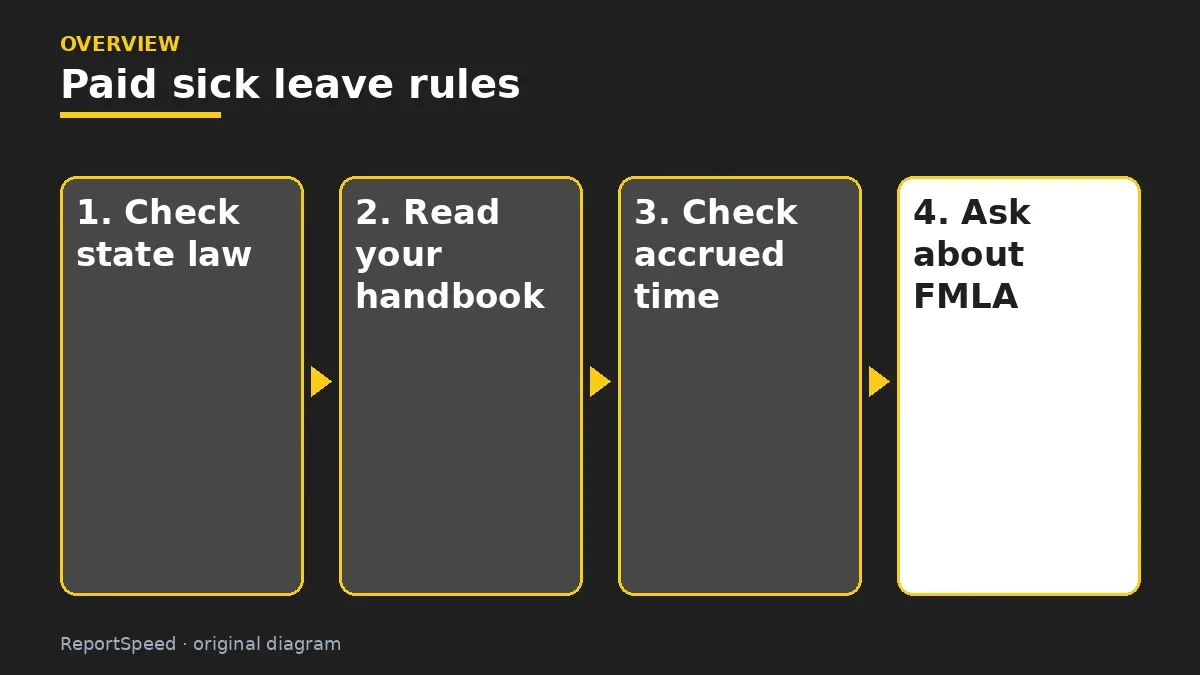
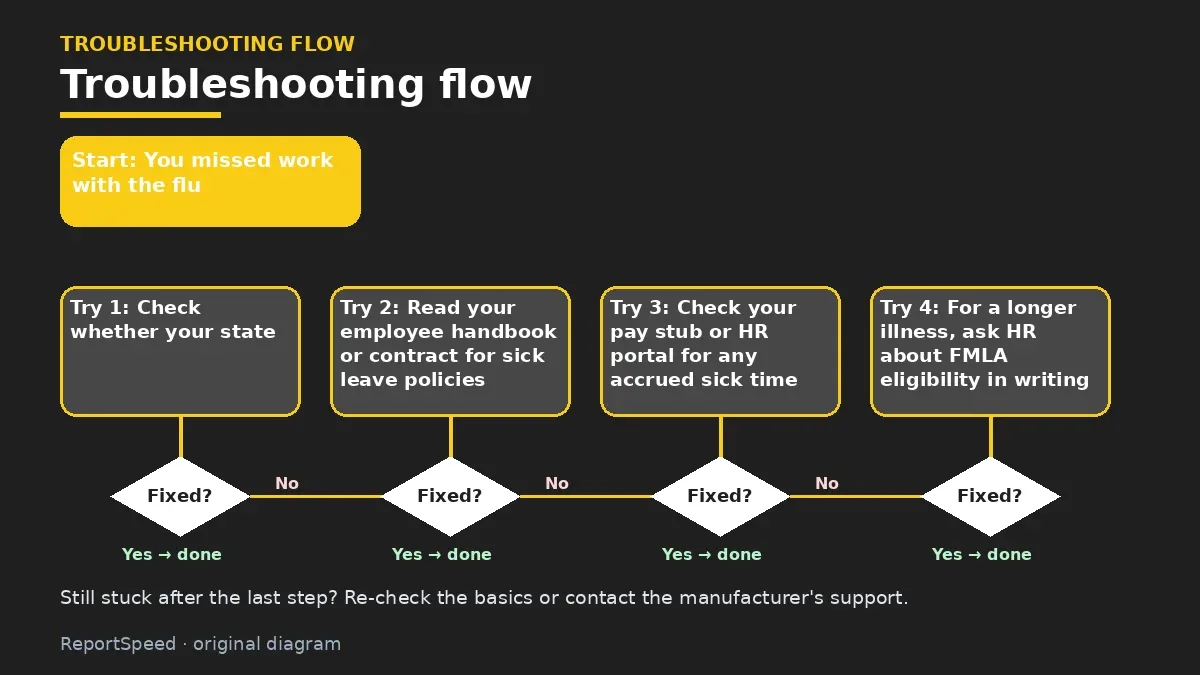
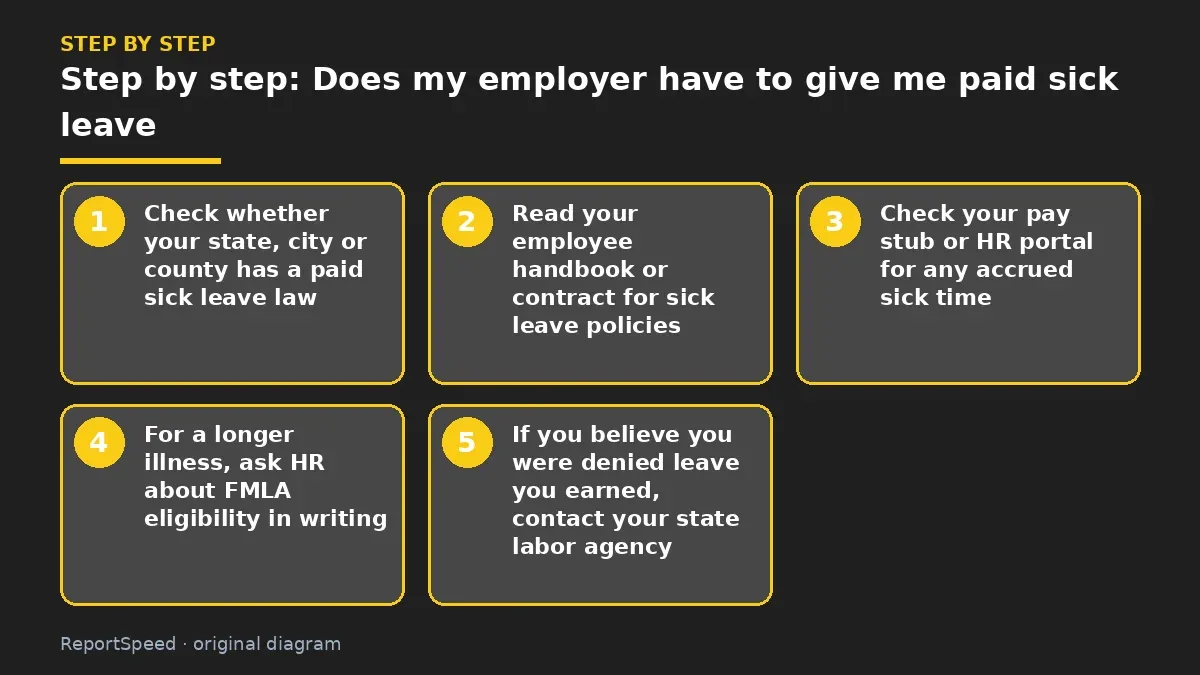
- Check whether your state, city or county has a paid sick leave law.
- Read your employee handbook or contract for sick leave policies.
- Check your pay stub or HR portal for any accrued sick time.
- For a longer illness, ask HR about FMLA eligibility in writing.
- If you believe you were denied leave you earned, contact your state labor agency.

Common mistakes:
- Relying only on federal law
- Not checking local city rules
- Missing the notice your employer's policy requires
- Assuming FMLA means paid leave
ReportSpeedMan tip: Some paid sick leave laws let you use sick time for medical appointments or to care for a sick child, not just your own illness. Read the specific law that covers you.
What I would actually do
I'd check my state and city sick leave laws, then my handbook and pay stub for accrued time, and ask HR in writing how my missed days were handled.
The trade-off people miss: even where paid sick leave isn't required, using unpaid time off for illness may still be protected under FMLA or state law. Losing pay isn't the same as losing protection.
Checking that it worked
You know which sick leave law covers you.
Quick FAQ
Can my employer ask for a doctor's note?
Often only after several consecutive days, depending on the law.
Does unused sick time get paid out?
Usually not, unless your policy says so.
Is FMLA paid?
No, though you may use accrued paid leave.
Wrap-up: Federal law doesn't require paid sick leave, but many states and cities do, and FMLA may protect your job for serious illness. Check local law and your employer's policy.
Wiki: Emergency Fund and Wage and Hour Basics (FLSA).
Does my employer have to give me paid sick leave: official sources I checked
Step-by-step photos

1. Before The problem 
2. Why it happens The cause 
3. The fix The fix 
4. After The result
⚡ Speed Summary
- Federal law doesn't require paid sick leave, but many states and cities do, and FMLA may protect your job for serious illness.
- Some paid sick leave laws let you use sick time for medical appointments or to care for a sick child, not just your own illness. Read the specific law that covers you.
- Accepting 'it isn't required' without checking your state or city law can mean giving up sick pay you've already earned.

Was this answer helpful?
Tap a star to rate this answer.
Related questions
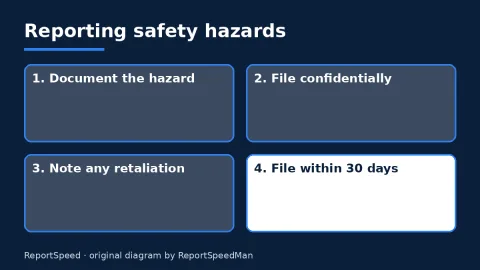
Can I be fired for reporting a safety problem at work? OSHA's 30-day rule
You can report hazards confidentially, and retaliation is illegal.
Rate itSolved

Pregnant at work: what accommodations can I ask for under the PWFA?
Under the PWFA, employers with 15+ workers must reasonably accommodate pregnancy limitations.
Rate itSolved
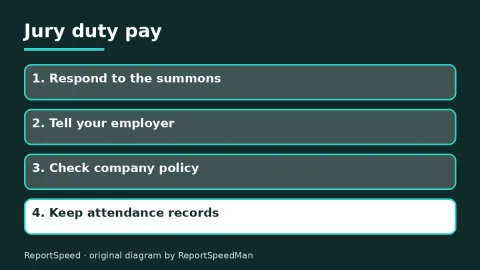
Do I get paid for jury duty, and can my employer fire me for going?
Federal jurors earn $50 a day; employer pay is optional, but firing you for federal jury service is illegal.
Rate itSolved
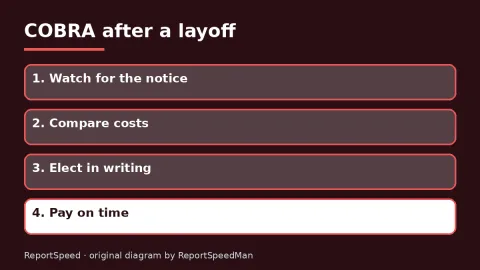
COBRA after a layoff: how long, how much and the deadlines
COBRA usually lasts 18 months, costs up to 102% of the premium, and gives you 60 days to elect and 45 days to pay.
Rate itSolved
Real experiences
No experiences yet. Be the first to share.