


I got a federal jury summons for next month. I work hourly at a warehouse, and I'm worried about losing pay or my manager holding it against me. Do I get paid for jury duty, does my employer have to pay me, and can they fire me for serving?
Do I get paid for jury duty, and can my employer fire me for going?
Concerns & risks
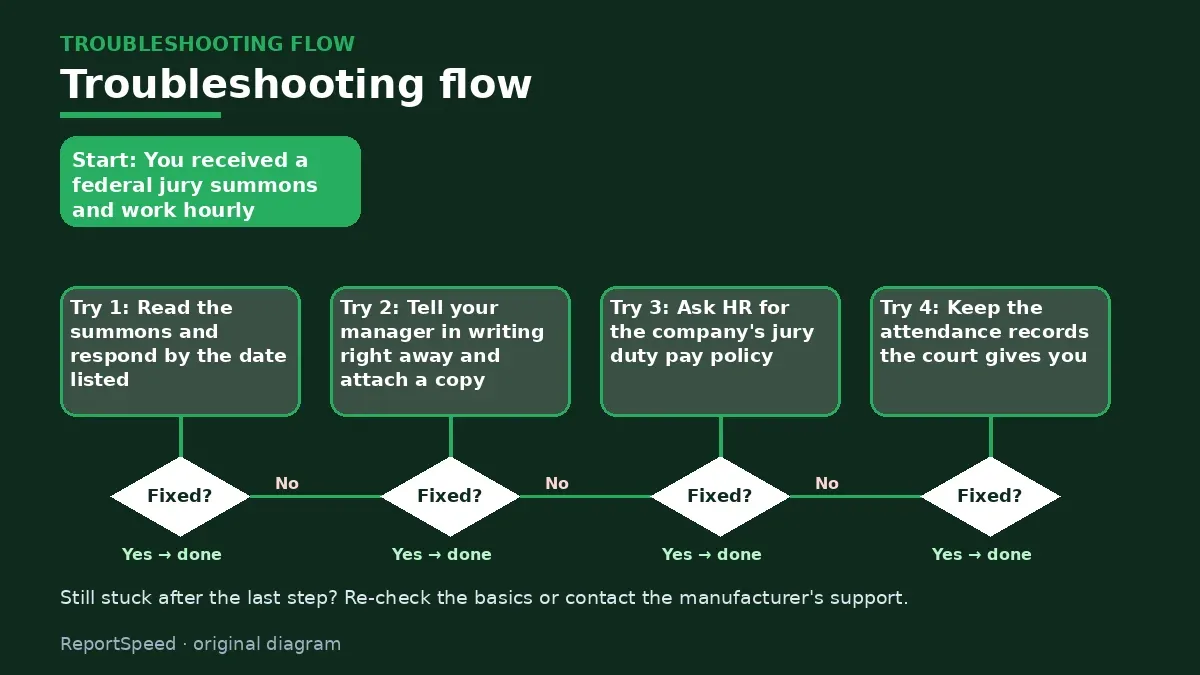
You received a federal jury summons and work hourly.
| Question | Federal court |
|---|---|
| Who pays jurors | The court, $50 a day |
| Employer pay required? | No, federal law |
| Firing allowed? | No, for permanent employees |
| State court summons | State rules apply |
| Federal employees | Regular salary |
| Overnight stay | Meals and lodging allowance |

Causes & evidence
The U.S. Courts explain that federal jurors are paid $50 for each day of service. Trial jurors may receive up to $60 a day after serving 10 days if the judge orders it, and grand jurors after 45 days. Jurors can also be reimbursed for reasonable travel and, in some courts, parking, plus meals and lodging if an overnight stay is required. Federal employees receive their regular salary instead of the fee. On the employer side, the Jury Selection and Service Act forbids any employer from firing, intimidating or coercing a permanent employee because of federal jury service. However, employers may continue your salary during jury service but federal law doesn't require it, so pay depends on company policy. State courts set their own juror pay and some states require employers to pay for a few days, so a state summons follows state law.
Edge cases: part-time or temporary employees may not be covered by the federal job protection, which applies to permanent employees. Self-employed jurors can ask the court about hardship. Some states require employers to pay for a few days.
Skipping the summons to avoid lost wages is the expensive move; ignoring a jury summons can bring court penalties, and the job protection only helps if you serve.
What to do

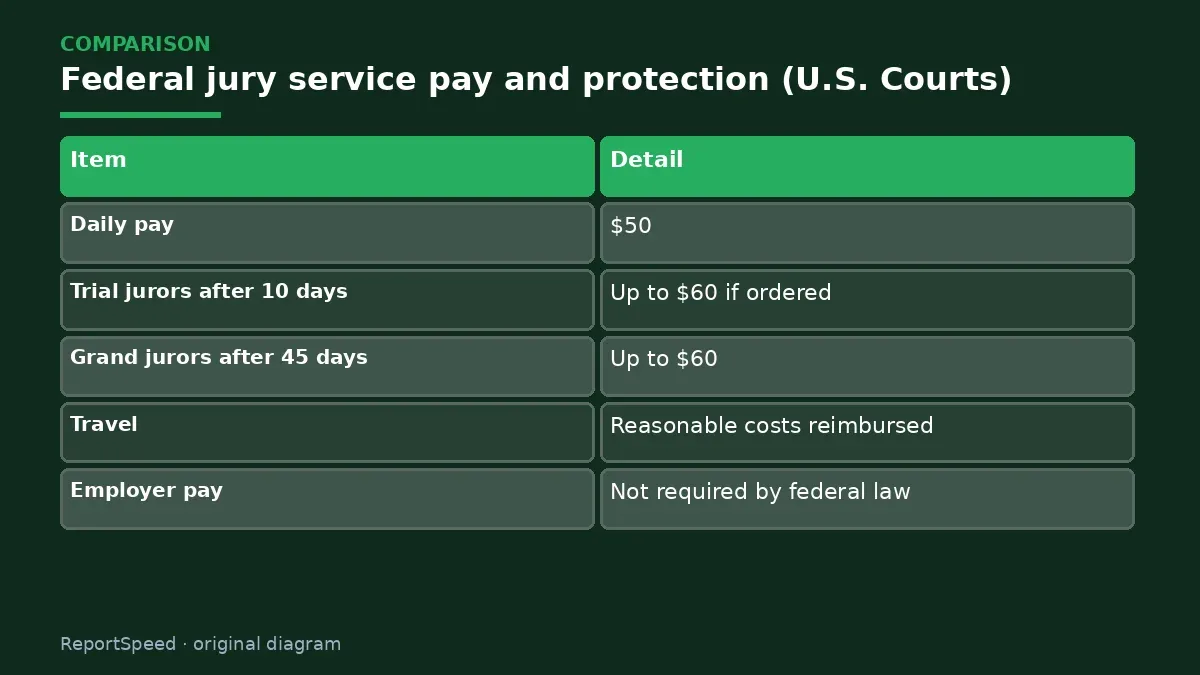
| Item | Detail |
|---|---|
| Daily pay | $50 |
| Trial jurors after 10 days | Up to $60 if ordered |
| Grand jurors after 45 days | Up to $60 |
| Travel | Reasonable costs reimbursed |
| Employer pay | Not required by federal law |
| Firing for service | Forbidden |
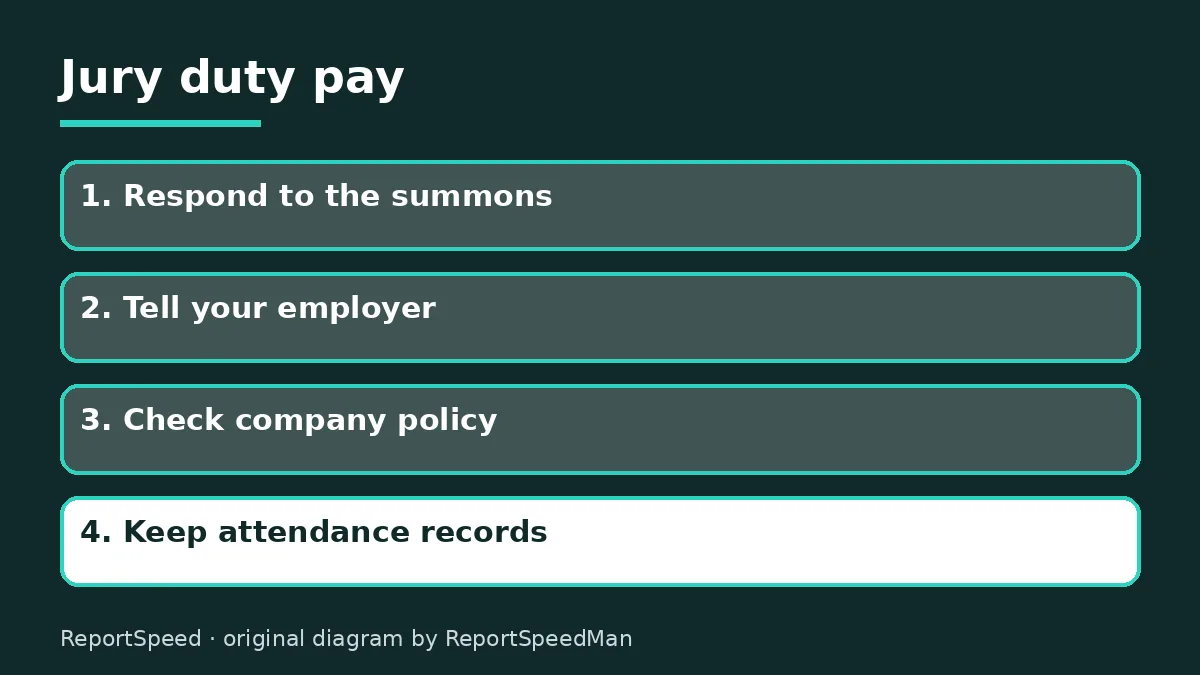
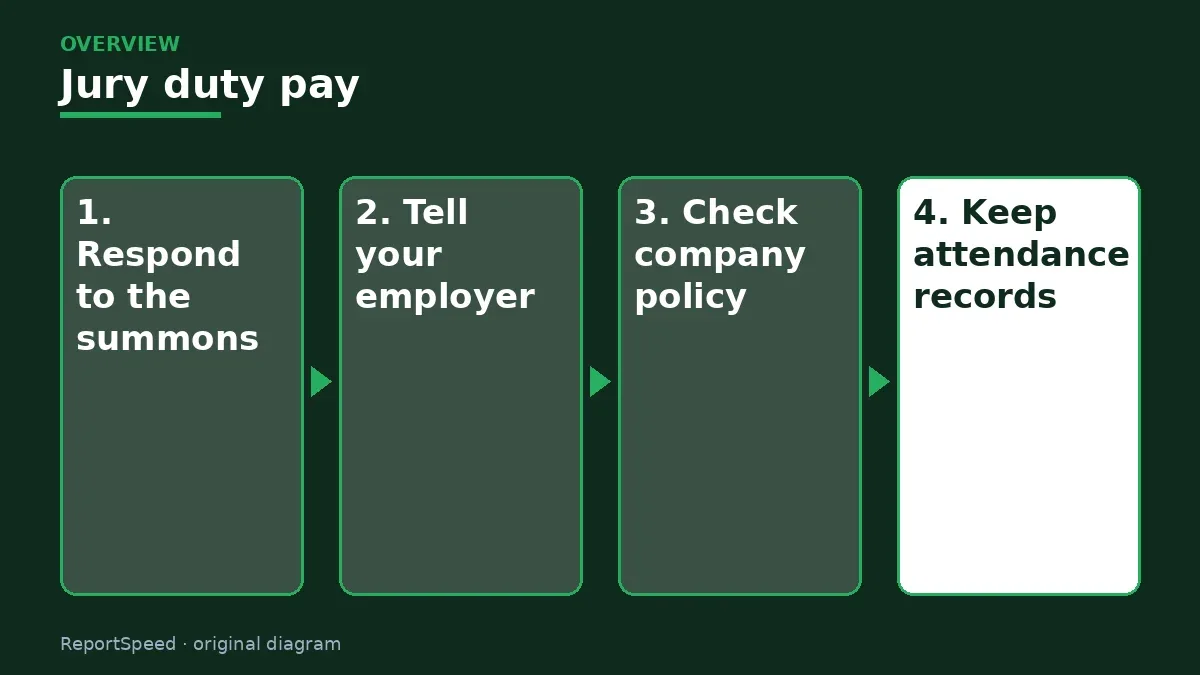
- Read the summons and respond by the date listed.
- Tell your manager in writing right away and attach a copy.
- Ask HR for the company's jury duty pay policy.
- Keep the attendance records the court gives you.
- Submit mileage and parking for reimbursement as instructed.
- If your employer threatens or disciplines you, contact the court clerk's office about your rights.
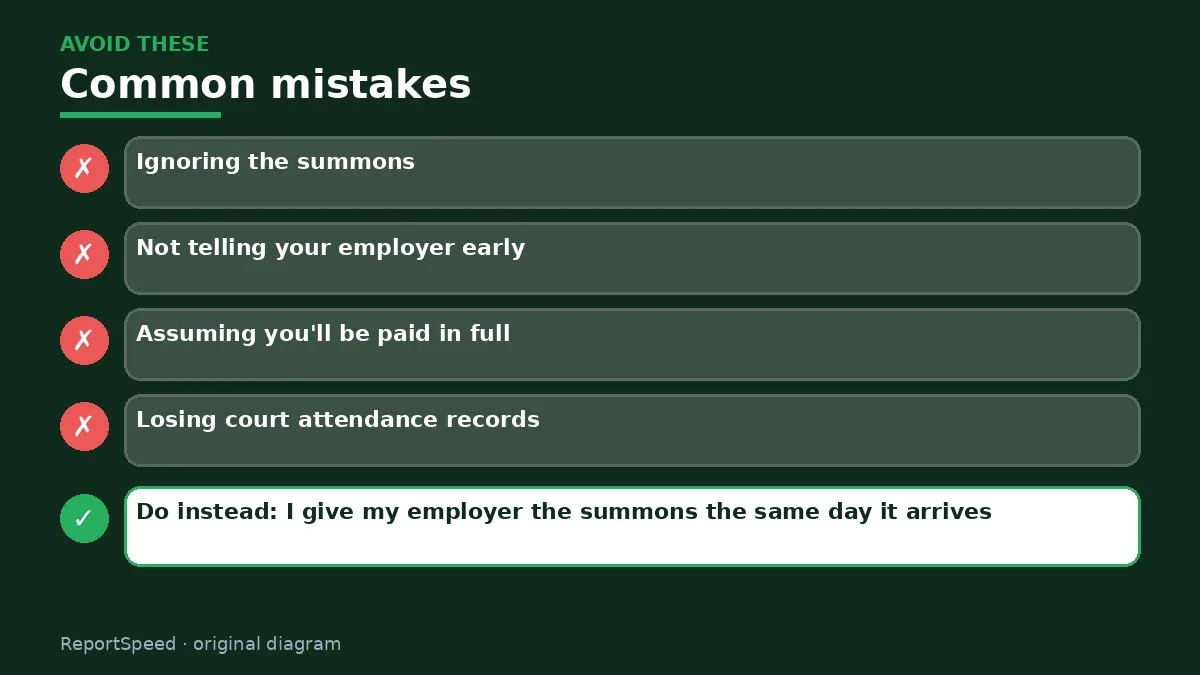
Common mistakes:
- Ignoring the summons
- Not telling your employer early
- Assuming you'll be paid in full
- Losing court attendance records
ReportSpeedMan tip: I give my employer the summons the same day it arrives. Early notice makes scheduling easier and leaves a paper trail.
What I would actually do
I'd hand my manager the summons that day, ask HR for the pay policy in writing, and track my court days for reimbursement.
The trade-off people miss: lost wages are real for hourly workers, but skipping a summons carries legal risk; if hardship is serious, ask the court about rescheduling.
How you can tell it worked
Your employer has the summons and you know the pay policy.
Quick FAQ
How much do federal jurors earn?
$50 a day.
Must my employer pay me?
Not under federal law.
Can I be fired?
Not for federal jury service as a permanent employee.
Wrap-up: Federal jurors earn $50 a day; employer pay is optional, but firing you for federal jury service is illegal. State summonses follow state rules.
Wiki: Wage and Hour Basics (FLSA) and Payment App and Money Scams.
Do I get paid for jury duty, and can my employer fire me for going: official sources I checked
Step-by-step photos
1. Before The problem 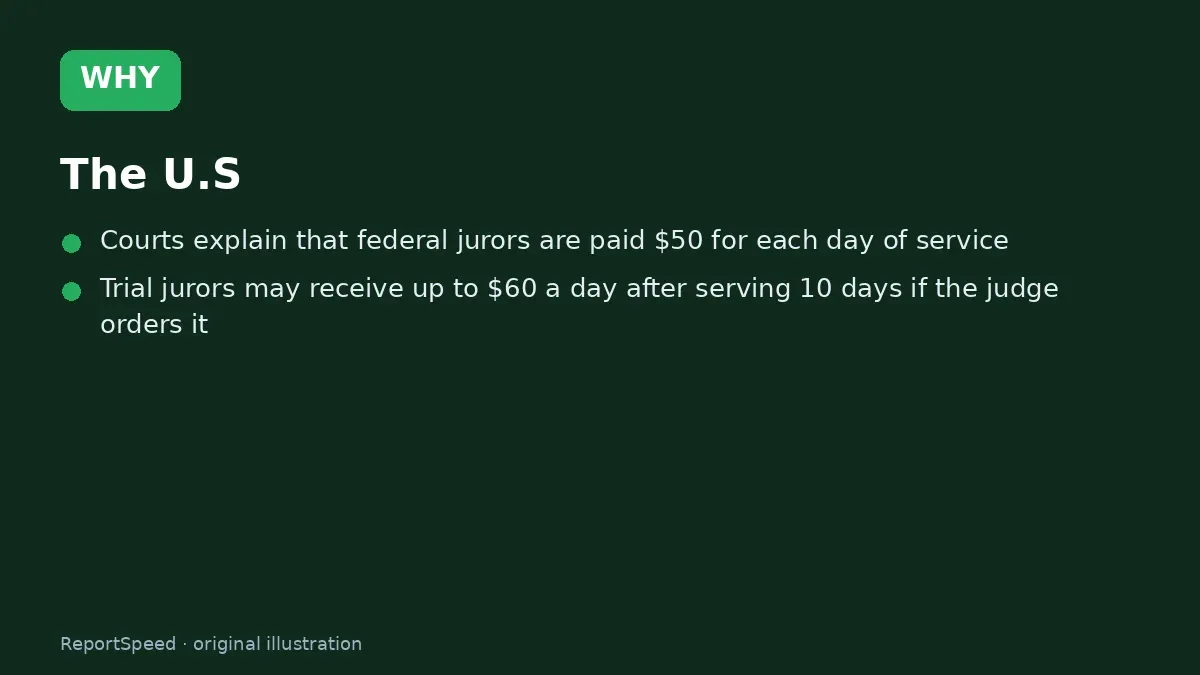
2. Why it happens The cause 
3. The fix The fix 
4. After The result
⚡ Speed Summary
- Federal jurors earn $50 a day; employer pay is optional, but firing you for federal jury service is illegal.
- I give my employer the summons the same day it arrives. Early notice makes scheduling easier and leaves a paper trail.
- Skipping the summons to avoid lost wages is the expensive move; ignoring a jury summons can bring court penalties, and the job protection only helps if you serve.

Was this answer helpful?
Tap a star to rate this answer.
Related questions
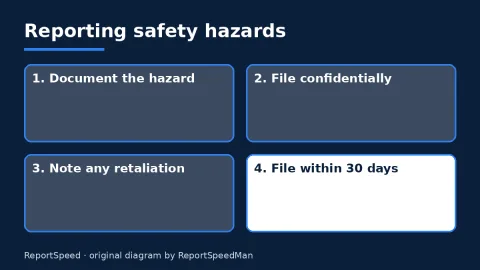
Can I be fired for reporting a safety problem at work? OSHA's 30-day rule
You can report hazards confidentially, and retaliation is illegal.
Rate itSolved

Pregnant at work: what accommodations can I ask for under the PWFA?
Under the PWFA, employers with 15+ workers must reasonably accommodate pregnancy limitations.
Rate itSolved
COBRA after a layoff: how long, how much and the deadlines
COBRA usually lasts 18 months, costs up to 102% of the premium, and gives you 60 days to elect and 45 days to pay.
Rate itSolved
Can my employer stop me from discussing my pay with coworkers?
Most private-sector workers can legally discuss pay.
Rate itSolved
Real experiences
No experiences yet. Be the first to share.