


My closet has a box of tax returns, W-2s, receipts and bank statements going back fifteen years. I want to shred most of it, but I'm nervous about tossing something the IRS could ask for later. How long should I keep tax records, which papers matter longest, and is there anything I should never throw away?
How long should I keep tax records? The IRS 3-, 6- and 7-year rules
Concerns & risks
You have fifteen years of returns, wage forms, receipts and statements and want to shred safely.
| Document | Typical keep time |
|---|---|
| Filed tax returns | Keep copies long term |
| W-2s and 1099s | Until the return's window ends |
| Deduction receipts | Until the return's window ends |
| Home purchase and improvement records | Until the sale year's window ends |
| Brokerage cost basis | Until the sale year's window ends |
| Household employee payroll | At least 4 years |

Causes & evidence
The IRS ties record keeping to the period of limitations, the window in which you can amend a return to claim a refund or the IRS can assess more tax. Its guidance lists the main windows. Keep records for 3 years in the ordinary case. If you file a claim for credit or refund after filing, keep them 3 years from filing or 2 years from paying the tax, whichever is later. Keep them 7 years if you claim a loss from worthless securities or a bad debt deduction, and 6 years if you leave out income that is more than 25% of the gross income shown on the return. If you never filed, or filed a fraudulent return, there is no end date. Employment tax records for people with household employees or a business are kept at least 4 years. A return filed early is treated as filed on the due date, so the clock starts in mid-April, not the day you hit submit. Property records are their own category: keep them until the limitation period runs out for the year you sell the property, because they prove your basis.
Edge cases: state tax agencies can have longer windows than the IRS. If you amended a return, the clock may restart for that claim. Records for retirement account basis, like nondeductible IRA contributions on Form 8606, matter until all the money is withdrawn.
Throwing out home-improvement receipts or brokerage purchase records too early is the costly error; they set your basis and you need them the year you sell, which may be decades away.
What to do
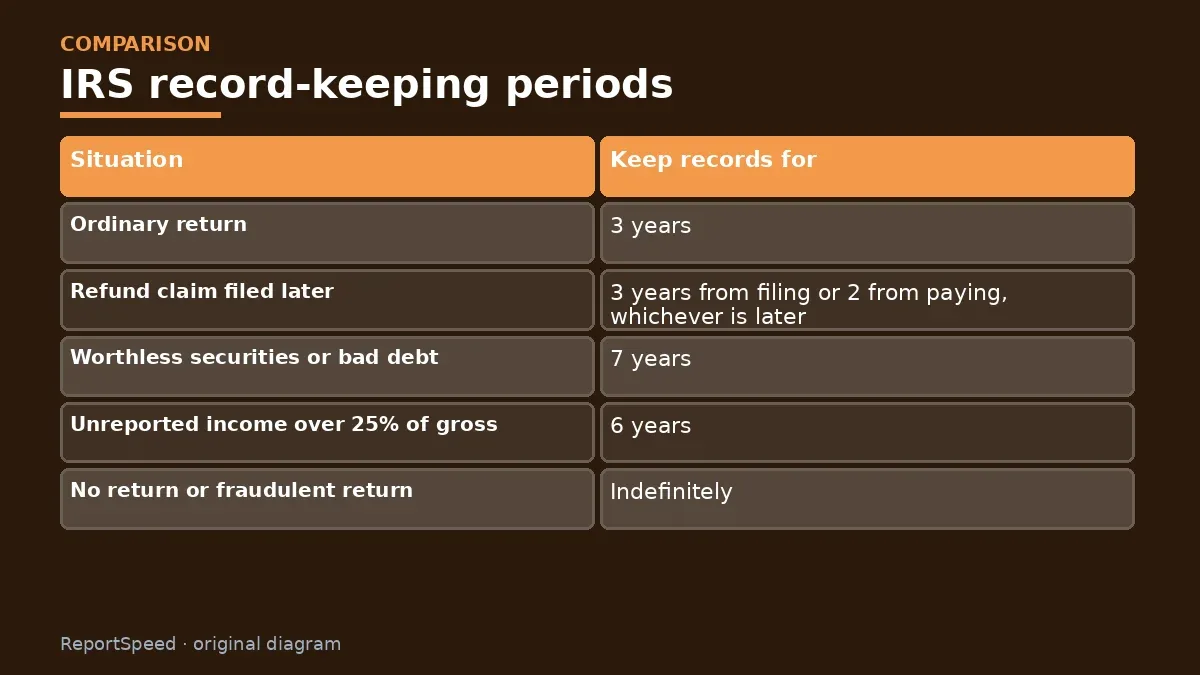
| Situation | Keep records for |
|---|---|
| Ordinary return | 3 years |
| Refund claim filed later | 3 years from filing or 2 from paying, whichever is later |
| Worthless securities or bad debt | 7 years |
| Unreported income over 25% of gross | 6 years |
| No return or fraudulent return | Indefinitely |
| Employment tax records | At least 4 years |
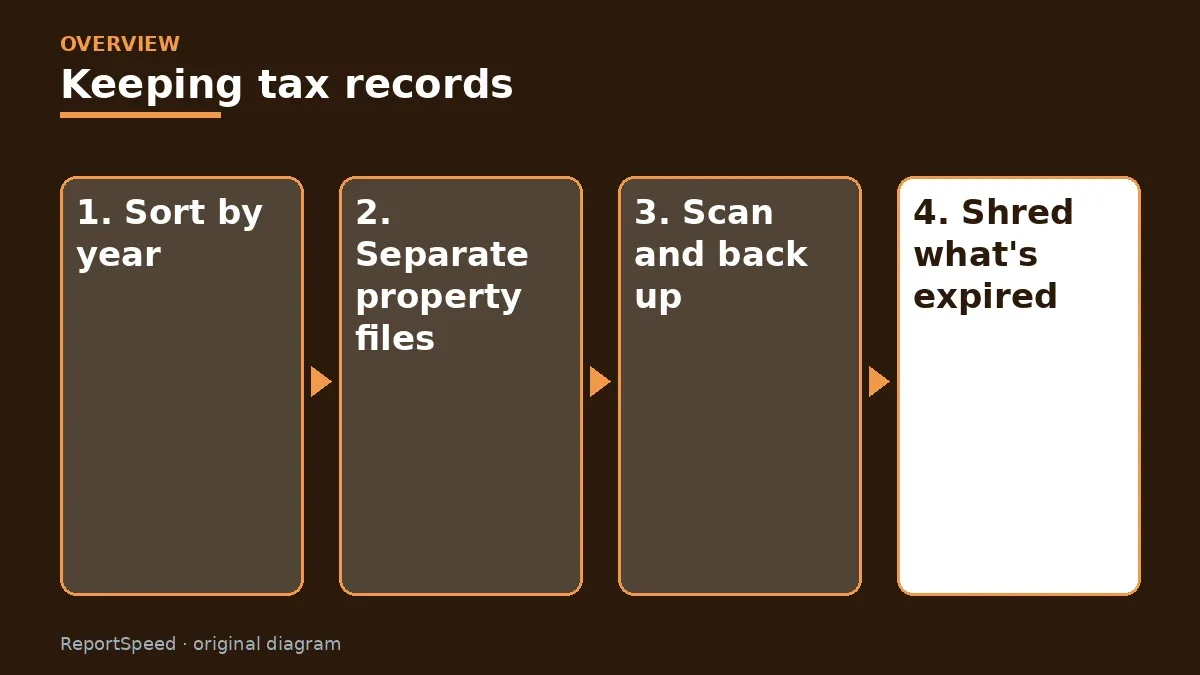
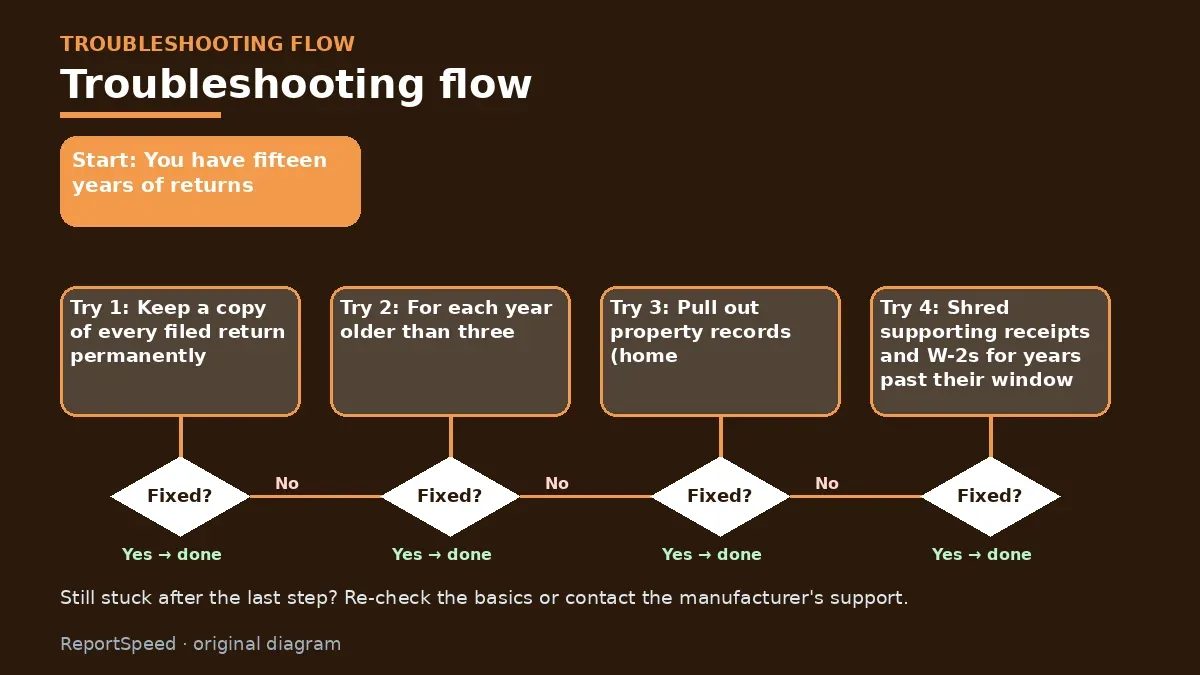
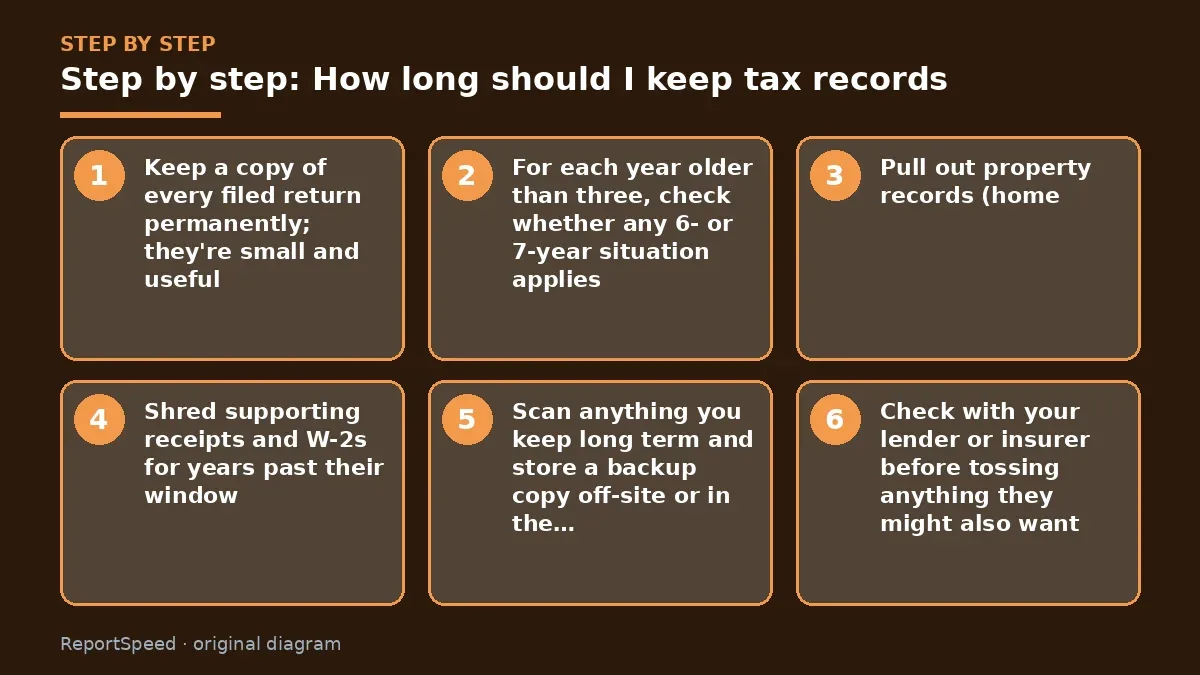
- Keep a copy of every filed return permanently; they're small and useful.
- For each year older than three, check whether any 6- or 7-year situation applies.
- Pull out property records (home, investments, rentals) and file them separately by asset.
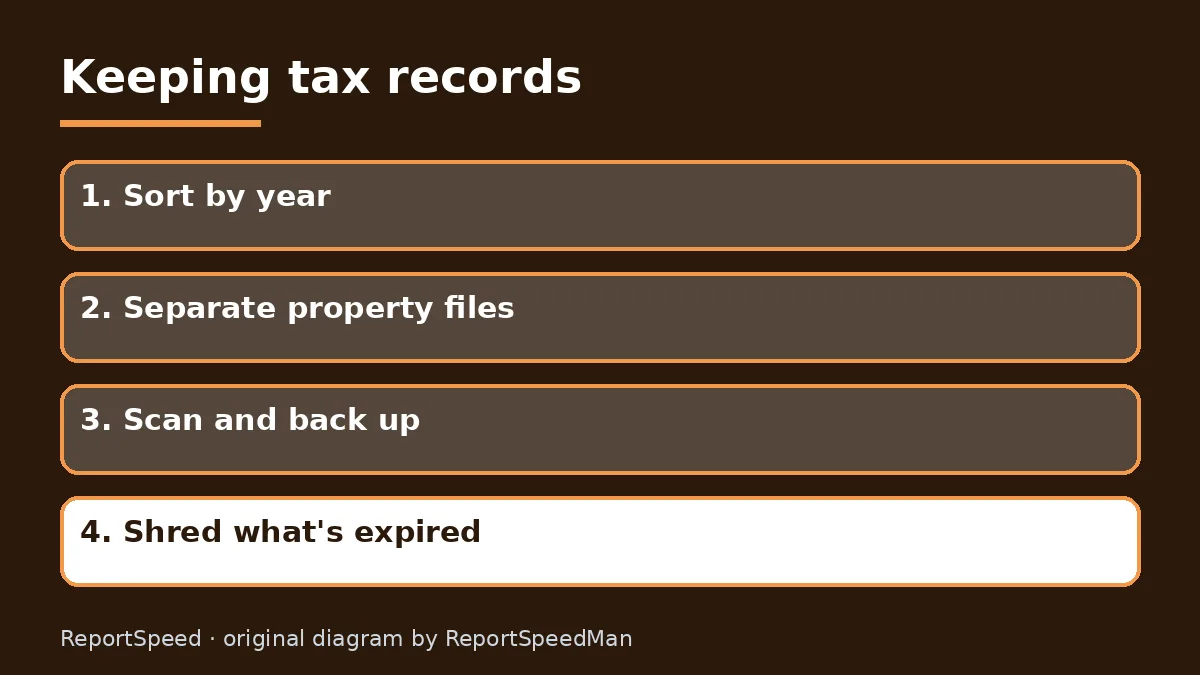
- Shred supporting receipts and W-2s for years past their window.
- Scan anything you keep long term and store a backup copy off-site or in the cloud.
- Check with your lender or insurer before tossing anything they might also want.

Common mistakes:
- Shredding the returns themselves
- Mixing property basis records in with yearly receipts
- Starting the clock on the filing date instead of the due date
- Forgetting state tax rules may differ
ReportSpeedMan tip: I label one folder per property and one per tax year. When a year ages out, the year folder goes to the shredder and the property folders stay put.
What I would actually do
I'd keep every return as a scanned PDF forever, keep supporting papers for the last three tax years plus any six- or seven-year cases, and move property records into per-asset folders I never purge until a sale.
The trade-off people miss: shredding aggressively frees space but can cost you if the IRS asks or if you sell a home decades later. Scanning keeps the proof without the boxes.
Did it work? How to check
Each folder has a clear end date and property records are filed apart.
Quick FAQ
Do I need to keep my returns forever?
Keeping copies long term is wise.
What about bank statements?
Keep those supporting tax items for the return's window.
Can I keep digital copies?
Yes, if they're clear and complete.
Wrap-up: Three years covers most returns; six, seven or forever apply in specific cases. Keep returns and property basis records far longer than receipts.
Wiki: Tax Withholding and Form W-4 and Identity Theft Recovery Steps.
How long should I keep tax records: where the facts come from
Step-by-step photos
1. Before The problem 
2. Why it happens The cause 
3. The fix The fix 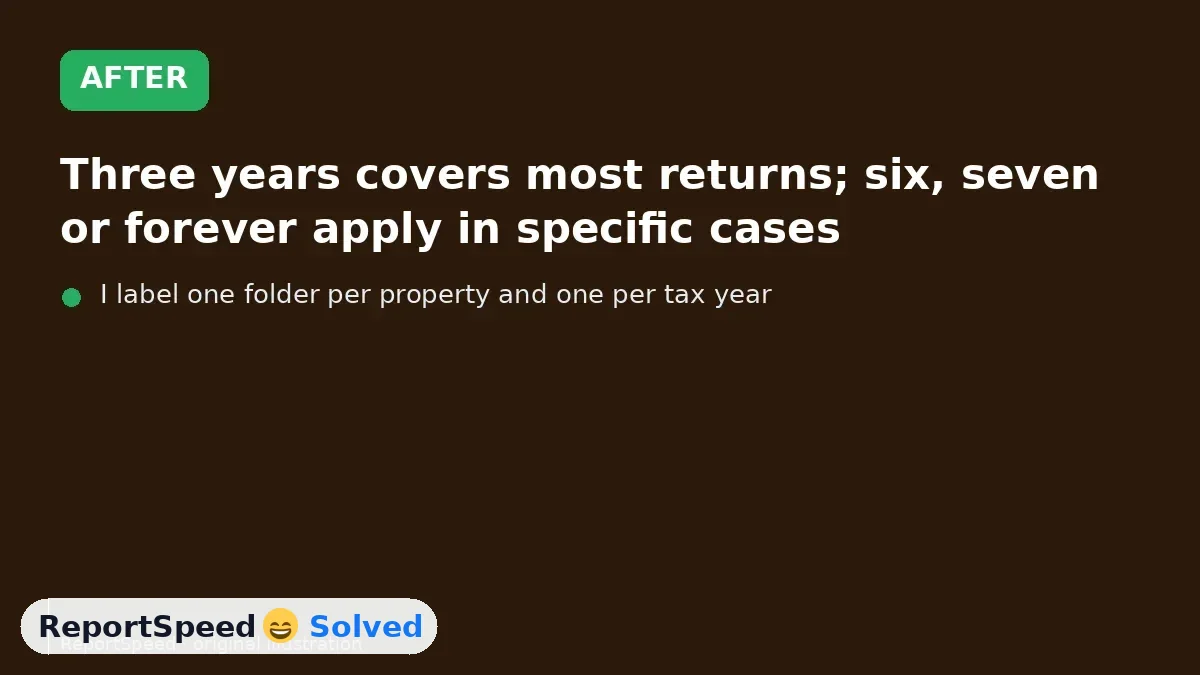
4. After The result
⚡ Speed Summary
- Three years covers most returns; six, seven or forever apply in specific cases.
- I label one folder per property and one per tax year. When a year ages out, the year folder goes to the shredder and the property folders stay put.
- Throwing out home-improvement receipts or brokerage purchase records too early is the costly error; they set your basis and you need them the year you sell, which may be decades away.

Was this answer helpful?
Tap a star to rate this answer.
Related questions
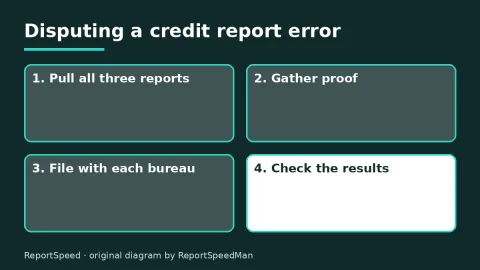
Found an error on my credit report? How to dispute it step by step
Dispute with each bureau and the furnisher, include proof, and expect results in about 30 days.
Rate itSolved
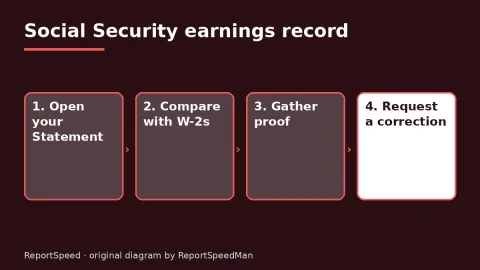
How do I check my Social Security earnings record and fix a mistake?
Check your Statement every year, match it to your W-2s, and correct gaps with proof before the usual window closes.
Rate itSolved
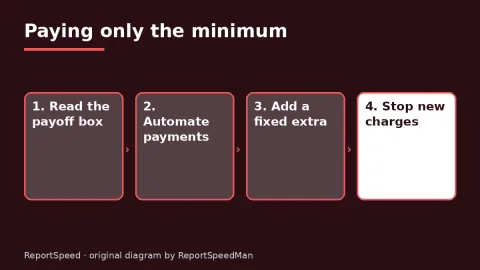
What happens if I only pay the minimum on my credit card?
Minimum payments keep you current but stretch the debt for years.
Rate itSolved
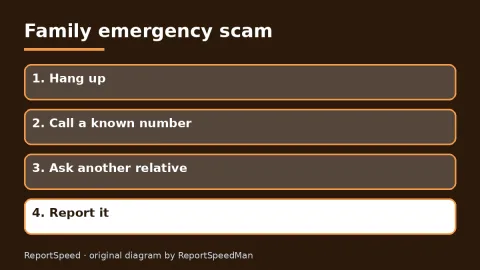
A call says my grandson is in jail: is it a family emergency scam?
Hang up, call your relative on a known number, check with family, and never pay by gift card, crypto, wire or courier because of a panicked call.
Rate itSolved
Real experiences
No experiences yet. Be the first to share.