


At dinner last week, my father-in-law started coughing hard on a piece of steak. He cleared it, but everyone froze and nobody knew what to do. I want to be ready next time. How do I help someone who is choking, when do I step in, and what changes if the person is pregnant or passes out?
How to help someone who is choking: back blows and abdominal thrusts
Concerns & risks
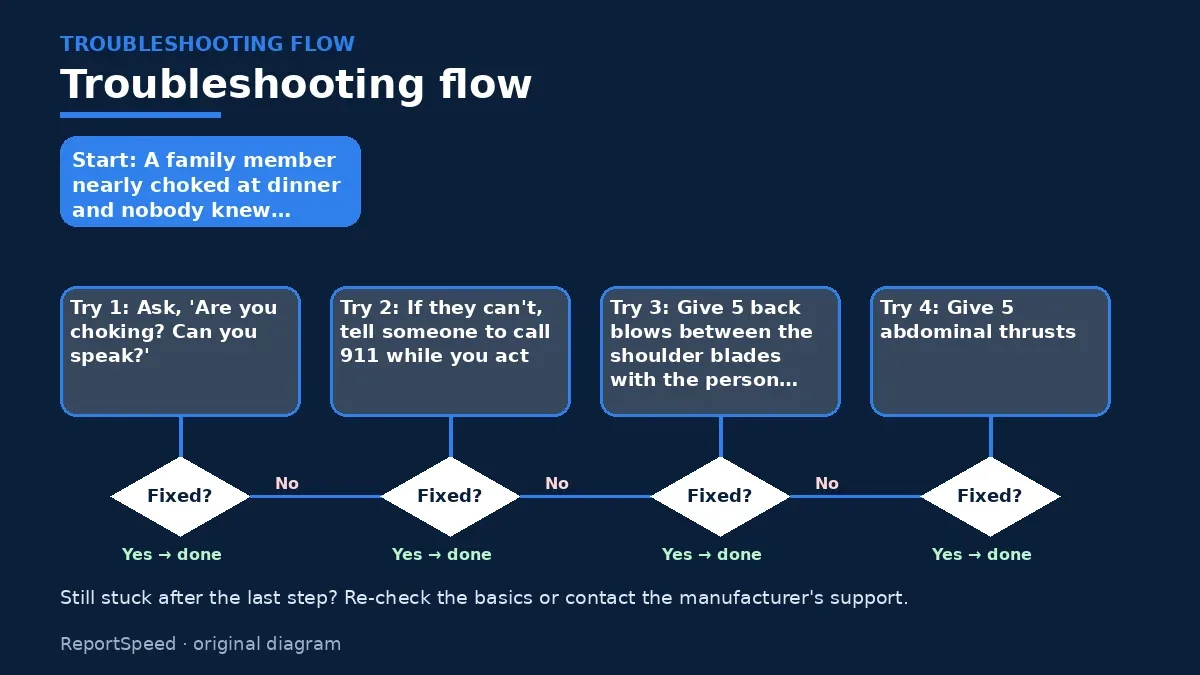
A family member nearly choked at dinner and nobody knew what to do.
| Person | Technique |
|---|---|
| Adult or child over 1 | Back blows plus abdominal thrusts |
| Pregnant person | Back blows plus chest thrusts |
| Obese person | Back blows plus chest thrusts |
| Infant under 1 | Different infant technique |
| Unconscious | CPR and call 911 |
| Choking alone | Abdominal thrusts on yourself |

Causes & evidence
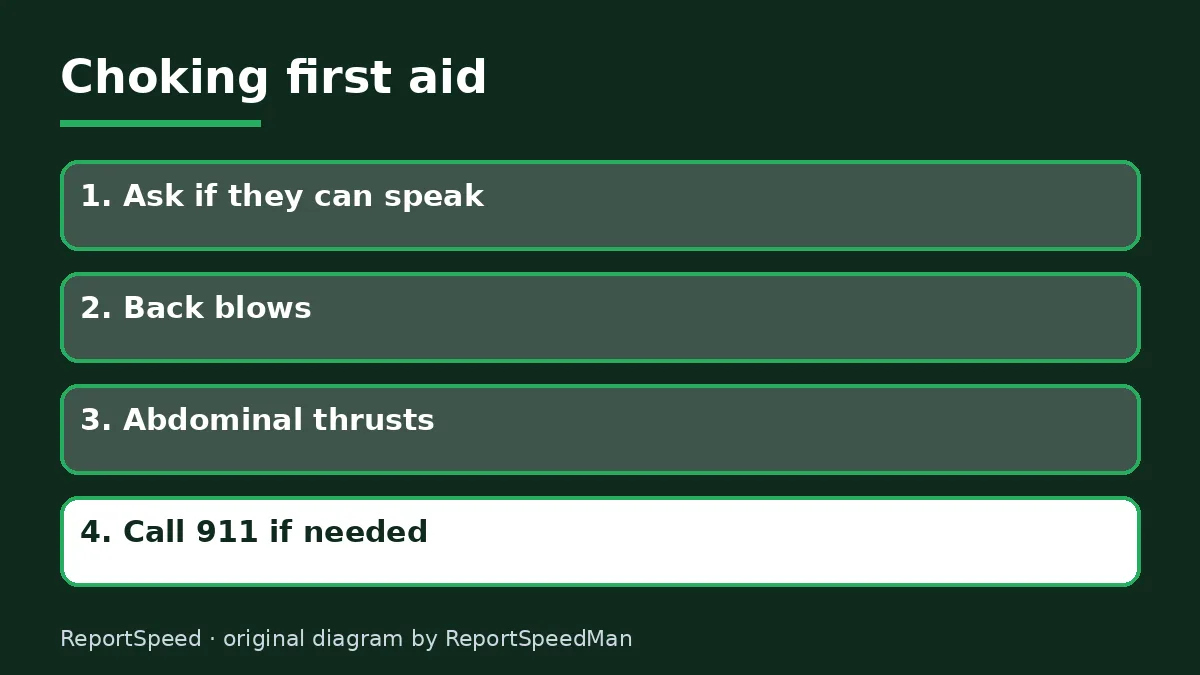
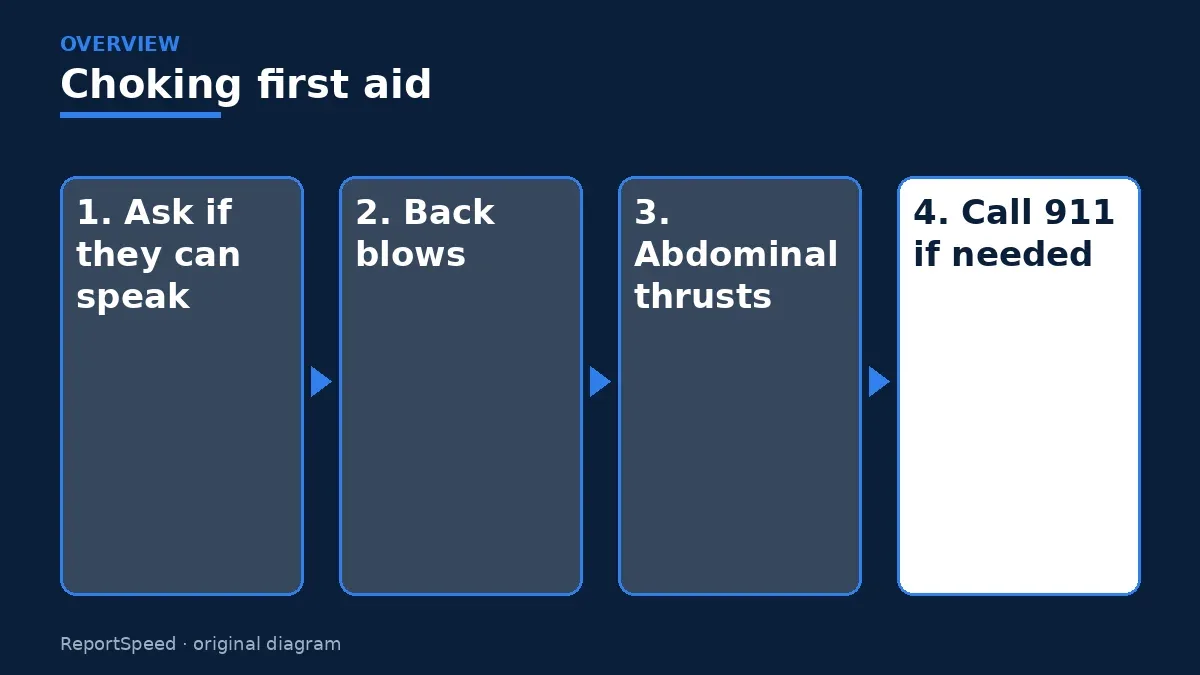
MedlinePlus, from the National Library of Medicine, explains that choking happens when food or an object blocks the throat or windpipe, and without oxygen brain damage can begin in as little as 4 to 6 minutes. Danger signs include being unable to speak, difficulty breathing, noisy or high-pitched breathing, weak coughing, bluish skin and loss of consciousness. First ask, 'Are you choking? Can you speak?' If the person is coughing forcefully and can talk, don't interfere; a strong cough may clear it. If they can't speak or breathe, give repeated cycles of 5 back blows followed by 5 abdominal thrusts until the object comes out or the person becomes unconscious. For back blows, lean the person forward and strike firmly between the shoulder blades with the heel of your hand. For abdominal thrusts, stand behind them, make a fist just above the navel and well below the breastbone, grasp it with your other hand, and thrust quickly inward and upward. For pregnant or obese people, use chest thrusts instead. If the person loses consciousness, call 911 and begin CPR.
Edge cases: for infants under 1, the technique is different and abdominal thrusts aren't used. If you're alone and choking, you can perform abdominal thrusts on yourself or against a chair back. Anyone treated should get a medical exam afterward.
Slapping the back of someone who is still coughing forcefully, or reaching into their mouth blindly, can push the object deeper.
What to do
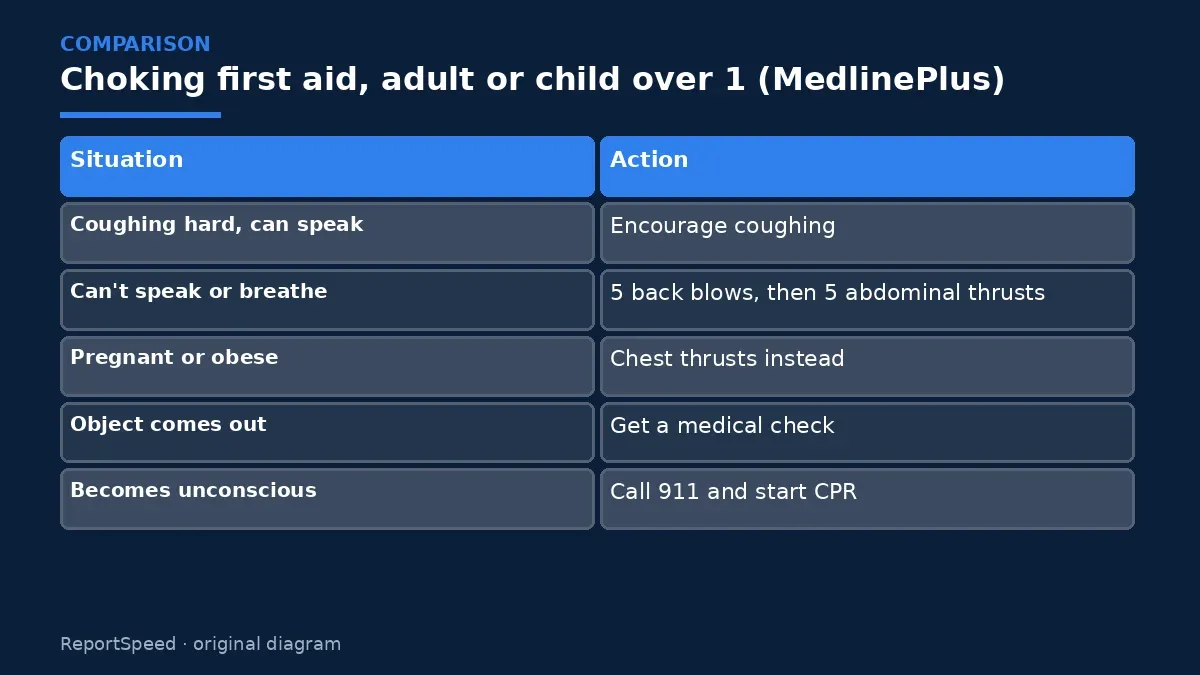
| Situation | Action |
|---|---|
| Coughing hard, can speak | Encourage coughing |
| Can't speak or breathe | 5 back blows, then 5 abdominal thrusts |
| Pregnant or obese | Chest thrusts instead |
| Object comes out | Get a medical check |
| Becomes unconscious | Call 911 and start CPR |
| Brain damage risk | As little as 4 to 6 minutes |
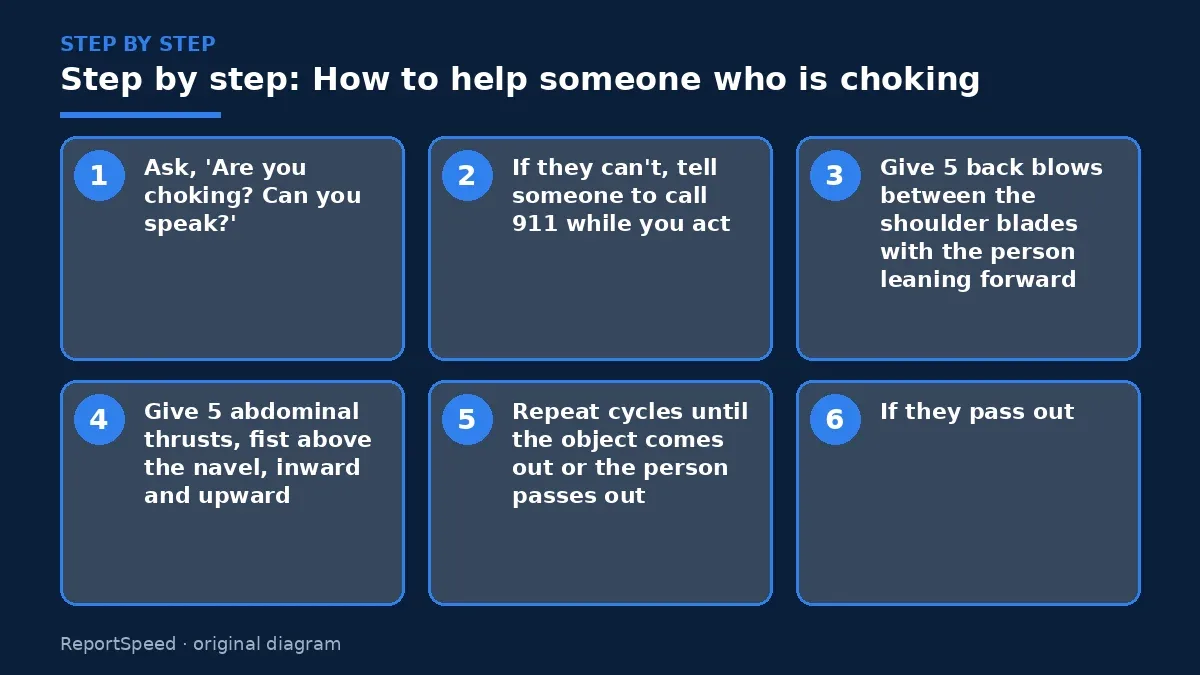
- Ask, 'Are you choking? Can you speak?'
- If they can't, tell someone to call 911 while you act.
- Give 5 back blows between the shoulder blades with the person leaning forward.
- Give 5 abdominal thrusts, fist above the navel, inward and upward.
- Repeat cycles until the object comes out or the person passes out.
- If they pass out, lower them to the floor, call 911 and start CPR, checking the mouth for a visible object.
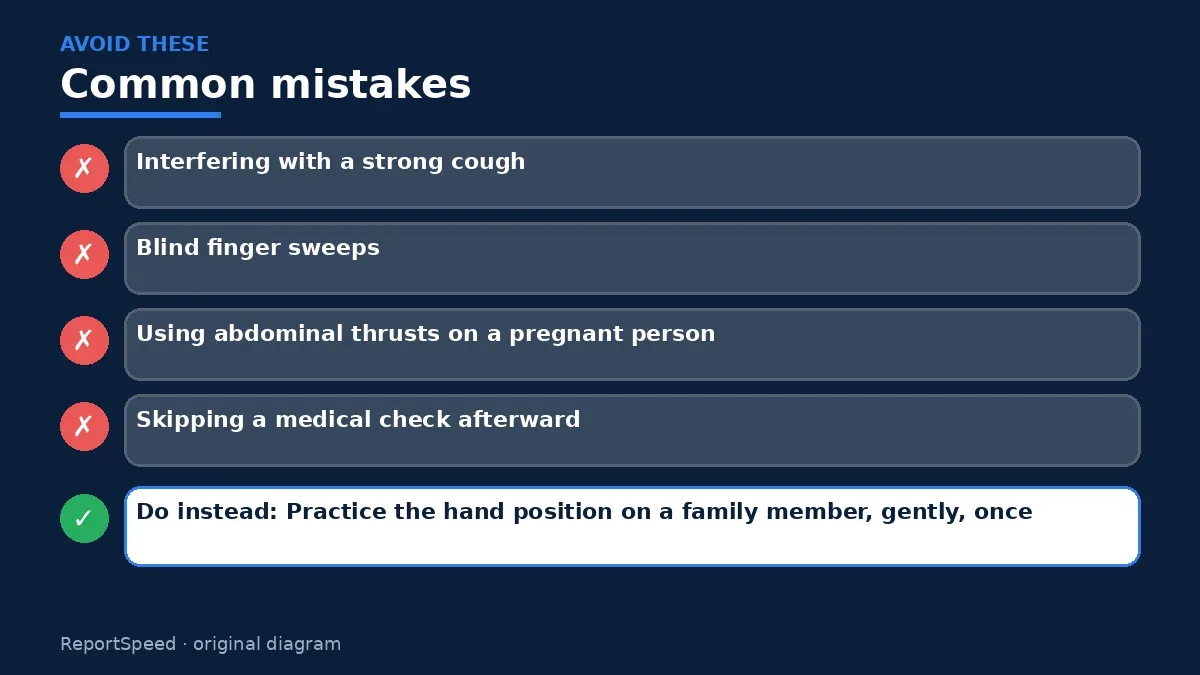
Common mistakes:
- Interfering with a strong cough
- Blind finger sweeps
- Using abdominal thrusts on a pregnant person
- Skipping a medical check afterward
ReportSpeedMan tip: Practice the hand position on a family member, gently, once. Muscle memory is what keeps you from freezing.
What I would actually do
I'd take a hands-on first aid class so the positions are familiar, and keep the steps in mind for family meals and restaurants.
The trade-off people miss: acting too early on someone who is coughing strongly can interfere, but hesitating once they can't speak wastes minutes.
Signs it worked
You can describe the steps without looking them up.
Quick FAQ
Should I do back blows first?
MedlinePlus describes 5 back blows then 5 thrusts.
What if they can still cough?
Let them keep coughing.
Do I need training?
A class helps, but knowing the steps matters most.
Wrap-up: Let a strong cough work. If they can't speak, alternate 5 back blows and 5 abdominal thrusts, and call 911 and start CPR if they pass out.
Wiki: Dehydration and Caregiver Stress.
How to help someone who is choking: primary sources
Step-by-step photos

1. Before The problem 
2. Why it happens The cause 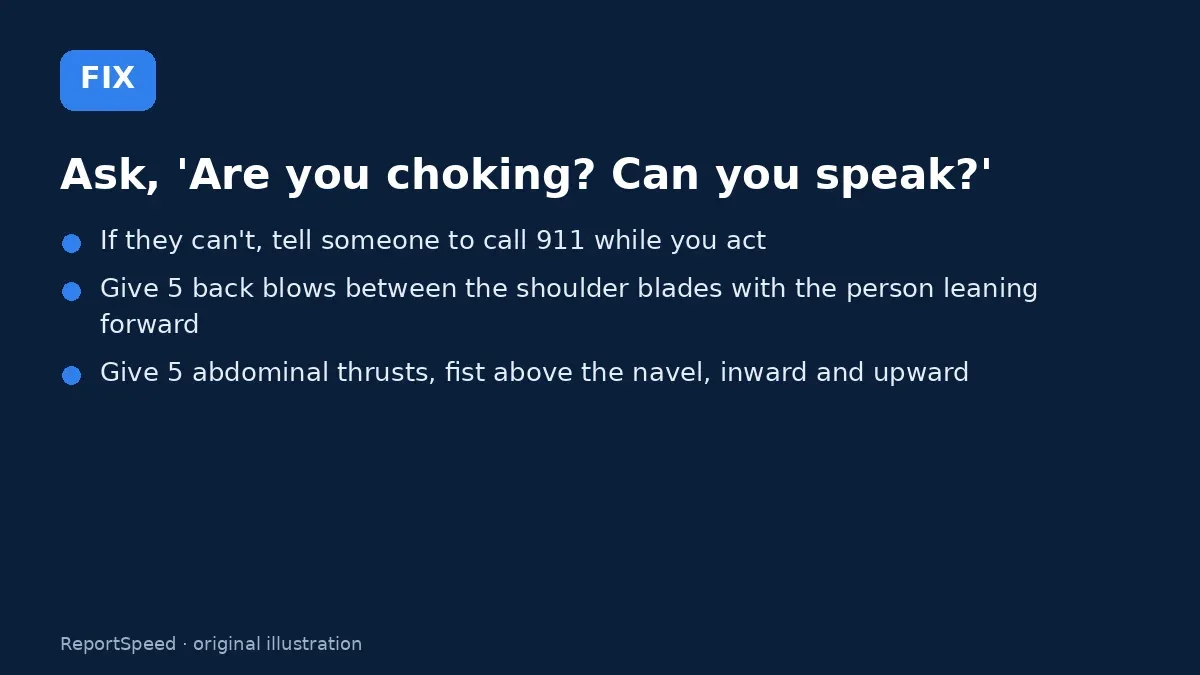
3. The fix The fix 
4. After The result
⚡ Speed Summary
- Let a strong cough work.
- Practice the hand position on a family member, gently, once. Muscle memory is what keeps you from freezing.
- Slapping the back of someone who is still coughing forcefully, or reaching into their mouth blindly, can push the object deeper.

Was this answer helpful?
Tap a star to rate this answer.
Related questions
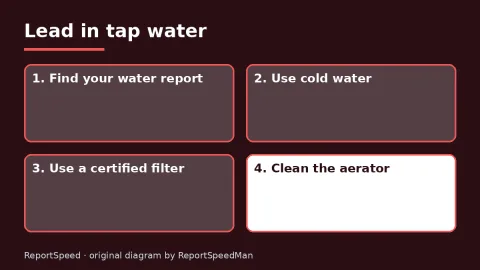
Is there lead in my tap water? How to check and lower your risk
Lead comes from plumbing, can't be seen, and isn't removed by boiling.
Rate itSolved
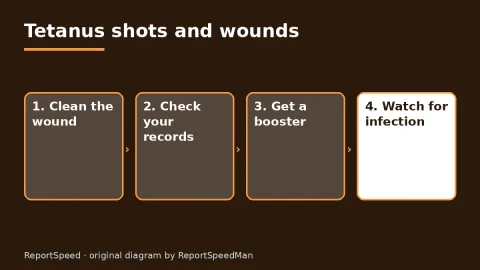
When do I need a tetanus shot? Booster timing and wounds
Boosters are every 10 years, or 5 years for dirty or puncture wounds.
Rate itSolved
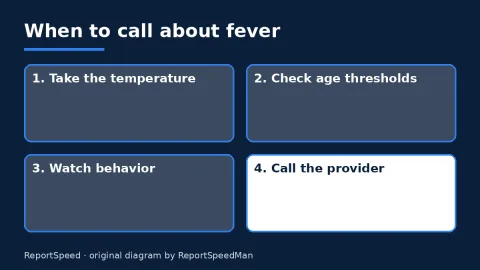
Fever: when to call the doctor for a child or adult
At 8 months, 102.2°F is the call-now line; your baby's 101.5°F means watch closely and call if it rises or warning signs appear.
Rate itSolved
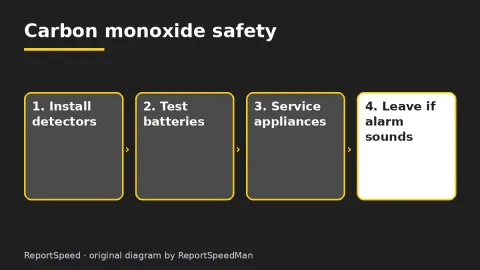
Carbon monoxide poisoning: symptoms and how to prevent it at home
Install detectors near bedrooms, test them twice a year, replace every five years, service appliances yearly, and leave immediately if the alarm sounds.
Rate itSolved
Real experiences
No experiences yet. Be the first to share.