


I'm four months pregnant and work on my feet at a retail store. I'm exhausted and need more water breaks and a stool to sit on sometimes. My manager seems annoyed. What accommodations can I ask for while pregnant, does the law protect me, and how should I make the request?
Pregnant at work: what accommodations can I ask for under the PWFA?
Concerns & risks
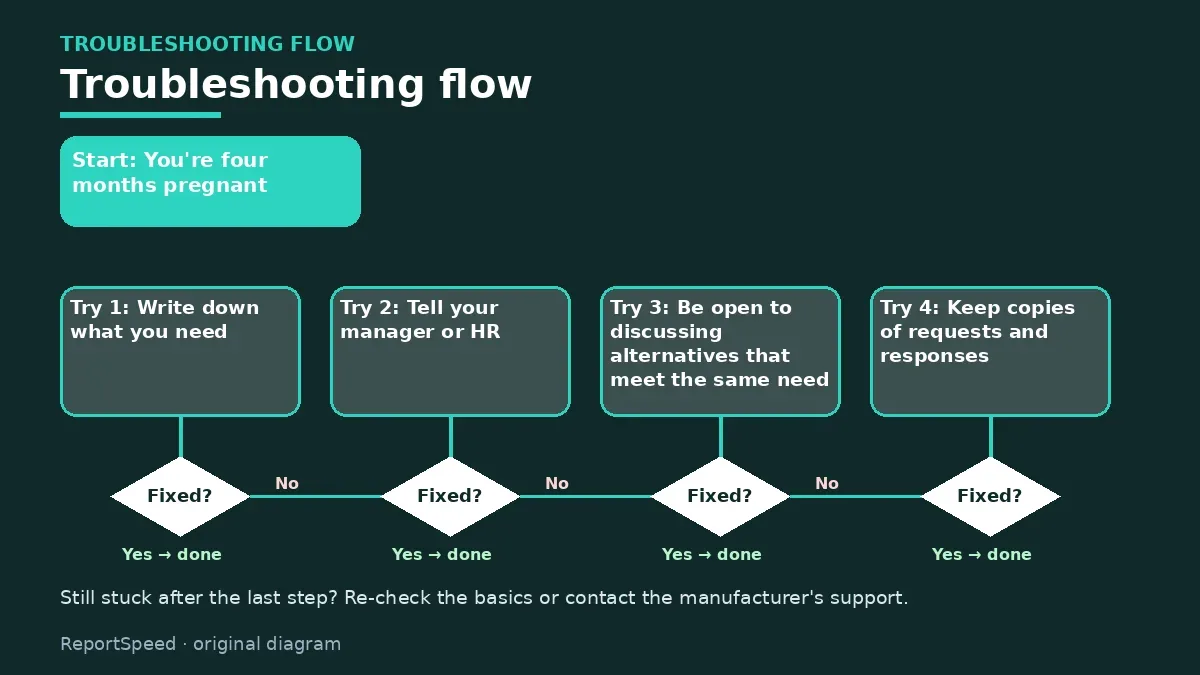
You're four months pregnant, work on your feet, and need more breaks and a place to sit.
| Need | Possible accommodation |
|---|---|
| Fatigue on your feet | Stool or chair |
| Hydration | Water bottle at station |
| Bathroom frequency | Extra breaks |
| Morning sickness | Later start time |
| Heavy lifting | Temporary task change |
| Recovery after birth | Leave |

Causes & evidence
The U.S. Equal Employment Opportunity Commission explains that the Pregnant Workers Fairness Act, in effect since June 27, 2023, applies to private and public employers with at least 15 employees. It requires them to provide reasonable accommodations for a worker's known limitations related to pregnancy, childbirth or related medical conditions, unless the accommodation would cause an undue hardship. Examples EEOC gives include the ability to sit or drink water, closer parking, flexible hours, extra breaks for rest or using the bathroom, and leave to recover from childbirth. Employers can't require you to accept an accommodation without discussing it with you, can't deny a job because of the need for one, can't force leave if another accommodation works, and can't retaliate for asking. The request doesn't need special words; telling a manager you need a change at work because of pregnancy is enough to start the conversation.
Edge cases: employers with fewer than 15 employees may be covered by state law. The PWFA covers limitations even if you're not disabled. A doctor's note can be requested only when reasonable, not for obvious needs like water breaks.
Waiting until you're struggling to ask is the trap; the law covers limitations as they come up, and an early request gives time to find a fit.
What to do
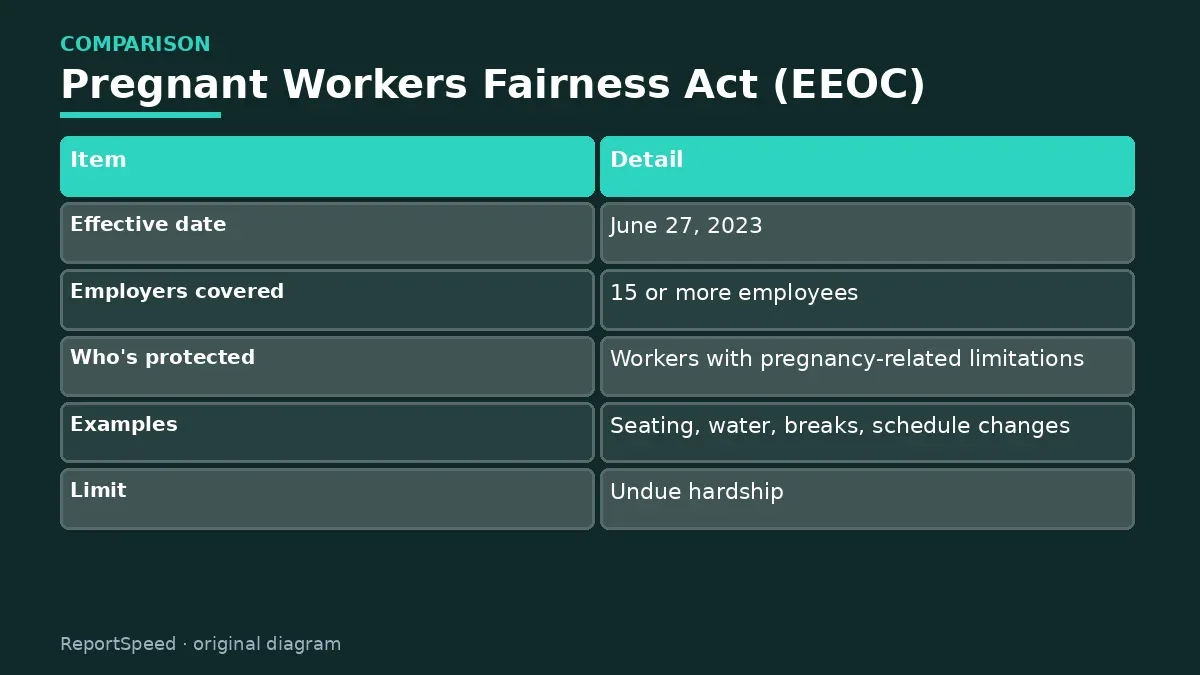
| Item | Detail |
|---|---|
| Effective date | June 27, 2023 |
| Employers covered | 15 or more employees |
| Who's protected | Workers with pregnancy-related limitations |
| Examples | Seating, water, breaks, schedule changes |
| Limit | Undue hardship |
| Retaliation | Prohibited |
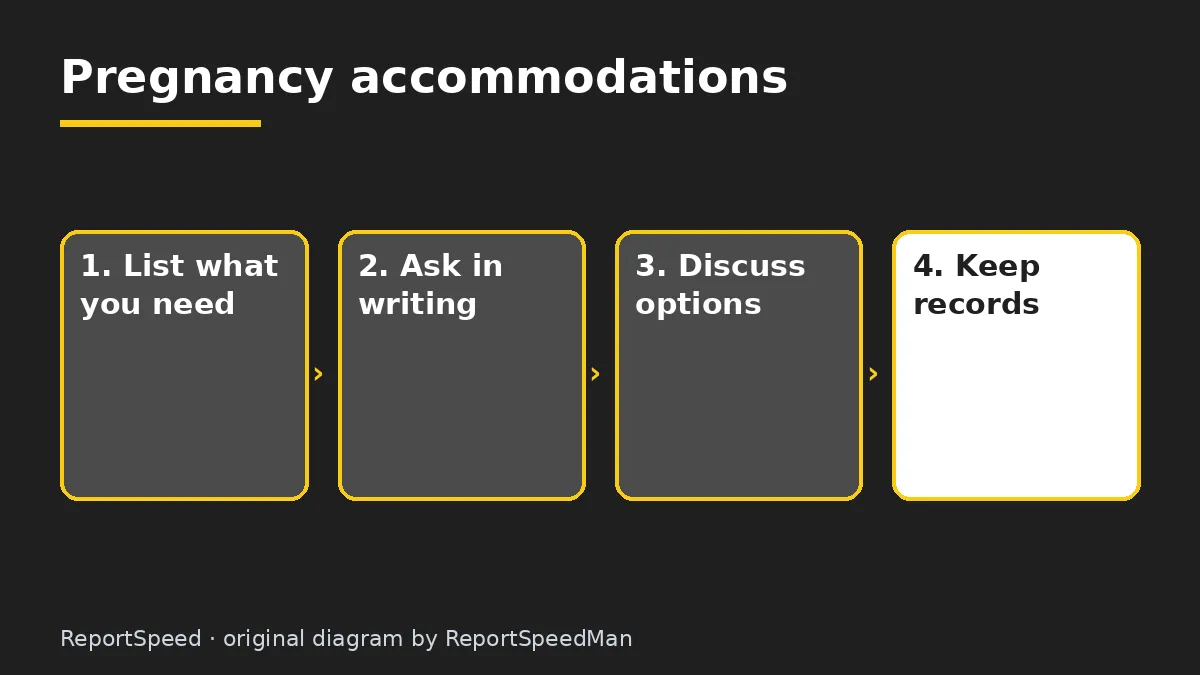
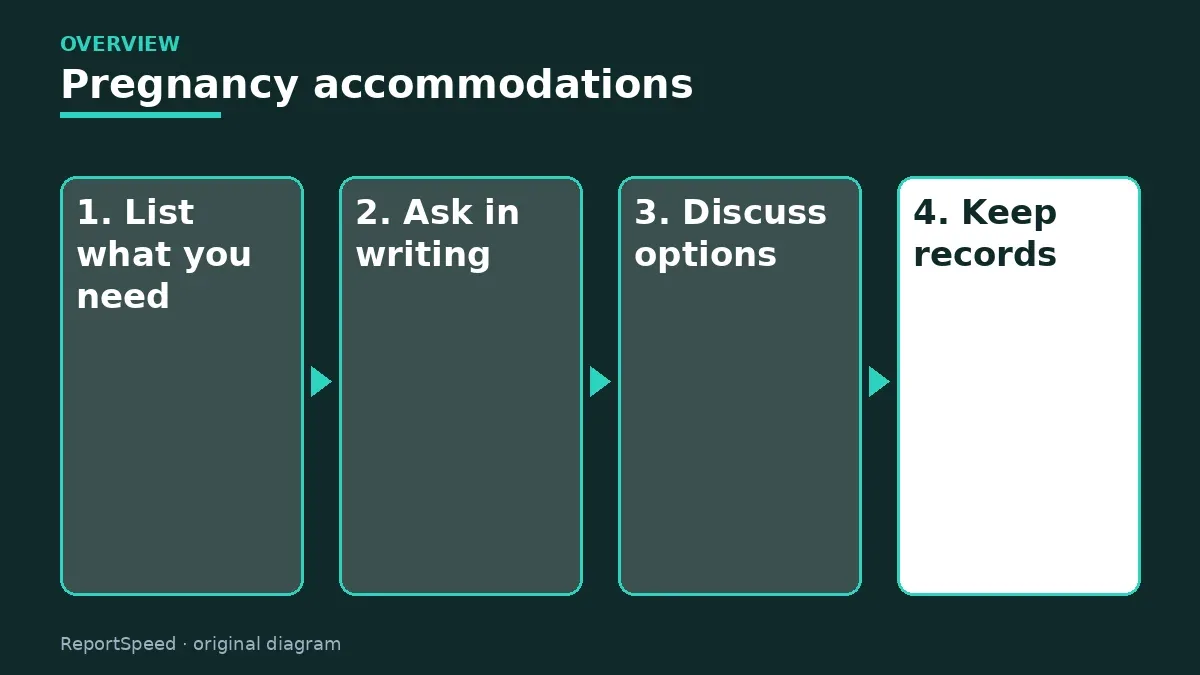
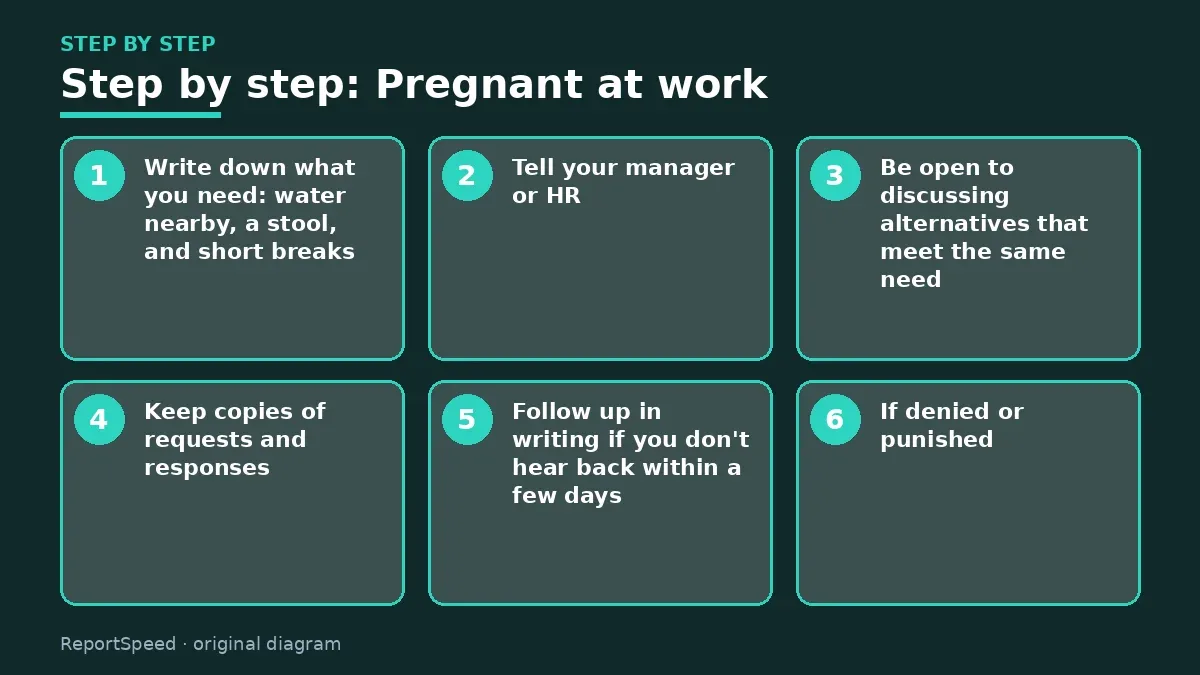
- Write down what you need: water nearby, a stool, and short breaks.
- Tell your manager or HR, ideally by email, that you need these changes due to pregnancy.
- Be open to discussing alternatives that meet the same need.
- Keep copies of requests and responses.
- Follow up in writing if you don't hear back within a few days.
- If denied or punished, contact the EEOC; most charges must be filed within 180 days, or 300 in many states.
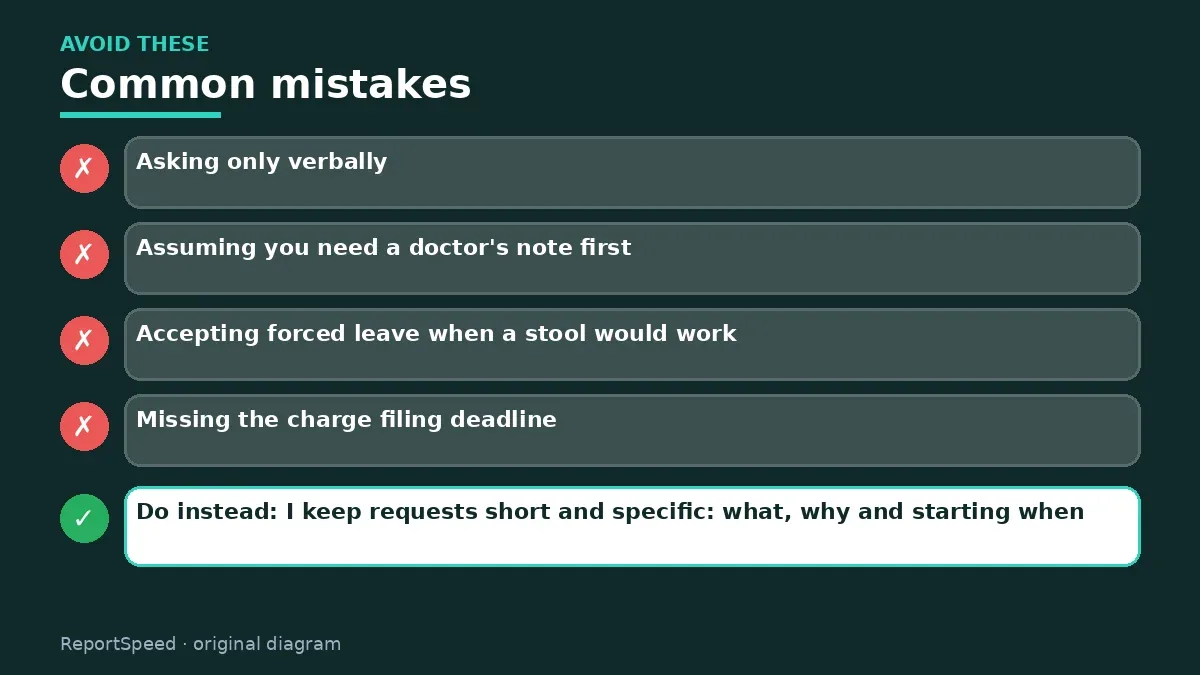
Common mistakes:
- Asking only verbally
- Assuming you need a doctor's note first
- Accepting forced leave when a stool would work
- Missing the charge filing deadline
ReportSpeedMan tip: I keep requests short and specific: what, why and starting when. It's easy to say yes to a clear ask.
What I would actually do
I'd email my manager a two-line request for a stool, a water bottle at my station and short breaks, and ask to talk about it that week.
The trade-off people miss: asking may feel awkward, but not asking leaves you without protection; the law works from the moment the employer knows.
Proof that it worked
Your request is in writing and the stool and breaks are in place.
Quick FAQ
Does it cover miscarriage?
EEOC says related conditions are covered.
Can I be forced on leave?
Not if another accommodation works.
Is there a filing deadline?
Usually 180 or 300 days.
Wrap-up: Under the PWFA, employers with 15+ workers must reasonably accommodate pregnancy limitations. Ask in writing and keep records.
Wiki: Caregiver Stress and Wage and Hour Basics (FLSA).
Pregnant at work: where the facts come from
Step-by-step photos
1. Before The problem 
2. Why it happens The cause 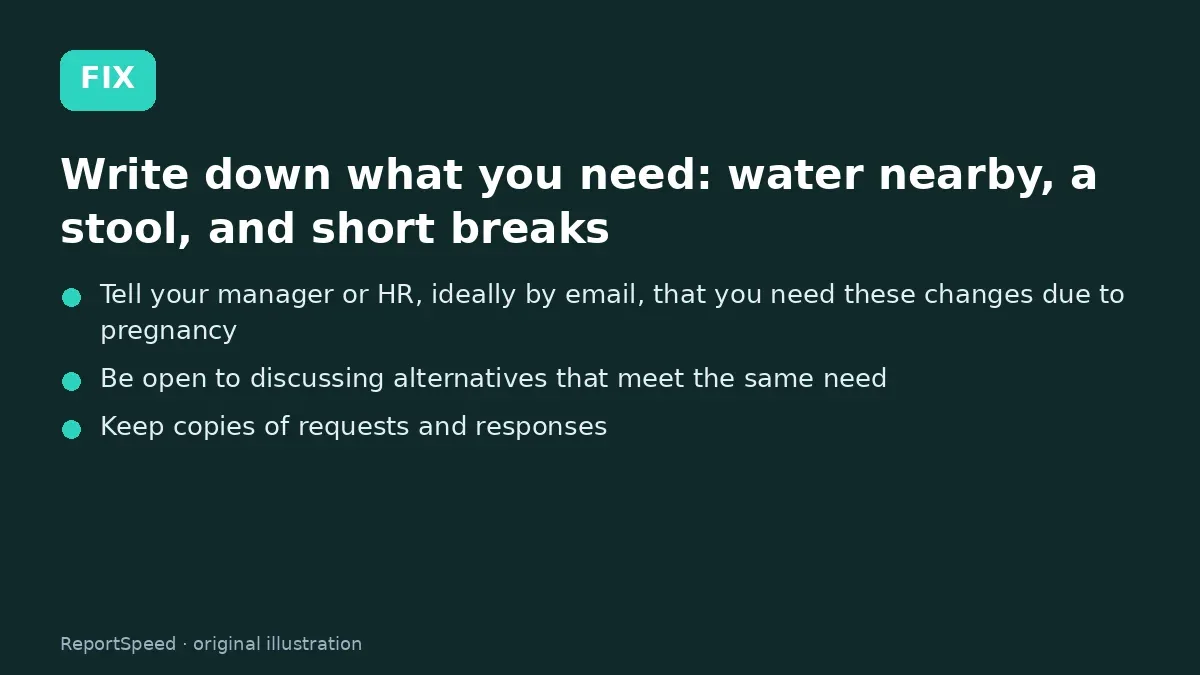
3. The fix The fix 
4. After The result
⚡ Speed Summary
- Under the PWFA, employers with 15+ workers must reasonably accommodate pregnancy limitations.
- I keep requests short and specific: what, why and starting when. It's easy to say yes to a clear ask.
- Waiting until you're struggling to ask is the trap; the law covers limitations as they come up, and an early request gives time to find a fit.

Was this answer helpful?
Tap a star to rate this answer.
Related questions
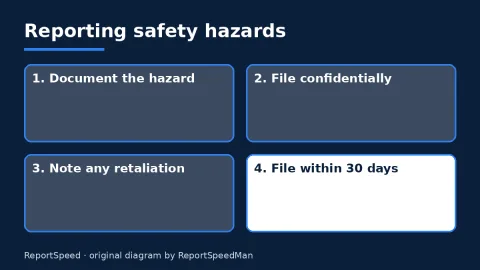
Can I be fired for reporting a safety problem at work? OSHA's 30-day rule
You can report hazards confidentially, and retaliation is illegal.
Rate itSolved
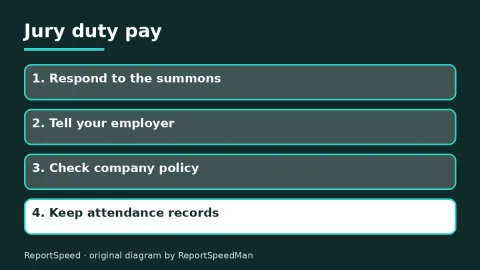
Do I get paid for jury duty, and can my employer fire me for going?
Federal jurors earn $50 a day; employer pay is optional, but firing you for federal jury service is illegal.
Rate itSolved
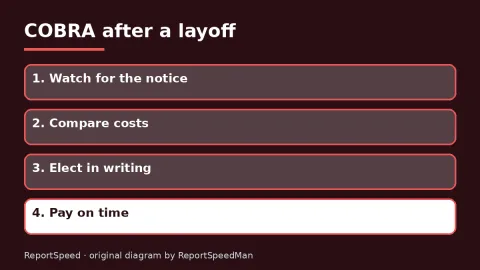
COBRA after a layoff: how long, how much and the deadlines
COBRA usually lasts 18 months, costs up to 102% of the premium, and gives you 60 days to elect and 45 days to pay.
Rate itSolved
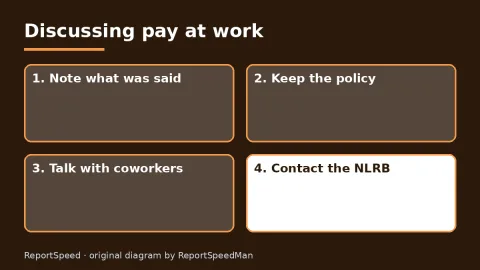
Can my employer stop me from discussing my pay with coworkers?
Most private-sector workers can legally discuss pay.
Rate itSolved
Real experiences
No experiences yet. Be the first to share.