


On my way home after a storm, there's a low spot on my road that floods. The water didn't look deep and a pickup drove through it, so I almost followed. Is it safe to drive through a flooded road, how much water does it take to float a car, and what should I do if I'm already stuck in water?
Is it safe to drive through a flooded road? How much water can float a car
Concerns & risks
A low stretch of your road floods after storms, and you watched a pickup drive through.
| You see | Do this |
|---|---|
| Water across the road | Turn around |
| Barricade | Never drive around it |
| Car stalls in rising water | Get out to higher ground if safe |
| Car swept away | Exit through a window, call 911 |
| Flash flood warning | Avoid low crossings |
| At night | Treat any water as unsafe |
Causes & evidence
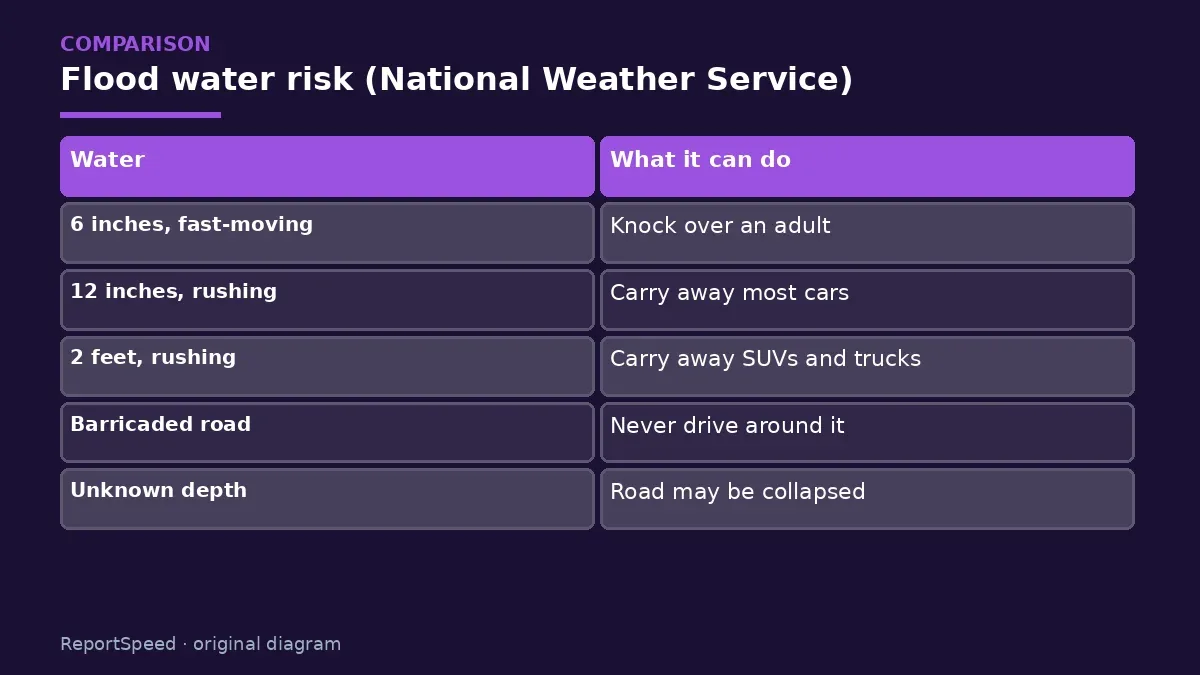
The National Weather Service says more deaths occur from flooding than from any other thunderstorm-related hazard, and the CDC reports that over half of flood-related drownings happen when a vehicle is driven into hazardous flood water. The NWS gives the numbers: just 6 inches of fast-moving water can knock over an adult, 12 inches of rushing water can carry away most cars, and 2 feet of rushing water can carry away SUVs and trucks. Water also hides damage: the road may have collapsed underneath. That's why its message is simply Turn Around Don't Drown, and why it says never drive around barriers blocking a flooded road. A pickup making it through tells you nothing about the next vehicle, since depth and current can change in minutes and higher clearance doesn't stop a vehicle from floating.
Edge cases: low-water crossings and underpasses flood fastest. Water can continue rising after rain stops, as runoff arrives from upstream. Even shallow standing water can hide debris or downed power lines.
Judging depth by eye is what traps drivers; murky water hides both depth and a washed-out road.
What to do
| Water | What it can do |
|---|---|
| 6 inches, fast-moving | Knock over an adult |
| 12 inches, rushing | Carry away most cars |
| 2 feet, rushing | Carry away SUVs and trucks |
| Barricaded road | Never drive around it |
| Unknown depth | Road may be collapsed |
| Safe depth | None; turn around |
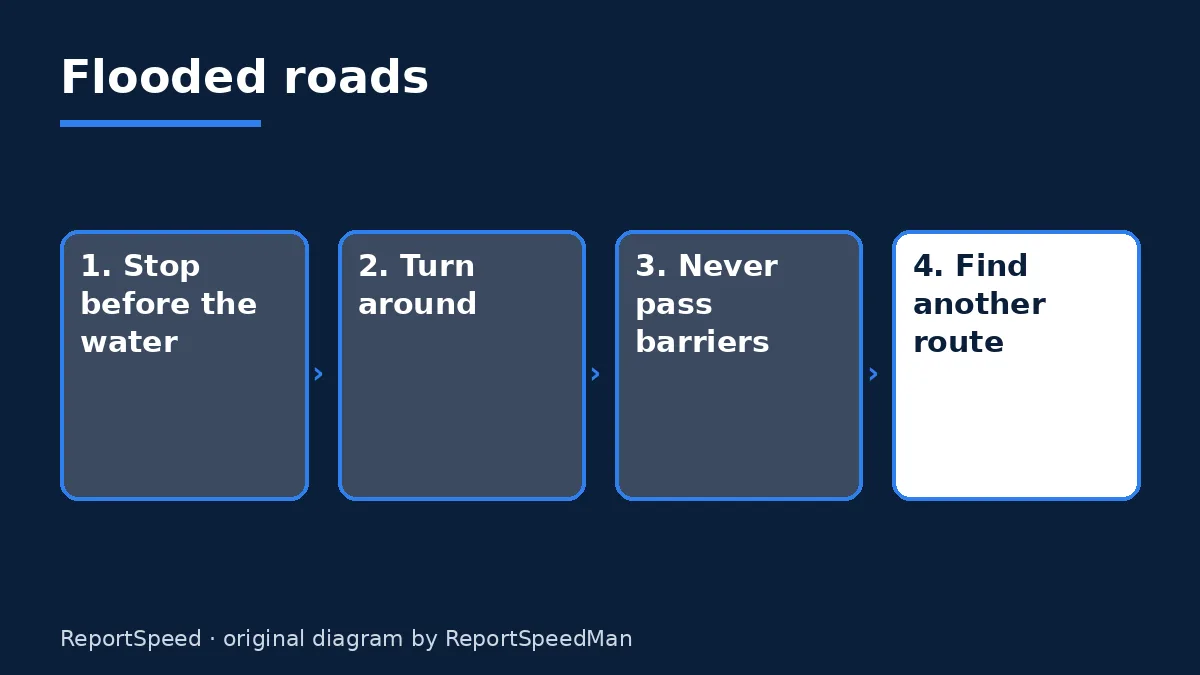
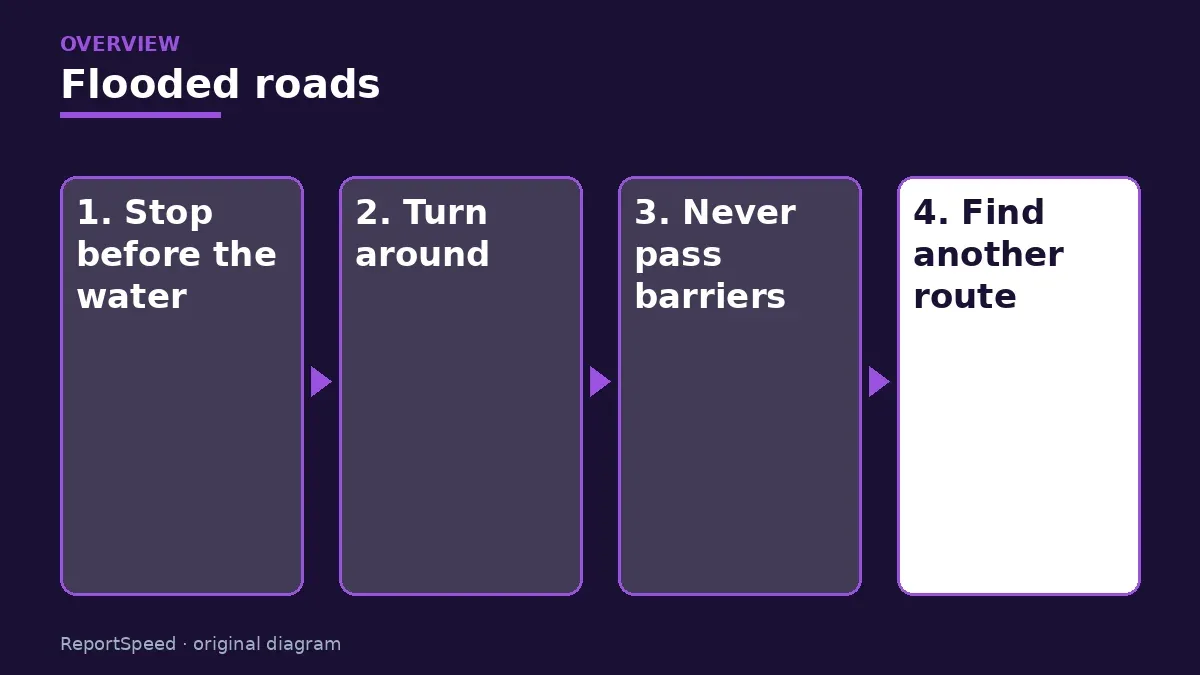
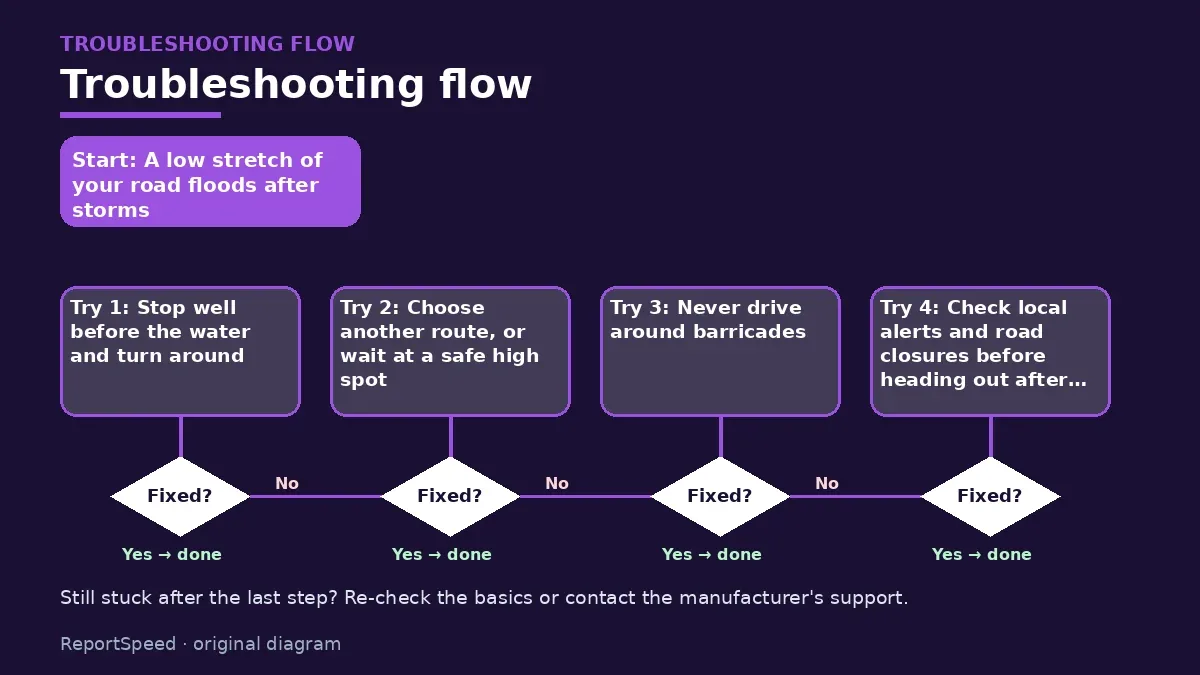
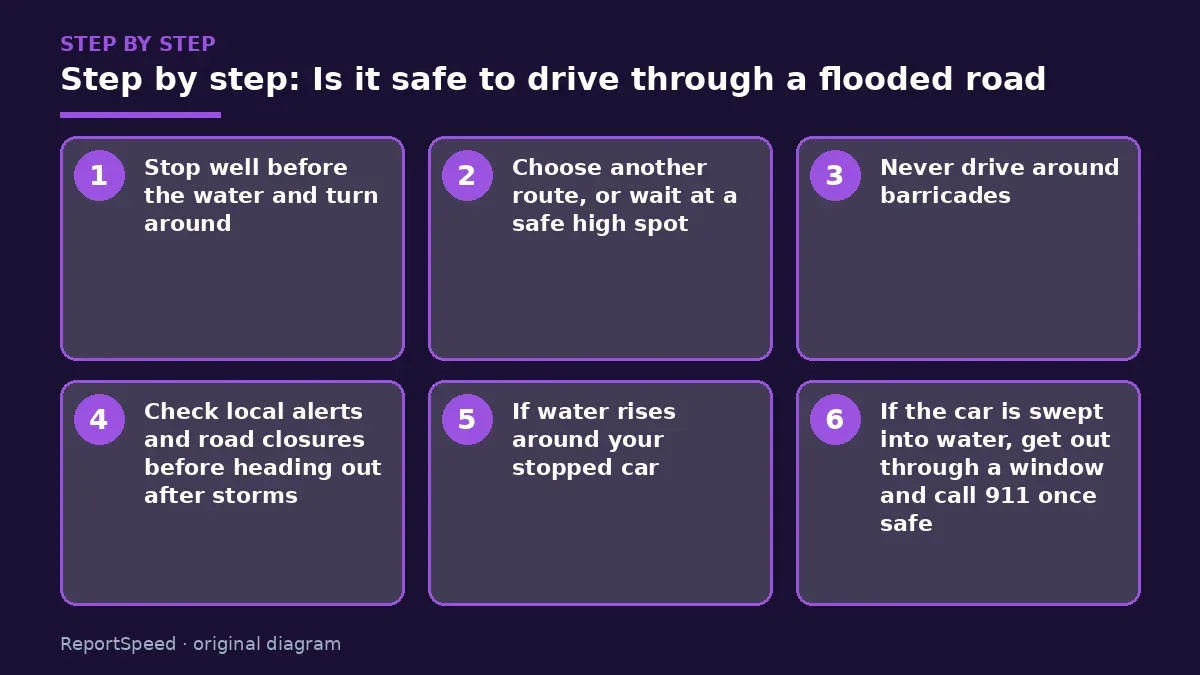
- Stop well before the water and turn around.
- Choose another route, or wait at a safe high spot.
- Never drive around barricades.
- Check local alerts and road closures before heading out after storms.
- If water rises around your stopped car, unbuckle and get out quickly if it is safe, moving to higher ground.
- If the car is swept into water, get out through a window and call 911 once safe.
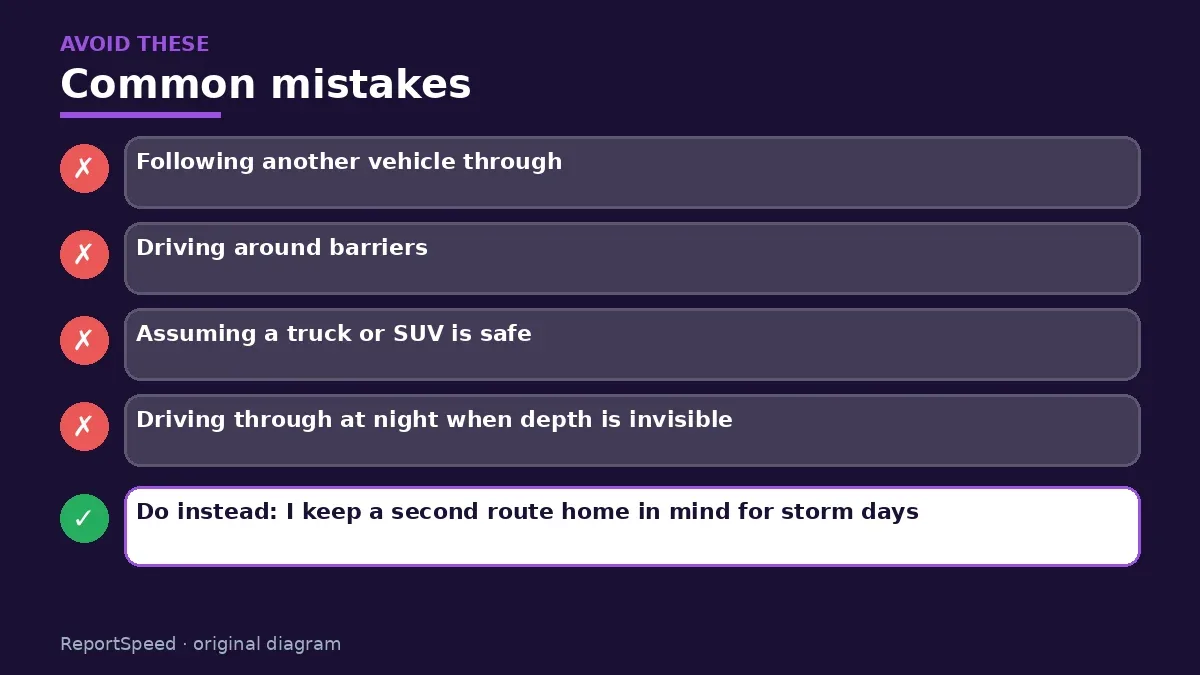
Common mistakes:
- Following another vehicle through
- Driving around barriers
- Assuming a truck or SUV is safe
- Driving through at night when depth is invisible
ReportSpeedMan tip: I keep a second route home in mind for storm days. Having a plan B makes turning around feel easy instead of inconvenient.
What I would actually do
I'd turn around at the first sign of water over the road and take the longer route or wait until it drains.
The trade-off people miss: the detour costs minutes, while the shortcut through water risks the car and your life; there's no depth that's reliably safe.
How to know it worked
You have a planned alternate route for storm days.
Quick FAQ
Is a truck safe in a foot of water?
No; 2 feet of rushing water can carry trucks.
What if water is still?
Depth and the road beneath are still unknown.
Will insurance cover flood damage?
Often only with comprehensive coverage.
Wrap-up: Never drive into flood water; a foot of rushing water can carry most cars. Turn around, find another route, and wait it out.
Wiki: Fuel Economy Basics and Emergency Fund.
Is it safe to drive through a flooded road: official sources I checked
Step-by-step photos

1. Before The problem 
2. Why it happens The cause 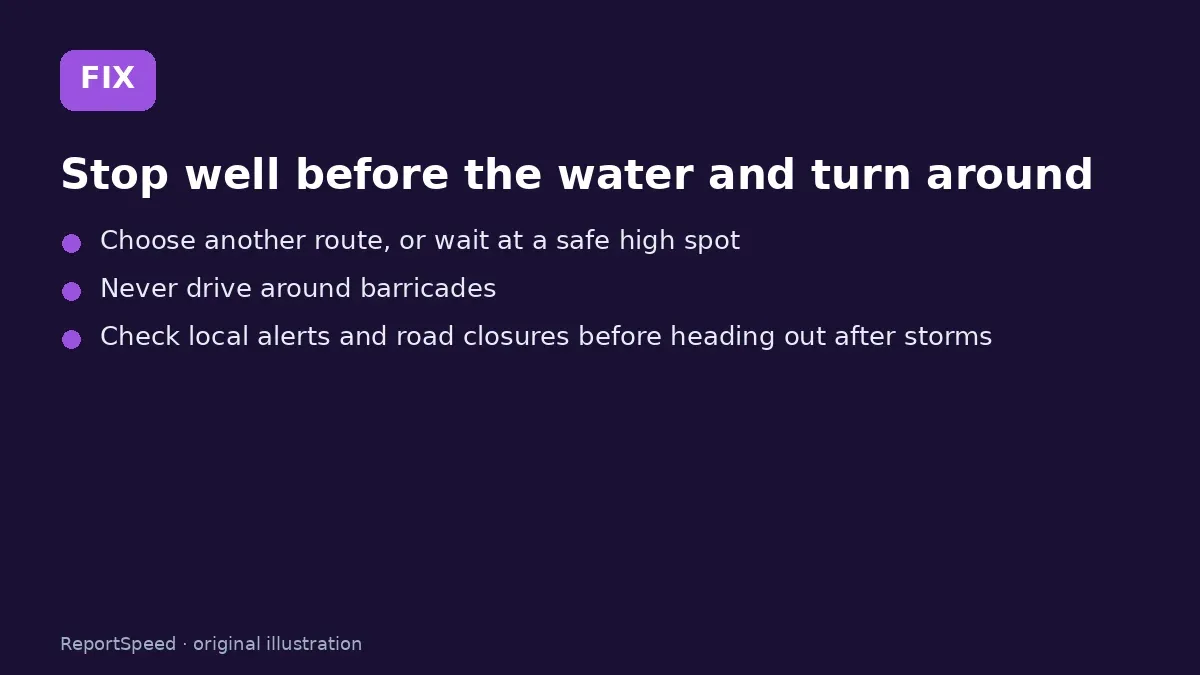
3. The fix The fix 
4. After The result
⚡ Speed Summary
- Never drive into flood water; a foot of rushing water can carry most cars.
- I keep a second route home in mind for storm days. Having a plan B makes turning around feel easy instead of inconvenient.
- Judging depth by eye is what traps drivers; murky water hides both depth and a washed-out road.

Was this answer helpful?
Tap a star to rate this answer.
Related questions

How far should I sit from the steering wheel airbag?
Keep 10 inches from the air bag cover, tilt the wheel toward your chest, and keep kids 12 and under in the back.
Rate itSolved
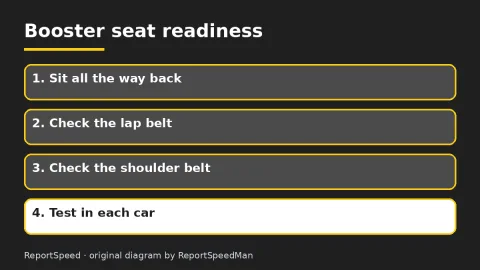
When can my child stop using a booster seat?
Keep the booster until the seat belt fits across the thighs and chest, and keep kids 12 and under in the back.
Rate itSolved
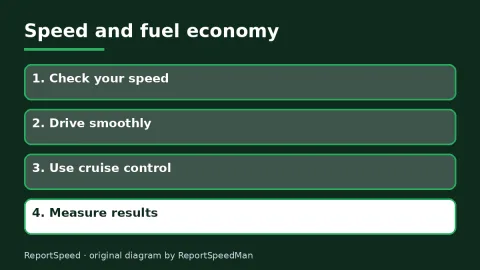
Does driving faster really waste gas? Speed and fuel economy
Above 50 mph mileage drops quickly, roughly like $0.30 more per gallon for each extra 5 mph.
Rate itSolved
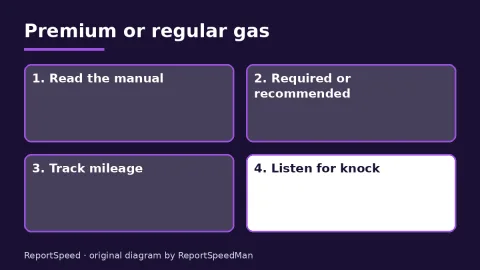
Do I need premium gas? What octane my car really needs
Check the manual: 87 means regular; required premium means premium.
Rate itSolved
Real experiences
No experiences yet. Be the first to share.