


I keep getting calls that show my own area code and the first three digits of my number. When I answered once, it was a fake 'Medicare' pitch. Yesterday a caller ID even showed my bank's name. How does caller ID spoofing work, is it legal, and how do I protect myself?
Caller ID spoofing: why scammers show a local number and how to protect yourself
Concerns & risks
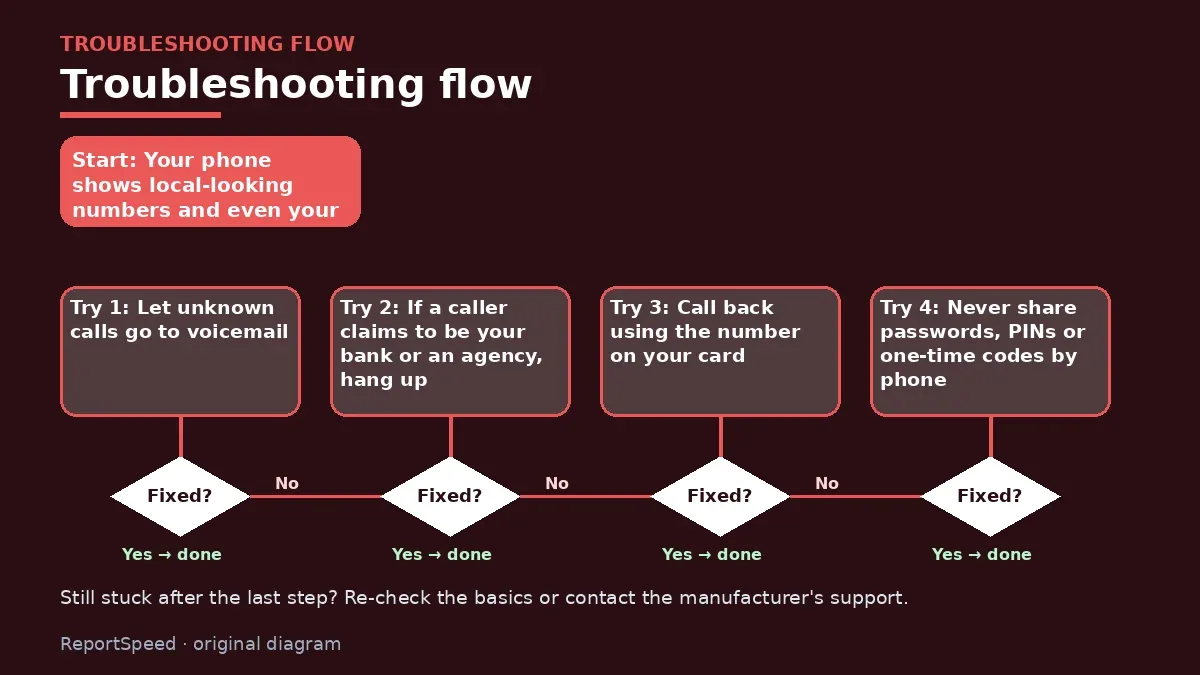
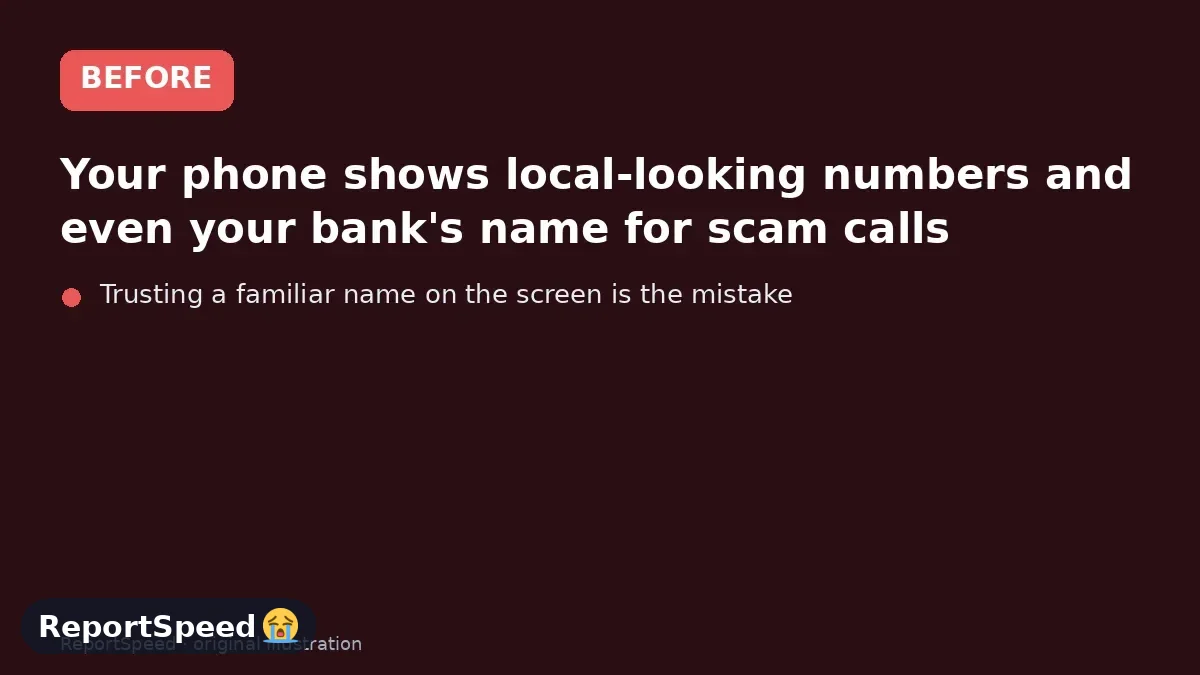
Your phone shows local-looking numbers and even your bank's name for scam calls.
| Example | Status |
|---|---|
| Doctor shows office number | Legal |
| Business shows toll-free callback | Legal |
| Blocking your own number | Not spoofing |
| Fake bank name to steal codes | Illegal |
| Fake agency to demand payment | Illegal |
| Penalty per violation | Up to $10,000 |
Causes & evidence
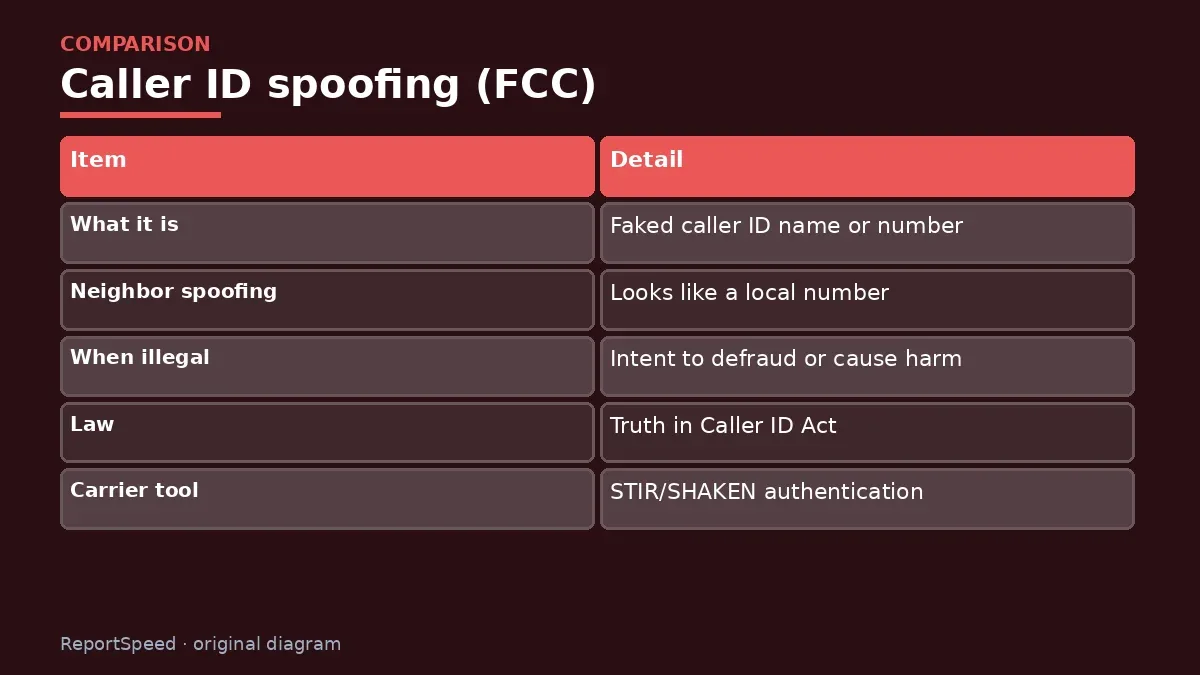
The Federal Communications Commission explains that spoofing is when a caller deliberately falsifies the information sent to your caller ID display to disguise their identity. Scammers often use neighbor spoofing, showing a number that looks local, because people are more likely to answer. Under the Truth in Caller ID Act, FCC rules prohibit anyone from transmitting misleading or inaccurate caller ID information with the intent to defraud, cause harm or wrongly obtain anything of value. Spoofing isn't always illegal; a doctor calling from a personal phone may show the office number, for instance. The FCC advises not answering calls from unknown numbers, hanging up if you do, never giving out personal information, and calling back using a number from your statement or an official website. Carriers use caller ID authentication, known as STIR/SHAKEN, to flag likely spoofed calls, but it doesn't catch all of them.
Edge cases: if people say your number called them, you're likely being spoofed; scammers usually switch numbers quickly. Set a voicemail password so spoofers can't access it. Legitimate agencies typically send mail before calling about payments.
Trusting a familiar name on the screen is the mistake; spoofed caller ID can show any name, including your bank or a government agency.
What to do
| Item | Detail |
|---|---|
| What it is | Faked caller ID name or number |
| Neighbor spoofing | Looks like a local number |
| When illegal | Intent to defraud or cause harm |
| Law | Truth in Caller ID Act |
| Carrier tool | STIR/SHAKEN authentication |
| Your best defense | Hang up and call back yourself |
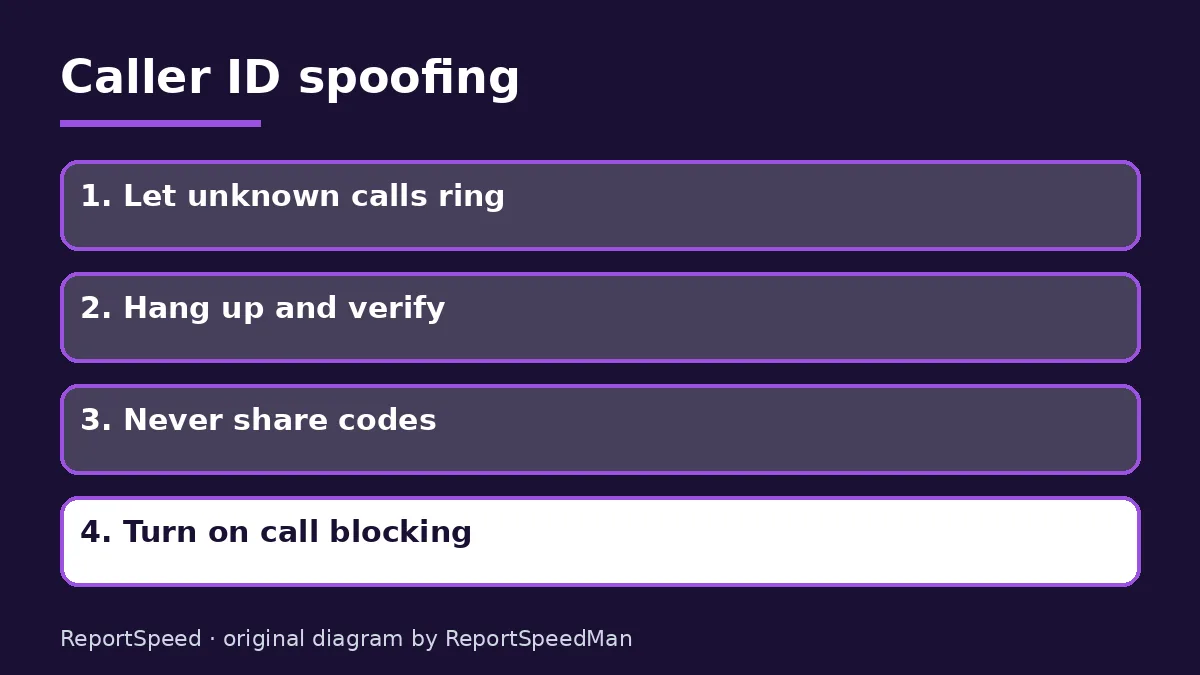
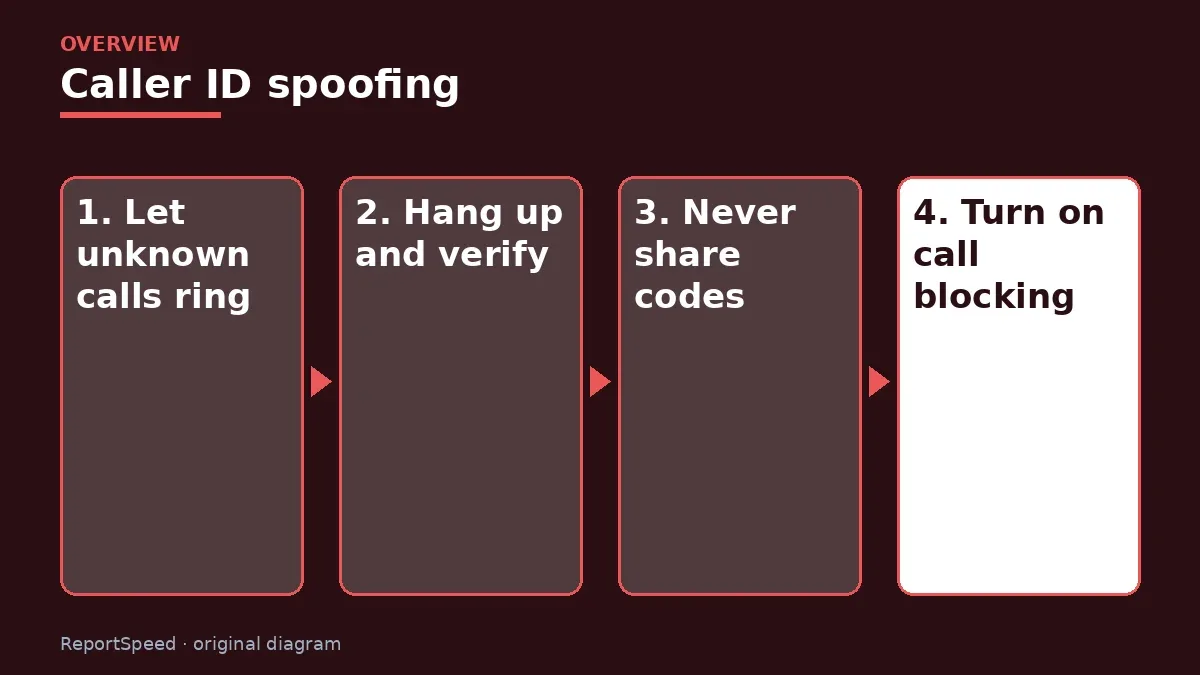
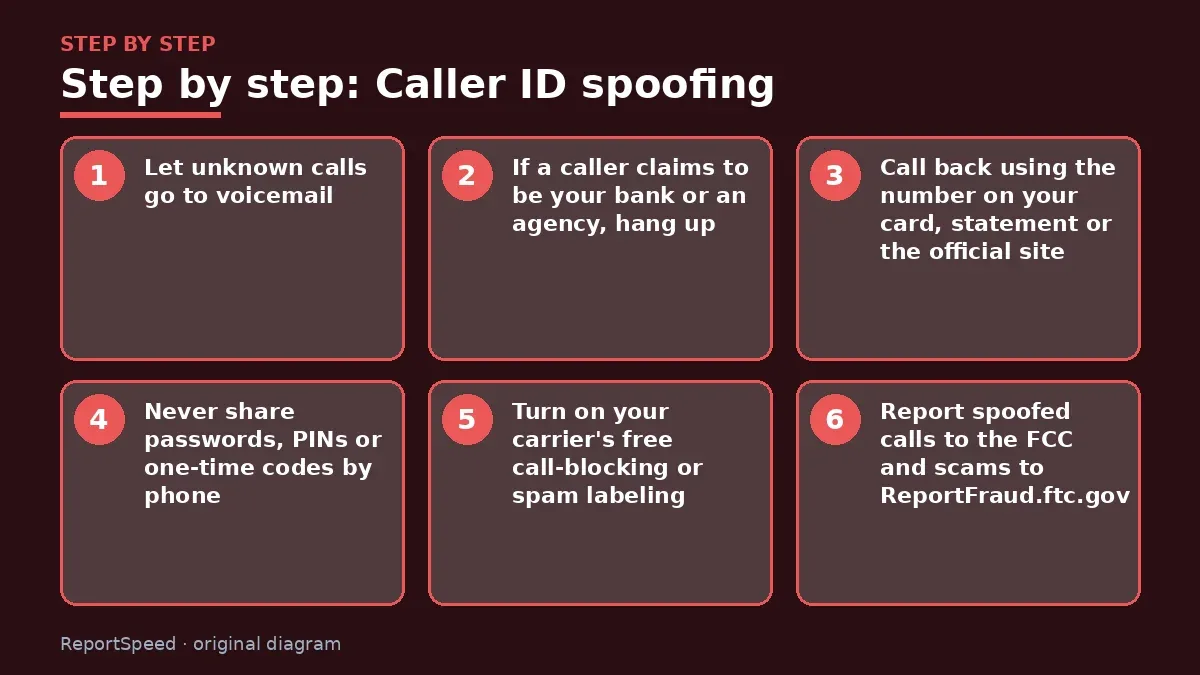
- Let unknown calls go to voicemail.
- If a caller claims to be your bank or an agency, hang up.
- Call back using the number on your card, statement or the official site.
- Never share passwords, PINs or one-time codes by phone.
- Turn on your carrier's free call-blocking or spam labeling.
- Report spoofed calls to the FCC and scams to ReportFraud.ftc.gov.
Common mistakes:
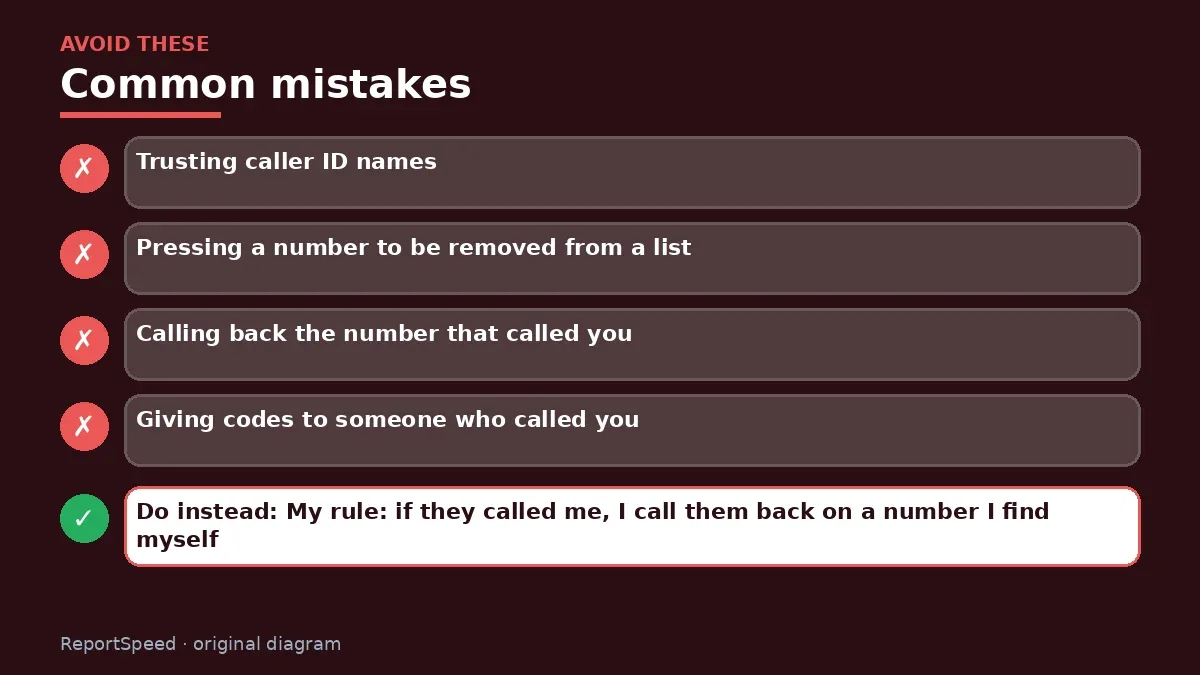
- Trusting caller ID names
- Pressing a number to be removed from a list
- Calling back the number that called you
- Giving codes to someone who called you
ReportSpeedMan tip: My rule: if they called me, I call them back on a number I find myself. It takes one minute and defeats spoofing every time.
What I would actually do
I'd send unknown calls to voicemail, turn on carrier spam labeling, and verify any bank or agency call through the number on my card.
The trade-off people miss: ignoring unknown numbers may delay a legitimate call, but real callers leave messages and you can call back safely.
How to tell it worked
You verify every unexpected call through a number you looked up.
Quick FAQ
Can I stop my number being spoofed?
Not directly; it usually passes.
Is blocking my number spoofing?
No.
Does STIR/SHAKEN stop all of it?
No, it helps carriers flag calls.
Wrap-up: Caller ID can be faked, and spoofing to defraud is illegal. Verify by calling back on a number you look up yourself.
Wiki: Robocalls and the Do Not Call Registry and Payment App and Money Scams.
Caller ID spoofing: official pages behind this answer
Step-by-step photos
1. Before The problem 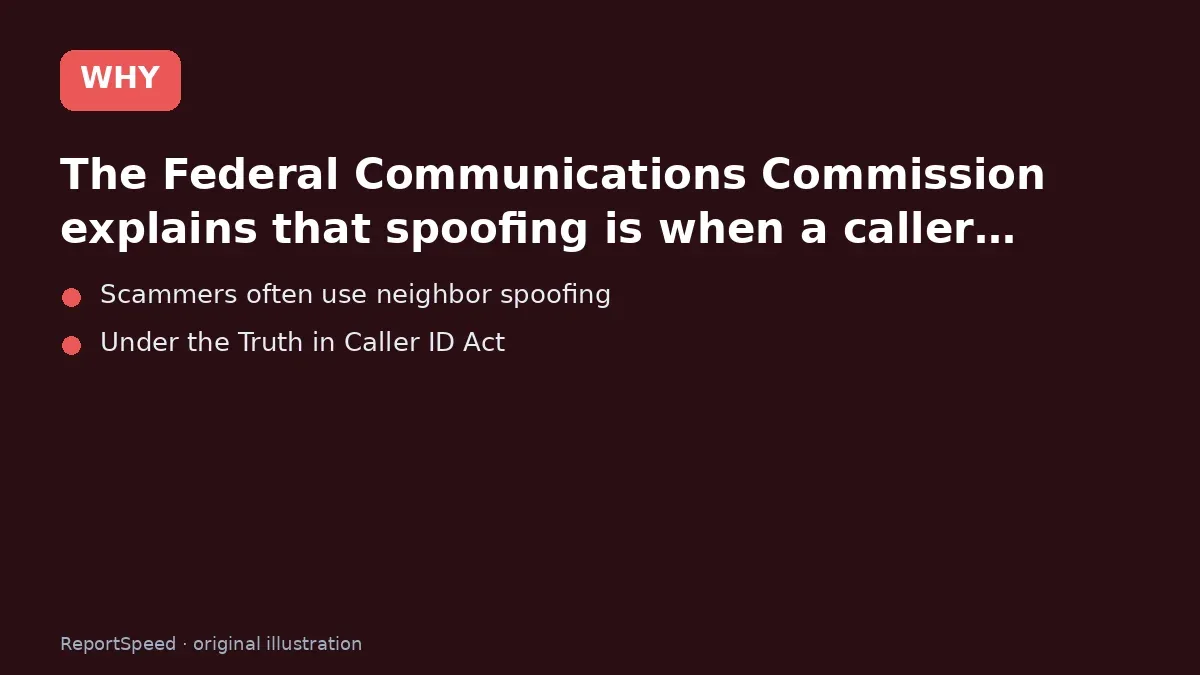
2. Why it happens The cause 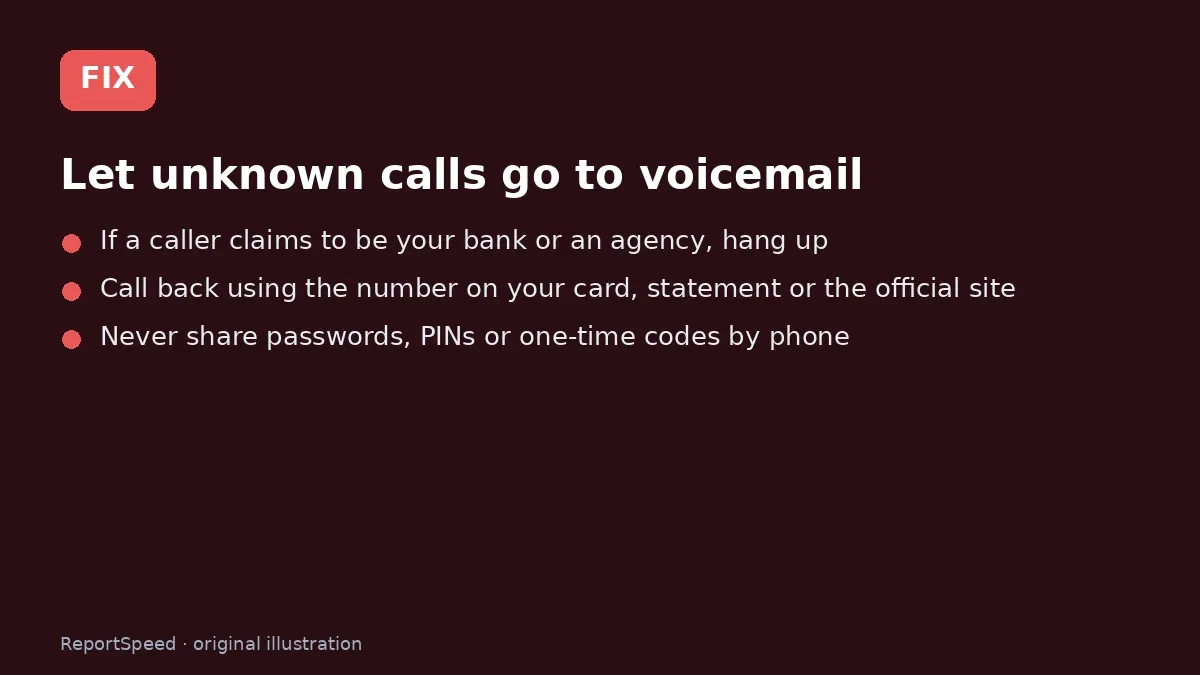
3. The fix The fix 
4. After The result
⚡ Speed Summary
- Caller ID can be faked, and spoofing to defraud is illegal.
- My rule: if they called me, I call them back on a number I find myself. It takes one minute and defeats spoofing every time.
- Trusting a familiar name on the screen is the mistake; spoofed caller ID can show any name, including your bank or a government agency.

Was this answer helpful?
Tap a star to rate this answer.
Related questions
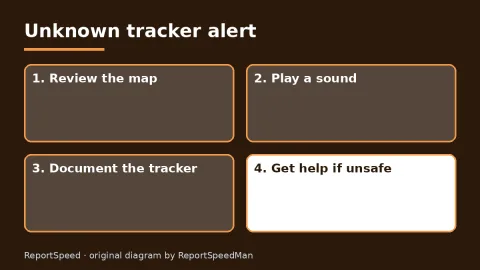
Got an 'AirTag found moving with you' alert? What to do next
Find the tracker, document it, identify the owner, and disable it.
Rate itSolved
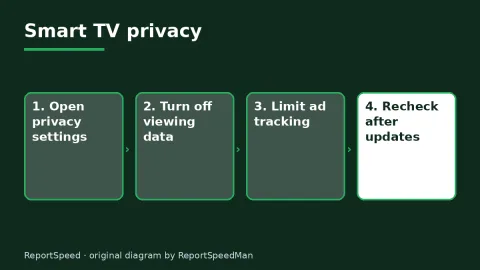
Is my smart TV tracking what I watch? How to turn off ACR
Smart TVs may use ACR to track viewing.
Rate itSolved
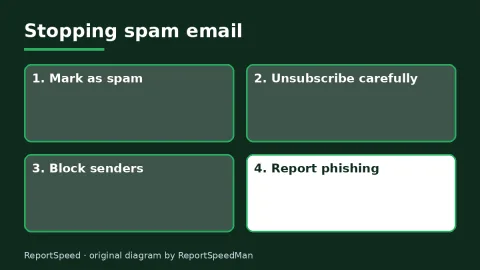
How do I stop spam emails without making it worse?
Mark spam, block repeat senders, unsubscribe only from known companies, and report phishing.
Rate itSolved
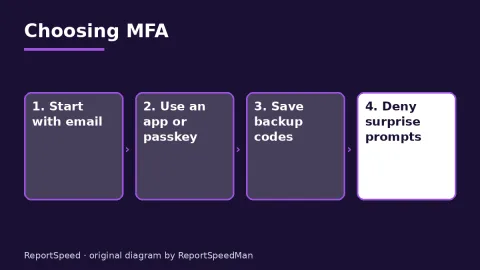
Text message codes vs authenticator apps: which MFA is safer?
Use MFA everywhere; prefer passkeys or security keys, then authenticator apps, and keep SMS only where nothing better is offered.
Rate itSolved
Real experiences
No experiences yet. Be the first to share.