


I work at a small manufacturing shop. A guard has been missing on one of the presses for months, and I'm thinking about calling OSHA. A coworker says they'll know it was me and I'll get fired. Can I be fired for reporting a safety problem, and what do I do if they retaliate?
Can I be fired for reporting a safety problem at work? OSHA's 30-day rule
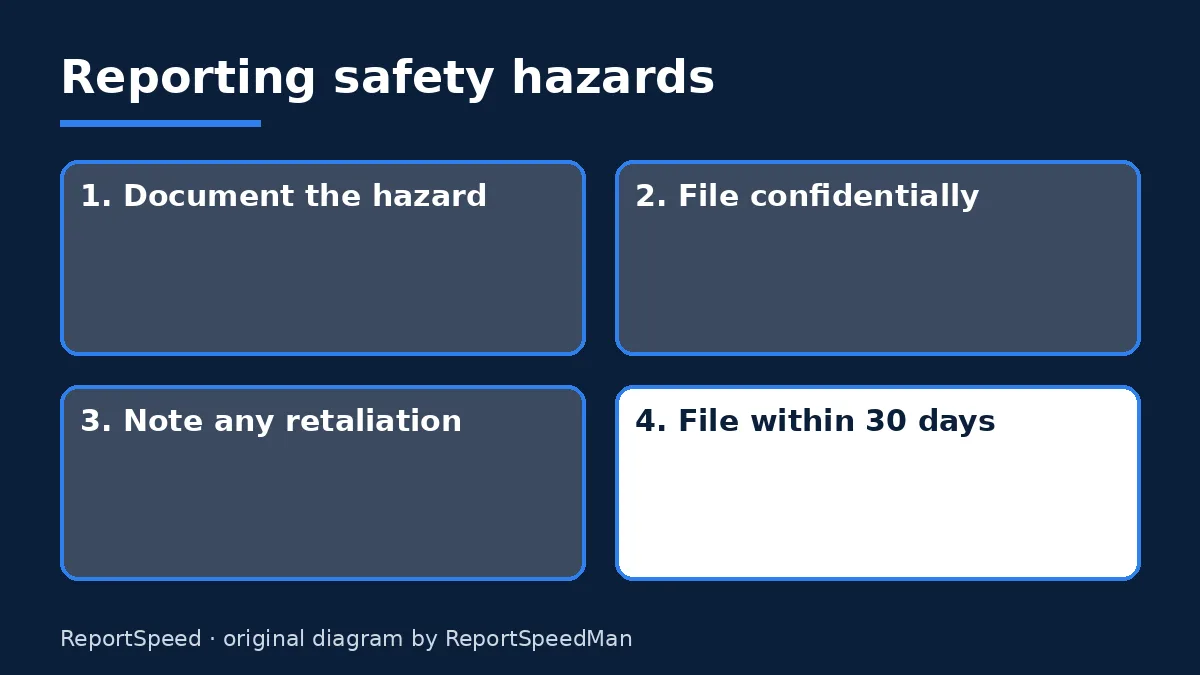
Concerns & risks
A press guard has been missing for months and you're thinking of reporting it.
| Event | Timing |
|---|---|
| Hazard complaint | Any time |
| Adverse action | Note the date |
| Retaliation complaint | Within 30 days |
| Other laws | Different deadlines |
| OSHA investigates | Employer notified |
| Possible remedies | Reinstatement, back pay |

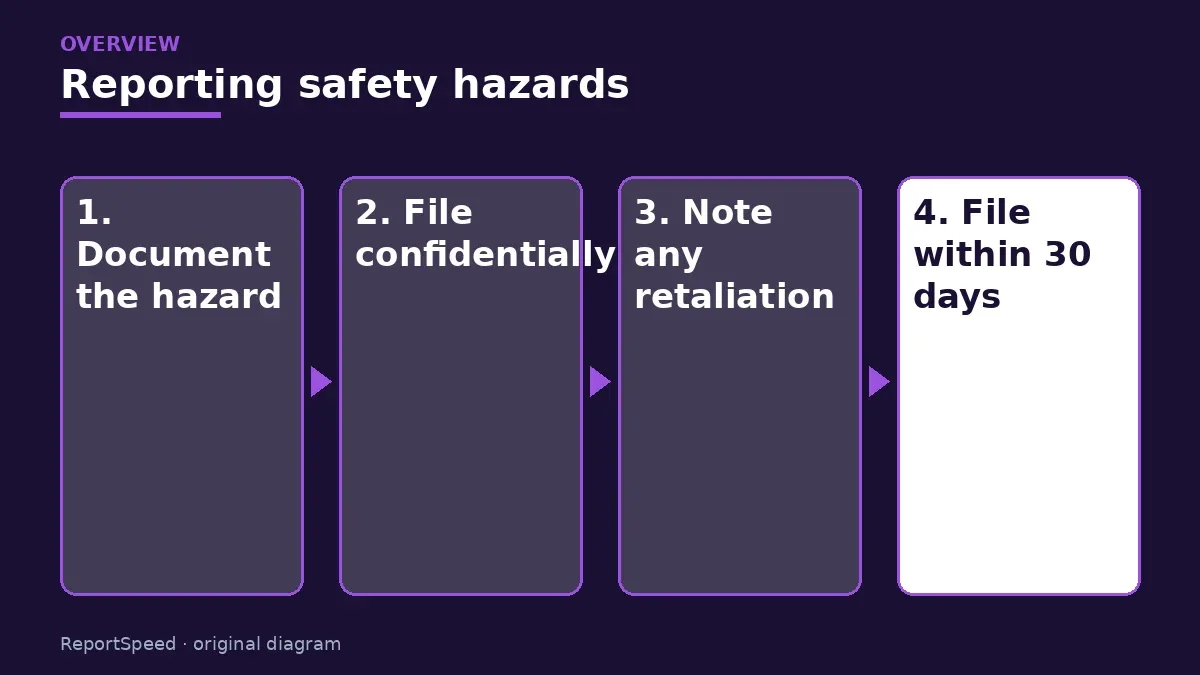
Causes & evidence
The Occupational Safety and Health Administration says workers have the right to file a confidential safety and health complaint and request an inspection, and the OSH Act's Section 11(c) prohibits employers from retaliating against workers for exercising safety rights, such as reporting a hazard, an injury or a safety concern. Retaliation can include firing, demotion, reduced hours, denial of overtime or a promotion, discipline, or threats. A retaliation complaint under Section 11(c) must be filed with OSHA within 30 days of the retaliatory action. You can ask OSHA not to reveal your name when you file a hazard complaint. OSHA also runs whistleblower protection programs under many other federal laws, with different deadlines, through whistleblowers.gov. Reporting internally first isn't required, though it can show the employer knew.
Edge cases: retaliation complaints can't be anonymous because OSHA must notify the employer. Other whistleblower laws have deadlines from 30 to 180 days or more. Public-sector workers may be covered by state OSHA plans.
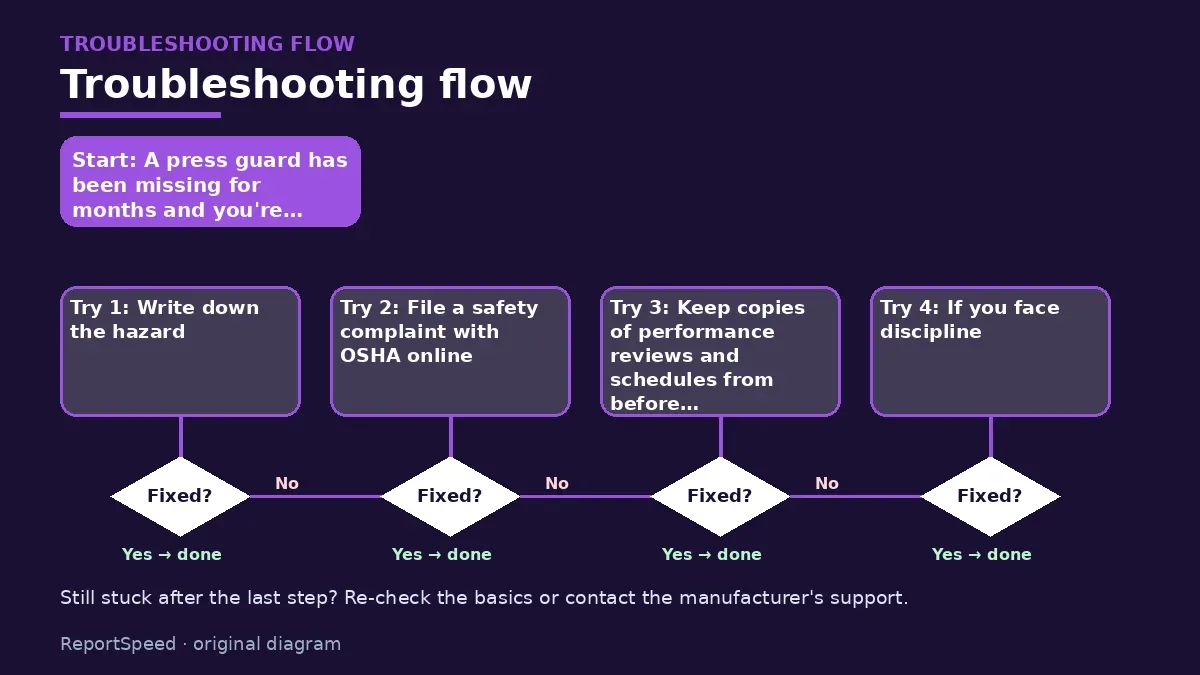
Missing the 30-day window is how strong cases get lost; the clock starts when the retaliatory action is communicated to you, not when you decide to act.
What to do

| Item | Detail |
|---|---|
| Who can complain | Workers or their representatives |
| Name confidentiality | You can request it |
| Law protecting you | OSH Act Section 11(c) |
| Retaliation examples | Firing, demotion, cut hours, threats |
| Filing deadline | 30 days |
| Where | OSHA, phone, online or in person |
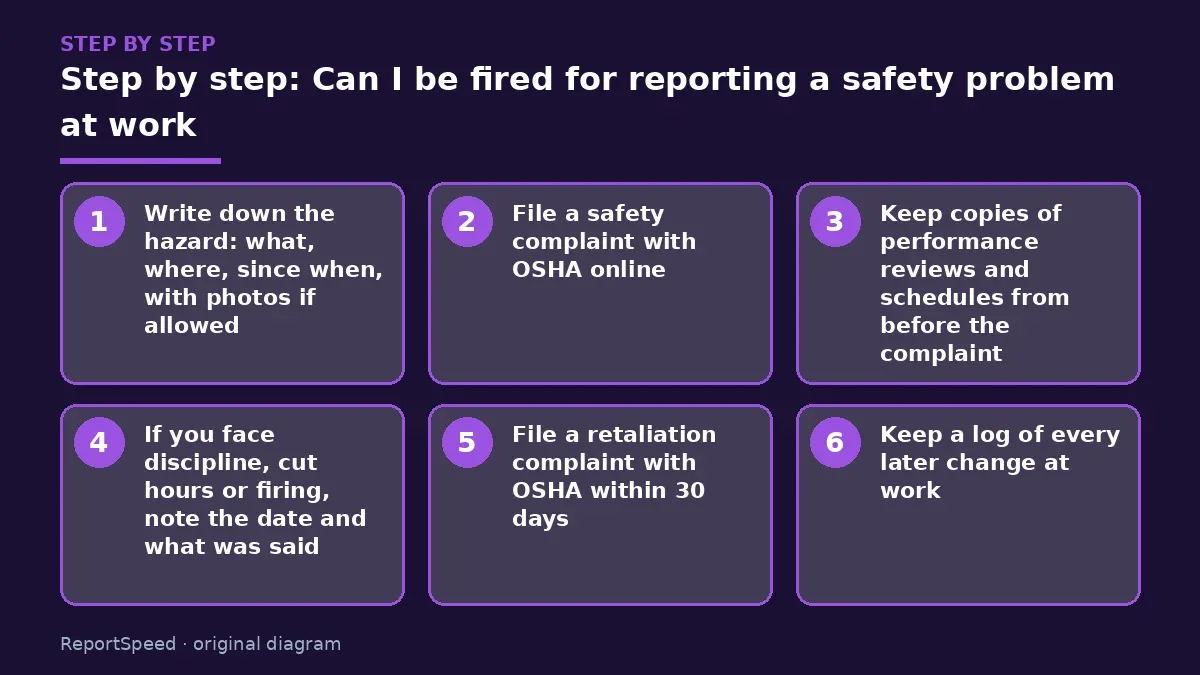
- Write down the hazard: what, where, since when, with photos if allowed.
- File a safety complaint with OSHA online, by phone at 1-800-321-6742, or at an area office, asking for confidentiality.
- Keep copies of performance reviews and schedules from before the complaint.
- If you face discipline, cut hours or firing, note the date and what was said.
- File a retaliation complaint with OSHA within 30 days.
- Keep a log of every later change at work.
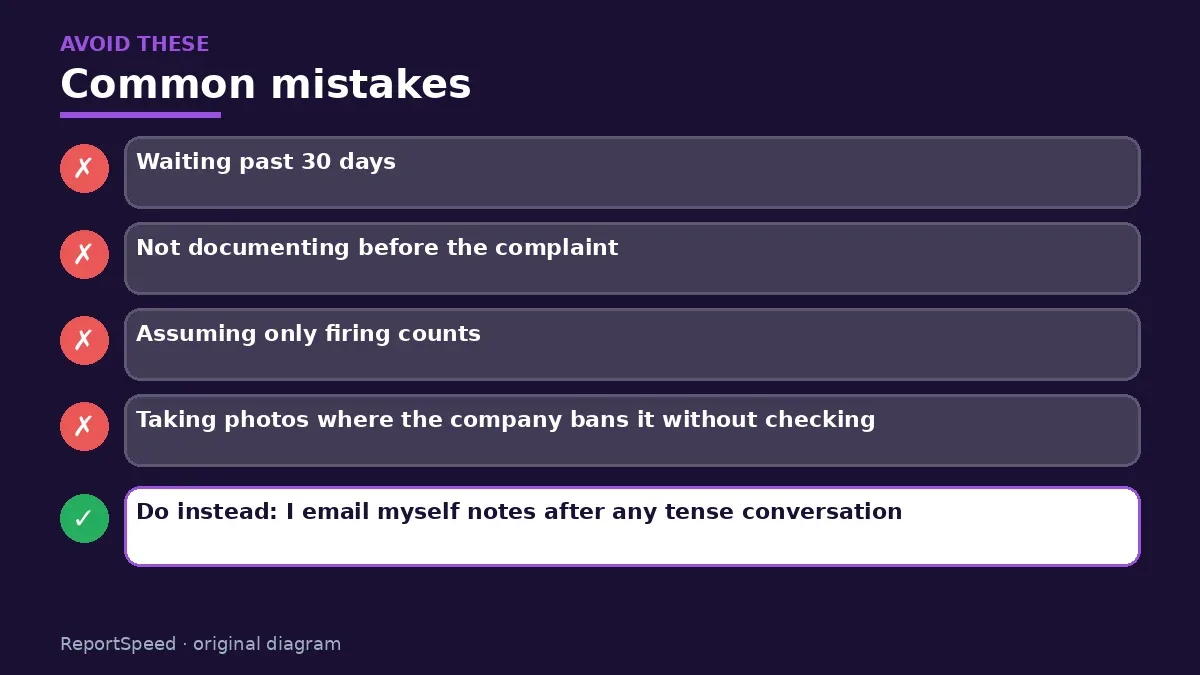
Common mistakes:
- Waiting past 30 days
- Not documenting before the complaint
- Assuming only firing counts
- Taking photos where the company bans it without checking
ReportSpeedMan tip: I email myself notes after any tense conversation. A timestamped record made the same day carries weight.
What I would actually do
I'd document the hazard, file a confidential OSHA complaint, save my good reviews, and file a retaliation complaint within days if anything changed.
The trade-off people miss: staying quiet avoids friction short term, but a missing guard risks a serious injury; the law gives you tools if you use them on time.
How to know it worked
Your complaint has a case number and your records are dated.
Quick FAQ
Can I report anonymously?
You can ask for confidentiality on hazard complaints.
What counts as retaliation?
Firing, demotion, threats and more.
How long do I have?
30 days for Section 11(c).
Wrap-up: You can report hazards confidentially, and retaliation is illegal. File a retaliation complaint within 30 days.
Wiki: Wage and Hour Basics (FLSA) and Headache Types.
Can I be fired for reporting a safety problem at work: primary sources
Step-by-step photos
1. Before The problem 
2. Why it happens The cause 
3. The fix The fix 
4. After The result
⚡ Speed Summary
- You can report hazards confidentially, and retaliation is illegal.
- I email myself notes after any tense conversation. A timestamped record made the same day carries weight.
- Missing the 30-day window is how strong cases get lost; the clock starts when the retaliatory action is communicated to you, not when you decide to act.

Was this answer helpful?
Tap a star to rate this answer.
Related questions

Pregnant at work: what accommodations can I ask for under the PWFA?
Under the PWFA, employers with 15+ workers must reasonably accommodate pregnancy limitations.
Rate itSolved
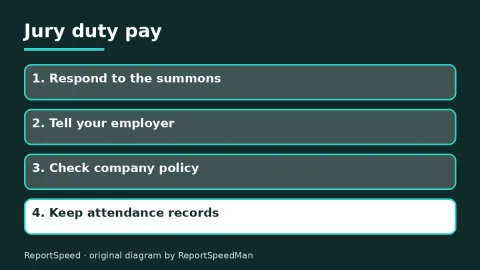
Do I get paid for jury duty, and can my employer fire me for going?
Federal jurors earn $50 a day; employer pay is optional, but firing you for federal jury service is illegal.
Rate itSolved
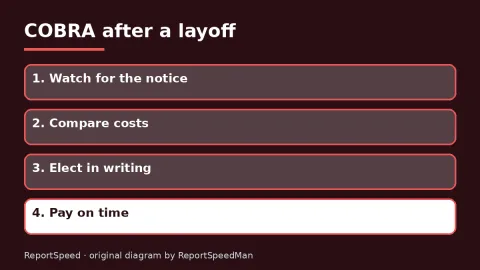
COBRA after a layoff: how long, how much and the deadlines
COBRA usually lasts 18 months, costs up to 102% of the premium, and gives you 60 days to elect and 45 days to pay.
Rate itSolved
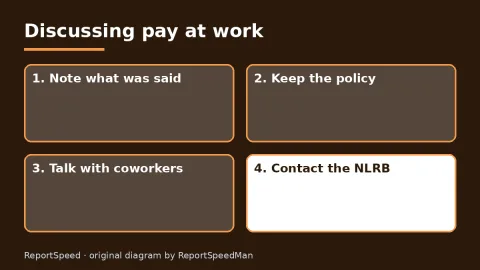
Can my employer stop me from discussing my pay with coworkers?
Most private-sector workers can legally discuss pay.
Rate itSolved
Real experiences
No experiences yet. Be the first to share.