


I strained my back lifting boxes at work on Tuesday. I thought it would get better, but now it's worse and I can barely bend. My supervisor told me to just use my sick days. Should I report it, and how does workers' compensation work if I'm hurt at work?
Hurt at work? What to do about workers' comp, step by step
Concerns & risks
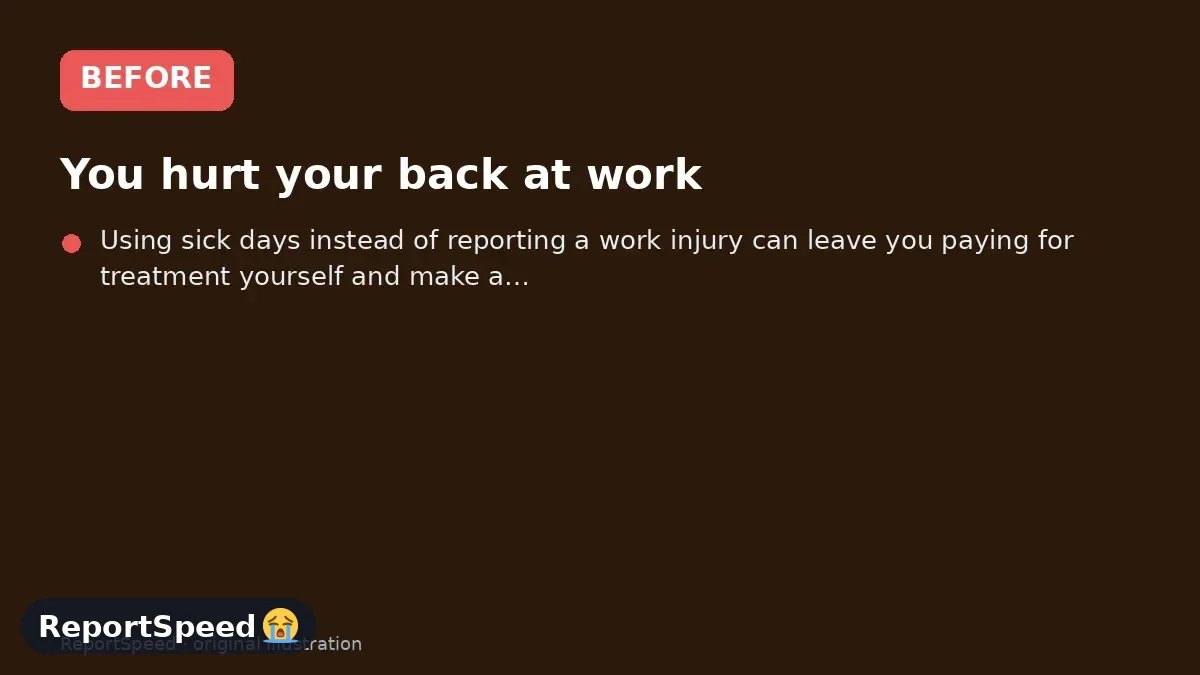
You hurt your back at work, it's getting worse and your supervisor suggested using sick days instead of reporting it.
| Detail | Example |
|---|---|
| Date and time | Tuesday, about 2 p.m. |
| Place | Loading dock B |
| What happened | Lifting a 50-lb box |
| Injury | Lower back strain |
| Witnesses | Names of coworkers present |


Causes & evidence
Per the U.S. Department of Labor, workers' compensation programs for most private-sector and state and local government workers are run by the states, each with its own rules, forms and deadlines. Federal workers, longshore and harbor workers, and certain energy and coal mine workers are covered by federal programs through DOL's Office of Workers' Compensation Programs. Workers' comp generally pays for medical care for work-related injuries and illnesses and partial wage replacement while you can't work, usually without needing to prove your employer was at fault. Most states require you to tell your employer about an injury within a set number of days, so report it in writing as soon as possible. OSHA says workers have the right to report a work-related injury or illness without retaliation; if you're punished for reporting, you generally have 30 days to file a whistleblower complaint with OSHA. Employers must report a work-related death to OSHA within 8 hours, and an in-patient hospitalization, amputation or loss of an eye within 24 hours.
Edge cases: independent contractors generally aren't covered by an employer's workers' comp, so misclassification matters. Injuries that develop over time, like repetitive strain, can also be covered. Some states let your employer choose the first doctor. If your claim is denied, your state usually has an appeal process with deadlines.
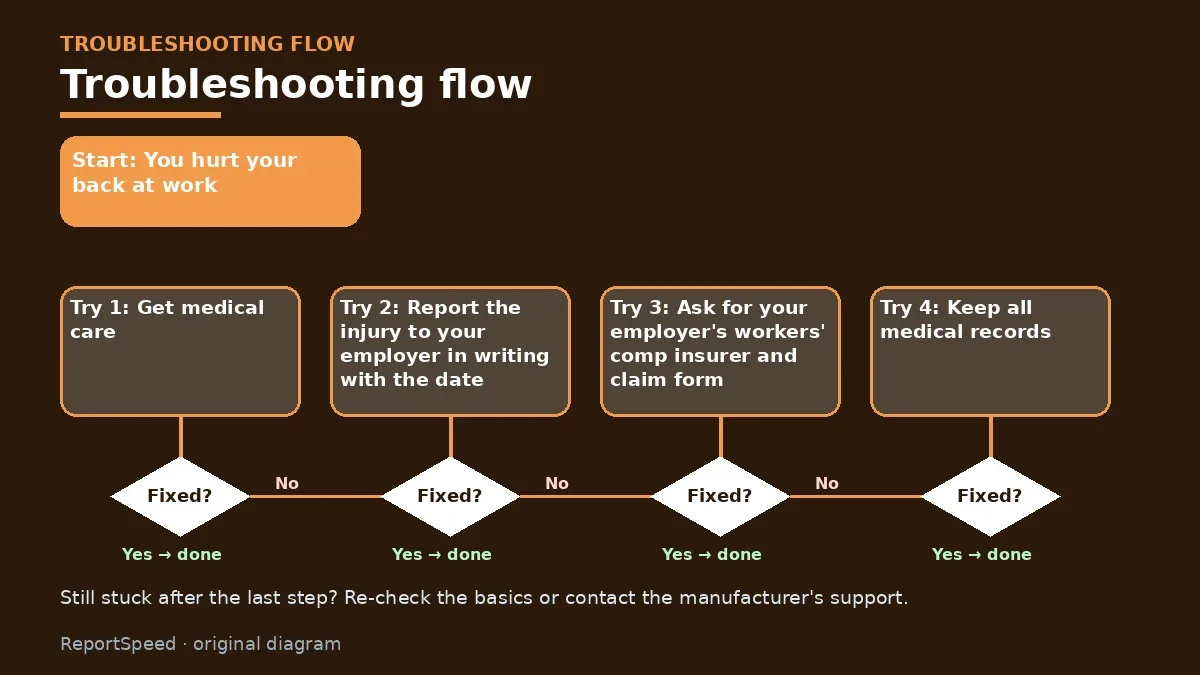
Using sick days instead of reporting a work injury can leave you paying for treatment yourself and make a later claim harder to prove.
What to do

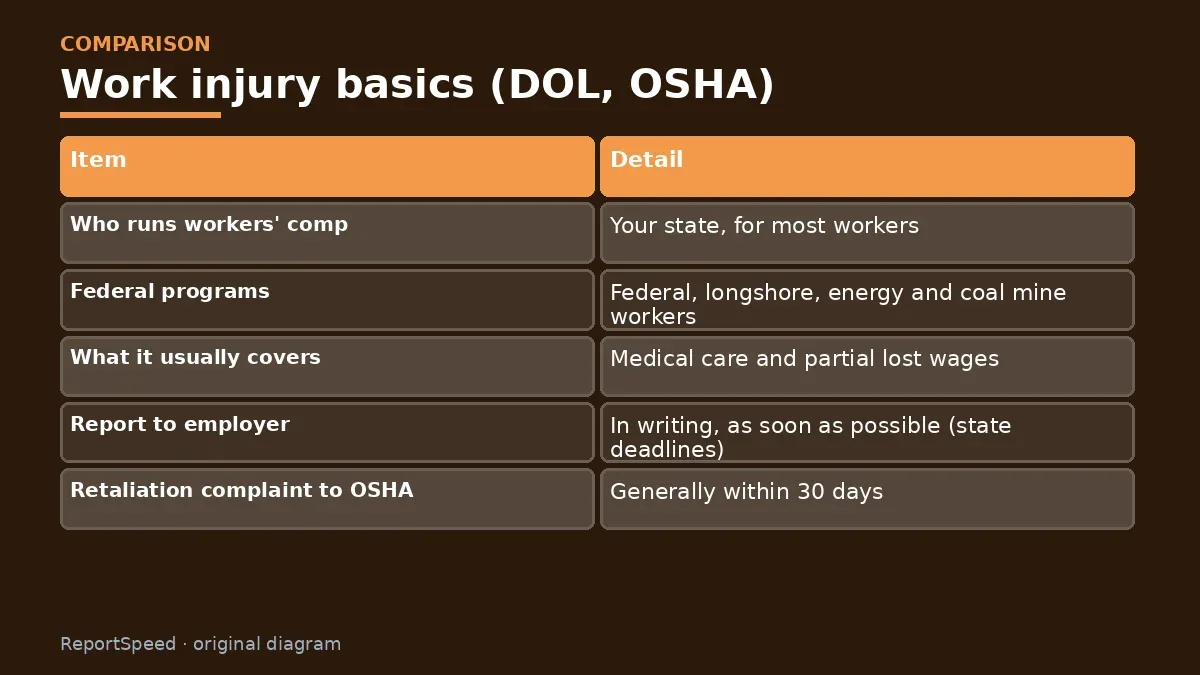
| Item | Detail |
|---|---|
| Who runs workers' comp | Your state, for most workers |
| Federal programs | Federal, longshore, energy and coal mine workers |
| What it usually covers | Medical care and partial lost wages |
| Report to employer | In writing, as soon as possible (state deadlines) |
| Retaliation complaint to OSHA | Generally within 30 days |
| Employer reports to OSHA | Death 8 hours; hospitalization, amputation or eye loss 24 hours |
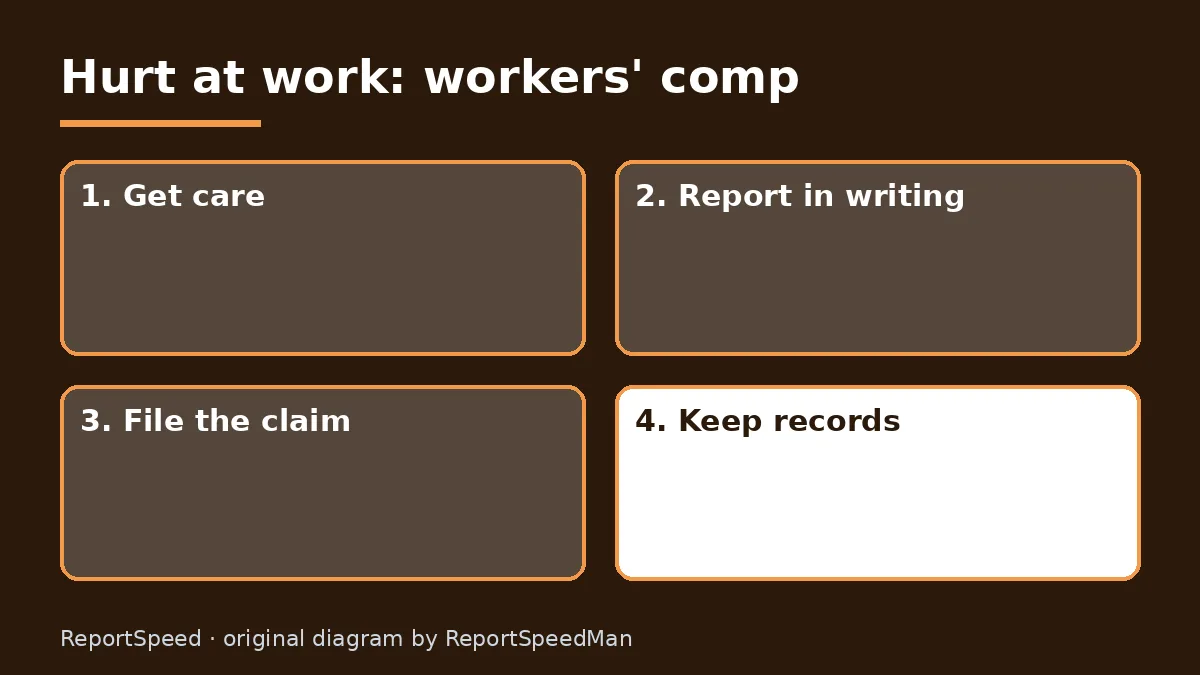
- Get medical care, and tell the provider the injury happened at work.
- Report the injury to your employer in writing with the date, time, place and what happened, and keep a copy.
- Ask for your employer's workers' comp insurer and claim form, or find it on your state's workers' comp agency website.
- Keep all medical records, bills, work restrictions and a log of missed days.
- If you're punished for reporting, contact OSHA within 30 days and consider talking to a workers' comp attorney.
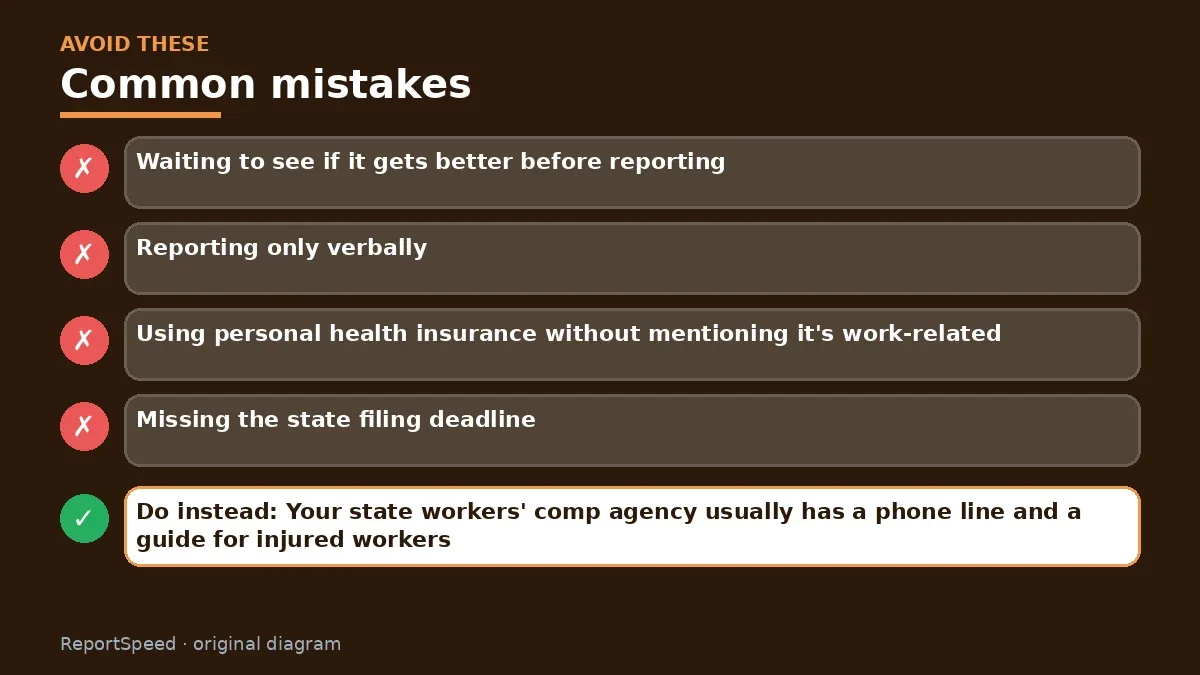
Common mistakes:
- Waiting to see if it gets better before reporting
- Reporting only verbally
- Using personal health insurance without mentioning it's work-related
- Missing the state filing deadline
ReportSpeedMan tip: Your state workers' comp agency usually has a phone line and a guide for injured workers. It's a free, neutral place to ask about deadlines.
What I would actually do
I'd email my supervisor and HR a short written report today, see a doctor and tell them it happened at work, and ask for the claim form and insurer details.
The trade-off people miss: using sick days feels simpler, but it can mean paying medical bills yourself and makes it harder to show later that the injury happened at work.
Did it work? How to check
Your injury is reported in writing and the claim is filed.
Quick FAQ
Can I be fired for filing?
Retaliation for reporting is illegal under OSHA and state laws.
Do I need a lawyer?
Not always; many states cap attorney fees.
Is workers' comp taxable?
Generally no for federal income tax.
Wrap-up: Report a work injury in writing right away, get care and file through your state's workers' comp system. Retaliation for reporting is illegal, and OSHA complaints generally have a 30-day deadline.
Wiki: Wage and Hour Basics (FLSA) and Emergency Fund.
Hurt at work: read the originals
Step-by-step photos
1. Before The problem 
2. Why it happens The cause 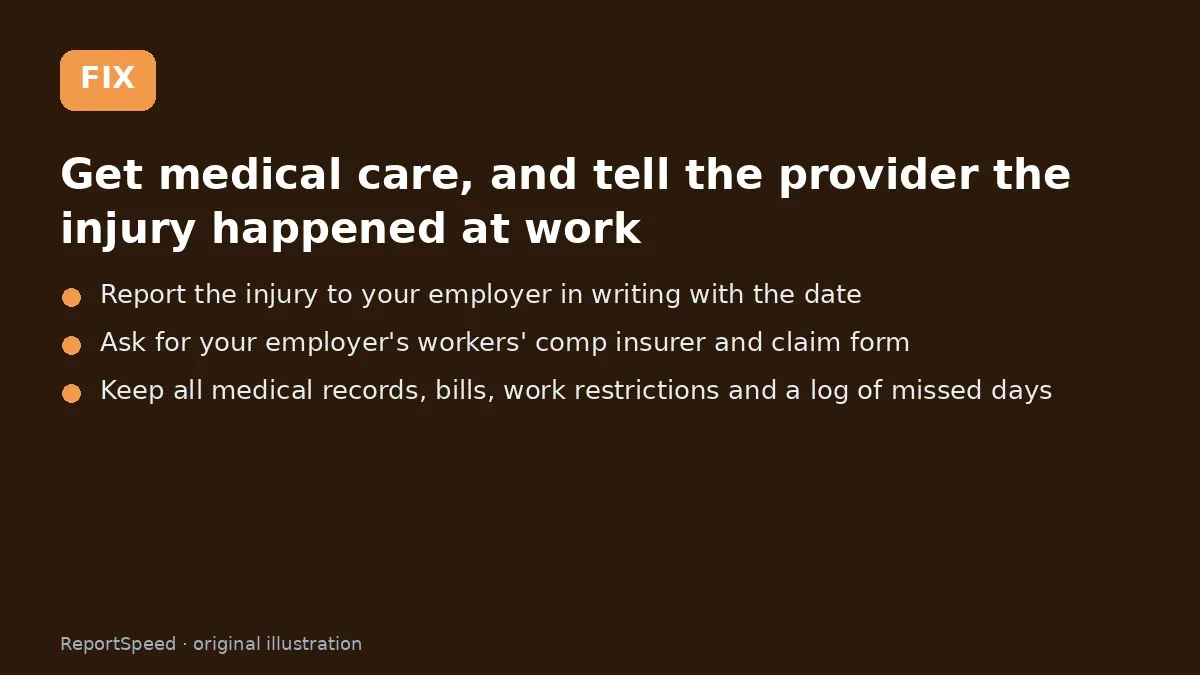
3. The fix The fix 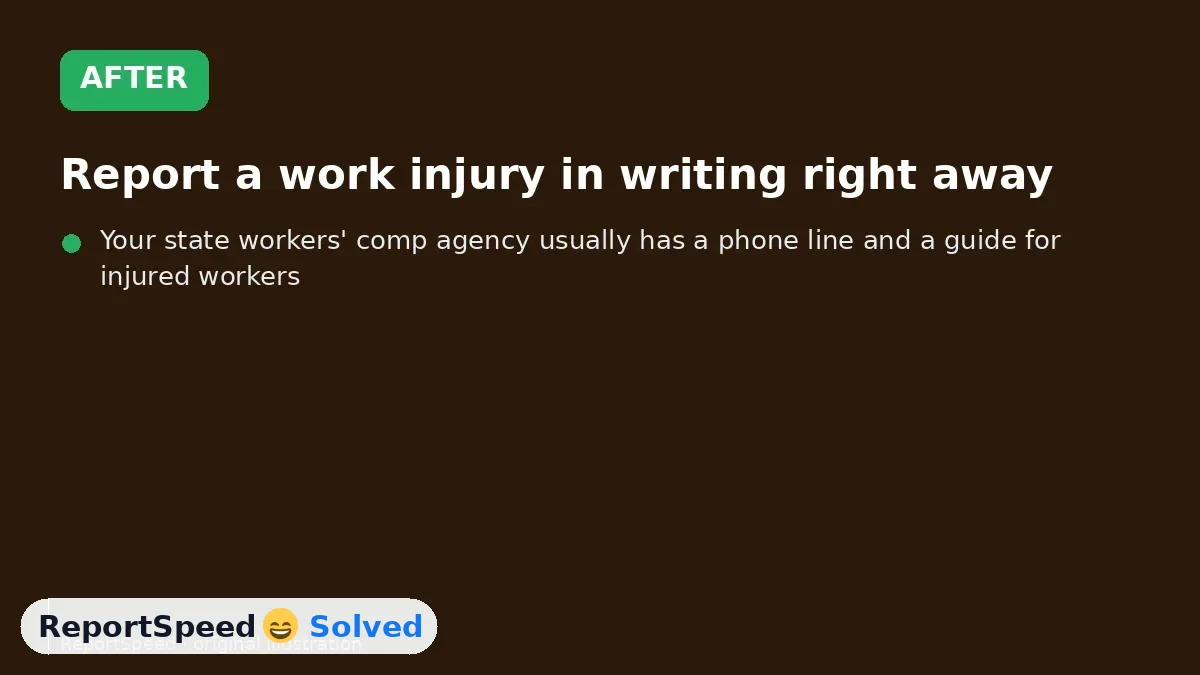
4. After The result
⚡ Speed Summary
- Report a work injury in writing right away, get care and file through your state's workers' comp system.
- Your state workers' comp agency usually has a phone line and a guide for injured workers. It's a free, neutral place to ask about deadlines.
- Using sick days instead of reporting a work injury can leave you paying for treatment yourself and make a later claim harder to prove.

Was this answer helpful?
Tap a star to rate this answer.
Related questions
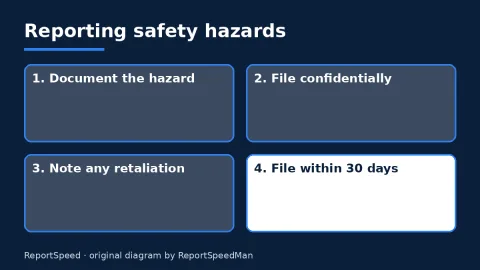
Can I be fired for reporting a safety problem at work? OSHA's 30-day rule
You can report hazards confidentially, and retaliation is illegal.
Rate itSolved

Pregnant at work: what accommodations can I ask for under the PWFA?
Under the PWFA, employers with 15+ workers must reasonably accommodate pregnancy limitations.
Rate itSolved

Do I get paid for jury duty, and can my employer fire me for going?
Federal jurors earn $50 a day; employer pay is optional, but firing you for federal jury service is illegal.
Rate itSolved

COBRA after a layoff: how long, how much and the deadlines
COBRA usually lasts 18 months, costs up to 102% of the premium, and gives you 60 days to elect and 45 days to pay.
Rate itSolved
Real experiences
No experiences yet. Be the first to share.