


Should my emergency money be in checking, savings, or invested?
Where should I keep my emergency fund?
Concerns & risks
You've saved up a little emergency cushion, but it's sitting in checking, and you keep accidentally spending it.
Investing it can mean it's down exactly when you need it.
Causes & evidence
An insured savings account keeps it safe and accessible. See emergency fund.
What to do
- Open a savings account separate from checking.
- Make sure it's FDIC-insured (or NCUA for credit unions).
- Compare rates; online banks often pay more.
- Avoid tying it up in stocks.
Common mistakes: Common mistakes: keeping emergency money where it's too easy to spend, or locking it up where you can't reach it quickly. A separate federally insured savings account is a good balance. Check that the bank is FDIC insured or the credit union is NCUA insured. Avoid investing emergency money in stocks, which can drop right when you need it. Name the account 'Emergency Only' as a mental speed bump.
Speed Man tip: High-yield savings is a nice boost without extra risk.
Wrap-up: Keep it in insured savings. Separate from daily spending. Don't invest your emergency fund.
⚡ Speed Summary
- Keep it in insured savings.
- Separate from daily spending.
- Don't invest your emergency fund.

Was this answer helpful?
Tap a star to rate this answer.
Related questions
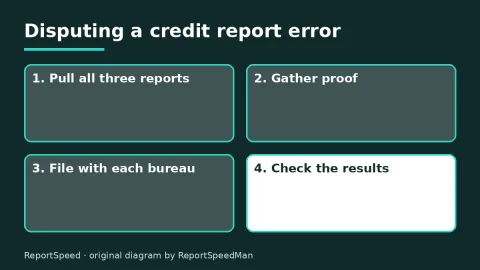
Found an error on my credit report? How to dispute it step by step
Dispute with each bureau and the furnisher, include proof, and expect results in about 30 days.
Rate itSolved
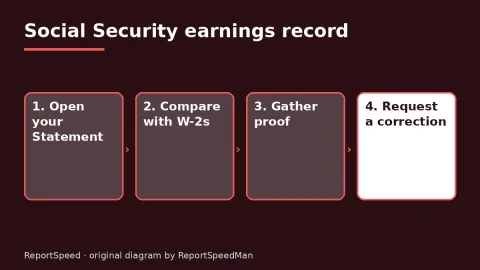
How do I check my Social Security earnings record and fix a mistake?
Check your Statement every year, match it to your W-2s, and correct gaps with proof before the usual window closes.
Rate itSolved
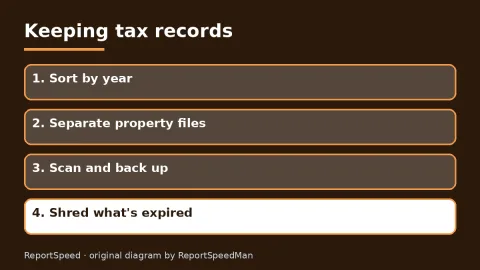
How long should I keep tax records? The IRS 3-, 6- and 7-year rules
Three years covers most returns; six, seven or forever apply in specific cases.
Rate itSolved
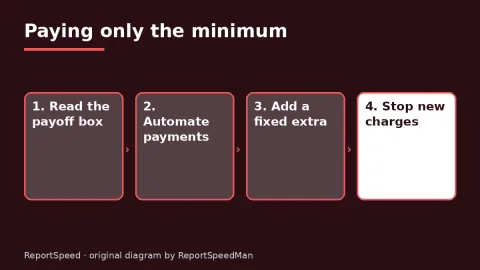
What happens if I only pay the minimum on my credit card?
Minimum payments keep you current but stretch the debt for years.
Rate itSolved
Real experiences
No experiences yet. Be the first to share.