


I have $4,200 on a credit card at about 24% APR and I've been paying just the minimum, around $120 a month. My statement has a box that says how long it would take to pay off. It looks scary. What really happens if I only pay the minimum on my credit card, and what's the smartest way to pay it down faster?
What happens if I only pay the minimum on my credit card?
Concerns & risks
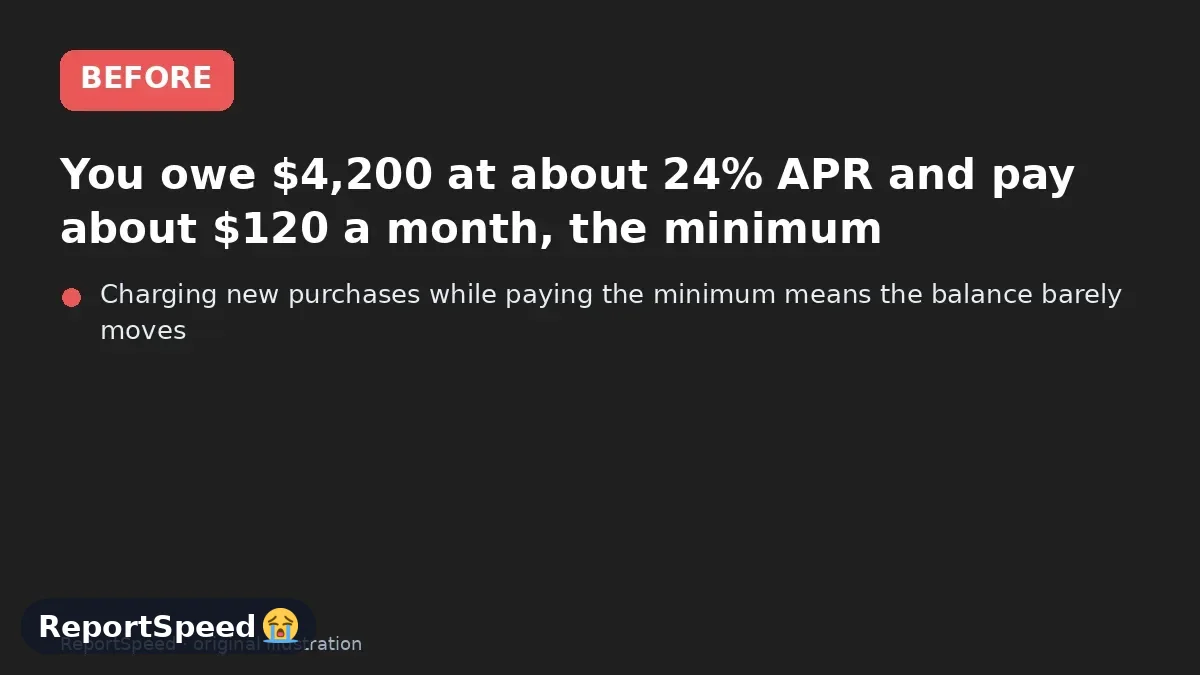
You owe $4,200 at about 24% APR and pay about $120 a month, the minimum.
| Statement item | What it tells you |
|---|---|
| Minimum payment due | Smallest amount to stay current |
| Payment due date | Pay by this to avoid late fees |
| Minimum payment warning | Years to pay off at minimum |
| 3-year payment | Monthly amount to clear in 36 months |
| APR | Interest rate on balances |
| Interest charged | What carrying the balance cost this month |
Causes & evidence
The CFPB explains that if you make only the minimum payment each month, it will take longer and cost more to pay off your balance, because interest keeps accruing on what's left. Under federal law, credit card statements must include a minimum payment warning showing how long it would take to pay off the balance if you pay only the minimum, the total cost, and how much you'd need to pay each month to pay it off in three years. Interest is charged on the balance you carry, so a larger payment cuts the principal faster and reduces future interest. Missing even the minimum can bring a late fee, a penalty APR and a negative mark on your credit report if it's 30 or more days late.
Who this applies to: anyone carrying a card balance. If you can't make the minimum, call your issuer before the due date to ask about hardship options. A nonprofit credit counselor can explain debt management plans. Balance transfers can help but usually charge a fee.
Charging new purchases while paying the minimum means the balance barely moves, even though you're paying every month.
What to do
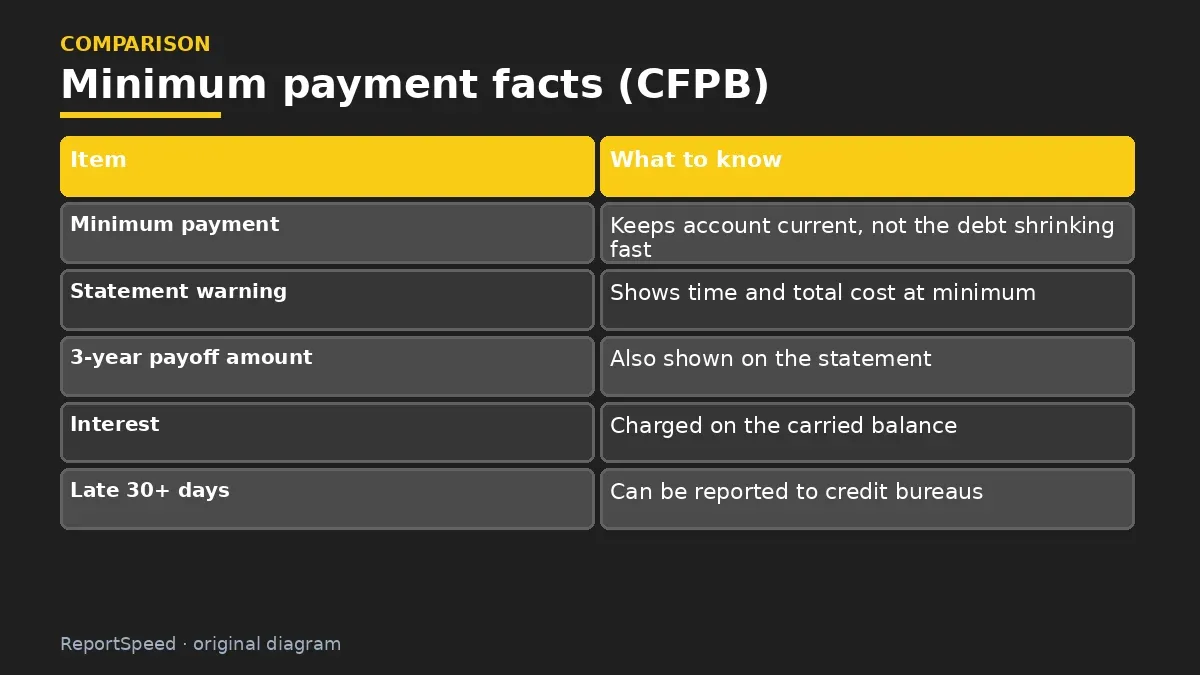
| Item | What to know |
|---|---|
| Minimum payment | Keeps account current, not the debt shrinking fast |
| Statement warning | Shows time and total cost at minimum |
| 3-year payoff amount | Also shown on the statement |
| Interest | Charged on the carried balance |
| Late 30+ days | Can be reported to credit bureaus |
| Missed payment | Late fee and possible penalty APR |
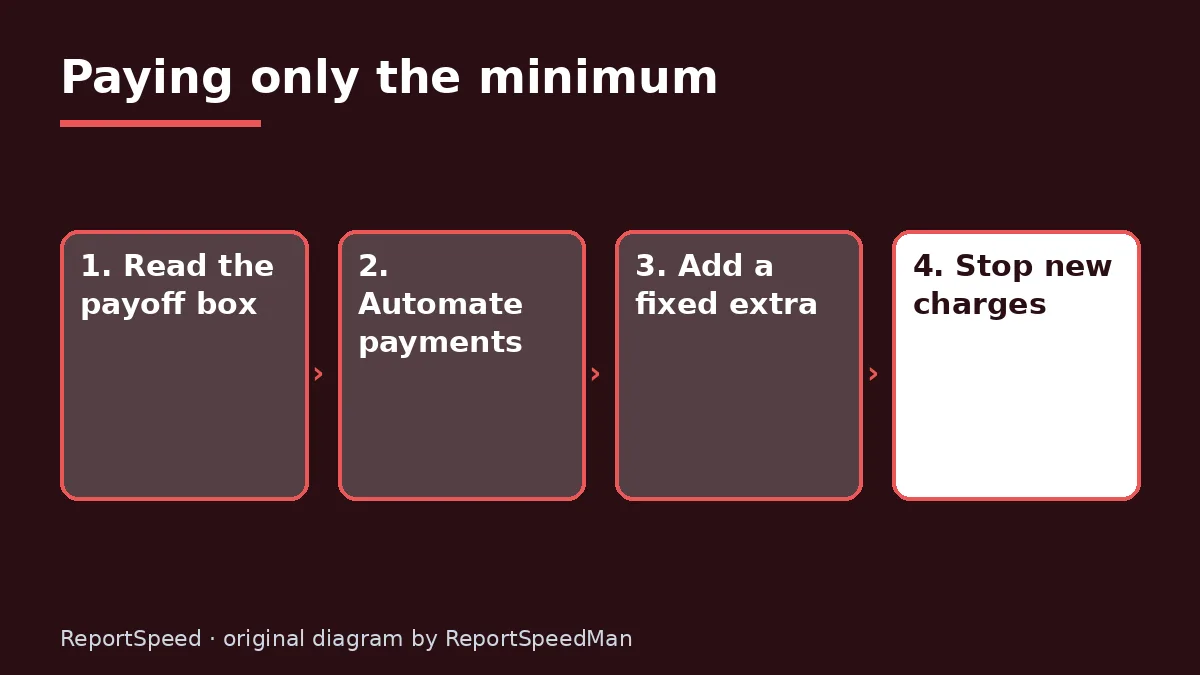
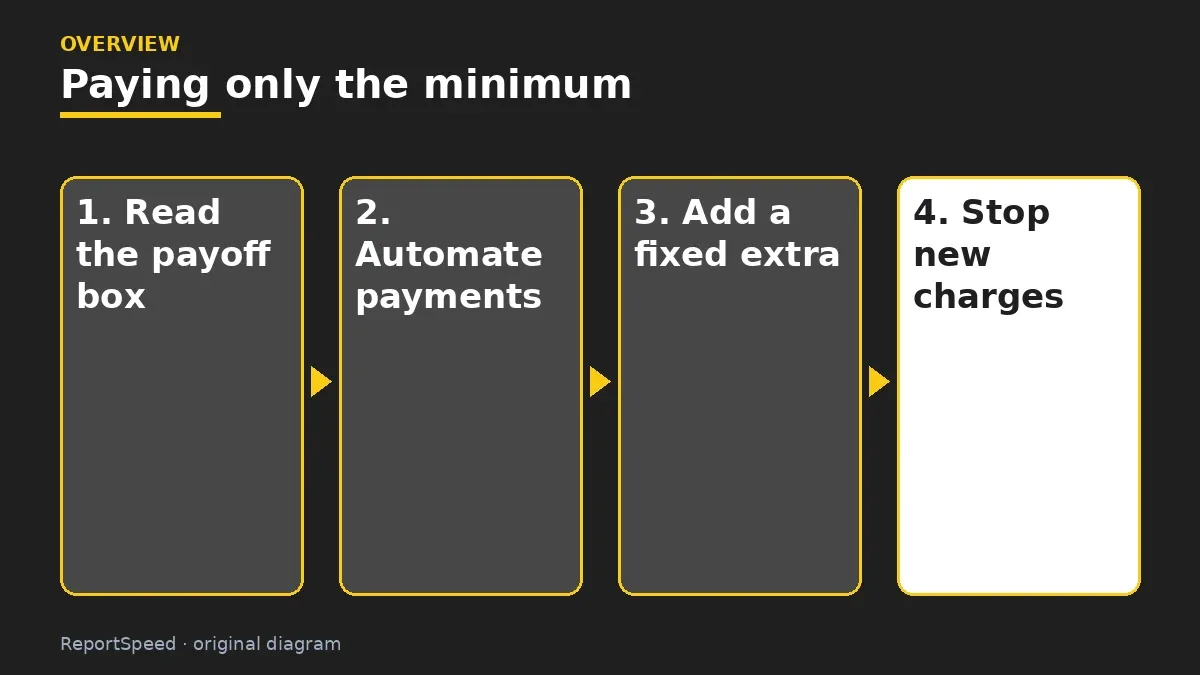
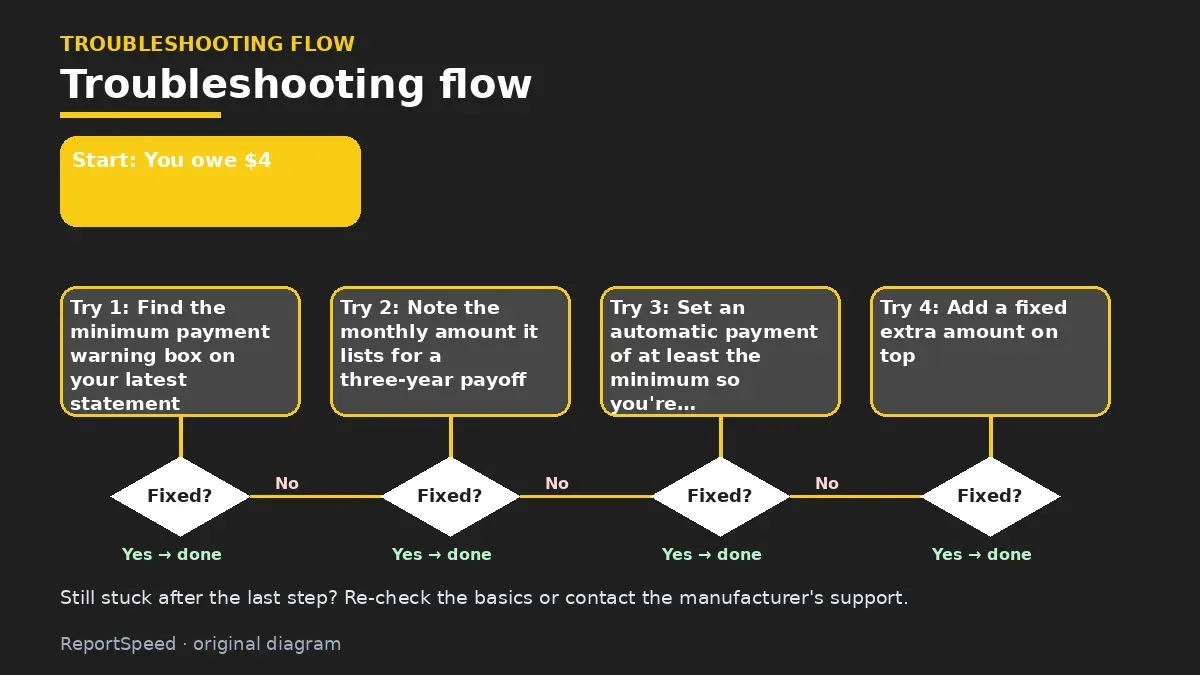
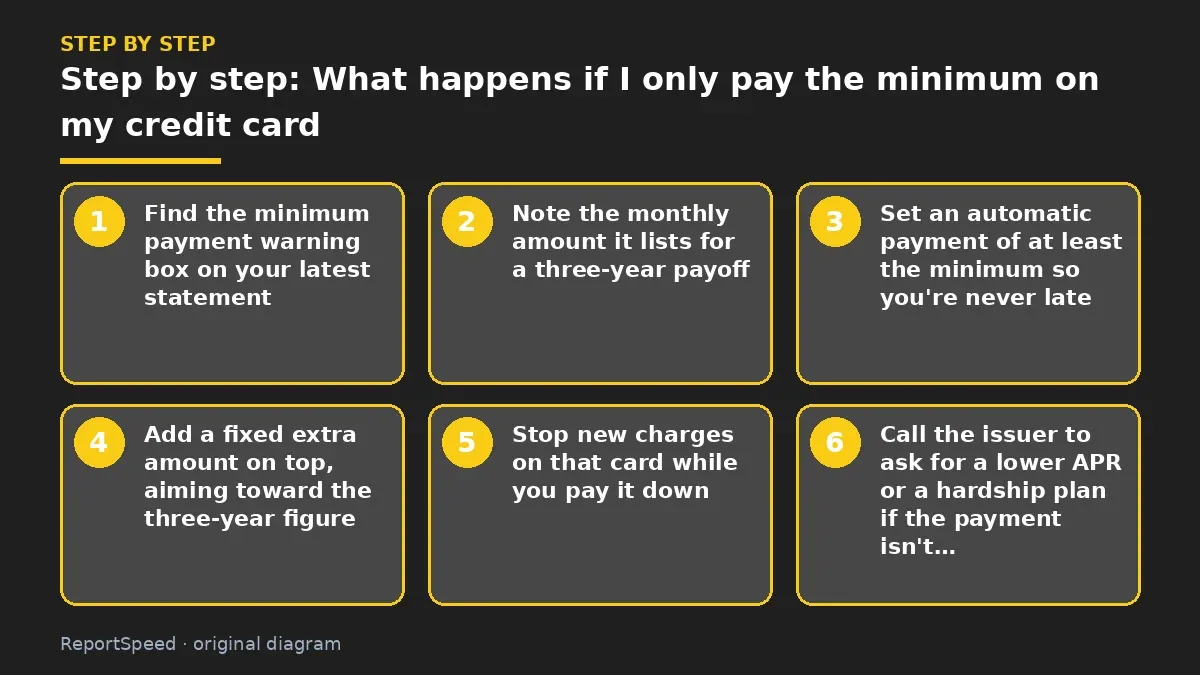
- Find the minimum payment warning box on your latest statement.
- Note the monthly amount it lists for a three-year payoff.
- Set an automatic payment of at least the minimum so you're never late.
- Add a fixed extra amount on top, aiming toward the three-year figure.
- Stop new charges on that card while you pay it down.
- Call the issuer to ask for a lower APR or a hardship plan if the payment isn't affordable.
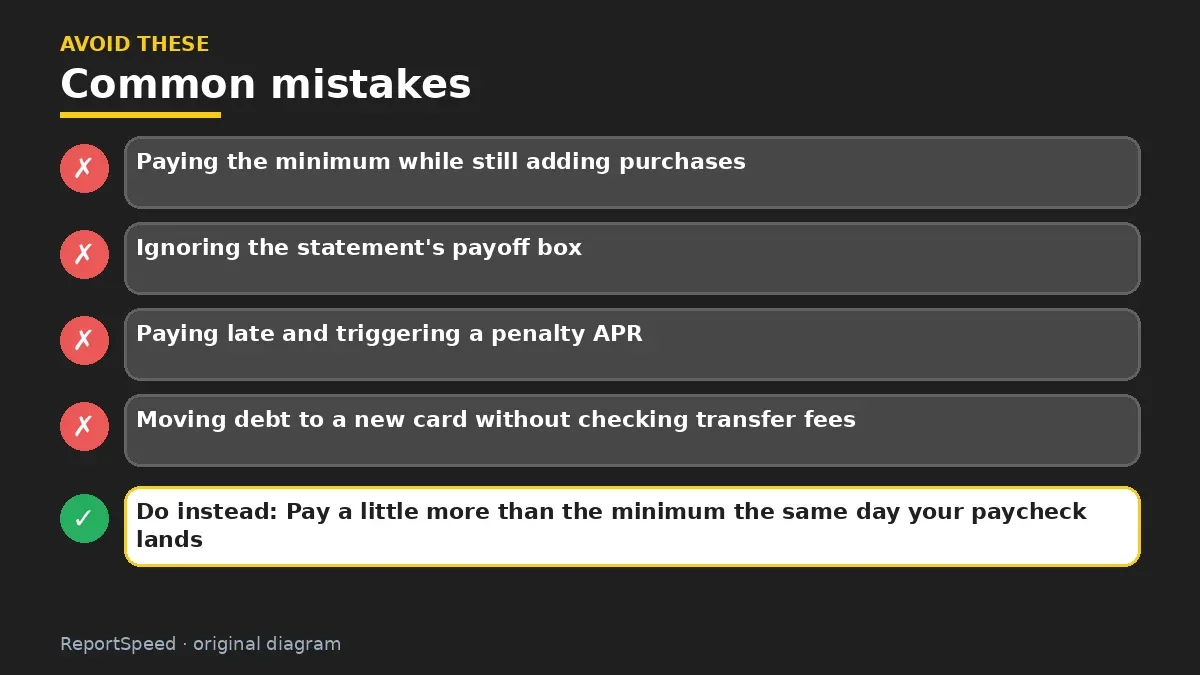
Common mistakes:
- Paying the minimum while still adding purchases
- Ignoring the statement's payoff box
- Paying late and triggering a penalty APR
- Moving debt to a new card without checking transfer fees
ReportSpeedMan tip: Pay a little more than the minimum the same day your paycheck lands. The money never sits in checking long enough to be spent.
What I would actually do
I'd automate the minimum to protect my credit, add a fixed extra equal to the statement's three-year amount, and move the card out of my wallet.
The trade-off people miss: paying extra on the card can drain cash for emergencies. Keep a small emergency fund so a surprise bill doesn't go right back on the card.
Checking that it worked
Your balance falls each month and the three-year payoff is on track.
Quick FAQ
Does paying the minimum hurt my credit?
Not directly, but high balances can affect utilization.
Where's the payoff info?
In the minimum payment warning on your statement.
Should I close the card?
Not necessarily; paying it down is the priority.
Wrap-up: Minimum payments keep you current but stretch the debt for years. Use your statement's three-year figure as a target, automate payments and stop new charges.
Wiki: Credit Card Interest and APR and Compound Interest.
What happens if I only pay the minimum on my credit card: where the facts come from
Step-by-step photos
1. Before The problem 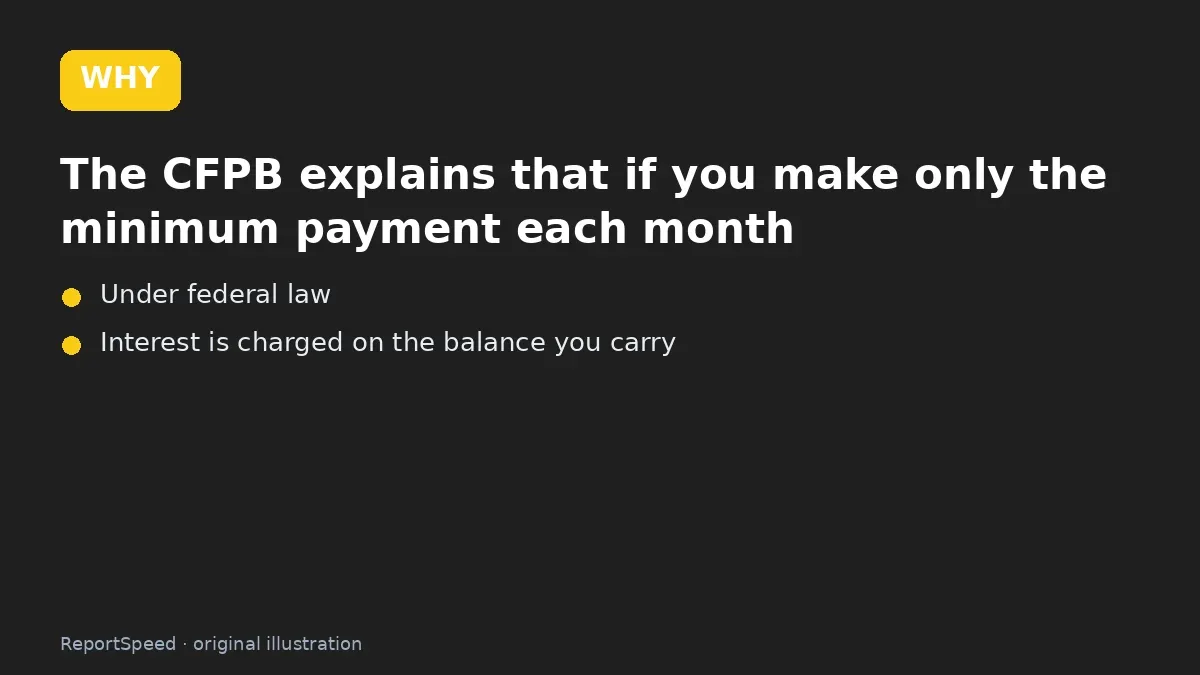
2. Why it happens The cause 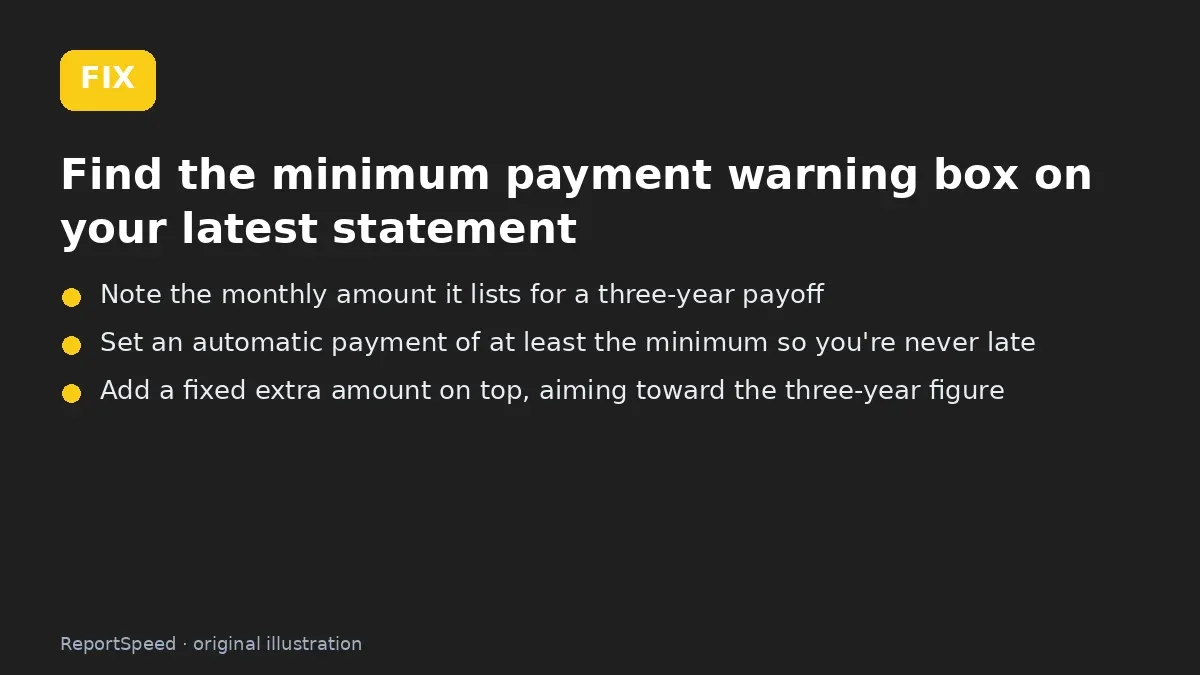
3. The fix The fix 
4. After The result
⚡ Speed Summary
- Minimum payments keep you current but stretch the debt for years.
- Pay a little more than the minimum the same day your paycheck lands. The money never sits in checking long enough to be spent.
- Charging new purchases while paying the minimum means the balance barely moves, even though you're paying every month.

Was this answer helpful?
Tap a star to rate this answer.
Related questions
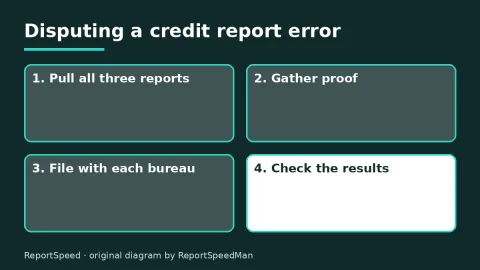
Found an error on my credit report? How to dispute it step by step
Dispute with each bureau and the furnisher, include proof, and expect results in about 30 days.
Rate itSolved
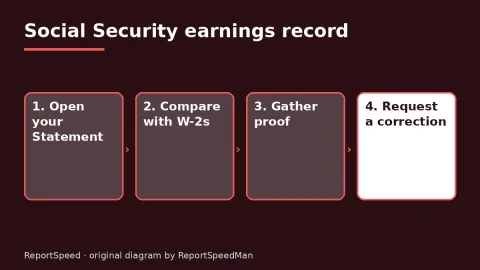
How do I check my Social Security earnings record and fix a mistake?
Check your Statement every year, match it to your W-2s, and correct gaps with proof before the usual window closes.
Rate itSolved
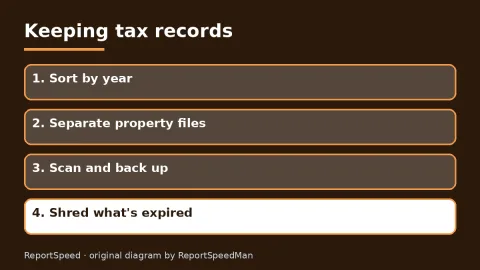
How long should I keep tax records? The IRS 3-, 6- and 7-year rules
Three years covers most returns; six, seven or forever apply in specific cases.
Rate itSolved
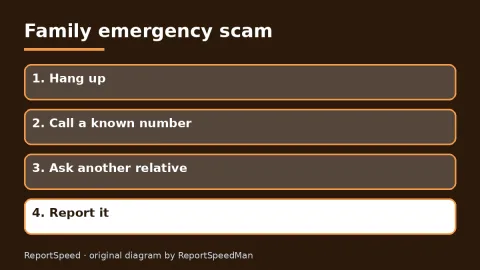
A call says my grandson is in jail: is it a family emergency scam?
Hang up, call your relative on a known number, check with family, and never pay by gift card, crypto, wire or courier because of a panicked call.
Rate itSolved
Real experiences
No experiences yet. Be the first to share.