


I was laid off yesterday after four years at my company. I've never filed for unemployment before. Where do I apply, how quickly should I do it, and what do I have to do to keep getting payments?
How do I apply for unemployment benefits?
Concerns & risks
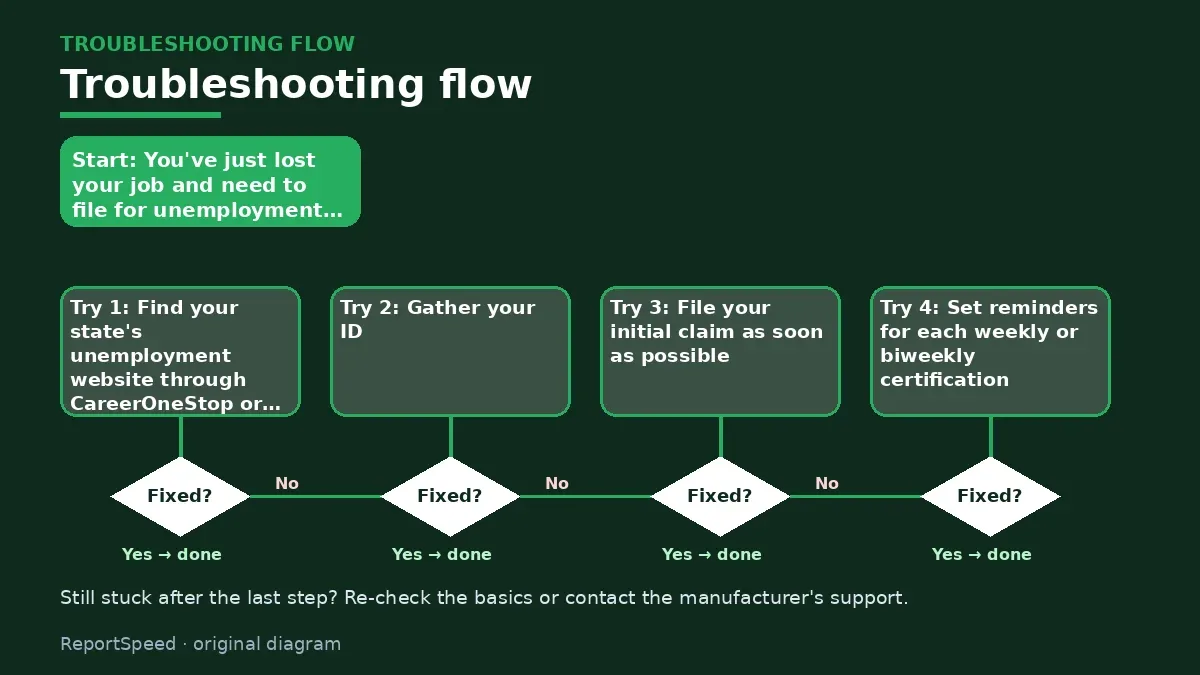
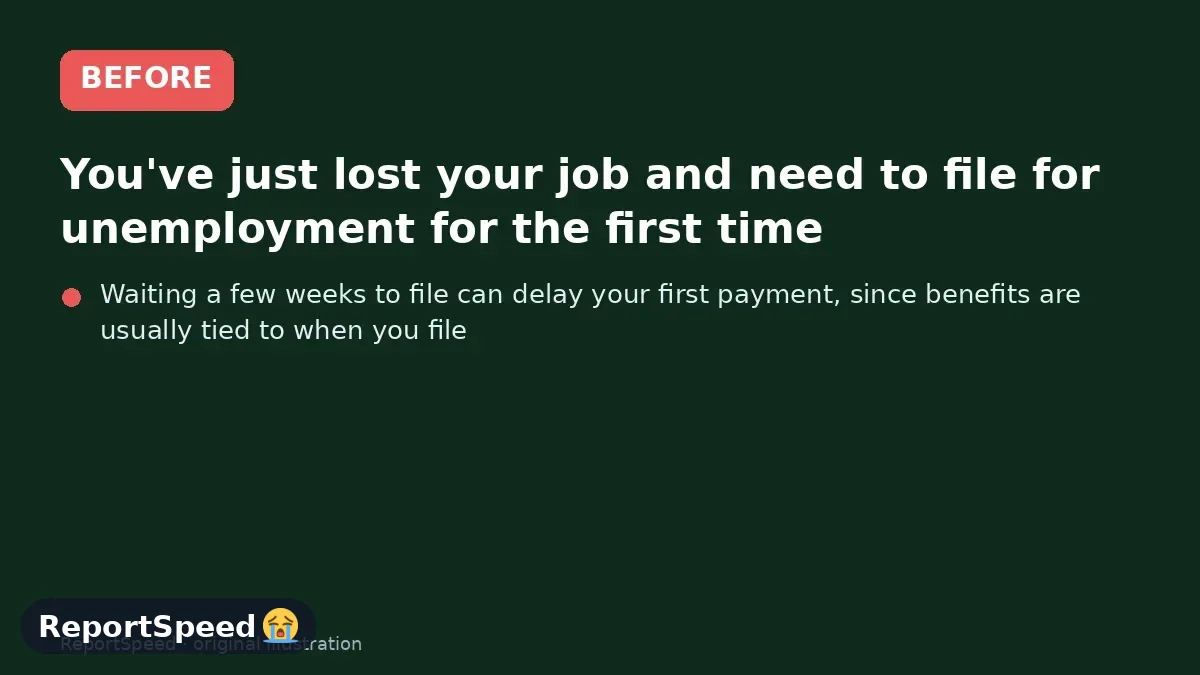
You've just lost your job and need to file for unemployment for the first time.
| Day | Task |
|---|---|
| Day 1 | Find your state site and gather documents |
| Day 1-2 | File the initial claim |
| Weekly | Certify on time |
| Ongoing | Log job search activity |

Causes & evidence
Unemployment insurance, as the Labor Department describes it, is a joint federal-state program, and each state administers its own program with its own rules. Generally, you must be unemployed through no fault of your own, as determined by state law, and meet state requirements for wages earned or time worked. You should file your claim with the state unemployment insurance program in the state where you worked, and if you worked in more than one state or have moved, the state where you now live can help. The DOL advises filing as soon as possible after becoming unemployed. After filing, you'll typically need to file weekly or biweekly claims and respond to questions about your availability for work and job search.
Benefit amounts and how long they last are set by each state. Some states have a waiting week before benefits start.
Waiting a few weeks to file can delay your first payment, since benefits are usually tied to when you file.
What to do
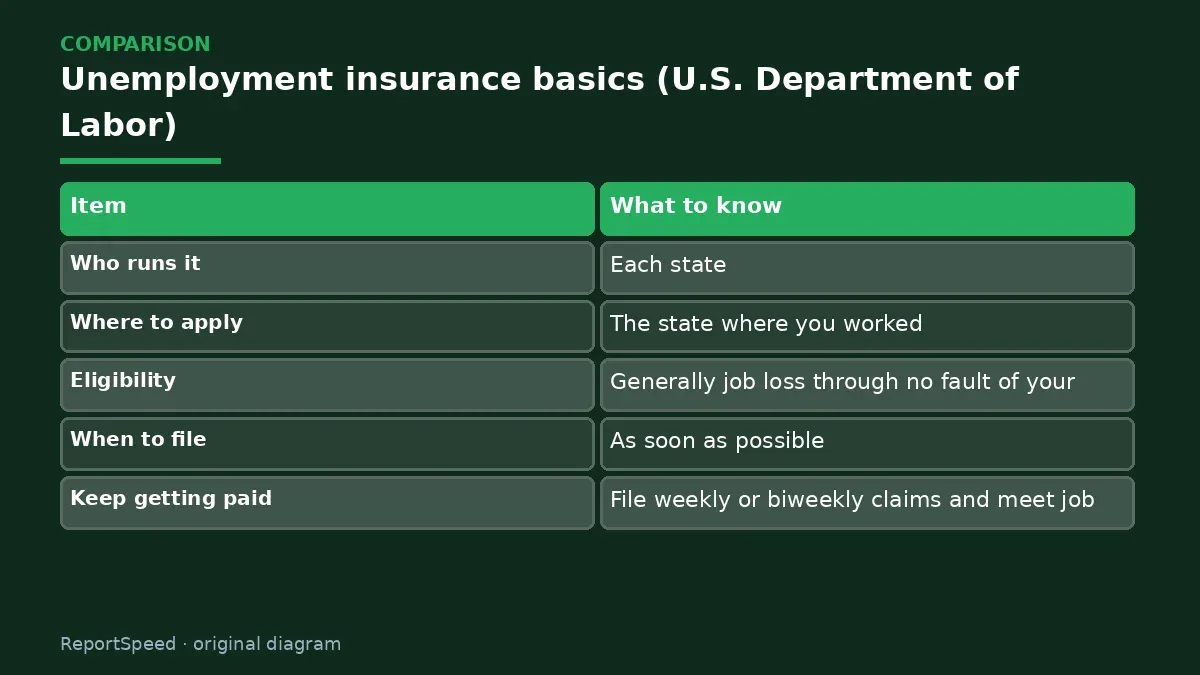
| Item | What to know |
|---|---|
| Who runs it | Each state |
| Where to apply | The state where you worked |
| Eligibility | Generally job loss through no fault of your own, plus wage or work requirements |
| When to file | As soon as possible |
| Keep getting paid | File weekly or biweekly claims and meet job search rules |
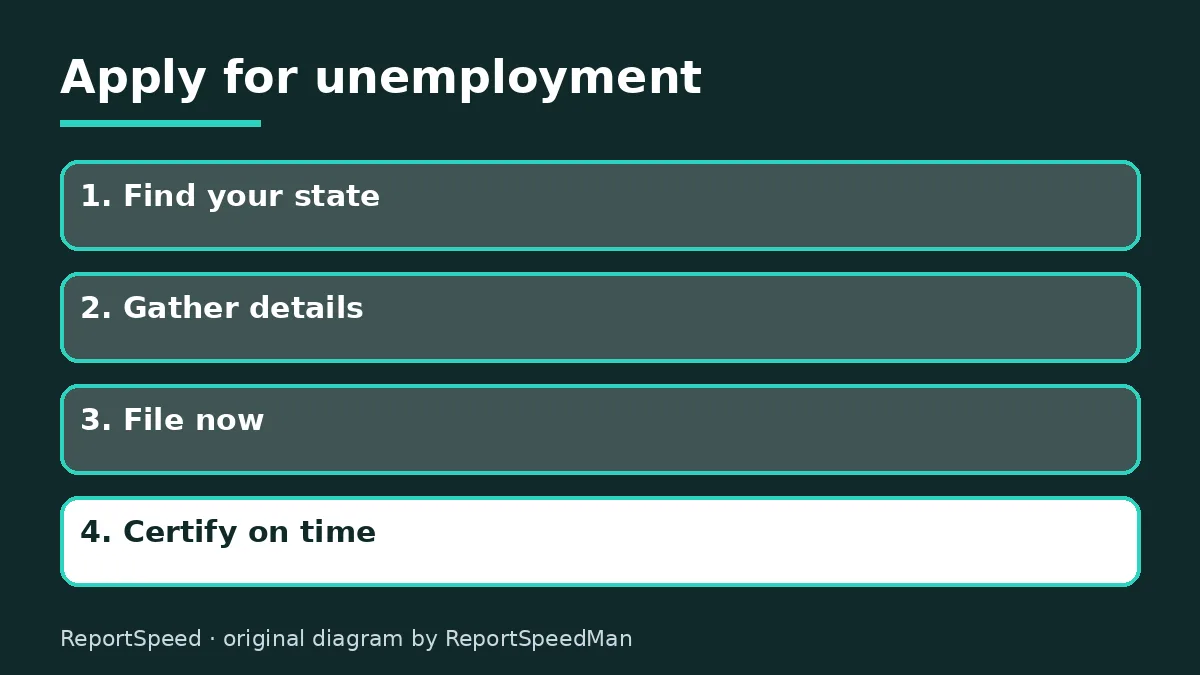
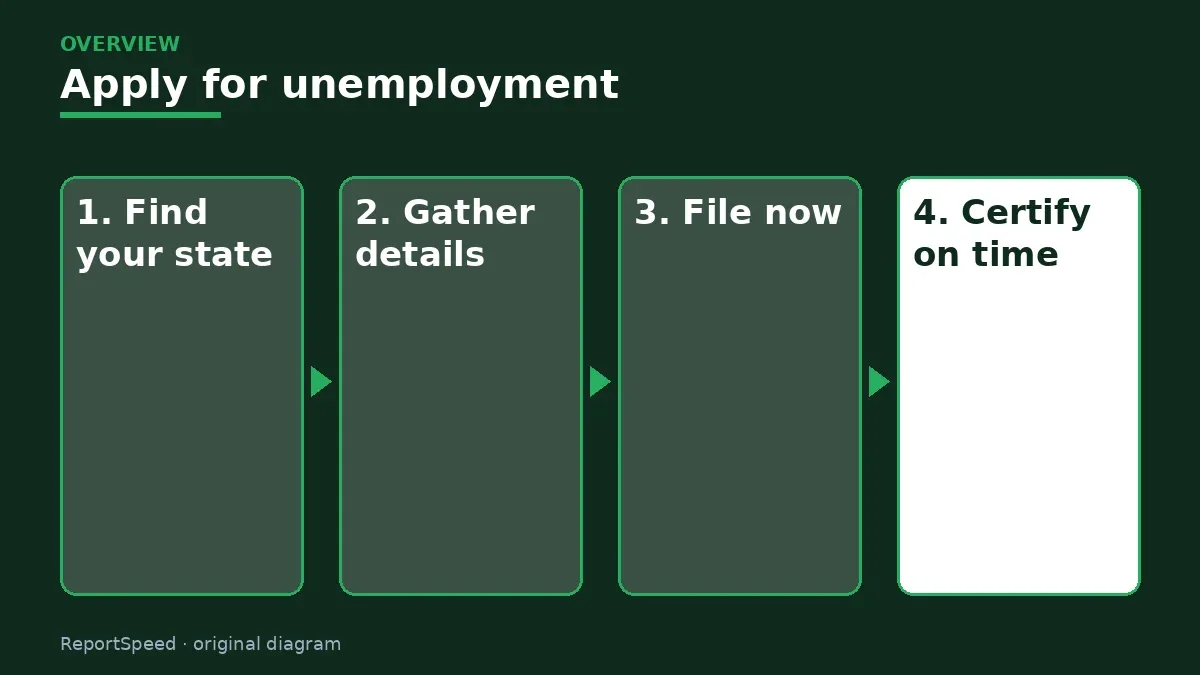
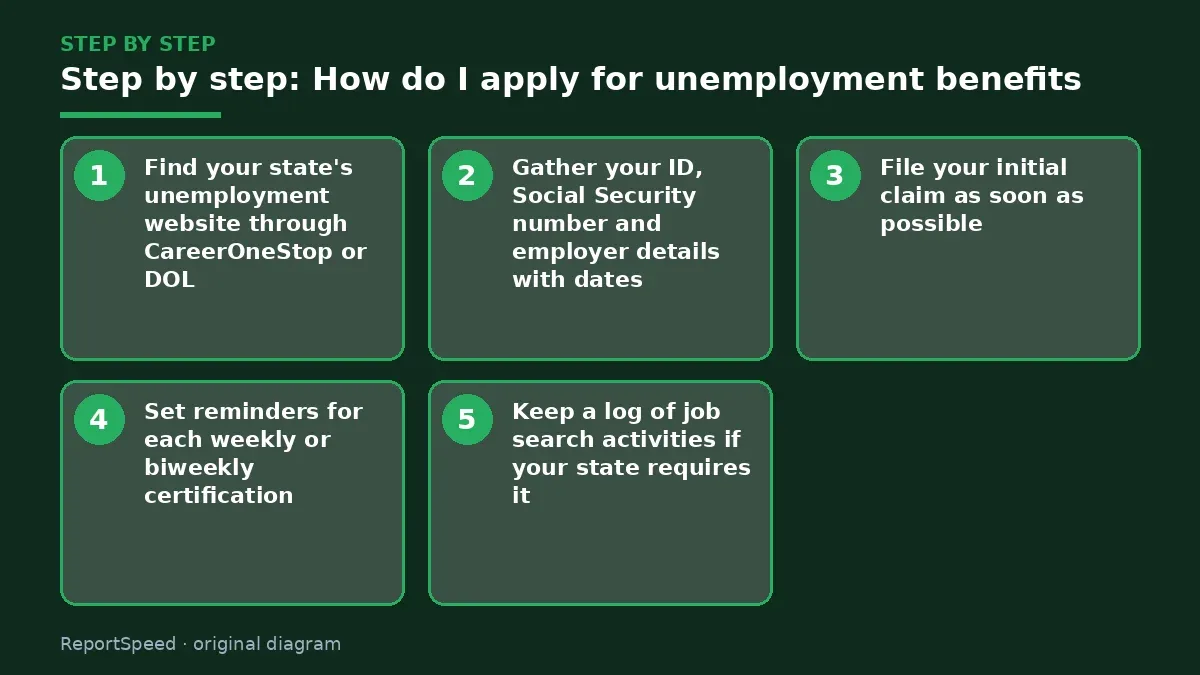
- Find your state's unemployment website through CareerOneStop or DOL.
- Gather your ID, Social Security number and employer details with dates.
- File your initial claim as soon as possible.
- Set reminders for each weekly or biweekly certification.
- Keep a log of job search activities if your state requires it.
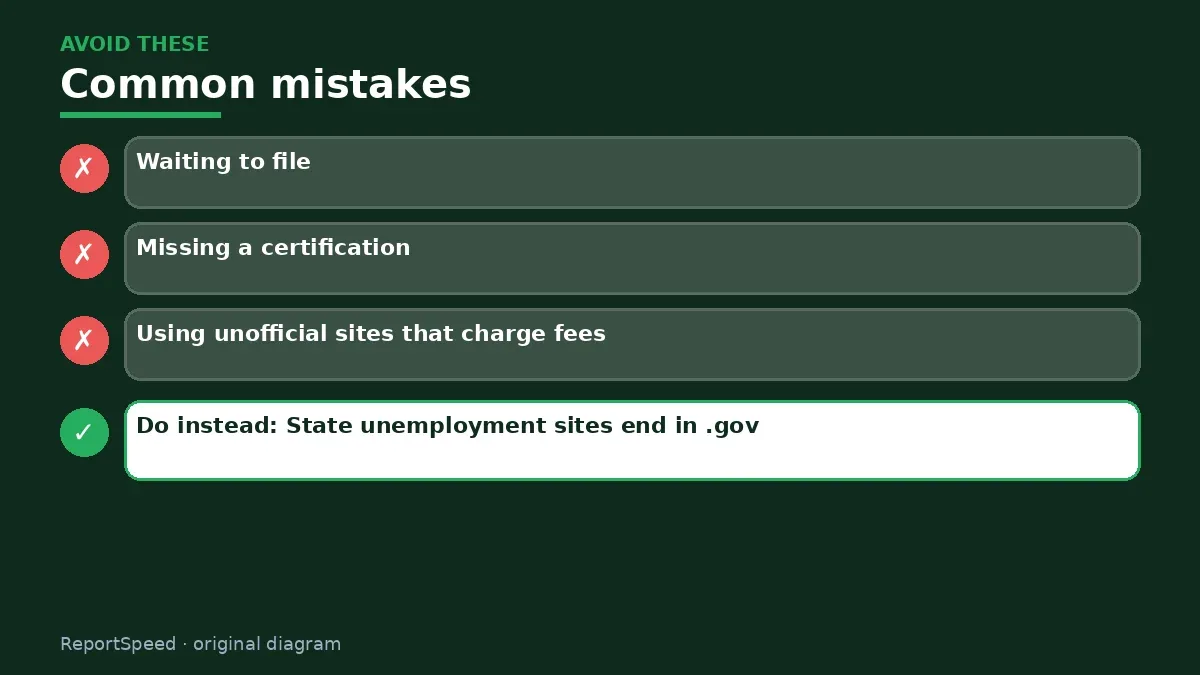
Common mistakes:
- Waiting to file
- Missing a certification
- Using unofficial sites that charge fees
ReportSpeedMan tip: State unemployment sites end in .gov. Be wary of anything asking for a fee to file.
What I would actually do
I'd file the day after a layoff, set a weekly phone reminder for certification and keep a simple job search log.
The trade-off people miss: severance or vacation payouts can affect benefits in some states, so report them accurately rather than guessing.
How you can tell it worked
Your claim is filed and each certification is submitted on time.
Quick FAQ
Can I apply if I quit?
Usually only with good cause under state law.
Can I work part-time?
Often, with reduced benefits.
What if I'm denied?
You can appeal.
Wrap-up: File with your state right away, certify on schedule and keep records. Each state's rules differ, so read yours.
Wiki: Wage and Hour Basics (FLSA) and Emergency Fund.
How do I apply for unemployment benefits: official pages behind this answer
Step-by-step photos
1. Before The problem 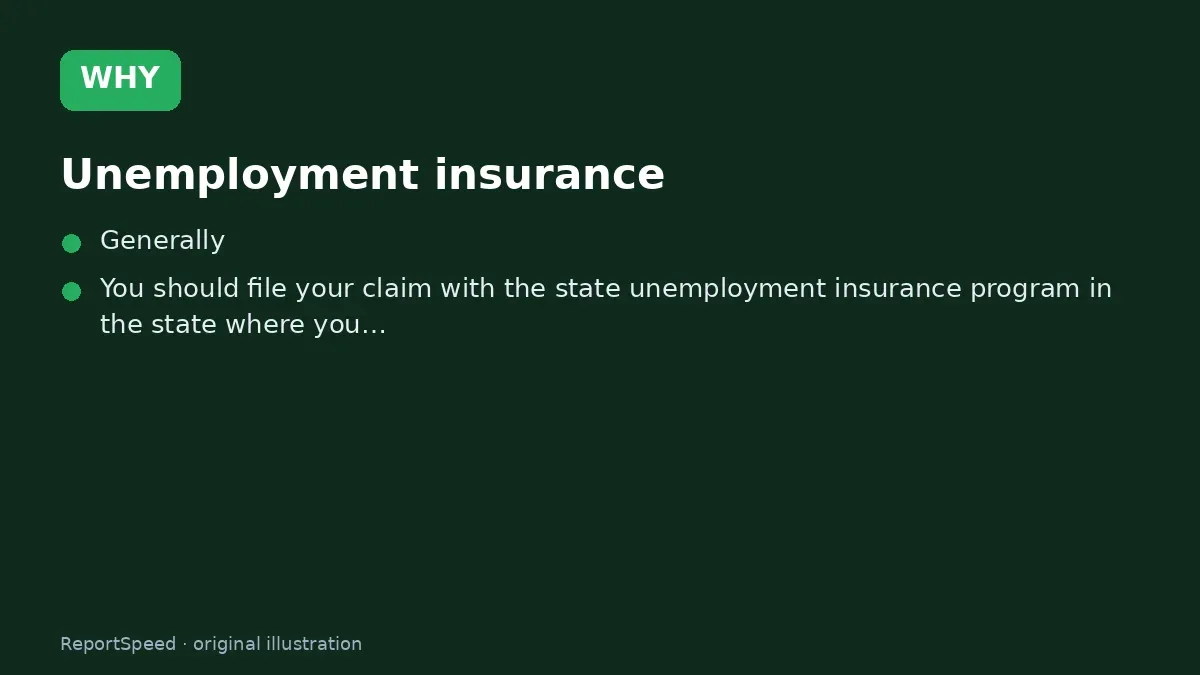
2. Why it happens The cause 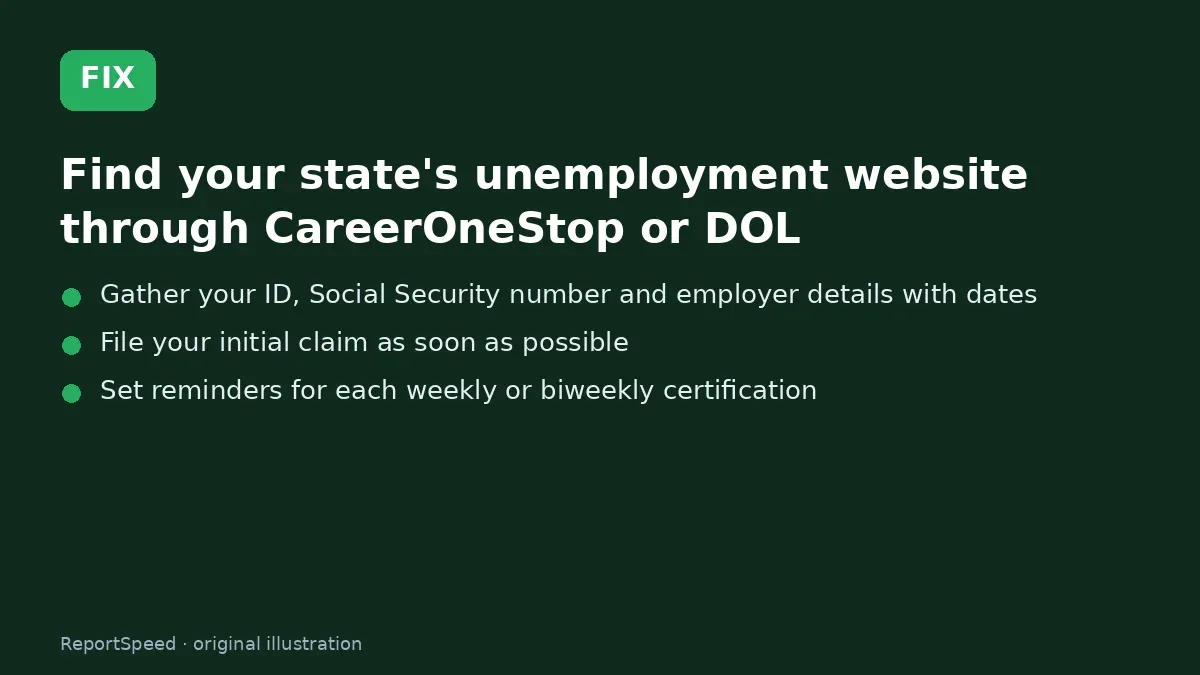
3. The fix The fix 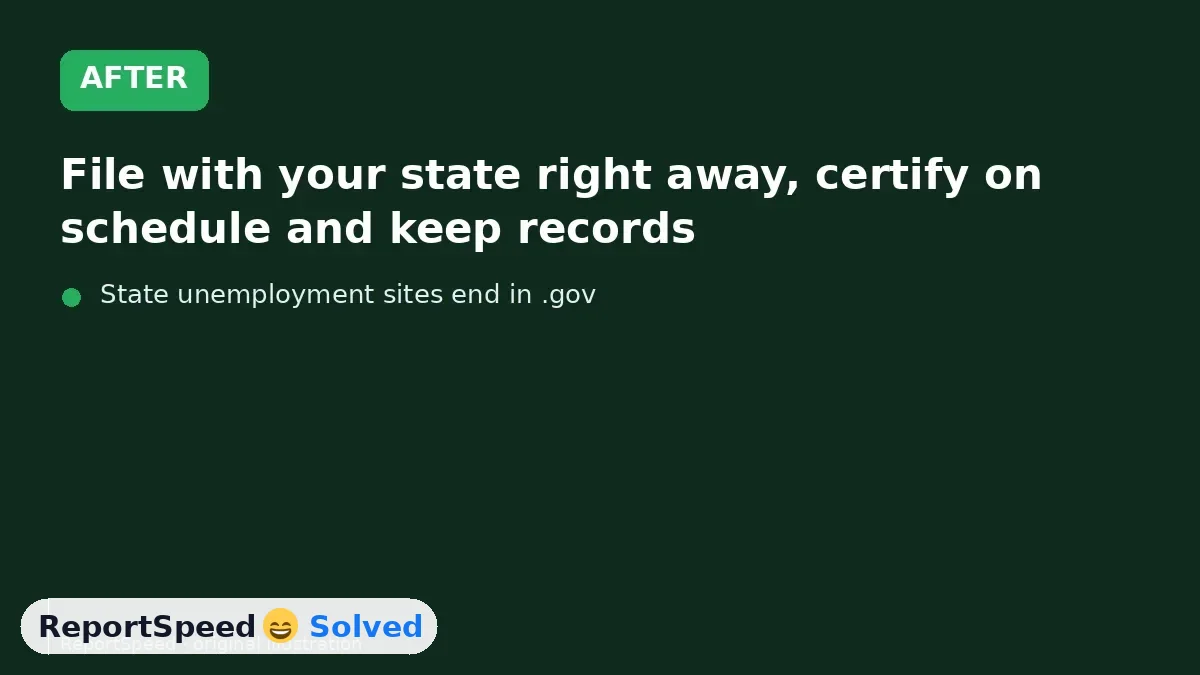
4. After The result
⚡ Speed Summary
- File with your state right away, certify on schedule and keep records.
- State unemployment sites end in .gov. Be wary of anything asking for a fee to file.
- Waiting a few weeks to file can delay your first payment, since benefits are usually tied to when you file.

Was this answer helpful?
Tap a star to rate this answer.
Related questions
Can I be fired for reporting a safety problem at work? OSHA's 30-day rule
You can report hazards confidentially, and retaliation is illegal.
Rate itSolved

Pregnant at work: what accommodations can I ask for under the PWFA?
Under the PWFA, employers with 15+ workers must reasonably accommodate pregnancy limitations.
Rate itSolved
Do I get paid for jury duty, and can my employer fire me for going?
Federal jurors earn $50 a day; employer pay is optional, but firing you for federal jury service is illegal.
Rate itSolved
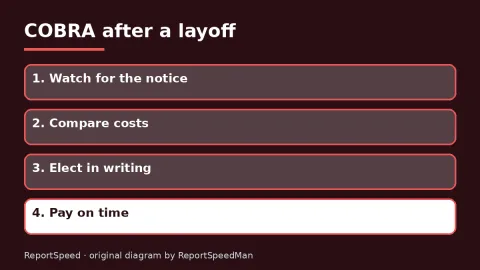
COBRA after a layoff: how long, how much and the deadlines
COBRA usually lasts 18 months, costs up to 102% of the premium, and gives you 60 days to elect and 45 days to pay.
Rate itSolved
Real experiences
No experiences yet. Be the first to share.