


My employer switched me to a salary last year and now I regularly work 50 hours a week with no extra pay. My manager says salaried people don't get overtime. Is that true, or does it depend on something else? How do I find out whether I should be getting paid for those extra hours?
I'm on salary. Am I exempt from overtime pay?
Concerns & risks
You're paid a salary, you regularly work over 40 hours, and you've been told you can't get overtime, but you're not sure that's correct.
| Record | Why it helps |
|---|---|
| Your own daily time log | Shows real hours |
| Job description | Compare with duties tests |
| Pay stubs | Show salary and deductions |
| Written HR answers | Document the conversation |

Causes & evidence
Under the federal Fair Labor Standards Act, covered non-exempt employees must be paid at least one and a half times their regular rate for hours over 40 in a workweek. Being salaried doesn't make you exempt by itself. The Department of Labor explains that to be exempt under the executive, administrative or professional exemptions, an employee generally must be paid on a salary basis, earn at least the salary threshold set in regulations, and mainly perform duties that meet the exemption tests. Job titles don't decide it; actual duties do. Many states have their own, sometimes stricter, wage and hour rules.
The DOL publishes fact sheets on each exemption, and the Wage and Hour Division accepts confidential complaints. Retaliation for asking about wages is prohibited under the FLSA.
Accepting 'salaried means exempt' without checking the duties test can mean years of unpaid overtime.
What to do
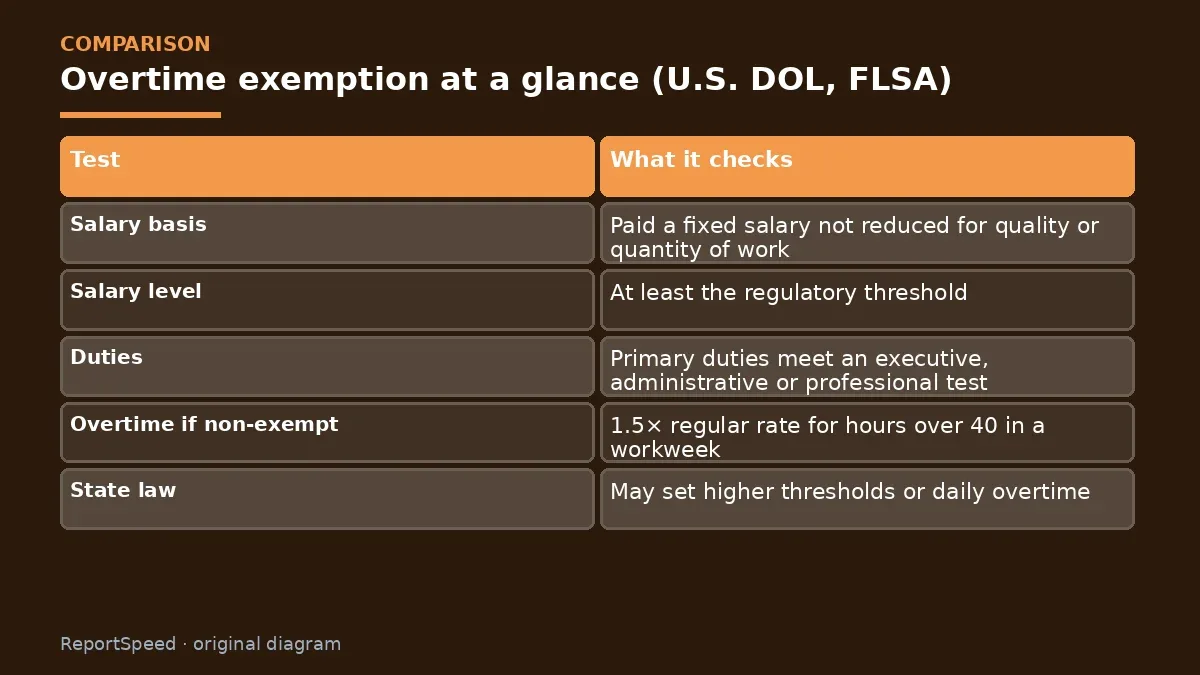
| Test | What it checks |
|---|---|
| Salary basis | Paid a fixed salary not reduced for quality or quantity of work |
| Salary level | At least the regulatory threshold |
| Duties | Primary duties meet an executive, administrative or professional test |
| Overtime if non-exempt | 1.5× regular rate for hours over 40 in a workweek |
| State law | May set higher thresholds or daily overtime |
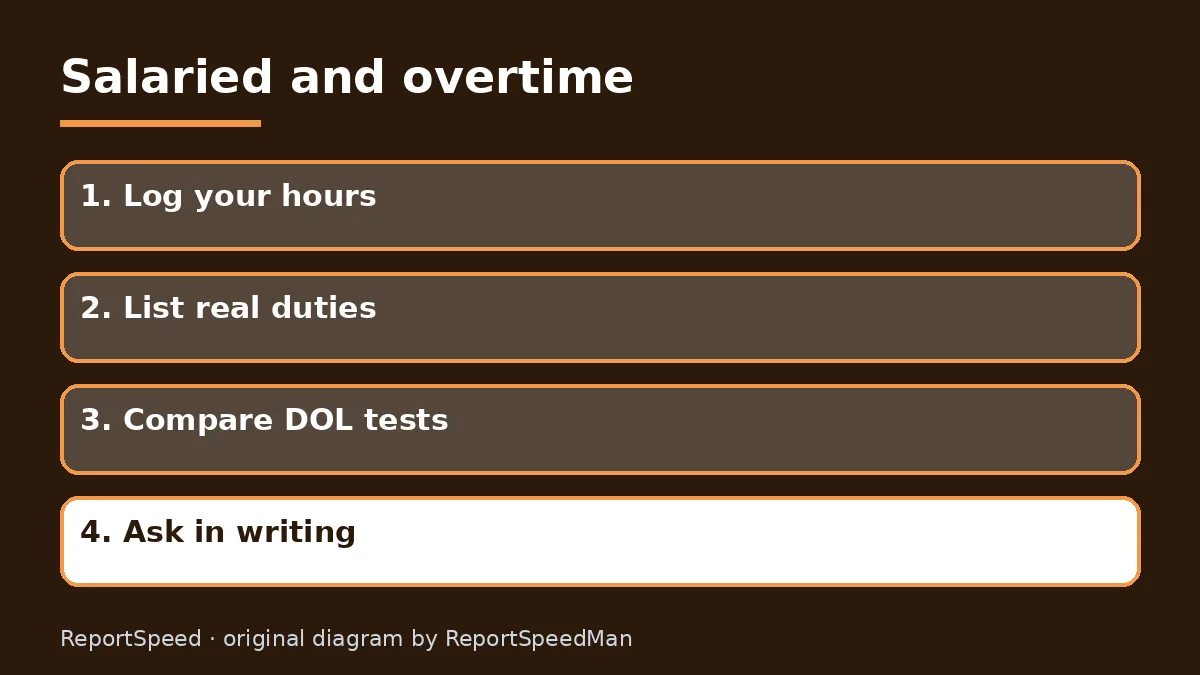
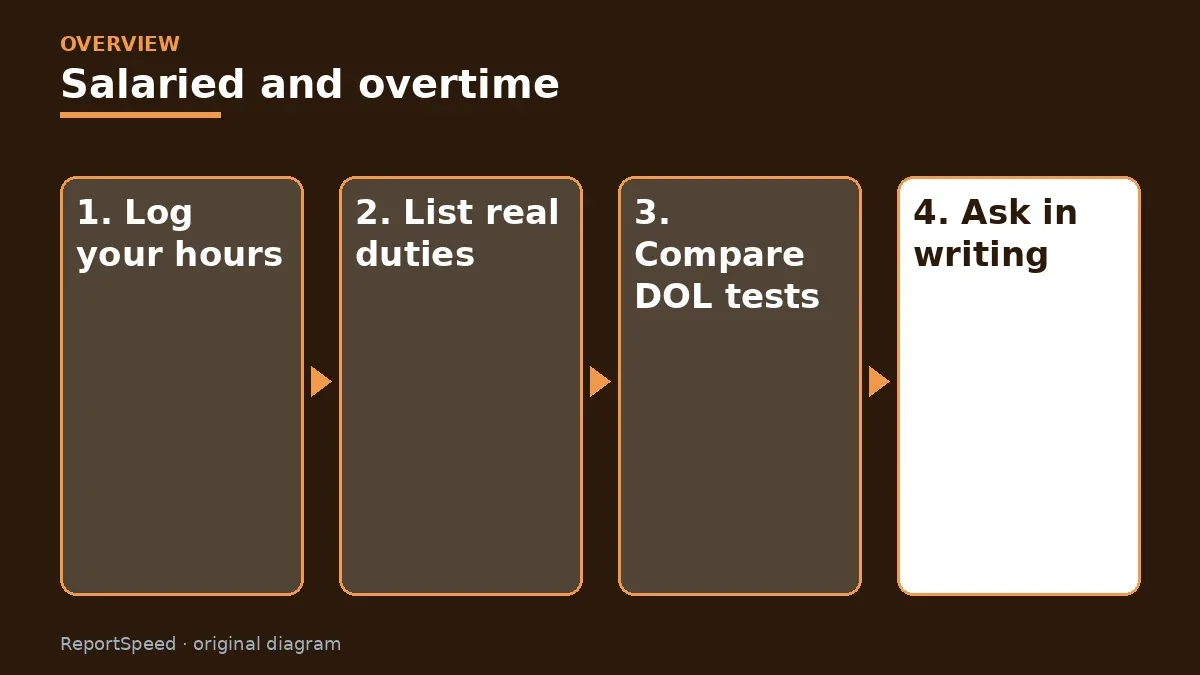
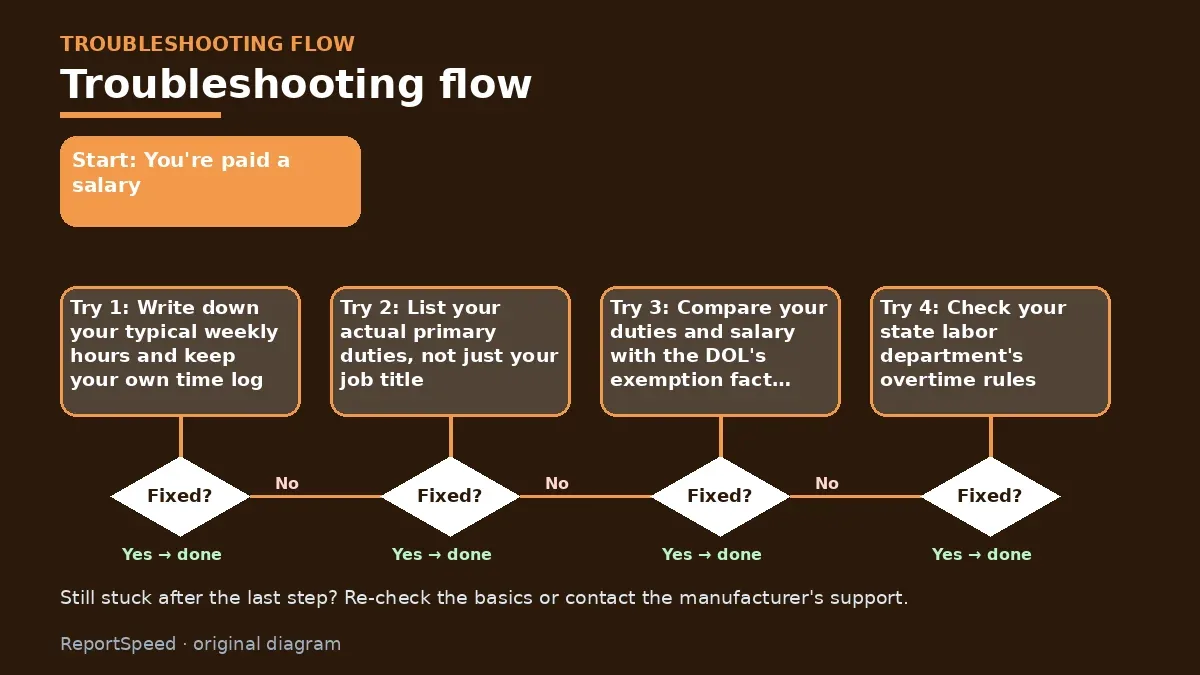
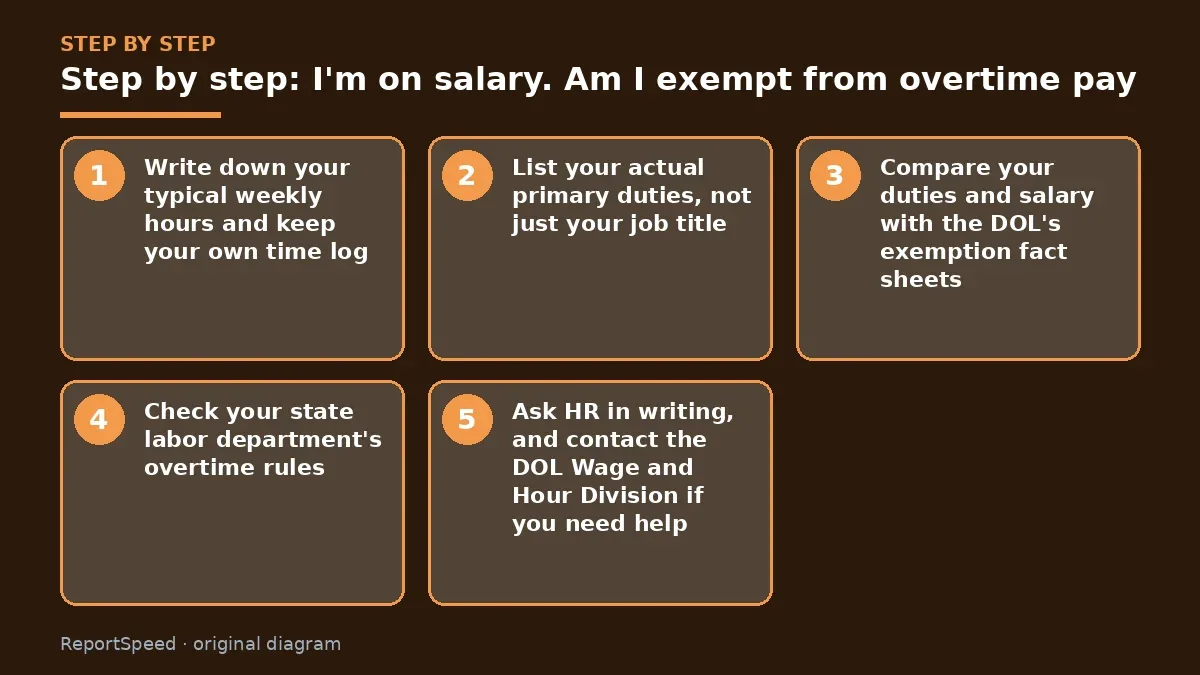
- Write down your typical weekly hours and keep your own time log.
- List your actual primary duties, not just your job title.
- Compare your duties and salary with the DOL's exemption fact sheets.
- Check your state labor department's overtime rules.
- Ask HR in writing, and contact the DOL Wage and Hour Division if you need help.
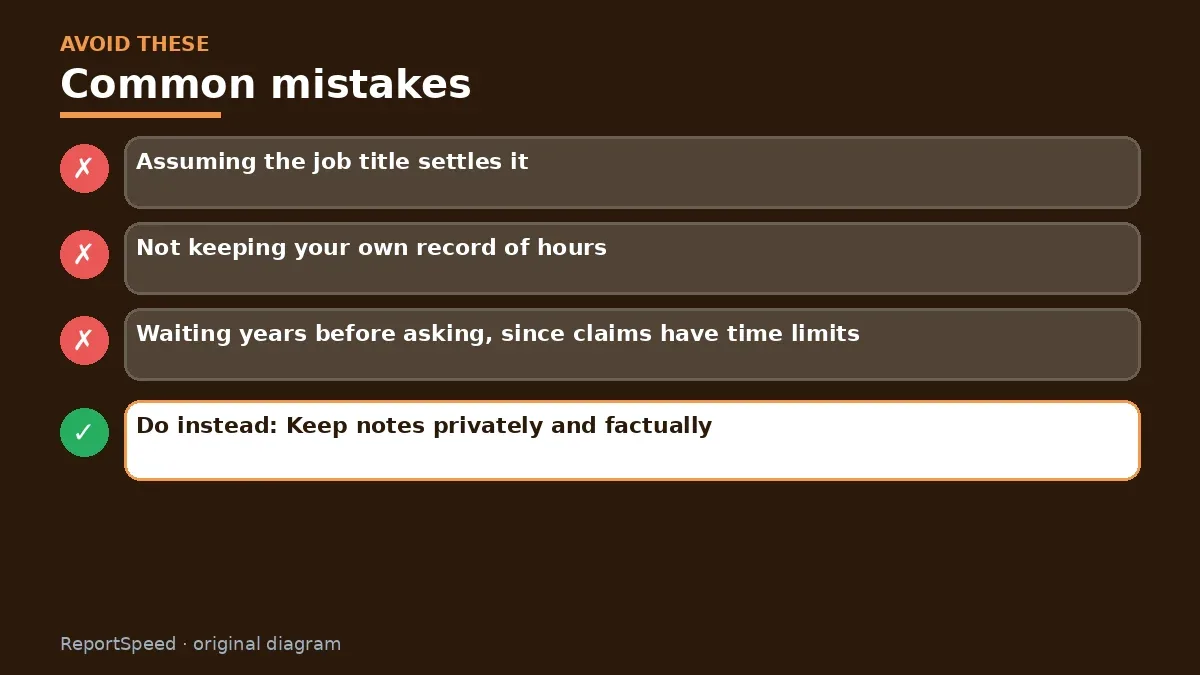
Common mistakes:
- Assuming the job title settles it
- Not keeping your own record of hours
- Waiting years before asking, since claims have time limits
ReportSpeedMan tip: Keep notes privately and factually; a simple daily log of start, end and break times is the most useful evidence if questions come up later.
What I would actually do
keep a private time log for a month, compare my real duties with the DOL fact sheets and then ask HR one clear written question.
The trade-off people miss: some states have higher salary thresholds or daily overtime, so federal rules aren't always the final word.
Did it work? How to check
You know your classification and either get overtime or understand why you're exempt.
Quick FAQ
Does my title matter?
No; duties and pay decide.
Can I be fired for asking?
The FLSA prohibits retaliation for complaints.
How far back can I claim?
Generally two years, three for willful violations.
Wrap-up: Salary alone doesn't make you exempt. Check the salary level and your real duties, keep a time log and ask in writing.
Wiki: Wage and Hour Basics (FLSA).
I'm on salary. Am I exempt from overtime pay: primary sources
Step-by-step photos

1. Before The problem 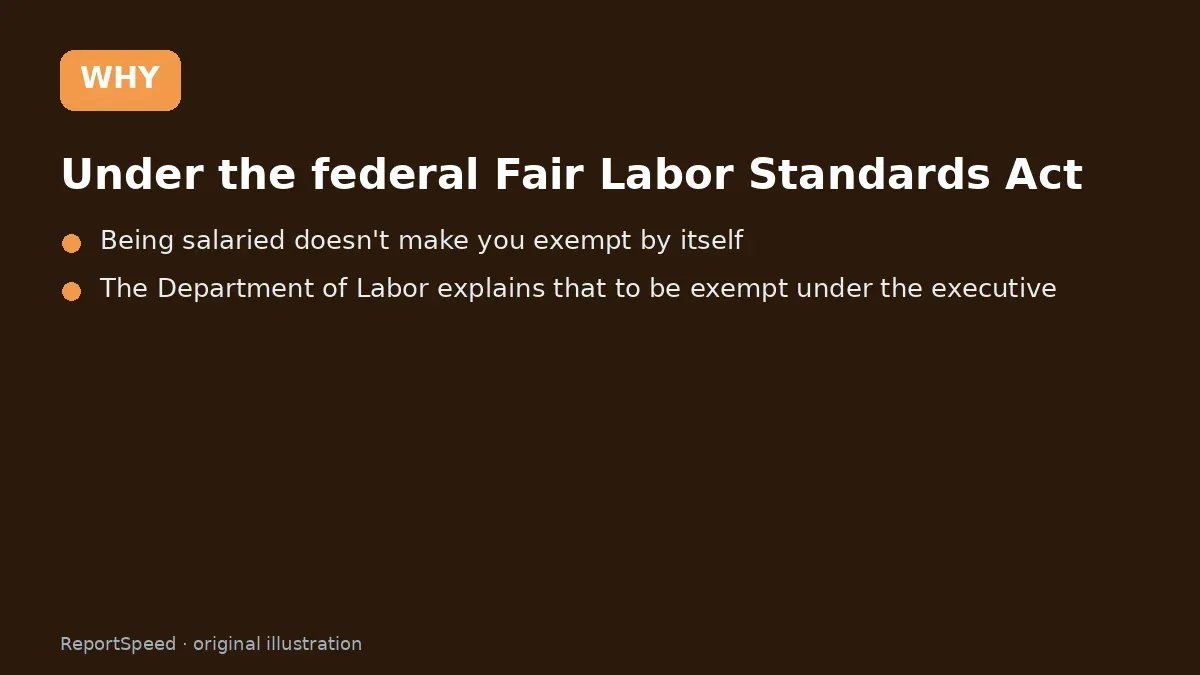
2. Why it happens The cause 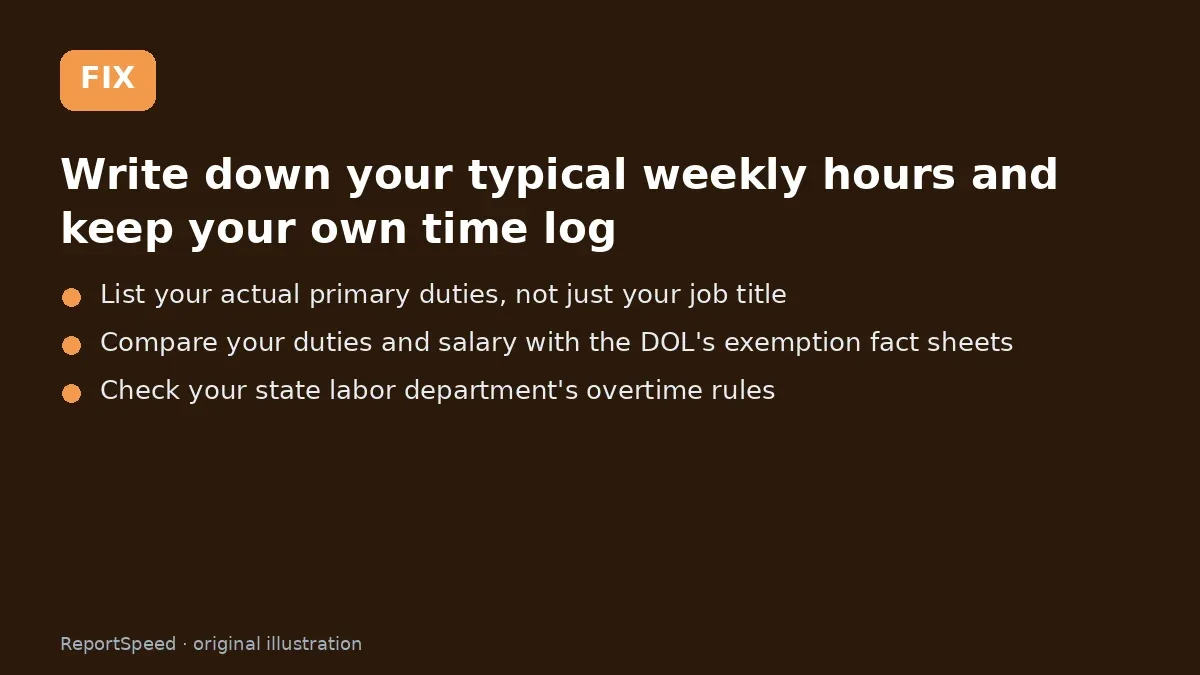
3. The fix The fix 
4. After The result
⚡ Speed Summary
- Salary alone doesn't make you exempt.
- Keep notes privately and factually; a simple daily log of start, end and break times is the most useful evidence if questions come up later.
- Accepting 'salaried means exempt' without checking the duties test can mean years of unpaid overtime.

Was this answer helpful?
Tap a star to rate this answer.
Related questions
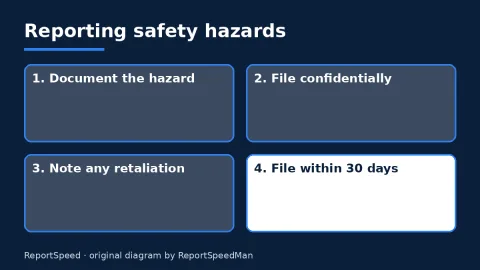
Can I be fired for reporting a safety problem at work? OSHA's 30-day rule
You can report hazards confidentially, and retaliation is illegal.
Rate itSolved

Pregnant at work: what accommodations can I ask for under the PWFA?
Under the PWFA, employers with 15+ workers must reasonably accommodate pregnancy limitations.
Rate itSolved
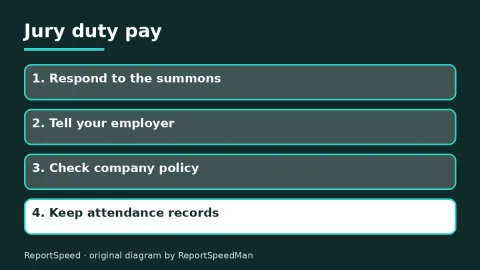
Do I get paid for jury duty, and can my employer fire me for going?
Federal jurors earn $50 a day; employer pay is optional, but firing you for federal jury service is illegal.
Rate itSolved
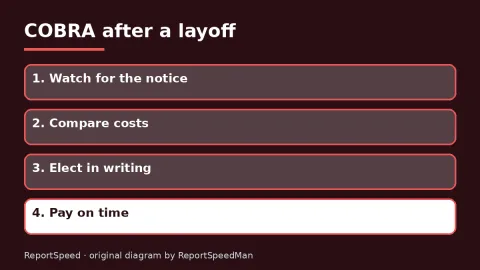
COBRA after a layoff: how long, how much and the deadlines
COBRA usually lasts 18 months, costs up to 102% of the premium, and gives you 60 days to elect and 45 days to pay.
Rate itSolved
Real experiences
No experiences yet. Be the first to share.