


I just started as a server and my pay stub shows $2.13 an hour plus tips. On slow nights my tips are terrible. Is $2.13 really legal, and what happens if my tips don't bring me up to minimum wage?
Tipped minimum wage: what is the $2.13 rule?

Concerns & risks
You're a tipped worker paid $2.13 an hour and worried about slow shifts.
| Item | Example check |
|---|---|
| Cash wage | Hours x $2.13 |
| Tips | Add all tips for the week |
| Total ÷ hours | Should be at least $7.25 |
| State rule | May require more |

Causes & evidence
Federal wage rules under the Fair Labor Standards Act say an employer of tipped employees must pay a cash wage of at least $2.13 per hour if it claims a tip credit against its minimum wage obligation. If your tips combined with the cash wage don't equal the federal minimum wage of $7.25 per hour, the employer must make up the difference. A tipped employee is one who customarily and regularly receives more than $30 a month in tips. Employers must tell you about the tip credit, and tips belong to the employee except in valid tip pools. Many states have higher minimum wages or don't allow a tip credit, and the higher standard applies.
Tip pooling rules and service charges can be complicated. Mandatory service charges aren't always tips under the law. Your pay stub should show your cash wage, reported tips and hours. If something looks wrong, ask payroll to explain how the tip credit was calculated for that week. Keep your own notes rather than relying only on the employer's records, since they will help if you ever need to raise the issue with the Wage and Hour Division or your state.

Not tracking your hours and tips means you can't tell whether a slow week left you below minimum wage.
What to do


| Item | Federal rule |
|---|---|
| Minimum cash wage | $2.13 an hour |
| Federal minimum wage | $7.25 an hour |
| If tips fall short | Employer must make up the difference |
| Tipped employee | Regularly gets more than $30 a month in tips |
| State law | Higher state standards apply |
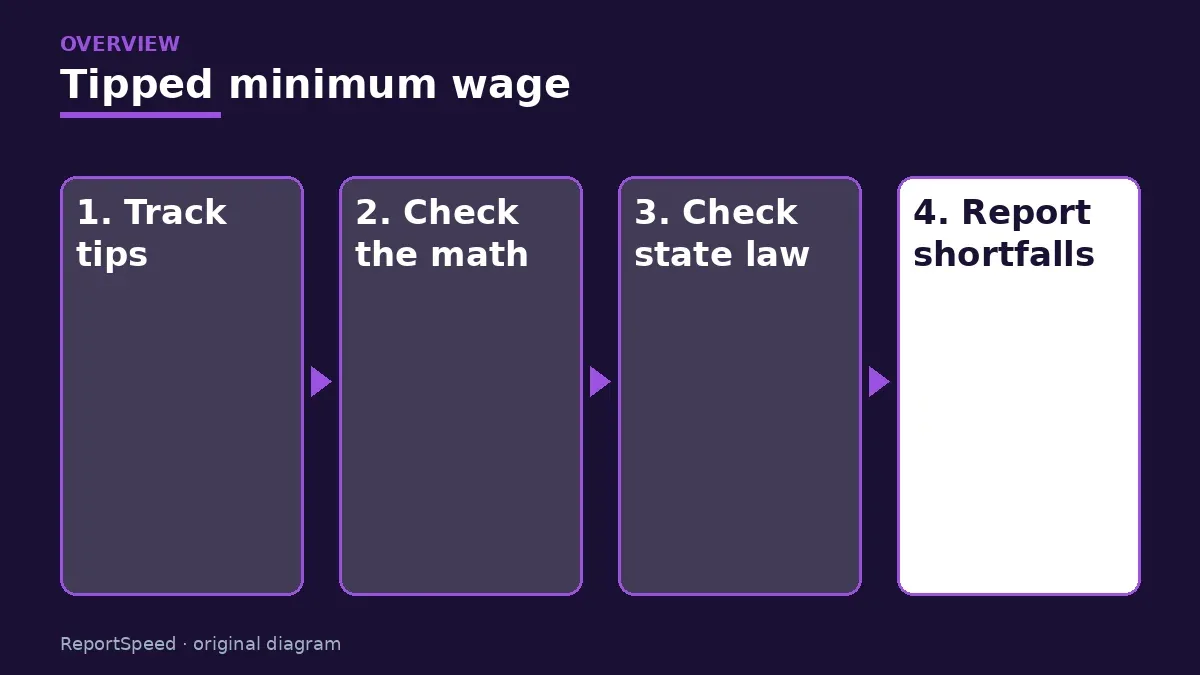
- Track your hours and tips for each shift.
- Divide total pay, cash wage plus tips, by hours each week.
- Check your state's minimum wage and tip credit rules.
- Raise any shortfall with your manager or payroll.
- Contact the Wage and Hour Division or your state labor office if it isn't fixed.
Common mistakes:
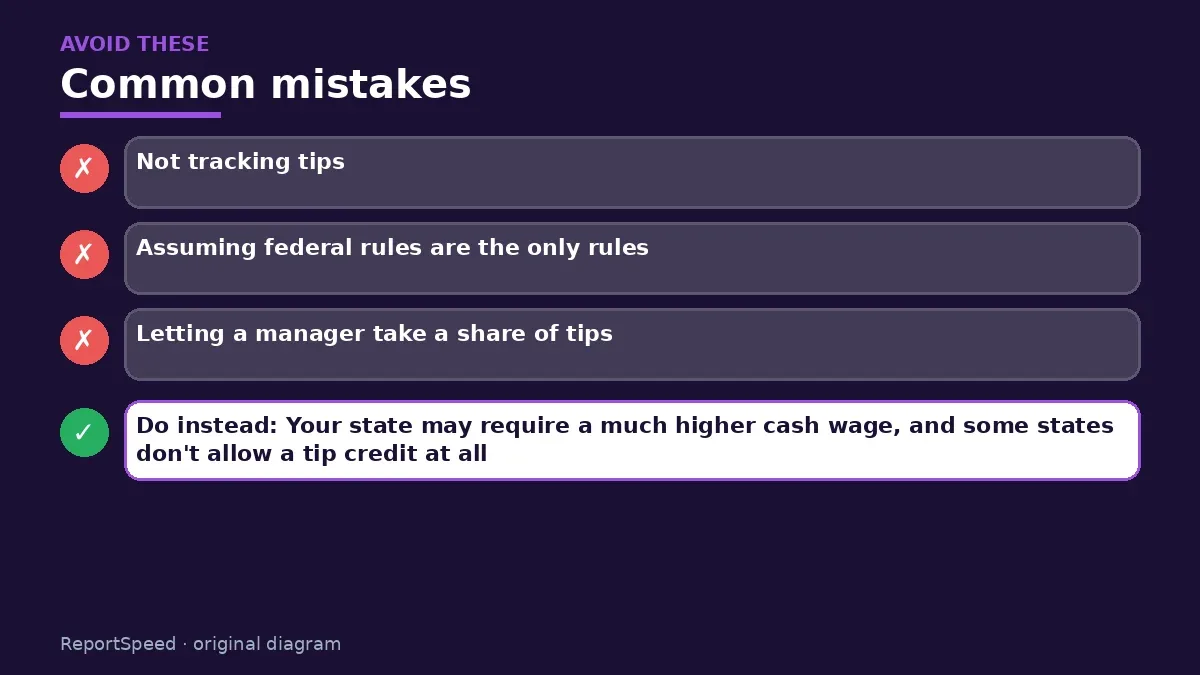
- Not tracking tips
- Assuming federal rules are the only rules
- Letting a manager take a share of tips
ReportSpeedMan tip: Your state may require a much higher cash wage, and some states don't allow a tip credit at all.
What I would actually do
I'd keep a simple weekly log of hours and tips and check the math against my state's minimum, not just $7.25.
The trade-off people miss: a good weekend can mask a bad weekday; the shortfall check is generally done per workweek, so one strong shift doesn't cover everything.
How to know it worked
Your weekly cash wage plus tips is at least the applicable minimum.
Quick FAQ
Can my manager share my tips?
Managers generally can't keep employees' tips.
Do credit card tips count?
Yes.
What if I'm not paid the difference?
Contact the Wage and Hour Division.
Wrap-up: $2.13 is legal federally only if tips get you to $7.25 or your state's higher rate. Track your pay so you can tell.
Wiki: Wage and Hour Basics (FLSA) and Tax Withholding and Form W-4.
Tipped minimum wage: official sources I checked
Step-by-step photos
1. Before The problem 
2. Why it happens The cause 
3. The fix The fix 
4. After The result
⚡ Speed Summary
- $2.13 is legal federally only if tips get you to $7.25 or your state's higher rate.
- Your state may require a much higher cash wage, and some states don't allow a tip credit at all.
- Not tracking your hours and tips means you can't tell whether a slow week left you below minimum wage.

Was this answer helpful?
Tap a star to rate this answer.
Related questions
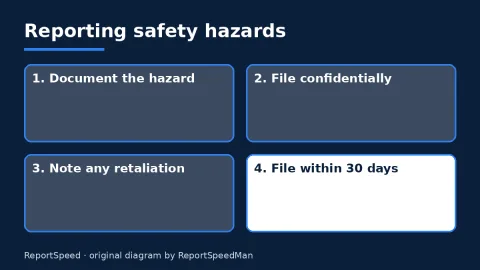
Can I be fired for reporting a safety problem at work? OSHA's 30-day rule
You can report hazards confidentially, and retaliation is illegal.
Rate itSolved

Pregnant at work: what accommodations can I ask for under the PWFA?
Under the PWFA, employers with 15+ workers must reasonably accommodate pregnancy limitations.
Rate itSolved
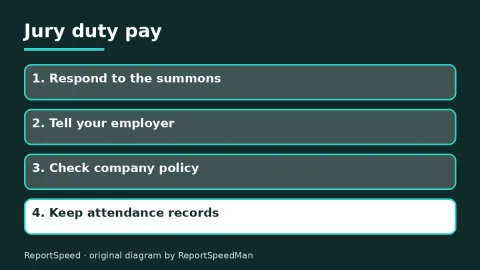
Do I get paid for jury duty, and can my employer fire me for going?
Federal jurors earn $50 a day; employer pay is optional, but firing you for federal jury service is illegal.
Rate itSolved
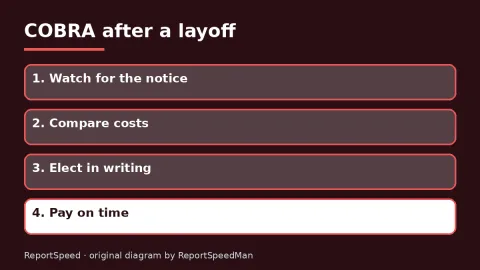
COBRA after a layoff: how long, how much and the deadlines
COBRA usually lasts 18 months, costs up to 102% of the premium, and gives you 60 days to elect and 45 days to pay.
Rate itSolved
Real experiences
No experiences yet. Be the first to share.