


I found a used car at a small dealer and the window sticker says 'As Is - No Dealer Warranty.' The salesperson says that's standard. What does 'as is' actually mean, and what can I do to protect myself before I buy?
Buying a used car 'as is': what does it mean for me?
Concerns & risks
You're looking at a used car sold 'as is' and want to know your risk.
| Check | Done? |
|---|---|
| Buyers Guide read | Warranty or as is |
| Independent inspection | Written report |
| Vehicle history | Title and accidents |
| Recall check | By VIN |
Causes & evidence
The FTC's Used Car Rule requires dealers to post a Buyers Guide in every used car they offer for sale. The Buyers Guide tells you whether the car comes with a dealer warranty or is sold 'as is,' meaning the dealer doesn't provide a warranty and you pay for repairs after the sale. The Buyers Guide becomes part of your sales contract and overrides contrary terms in the contract. Some states don't allow 'as is' sales or limit them, so the rules depend on where you buy. The FTC recommends getting an independent pre-purchase inspection by a mechanic you choose, checking the vehicle history and checking for open safety recalls.
The Buyers Guide may also mention implied warranties under state law. Private sales between individuals aren't covered by the Used Car Rule. When comparing two similar cars, the one with a clean independent inspection and full records is often the better buy even at a slightly higher price. Keep a copy of the signed Buyers Guide with your sales papers, because it becomes part of the contract and shows exactly what was promised at the time of sale.

Relying on a salesperson's verbal promise when the Buyers Guide says 'as is' leaves you with nothing in writing.
What to do


| Item | What to know |
|---|---|
| Buyers Guide | Required on used cars at dealers |
| 'As is' | No dealer warranty; you pay for repairs after sale |
| Contract | Buyers Guide is part of the contract |
| State rules | Some states limit or ban 'as is' sales |
| Protect yourself | Independent inspection, history, recall check |
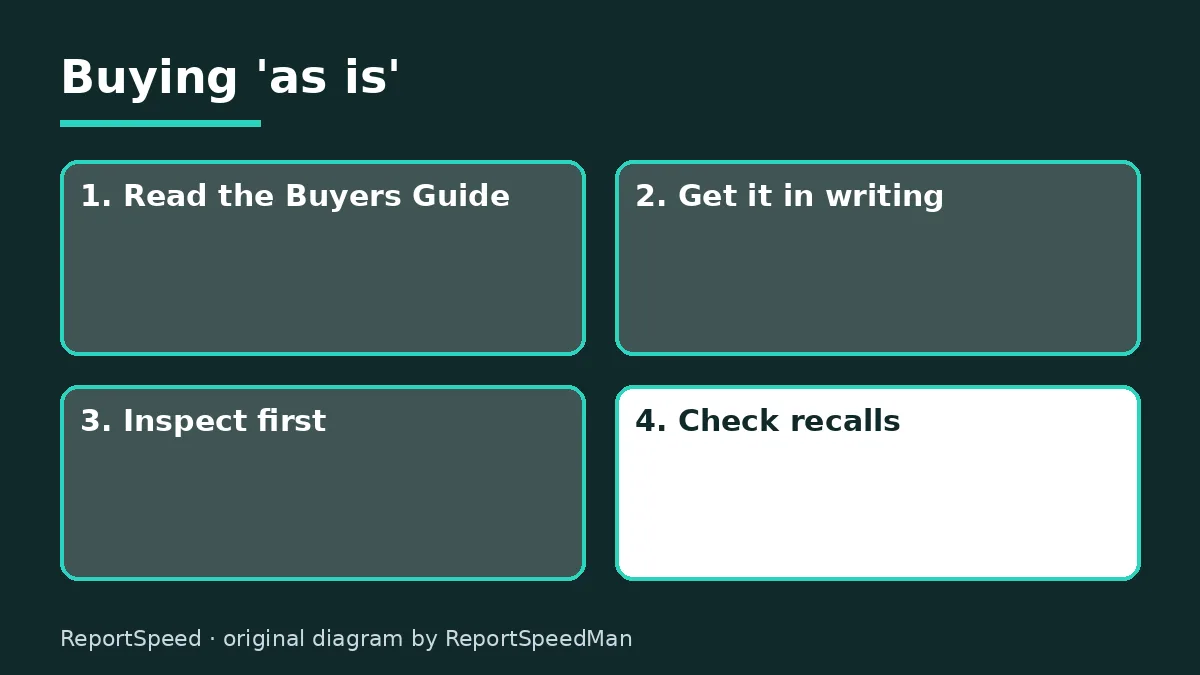
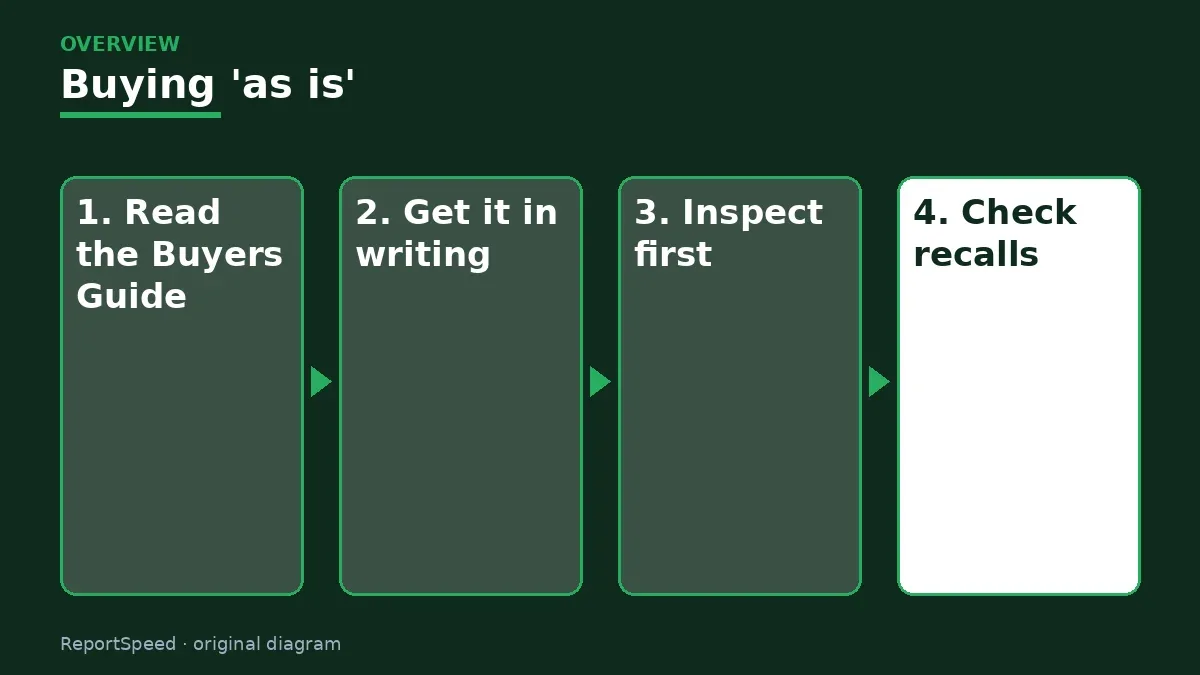
- Read the Buyers Guide in the window.
- Get any promises from the dealer in writing.
- Arrange an independent inspection before you sign.
- Check the vehicle history and open recalls by VIN.
- Check your state's rules on 'as is' sales.

Common mistakes:
- Skipping the inspection
- Trusting verbal promises
- Not keeping a copy of the Buyers Guide
ReportSpeedMan tip: If a dealer won't allow an independent inspection, treat that as a strong reason to walk away.
What I would actually do
I'd pay for an independent inspection before negotiating, then use the repair estimate to adjust the price or walk away.
The trade-off people miss: a 'certified' label or dealer inspection isn't the same as an independent inspection, and it doesn't change an 'as is' sale.
How you can tell it worked
You have an inspection report, a history report and all promises in writing before signing.
Quick FAQ
Can I return an 'as is' car?
Generally no; there's no cooling-off right in most cases.
Is a history report enough?
No; get an inspection too.
What if the dealer promised a repair?
Get it written on the Buyers Guide or contract.
Wrap-up: 'As is' is a warning to do your checks first. Inspection, history, recalls and written promises are your protection.
Wiki: Vehicle Recalls and Fuel Economy Basics.
Buying a used car 'as is': where the facts come from
Step-by-step photos
1. Before The problem 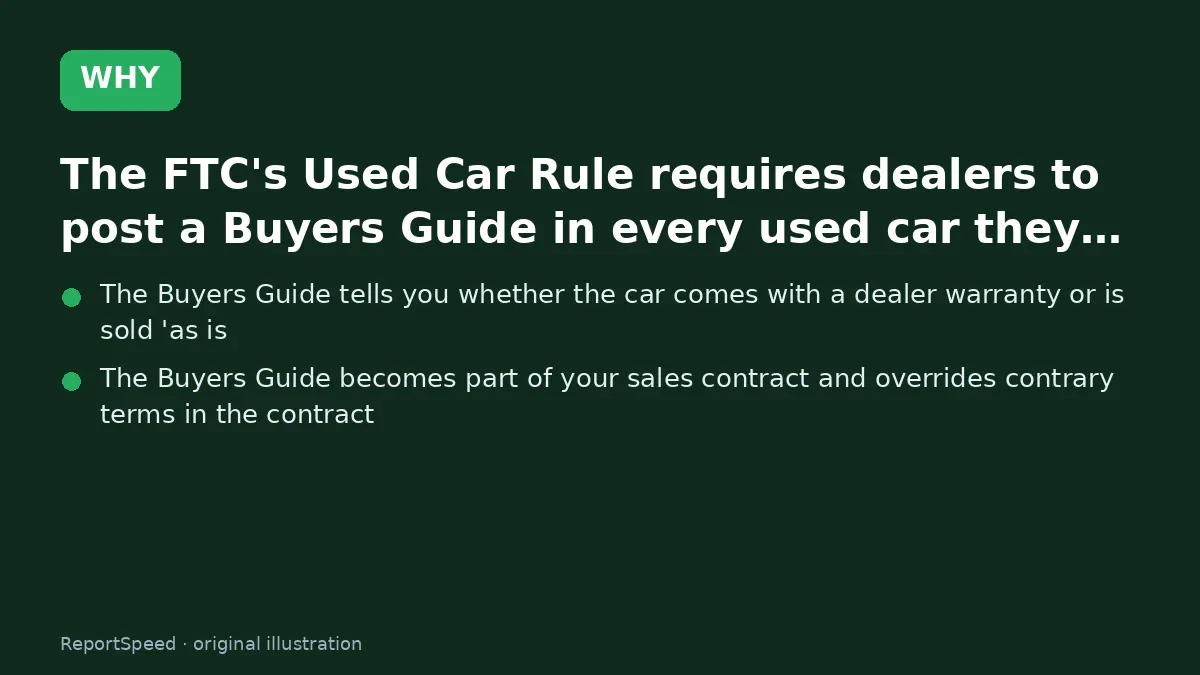
2. Why it happens The cause 
3. The fix The fix 
4. After The result
⚡ Speed Summary
- 'As is' is a warning to do your checks first.
- If a dealer won't allow an independent inspection, treat that as a strong reason to walk away.
- Relying on a salesperson's verbal promise when the Buyers Guide says 'as is' leaves you with nothing in writing.

Was this answer helpful?
Tap a star to rate this answer.
Related questions

How far should I sit from the steering wheel airbag?
Keep 10 inches from the air bag cover, tilt the wheel toward your chest, and keep kids 12 and under in the back.
Rate itSolved
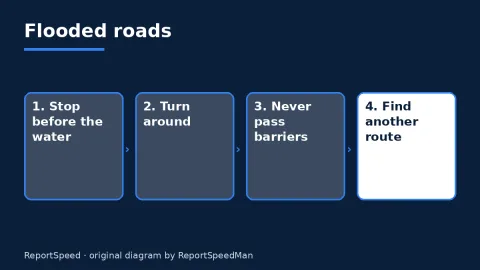
Is it safe to drive through a flooded road? How much water can float a car
Never drive into flood water; a foot of rushing water can carry most cars.
Rate itSolved
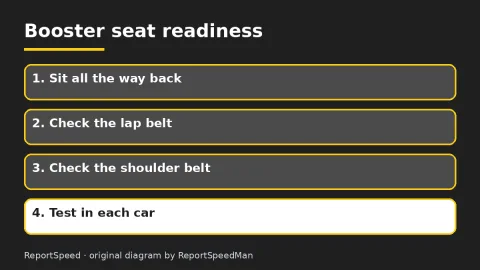
When can my child stop using a booster seat?
Keep the booster until the seat belt fits across the thighs and chest, and keep kids 12 and under in the back.
Rate itSolved
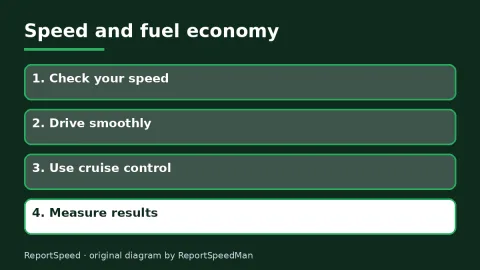
Does driving faster really waste gas? Speed and fuel economy
Above 50 mph mileage drops quickly, roughly like $0.30 more per gallon for each extra 5 mph.
Rate itSolved
Real experiences
No experiences yet. Be the first to share.