


My commute is 30 miles each way, mostly highway, and I usually cruise around 75 mph. My partner says slowing down to 65 would save a lot of gas; I think it's barely noticeable. Does driving faster really waste gas, and how much difference do speed and driving habits make?
Does driving faster really waste gas? Speed and fuel economy
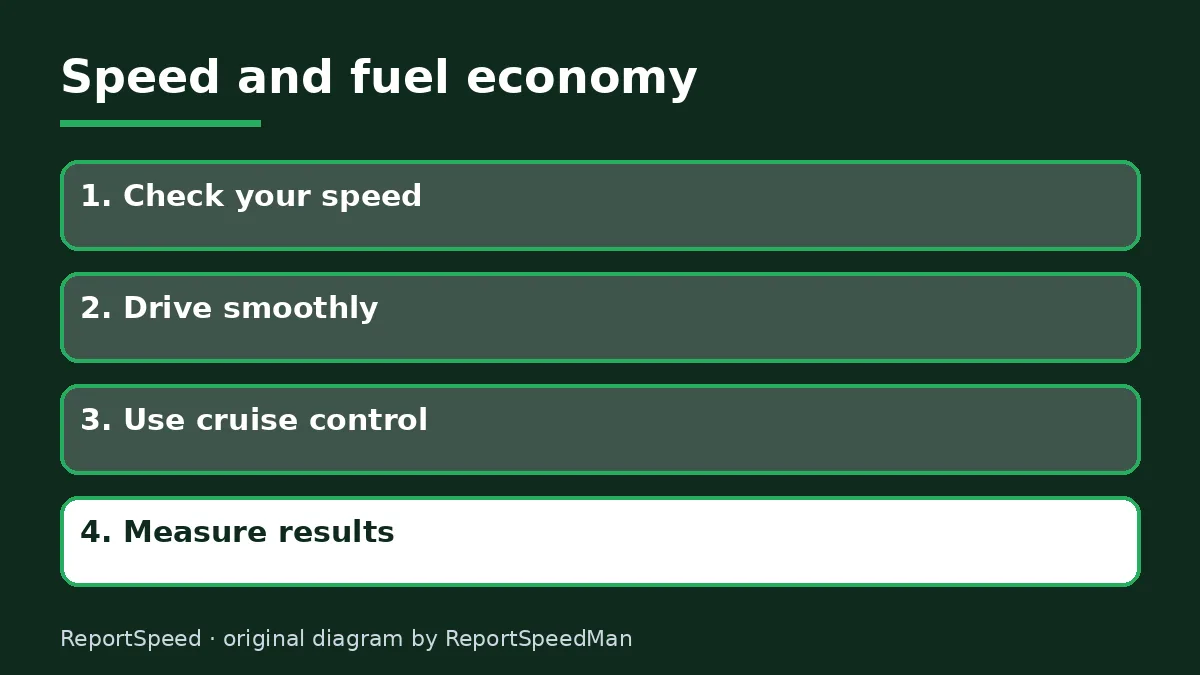
Concerns & risks
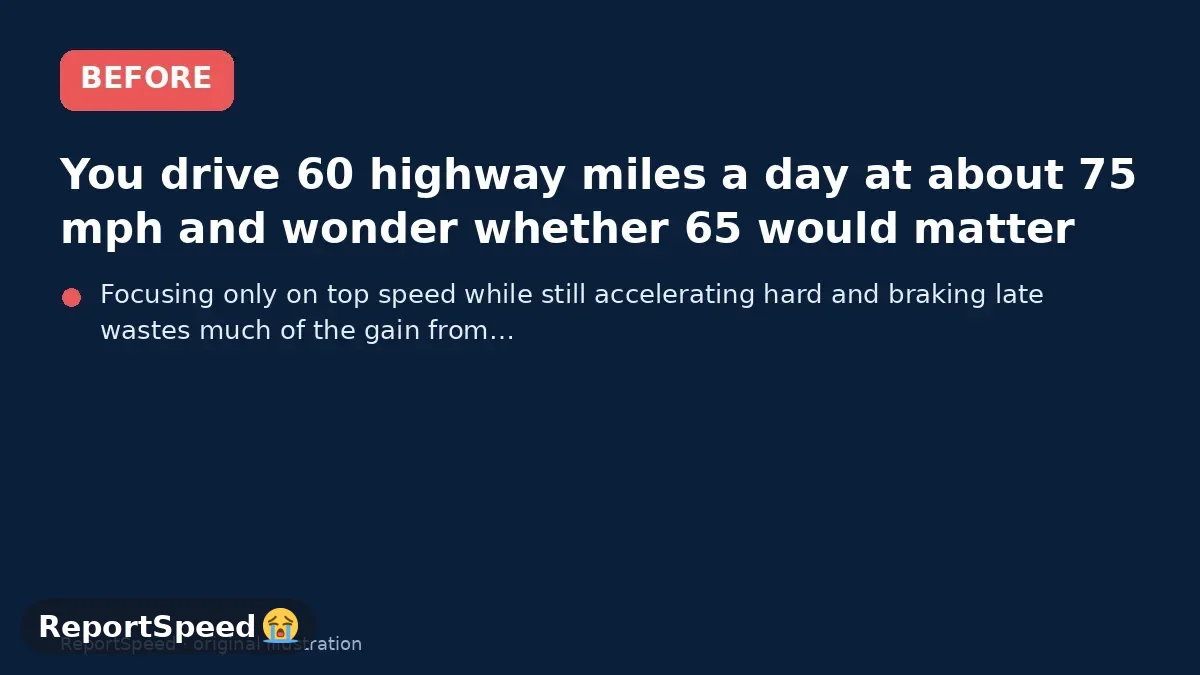
You drive 60 highway miles a day at about 75 mph and wonder whether 65 would matter.
| Speed | Rule-of-thumb extra cost |
|---|---|
| 50 mph | Baseline |
| 55 mph | About $0.30/gal more |
| 60 mph | About $0.60/gal more |
| 65 mph | About $0.90/gal more |
| 70 mph | About $1.20/gal more |
| 75 mph | About $1.50/gal more |
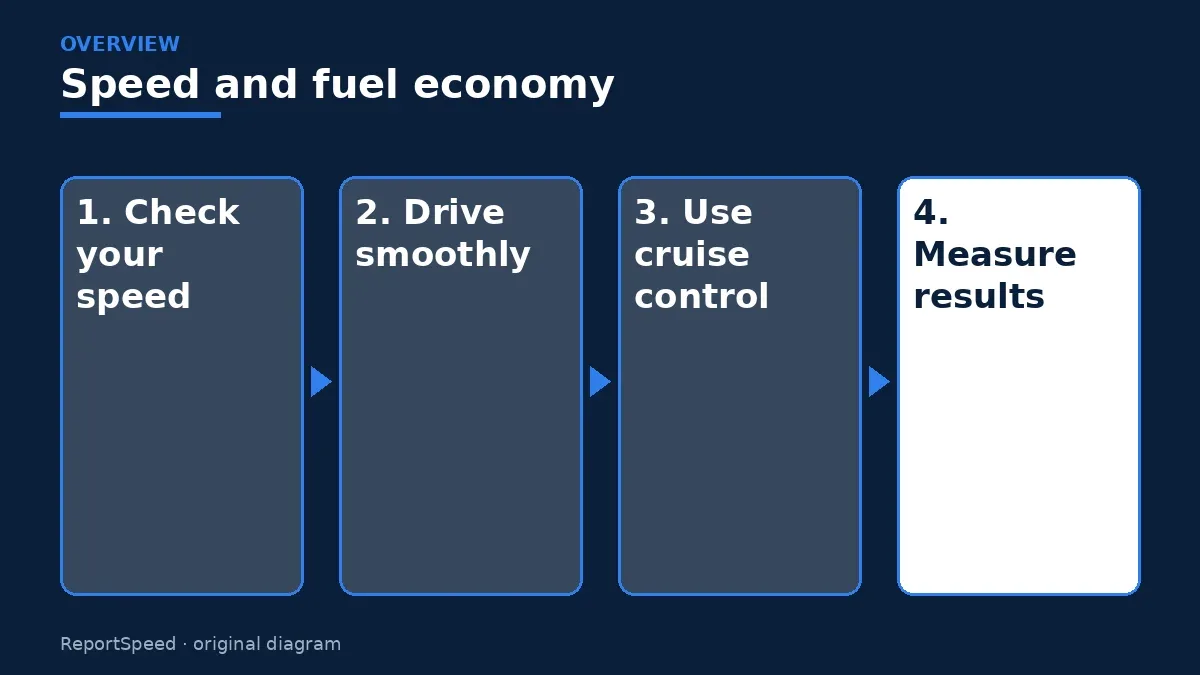
Causes & evidence
Fueleconomy.gov says that while each vehicle reaches its best fuel economy at a different speed, gas mileage usually decreases rapidly above 50 mph. It estimates that each 5 mph you drive over 50 mph is like paying an additional $0.30 per gallon for gas. It also says aggressive driving, meaning speeding, rapid acceleration and hard braking, can lower your gas mileage by roughly 15% to 30% at highway speeds and 10% to 40% in stop-and-go traffic. Idling can use a quarter to a half gallon of fuel per hour, depending on engine size and air conditioner use. Cruise control on flat highways helps hold a steady speed. Exact savings depend on your car, so the site's calculator lets you plug in your own speed and fuel price.
Edge cases: the $0.30-per-gallon figure is a rule of thumb from fueleconomy.gov and varies by car. EVs and hybrids also lose efficiency at high speed. Always follow posted limits and traffic conditions.

Focusing only on top speed while still accelerating hard and braking late wastes much of the gain from slowing down.
What to do
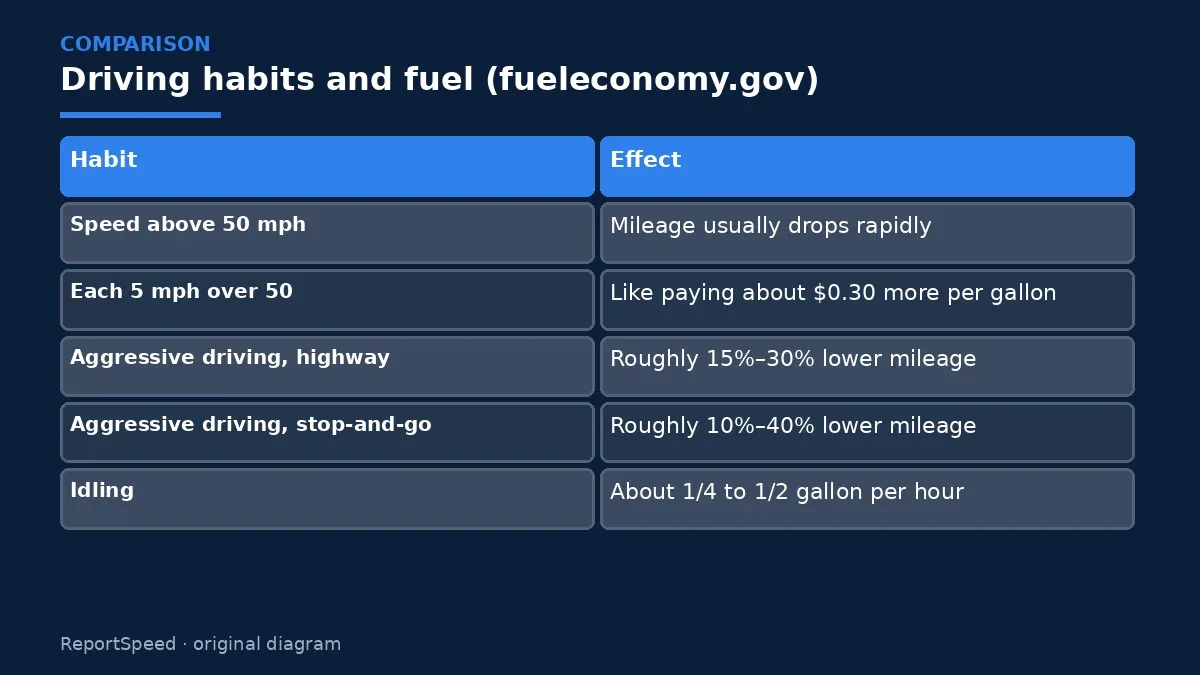
| Habit | Effect |
|---|---|
| Speed above 50 mph | Mileage usually drops rapidly |
| Each 5 mph over 50 | Like paying about $0.30 more per gallon |
| Aggressive driving, highway | Roughly 15%–30% lower mileage |
| Aggressive driving, stop-and-go | Roughly 10%–40% lower mileage |
| Idling | About 1/4 to 1/2 gallon per hour |
| Cruise control | Helps hold steady speed on flat roads |
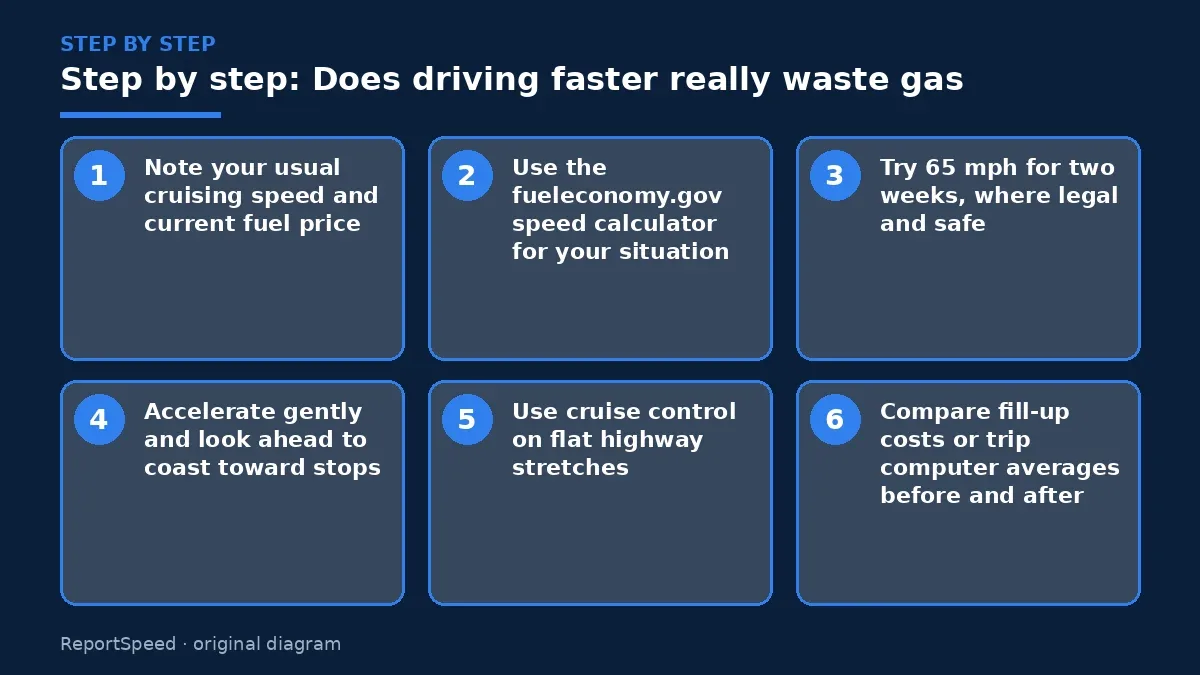
- Note your usual cruising speed and current fuel price.
- Use the fueleconomy.gov speed calculator for your situation.
- Try 65 mph for two weeks, where legal and safe.
- Accelerate gently and look ahead to coast toward stops.
- Use cruise control on flat highway stretches.
- Compare fill-up costs or trip computer averages before and after.
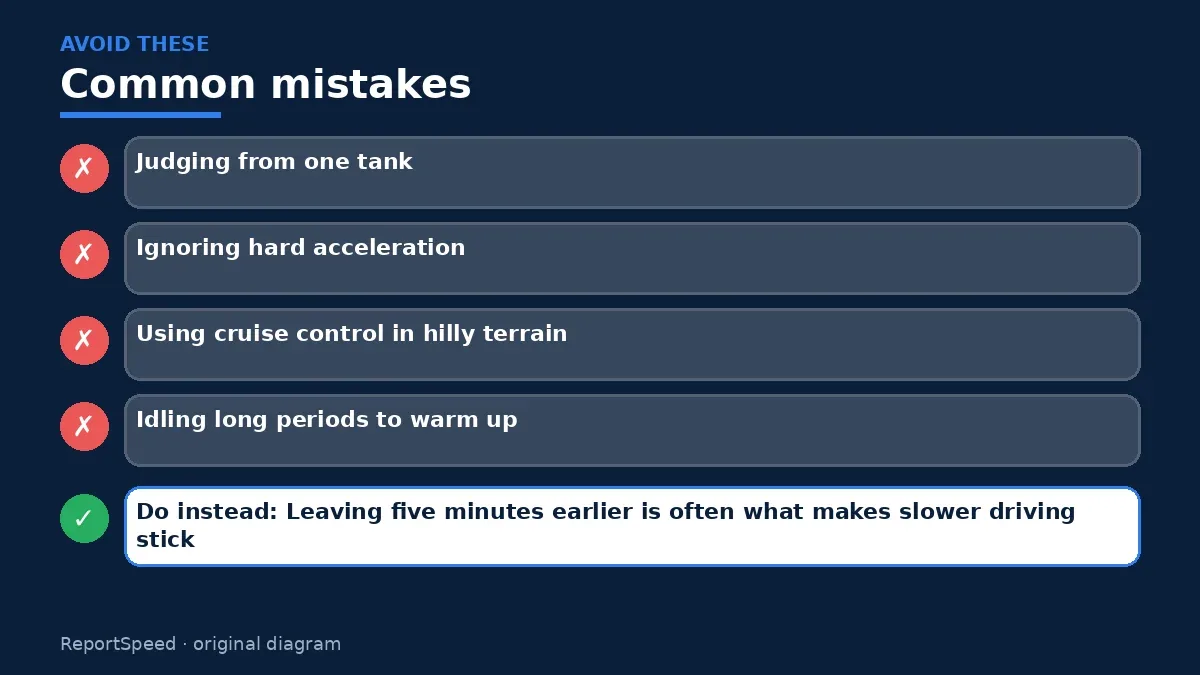
Common mistakes:
- Judging from one tank
- Ignoring hard acceleration
- Using cruise control in hilly terrain
- Idling long periods to warm up
ReportSpeedMan tip: Leaving five minutes earlier is often what makes slower driving stick; most speeding on a commute is about the clock, not the car.
What I would actually do
I'd drop from 75 to 65 for two weeks, leave five minutes earlier, use cruise control on flat stretches and compare fill-up costs.
The trade-off people miss: slower driving adds a few minutes, which some people value more than the fuel savings. That's a fair choice, but it should be a choice, not a guess.
Signs it worked
Your fill-up costs drop over several tanks.
Quick FAQ
Is 50 mph the sweet spot?
Mileage usually drops above 50; exact peak varies.
Does cruise control help?
On flat roads, yes.
Does idling waste much?
About 1/4 to 1/2 gallon per hour.
Wrap-up: Above 50 mph mileage drops quickly, roughly like $0.30 more per gallon for each extra 5 mph. Slow a bit, drive smoothly and measure your own result.
Wiki: Fuel Economy Basics and Sleep Basics and Insomnia.
Does driving faster really waste gas: where the facts come from
Step-by-step photos
1. Before The problem 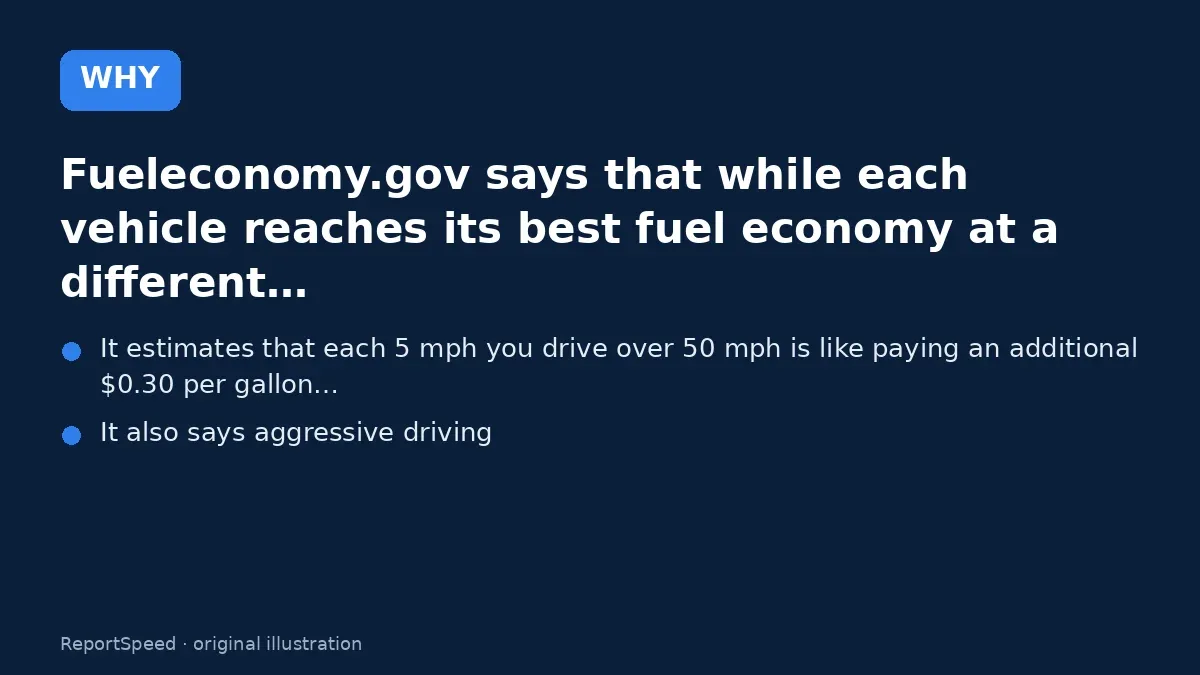
2. Why it happens The cause 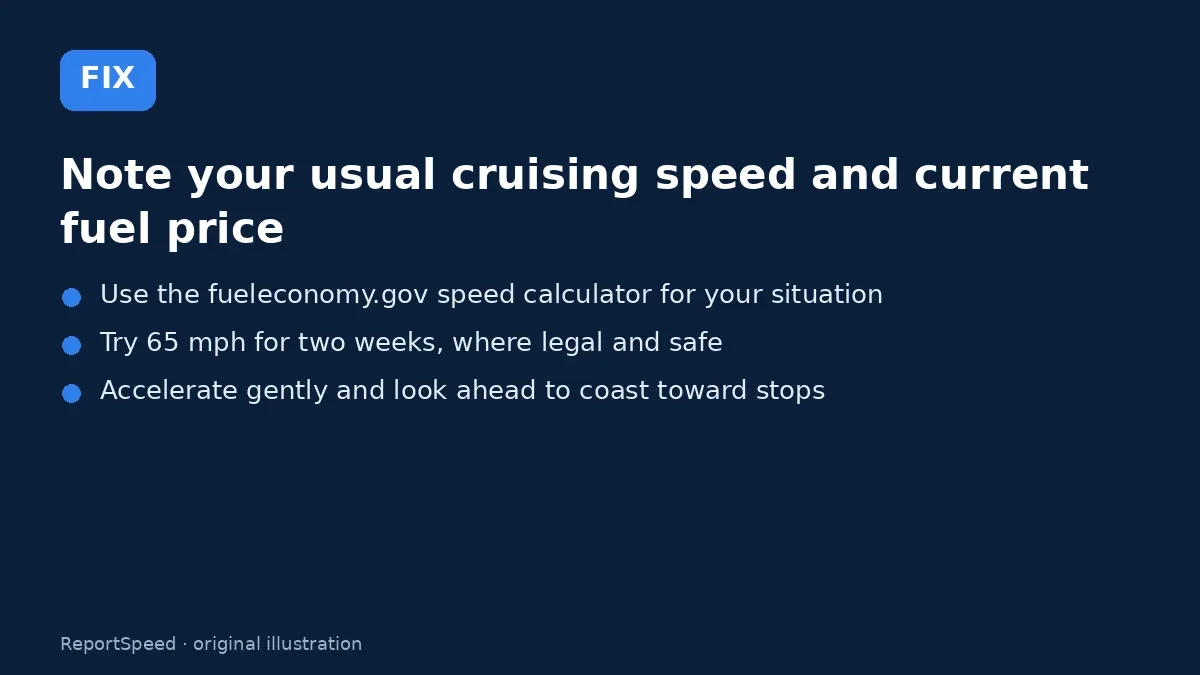
3. The fix The fix 
4. After The result
⚡ Speed Summary
- Above 50 mph mileage drops quickly, roughly like $0.30 more per gallon for each extra 5 mph.
- Leaving five minutes earlier is often what makes slower driving stick; most speeding on a commute is about the clock, not the car.
- Focusing only on top speed while still accelerating hard and braking late wastes much of the gain from slowing down.

Was this answer helpful?
Tap a star to rate this answer.
Related questions

How far should I sit from the steering wheel airbag?
Keep 10 inches from the air bag cover, tilt the wheel toward your chest, and keep kids 12 and under in the back.
Rate itSolved
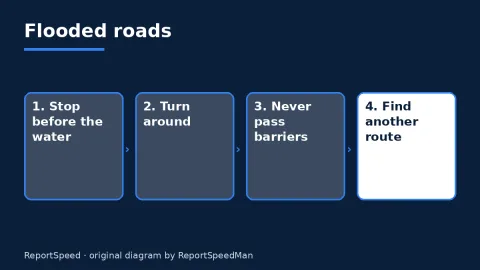
Is it safe to drive through a flooded road? How much water can float a car
Never drive into flood water; a foot of rushing water can carry most cars.
Rate itSolved
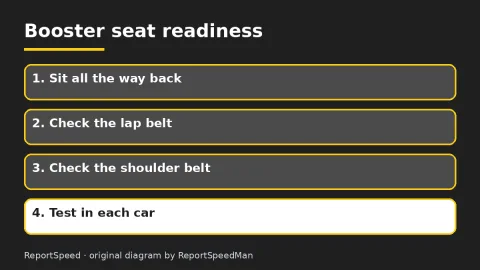
When can my child stop using a booster seat?
Keep the booster until the seat belt fits across the thighs and chest, and keep kids 12 and under in the back.
Rate itSolved
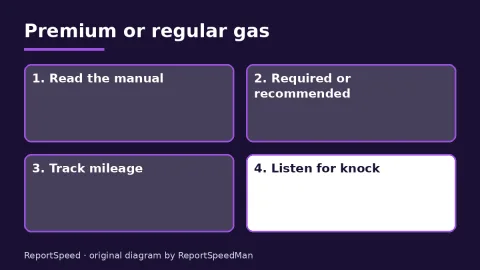
Do I need premium gas? What octane my car really needs
Check the manual: 87 means regular; required premium means premium.
Rate itSolved
Real experiences
No experiences yet. Be the first to share.