


I found a tick on my son's leg after a hike. I've heard you should burn it with a match or cover it with nail polish so it backs out. What's the safest way to get it off, and when should we see a doctor?
How do I remove a tick the right way?

Concerns & risks
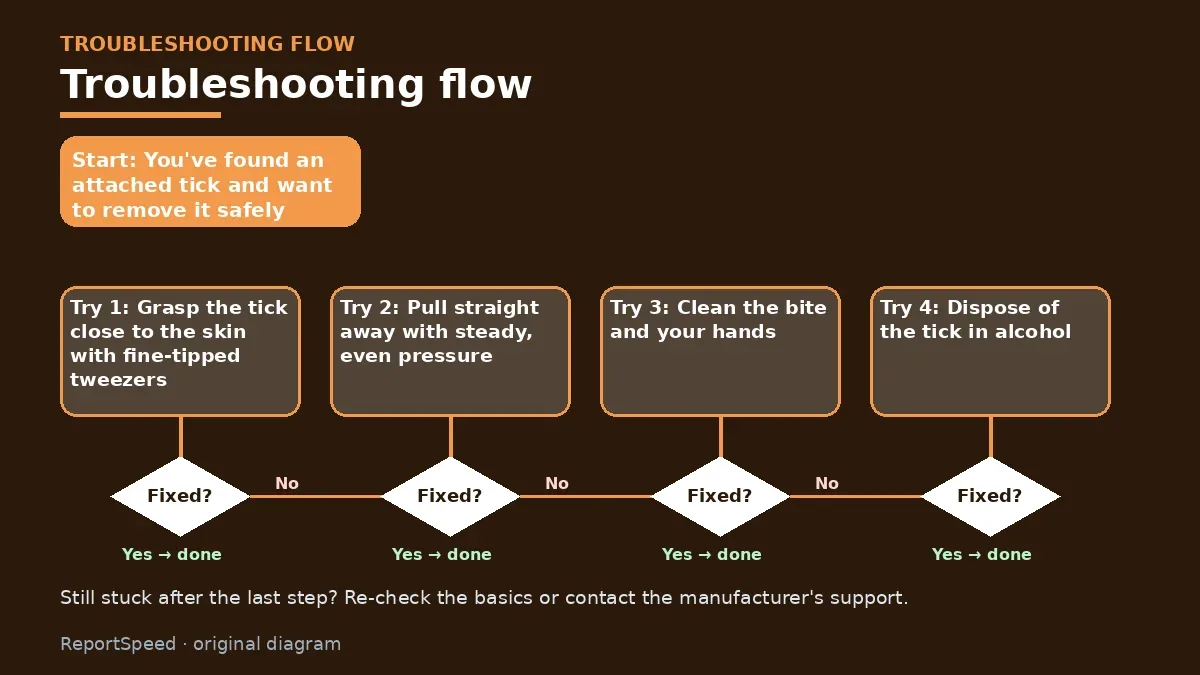
You've found an attached tick and want to remove it safely.
| Do | Don't |
|---|---|
| Use fine-tipped tweezers | Twist or jerk |
| Pull with steady pressure | Use heat or nail polish |
| Clean the bite | Crush the tick in fingers |
| Note the date | Ignore a later rash |
Causes & evidence
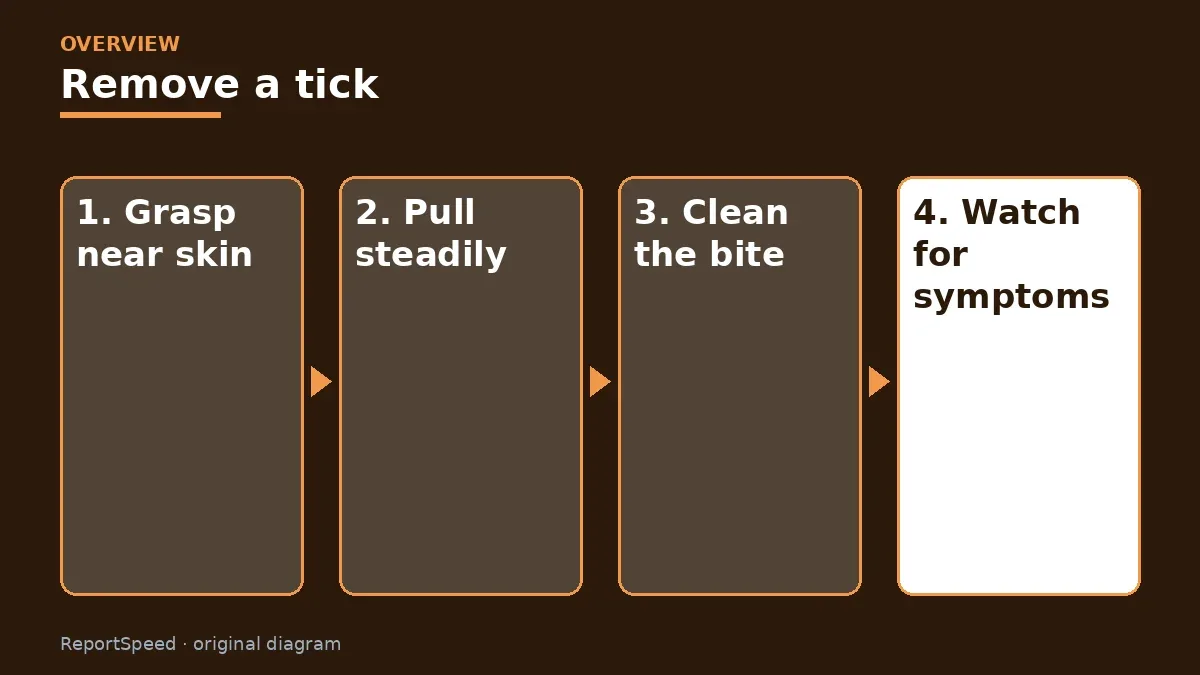
The CDC says to remove an attached tick as soon as possible rather than waiting for a healthcare provider. Grasp the tick as close to the skin's surface as possible using clean, fine-tipped tweezers, then pull it away from the skin with steady, even pressure without twisting or jerking, which can cause the mouthparts to break off. If mouthparts remain and can't be removed easily, leave them, as the skin will push them out as it heals. Clean the bite area and your hands with soap and water, rubbing alcohol or hand sanitizer. The CDC warns not to use petroleum jelly, heat, nail polish or other substances to make the tick detach. See a doctor if a rash or fever develops within several weeks.
Tick risk depends on where you live and the season. Using repellent and checking skin after outdoor time help reduce bites. Writing down when and where the bite happened is surprisingly useful. Symptoms of tickborne illness can appear days to weeks later, and a doctor will want to know about the bite, where it happened and when. Some people take a quick photo of the tick before disposing of it, which can help a clinician understand the type of tick if symptoms develop.
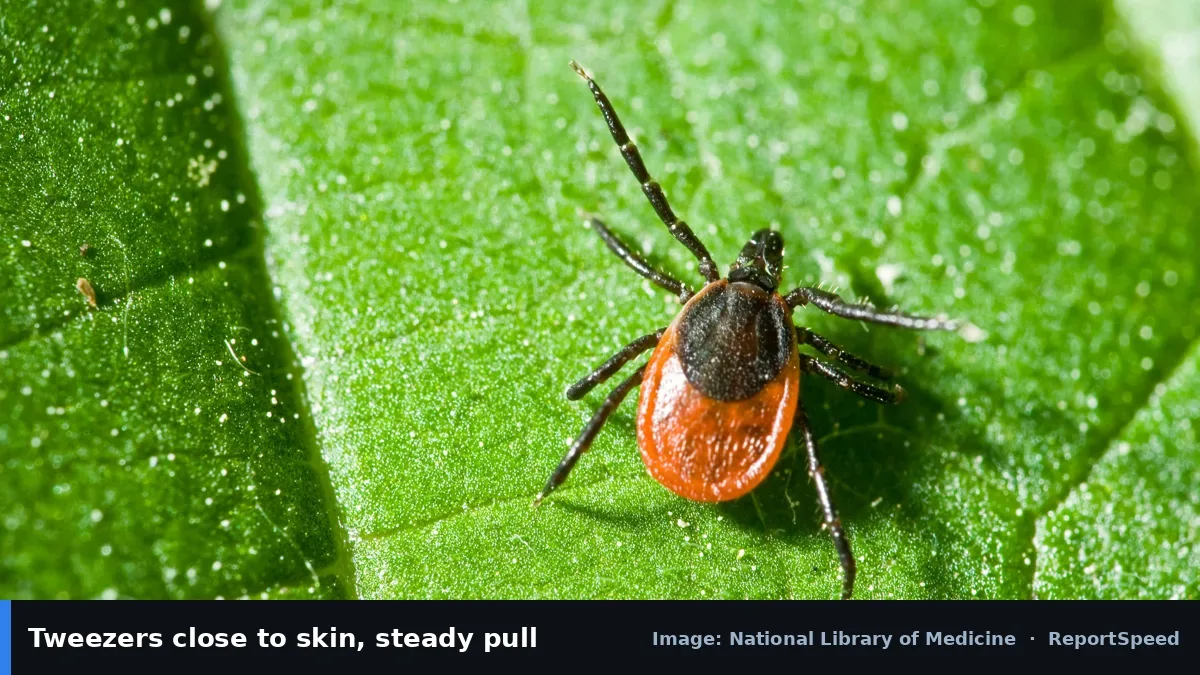
Trying to make the tick back out with heat or nail polish delays removal and may make things worse.
What to do
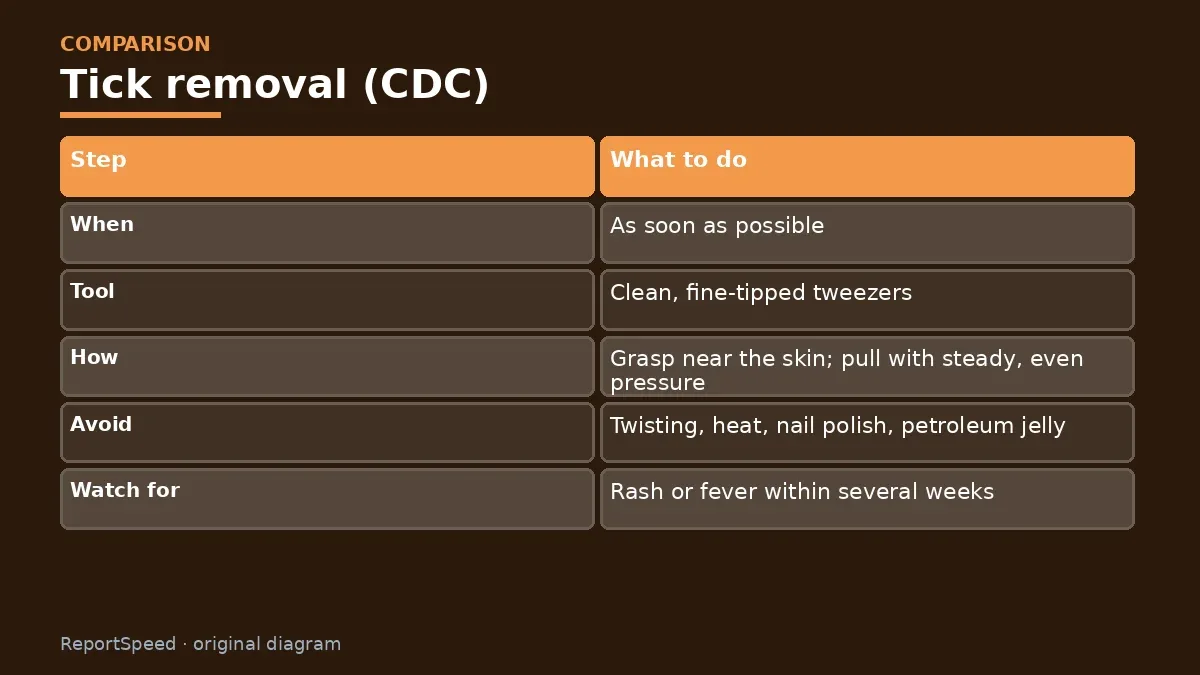
| Step | What to do |
|---|---|
| When | As soon as possible |
| Tool | Clean, fine-tipped tweezers |
| How | Grasp near the skin; pull with steady, even pressure |
| Avoid | Twisting, heat, nail polish, petroleum jelly |
| Watch for | Rash or fever within several weeks |
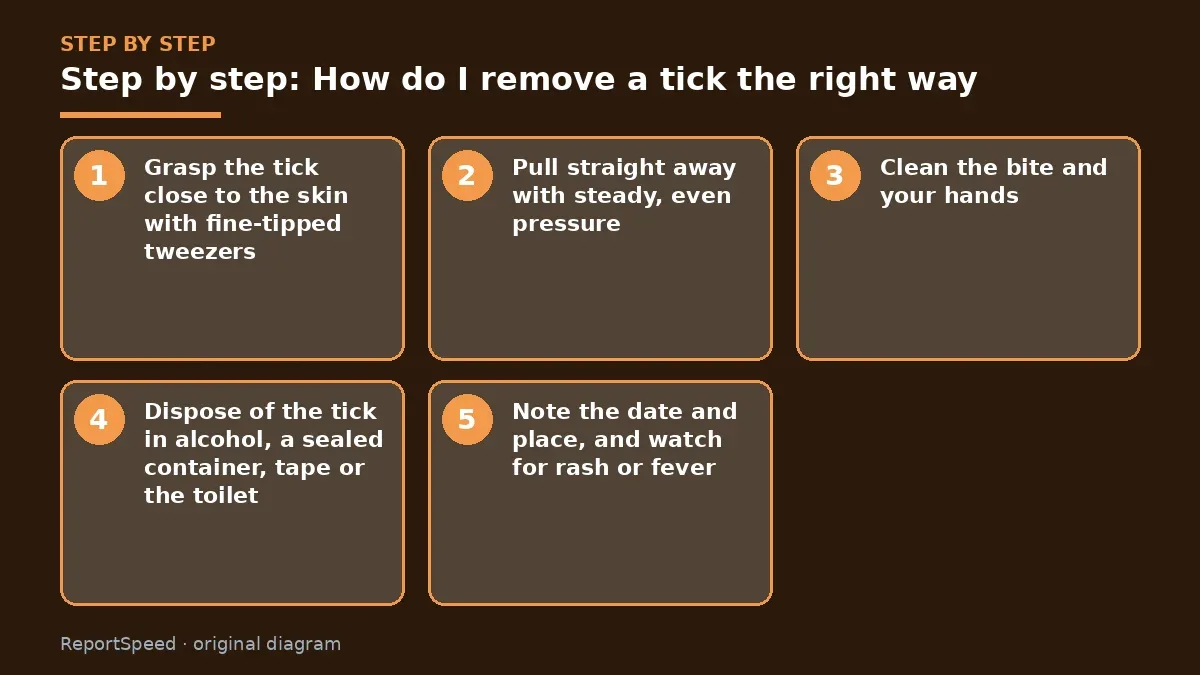
- Grasp the tick close to the skin with fine-tipped tweezers.
- Pull straight away with steady, even pressure.
- Clean the bite and your hands.
- Dispose of the tick in alcohol, a sealed container, tape or the toilet.
- Note the date and place, and watch for rash or fever.
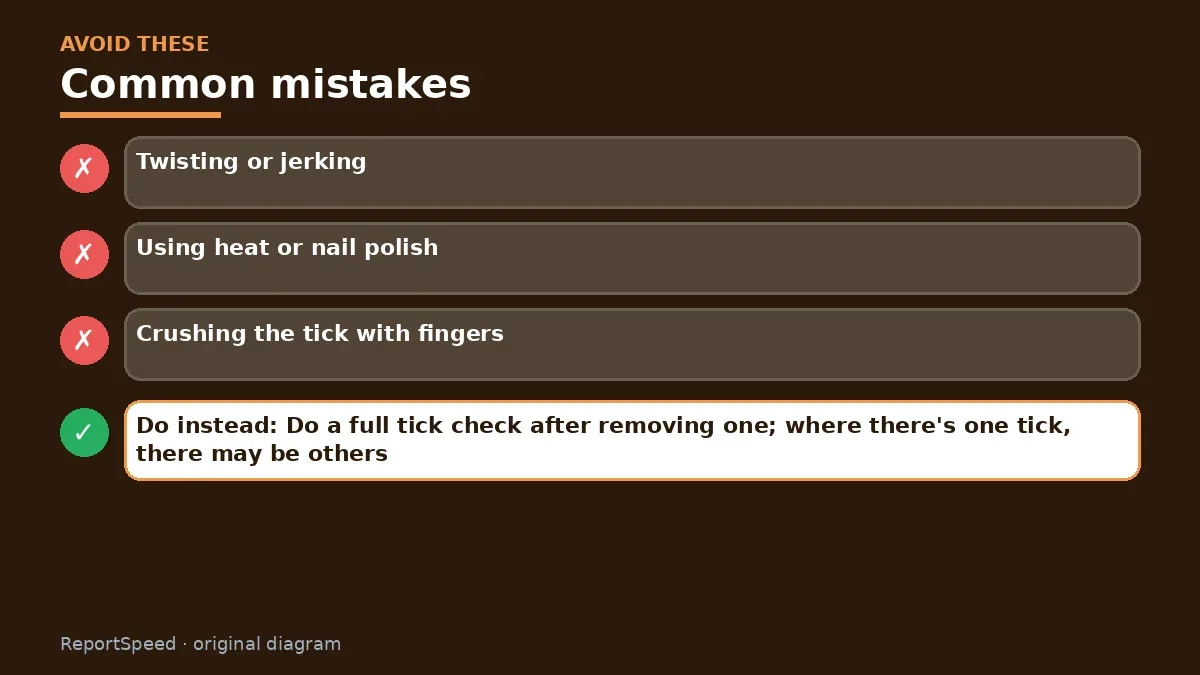
Common mistakes:
- Twisting or jerking
- Using heat or nail polish
- Crushing the tick with fingers
ReportSpeedMan tip: Do a full tick check after removing one; where there's one tick, there may be others.
What I would actually do
I'd remove the tick straight away with tweezers, clean up, write down the date and place, and watch for symptoms over the following weeks.
The trade-off people miss: waiting to have a professional remove it, or trying folk remedies first, adds time the tick stays attached.
Did it work? How to check
The whole tick is out, the bite is clean and you've noted the date.
Quick FAQ
Should I test the tick?
The CDC generally doesn't recommend it.
Should I save it?
You can note details; ask a doctor if symptoms appear.
Mouthparts left in?
Leave them if they won't come out easily.
Wrap-up: Tweezers, steady pull, clean up and watch for symptoms. Skip the folk remedies.
Wiki: Kids and Screen Time and Common Cold vs. Flu.
How do I remove a tick the right way: where the facts come from
Step-by-step photos
1. Before The problem 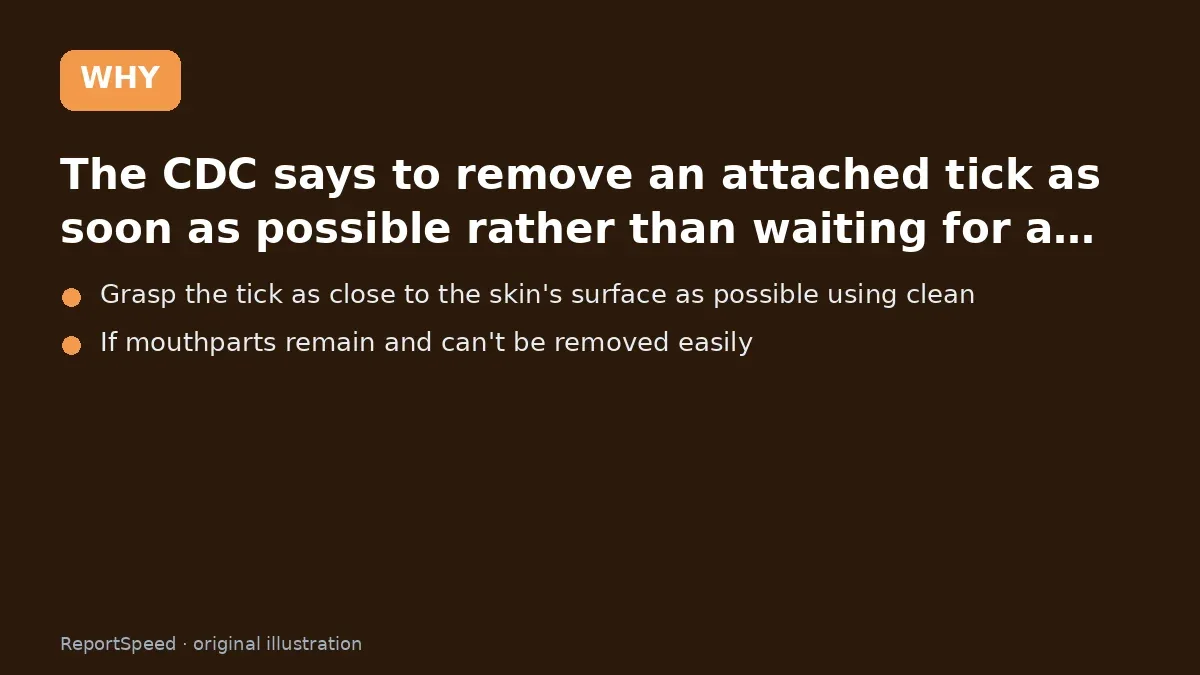
2. Why it happens The cause 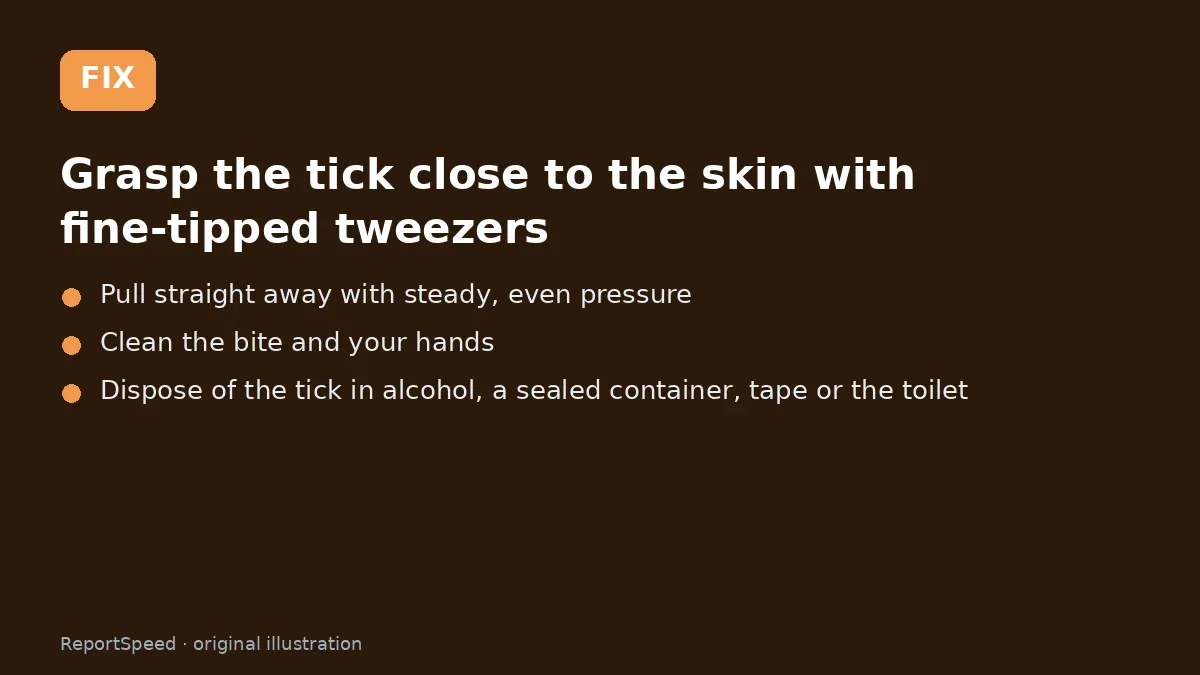
3. The fix The fix 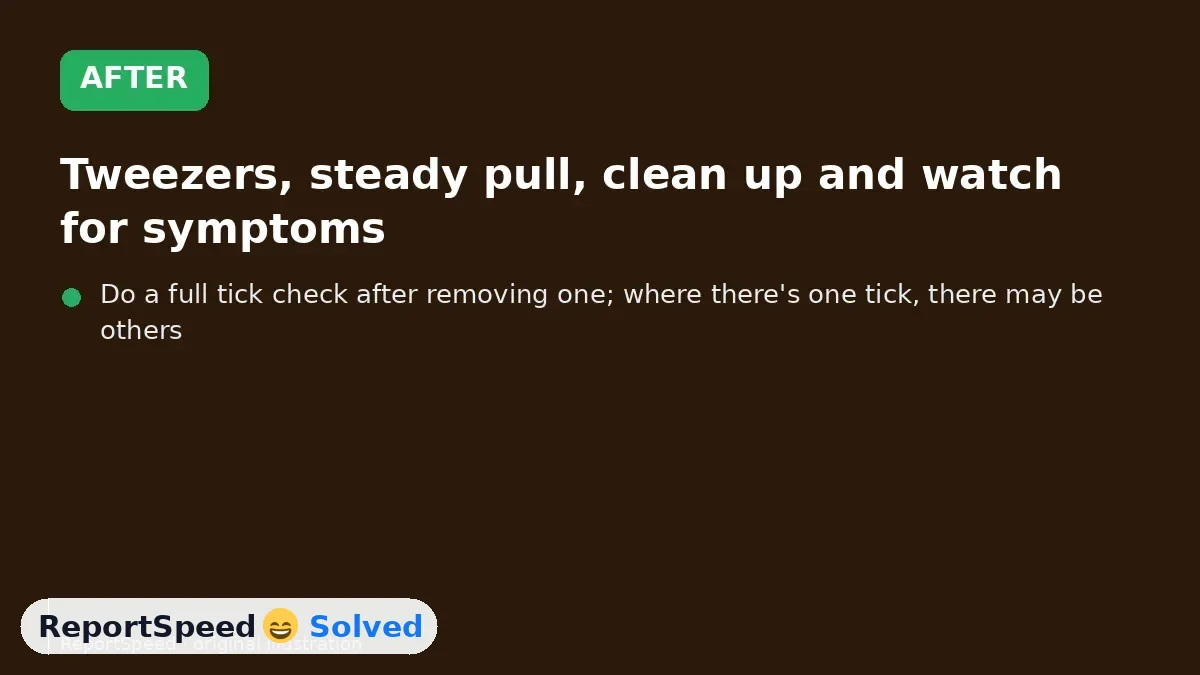
4. After The result
⚡ Speed Summary
- Tweezers, steady pull, clean up and watch for symptoms.
- Do a full tick check after removing one; where there's one tick, there may be others.
- Trying to make the tick back out with heat or nail polish delays removal and may make things worse.

Was this answer helpful?
Tap a star to rate this answer.
Related questions
Is there lead in my tap water? How to check and lower your risk
Lead comes from plumbing, can't be seen, and isn't removed by boiling.
Rate itSolved
When do I need a tetanus shot? Booster timing and wounds
Boosters are every 10 years, or 5 years for dirty or puncture wounds.
Rate itSolved
How to help someone who is choking: back blows and abdominal thrusts
Let a strong cough work.
Rate itSolved
Fever: when to call the doctor for a child or adult
At 8 months, 102.2°F is the call-now line; your baby's 101.5°F means watch closely and call if it rises or warning signs appear.
Rate itSolved
Real experiences
No experiences yet. Be the first to share.