


My old car is on its last legs and I drive about 40 miles a day, mostly highway with some city traffic. I keep going back and forth between a regular hybrid, a full electric car and just another gas car. I can maybe install a charger at home. How do I figure out which type actually fits my life?
Hybrid vs electric vs gas car: which should I buy for my commute?
Concerns & risks
You need a new car, your commute is predictable, and you're unsure whether the savings and convenience of a hybrid or EV are real for someone like you.
| Your situation | Often fits |
|---|---|
| Home charging, steady commute | Electric |
| No charger, mixed driving | Hybrid |
| Frequent long rural trips, tight budget | Gas or hybrid |
| Some short trips plus long ones | Plug-in hybrid |
Causes & evidence
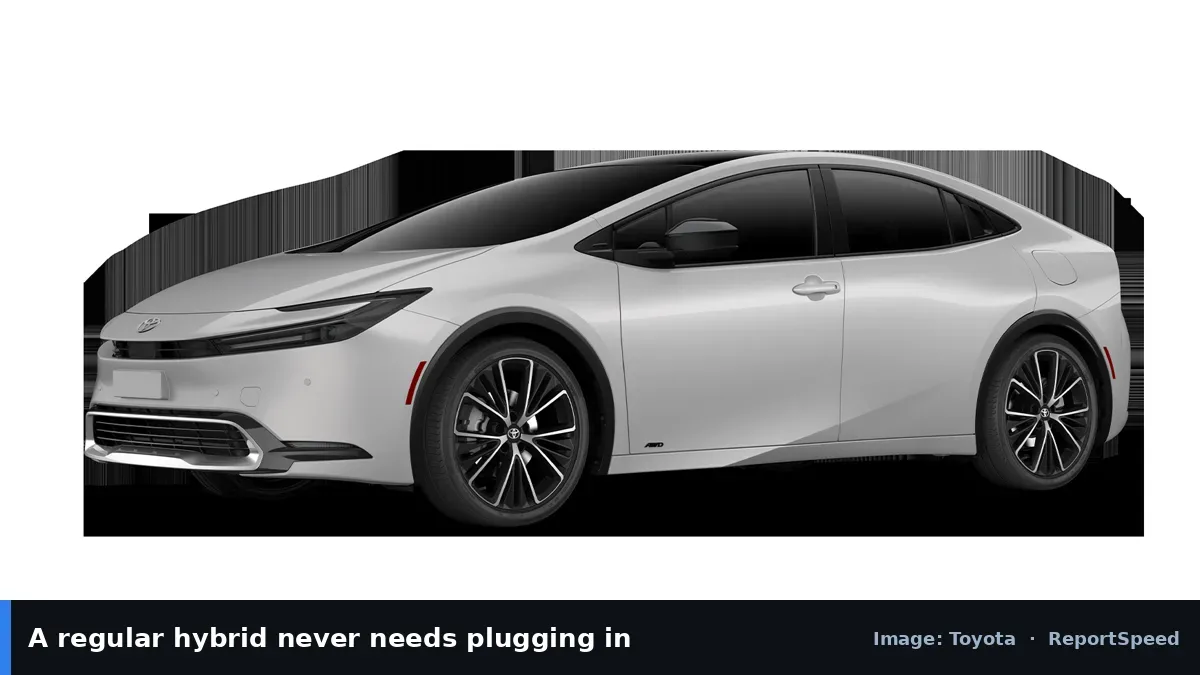
The three types use energy differently. A conventional hybrid, such as Toyota's Prius, combines a gas engine with a battery that recharges while driving, so you never plug in. A plug-in hybrid adds a larger battery for some electric-only miles. A battery electric car, such as Hyundai's IONIQ 5, runs entirely on electricity and works best with home or workplace charging. The DOE's fueleconomy.gov lets you compare official EPA ratings and estimated fuel costs side by side. The deciding factors are usually home charging access, long-trip frequency, purchase price and local electricity and fuel prices.
Official EPA ratings let you compare models consistently, and fueleconomy.gov estimates annual fuel costs. Charging speeds and costs vary widely between home and public chargers.
Buying an EV without reliable home or workplace charging is the most common path to regret.
What to do
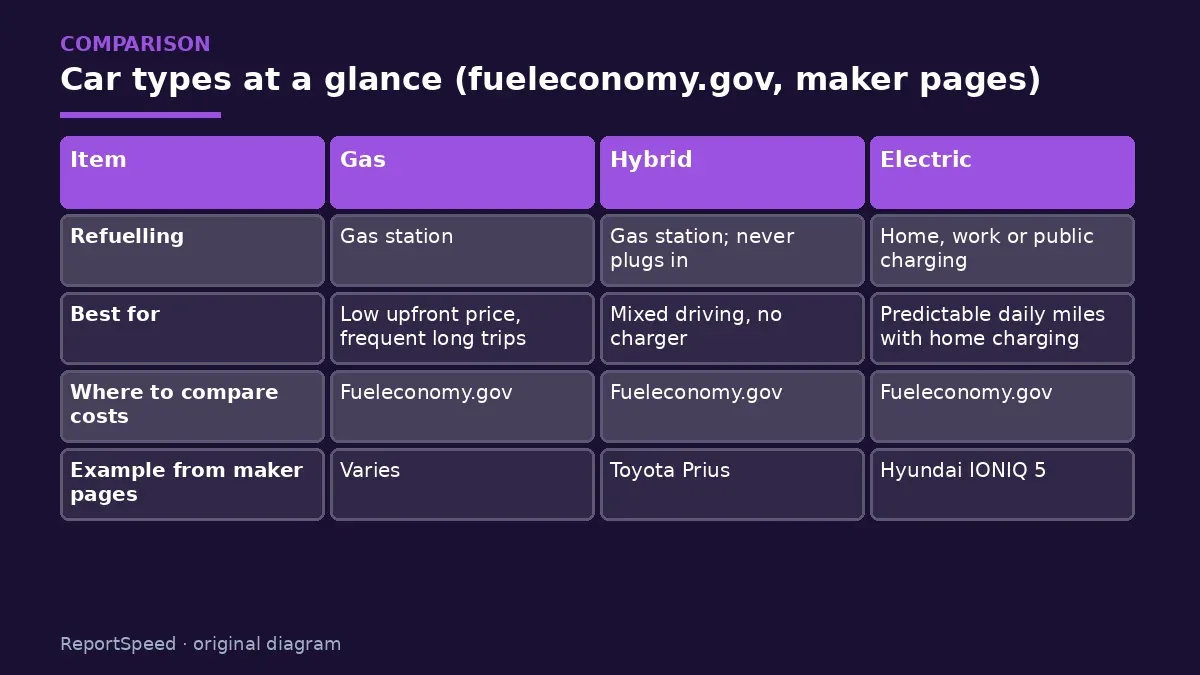
| Item | Gas | Hybrid | Electric |
|---|---|---|---|
| Refuelling | Gas station | Gas station; never plugs in | Home, work or public charging |
| Best for | Low upfront price, frequent long trips | Mixed driving, no charger | Predictable daily miles with home charging |
| Where to compare costs | fueleconomy.gov | fueleconomy.gov | fueleconomy.gov |
| Example from maker pages | Varies | Toyota Prius | Hyundai IONIQ 5 |
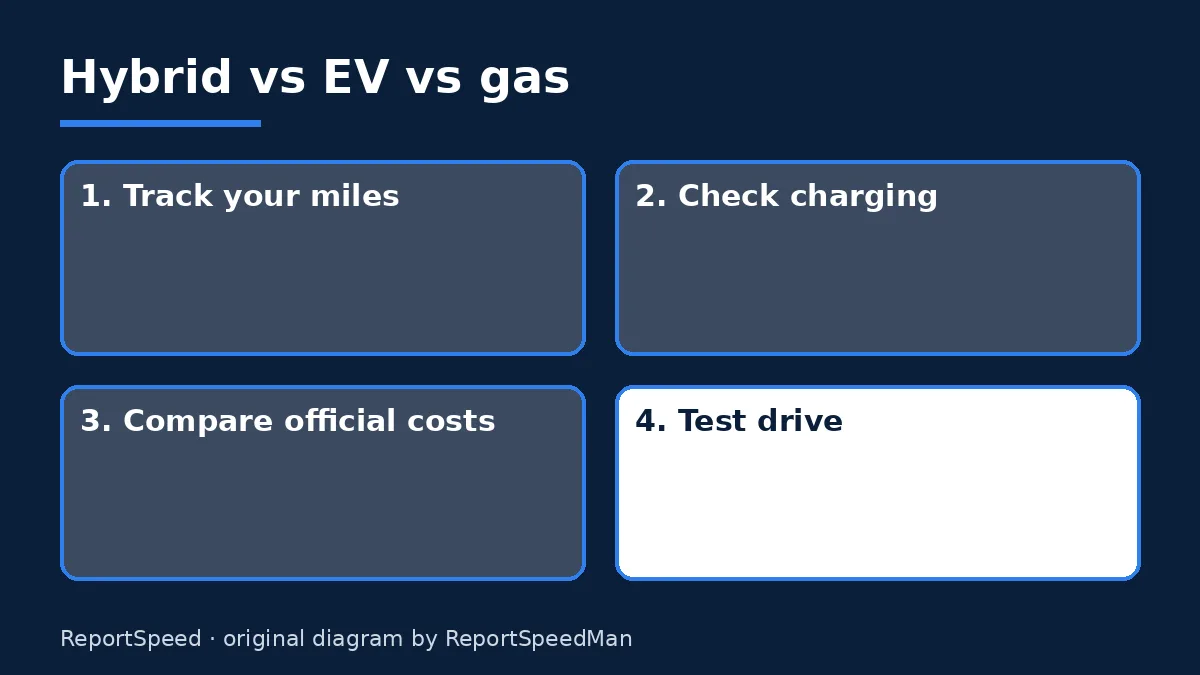
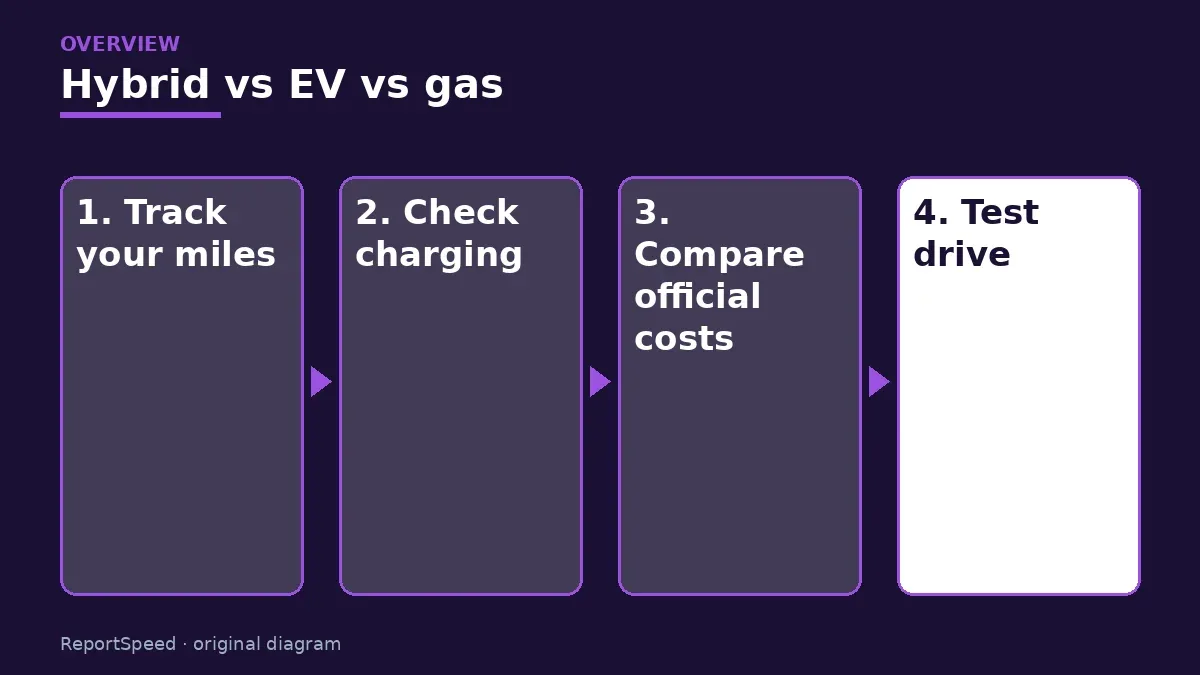
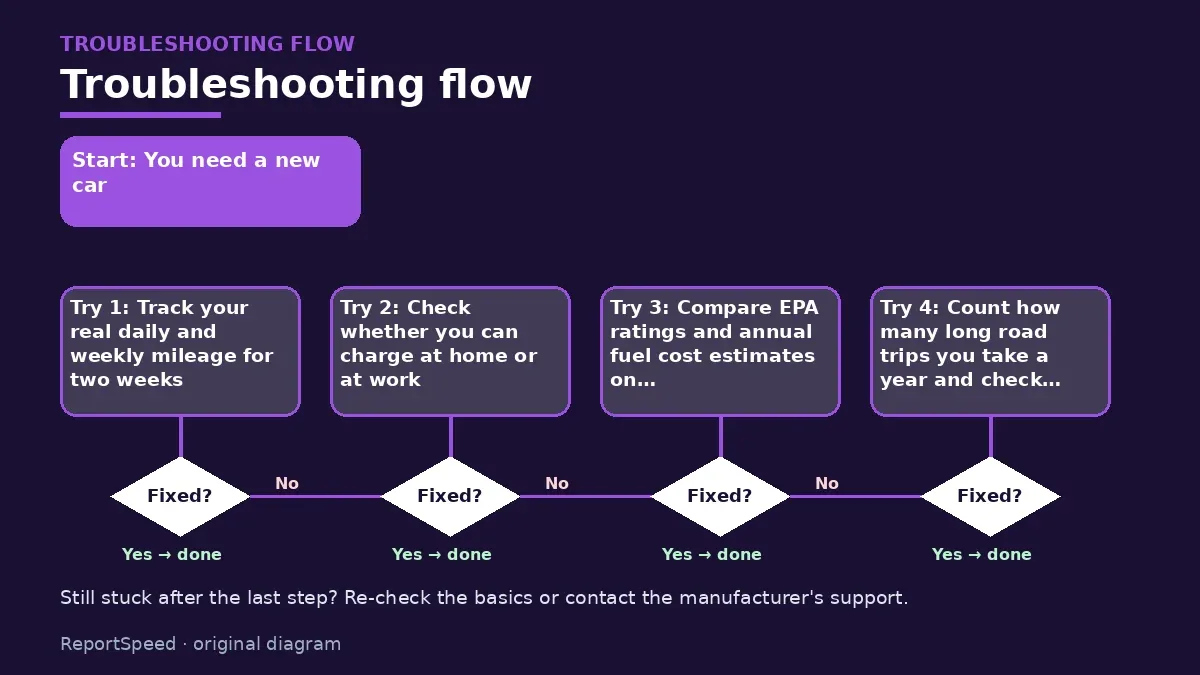
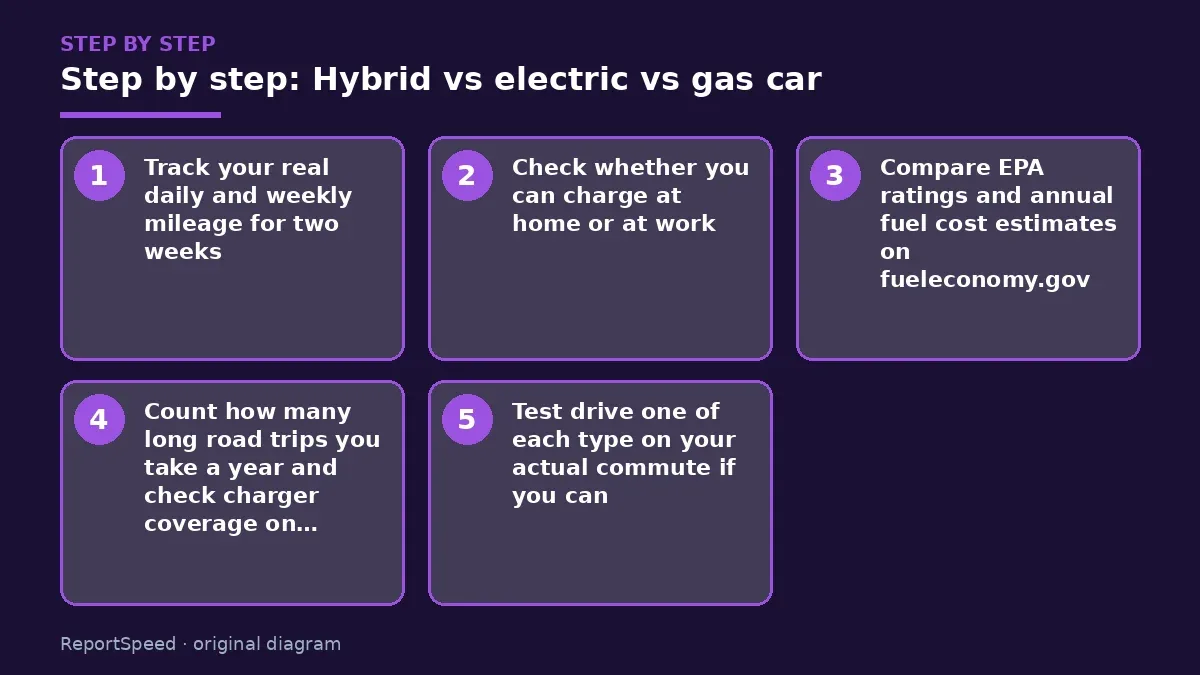
- Track your real daily and weekly mileage for two weeks.
- Check whether you can charge at home or at work.
- Compare EPA ratings and annual fuel cost estimates on fueleconomy.gov.
- Count how many long road trips you take a year and check charger coverage on those routes.
- Test drive one of each type on your actual commute if you can.
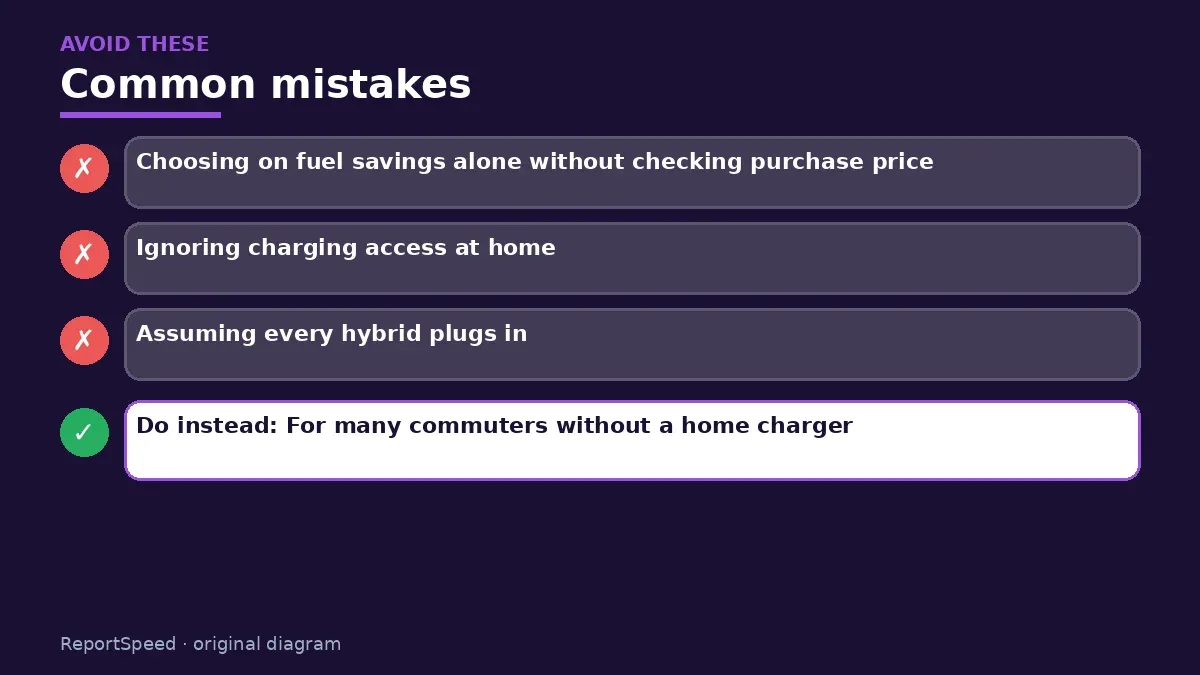
Common mistakes:
- Choosing on fuel savings alone without checking purchase price
- Ignoring charging access at home
- Assuming every hybrid plugs in
ReportSpeedMan tip: For many commuters without a home charger, a conventional hybrid captures much of the fuel savings with none of the charging planning.
What I would actually do
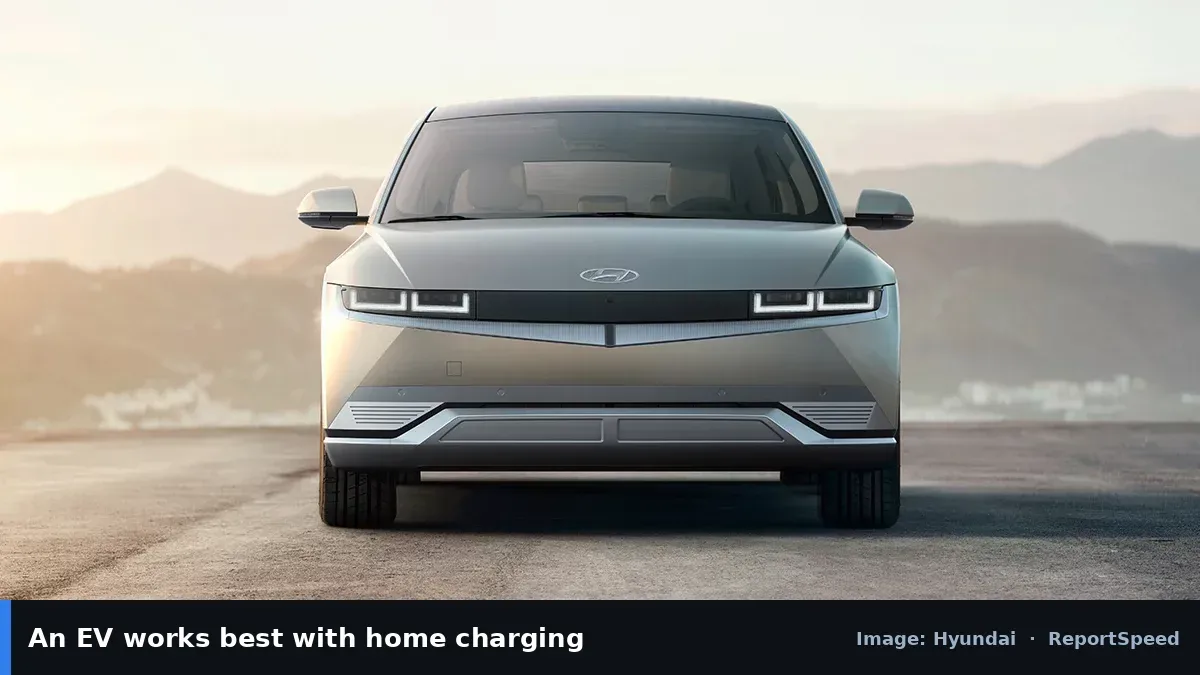
with a driveway charger and a steady 40-mile commute, I'd test drive an EV seriously. Without home charging, I'd go straight to a conventional hybrid.
The trade-off people miss: running costs aren't everything. Insurance, purchase price and resale vary by model, so compare the whole picture for the specific cars you're considering.
How to know it worked
Your car's running costs and charging or fuelling routine fit your week without stress.
Quick FAQ
Do hybrids need charging?
Conventional hybrids don't; plug-in hybrids can.
Does cold weather affect EVs?
Range can drop in cold weather.
Where do I compare costs?
fueleconomy.gov.
Wrap-up: Match the drivetrain to your miles and charging access. With home charging an EV shines; without it, a hybrid is often the easier win.
Wiki: Fuel Economy Basics.
Hybrid vs electric vs gas car: primary sources
Step-by-step photos

1. Before The problem 
2. Why it happens The cause 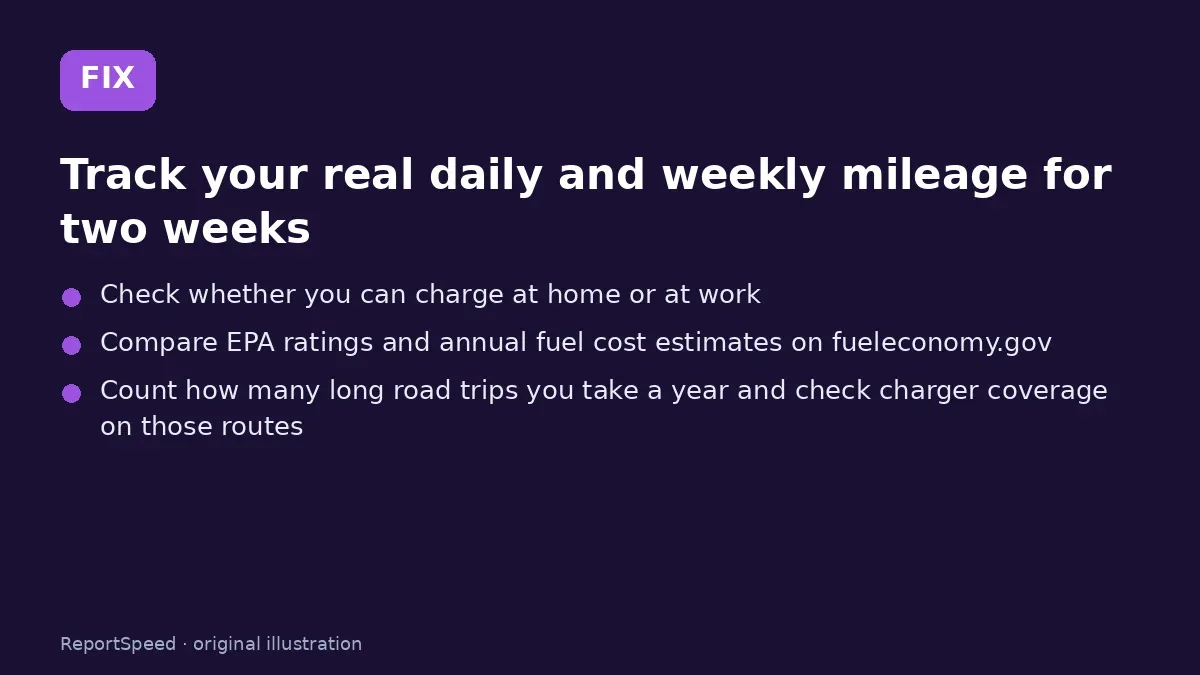
3. The fix The fix 
4. After The result
⚡ Speed Summary
- Match the drivetrain to your miles and charging access.
- For many commuters without a home charger, a conventional hybrid captures much of the fuel savings with none of the charging planning.
- Buying an EV without reliable home or workplace charging is the most common path to regret.

Was this answer helpful?
Tap a star to rate this answer.
Related questions

How far should I sit from the steering wheel airbag?
Keep 10 inches from the air bag cover, tilt the wheel toward your chest, and keep kids 12 and under in the back.
Rate itSolved
Is it safe to drive through a flooded road? How much water can float a car
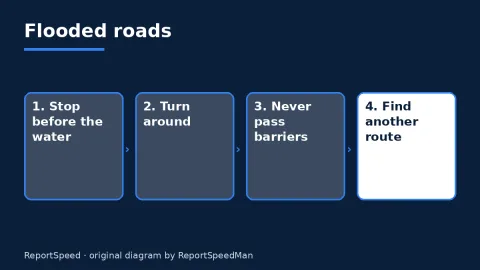
Never drive into flood water; a foot of rushing water can carry most cars.
Rate itSolved

When can my child stop using a booster seat?
Keep the booster until the seat belt fits across the thighs and chest, and keep kids 12 and under in the back.
Rate itSolved

Does driving faster really waste gas? Speed and fuel economy
Above 50 mph mileage drops quickly, roughly like $0.30 more per gallon for each extra 5 mph.
Rate itSolved
Real experiences
No experiences yet. Be the first to share.