


I sold a bike online and the buyer mailed me a check for $300 more than the price. He asked me to deposit it and send the extra back by gift card for 'shipping.' My bank already shows the money available. Is it safe to send the difference back?
Fake check scams: why you shouldn't send money back
Concerns & risks
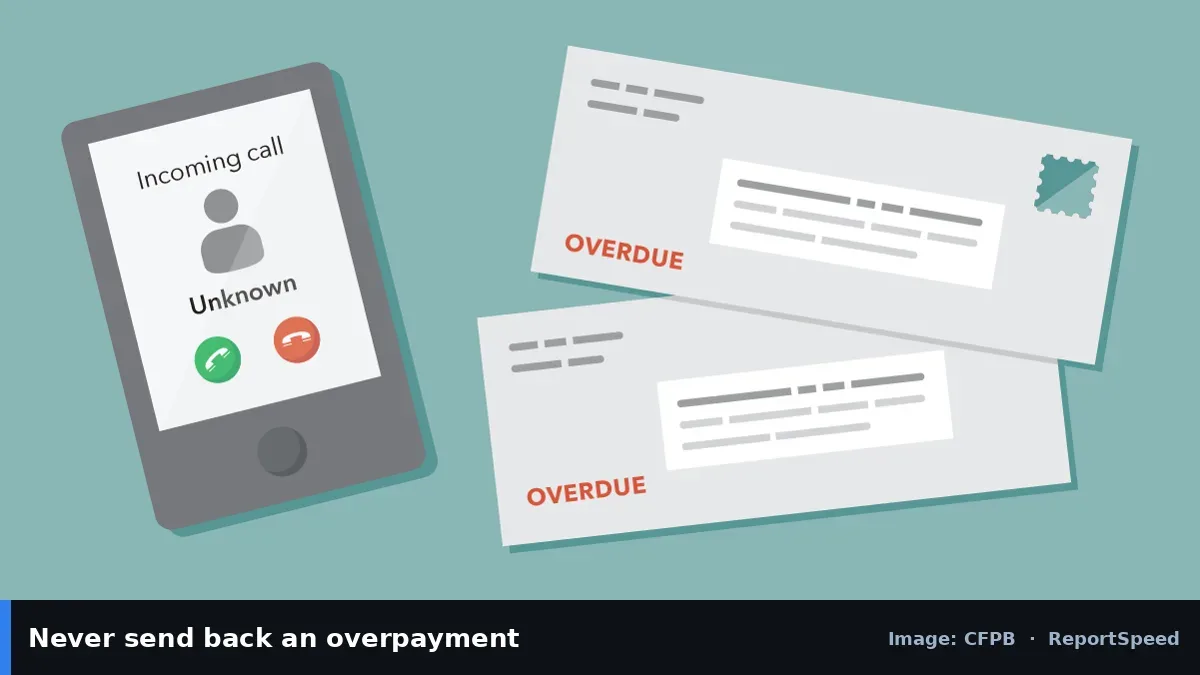
A buyer overpaid with a check and wants you to return the extra money.
| Story | Ask |
|---|---|
| Buyer overpays | Send the extra back |
| Mystery shopper job | Buy gift cards |
| Prize winnings | Pay fees from the check |
| Rental deposit refund | Return part of it |
Causes & evidence
The FTC explains that in fake check scams, someone sends you a check and asks you to send some of the money back, by gift card, wire transfer or payment app. Banks must make deposited funds available quickly, often within a couple of days, but it can take weeks to discover a fake check. When the check bounces, the bank removes the money from your account, and you are responsible for paying it back. Scammers use overpayments, mystery shopper jobs, prize winnings and rental deposits as stories. The FTC says that anyone who gives you a check and asks you to send money back is a scammer.
Fake checks can look very convincing, including cashier's checks and money orders. Banks can identify fakes, but often only after the money has been made available. Scammers often move fast because they know the bank's discovery window works in their favour. They may send follow-up messages claiming an emergency, offering a bonus for quick action or threatening to report you. Treat any pressure to act quickly as a further sign of fraud, and keep copies of the check, envelope and messages in case your bank or the FTC asks for them.

Sending money back because the deposit 'cleared' is exactly what the scammer is counting on.
What to do

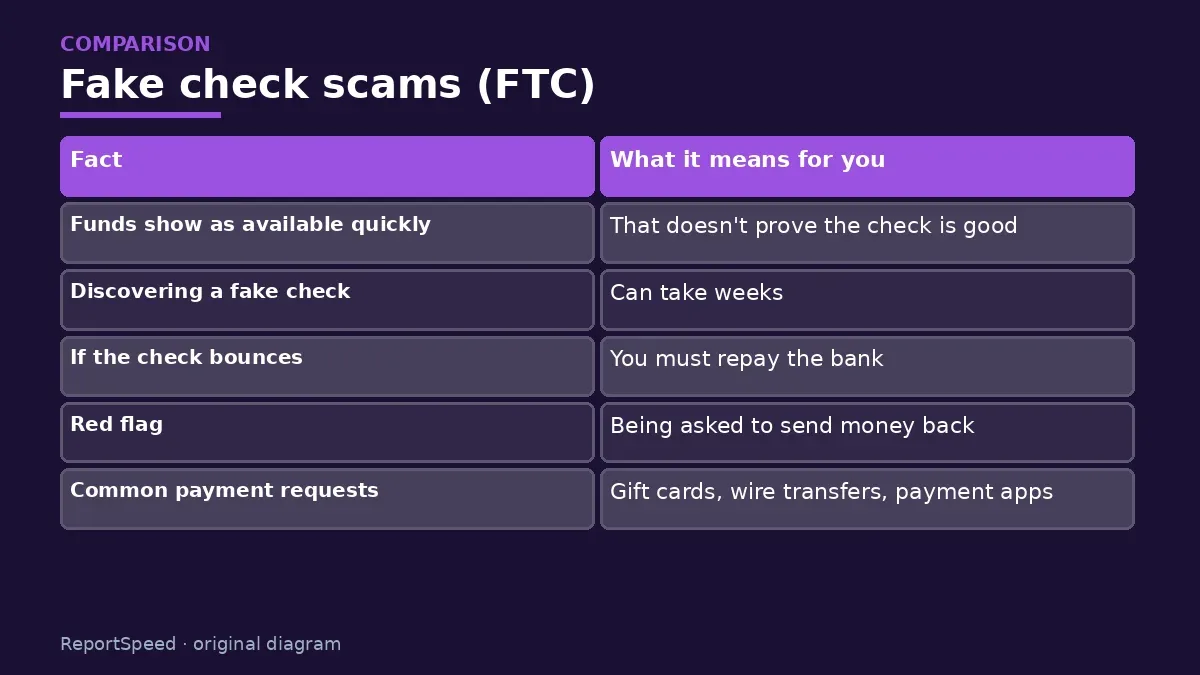
| Fact | What it means for you |
|---|---|
| Funds show as available quickly | That doesn't prove the check is good |
| Discovering a fake check | Can take weeks |
| If the check bounces | You must repay the bank |
| Red flag | Being asked to send money back |
| Common payment requests | Gift cards, wire transfers, payment apps |
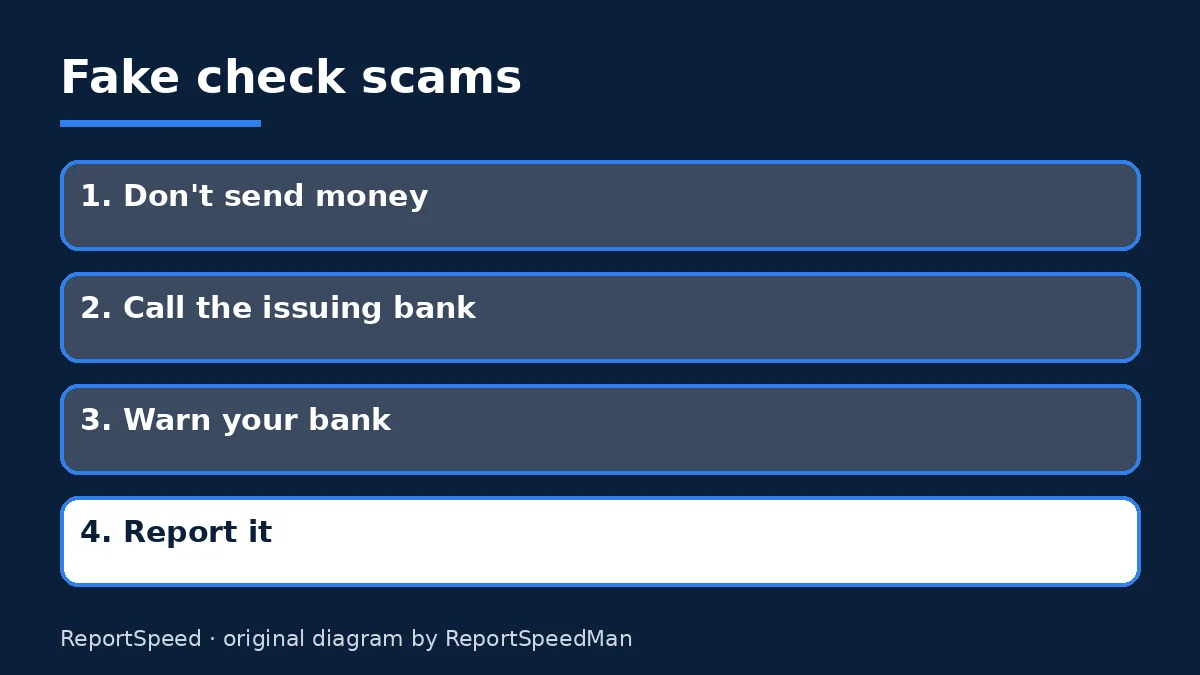
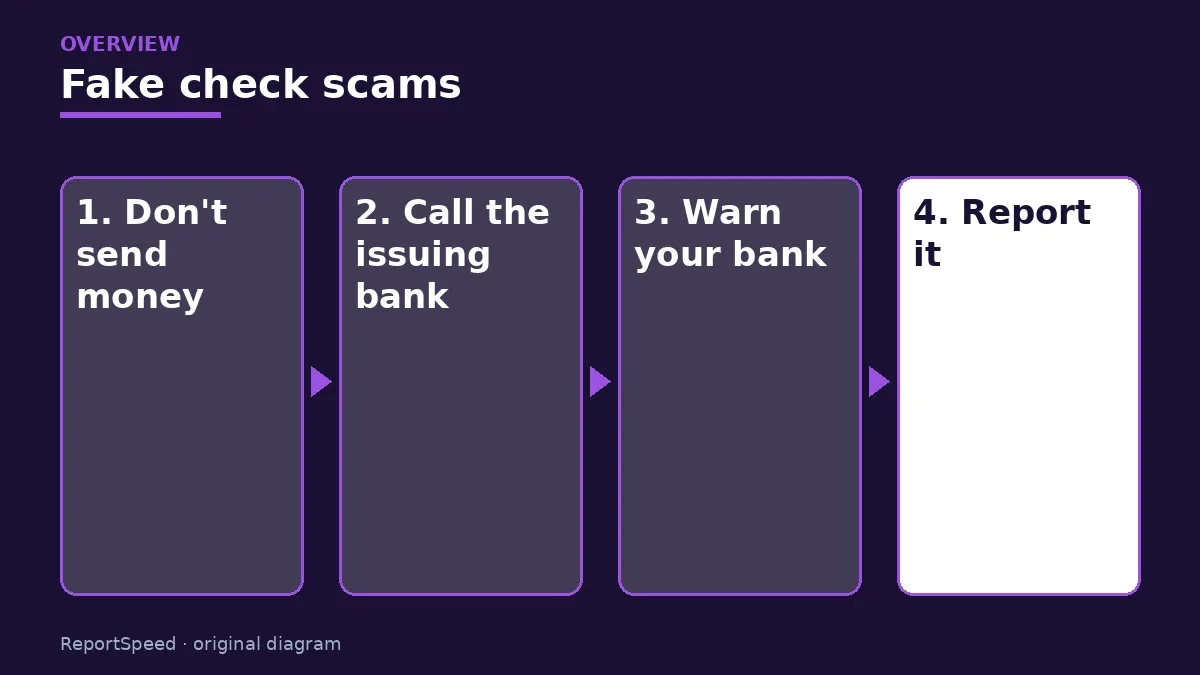
- Don't send any money back, by any method.
- Contact the bank that issued the check using a number you find yourself, not one on the check.
- Tell your own bank you think the check may be fake.
- Stop communicating with the buyer.
- Report it at ReportFraud.ftc.gov.
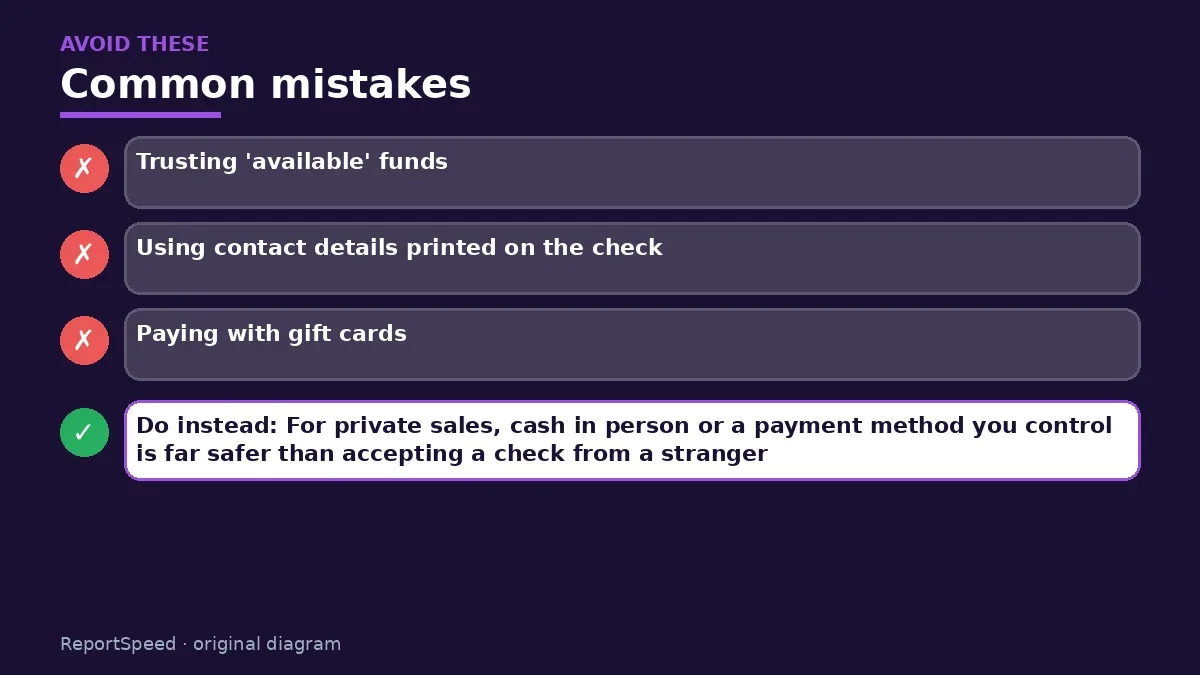
Common mistakes:
- Trusting 'available' funds
- Using contact details printed on the check
- Paying with gift cards
ReportSpeedMan tip: For private sales, cash in person or a payment method you control is far safer than accepting a check from a stranger.
What I would actually do
I'd refuse any overpayment, ask the buyer to send a new payment for the exact amount, and if they push, end the sale.
The trade-off people miss: 'funds available' is about how fast banks must release money, not proof the check is good, so the risk stays with you for weeks.
How to know it worked
No money left your account and the buyer is reported.
Quick FAQ
The bank said the funds were available. Am I safe?
Not necessarily.
What if I already sent money?
Contact the payment company right away.
Should I report it?
Yes, at ReportFraud.ftc.gov.
Wrap-up: If someone pays you by check and asks for money back, stop. It can take weeks to reveal a fake check, and you'd be on the hook.
Wiki: Phishing and Identity Theft Recovery Steps.
Fake check scams: where the facts come from
Step-by-step photos
1. Before The problem 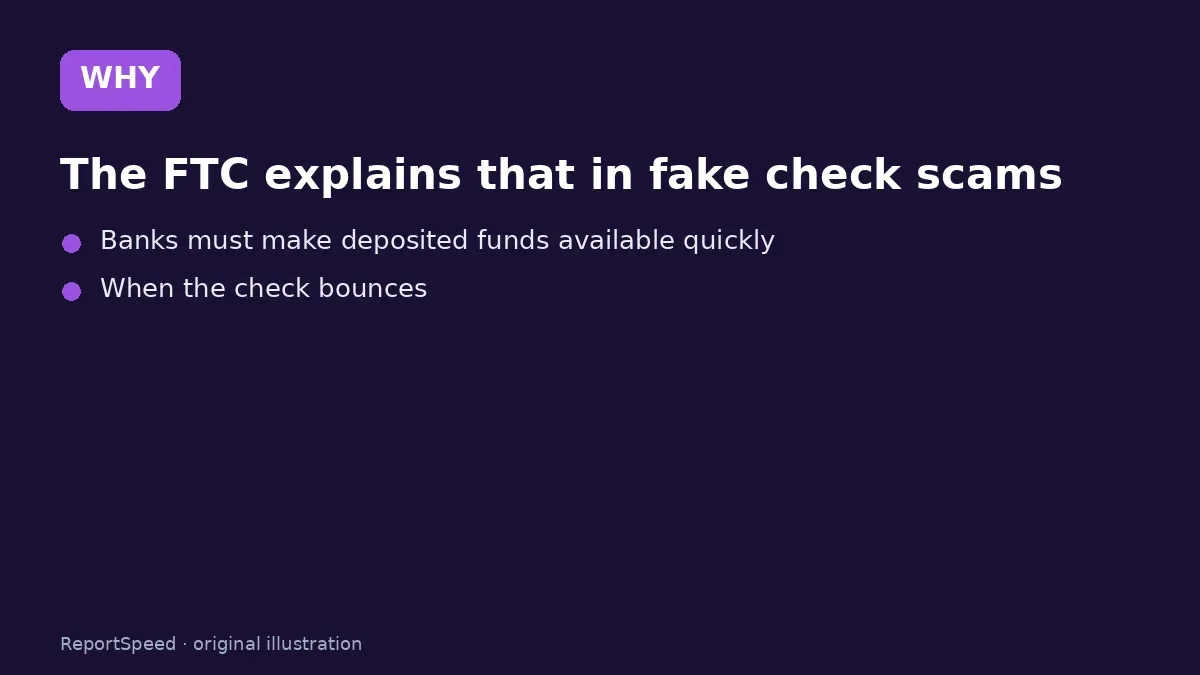
2. Why it happens The cause 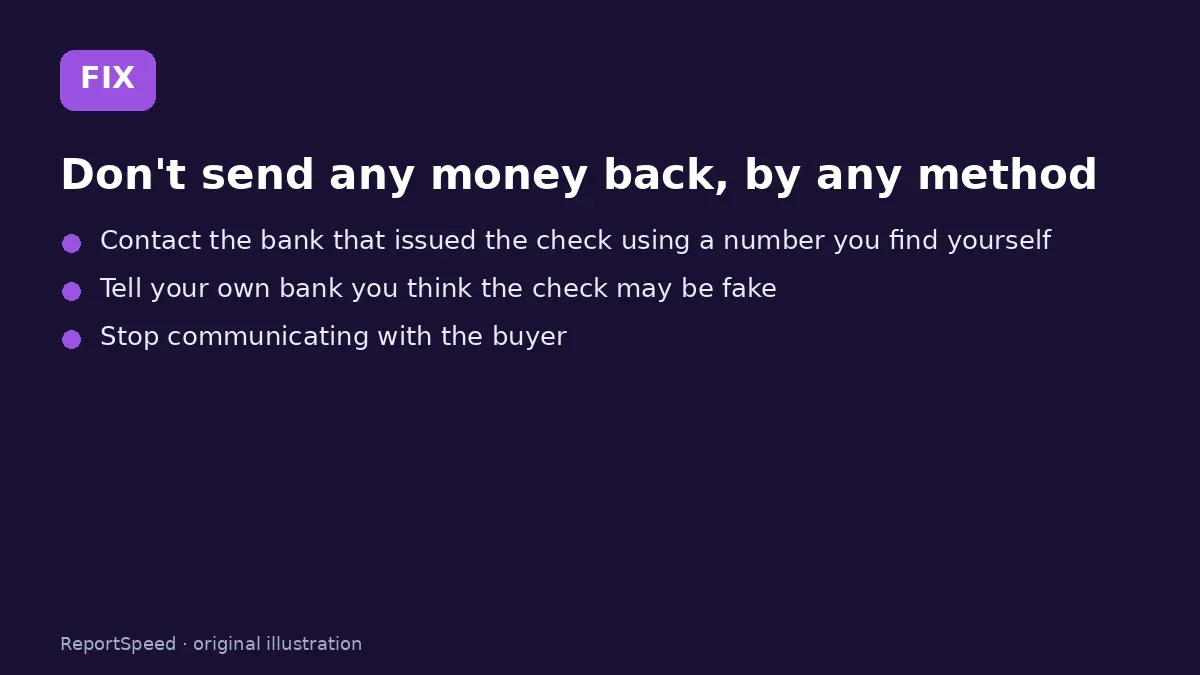
3. The fix The fix 
4. After The result
⚡ Speed Summary
- If someone pays you by check and asks for money back, stop.
- For private sales, cash in person or a payment method you control is far safer than accepting a check from a stranger.
- Sending money back because the deposit 'cleared' is exactly what the scammer is counting on.

Was this answer helpful?
Tap a star to rate this answer.
Related questions
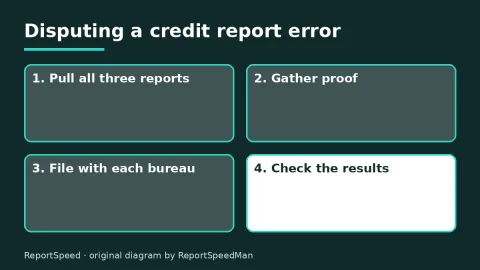
Found an error on my credit report? How to dispute it step by step
Dispute with each bureau and the furnisher, include proof, and expect results in about 30 days.
Rate itSolved
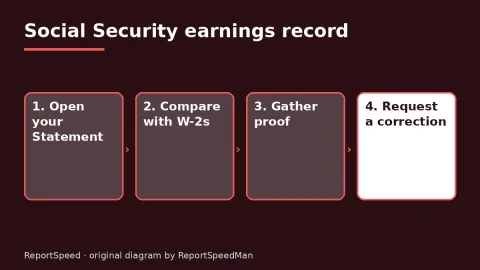
How do I check my Social Security earnings record and fix a mistake?
Check your Statement every year, match it to your W-2s, and correct gaps with proof before the usual window closes.
Rate itSolved
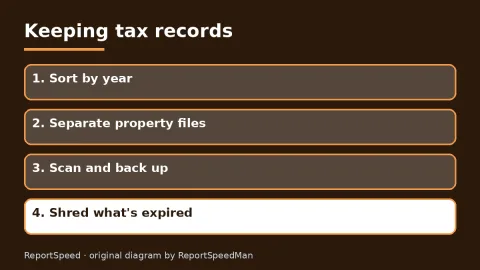
How long should I keep tax records? The IRS 3-, 6- and 7-year rules
Three years covers most returns; six, seven or forever apply in specific cases.
Rate itSolved
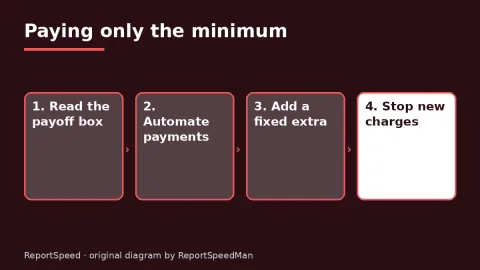
What happens if I only pay the minimum on my credit card?
Minimum payments keep you current but stretch the debt for years.
Rate itSolved
Real experiences
No experiences yet. Be the first to share.