


My mom got a call that sounded exactly like my brother saying he'd been in an accident and needed money wired right away. Luckily she called him first and he was fine. I've read scammers can clone voices from short clips online. How real is this, and how do we protect the family?
Could a scammer clone my family's voice with AI? How to protect yourself
Concerns & risks
Someone in your family got a frightening call that sounded like a relative, and you want to make sure nobody falls for it next time.
| Item | Who |
|---|---|
| Code word | Everyone in the family |
| Callback numbers saved | Each person's phone |
| Second contact to confirm | Agree on one person |
| Payment rule: never gift cards or wires | Everyone |
Causes & evidence
The FTC has warned that scammers can use short audio clips, often from social media videos, to create convincing voice clones for family emergency schemes. The call usually creates panic and urgency, asks for secrecy, and demands payment by wire, gift cards, crypto or cash pickup, methods that are hard to reverse. Caller ID can be spoofed, so the number may even look familiar. Because the voice can sound real, the safest check is independent verification, not judging the voice.
The FTC says scammers need only a short clip to clone a voice. Asking a question only the real person would know is another quick check if you can't hang up.

Trying to judge whether the voice sounds right is unreliable; verification is what protects you.
What to do
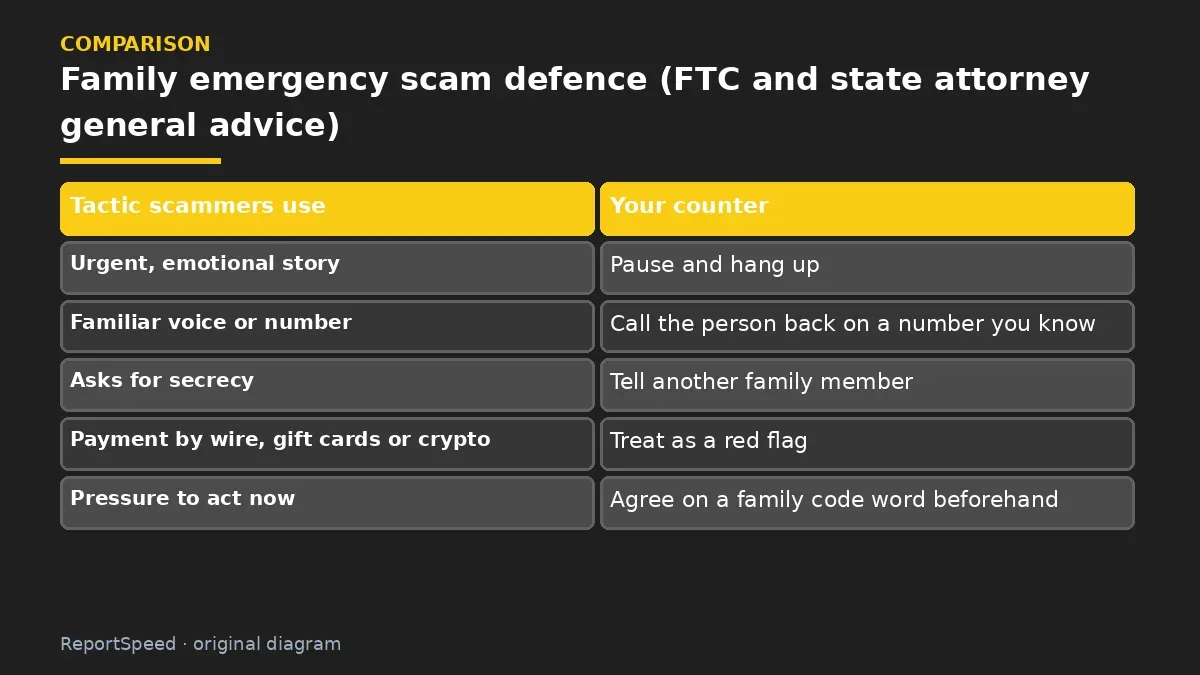
| Tactic scammers use | Your counter |
|---|---|
| Urgent, emotional story | Pause and hang up |
| Familiar voice or number | Call the person back on a number you know |
| Asks for secrecy | Tell another family member |
| Payment by wire, gift cards or crypto | Treat as a red flag |
| Pressure to act now | Agree on a family code word beforehand |
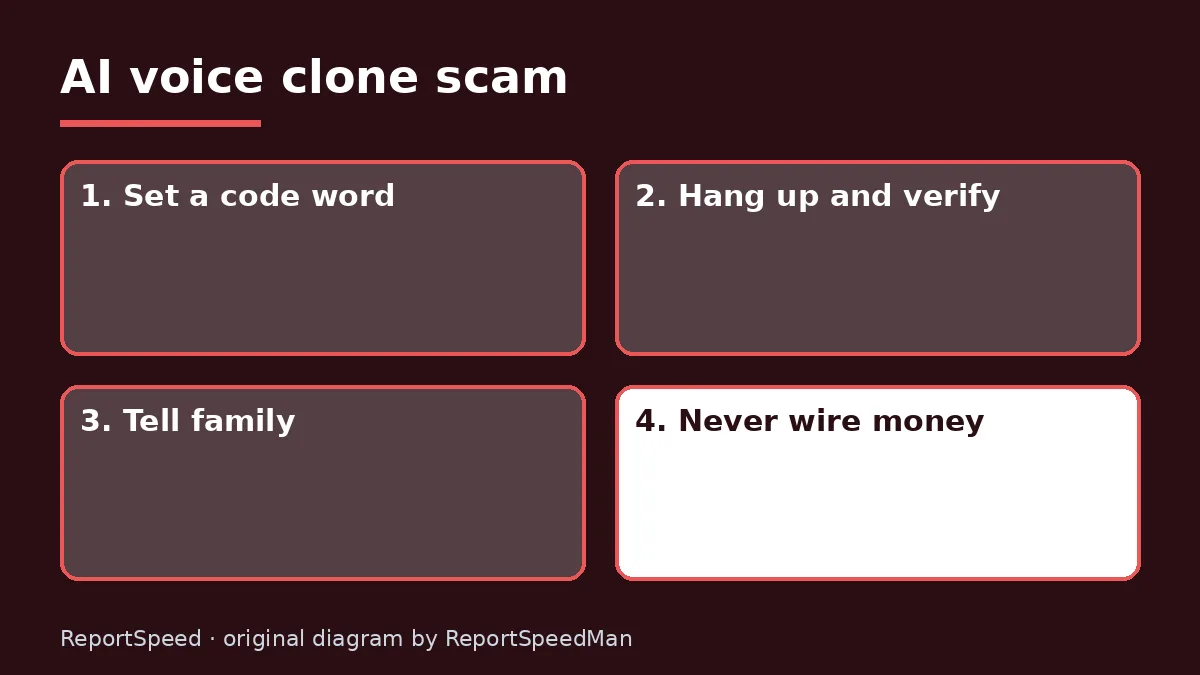
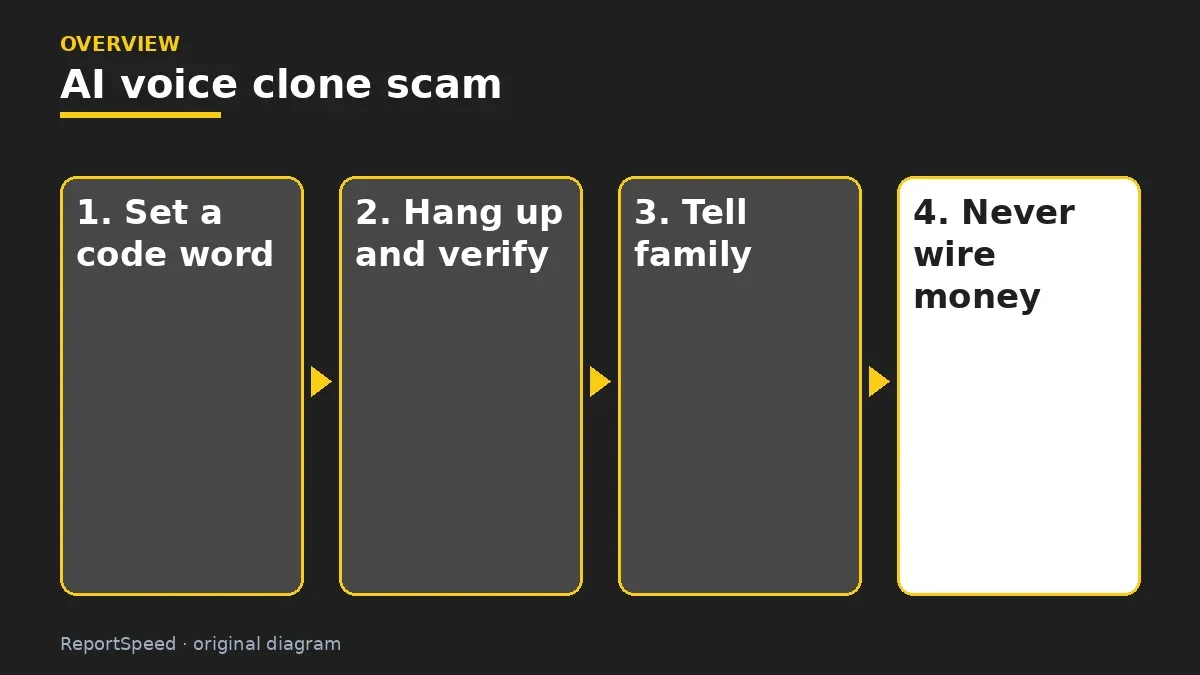
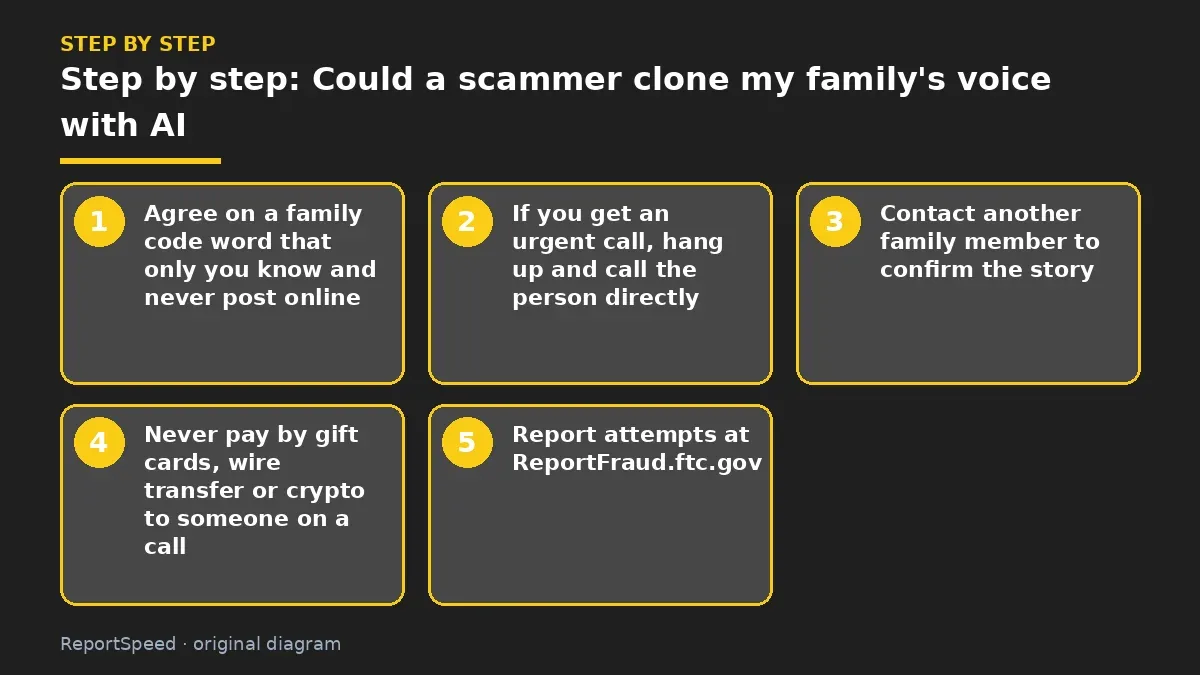
- Agree on a family code word that only you know and never post online.
- If you get an urgent call, hang up and call the person directly.
- Contact another family member to confirm the story.
- Never pay by gift cards, wire transfer or crypto to someone on a call.
- Report attempts at ReportFraud.ftc.gov.
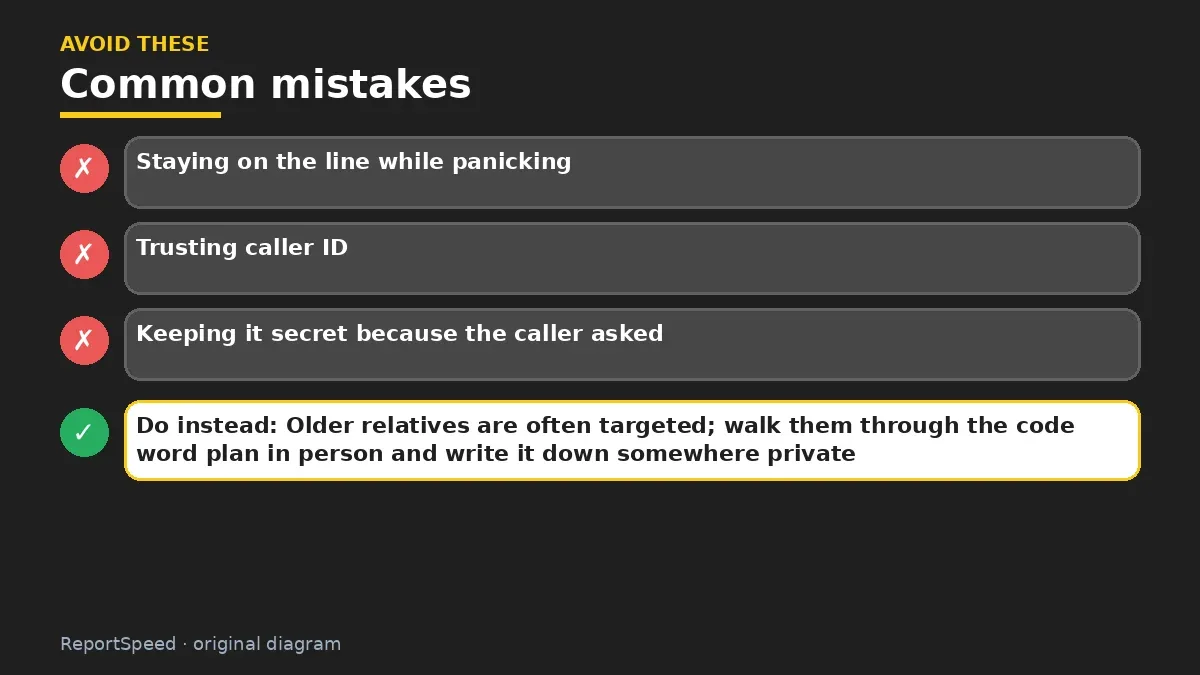
Common mistakes:
- Staying on the line while panicking
- Trusting caller ID
- Keeping it secret because the caller asked
ReportSpeedMan tip: Older relatives are often targeted; walk them through the code word plan in person and write it down somewhere private.
What I would actually do
set a family code word at the next dinner, save everyone's callback numbers and agree that no one pays by gift card or wire on a phone request.
The trade-off people miss: posting less voice and video publicly helps, but you can't remove every clip, so verification habits matter most.
Checking that it worked
Your whole family knows the code word and the hang-up-and-verify rule.
Quick FAQ
Can caller ID be faked?
Yes, numbers can be spoofed.
What if I already paid?
Contact the payment company immediately and report it.
Should I stop posting videos?
Limiting public audio helps, but verification is the main defence.
Wrap-up: Set a family code word, hang up and verify, and never pay through hard-to-trace methods. That stops voice clone scams cold.
Wiki: Phishing and Payment App and Money Scams.
Could a scammer clone my family's voice with AI: official sources I checked
Step-by-step photos

1. Before The problem 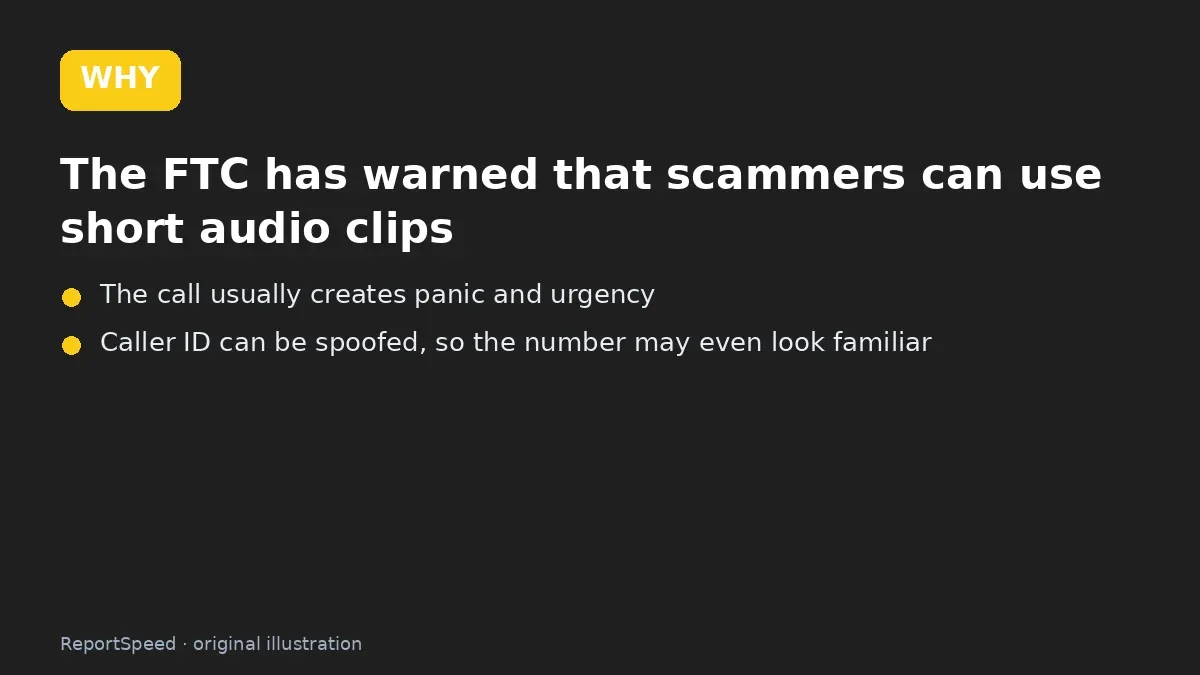
2. Why it happens The cause 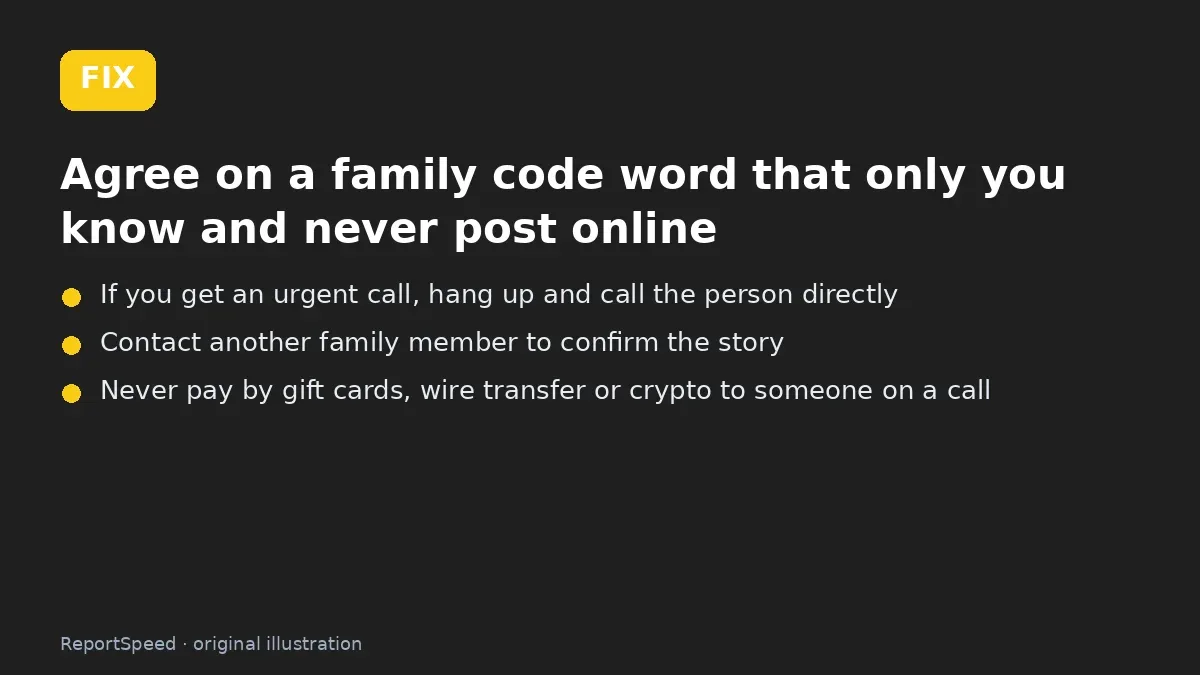
3. The fix The fix 
4. After The result
⚡ Speed Summary
- Set a family code word, hang up and verify, and never pay through hard-to-trace methods.
- Older relatives are often targeted; walk them through the code word plan in person and write it down somewhere private.
- Trying to judge whether the voice sounds right is unreliable; verification is what protects you.

Was this answer helpful?
Tap a star to rate this answer.
Related questions
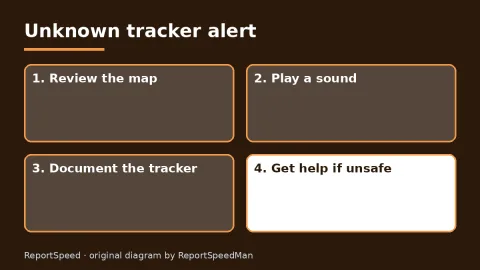
Got an 'AirTag found moving with you' alert? What to do next
Find the tracker, document it, identify the owner, and disable it.
Rate itSolved
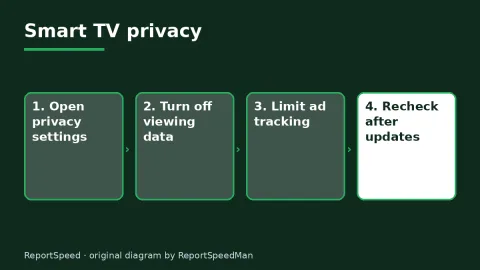
Is my smart TV tracking what I watch? How to turn off ACR
Smart TVs may use ACR to track viewing.
Rate itSolved
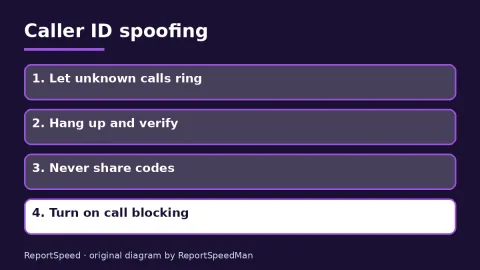
Caller ID spoofing: why scammers show a local number and how to protect yourself
Caller ID can be faked, and spoofing to defraud is illegal.
Rate itSolved
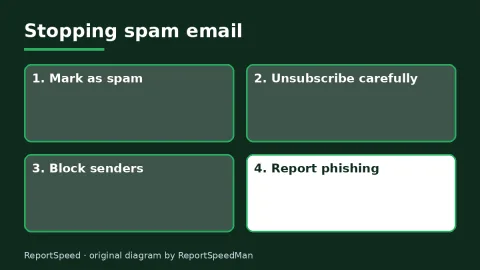
How do I stop spam emails without making it worse?
Mark spam, block repeat senders, unsubscribe only from known companies, and report phishing.
Rate itSolved
Real experiences
No experiences yet. Be the first to share.