


I'm an hourly warehouse worker. We get two 10-minute breaks, and our manager clocks us out for them. We also have a mandatory 45-minute safety training once a month before shift, unpaid, and sometimes we sit around waiting for trucks. Does my employer have to pay for breaks, training and waiting time under federal law?
Does my employer have to pay for breaks, training and waiting time?
Concerns & risks
You're hourly, get clocked out for 10-minute breaks, attend unpaid mandatory training and wait for trucks.
| Item | Example |
|---|---|
| Clock in/out | 7:00–3:30 |
| Short breaks | Two 10-minute breaks |
| Meal break | 30 minutes, fully off duty? |
| Training | 45 minutes, required |
| Waiting | Truck delay, told to stay |
| Pay stub match | Hours paid vs worked |
Causes & evidence
The Department of Labor's Fact Sheet #22 on hours worked under the Fair Labor Standards Act explains that rest periods of short duration, generally 5 to about 20 minutes, are common and must be counted as hours worked. Bona fide meal periods, typically 30 minutes or more, generally need not be paid if the employee is completely relieved from duty. Waiting time is paid when you are 'engaged to wait', such as waiting for a truck while on duty, but not when you're completely relieved and can use the time effectively for your own purposes. Training time is not counted only if all four conditions are met: it's outside normal hours, voluntary, not directly related to the job, and no productive work is done. Mandatory, job-related training doesn't meet those tests. On-call time is paid if you must stay on the premises or are so restricted you can't use the time for yourself.
Who this applies to: non-exempt employees covered by the FLSA. State laws may require paid breaks or meal periods. Commute time from home to work generally isn't paid, but travel between job sites during the day usually is.
Accepting 'that's just how breaks work here' leaves unpaid minutes that add up across every shift and may also affect overtime.
What to do

| Time | Generally paid? |
|---|---|
| Rest breaks of 5–20 minutes | Yes |
| Meal periods 30+ minutes, fully relieved | No |
| Waiting while on duty | Yes ('engaged to wait') |
| Fully relieved, free time | No ('waiting to be engaged') |
| Mandatory job-related training | Yes |
| On-call, must stay on premises | Yes |
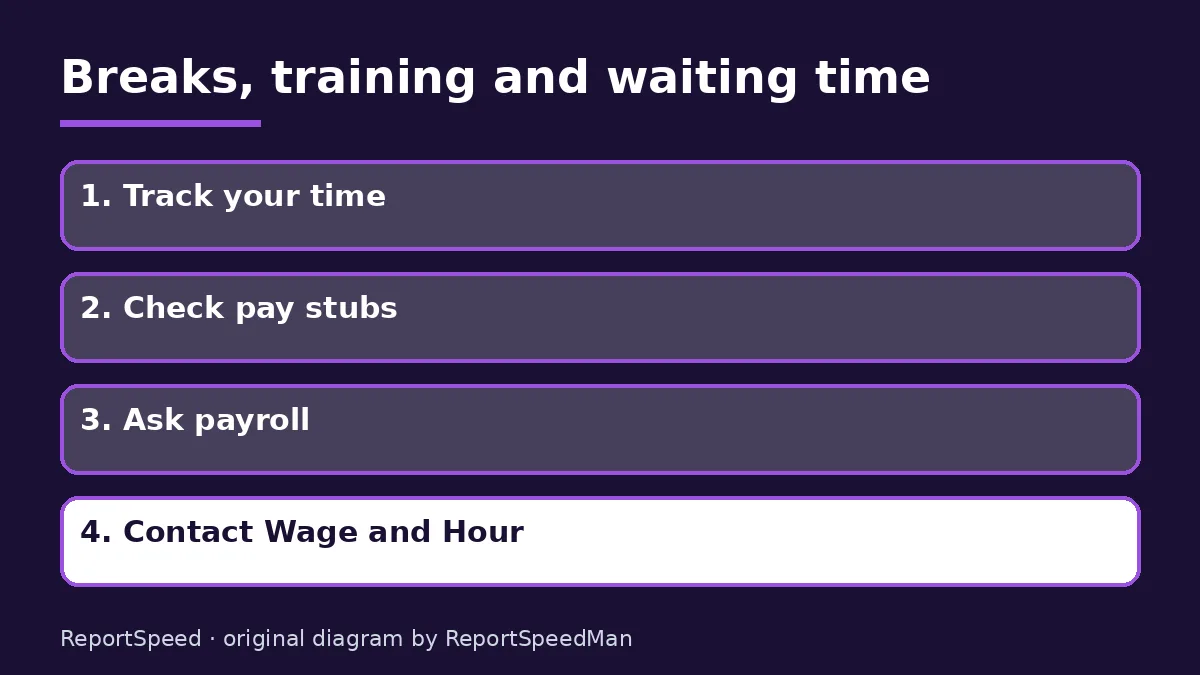
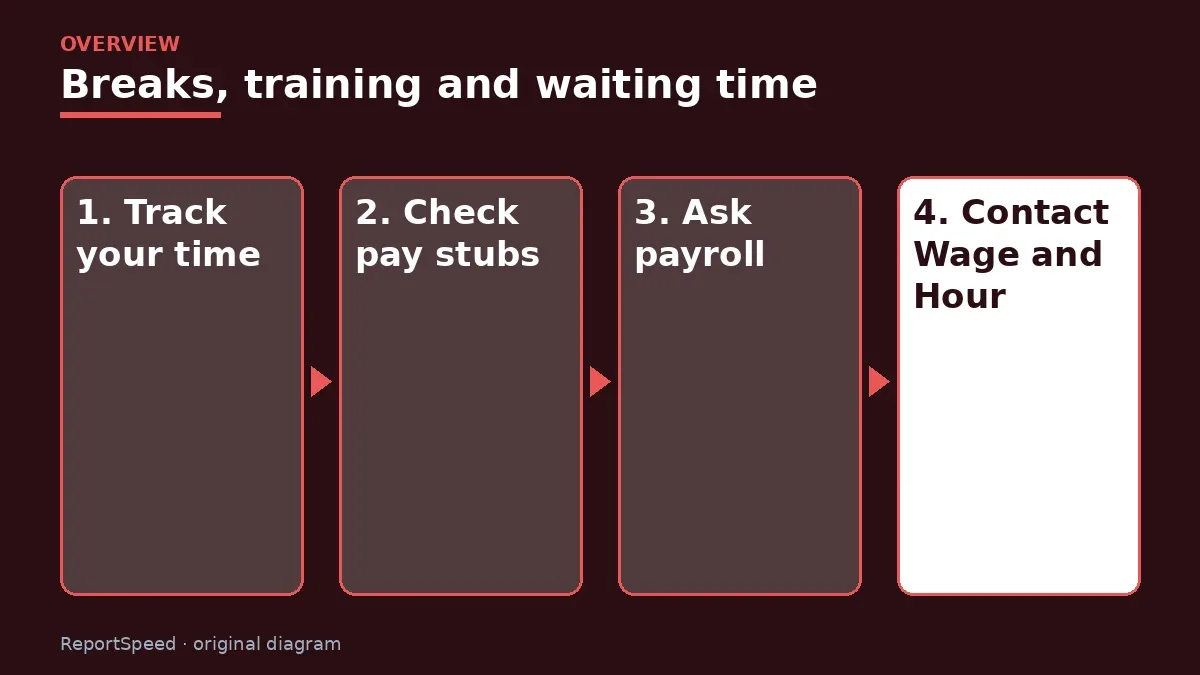
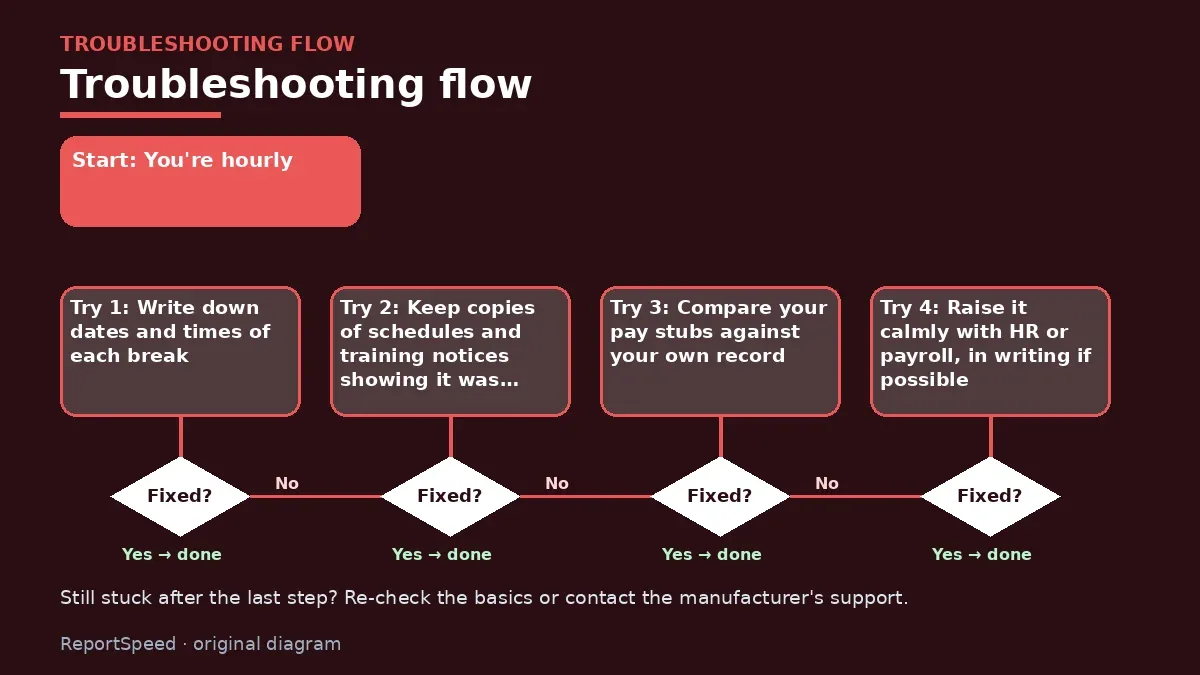
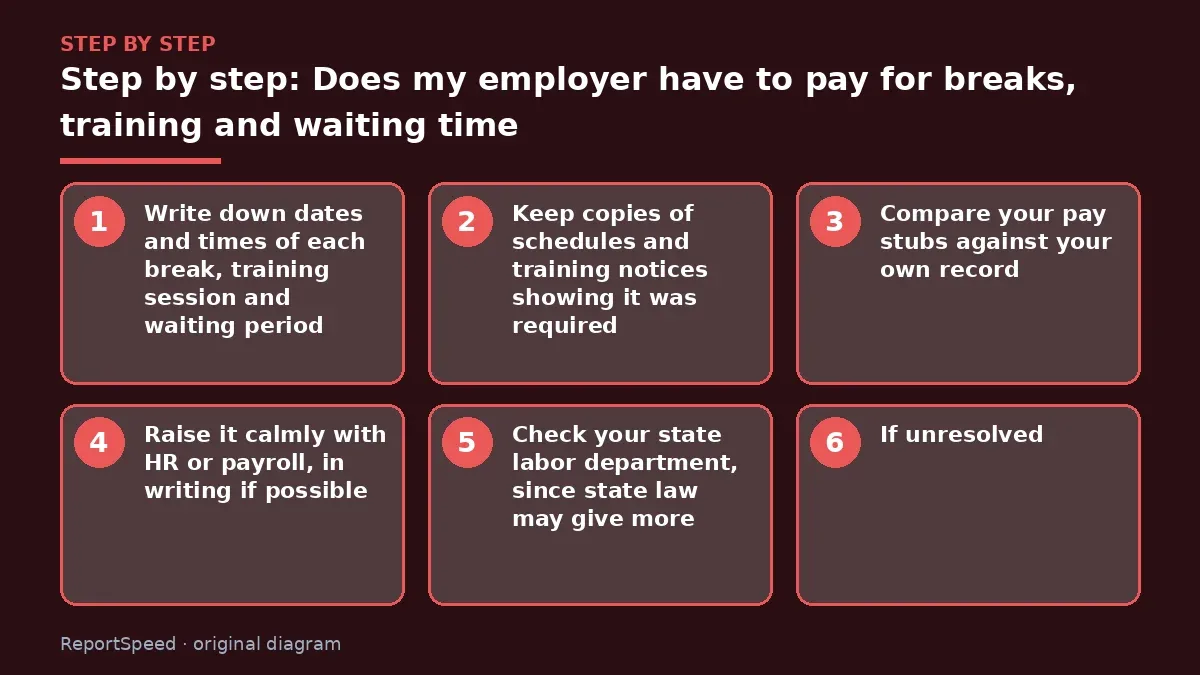
- Write down dates and times of each break, training session and waiting period.
- Keep copies of schedules and training notices showing it was required.
- Compare your pay stubs against your own record.
- Raise it calmly with HR or payroll, in writing if possible.
- Check your state labor department, since state law may give more.
- If unresolved, contact the DOL Wage and Hour Division; it's free and confidential.
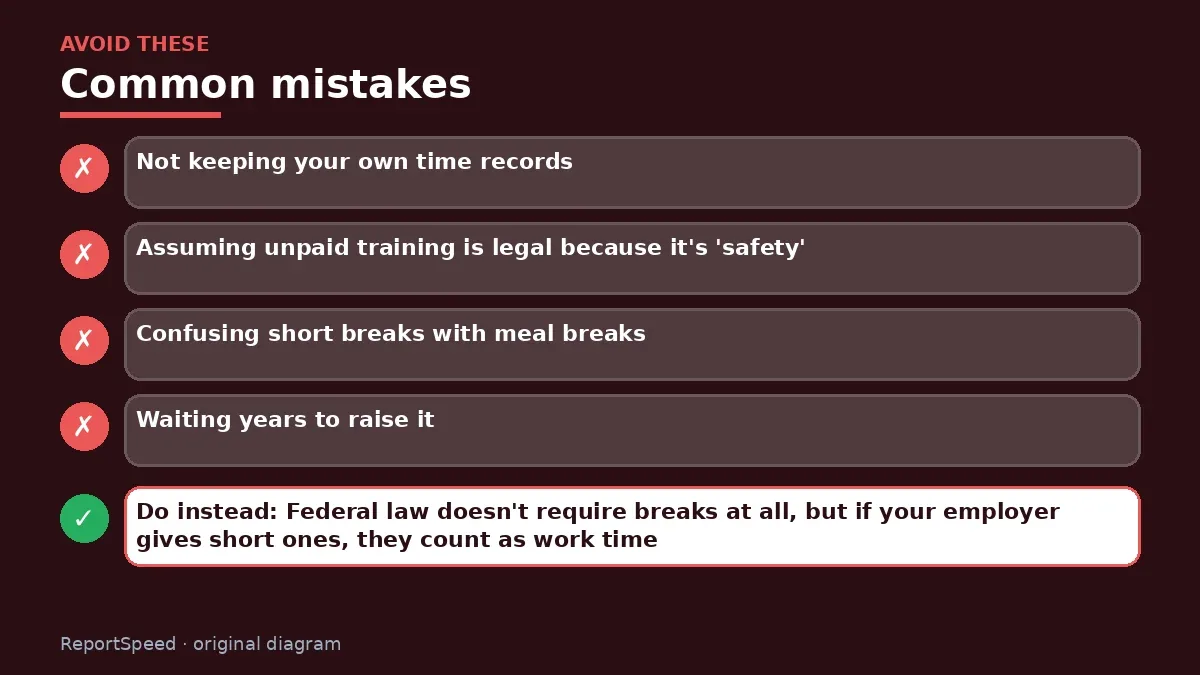
Common mistakes:
- Not keeping your own time records
- Assuming unpaid training is legal because it's 'safety'
- Confusing short breaks with meal breaks
- Waiting years to raise it
ReportSpeedMan tip: Federal law doesn't require breaks at all, but if your employer gives short ones, they count as work time. That distinction is the one most managers miss.
What I would actually do
I'd log my breaks, training and waiting for two weeks, compare with pay stubs, then raise it with payroll in writing.
The trade-off people miss: raising pay issues can feel risky, but retaliation for asserting FLSA rights is illegal, and waiting can make back pay harder to recover.
How to tell it worked
Your pay stubs include breaks, training and waiting time.
Quick FAQ
Are 10-minute breaks paid?
Yes, under the FLSA.
Are lunch breaks paid?
Not if 30+ minutes and fully off duty.
Is training paid?
Mandatory job-related training is.
Wrap-up: Short breaks, mandatory job training and on-duty waiting generally count as paid time. Keep records, ask payroll, and contact the Wage and Hour Division if needed.
Wiki: Wage and Hour Basics (FLSA) and Compound Interest.
Does my employer have to pay for breaks, training and waiting time: primary sources
Step-by-step photos
1. Before The problem 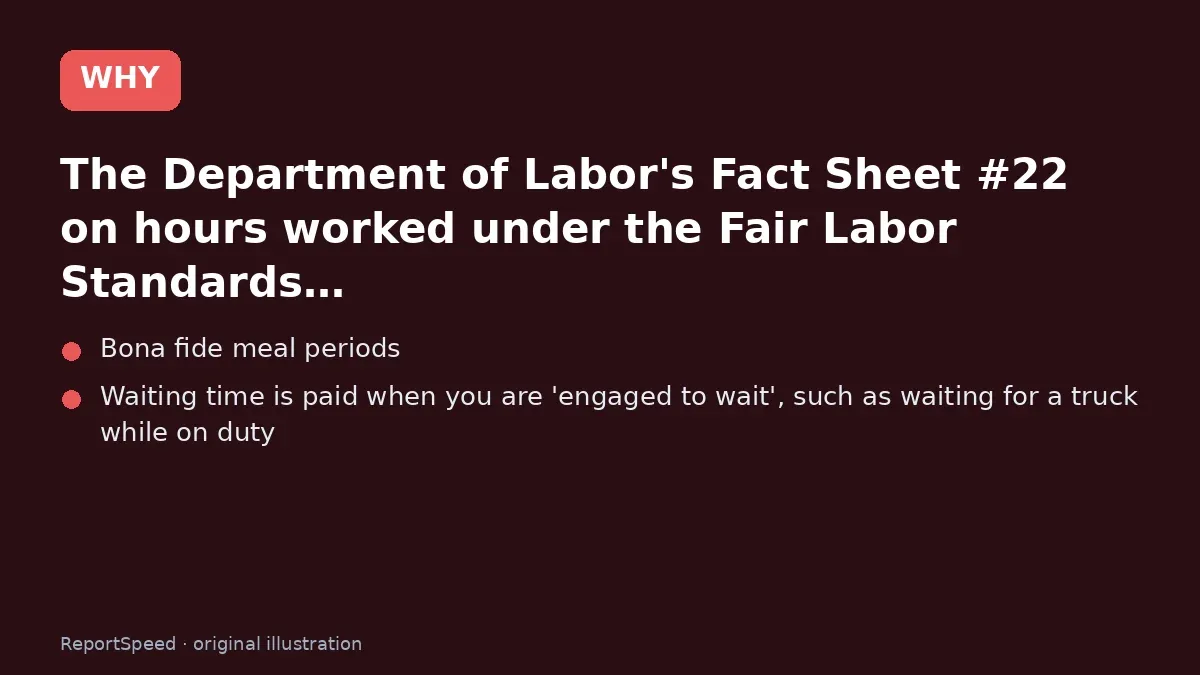
2. Why it happens The cause 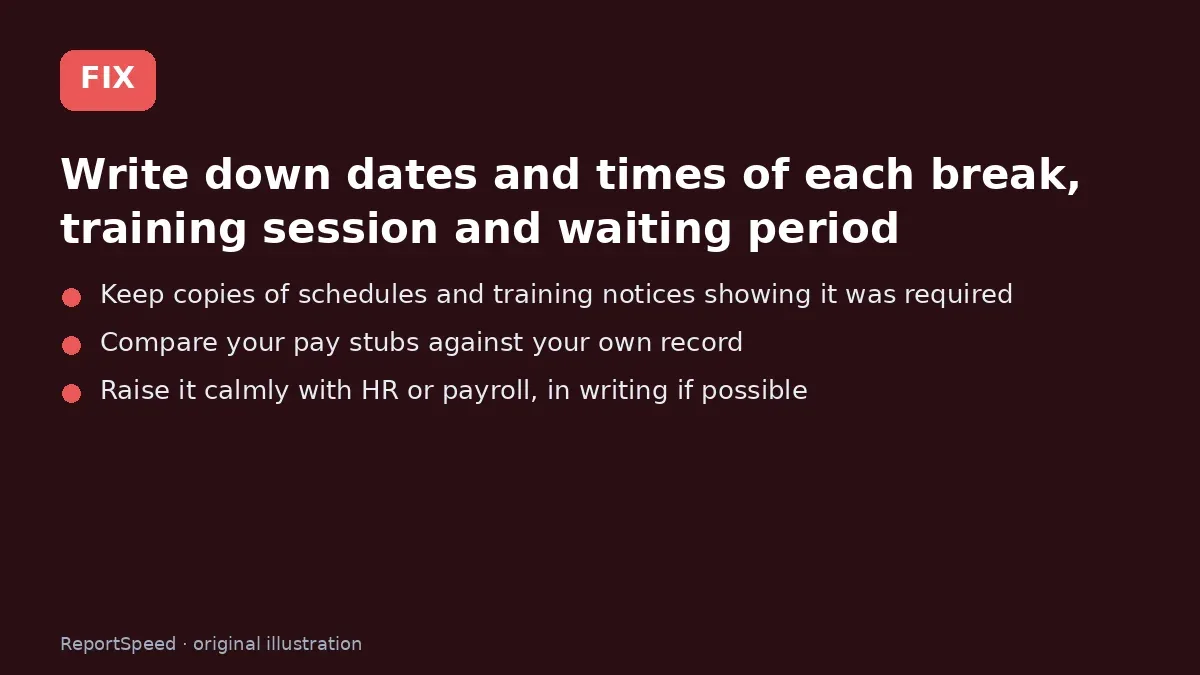
3. The fix The fix 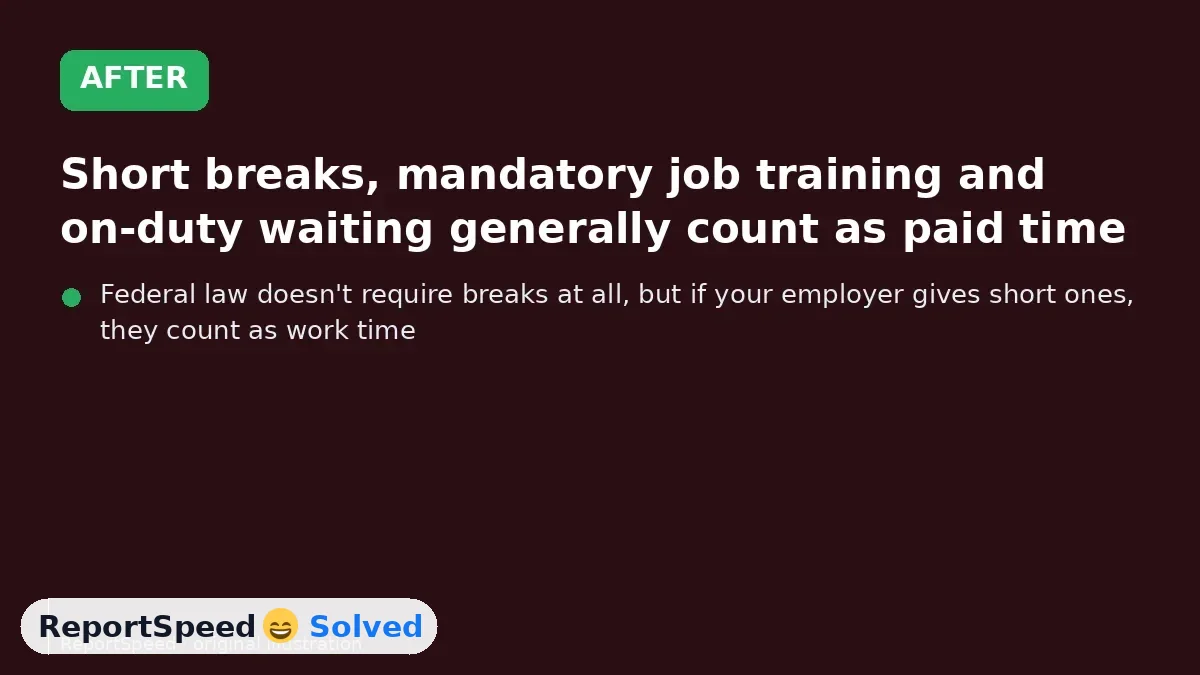
4. After The result
⚡ Speed Summary
- Short breaks, mandatory job training and on-duty waiting generally count as paid time.
- Federal law doesn't require breaks at all, but if your employer gives short ones, they count as work time. That distinction is the one most managers miss.
- Accepting 'that's just how breaks work here' leaves unpaid minutes that add up across every shift and may also affect overtime.

Was this answer helpful?
Tap a star to rate this answer.
Related questions
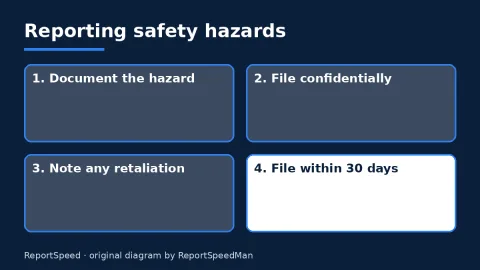
Can I be fired for reporting a safety problem at work? OSHA's 30-day rule
You can report hazards confidentially, and retaliation is illegal.
Rate itSolved

Pregnant at work: what accommodations can I ask for under the PWFA?
Under the PWFA, employers with 15+ workers must reasonably accommodate pregnancy limitations.
Rate itSolved
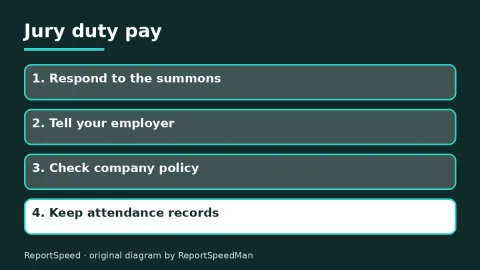
Do I get paid for jury duty, and can my employer fire me for going?
Federal jurors earn $50 a day; employer pay is optional, but firing you for federal jury service is illegal.
Rate itSolved
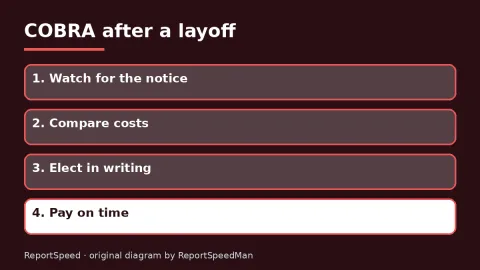
COBRA after a layoff: how long, how much and the deadlines
COBRA usually lasts 18 months, costs up to 102% of the premium, and gives you 60 days to elect and 45 days to pay.
Rate itSolved
Real experiences
No experiences yet. Be the first to share.