


I work set hours for one company, use their laptop and follow their procedures, but they pay me on a 1099 as a contractor. I don't get benefits and I pay all my own taxes. A friend says I might be misclassified. How do I tell the difference between an employee and a contractor, and why does it matter?
Employee or independent contractor: am I misclassified?
Concerns & risks
You're treated like a regular worker day to day, but you're paid as an independent contractor, and you're starting to wonder whether that's correct.
| Clue | Suggests |
|---|---|
| Set schedule from the company | Employee |
| Company laptop and procedures | Employee |
| Several clients, own tools | Contractor |
| You set your rates | Contractor |

Causes & evidence
Classification depends on the real working relationship, not what the contract says. The Department of Labor uses an economic reality approach under the FLSA, looking at factors such as control over the work, your opportunity for profit or loss, your investment, permanence of the relationship and how integral the work is to the business. The IRS looks at behavioural control, financial control and the relationship. Employees get minimum wage and overtime protections, and employers withhold taxes and pay half of Social Security and Medicare; contractors pay self-employment tax on their own. Misclassification can cost workers money and protections.
Misclassification affects unemployment insurance, workers' compensation and tax withholding as well as wages. States may use their own tests.
Assuming the 1099 form settles your status means missing out on protections you may be entitled to.
What to do
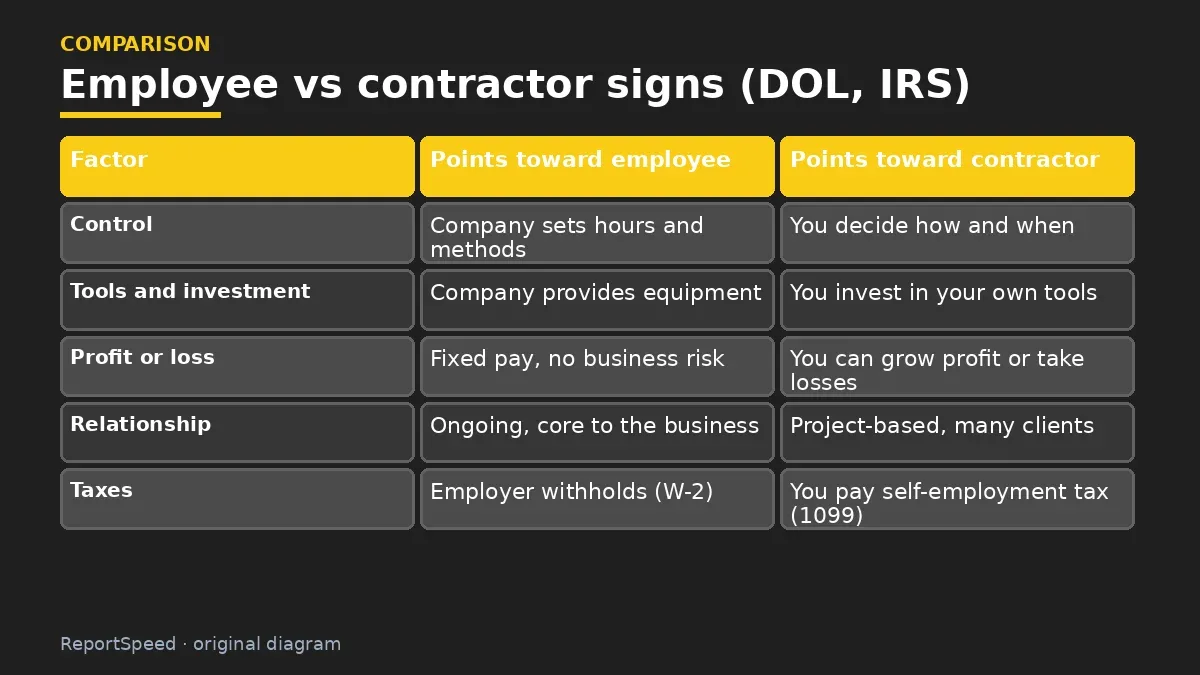
| Factor | Points toward employee | Points toward contractor |
|---|---|---|
| Control | Company sets hours and methods | You decide how and when |
| Tools and investment | Company provides equipment | You invest in your own tools |
| Profit or loss | Fixed pay, no business risk | You can grow profit or take losses |
| Relationship | Ongoing, core to the business | Project-based, many clients |
| Taxes | Employer withholds (W-2) | You pay self-employment tax (1099) |
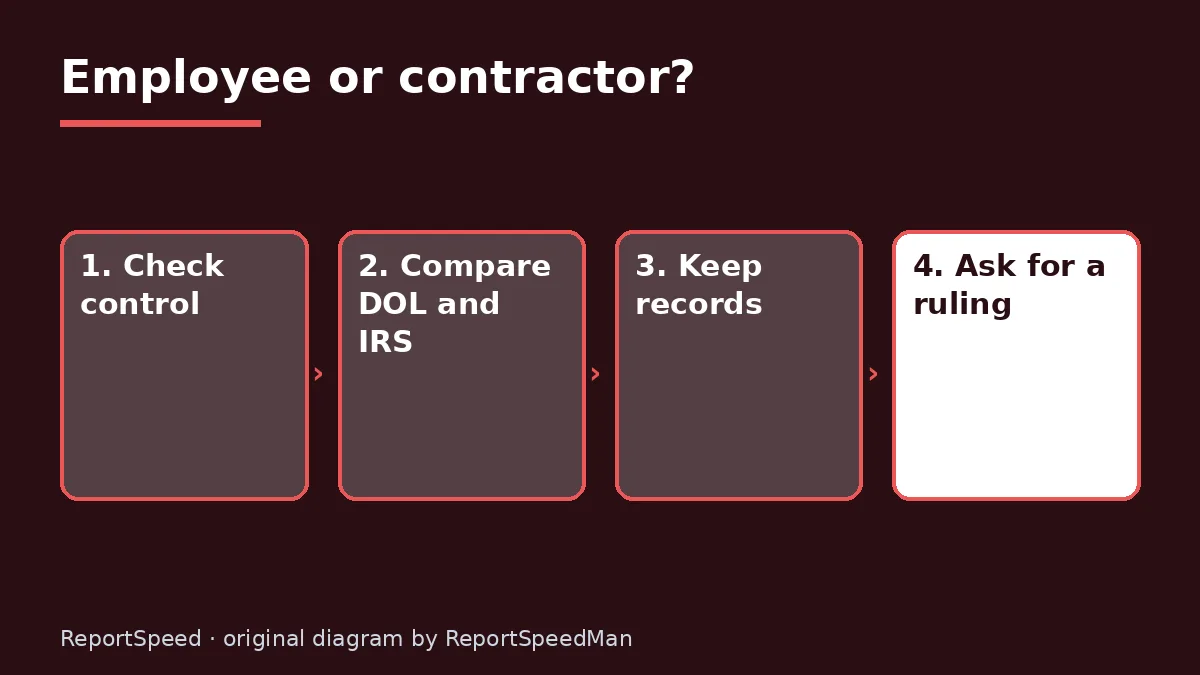
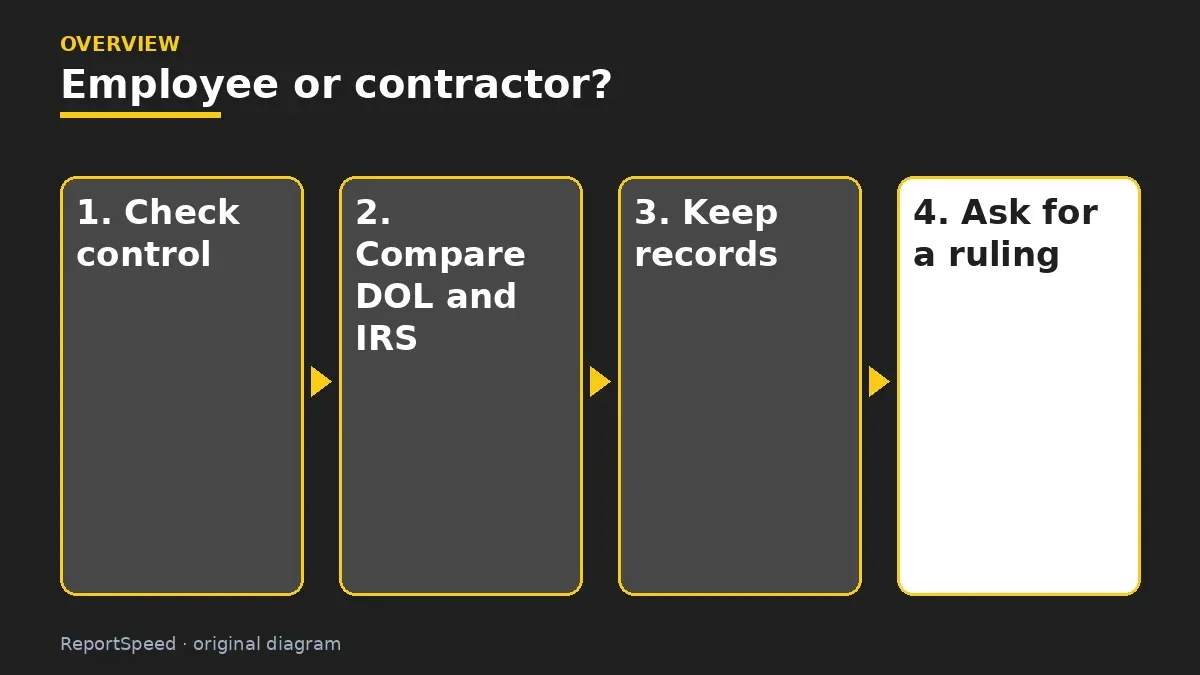
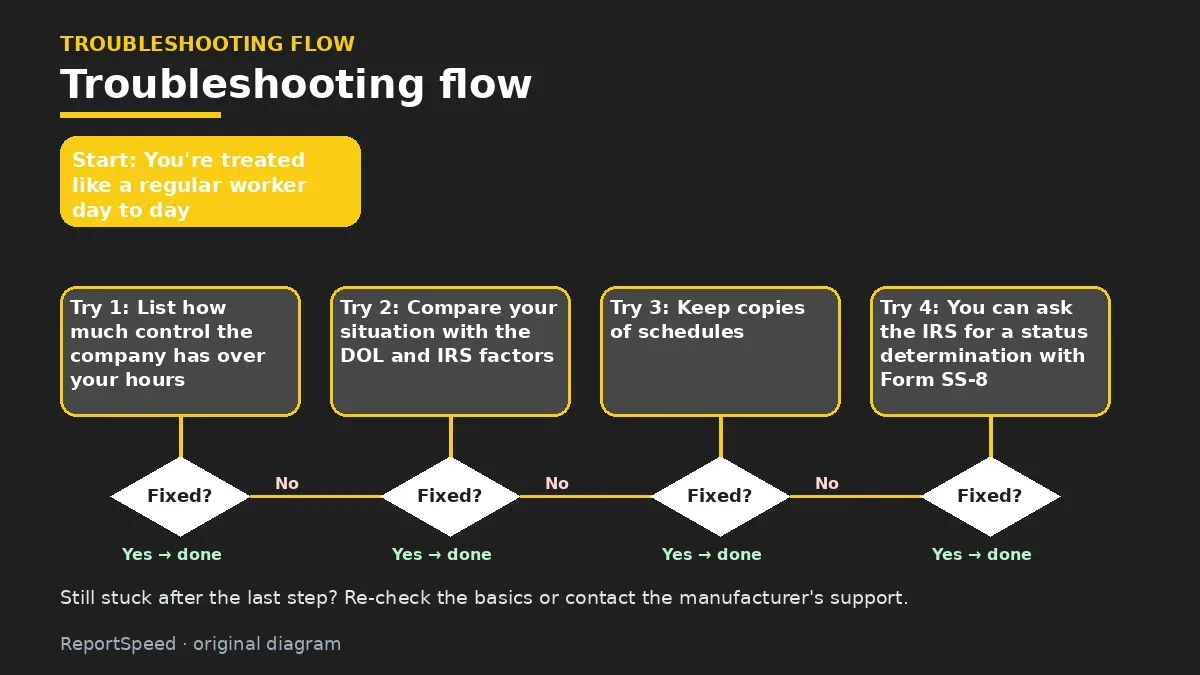
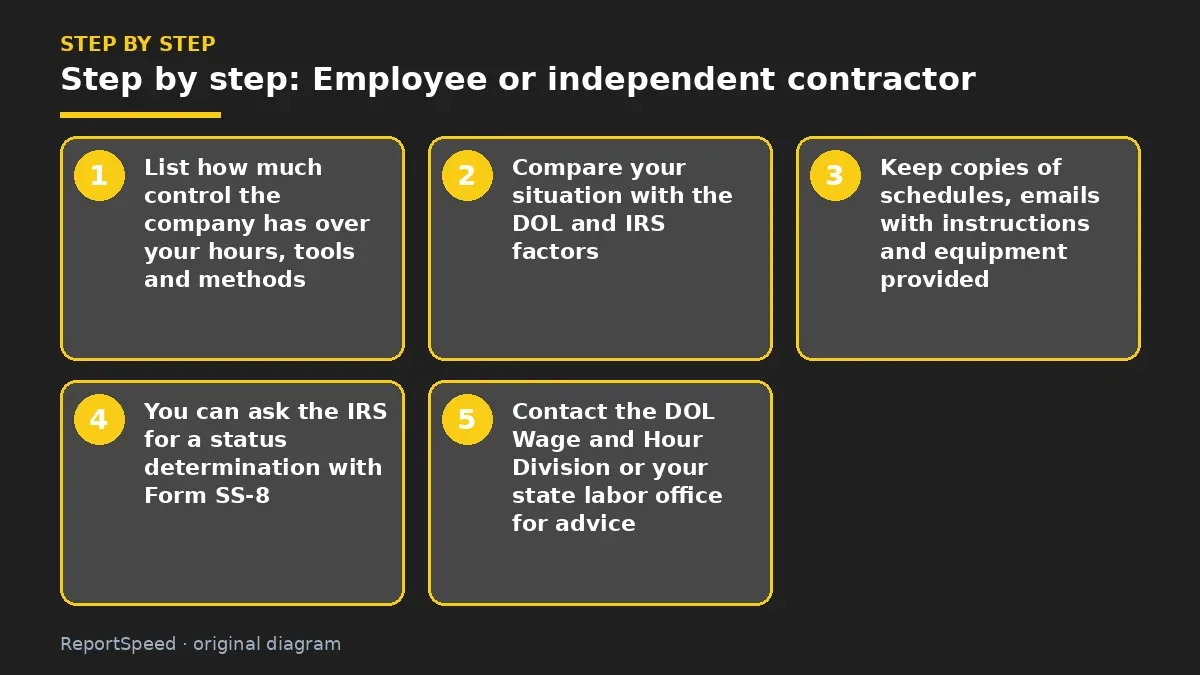
- List how much control the company has over your hours, tools and methods.
- Compare your situation with the DOL and IRS factors.
- Keep copies of schedules, emails with instructions and equipment provided.
- You can ask the IRS for a status determination with Form SS-8.
- Contact the DOL Wage and Hour Division or your state labor office for advice.
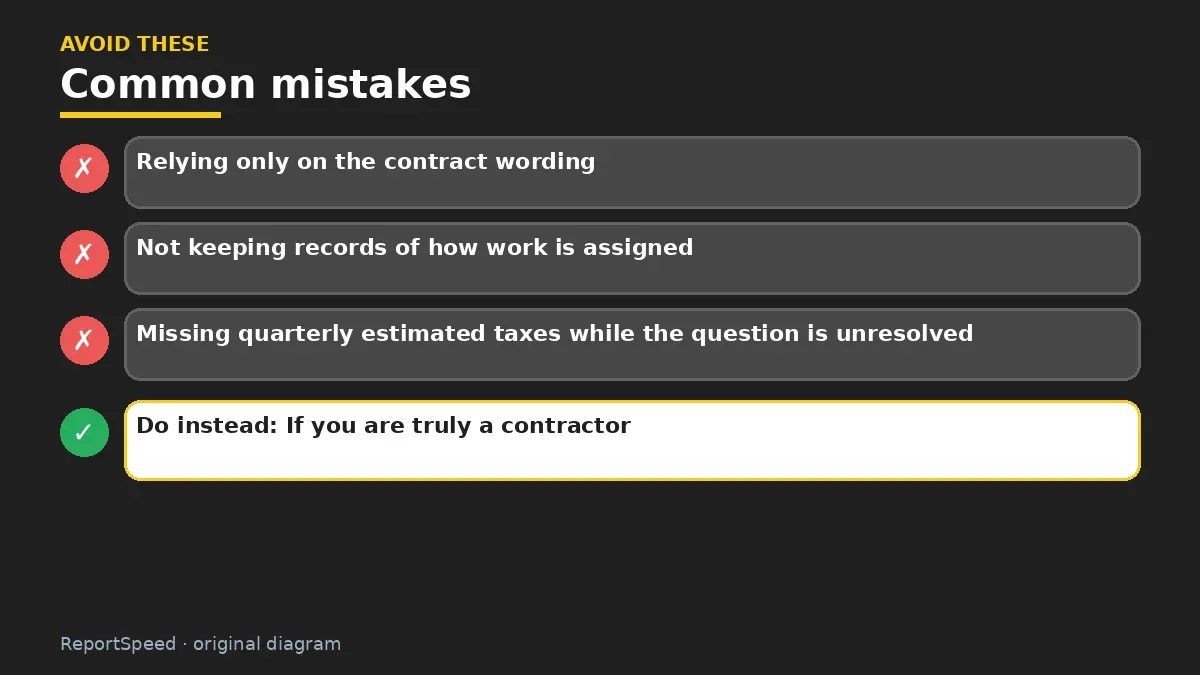
Common mistakes:
- Relying only on the contract wording
- Not keeping records of how work is assigned
- Missing quarterly estimated taxes while the question is unresolved
ReportSpeedMan tip: If you are truly a contractor, set aside a portion of each payment for taxes and pay quarterly estimates; if you think you're an employee, raise it early and in writing.
What I would actually do
list the control and tools factors honestly, keep copies of schedules and instructions, and if it points to employee, raise it in writing or file Form SS-8.
The trade-off people miss: some people prefer contractor freedom; if that's you, make sure the relationship truly gives you that freedom, not just the tax burden.
Checking that it worked
Your status is clarified and your taxes and protections match how you actually work.
Quick FAQ
What's Form SS-8?
An IRS request for a determination of worker status.
Will my employer know?
The IRS contacts the business as part of the review.
Do states have different rules?
Yes, many use their own tests.
Wrap-up: Your real working relationship decides your status. Compare it with the DOL and IRS factors, keep records and ask for help if it doesn't add up.
Wiki: Wage and Hour Basics (FLSA) and Tax Withholding and Form W-4.
Employee or independent contractor: official pages behind this answer
Step-by-step photos

1. Before The problem 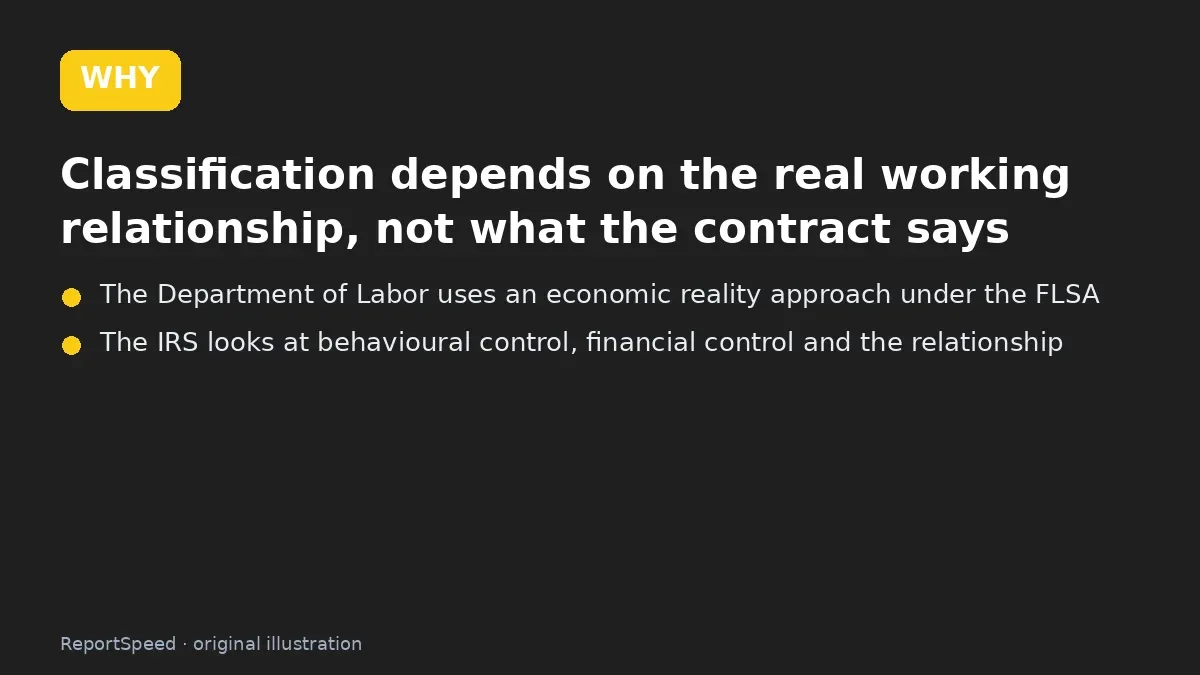
2. Why it happens The cause 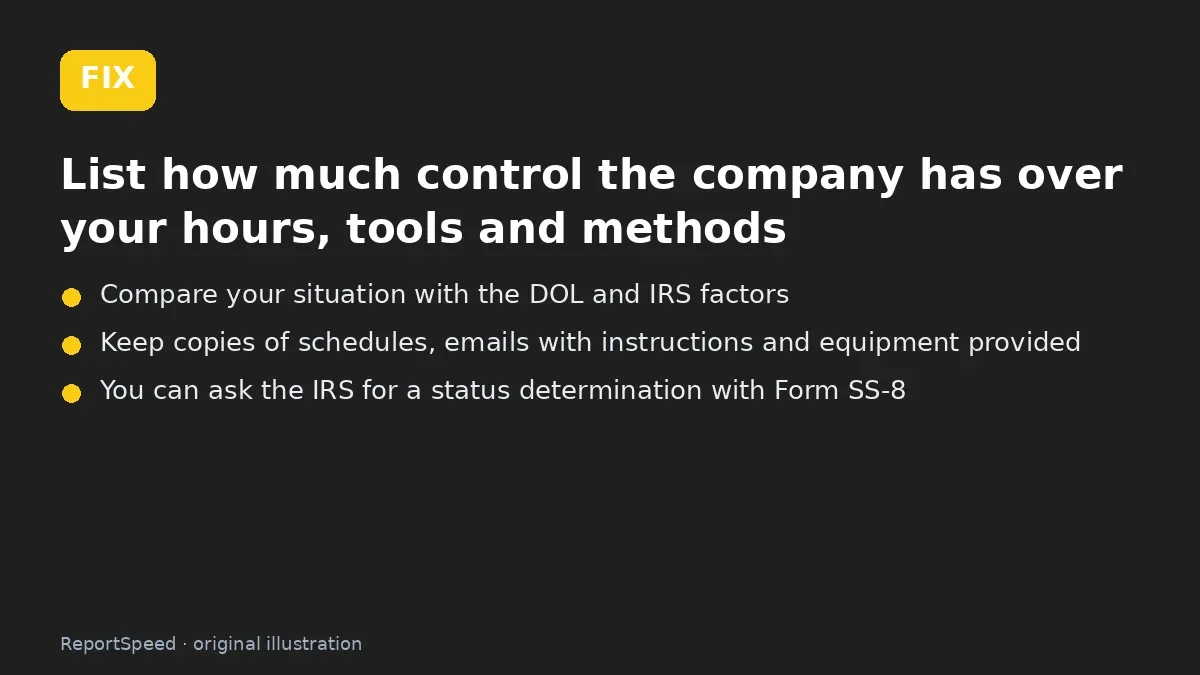
3. The fix The fix 
4. After The result
⚡ Speed Summary
- Your real working relationship decides your status.
- If you are truly a contractor, set aside a portion of each payment for taxes and pay quarterly estimates; if you think you're an employee, raise it early and in writing.
- Assuming the 1099 form settles your status means missing out on protections you may be entitled to.

Was this answer helpful?
Tap a star to rate this answer.
Related questions
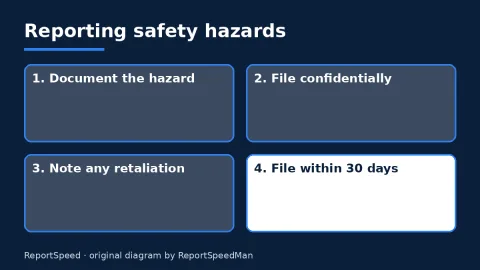
Can I be fired for reporting a safety problem at work? OSHA's 30-day rule
You can report hazards confidentially, and retaliation is illegal.
Rate itSolved

Pregnant at work: what accommodations can I ask for under the PWFA?
Under the PWFA, employers with 15+ workers must reasonably accommodate pregnancy limitations.
Rate itSolved
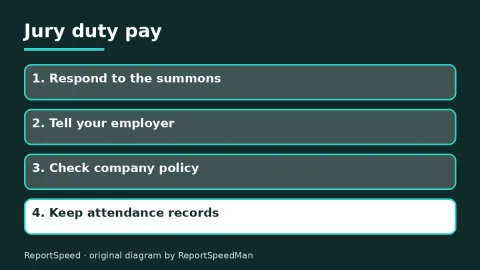
Do I get paid for jury duty, and can my employer fire me for going?
Federal jurors earn $50 a day; employer pay is optional, but firing you for federal jury service is illegal.
Rate itSolved
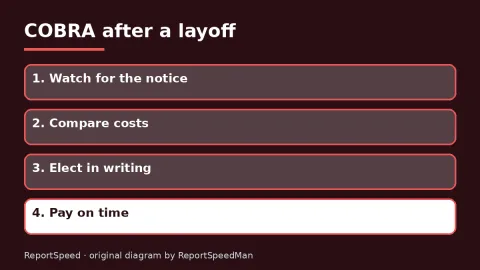
COBRA after a layoff: how long, how much and the deadlines
COBRA usually lasts 18 months, costs up to 102% of the premium, and gives you 60 days to elect and 45 days to pay.
Rate itSolved
Real experiences
No experiences yet. Be the first to share.