


I just moved for a new job and was offered $9 an hour. Back home the minimum wage was higher, and I'm not sure what applies here. The employer says it's above the federal minimum. What is the minimum wage where I live, and which one does my employer have to pay?
What is the minimum wage where I live? Federal vs state rules
Concerns & risks
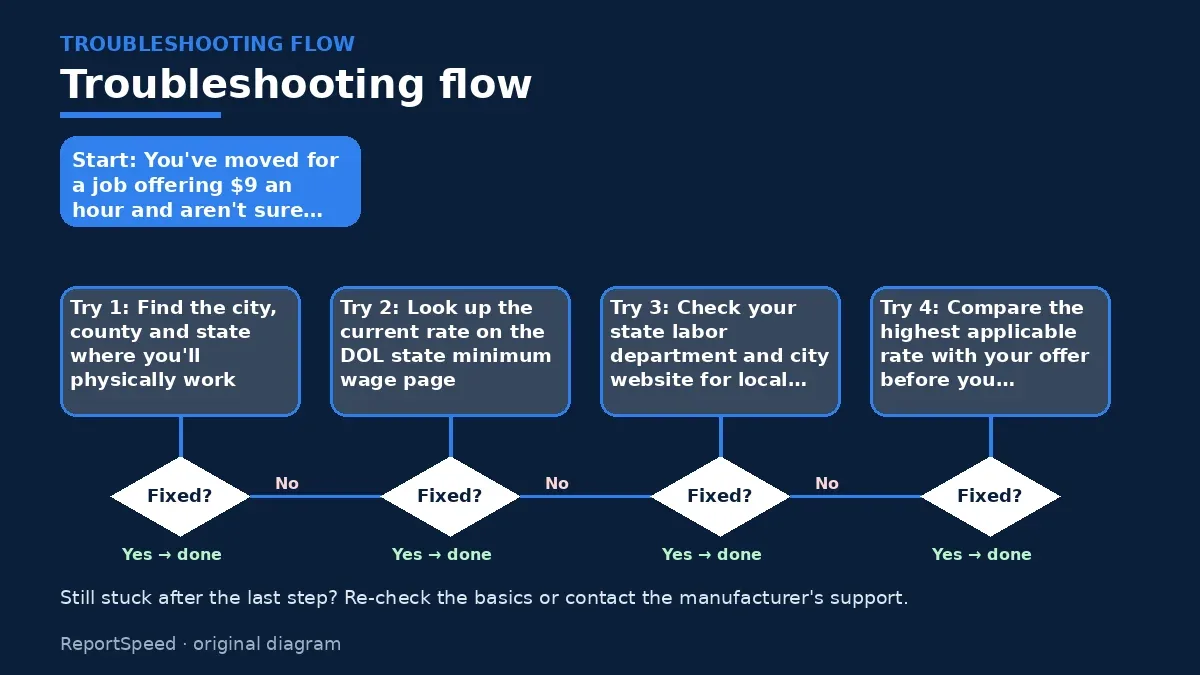
You've moved for a job offering $9 an hour and aren't sure which minimum wage applies.
| Worker type | Rule to check |
|---|---|
| Tipped employees | Cash wage plus tips must reach minimum |
| Under 20, first 90 days | Federal youth rate $4.25 |
| Some full-time students | Special certificates |
| Some workers with disabilities | Special certificates |
| Exempt employees | Different salary rules |
Causes & evidence
Under federal law, the minimum wage for covered non-exempt employees is $7.25 per hour, a rate that has been in effect since July 24, 2009. Many states, and some cities and counties, set higher minimum wages. When an employee is covered by both federal and state law, the employee is entitled to the higher of the two. DOL keeps a state-by-state table of current minimum wages, and state labor departments publish their own rates and any scheduled increases, which often take effect on January 1. Some workers have different rules: tipped employees can be paid a lower cash wage if tips make up the difference, workers under 20 can be paid $4.25 an hour for their first 90 consecutive calendar days under federal law, and some full-time students and workers with disabilities may be covered by special certificates. Check the rate for the city and state where you physically do the work.
Edge cases: if you work in more than one city, the rate where you physically work each hour usually applies. Remote workers may be covered by the law where they live and work. Some local minimum wages apply only to employers of a certain size. Rates often rise on January 1 or July 1.
Accepting 'it's above the federal minimum' as the final answer can mean being paid below your state or city's minimum.
What to do

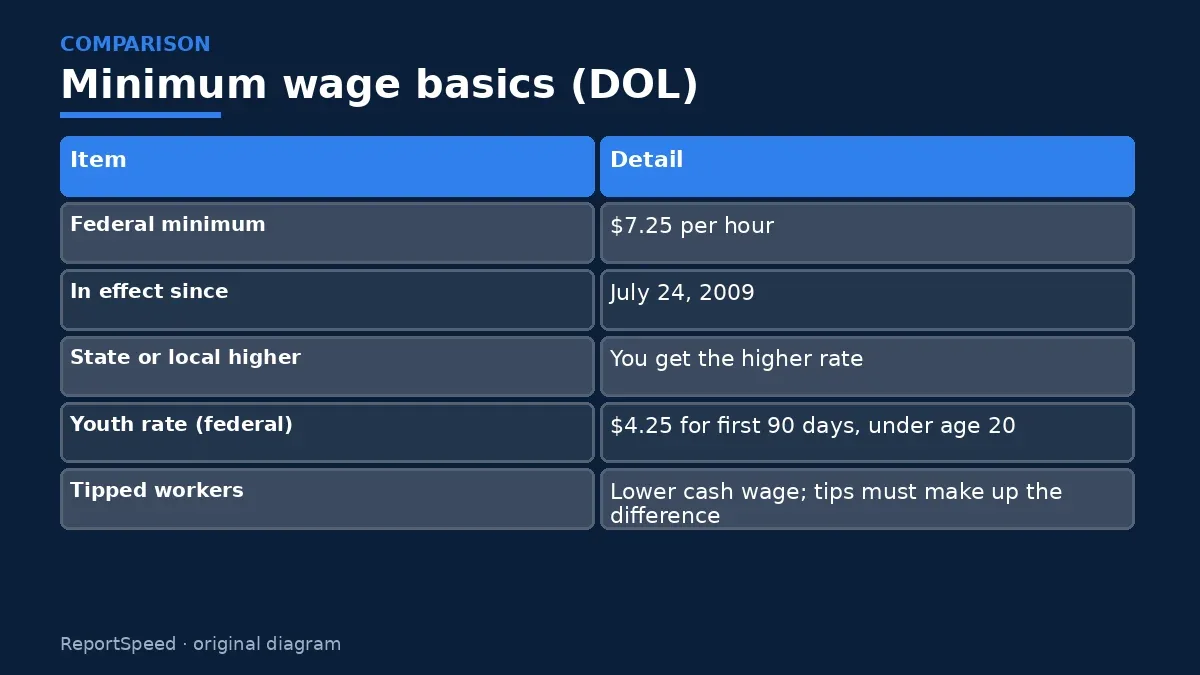
| Item | Detail |
|---|---|
| Federal minimum | $7.25 per hour |
| In effect since | July 24, 2009 |
| State or local higher | You get the higher rate |
| Youth rate (federal) | $4.25 for first 90 days, under age 20 |
| Tipped workers | Lower cash wage; tips must make up the difference |
| Where to check | DOL state table, state labor department |
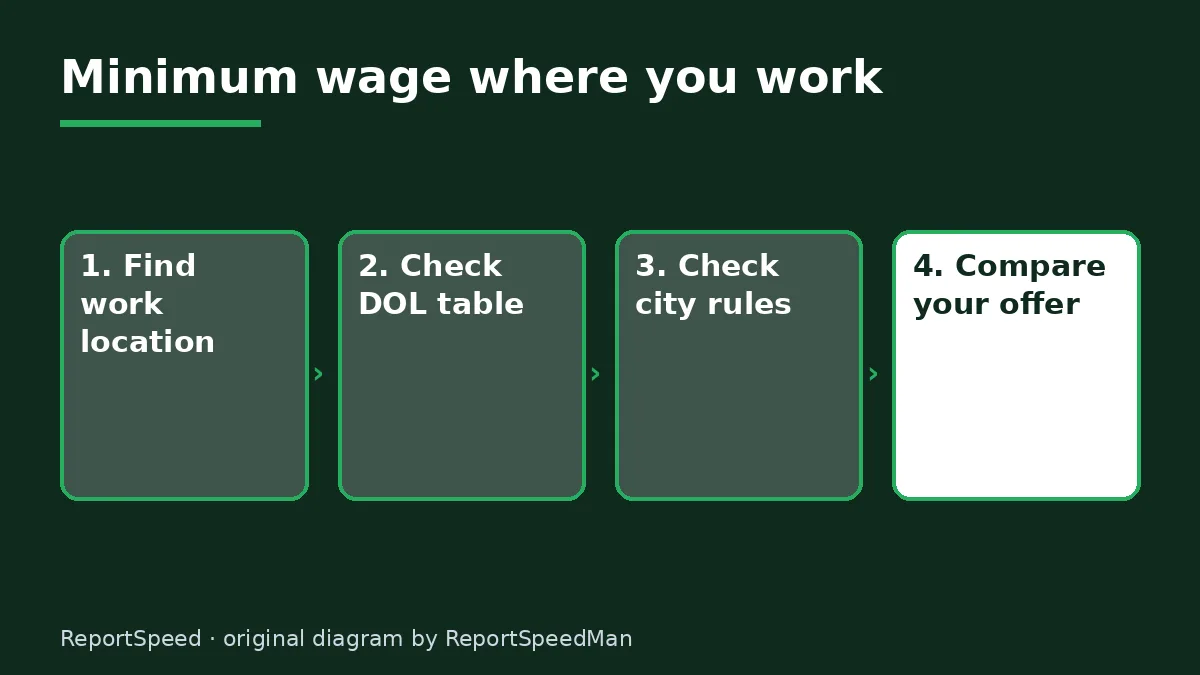
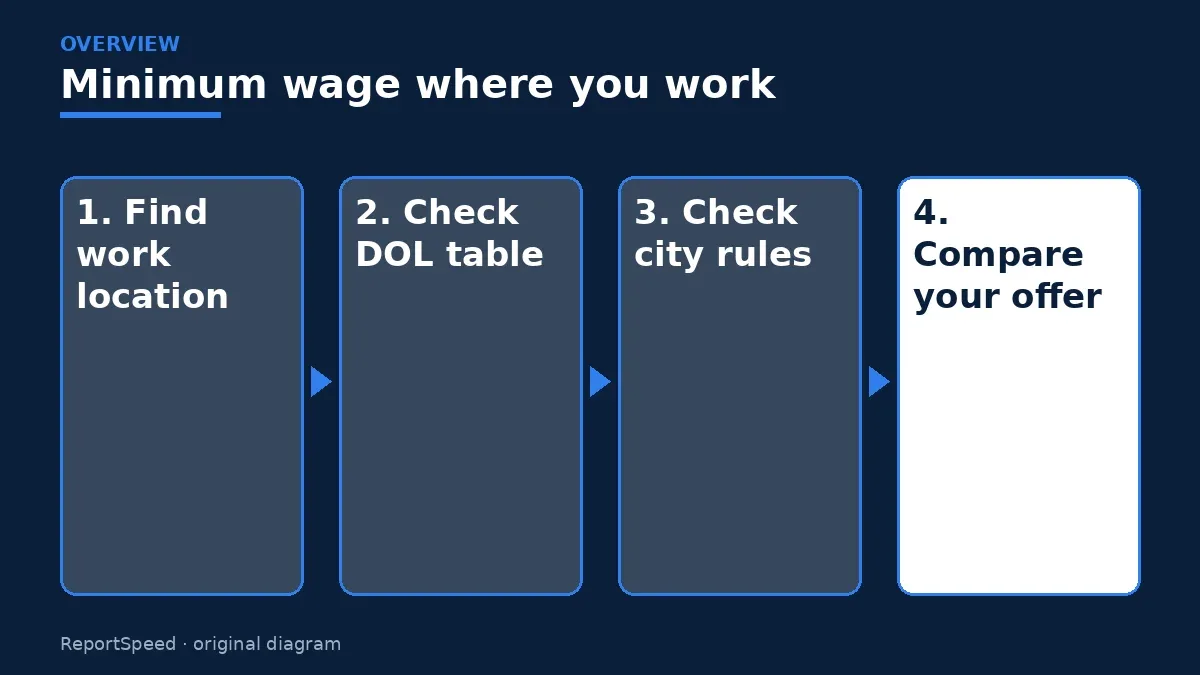
- Find the city, county and state where you'll physically work.
- Look up the current rate on the DOL state minimum wage page.
- Check your state labor department and city website for local rates and upcoming increases.
- Compare the highest applicable rate with your offer before you start.
- If you're paid below it, raise it with HR in writing, then contact your state labor agency or DOL.
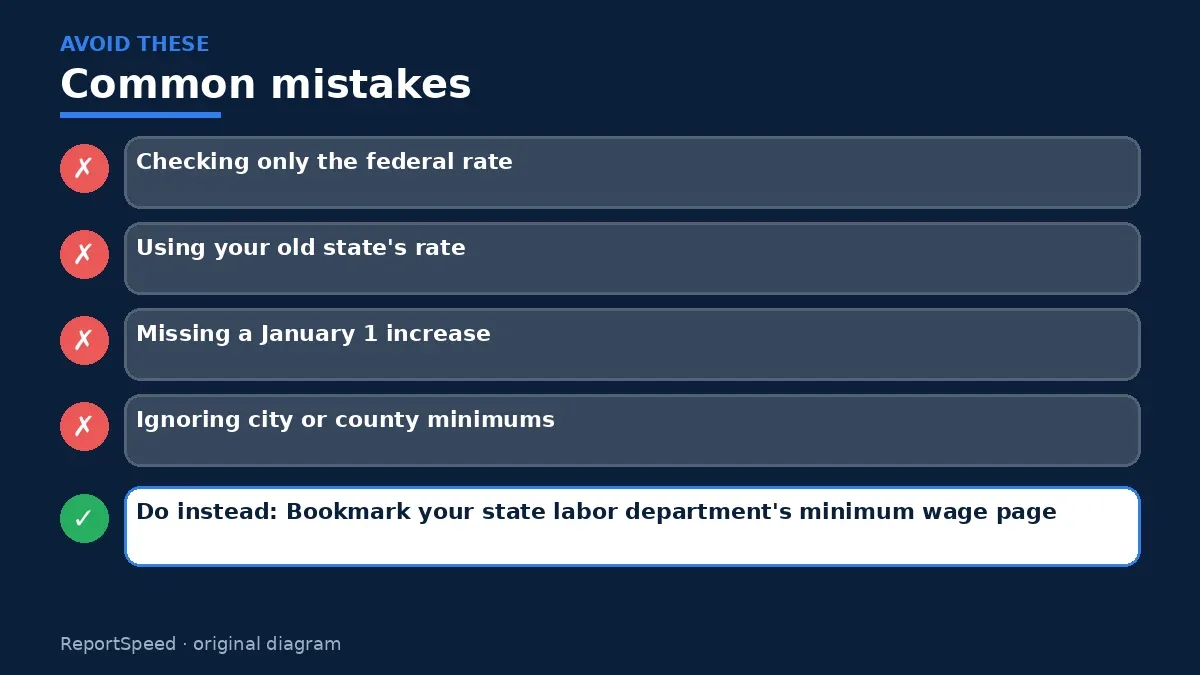
Common mistakes:
- Checking only the federal rate
- Using your old state's rate
- Missing a January 1 increase
- Ignoring city or county minimums
ReportSpeedMan tip: Bookmark your state labor department's minimum wage page. Rates in many states change every year, sometimes tied to inflation.
What I would actually do
I'd look up my state and city rates before my first day and ask HR in writing how my rate compares with the local minimum.
The trade-off people miss: the federal minimum hasn't changed since 2009, so it's often far below state rates. An offer that sounds 'above minimum' may still be below the one that applies to you.
Signs it worked
Your pay meets the highest applicable minimum wage.
Quick FAQ
Can my employer pay less because I'm new?
Only within narrow federal rules like the youth wage.
Do tips count toward minimum wage?
For tipped workers, tips can count up to set limits.
Who do I report to?
Your state labor agency or DOL's Wage and Hour Division.
Wrap-up: The federal minimum is $7.25, but you're generally owed the highest of federal, state and local rates where you work. Check DOL's state table and your city's rules.
Wiki: Wage and Hour Basics (FLSA) and Credit Scores and Credit Reports.
What is the minimum wage where I live: official pages behind this answer
Step-by-step photos
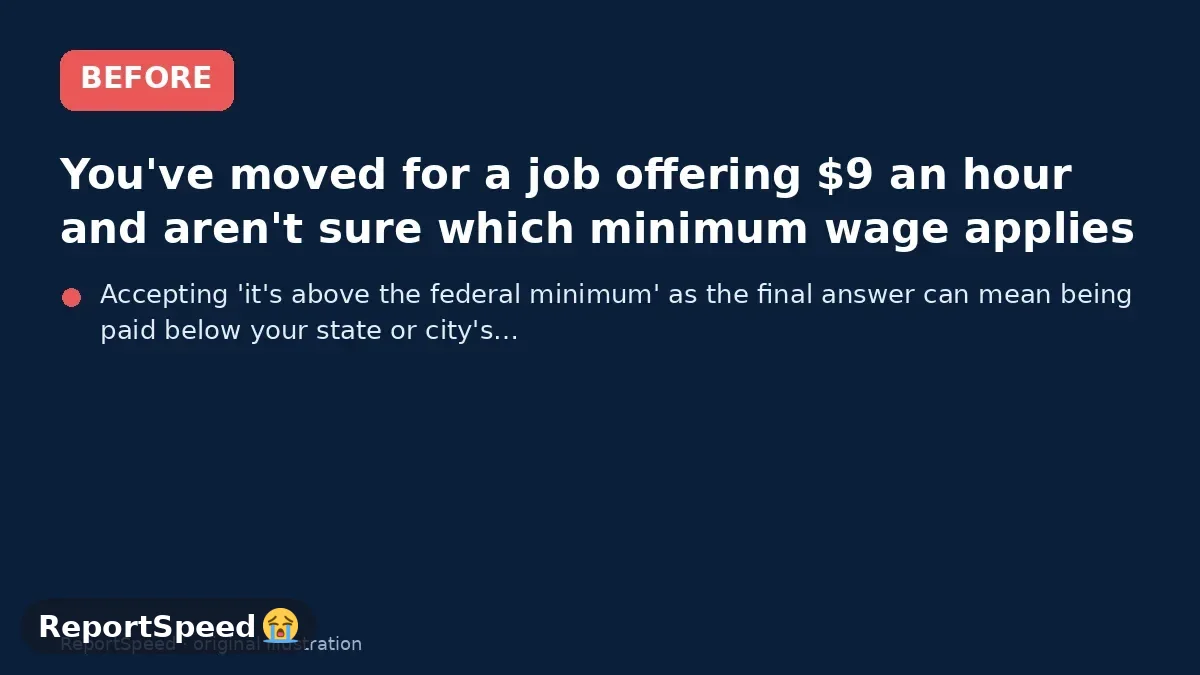
1. Before The problem 
2. Why it happens The cause 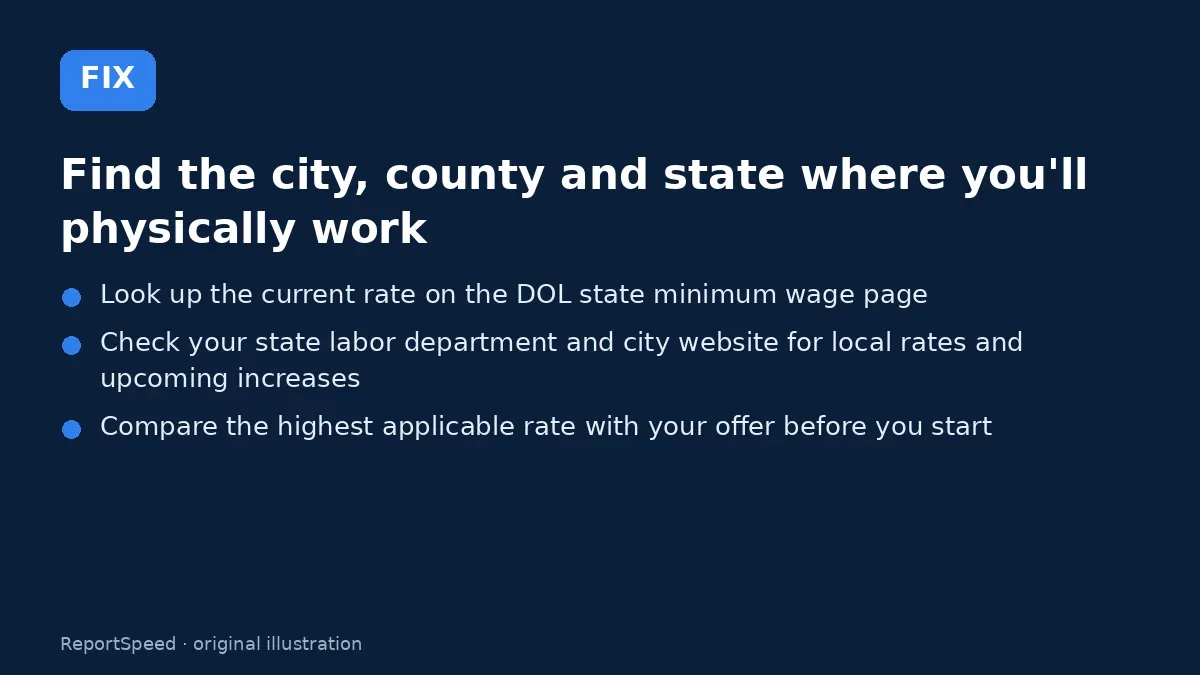
3. The fix The fix 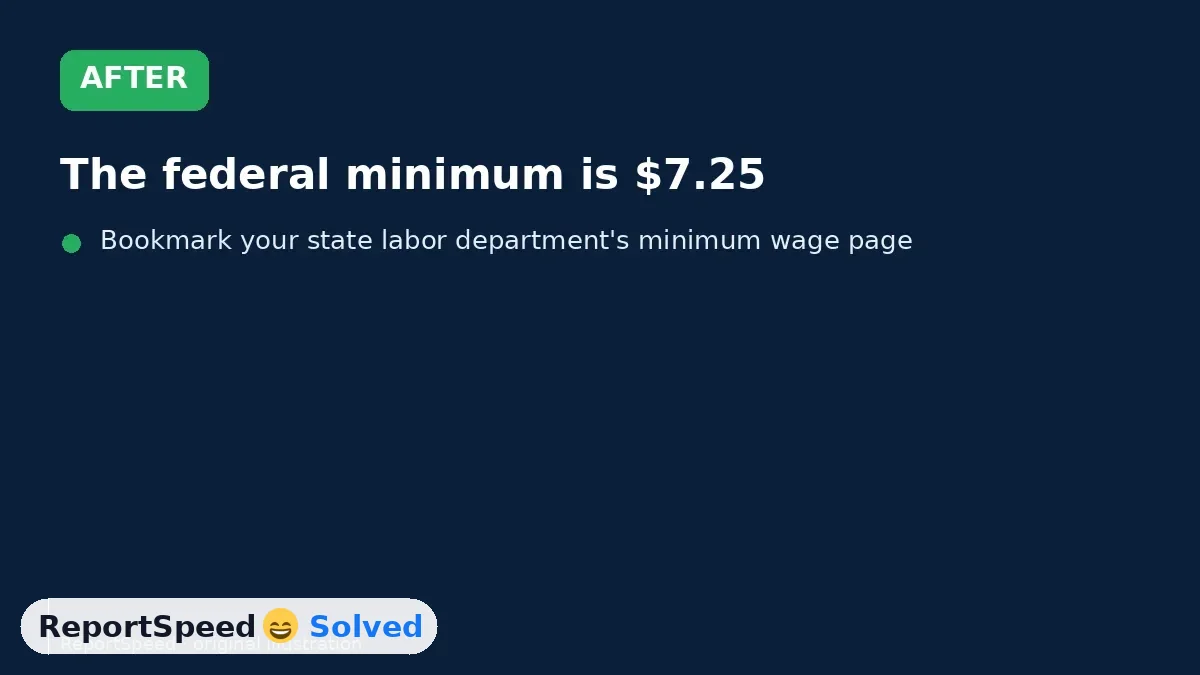
4. After The result
⚡ Speed Summary
- The federal minimum is $7.25, but you're generally owed the highest of federal, state and local rates where you work.
- Bookmark your state labor department's minimum wage page. Rates in many states change every year, sometimes tied to inflation.
- Accepting 'it's above the federal minimum' as the final answer can mean being paid below your state or city's minimum.

Was this answer helpful?
Tap a star to rate this answer.
Related questions
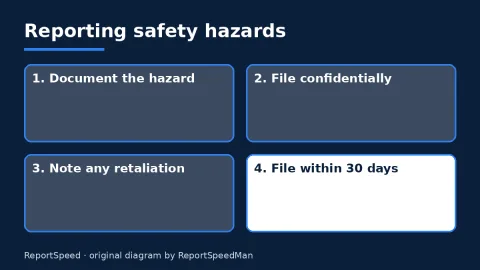
Can I be fired for reporting a safety problem at work? OSHA's 30-day rule
You can report hazards confidentially, and retaliation is illegal.
Rate itSolved

Pregnant at work: what accommodations can I ask for under the PWFA?
Under the PWFA, employers with 15+ workers must reasonably accommodate pregnancy limitations.
Rate itSolved
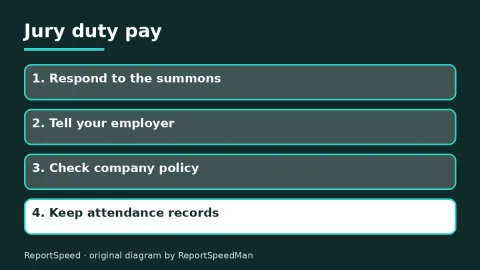
Do I get paid for jury duty, and can my employer fire me for going?
Federal jurors earn $50 a day; employer pay is optional, but firing you for federal jury service is illegal.
Rate itSolved
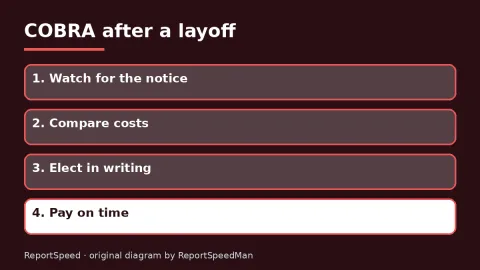
COBRA after a layoff: how long, how much and the deadlines
COBRA usually lasts 18 months, costs up to 102% of the premium, and gives you 60 days to elect and 45 days to pay.
Rate itSolved
Real experiences
No experiences yet. Be the first to share.