


I'm starting a new job next month and I have about $18,000 in my old employer's 401(k). HR sent a packet with options I don't really understand: leave it, roll it over, or cash it out. Cashing out is tempting because I could use the money. What are the real pros and cons of each choice?
What should I do with my 401(k) when I leave a job?
Concerns & risks
You're leaving a job, you have money in the old 401(k), and you need to decide what to do with it without making an expensive mistake.
| Path | Tax withheld? |
|---|---|
| Direct rollover to new plan or IRA | No |
| Check paid to you, deposited within 60 days | 20% withheld; replace it to avoid tax |
| Cash out | Withholding plus possible additional tax |
| Leave in old plan | No |
Causes & evidence
You generally have four choices: leave the money in the old plan if allowed, roll it into your new employer's plan, roll it into an IRA, or cash it out. The IRS explains that a direct rollover, where the money moves straight from one plan to another, avoids withholding. If the plan pays you instead, it generally withholds 20%, and you have 60 days to deposit the full amount into a new account to avoid taxes. Cashing out before age 59½ usually means income tax plus a 10% additional tax, unless an exception applies, and you lose future growth through compound interest.
Rollovers between plans and IRAs keep tax-advantaged status when done correctly. The IRS lists exceptions to the 10% additional tax for early withdrawals.
Cashing out for short-term needs can cost a big slice of the balance in taxes and lost growth.
What to do


| Option | Pros | Watch out for |
|---|---|---|
| Leave in old plan | No action needed | Fees, limited investment choices, forgetting it |
| Roll to new employer plan | Everything in one place | New plan must accept rollovers |
| Roll to an IRA | Wide investment choice | Pick low-cost funds; check fees |
| Cash out | Money now | Income tax plus 10% additional tax if under 59½, lost growth |
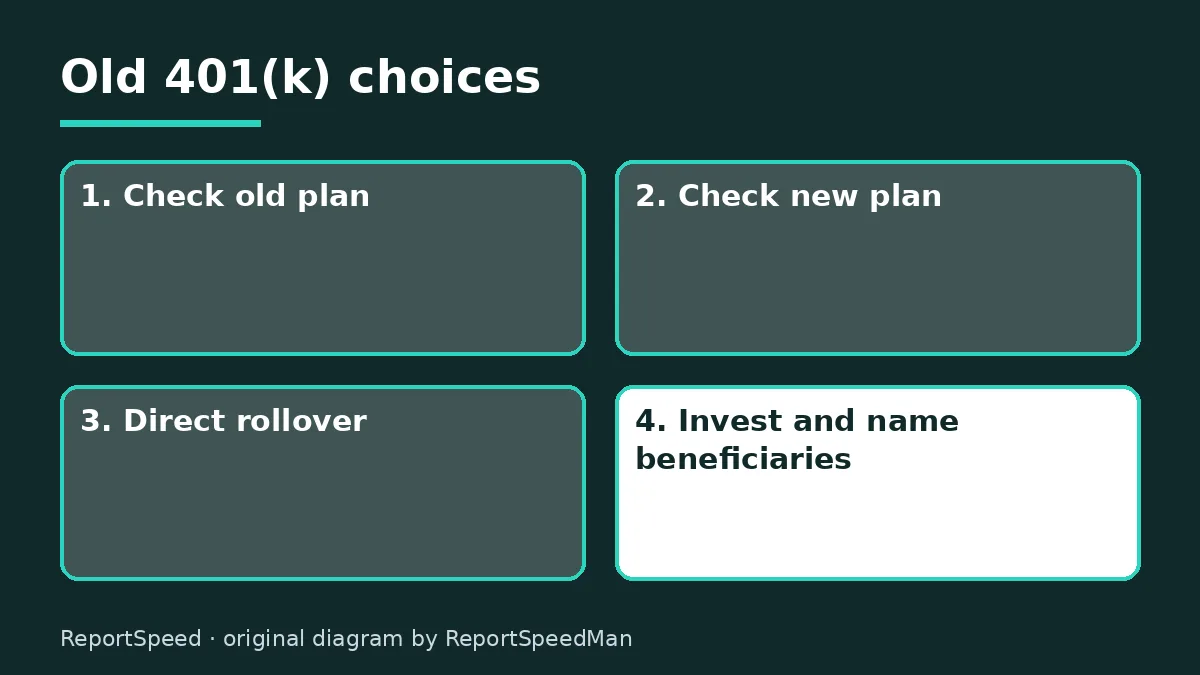
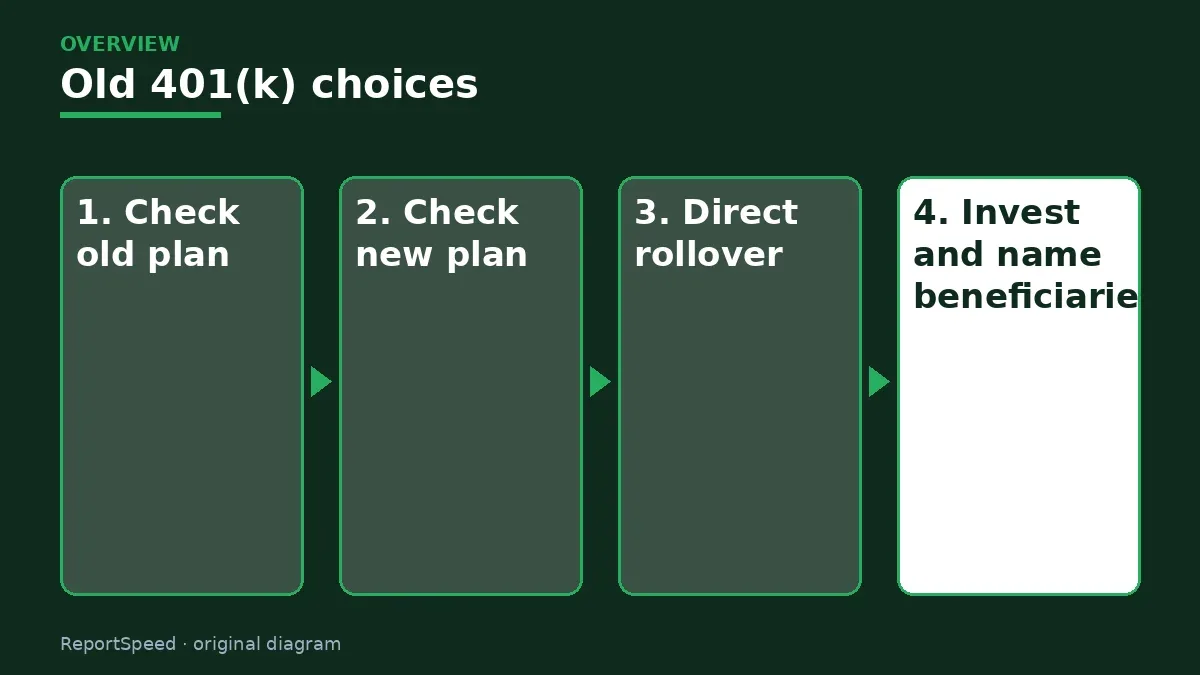
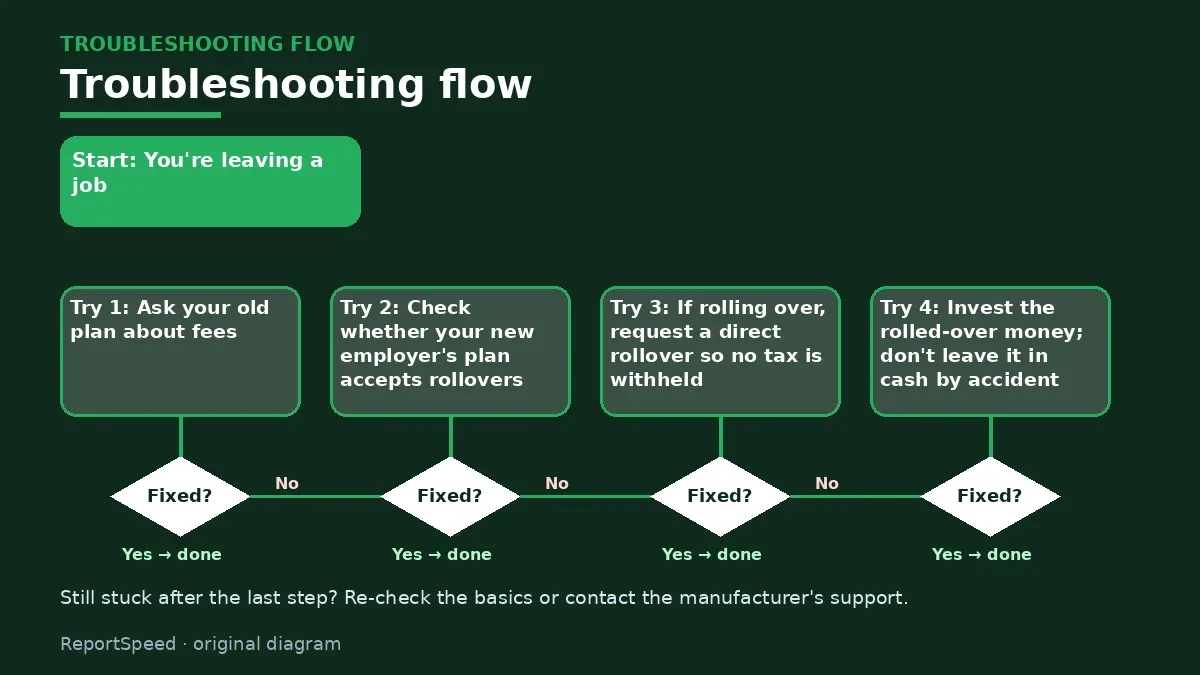
- Ask your old plan about fees, investment options and whether you can stay.
- Check whether your new employer's plan accepts rollovers.
- If rolling over, request a direct rollover so no tax is withheld.
- Invest the rolled-over money; don't leave it in cash by accident.
- Update your beneficiaries on the new account.

Common mistakes:
- Cashing out without calculating the tax cost
- Taking an indirect rollover and missing the 60-day deadline
- Leaving rolled money uninvested
ReportSpeedMan tip: If you have an outstanding 401(k) loan, ask how leaving affects it; unpaid balances can become taxable distributions.
What I would actually do
request a direct rollover into either the new plan or a low-cost IRA, then confirm the money is invested and beneficiaries are set.
The trade-off people miss: leaving the money in the old plan is fine short term, but scattered old accounts are easy to forget over a career.
How you can tell it worked
Your old 401(k) moved by direct rollover and the money is invested with beneficiaries named.
Quick FAQ
Can I roll a Roth 401(k) to a Roth IRA?
Yes, Roth to Roth rollovers are allowed.
How long do I have for a 60-day rollover?
60 days from receiving the funds.
Is there a minimum balance to stay?
Plans can cash out or move small balances; check yours.
Wrap-up: Leave it, roll it to your new plan or an IRA, and use a direct rollover. Cashing out is the option most people regret.
Wiki: Emergency Fund.
What should I do with my 401(k) when I leave a job: read the originals
Step-by-step photos
1. Before The problem 
2. Why it happens The cause 
3. The fix The fix 
4. After The result
⚡ Speed Summary
- Leave it, roll it to your new plan or an IRA, and use a direct rollover.
- If you have an outstanding 401(k) loan, ask how leaving affects it; unpaid balances can become taxable distributions.
- Cashing out for short-term needs can cost a big slice of the balance in taxes and lost growth.

Was this answer helpful?
Tap a star to rate this answer.
Related questions
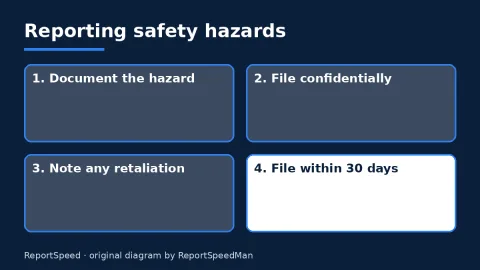
Can I be fired for reporting a safety problem at work? OSHA's 30-day rule
You can report hazards confidentially, and retaliation is illegal.
Rate itSolved

Pregnant at work: what accommodations can I ask for under the PWFA?
Under the PWFA, employers with 15+ workers must reasonably accommodate pregnancy limitations.
Rate itSolved
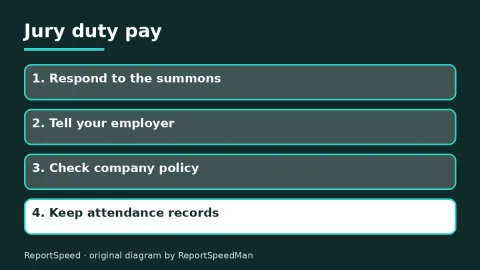
Do I get paid for jury duty, and can my employer fire me for going?
Federal jurors earn $50 a day; employer pay is optional, but firing you for federal jury service is illegal.
Rate itSolved
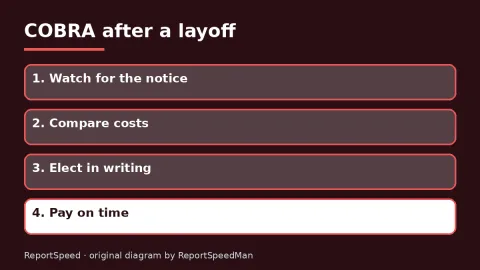
COBRA after a layoff: how long, how much and the deadlines
COBRA usually lasts 18 months, costs up to 102% of the premium, and gives you 60 days to elect and 45 days to pay.
Rate itSolved
Real experiences
No experiences yet. Be the first to share.