


When I look at credit cards, banks advertise APR, and when I look at savings accounts they show APY. Sometimes both numbers appear on the same loan page and I honestly don't know which one matters. Why are there two numbers, and which should I compare when I'm choosing a card, loan or savings account?
APR vs APY: what's the difference and which number should I compare?
Concerns & risks
You are comparing a credit card, a loan or a savings account and the advertised rates use different terms, so you can't tell which offer is actually better.
| Product | Compare by |
|---|---|
| Credit card | APR (and whether it's variable) |
| Car loan or mortgage | APR for the same term |
| Savings account | APY |
| CD | APY and term |
Causes & evidence
APR, the annual percentage rate, expresses the yearly cost of borrowing, and for many loans it includes certain fees on top of the interest rate. APY, the annual percentage yield, shows what you earn on deposits in a year once compounding is included, which is why the CFPB notes that banks must disclose APY for savings accounts. Credit card APR can be fixed or variable; a variable APR moves with an index, often the prime rate. Because compounding raises the effective number, APY on a deposit is always at least as high as the simple interest rate.
Many credit cards have variable APRs tied to the prime rate, so the rate can change. On deposits, the APY reflects compounding frequency; daily compounding gives a slightly higher APY than monthly at the same rate.
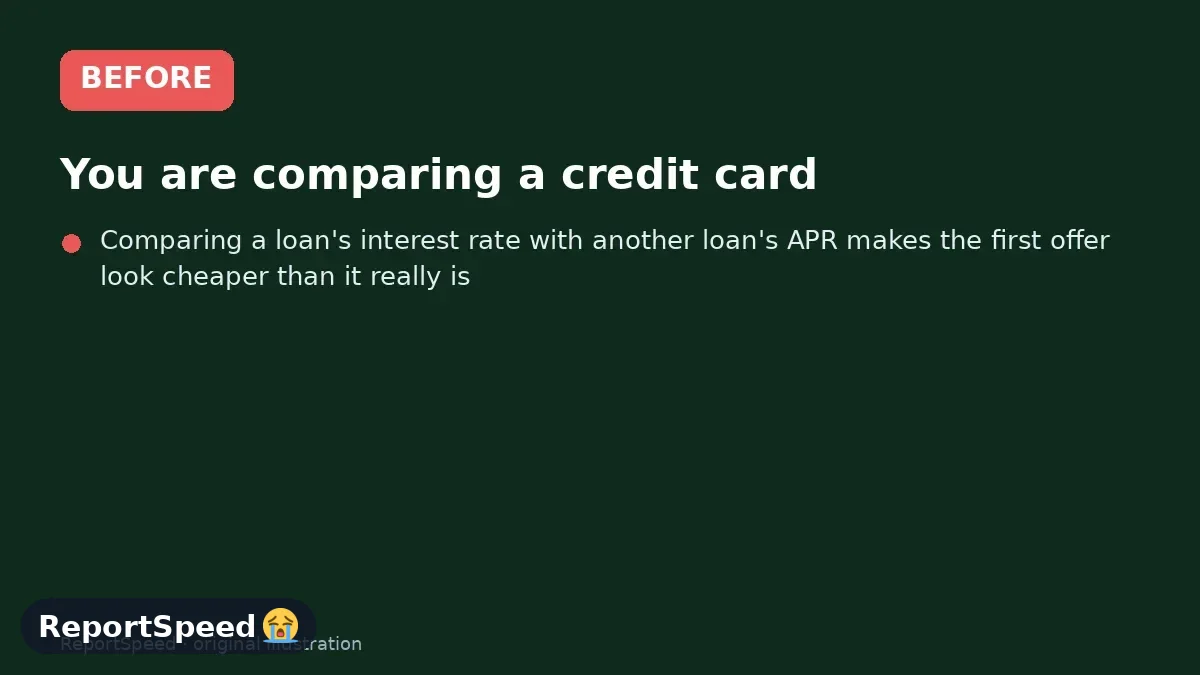
Comparing a loan's interest rate with another loan's APR makes the first offer look cheaper than it really is.
What to do

| Item | APR | APY |
|---|---|---|
| Used for | Credit cards, loans, mortgages | Savings, CDs, money market accounts |
| What it shows | Yearly cost of borrowing | Yearly earnings including compounding |
| Includes fees? | Many loans include certain fees | No, it's about earnings |
| Fixed or variable | Either; variable follows an index | Savings APY can change; CD APY is usually fixed |
| Compare by | Lowest APR for the same term | Highest APY with the same access |
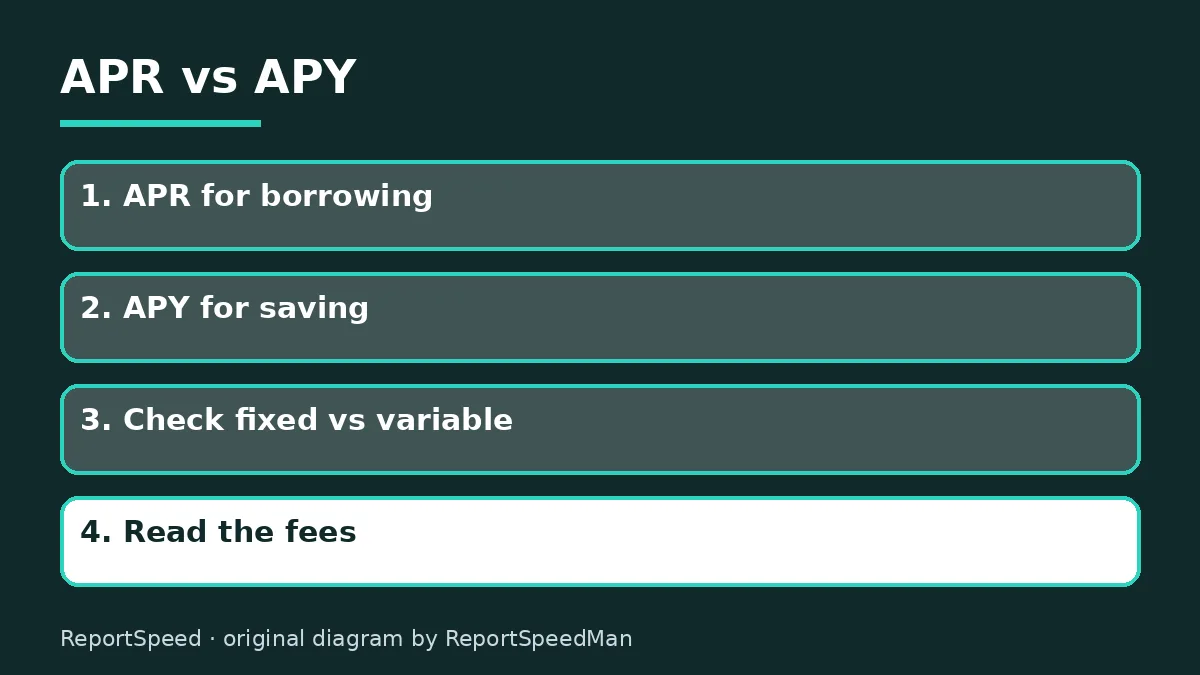
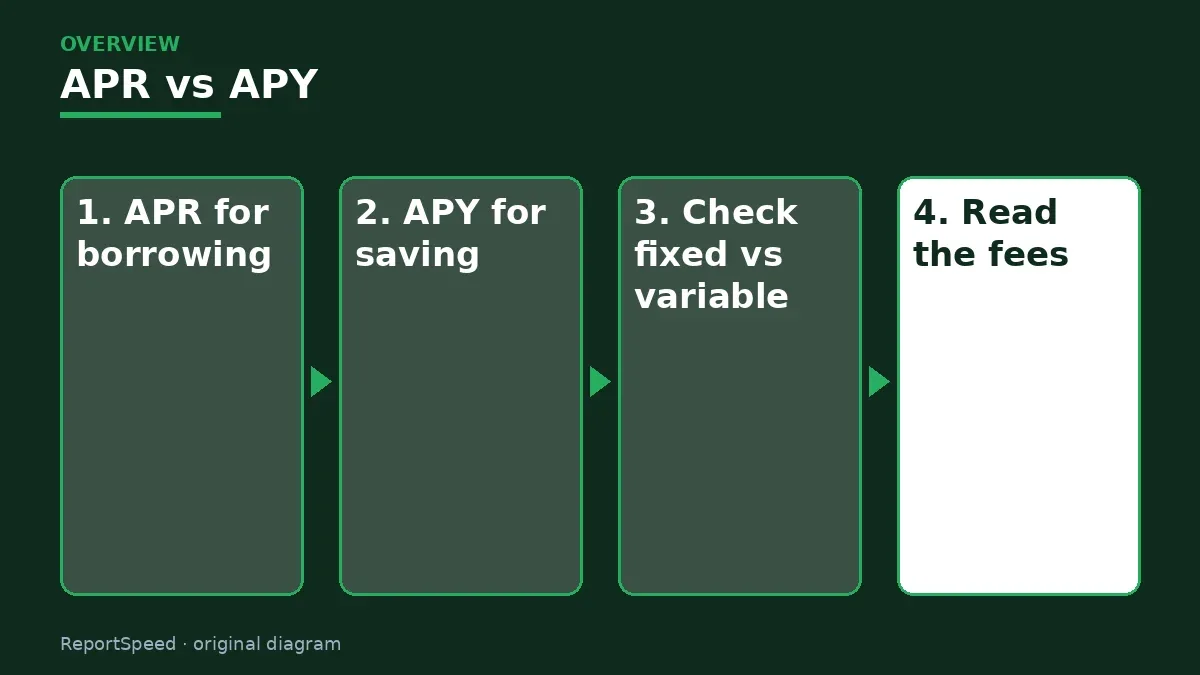
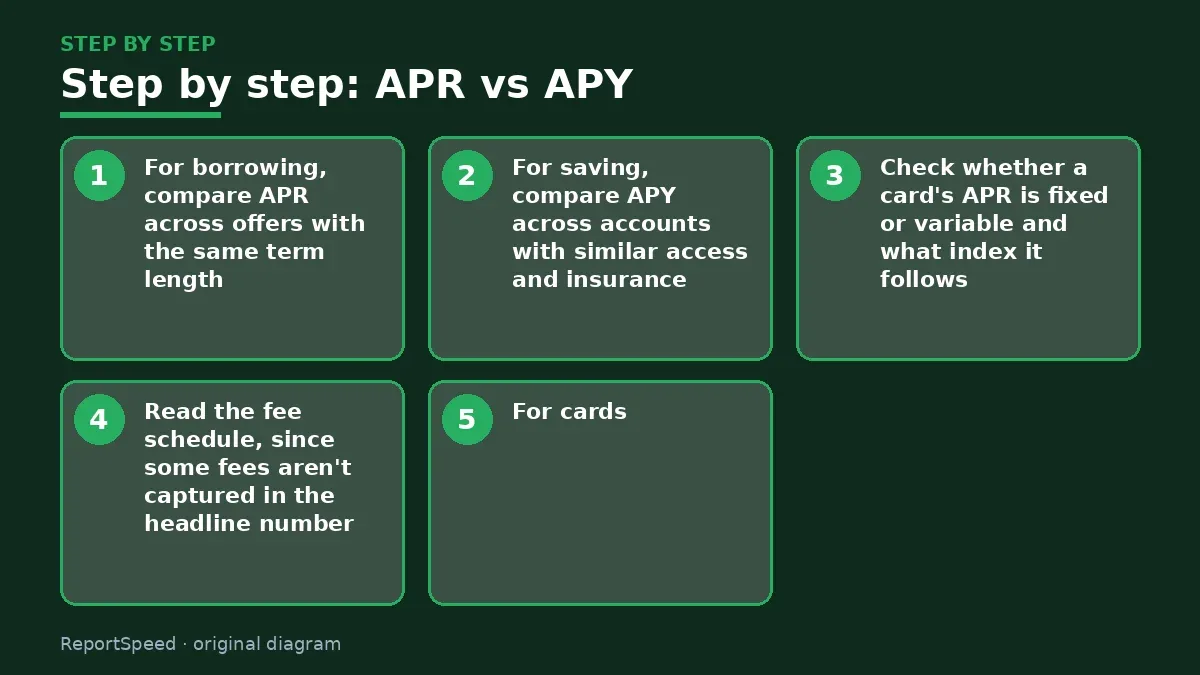
- For borrowing, compare APR across offers with the same term length.
- For saving, compare APY across accounts with similar access and insurance.
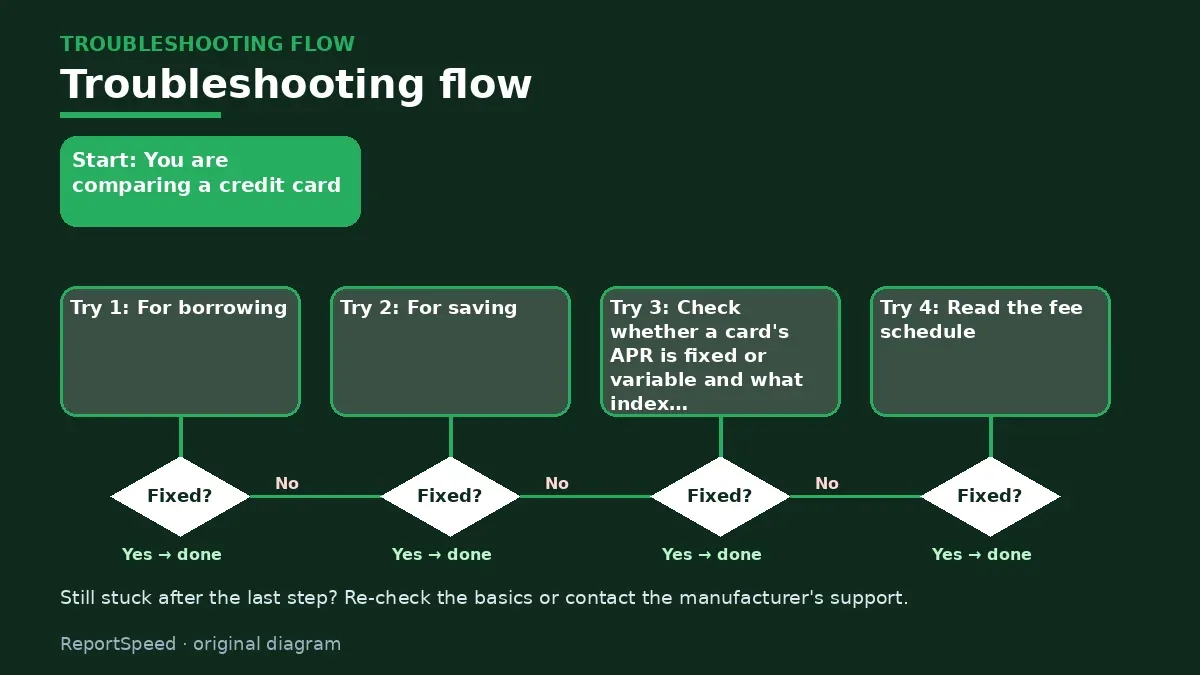
- Check whether a card's APR is fixed or variable and what index it follows.
- Read the fee schedule, since some fees aren't captured in the headline number.
- For cards, remember that paying the full statement balance avoids purchase interest in most cases.
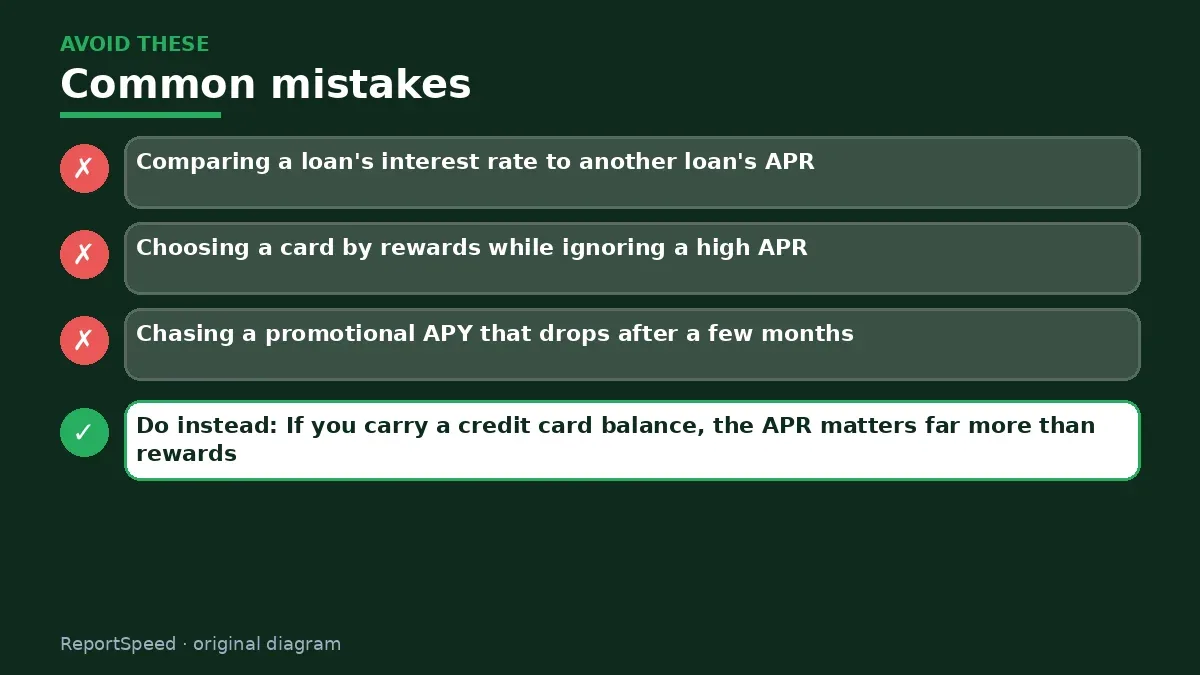
Common mistakes:
- Comparing a loan's interest rate to another loan's APR
- Choosing a card by rewards while ignoring a high APR
- Chasing a promotional APY that drops after a few months
ReportSpeedMan tip: If you carry a credit card balance, the APR matters far more than rewards. If you pay in full every month, the APR barely touches you.
What I would actually do
for any card or loan I'd put the APRs side by side for the same term; for savings I'd line up APYs for insured accounts with the access I need.
The trade-off people miss: rewards and promo rates grab attention, but a variable APR on a balance you carry costs more than most rewards return.
How you can tell it worked
You can compare two offers in under a minute by lining up APR or APY for like products.
Quick FAQ
Is a lower APR always better?
For the same term and fees, yes.
Why does APY exceed the rate?
Compounding adds interest on interest.
Does APR matter if I pay in full?
Usually little for purchases, but check cash advance terms.
Wrap-up: Use APR to compare what borrowing costs and APY to compare what saving earns. Match like with like and the better offer becomes obvious.
Wiki: Compound Interest.
APR vs APY: official sources I checked
Step-by-step photos
1. Before The problem 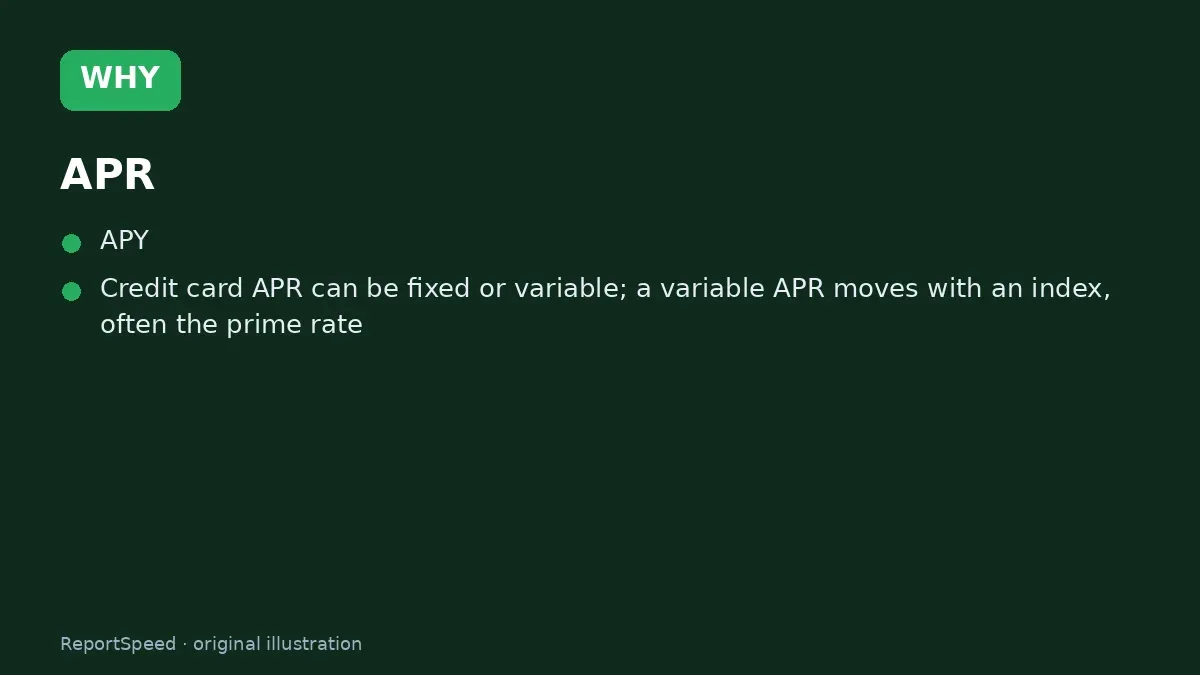
2. Why it happens The cause 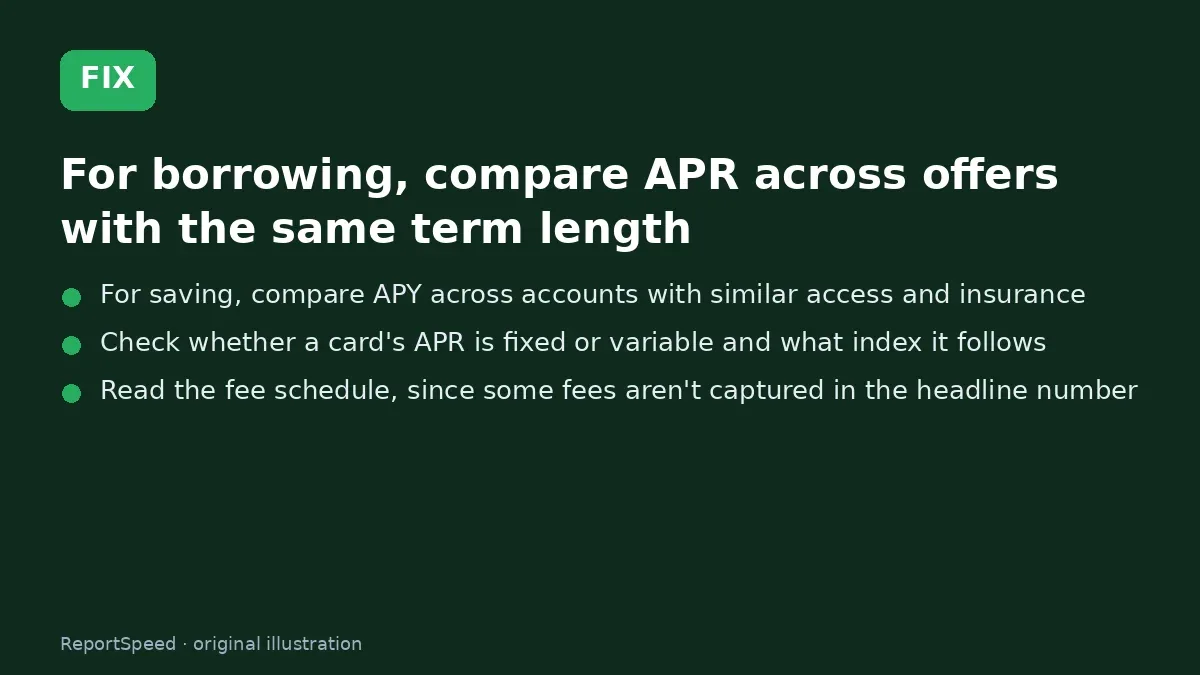
3. The fix The fix 
4. After The result
⚡ Speed Summary
- Use APR to compare what borrowing costs and APY to compare what saving earns.
- If you carry a credit card balance, the APR matters far more than rewards. If you pay in full every month, the APR barely touches you.
- Comparing a loan's interest rate with another loan's APR makes the first offer look cheaper than it really is.

Was this answer helpful?
Tap a star to rate this answer.
Related questions
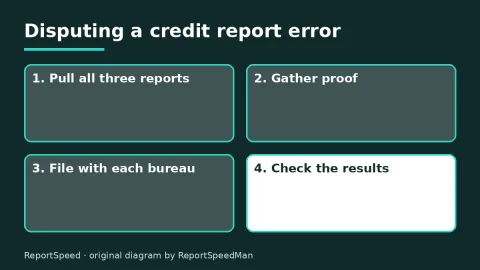
Found an error on my credit report? How to dispute it step by step
Dispute with each bureau and the furnisher, include proof, and expect results in about 30 days.
Rate itSolved
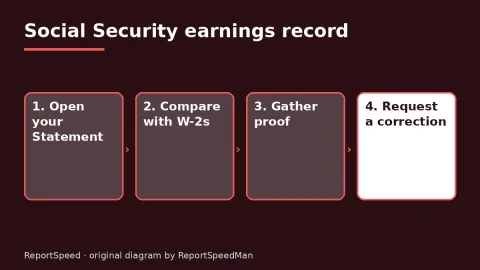
How do I check my Social Security earnings record and fix a mistake?
Check your Statement every year, match it to your W-2s, and correct gaps with proof before the usual window closes.
Rate itSolved
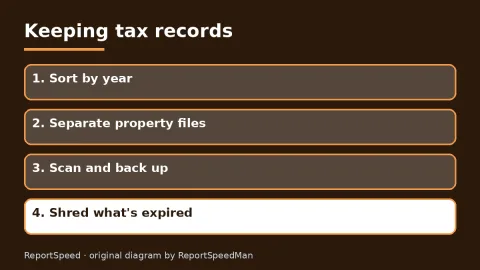
How long should I keep tax records? The IRS 3-, 6- and 7-year rules
Three years covers most returns; six, seven or forever apply in specific cases.
Rate itSolved
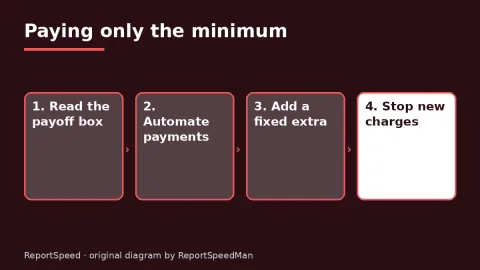
What happens if I only pay the minimum on my credit card?
Minimum payments keep you current but stretch the debt for years.
Rate itSolved
Real experiences
No experiences yet. Be the first to share.