


Almost every online checkout now offers to split my purchase into four payments with no interest. It's tempting for things like a new laptop or concert tickets. Is buy now, pay later actually a good deal, or are there hidden costs I'm not seeing?
Buy now, pay later: is pay-in-4 a good idea?
Concerns & risks
You keep seeing buy now, pay later at checkout and want to know if using it is smart.
| Situation | Signal |
|---|---|
| One plan, affordable payments | Reasonable |
| Several plans at once | Red flag |
| Everyday spending | Red flag |
| Autopay from a thin account | Risk of bank fees |

Causes & evidence
The CFPB describes buy now, pay later as a type of installment loan that lets you buy something right away and pay it off over four or fewer payments, commonly four interest-free payments every two weeks, with the first often due at checkout. Most of these loans don't require a hard credit inquiry. Many don't charge interest, but most charge late fees for missed payments, and if you set up automatic payments from a bank account without enough money, your bank may charge an overdraft or non-sufficient funds fee. Most pay-in-4 lenders don't report your on-time payments to the major credit bureaus, so they usually won't help build credit, but an unpaid loan sent to a debt collector can hurt your credit.
Returns can be more complicated with BNPL, because you deal with both the store and the lender. Keep paying scheduled installments until the refund is confirmed, unless the lender tells you otherwise.
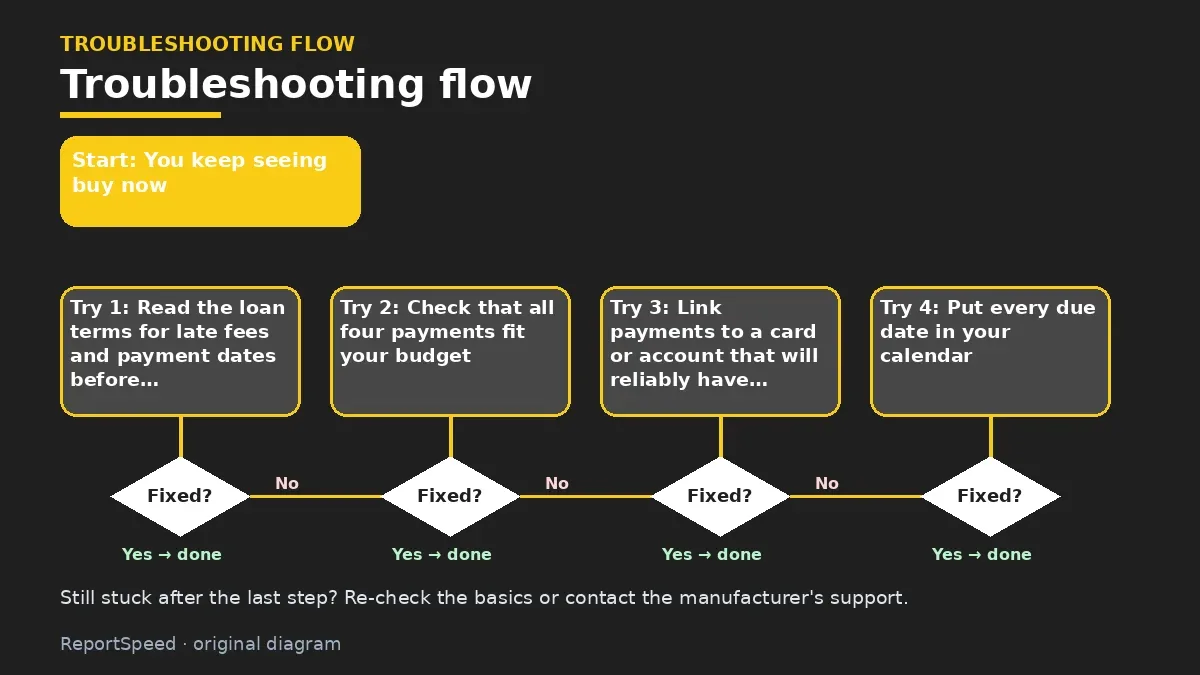
Running several pay-in-4 plans at once makes it easy to lose track of due dates and stack up late fees.
What to do

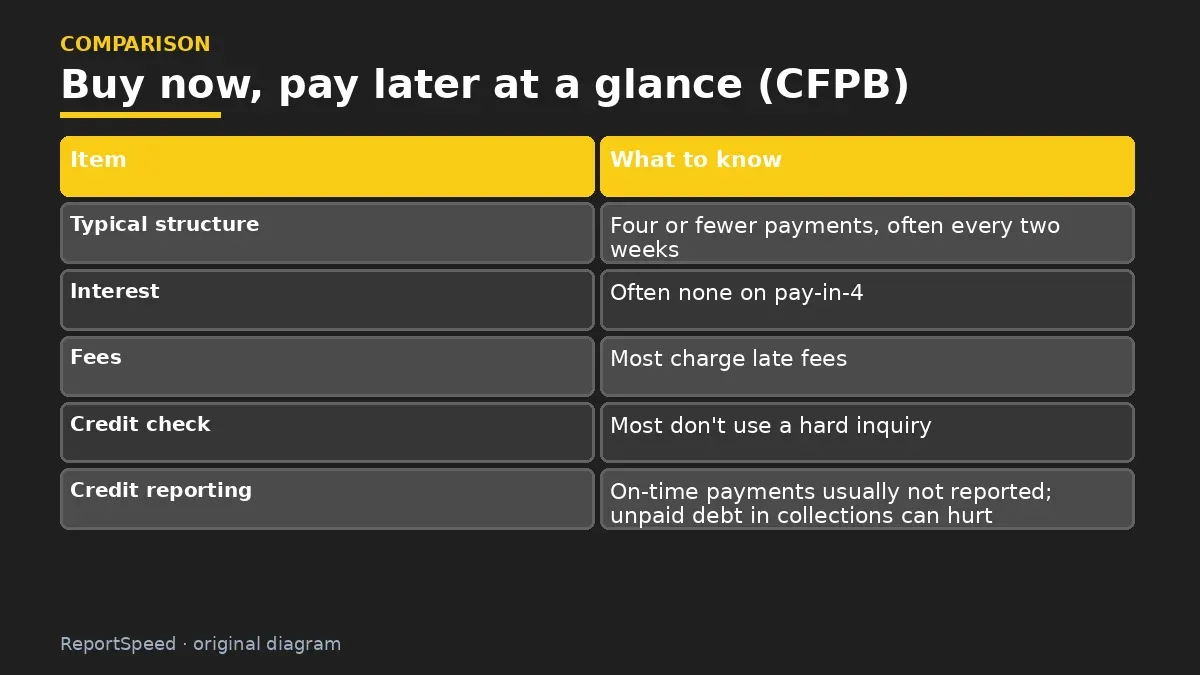
| Item | What to know |
|---|---|
| Typical structure | Four or fewer payments, often every two weeks |
| Interest | Often none on pay-in-4 |
| Fees | Most charge late fees |
| Credit check | Most don't use a hard inquiry |
| Credit reporting | On-time payments usually not reported; unpaid debt in collections can hurt |
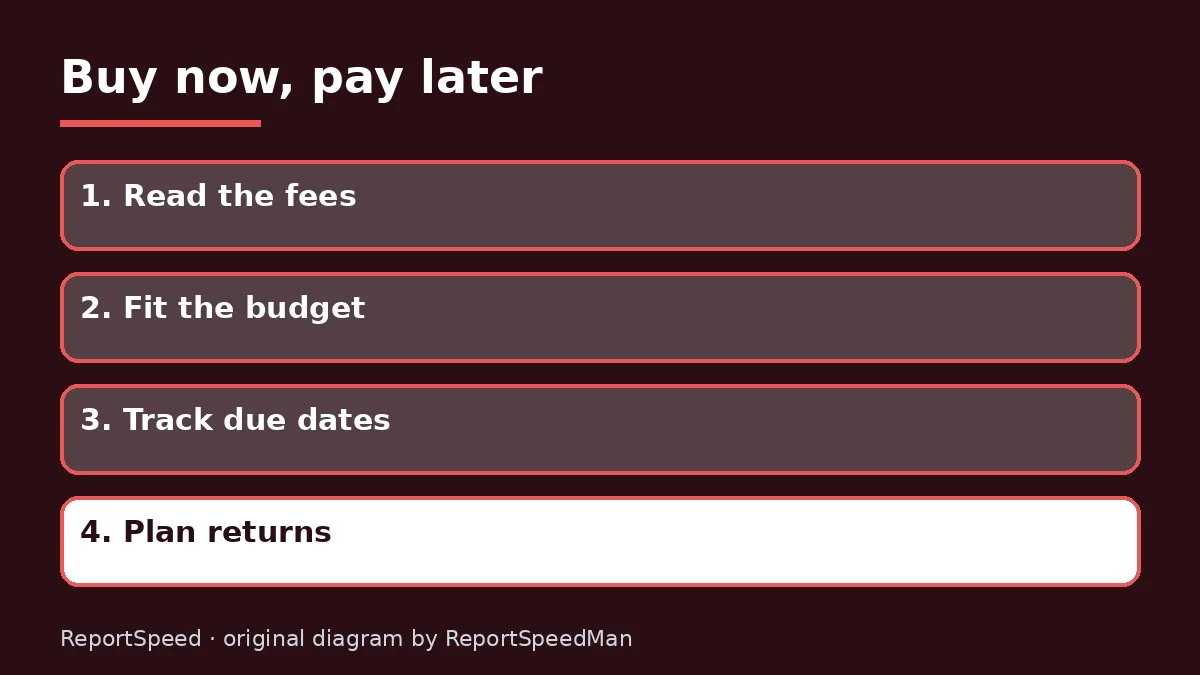
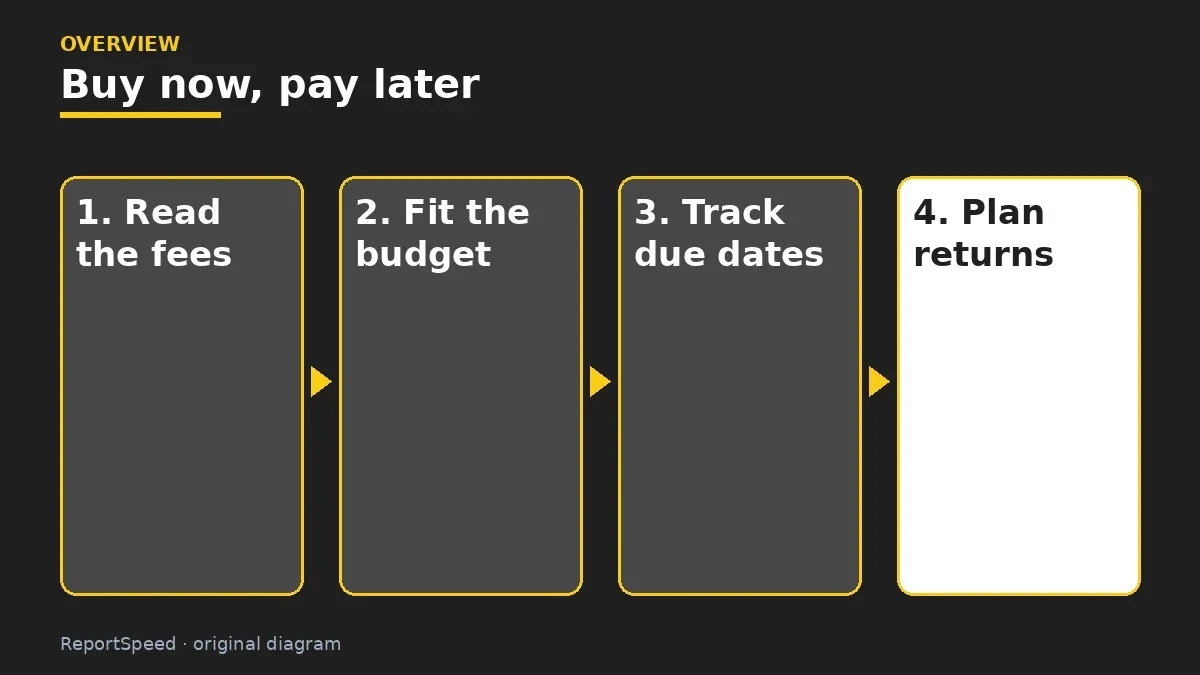
- Read the loan terms for late fees and payment dates before accepting.
- Check that all four payments fit your budget, alongside any other plans you have.
- Link payments to a card or account that will reliably have money on each due date.
- Put every due date in your calendar.
- Before returning an item, ask how the refund and remaining payments are handled.
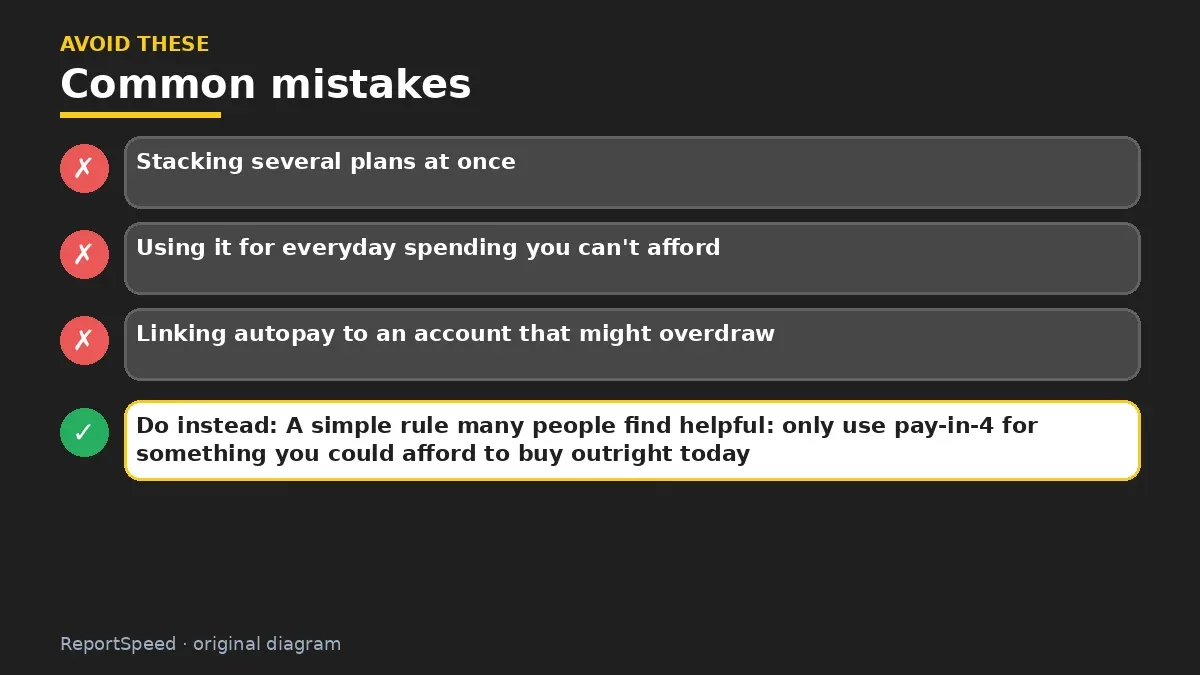
Common mistakes:
- Stacking several plans at once
- Using it for everyday spending you can't afford
- Linking autopay to an account that might overdraw
ReportSpeedMan tip: A simple rule many people find helpful: only use pay-in-4 for something you could afford to buy outright today.
What I would actually do
I'd only use pay-in-4 for one planned purchase at a time that I could pay for today, with payments linked to a credit card rather than a thin checking account.
The trade-off people miss: because most pay-in-4 lenders don't report on-time payments, you take on the risk of a loan without gaining the credit history you'd build from a card paid in full.
Checking that it worked
Every installment is paid on time and you never have more than one plan open.
Quick FAQ
Do BNPL loans check my credit?
Most don't use a hard inquiry.
Will paying on time help my score?
Usually not for pay-in-4.
What if I miss a payment?
Expect a late fee and possible collections.
Wrap-up: Pay-in-4 can be a free way to spread a purchase you can afford. Treat it like any loan: read the fees, track the dates and avoid stacking plans.
Wiki: Credit Scores and Credit Reports and Credit Card Interest and APR.
Buy now, pay later: official pages behind this answer
Step-by-step photos

1. Before The problem 
2. Why it happens The cause 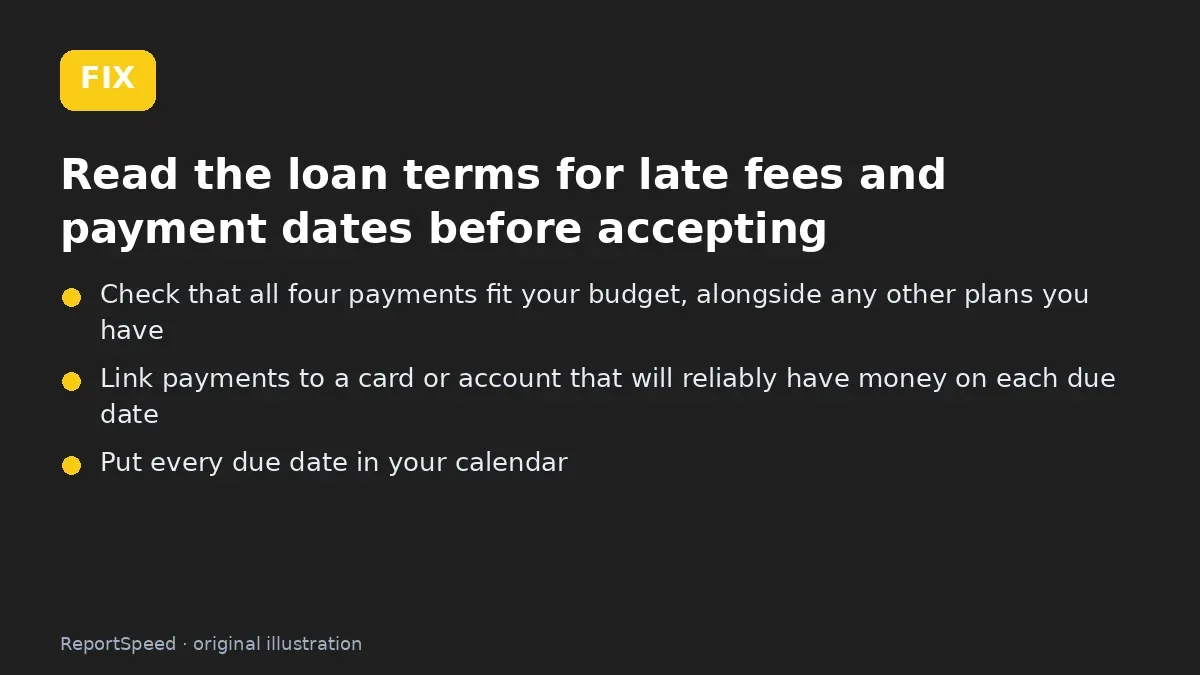
3. The fix The fix 
4. After The result
⚡ Speed Summary
- Pay-in-4 can be a free way to spread a purchase you can afford.
- A simple rule many people find helpful: only use pay-in-4 for something you could afford to buy outright today.
- Running several pay-in-4 plans at once makes it easy to lose track of due dates and stack up late fees.

Was this answer helpful?
Tap a star to rate this answer.
Related questions
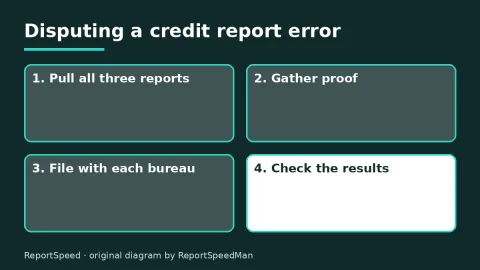
Found an error on my credit report? How to dispute it step by step
Dispute with each bureau and the furnisher, include proof, and expect results in about 30 days.
Rate itSolved
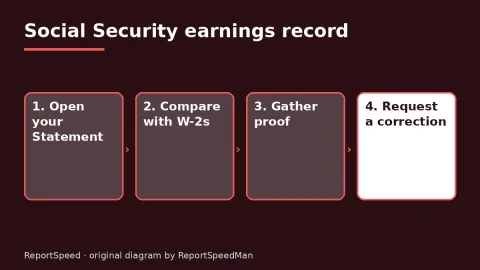
How do I check my Social Security earnings record and fix a mistake?
Check your Statement every year, match it to your W-2s, and correct gaps with proof before the usual window closes.
Rate itSolved
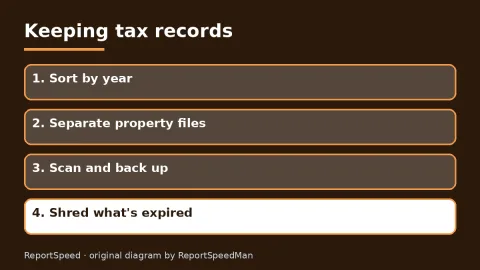
How long should I keep tax records? The IRS 3-, 6- and 7-year rules
Three years covers most returns; six, seven or forever apply in specific cases.
Rate itSolved
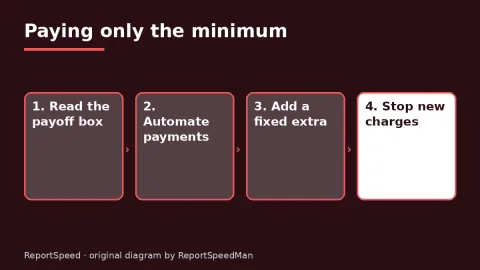
What happens if I only pay the minimum on my credit card?
Minimum payments keep you current but stretch the debt for years.
Rate itSolved
Real experiences
No experiences yet. Be the first to share.