


I found out a coworker hired after me makes $2 an hour more for the same job. When I brought it up in the break room, my supervisor said discussing salaries is against company policy and could get me written up. Can my employer stop me from discussing my pay with coworkers?
Can my employer stop me from discussing my pay with coworkers?
Concerns & risks
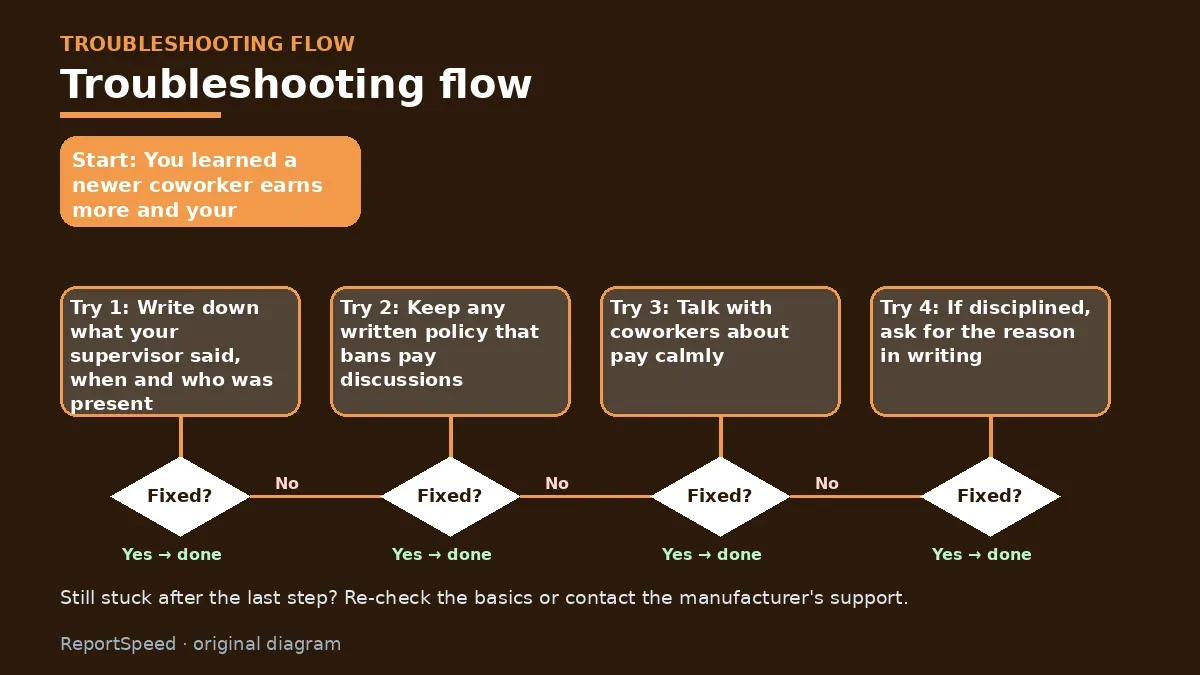
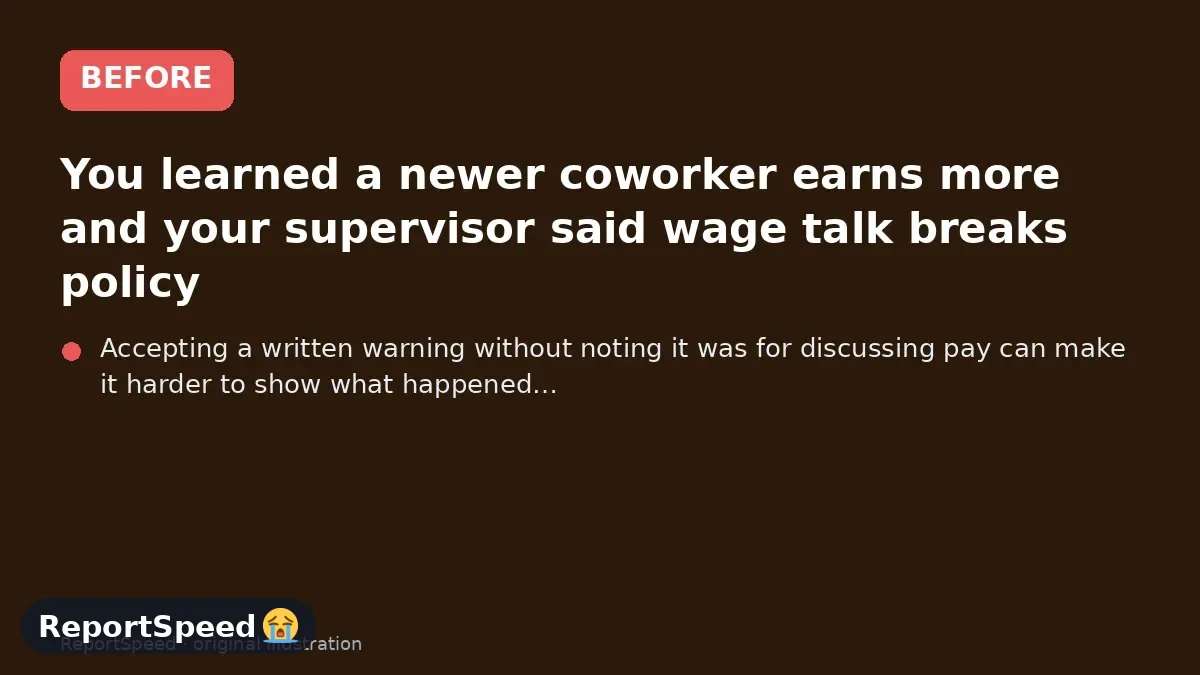
You learned a newer coworker earns more and your supervisor said wage talk breaks policy.
| Issue | Agency |
|---|---|
| Discussing pay | NLRB |
| Unequal pay by sex | EEOC |
| Unpaid wages | DOL Wage and Hour |
| State pay transparency | State labor department |
| Union contract issues | NLRB |
| Public employee | Your state or federal agency |

Causes & evidence
The National Labor Relations Board explains that the National Labor Relations Act protects the right of most private-sector employees to talk with coworkers about wages, benefits and other terms and conditions of employment, whether or not they're in a union. This is called protected concerted activity. Employers can't lawfully prohibit these discussions or discipline, discharge or threaten employees for engaging in them. The Act generally doesn't cover supervisors and managers, independent contractors, agricultural and domestic workers, or government employees, who may have protections under other laws. If you believe your rights were violated, you can file a charge with the NLRB, generally within six months of the violation. Separate federal laws, such as the Equal Pay Act, address pay differences based on sex.
Edge cases: supervisors aren't protected by the NLRA, but rules can be complex. Employers can generally limit employees whose jobs give them access to confidential pay data from sharing others' records. Many states have their own pay transparency laws.
Accepting a written warning without noting it was for discussing pay can make it harder to show what happened later.
What to do
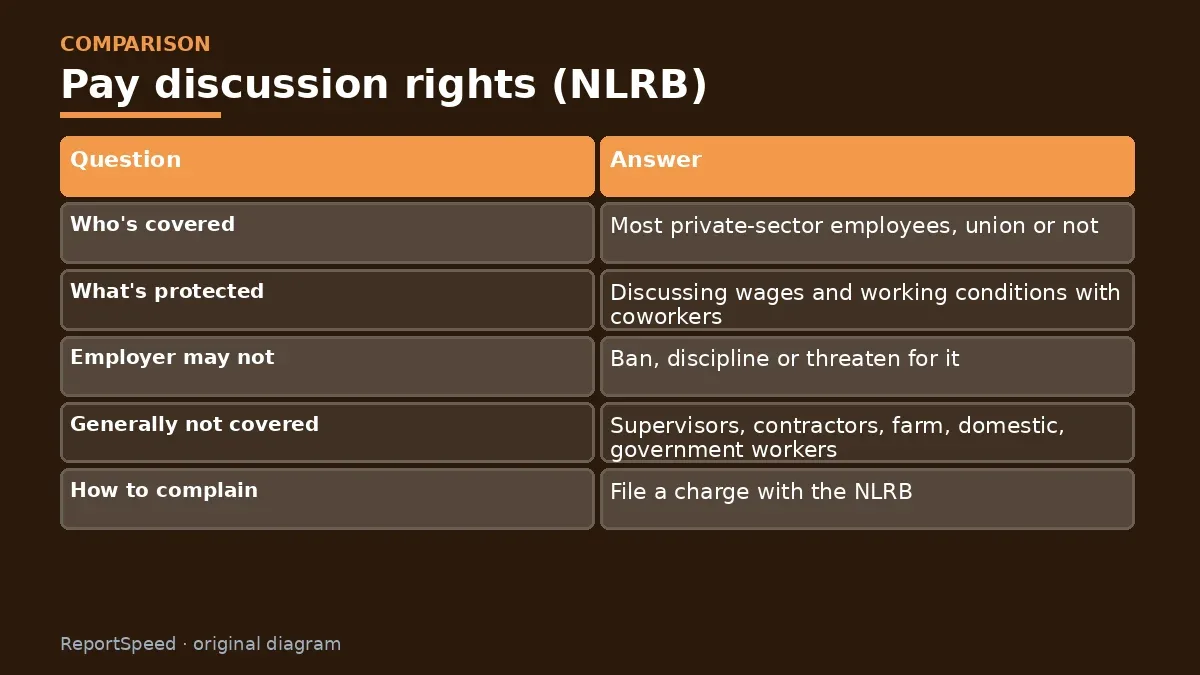
| Question | Answer |
|---|---|
| Who's covered | Most private-sector employees, union or not |
| What's protected | Discussing wages and working conditions with coworkers |
| Employer may not | Ban, discipline or threaten for it |
| Generally not covered | Supervisors, contractors, farm, domestic, government workers |
| How to complain | File a charge with the NLRB |
| Deadline | Generally within six months |
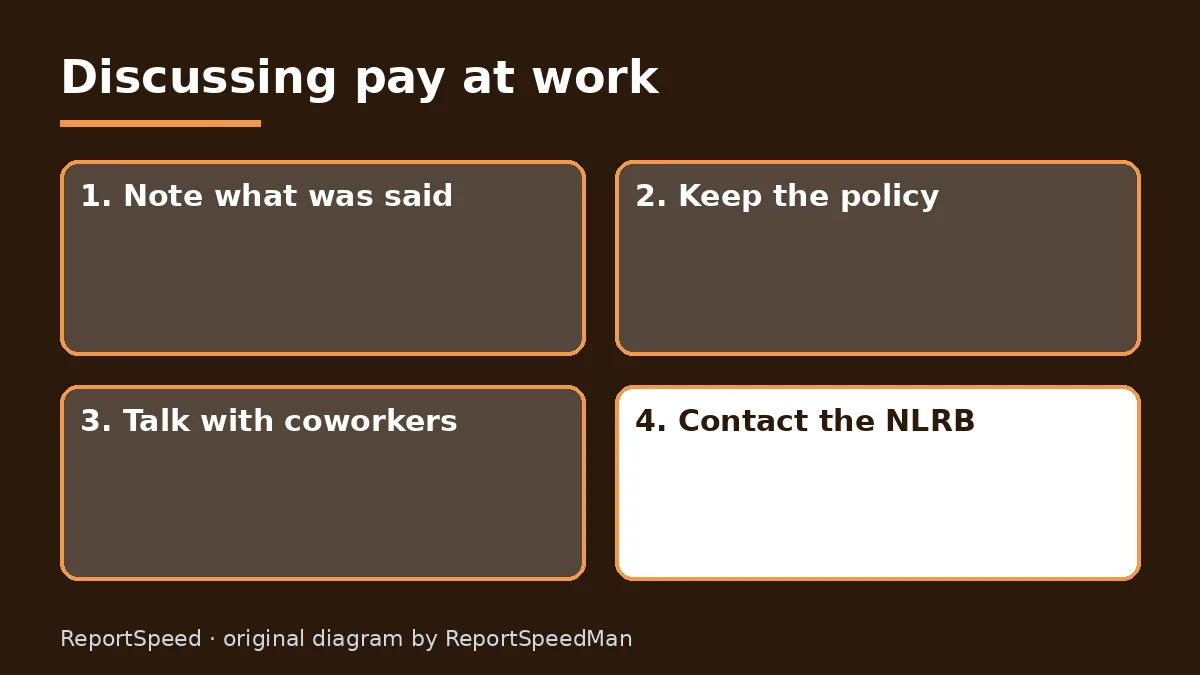
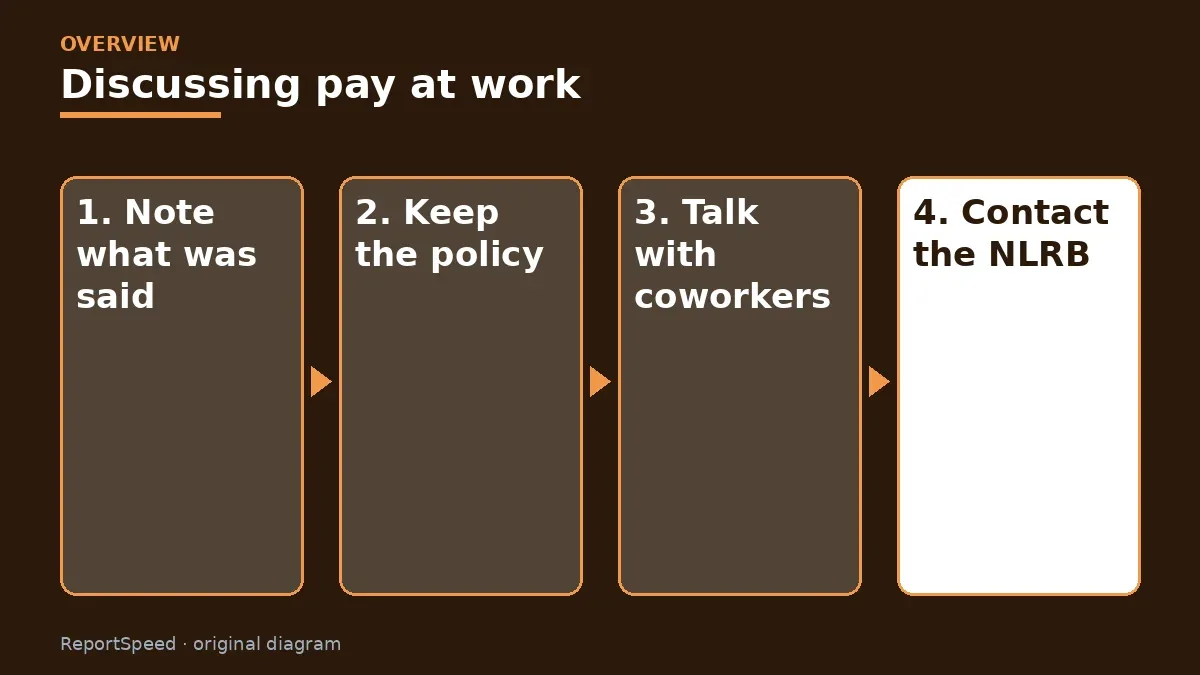
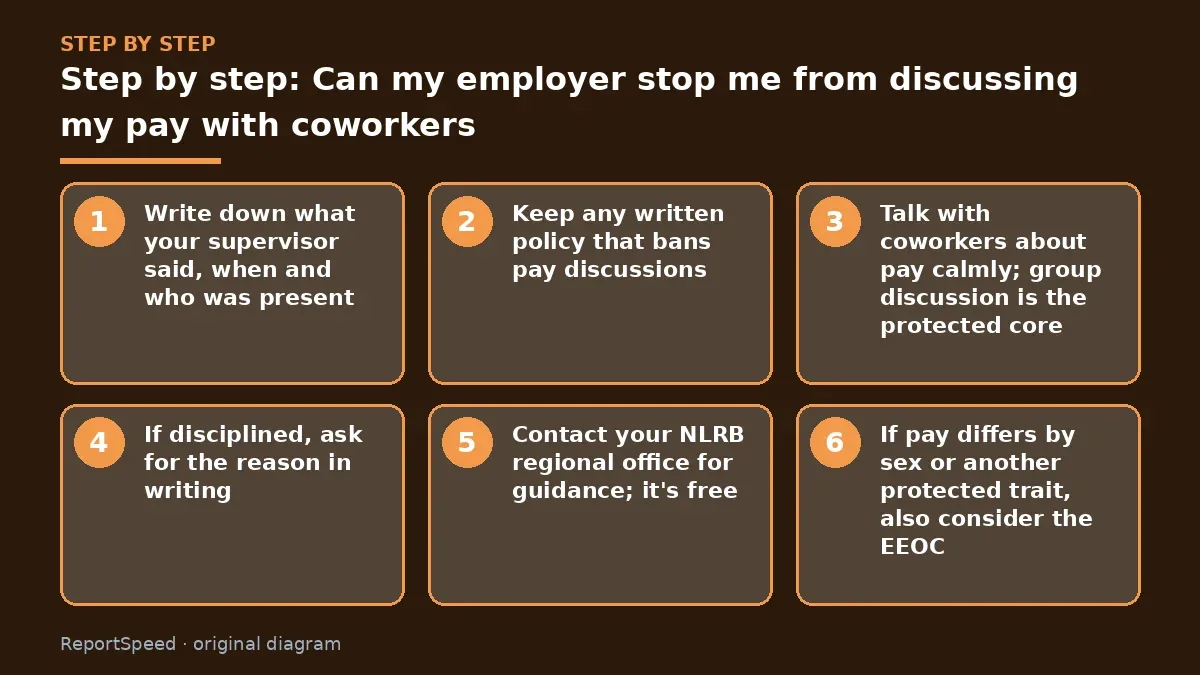
- Write down what your supervisor said, when and who was present.
- Keep any written policy that bans pay discussions.
- Talk with coworkers about pay calmly; group discussion is the protected core.
- If disciplined, ask for the reason in writing.
- Contact your NLRB regional office for guidance; it's free.
- If pay differs by sex or another protected trait, also consider the EEOC.
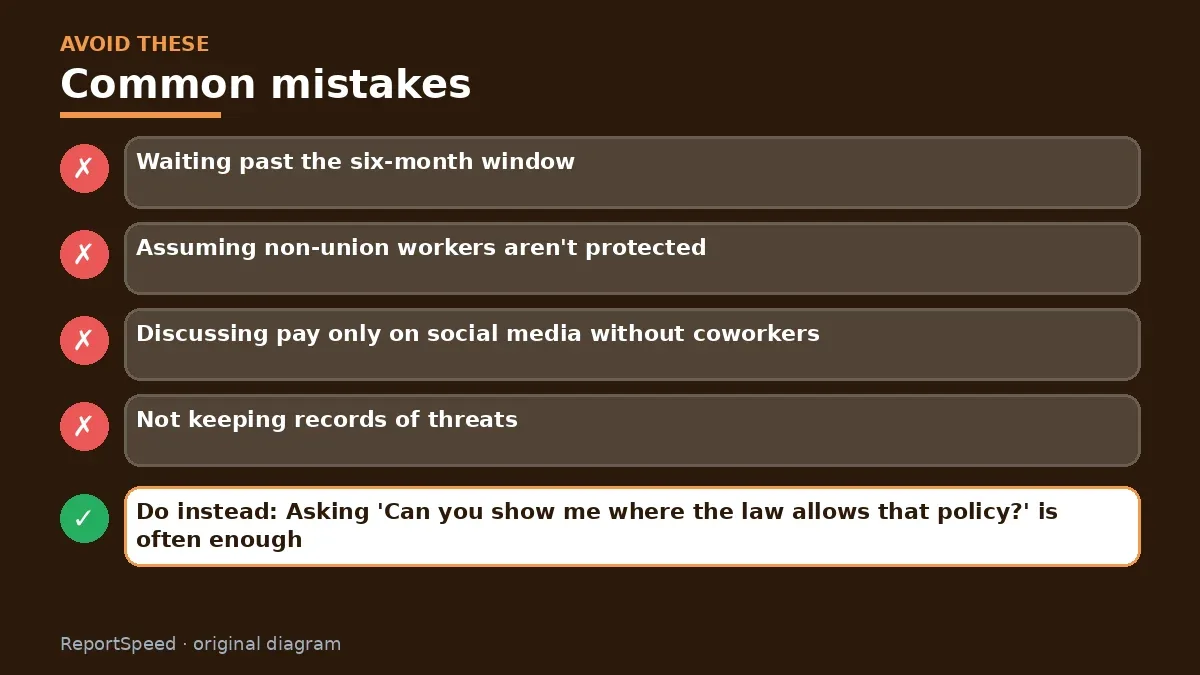
Common mistakes:
- Waiting past the six-month window
- Assuming non-union workers aren't protected
- Discussing pay only on social media without coworkers
- Not keeping records of threats
ReportSpeedMan tip: Asking 'Can you show me where the law allows that policy?' is often enough. Many supervisors simply repeat an outdated rule.
What I would actually do
I'd note the warning, keep talking with coworkers respectfully, and contact the NLRB regional office if discipline followed.
The trade-off people miss: pay talk can create tension, but it's often the only way to spot unequal pay.
Did it work? How to check
You can discuss pay without threat of discipline.
Quick FAQ
Is my company's policy legal?
A blanket ban on wage talk is generally unlawful.
Do I need a union?
No.
How long to file?
Generally six months.
Wrap-up: Most private-sector workers can legally discuss pay. Document the warning and contact the NLRB within six months if you're disciplined.
Wiki: Wage and Hour Basics (FLSA) and Credit Scores and Credit Reports.
Can my employer stop me from discussing my pay with coworkers: read the originals
Step-by-step photos
1. Before The problem 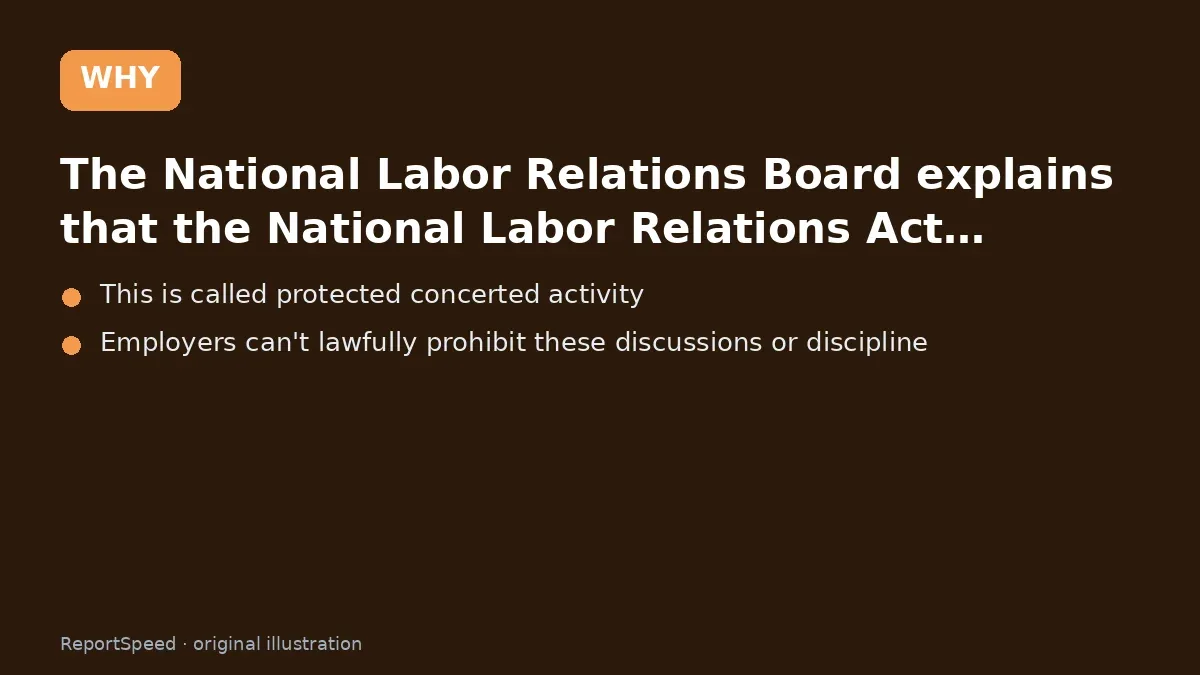
2. Why it happens The cause 
3. The fix The fix 
4. After The result
⚡ Speed Summary
- Most private-sector workers can legally discuss pay.
- Asking 'Can you show me where the law allows that policy?' is often enough. Many supervisors simply repeat an outdated rule.
- Accepting a written warning without noting it was for discussing pay can make it harder to show what happened later.

Was this answer helpful?
Tap a star to rate this answer.
Related questions
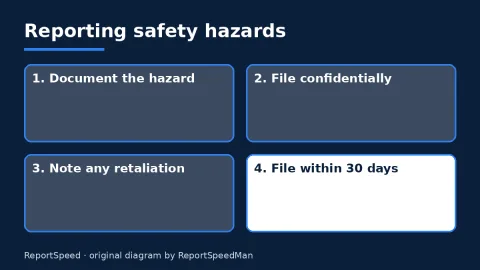
Can I be fired for reporting a safety problem at work? OSHA's 30-day rule
You can report hazards confidentially, and retaliation is illegal.
Rate itSolved

Pregnant at work: what accommodations can I ask for under the PWFA?
Under the PWFA, employers with 15+ workers must reasonably accommodate pregnancy limitations.
Rate itSolved
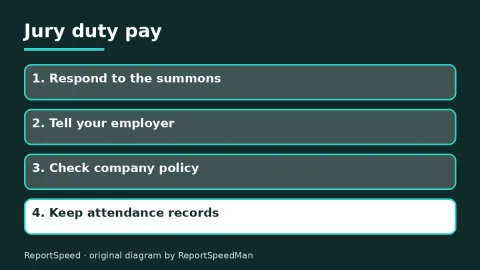
Do I get paid for jury duty, and can my employer fire me for going?
Federal jurors earn $50 a day; employer pay is optional, but firing you for federal jury service is illegal.
Rate itSolved
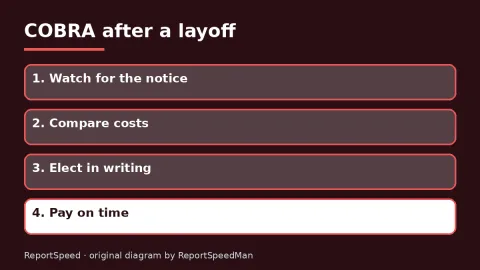
COBRA after a layoff: how long, how much and the deadlines
COBRA usually lasts 18 months, costs up to 102% of the premium, and gives you 60 days to elect and 45 days to pay.
Rate itSolved
Real experiences
No experiences yet. Be the first to share.