


My check engine light came on this morning. The car seems to drive normally. Is it safe to keep driving for a few days until I can get it looked at, or should I pull over right away? Does it matter whether the light is flashing?
Check engine light on: is it safe to keep driving?
Concerns & risks
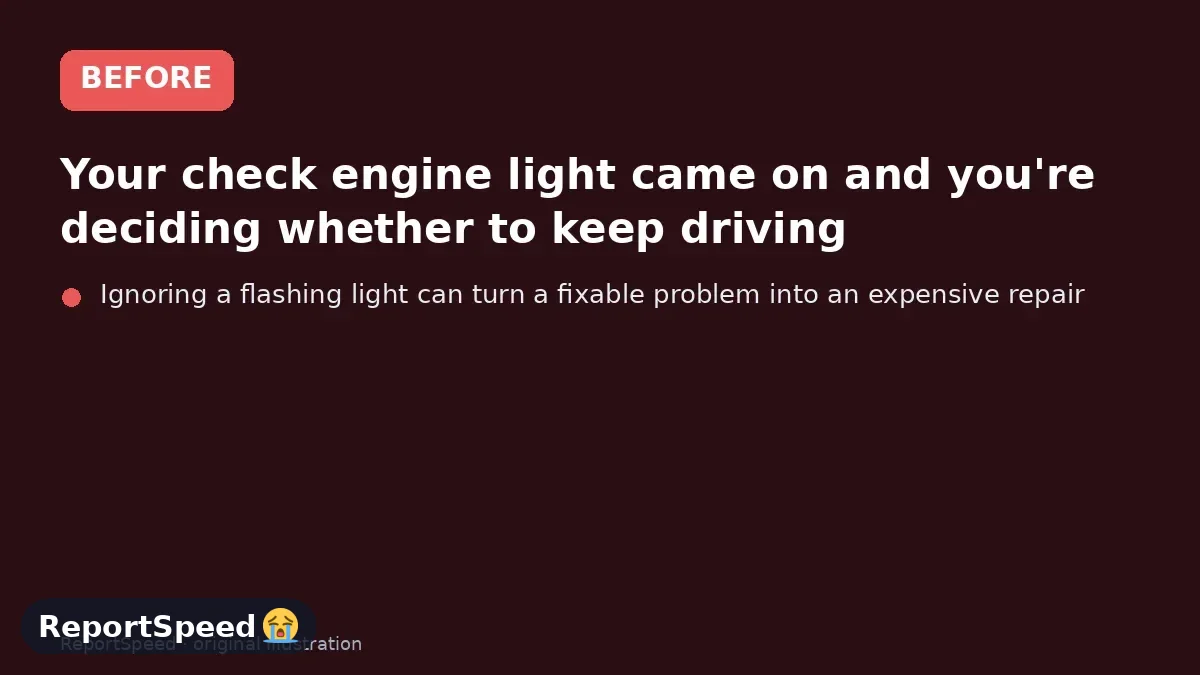
Your check engine light came on and you're deciding whether to keep driving.
| Light | Move |
|---|---|
| Steady, car normal | Book a check soon |
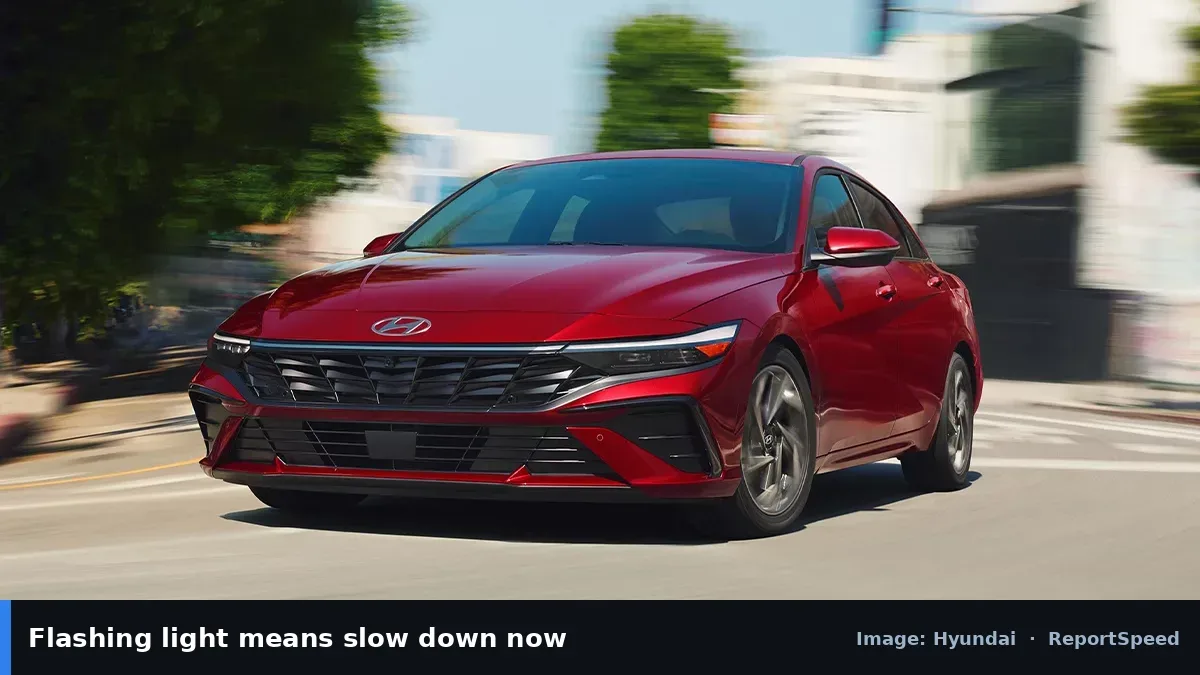
| Flashing | Ease off, get service promptly |
| Plus temp or oil warning | Stop safely, check manual |
| After gas cap fix | Watch whether it clears |
Causes & evidence
Modern cars have an onboard diagnostic system that monitors the engine and emissions controls and turns on the check engine light when it detects a problem. Your owner's manual is the official guide for your model, and most manuals separate a steady light from a flashing one. A steady light usually means a problem should be checked soon. A flashing light usually signals a more serious problem, such as an engine misfire, that can damage the catalytic converter, and manuals typically advise reducing speed and getting service promptly. Something as simple as a loose gas cap can also turn the light on. The FTC's auto repair guidance advises getting a written estimate before work begins.
A diagnostic code read tells a shop where to start, but it isn't a full diagnosis on its own. Some auto parts stores offer free code reads, which can help you understand an estimate.
Ignoring a flashing light can turn a fixable problem into an expensive repair.
What to do

| Light | Usual meaning | Usual action |
|---|---|---|
| Steady | A fault has been detected | Get it checked soon |
| Flashing | More serious fault, often a misfire | Reduce speed and get service promptly |
| Loose gas cap | Can trigger the light | Tighten it and see if the light clears after some driving |
| Repairs | Shop diagnoses the code | Get a written estimate |
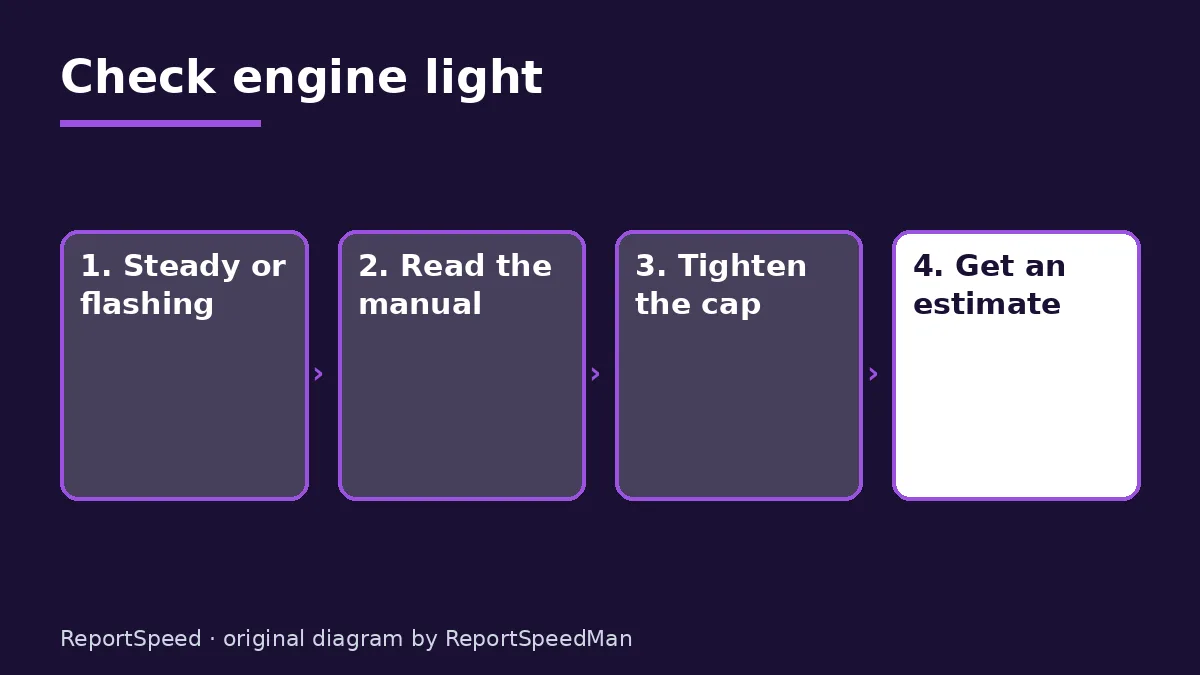
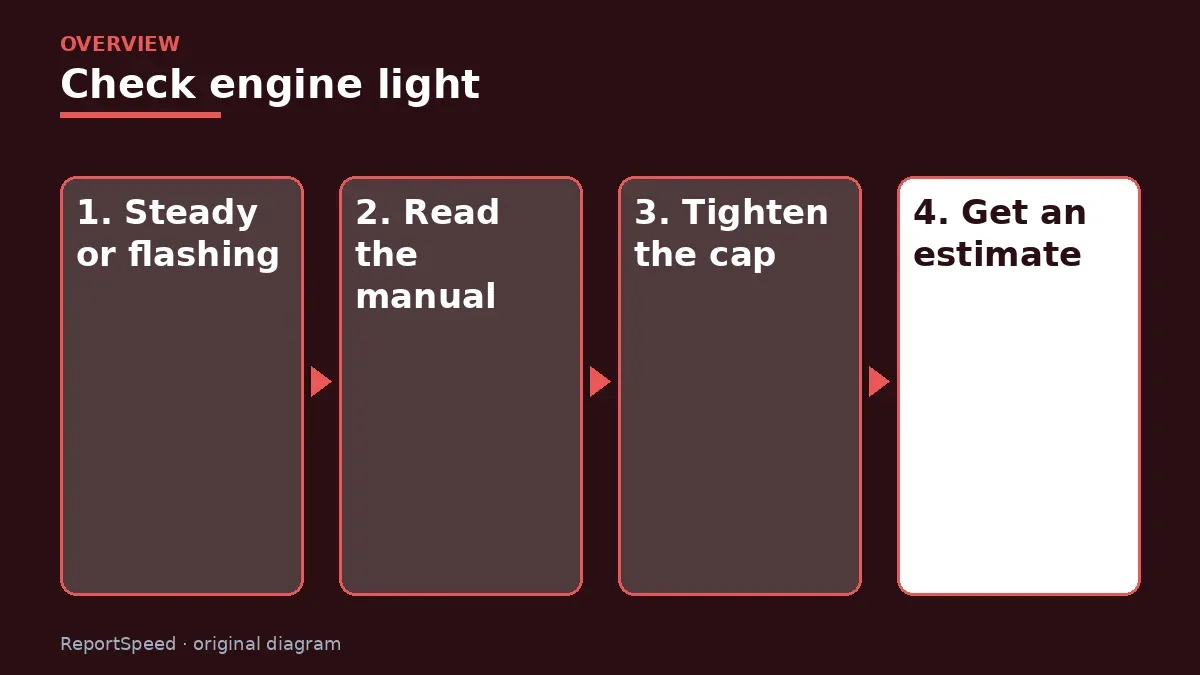
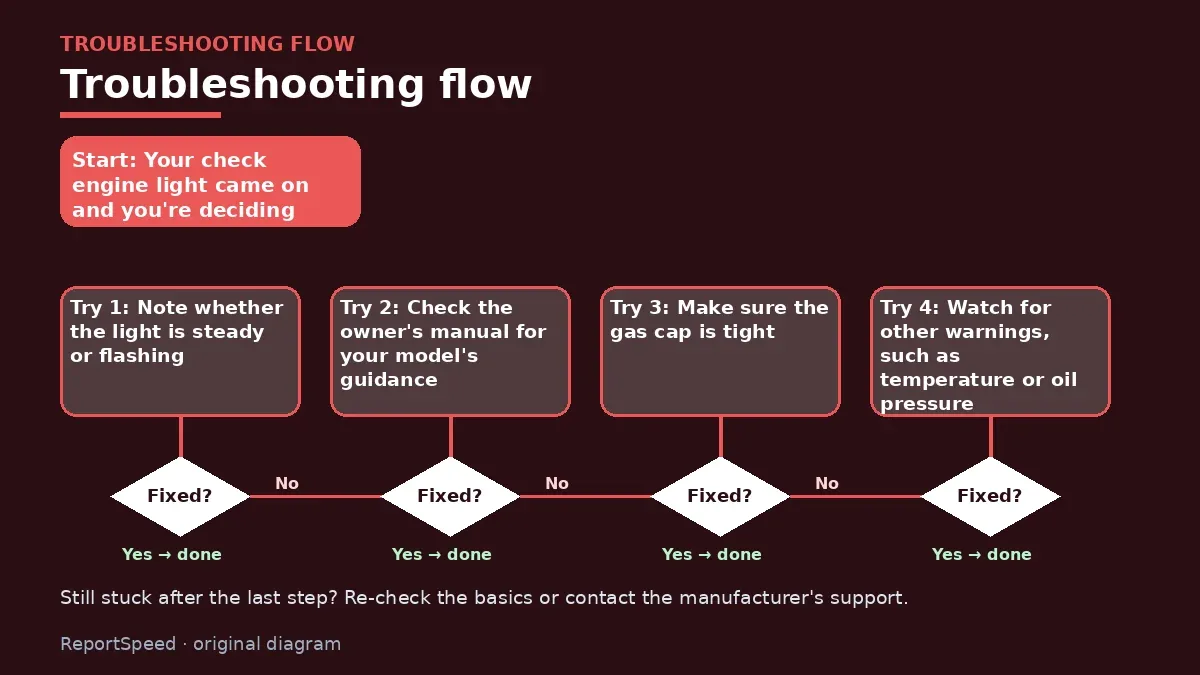
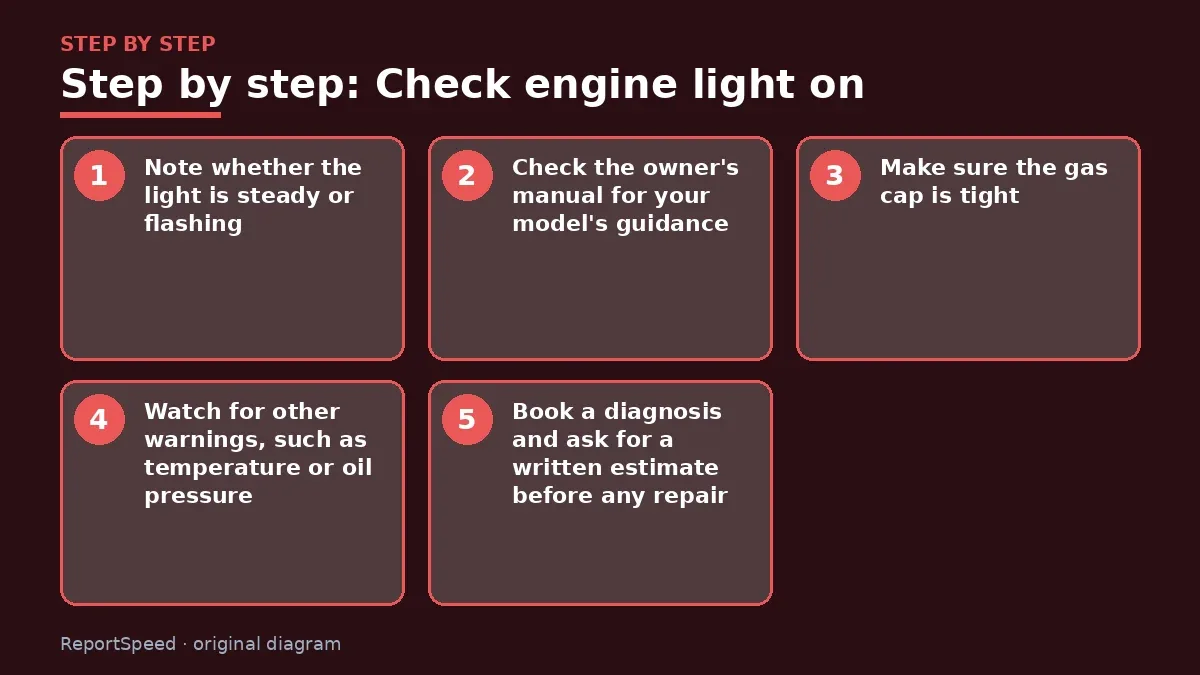
- Note whether the light is steady or flashing.
- Check the owner's manual for your model's guidance.
- Make sure the gas cap is tight.
- Watch for other warnings, such as temperature or oil pressure.
- Book a diagnosis and ask for a written estimate before any repair.
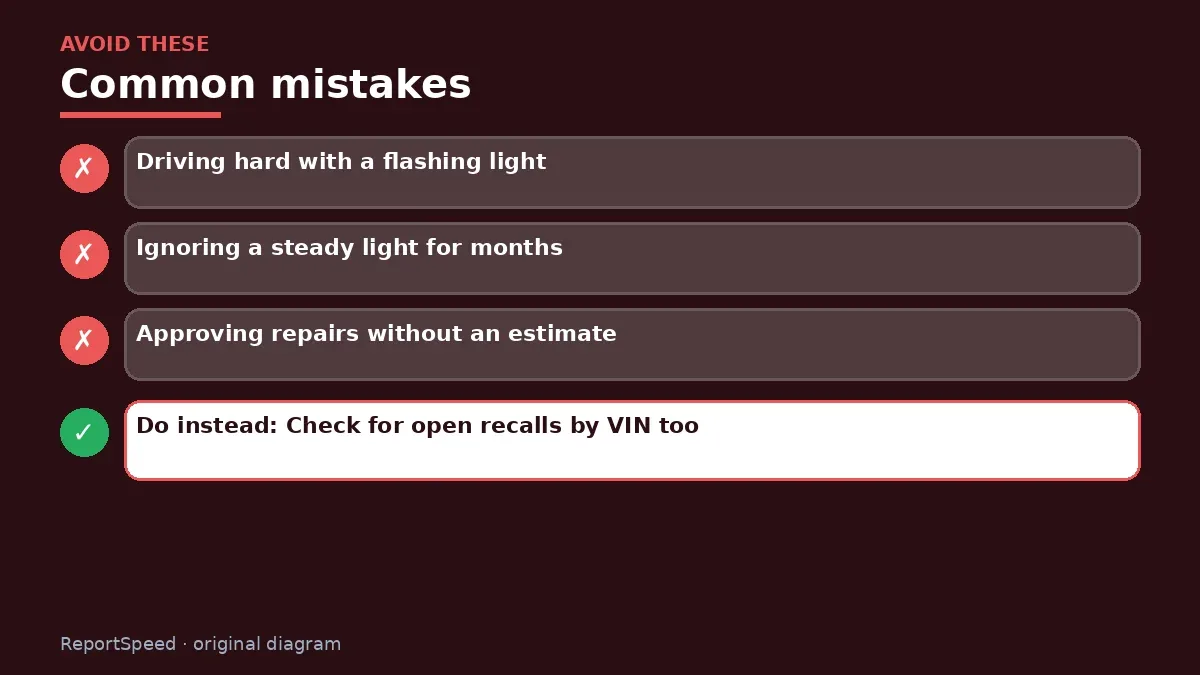
Common mistakes:
- Driving hard with a flashing light
- Ignoring a steady light for months
- Approving repairs without an estimate
ReportSpeedMan tip: Check for open recalls by VIN too. Some engine-related faults are covered by free recall repairs.
What I would actually do
with a steady light and a normal-feeling car, I'd tighten the gas cap and book a diagnosis within the week; with a flashing light, I'd slow down and get to a shop that day.
The trade-off people miss: a light that turns off by itself hasn't necessarily fixed the problem; the stored code can still point to a fault worth checking.
How to tell it worked
The code is diagnosed, fixed with a written estimate and the light stays off.
Quick FAQ
Will a loose gas cap fix itself?
The light may go off after some driving once tightened.
Can I pass emissions with the light on?
In many places, no.
Is a flashing light an emergency?
It's urgent; follow your manual.
Wrap-up: A steady light means book a check soon; a flashing light means ease off and get service promptly. Your manual has the final word.
Wiki: Vehicle Recalls and Fuel Economy Basics.
Check engine light on: primary sources
Step-by-step photos
1. Before The problem 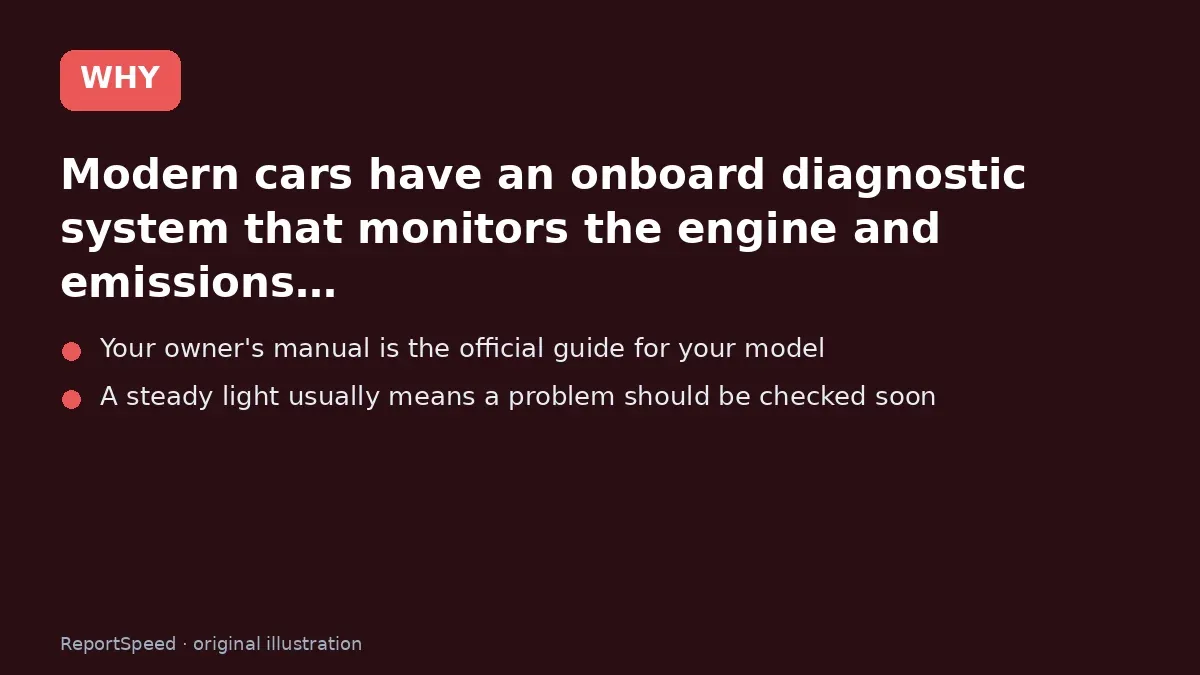
2. Why it happens The cause 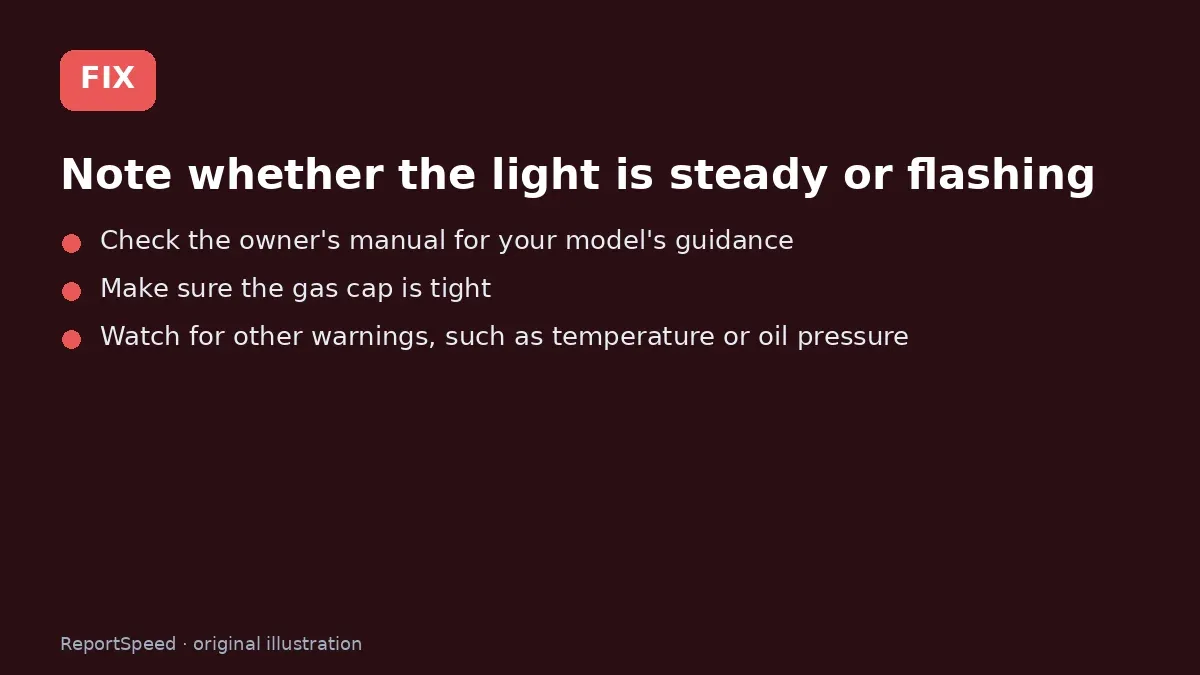
3. The fix The fix 
4. After The result
⚡ Speed Summary
- A steady light means book a check soon; a flashing light means ease off and get service promptly.
- Check for open recalls by VIN too. Some engine-related faults are covered by free recall repairs.
- Ignoring a flashing light can turn a fixable problem into an expensive repair.

Was this answer helpful?
Tap a star to rate this answer.
Related questions

How far should I sit from the steering wheel airbag?
Keep 10 inches from the air bag cover, tilt the wheel toward your chest, and keep kids 12 and under in the back.
Rate itSolved
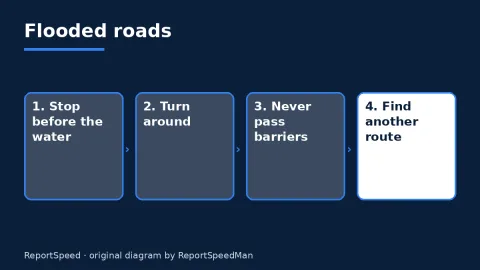
Is it safe to drive through a flooded road? How much water can float a car
Never drive into flood water; a foot of rushing water can carry most cars.
Rate itSolved
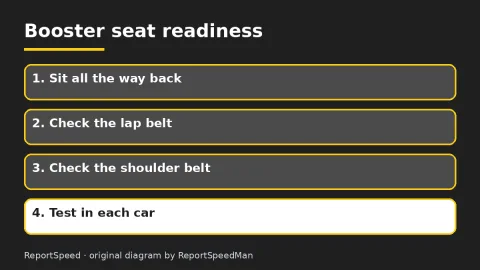
When can my child stop using a booster seat?
Keep the booster until the seat belt fits across the thighs and chest, and keep kids 12 and under in the back.
Rate itSolved
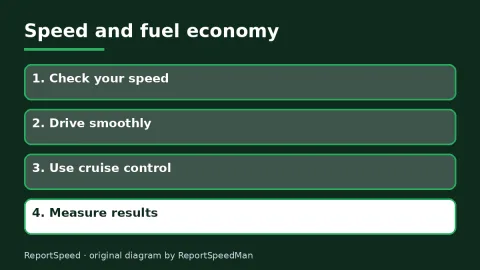
Does driving faster really waste gas? Speed and fuel economy
Above 50 mph mileage drops quickly, roughly like $0.30 more per gallon for each extra 5 mph.
Rate itSolved
Real experiences
No experiences yet. Be the first to share.