


My new car's fuel door says 'unleaded', and the owner's manual has a line about 87 octane, but a friend says premium keeps the engine cleaner and gets better mileage. Premium costs about 70 cents more a gallon near me. Do I need premium gas, and is there any benefit to using it if my car doesn't require it?
Do I need premium gas? What octane my car really needs
Concerns & risks
Your manual mentions 87 octane, a friend insists on premium, and the price gap is about 70 cents a gallon.
| Manual says | What to buy |
|---|---|
| 87 octane | Regular |
| Premium required | Premium every time |
| Premium recommended | Your choice; regular may cost some power |
| Knocking on correct fuel | Get it checked |
| Higher octane than listed | No benefit for most cars |
| Cleaning claims | Not an octane feature |
Causes & evidence
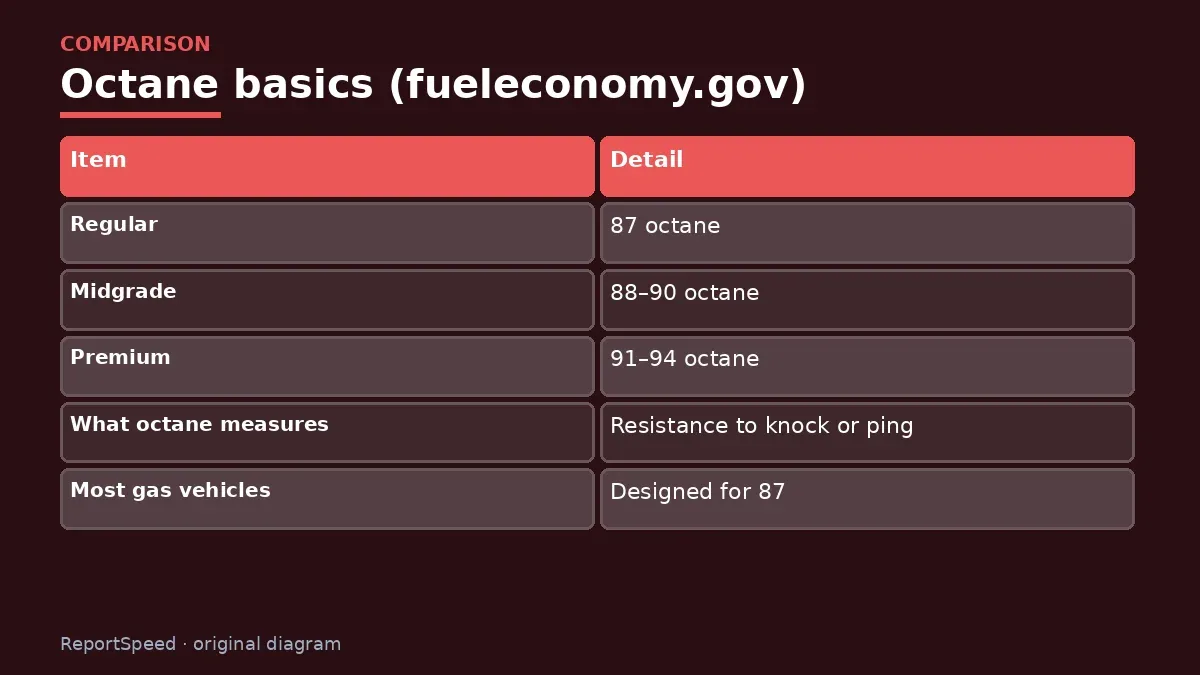
Fueleconomy.gov, run by the U.S. Department of Energy and EPA, explains that octane rating measures a fuel's ability to resist knocking or pinging, which is caused by the air and fuel mixture detonating prematurely. U.S. unleaded gasoline is typically 87 octane for regular, 88 to 90 for midgrade and 91 to 94 for premium. Most gasoline vehicles are designed to run on 87 octane, but some are designed for higher octane, so the site says to check your owner's manual. If your vehicle requires premium, using it is worth it. If the manual says premium is recommended but not required, it's up to you; the engine may run with slightly less power on regular. The FTC has said the same thing in an enforcement case over premium gas ads: unless your owner's manual calls for high octane or your engine is knocking, there's no reason to pay for premium.
Edge cases: high altitudes sometimes sell 85-octane regular; follow your manual and the fuel door label. Turbocharged engines are more likely to require or recommend premium. Flex-fuel and diesel vehicles follow different fuel rules.
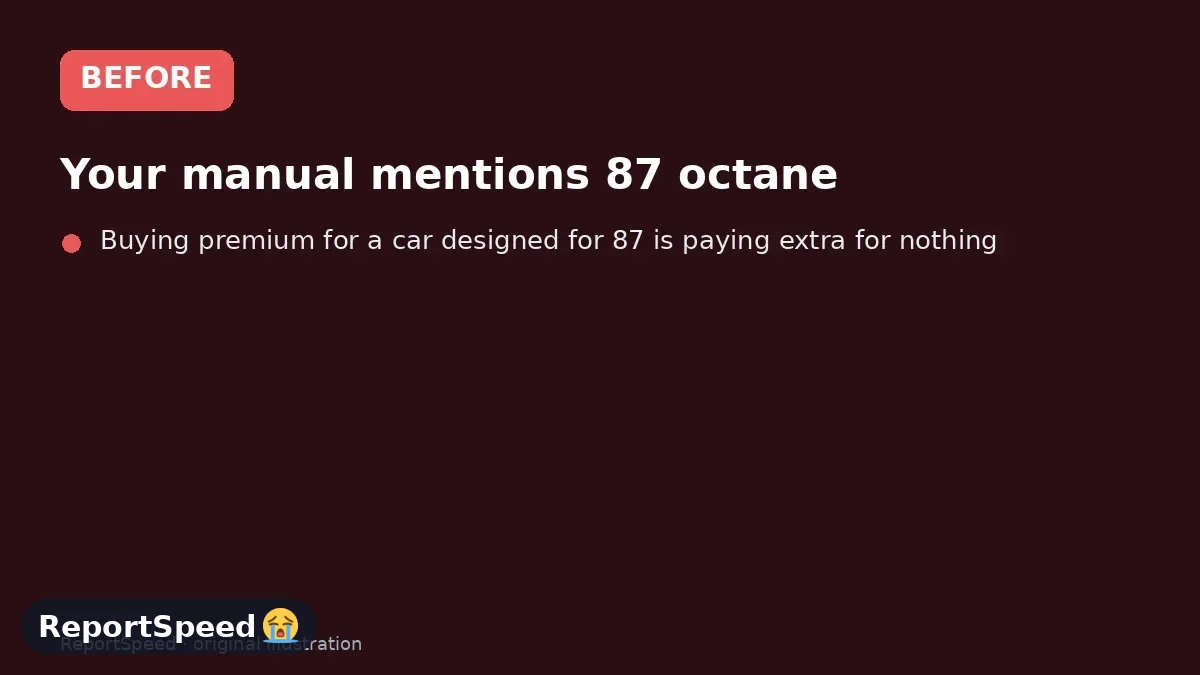
Buying premium for a car designed for 87 is paying extra for nothing, while using regular in a car that requires premium risks knock and reduced performance.
What to do
| Item | Detail |
|---|---|
| Regular | 87 octane |
| Midgrade | 88–90 octane |
| Premium | 91–94 octane |
| What octane measures | Resistance to knock or ping |
| Most gas vehicles | Designed for 87 |
| Final word | Your owner's manual |
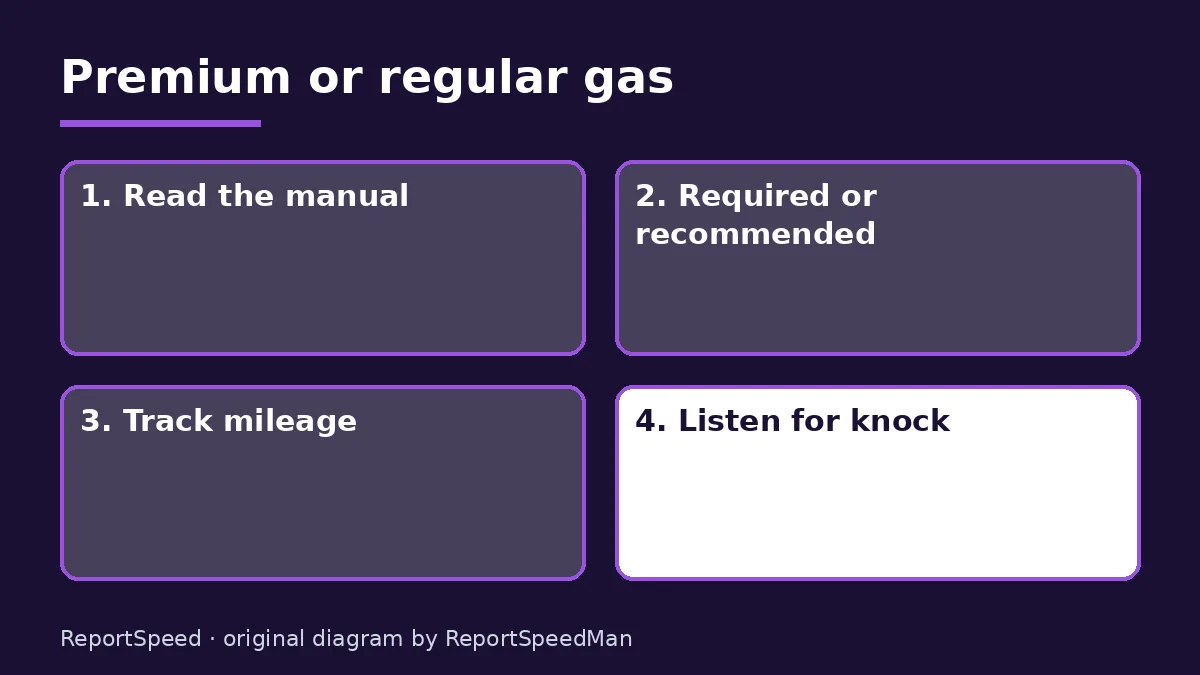
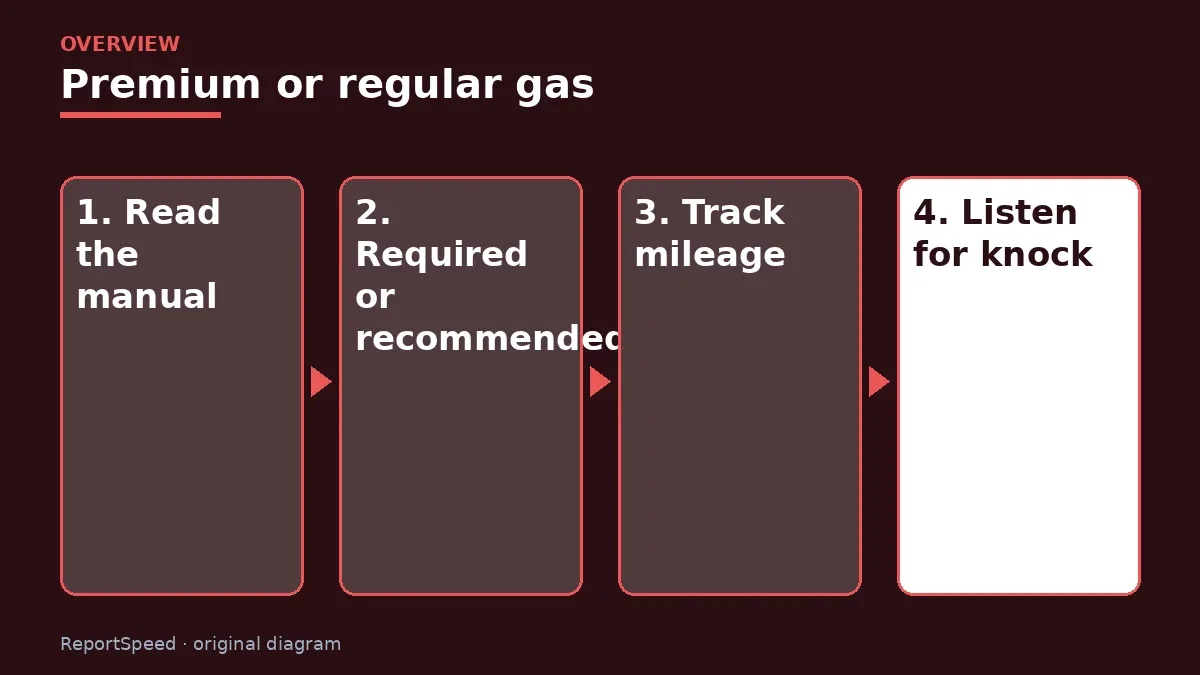
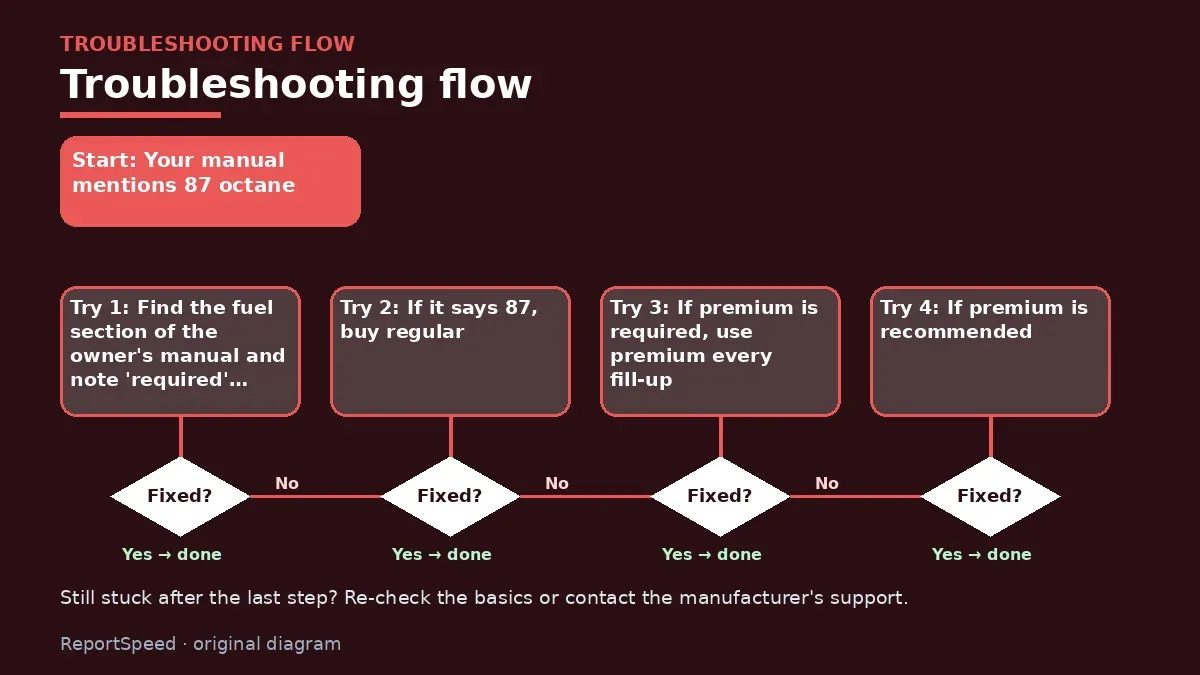
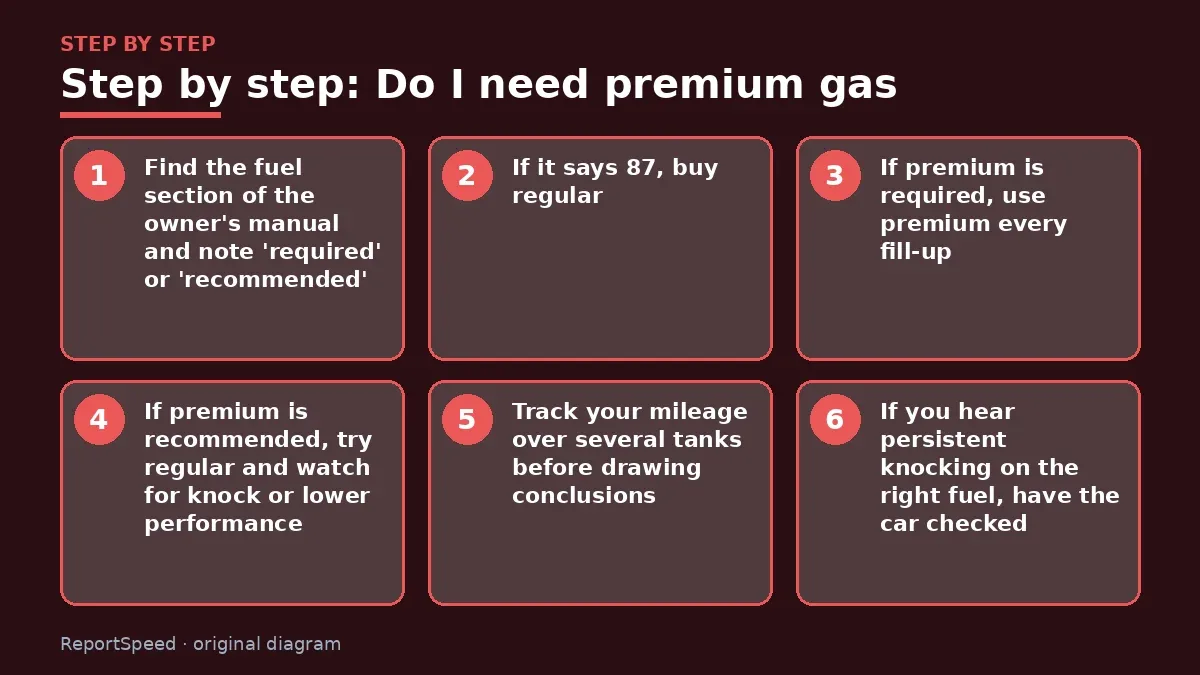
- Find the fuel section of the owner's manual and note 'required' or 'recommended'.
- If it says 87, buy regular.
- If premium is required, use premium every fill-up.
- If premium is recommended, try regular and watch for knock or lower performance.
- Track your mileage over several tanks before drawing conclusions.
- If you hear persistent knocking on the right fuel, have the car checked.

Common mistakes:
- Treating 'recommended' as 'required'
- Assuming premium cleans the engine
- Judging mileage from one tank
- Ignoring knocking sounds
ReportSpeedMan tip: Top Tier detergent gasoline is a separate question from octane; you can get it in regular grade.
What I would actually do
I'd read the manual, buy regular if it says 87, and only try premium if I heard persistent knocking.
The trade-off people miss: premium in a car that doesn't need it costs extra on every fill-up without benefit, while skipping premium in a car that requires it can reduce performance.
How to tell it worked
You're buying the octane your manual specifies.
Quick FAQ
Does premium clean my engine?
Octane isn't a cleaning measure.
Does premium improve mileage?
Not in a car designed for 87.
What if my car knocks?
Try the octane in the manual and get it checked.
Wrap-up: Check the manual: 87 means regular; required premium means premium. Higher octane doesn't help a car not designed for it.
Wiki: Fuel Economy Basics and Compound Interest.
Do I need premium gas: official sources I checked
Step-by-step photos
1. Before The problem 
2. Why it happens The cause 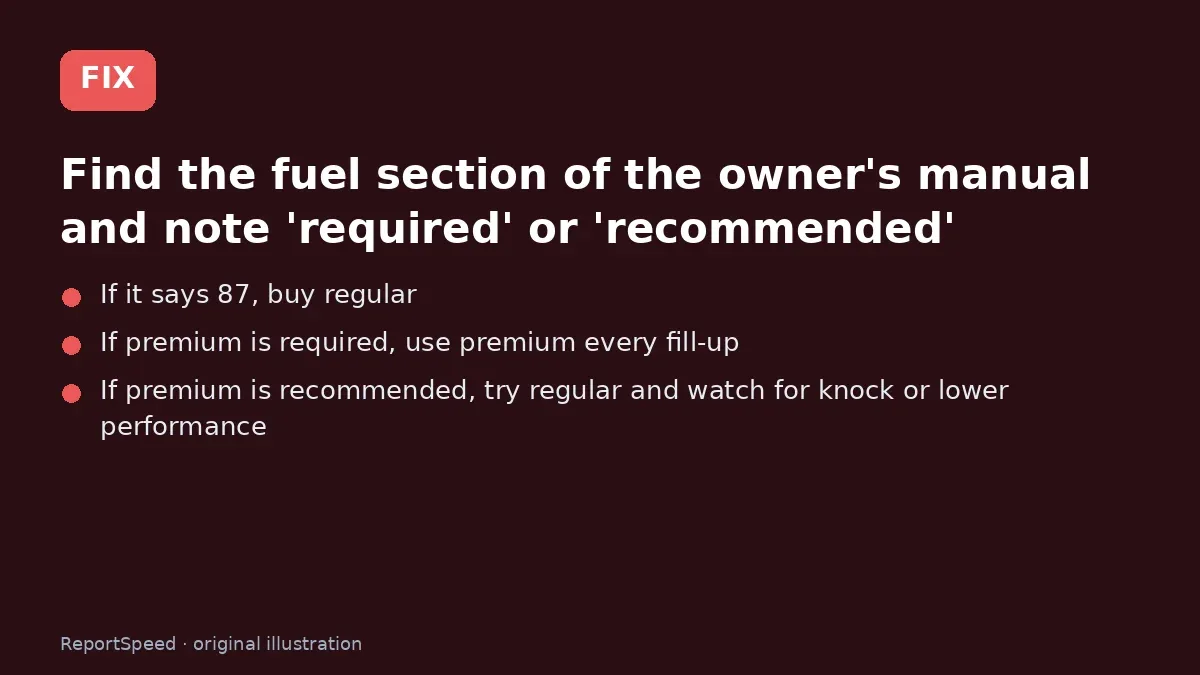
3. The fix The fix 
4. After The result
⚡ Speed Summary
- Check the manual: 87 means regular; required premium means premium.
- Top Tier detergent gasoline is a separate question from octane; you can get it in regular grade.
- Buying premium for a car designed for 87 is paying extra for nothing, while using regular in a car that requires premium risks knock and reduced performance.

Was this answer helpful?
Tap a star to rate this answer.
Related questions

How far should I sit from the steering wheel airbag?
Keep 10 inches from the air bag cover, tilt the wheel toward your chest, and keep kids 12 and under in the back.
Rate itSolved
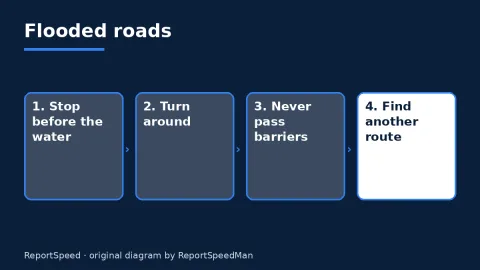
Is it safe to drive through a flooded road? How much water can float a car
Never drive into flood water; a foot of rushing water can carry most cars.
Rate itSolved
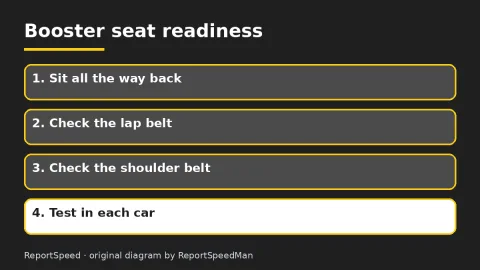
When can my child stop using a booster seat?
Keep the booster until the seat belt fits across the thighs and chest, and keep kids 12 and under in the back.
Rate itSolved
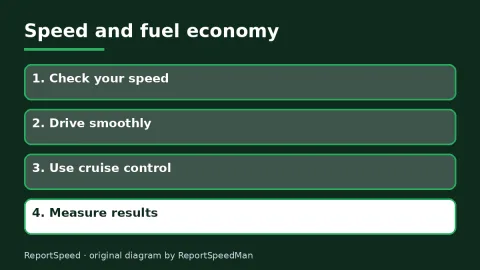
Does driving faster really waste gas? Speed and fuel economy
Above 50 mph mileage drops quickly, roughly like $0.30 more per gallon for each extra 5 mph.
Rate itSolved
Real experiences
No experiences yet. Be the first to share.