


I got a text saying USPS couldn't deliver my package because of an 'incomplete address' and I need to click a link and pay a $1.50 redelivery fee within 24 hours. I am expecting a package, so it seemed believable. Is this USPS text a scam, and what should I do if I already clicked?
Got a USPS text about a missed delivery? How to tell if it's a scam
Concerns & risks
You received a delivery text asking you to click a link and pay a small fee, and you're expecting a package.
| What you did | Next step |
|---|---|
| Only opened the link | Close it; clear browser data; watch accounts |
| Entered card number | Call issuer, cancel card |
| Entered a password | Change it and turn on MFA |
| Entered SSN | Consider a credit freeze |
| Any of these | Report to 7726 and spam@uspis.gov |
Causes & evidence
The U.S. Postal Inspection Service says USPS won't send you text messages or emails without you first requesting the service with a tracking number, and those messages won't contain a link. So a text you didn't sign up for, with a link about a delivery problem, is a scam called smishing, a form of phishing by text. The small fee is the hook: the fake site collects your card number, and often your name, address and other personal details for further fraud. The FTC's advice on spam texts is not to click links or reply, and to check with the company using a website or phone number you know is real. To report it, forward the text to 7726 (SPAM), and for USPS-related smishing, email the text and a screenshot to spam@uspis.gov. If you entered card details, the Postal Inspection Service advises notifying your bank or card issuer right away.
Edge cases: similar scams impersonate FedEx, UPS, Amazon and toll road agencies. Some scam texts use email addresses or long numbers instead of short codes. Real USPS tracking texts come from a short code you signed up with and don't include links.
Clicking 'just to check' is risky, because the fake page can capture what you type even before you press submit.
What to do
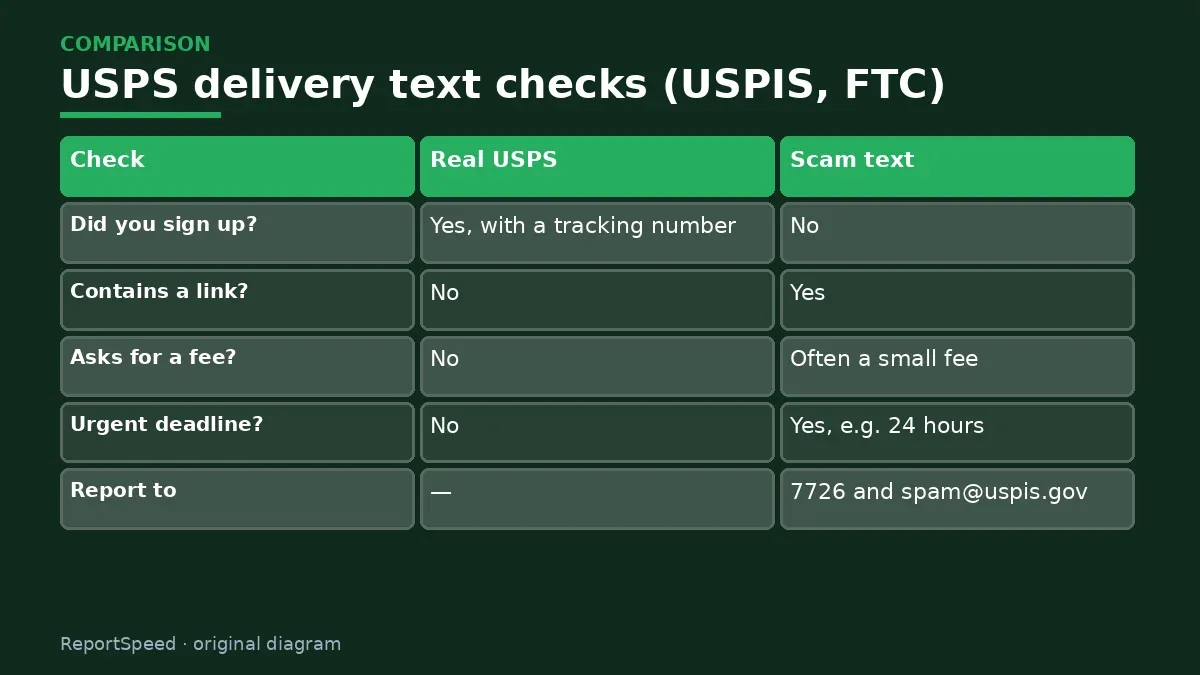
| Check | Real USPS | Scam text |
|---|---|---|
| Did you sign up? | Yes, with a tracking number | No |
| Contains a link? | No | Yes |
| Asks for a fee? | No | Often a small fee |
| Urgent deadline? | No | Yes, e.g. 24 hours |
| Report to | — | 7726 and spam@uspis.gov |
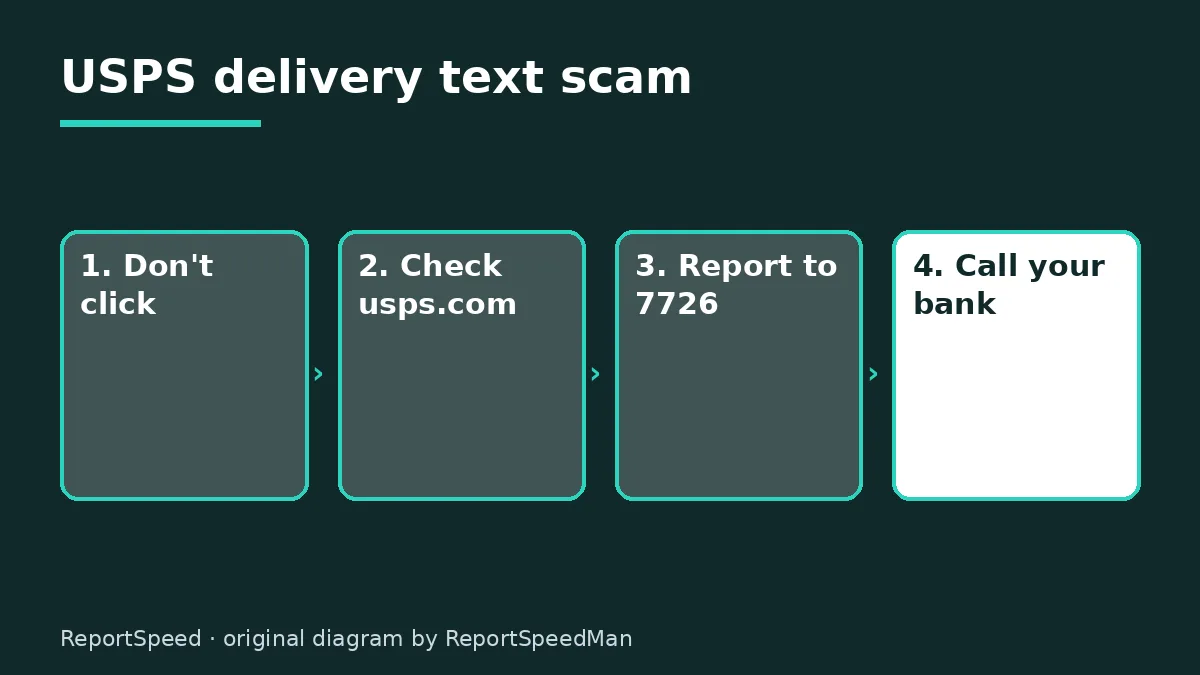
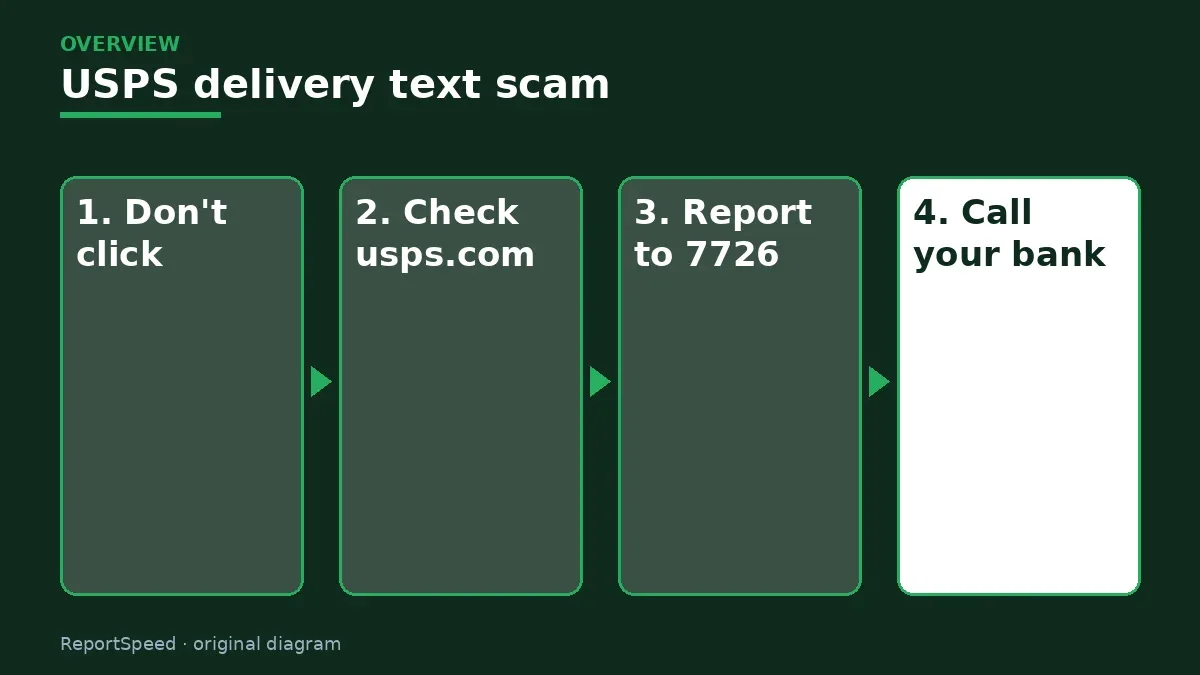
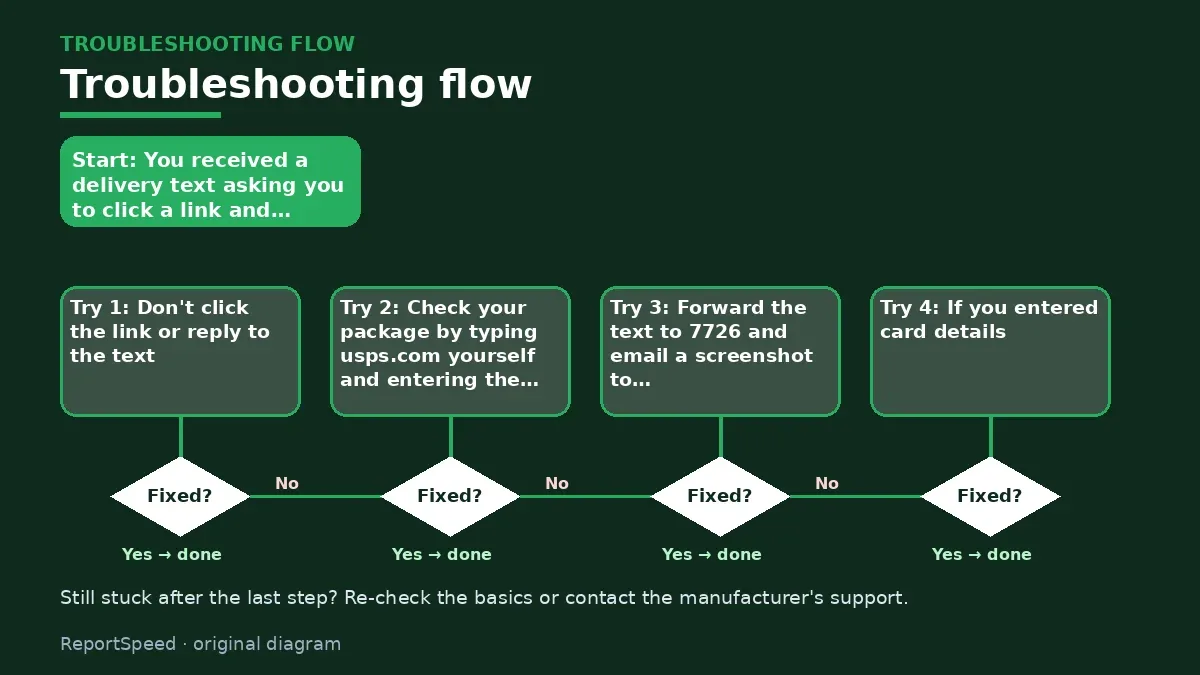
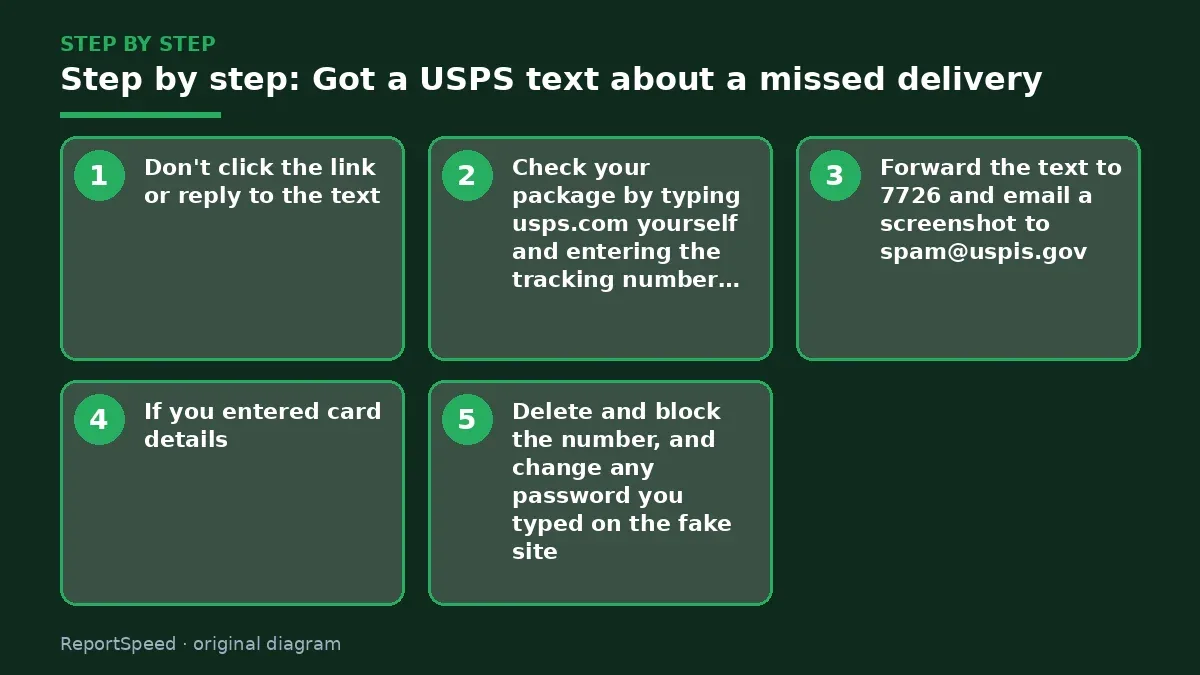
- Don't click the link or reply to the text.
- Check your package by typing usps.com yourself and entering the tracking number from the seller.
- Forward the text to 7726 and email a screenshot to spam@uspis.gov.
- If you entered card details, call your card issuer, dispute charges and ask for a new card.
- Delete and block the number, and change any password you typed on the fake site.
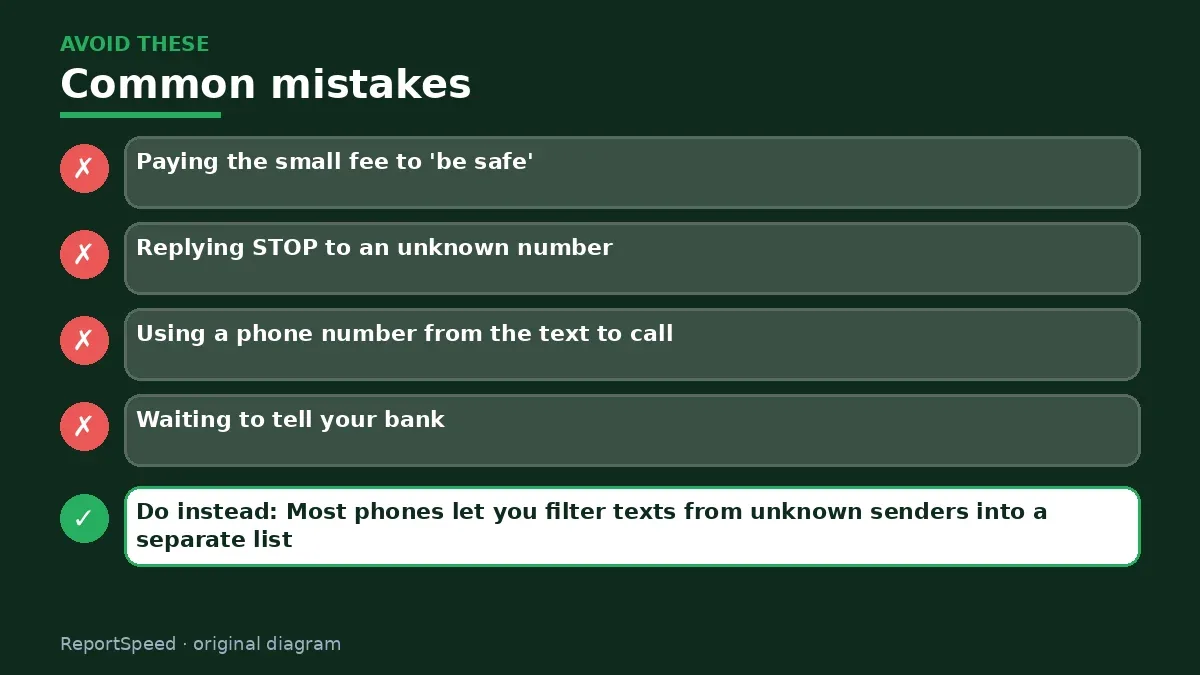
Common mistakes:
- Paying the small fee to 'be safe'
- Replying STOP to an unknown number
- Using a phone number from the text to call
- Waiting to tell your bank
ReportSpeedMan tip: Most phones let you filter texts from unknown senders into a separate list. Turning that on makes delivery scams easier to spot.
What I would actually do
I'd delete the text without clicking, check my package on usps.com using the tracking number from the seller's email and forward the text to 7726.
The trade-off people miss: the fee is tiny on purpose. The real cost is your card details and identity information, which scammers can reuse or sell long after the $1.50 charge.
How you can tell it worked
You reported the text and your accounts are secure.
Quick FAQ
Do I need to reply STOP?
No. Replying can confirm your number is active.
Is it safe to just open the text?
Opening is generally fine; don't tap links.
Should I freeze my credit?
Consider it if you entered your SSN.
Wrap-up: USPS doesn't send unrequested delivery texts with links. Don't click, check usps.com yourself, report to 7726 and spam@uspis.gov, and call your bank if you paid.
Wiki: Phishing and Robocalls and the Do Not Call Registry.
Got a USPS text about a missed delivery: where the facts come from
Step-by-step photos
1. Before The problem 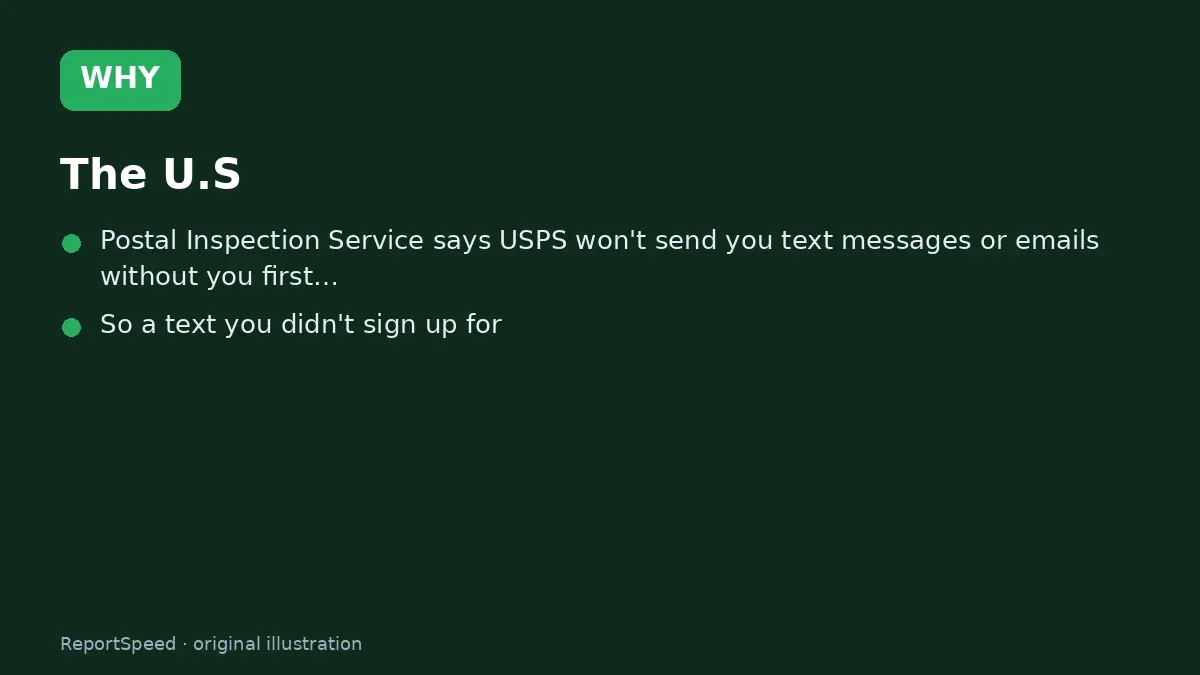
2. Why it happens The cause 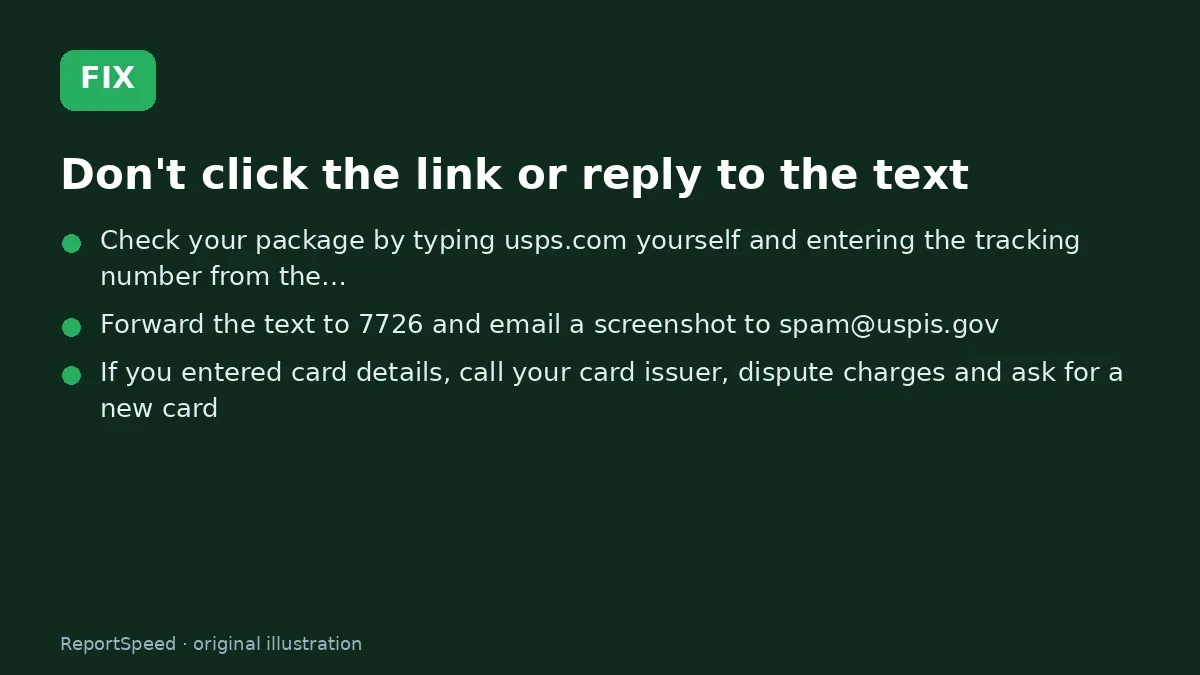
3. The fix The fix 
4. After The result
⚡ Speed Summary
- USPS doesn't send unrequested delivery texts with links.
- Most phones let you filter texts from unknown senders into a separate list. Turning that on makes delivery scams easier to spot.
- Clicking 'just to check' is risky, because the fake page can capture what you type even before you press submit.

Was this answer helpful?
Tap a star to rate this answer.
Related questions
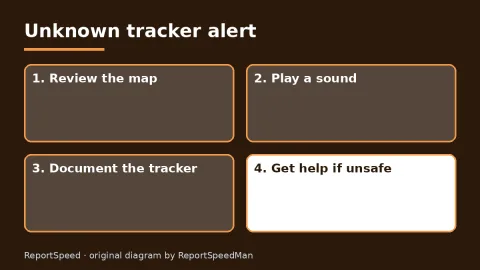
Got an 'AirTag found moving with you' alert? What to do next
Find the tracker, document it, identify the owner, and disable it.
Rate itSolved
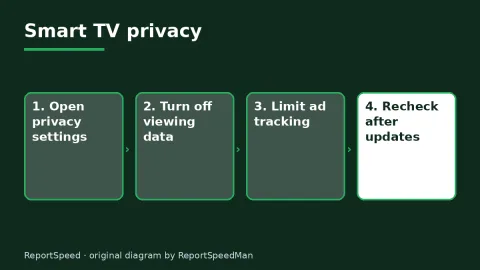
Is my smart TV tracking what I watch? How to turn off ACR
Smart TVs may use ACR to track viewing.
Rate itSolved
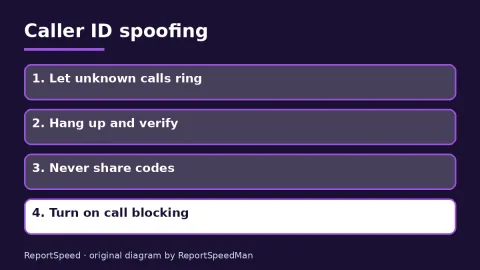
Caller ID spoofing: why scammers show a local number and how to protect yourself
Caller ID can be faked, and spoofing to defraud is illegal.
Rate itSolved
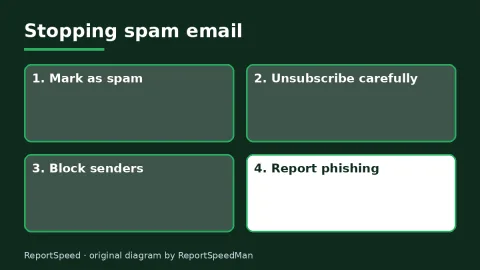
How do I stop spam emails without making it worse?
Mark spam, block repeat senders, unsubscribe only from known companies, and report phishing.
Rate itSolved
Real experiences
No experiences yet. Be the first to share.