


I have about six months of expenses saved in a regular checking account earning basically nothing. Friends keep mentioning high-yield savings, CDs and T-bills, and each one swears theirs is best. I don't want to risk the money, I just want it to earn something. How do these compare and which makes sense for cash I might need?
High-yield savings vs CD vs Treasury bills: where should my savings go?

Concerns & risks
Your savings sit in checking, you want a better rate without taking market risk, and the three popular options sound similar enough to be confusing.
| Money for… | Good home |
|---|---|
| Emergencies | High-yield savings |
| A purchase on a known date | CD or T-bill maturing just before |
| Large balance in a high-tax state | T-bills (state tax exempt) |
| Long-term goals | Usually investing, not cash |
Causes & evidence
Each option protects your money in a different way. High-yield savings accounts and CDs at banks are covered by FDIC deposit insurance up to the legal limit, and credit union accounts by NCUA insurance. A savings account lets you withdraw any time but the rate can change; a CD locks a rate for a set term, usually with a penalty for early withdrawal. Treasury bills are short-term U.S. government debt sold at a discount through TreasuryDirect or a brokerage, with terms of a year or less, and their interest is exempt from state and local income tax. The right home depends on access, rate certainty and tax.
Rates on savings accounts and new CDs move with the broader interest rate environment, so today's comparison may change. T-bills are bought at auction, either through TreasuryDirect or a brokerage account.
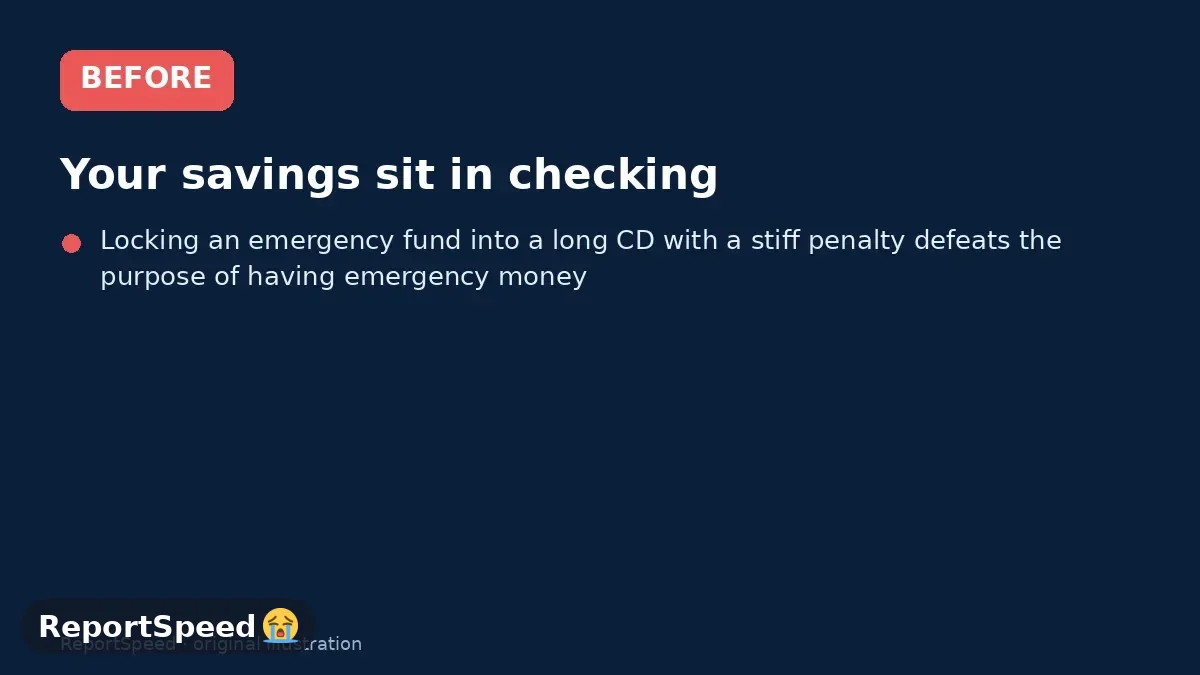
Locking an emergency fund into a long CD with a stiff penalty defeats the purpose of having emergency money.
What to do
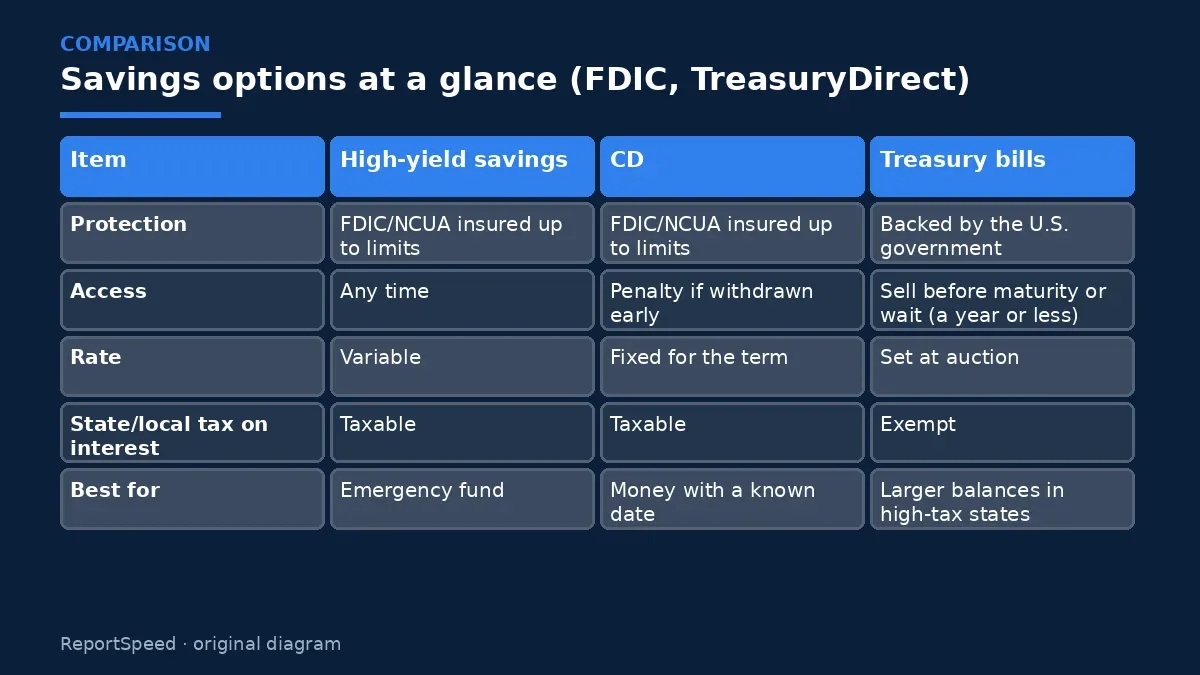
| Item | High-yield savings | CD | Treasury bills |
|---|---|---|---|
| Protection | FDIC/NCUA insured up to limits | FDIC/NCUA insured up to limits | Backed by the U.S. government |
| Access | Any time | Penalty if withdrawn early | Sell before maturity or wait (a year or less) |
| Rate | Variable | Fixed for the term | Set at auction |
| State/local tax on interest | Taxable | Taxable | Exempt |
| Best for | Emergency fund | Money with a known date | Larger balances in high-tax states |
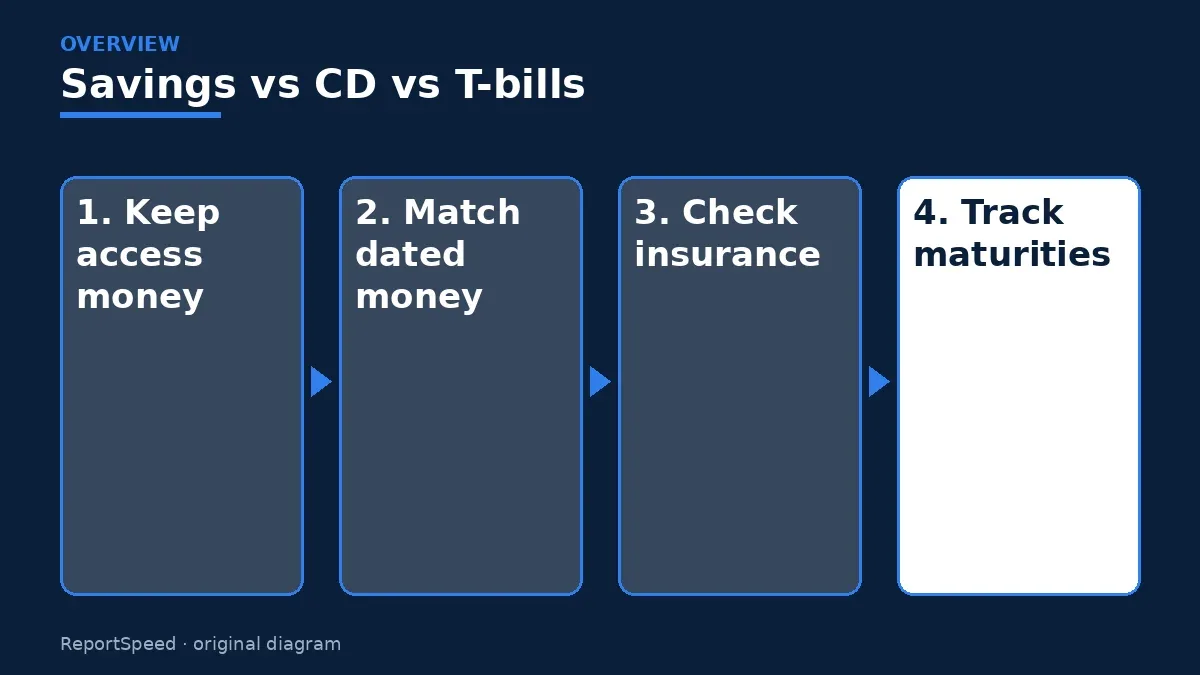
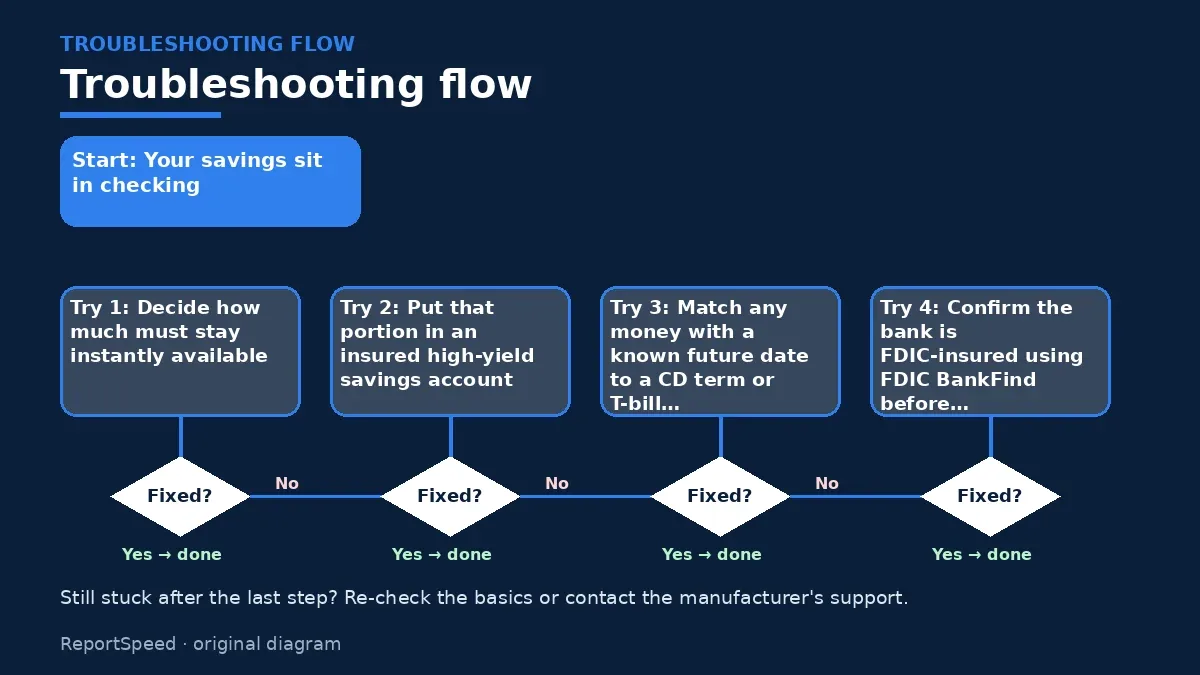
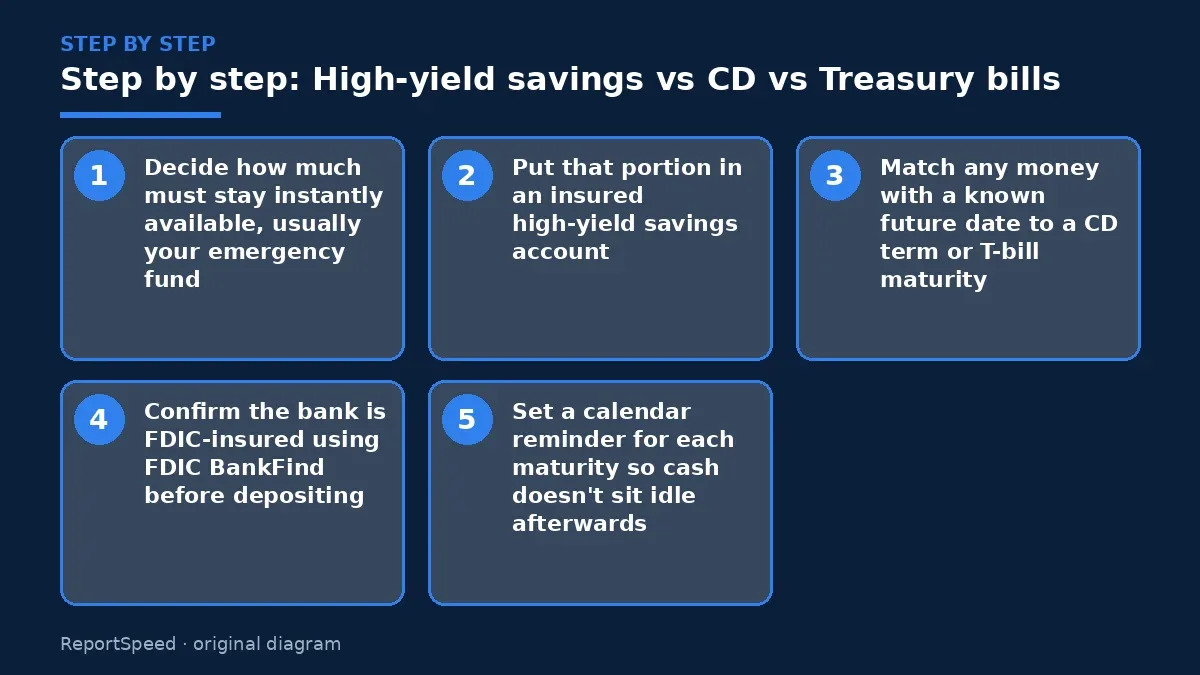
- Decide how much must stay instantly available, usually your emergency fund.
- Put that portion in an insured high-yield savings account.
- Match any money with a known future date to a CD term or T-bill maturity.
- Confirm the bank is FDIC-insured using FDIC BankFind before depositing.
- Set a calendar reminder for each maturity so cash doesn't sit idle afterwards.
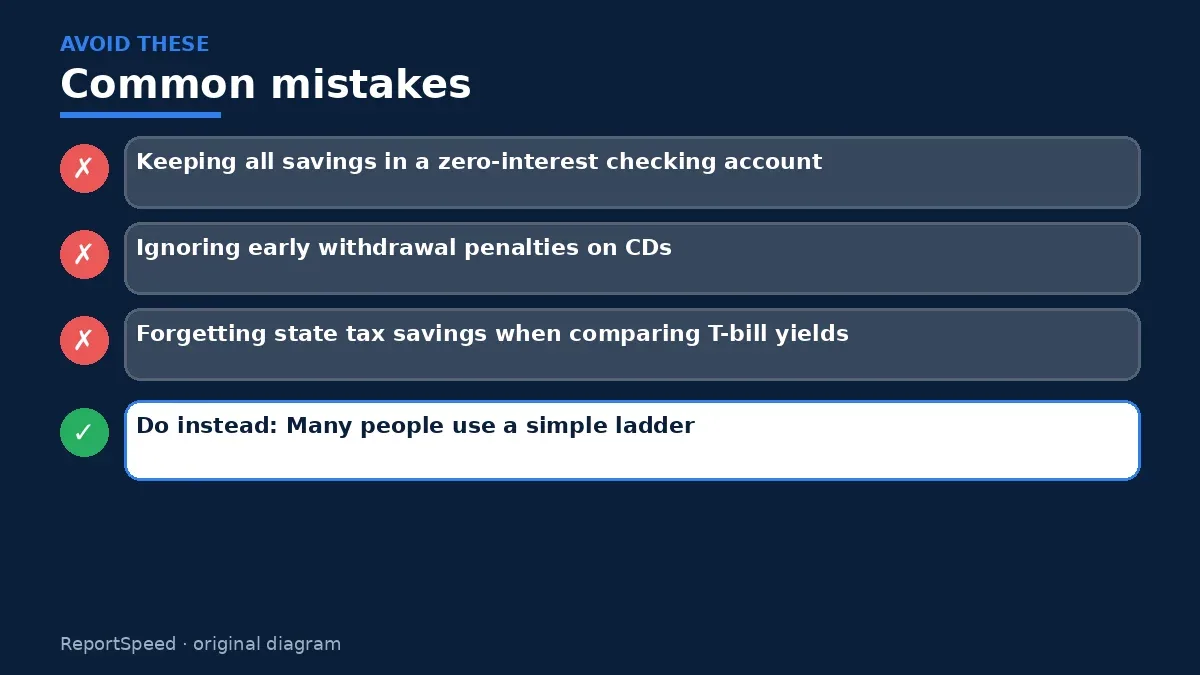
Common mistakes:
- Keeping all savings in a zero-interest checking account
- Ignoring early withdrawal penalties on CDs
- Forgetting state tax savings when comparing T-bill yields
ReportSpeedMan tip: Many people use a simple ladder: emergency money in savings, and the rest spread across a few maturities so something comes due every few months.
What I would actually do
emergency fund in an insured high-yield savings account at a bank I can reach quickly, and anything with a date on it in T-bills or a CD maturing just before I need it.
The trade-off people miss: chasing the top rate every few months costs time and can leave money in transit. A good rate you keep beats a great rate you keep moving.
Signs it worked
Your emergency fund earns interest in an insured account and dated money matures right before you need it.
Quick FAQ
Are T-bills risky?
They're backed by the U.S. government; prices can move if sold before maturity.
Is a credit union OK?
Yes, if it's NCUA-insured.
Can I lose money in a CD?
Not principal at an insured bank, but early withdrawal penalties can eat interest.
Wrap-up: Keep quick-access cash in insured savings and park dated money in CDs or T-bills. Each tool earns more than checking.
Wiki: Emergency Fund and Compound Interest.
High-yield savings vs CD vs Treasury bills: primary sources
Step-by-step photos
1. Before The problem 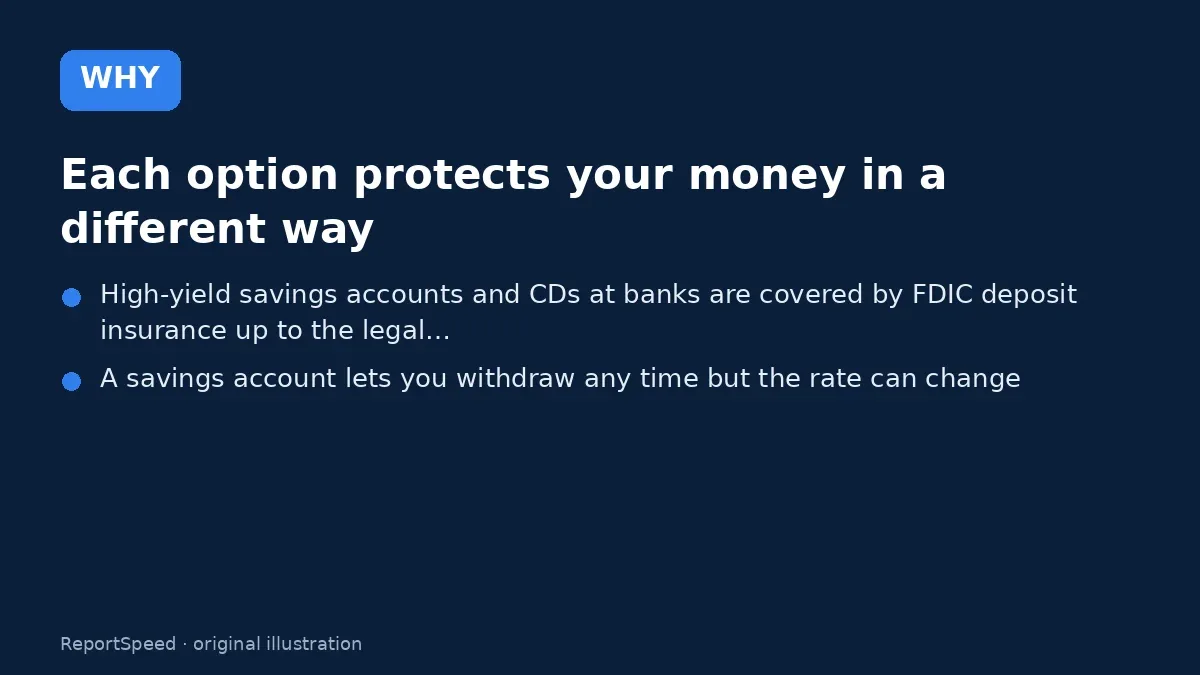
2. Why it happens The cause 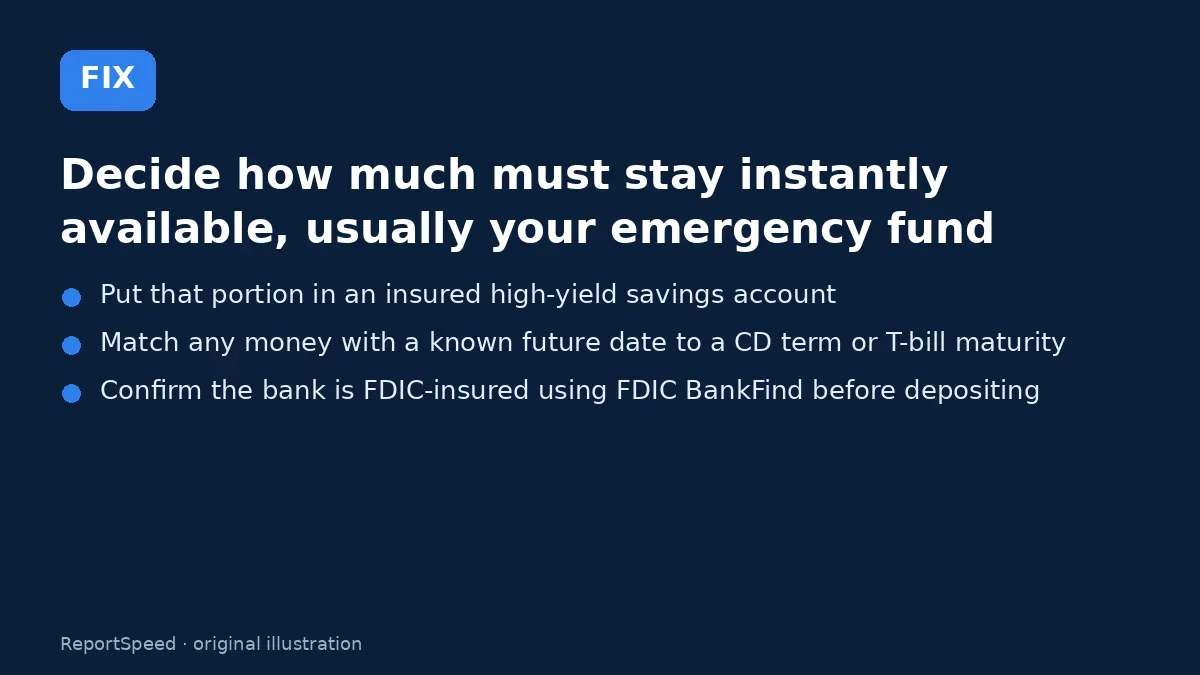
3. The fix The fix 
4. After The result
⚡ Speed Summary
- Keep quick-access cash in insured savings and park dated money in CDs or T-bills.
- Many people use a simple ladder: emergency money in savings, and the rest spread across a few maturities so something comes due every few months.
- Locking an emergency fund into a long CD with a stiff penalty defeats the purpose of having emergency money.

Was this answer helpful?
Tap a star to rate this answer.
Related questions
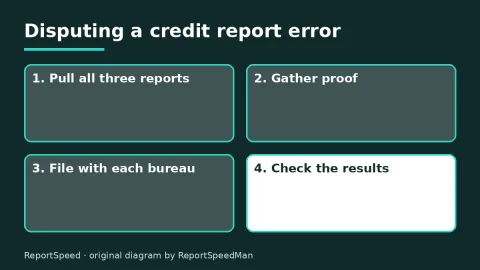
Found an error on my credit report? How to dispute it step by step
Dispute with each bureau and the furnisher, include proof, and expect results in about 30 days.
Rate itSolved
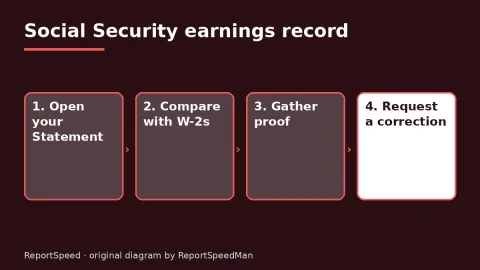
How do I check my Social Security earnings record and fix a mistake?
Check your Statement every year, match it to your W-2s, and correct gaps with proof before the usual window closes.
Rate itSolved
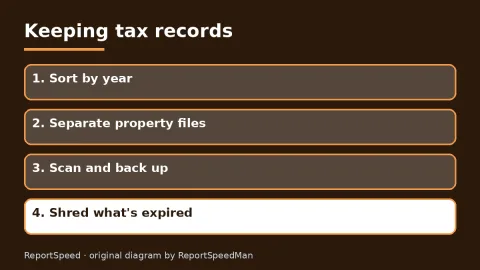
How long should I keep tax records? The IRS 3-, 6- and 7-year rules
Three years covers most returns; six, seven or forever apply in specific cases.
Rate itSolved
What happens if I only pay the minimum on my credit card?
Minimum payments keep you current but stretch the debt for years.
Rate itSolved
Real experiences
No experiences yet. Be the first to share.