


It was only about 70 degrees out today, and I almost left my sleeping toddler in the car for a quick stop at the post office. I figured with the windows cracked it would be fine for a few minutes. How fast does a car really heat up with a child inside, and how can I make sure I never forget?
Hot car safety: how fast does a car heat up with a child inside?

Concerns & risks
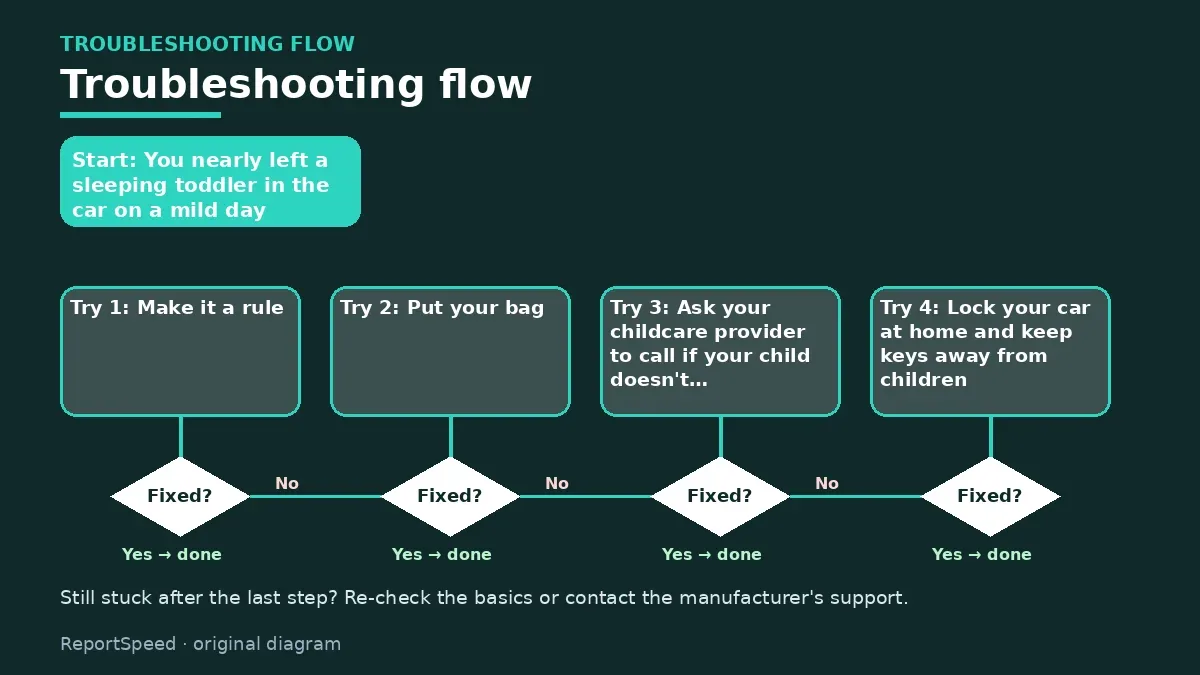
You nearly left a sleeping toddler in the car on a mild day, thinking cracked windows would be enough.
| Habit | How |
|---|---|
| Bag in the back | Forces a back-seat check |
| Phone reminder | Set for daycare drop-off days |
| Daycare call | Agree they call if child is absent |
| Locked car at home | Stops kids climbing in |
| Routine change days | Extra check, highest-risk times |

Causes & evidence
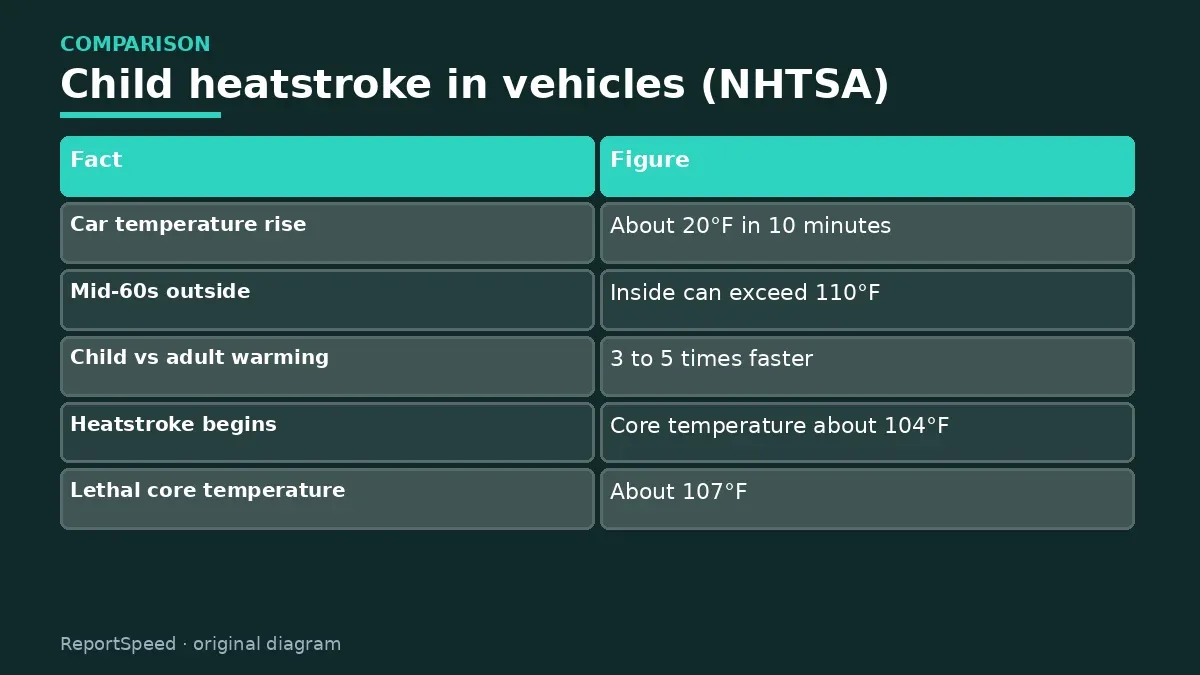
NHTSA says vehicles can heat up very quickly, with temperatures rising about 20 degrees in as little as 10 minutes. An outside temperature in the mid-60s can push the inside of a car above 110°F. Children's bodies warm three to five times faster than adults' bodies, and heatstroke begins when core body temperature reaches about 104°F; a core temperature of about 107°F is lethal. Cracking the windows or parking in the shade does little to help. NHTSA reports that more than 1,000 children have died in hot cars since 1998, and that over half of these deaths happen when a parent or caregiver forgets a child is in the car. Others happen when children climb into an unlocked vehicle. NHTSA's advice is to never leave a child alone in a vehicle for any length of time.
Edge cases: heatstroke can happen on cool, sunny days and at any time of year, not just in summer or in hot states. Trunks are also dangerous, so teach children that cars and trunks are not play areas. Many states have laws protecting bystanders who break into a car to rescue a child, but rules vary; the safest first step is always to call 911.
Believing it won't happen to you is the biggest risk. NHTSA notes that changes in routine and tired caregivers are common factors.
What to do
| Fact | Figure |
|---|---|
| Car temperature rise | About 20°F in 10 minutes |
| Mid-60s outside | Inside can exceed 110°F |
| Child vs adult warming | 3 to 5 times faster |
| Heatstroke begins | Core temperature about 104°F |
| Lethal core temperature | About 107°F |
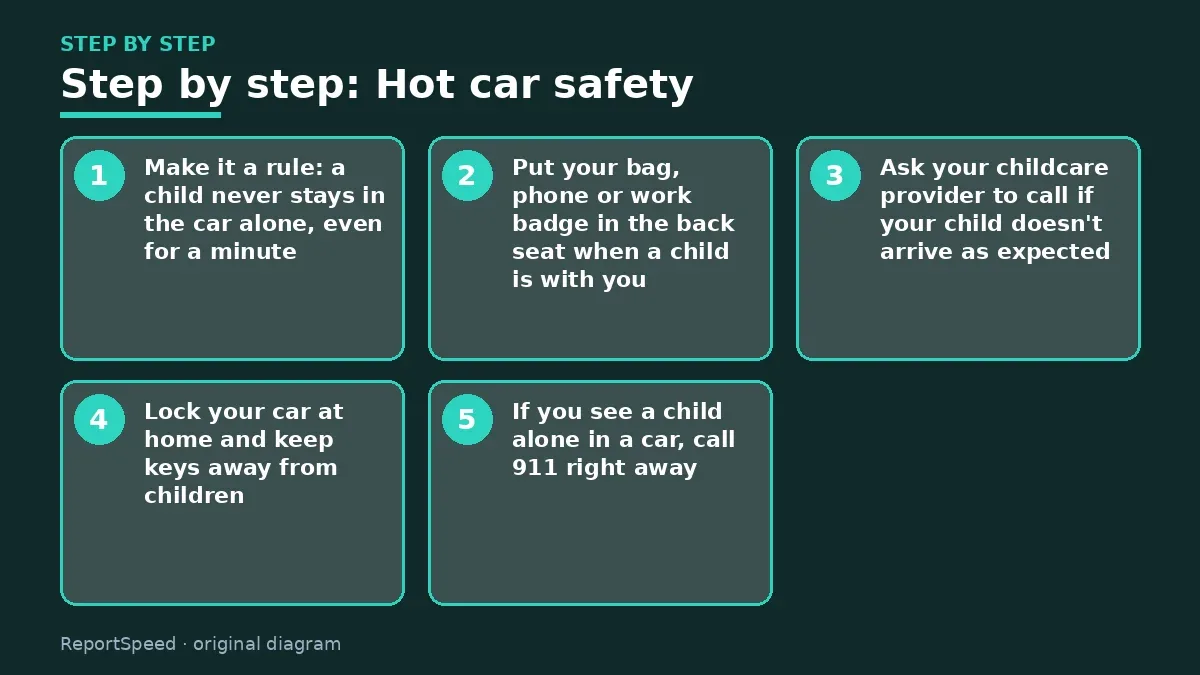
- Make it a rule: a child never stays in the car alone, even for a minute.
- Put your bag, phone or work badge in the back seat when a child is with you.
- Ask your childcare provider to call if your child doesn't arrive as expected.
- Lock your car at home and keep keys away from children.
- If you see a child alone in a car, call 911 right away.
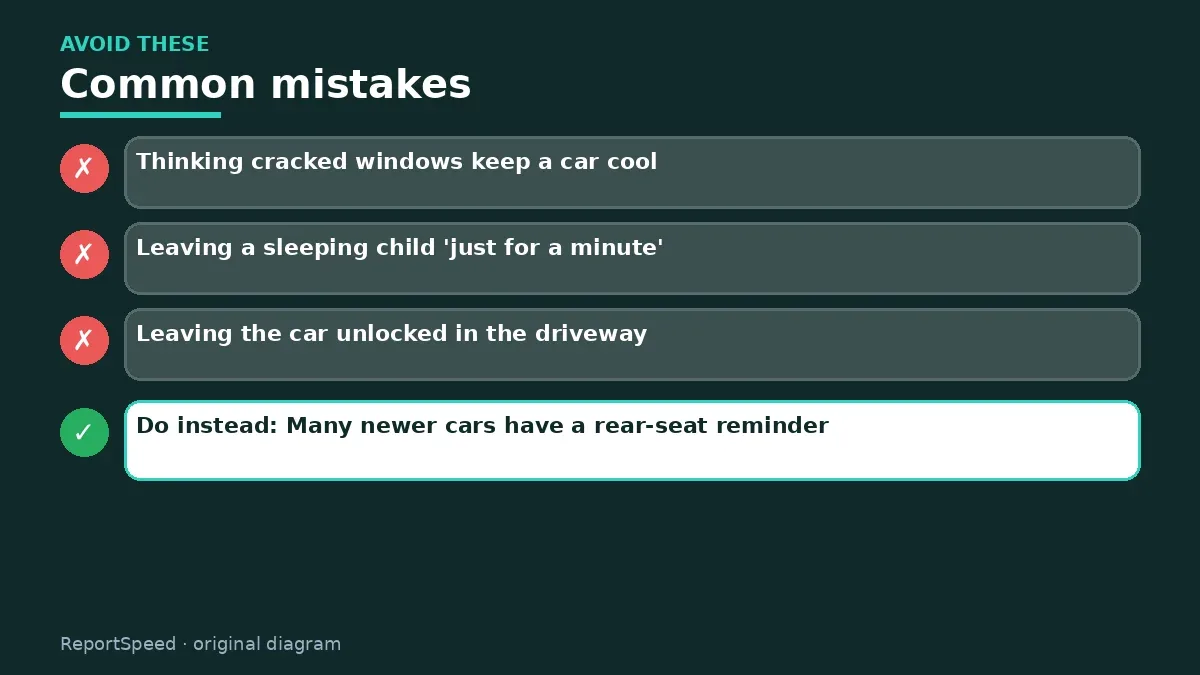
Common mistakes:
- Thinking cracked windows keep a car cool
- Leaving a sleeping child 'just for a minute'
- Leaving the car unlocked in the driveway
ReportSpeedMan tip: Many newer cars have a rear-seat reminder. Check your manual to see whether it's on, but keep your own back-seat habit too.
What I would actually do
I'd put my work bag on the floor behind the driver's seat every single time my child rides with me, so I can't leave without looking back.
The trade-off people miss: the risk is highest on unusual days, such as when the other parent normally does drop-off. Those are the days a routine fails, so add a phone reminder for them.
Proof that it worked
Checking the back seat is automatic every time you park.
Quick FAQ
Is it okay if the engine and A/C are running?
NHTSA says never leave a child alone in a vehicle for any reason.
What if I see a child alone in a car?
Call 911 right away.
Do rear-seat reminders work?
They help, but keep your own habit too.
Wrap-up: A car can heat up about 20 degrees in 10 minutes, and children heat up far faster than adults. Never leave a child alone in a car, and build a back-seat check habit.
Wiki: Vehicle Recalls and Kids and Screen Time.
Hot car safety: official pages behind this answer
Step-by-step photos

1. Before The problem 
2. Why it happens The cause 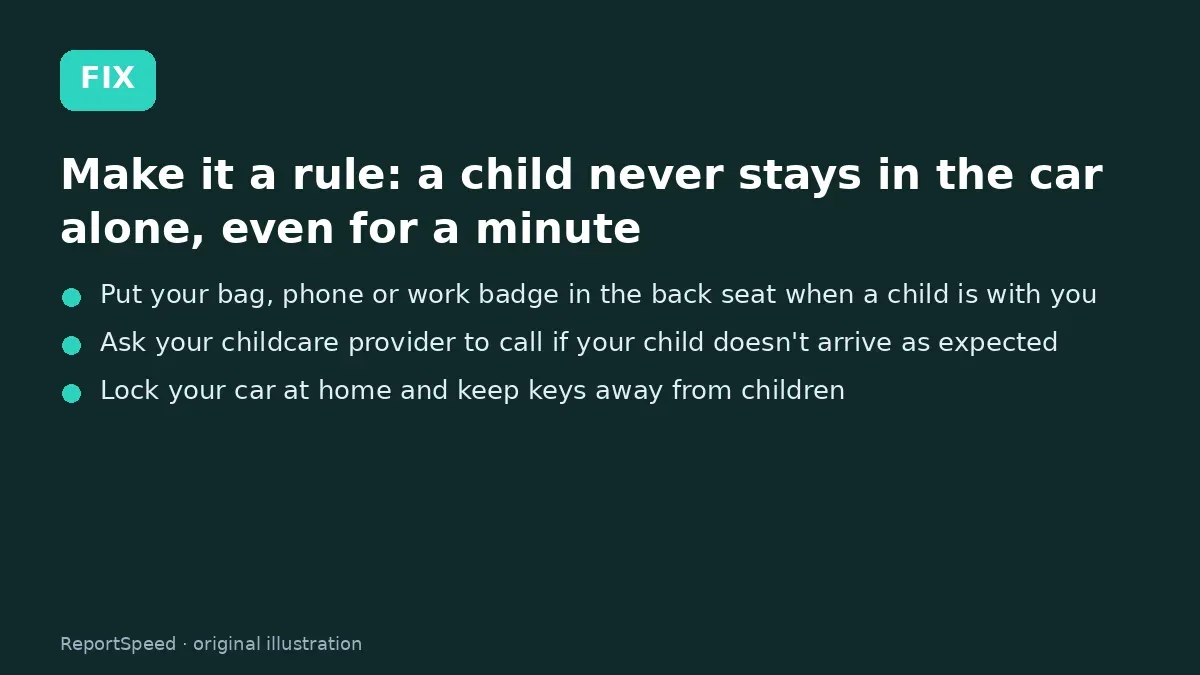
3. The fix The fix 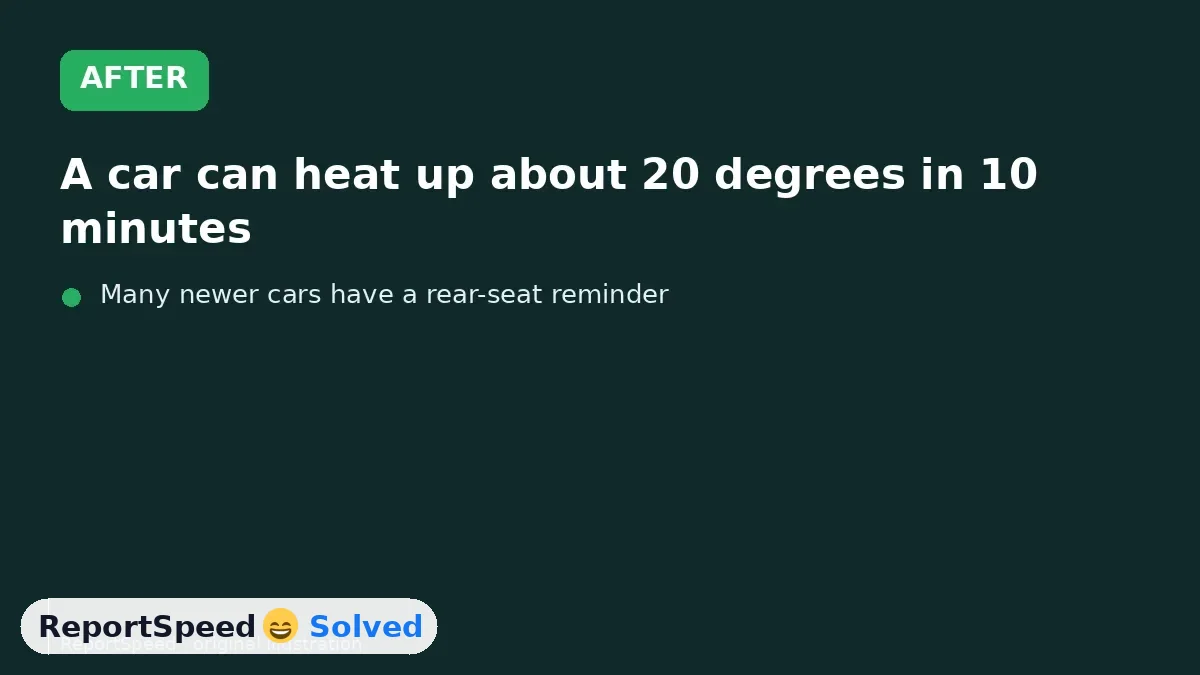
4. After The result
⚡ Speed Summary
- A car can heat up about 20 degrees in 10 minutes, and children heat up far faster than adults.
- Many newer cars have a rear-seat reminder. Check your manual to see whether it's on, but keep your own back-seat habit too.
- Believing it won't happen to you is the biggest risk. NHTSA notes that changes in routine and tired caregivers are common factors.

Was this answer helpful?
Tap a star to rate this answer.
Related questions

How far should I sit from the steering wheel airbag?
Keep 10 inches from the air bag cover, tilt the wheel toward your chest, and keep kids 12 and under in the back.
Rate itSolved
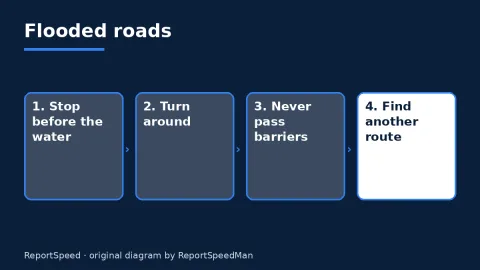
Is it safe to drive through a flooded road? How much water can float a car
Never drive into flood water; a foot of rushing water can carry most cars.
Rate itSolved
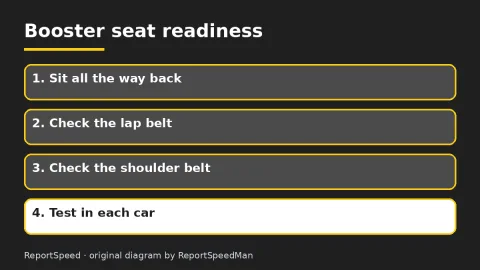
When can my child stop using a booster seat?
Keep the booster until the seat belt fits across the thighs and chest, and keep kids 12 and under in the back.
Rate itSolved
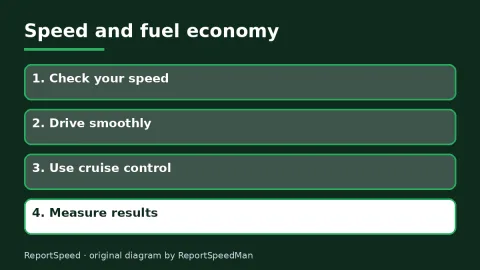
Does driving faster really waste gas? Speed and fuel economy
Above 50 mph mileage drops quickly, roughly like $0.30 more per gallon for each extra 5 mph.
Rate itSolved
Real experiences
No experiences yet. Be the first to share.