


I found a used SUV at a good price from a private seller. It looks clean and drives fine, but I've heard stories about cars with flood damage or rolled-back odometers being resold. What can I check myself before handing over money, and which sources are actually official?
How do I check a used car's history before I buy it?
Concerns & risks
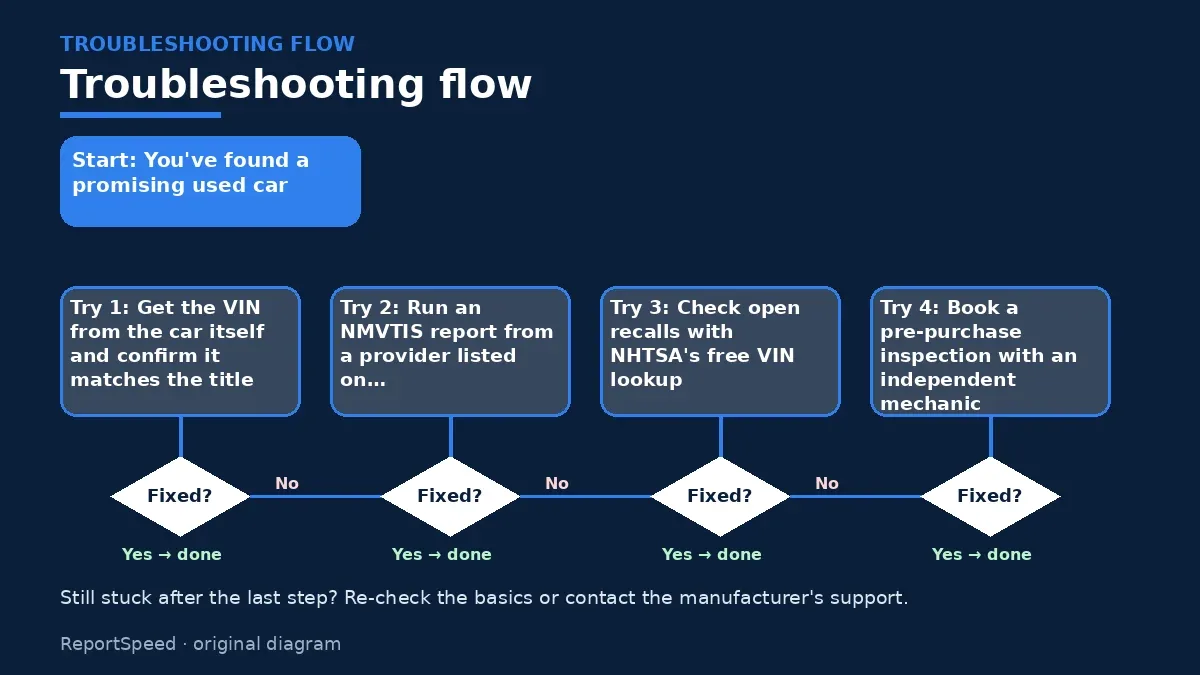
You've found a promising used car, the price is tempting and you want to be sure it doesn't have a hidden history like a salvage title, flood damage or an open recall.
| Check | Cost |
|---|---|
| VIN on car matches title | Free |
| NHTSA recall lookup | Free |
| NMVTIS title report | Low cost |
| Independent inspection | Paid, worth it |

Causes & evidence
Problem cars often move between states, where title brands can get lost. The Justice Department's National Motor Vehicle Title Information System (NMVTIS) collects title, brand and odometer data from states, insurers and salvage yards, and approved providers sell low-cost reports through vehiclehistory.gov. NHTSA's free VIN lookup shows unrepaired safety recalls. For dealer purchases, the FTC's Used Car Rule requires a Buyers Guide on the window explaining warranty terms. None of these replace a mechanic's inspection, because reports only show what was reported.
NMVTIS reports focus on title brands and odometer readings reported by states and insurers. Commercial history reports may include different data, such as service records.
Relying on a clean report alone, without a pre-purchase inspection, is how flood and accident damage slip through.
What to do
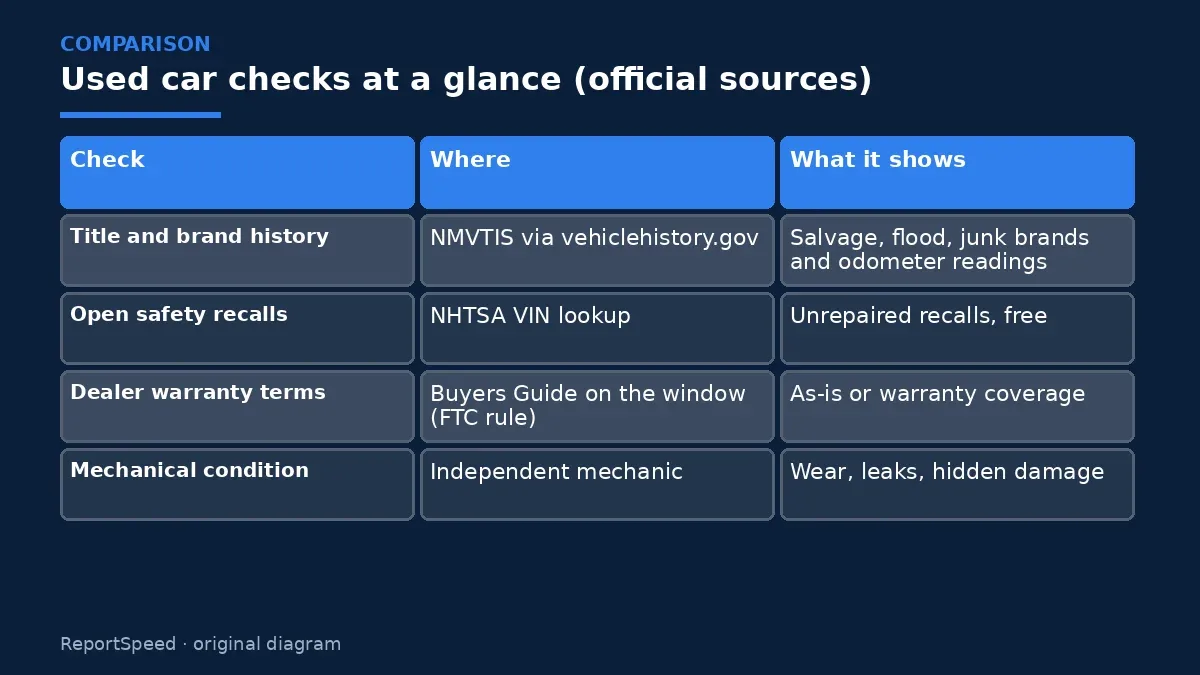
| Check | Where | What it shows |
|---|---|---|
| Title and brand history | NMVTIS via vehiclehistory.gov | Salvage, flood, junk brands and odometer readings |
| Open safety recalls | NHTSA VIN lookup | Unrepaired recalls, free |
| Dealer warranty terms | Buyers Guide on the window (FTC rule) | As-is or warranty coverage |
| Mechanical condition | Independent mechanic | Wear, leaks, hidden damage |
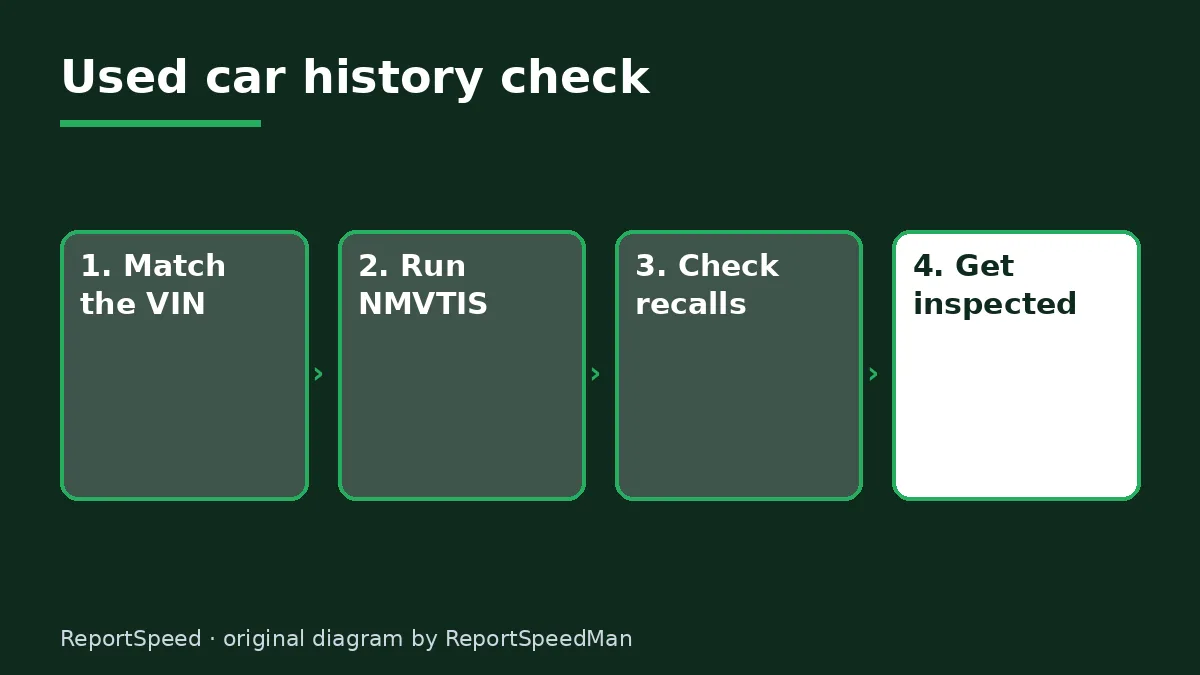
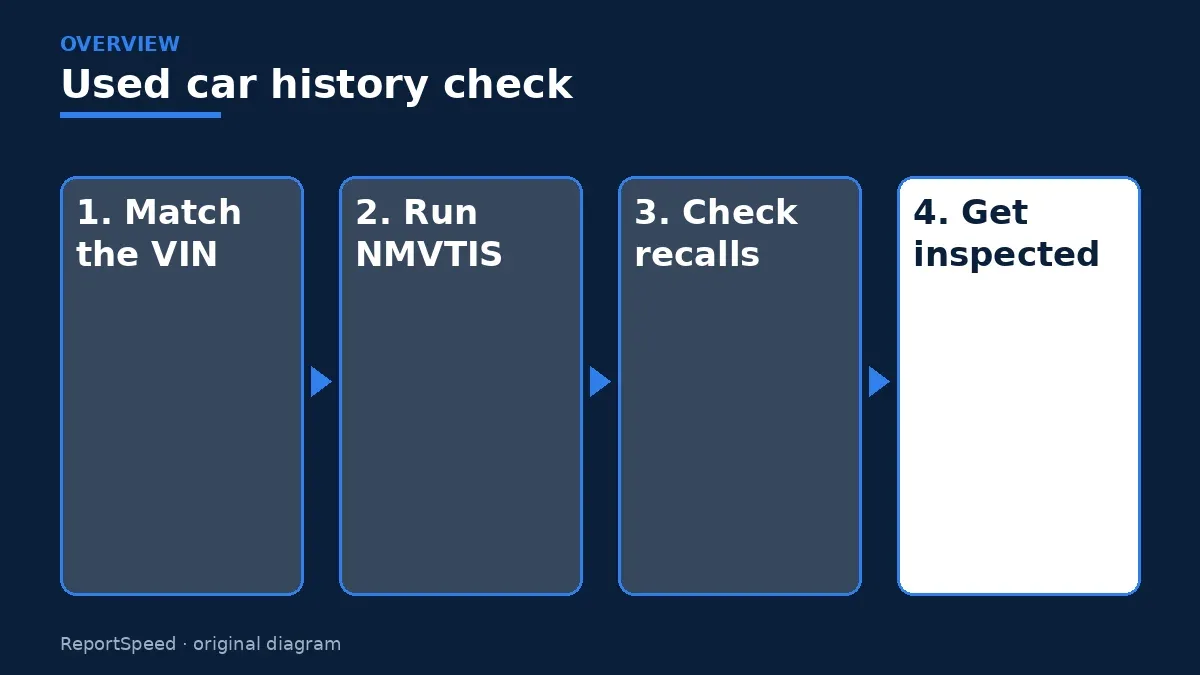
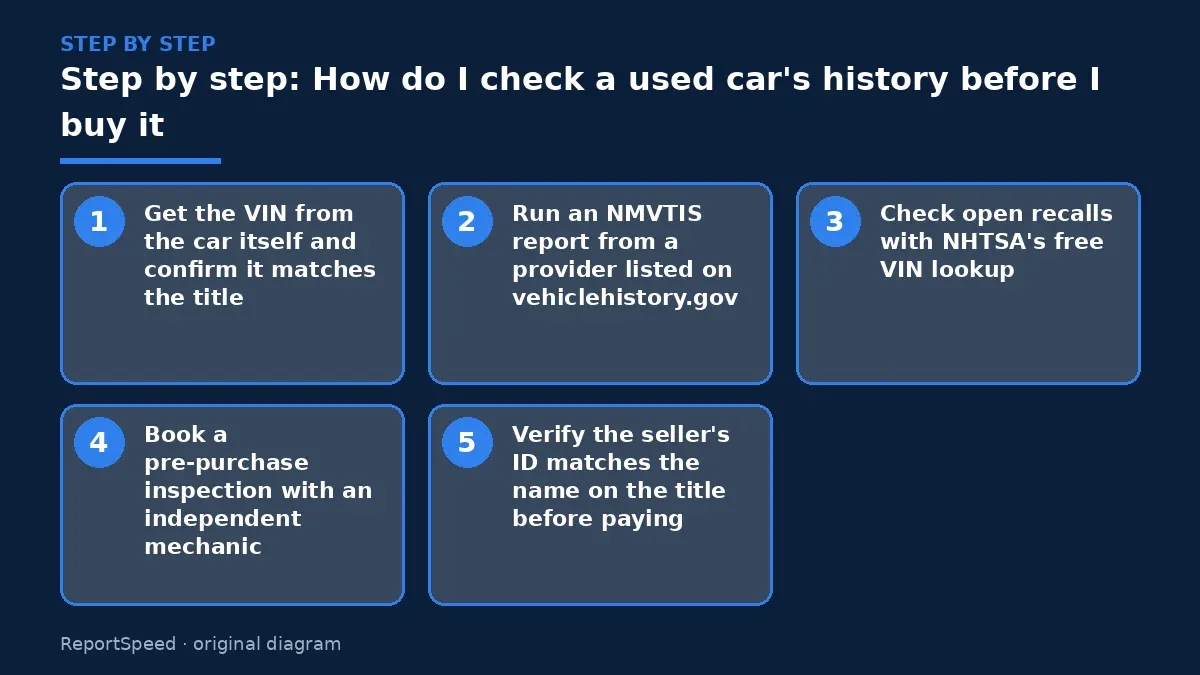
- Get the VIN from the car itself and confirm it matches the title.
- Run an NMVTIS report from a provider listed on vehiclehistory.gov.
- Check open recalls with NHTSA's free VIN lookup.
- Book a pre-purchase inspection with an independent mechanic.
- Verify the seller's ID matches the name on the title before paying.
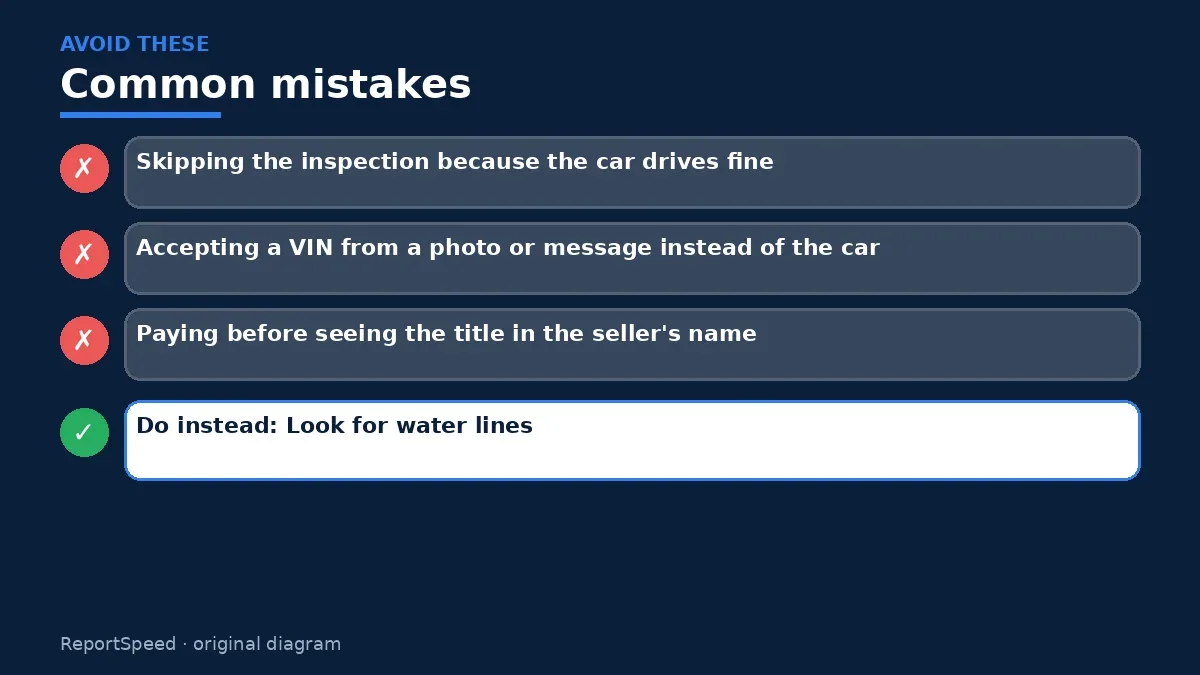
Common mistakes:
- Skipping the inspection because the car drives fine
- Accepting a VIN from a photo or message instead of the car
- Paying before seeing the title in the seller's name
ReportSpeedMan tip: Look for water lines, silt under carpets and corrosion in odd places; flood cars often show it in the trunk spare tyre well.
What I would actually do
run an NMVTIS report and NHTSA recall check from the VIN on the car, then spend the money on an independent inspection before any deposit.
The trade-off people miss: a private sale has no dealer Buyers Guide and usually no warranty, so the inspection is your only safety net.
Signs it worked
The title, recall check and inspection all come back clean before money changes hands.
Quick FAQ
Is NMVTIS the same as other reports?
It's the federal title database; commercial reports may add other data.
Do recalls transfer with the car?
Yes, recall repairs are tied to the VIN.
What is a salvage title?
A brand showing an insurer declared the car a loss.
Wrap-up: Run the title report, check recalls and pay for an inspection. A small cost upfront protects a big purchase.
Wiki: Vehicle Recalls.
How do I check a used car's history before I buy it: read the originals
Step-by-step photos
1. Before The problem 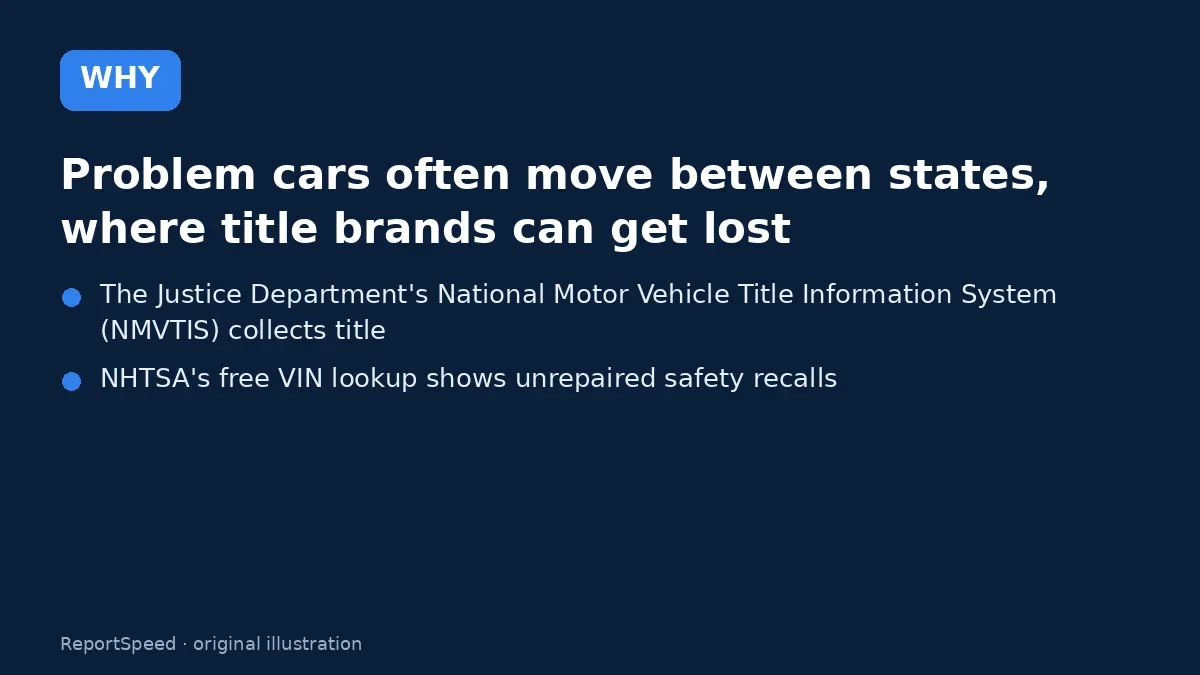
2. Why it happens The cause 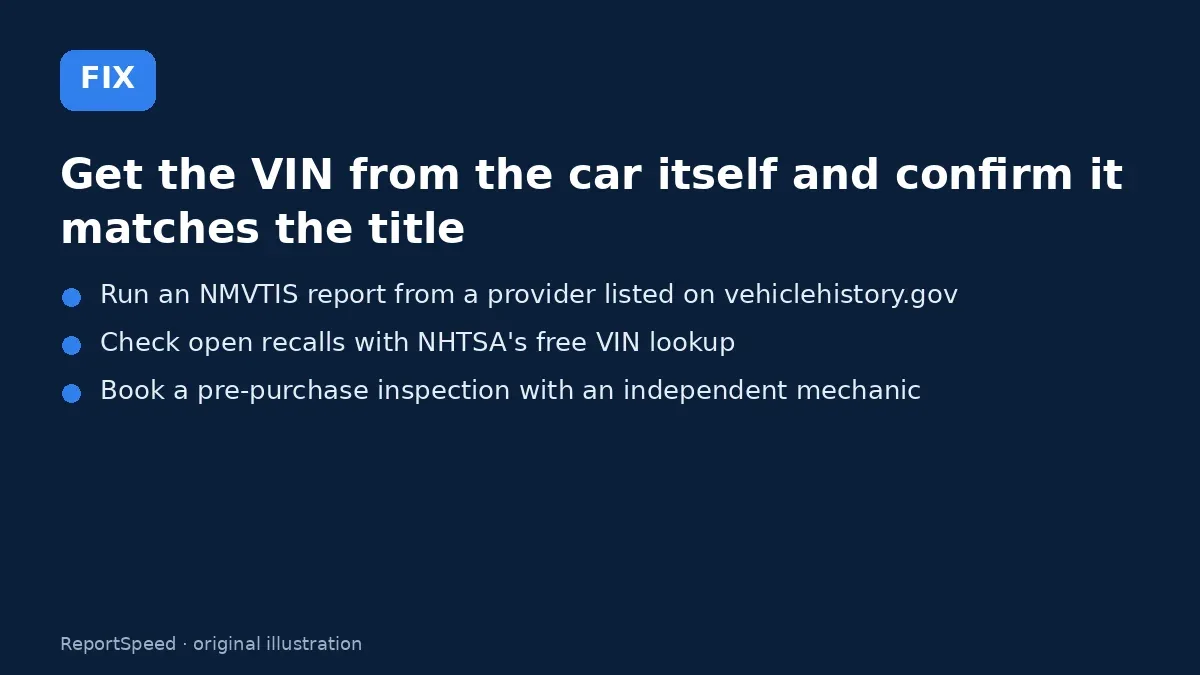
3. The fix The fix 
4. After The result
⚡ Speed Summary
- Run the title report, check recalls and pay for an inspection.
- Look for water lines, silt under carpets and corrosion in odd places; flood cars often show it in the trunk spare tyre well.
- Relying on a clean report alone, without a pre-purchase inspection, is how flood and accident damage slip through.

Was this answer helpful?
Tap a star to rate this answer.
Related questions

How far should I sit from the steering wheel airbag?
Keep 10 inches from the air bag cover, tilt the wheel toward your chest, and keep kids 12 and under in the back.
Rate itSolved
Is it safe to drive through a flooded road? How much water can float a car
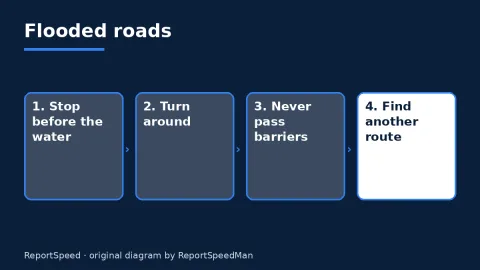
Never drive into flood water; a foot of rushing water can carry most cars.
Rate itSolved
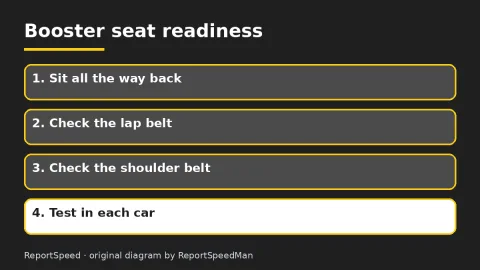
When can my child stop using a booster seat?
Keep the booster until the seat belt fits across the thighs and chest, and keep kids 12 and under in the back.
Rate itSolved
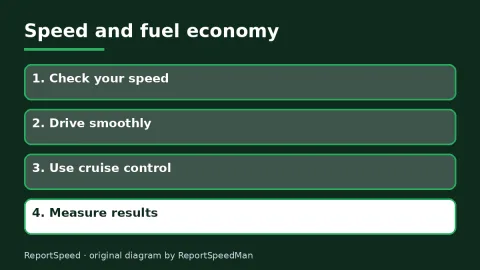
Does driving faster really waste gas? Speed and fuel economy
Above 50 mph mileage drops quickly, roughly like $0.30 more per gallon for each extra 5 mph.
Rate itSolved
Real experiences
No experiences yet. Be the first to share.