


My car's tires are about four years old and the shop says I'll need new ones 'soon', but they also sell tires. I have a penny and a few minutes. How do I check tire tread depth myself, what number means they're worn out, and are there other signs I should look for besides tread?
How do I check tire tread depth, and when are tires worn out?
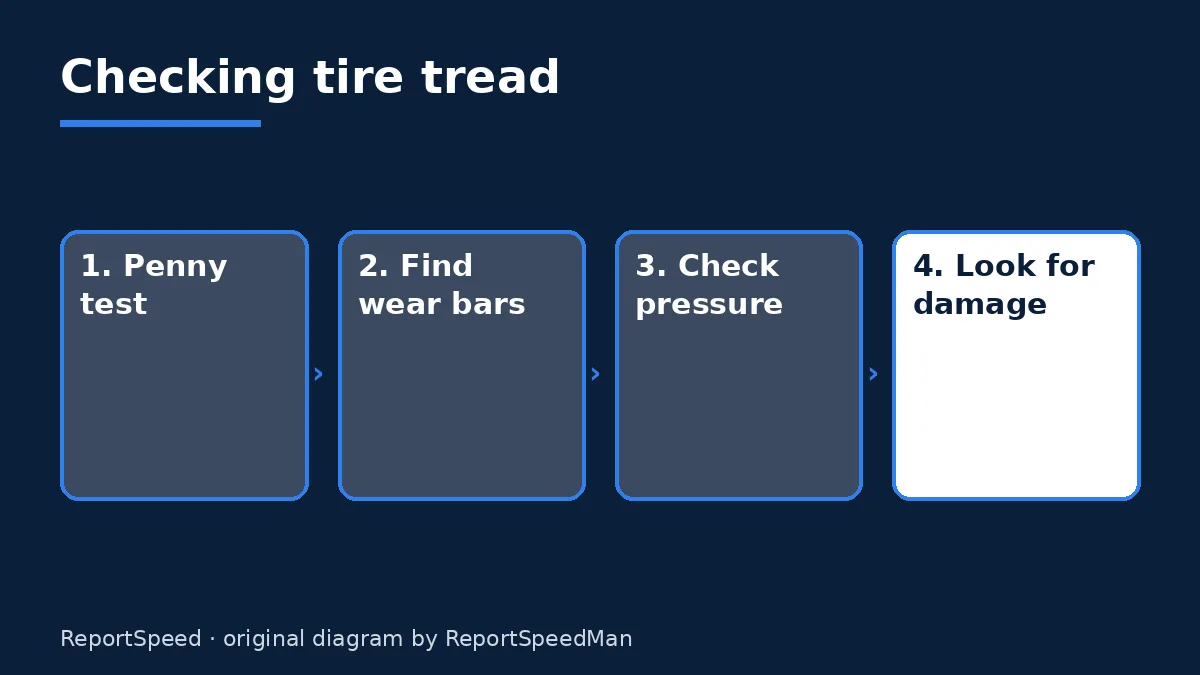
Concerns & risks
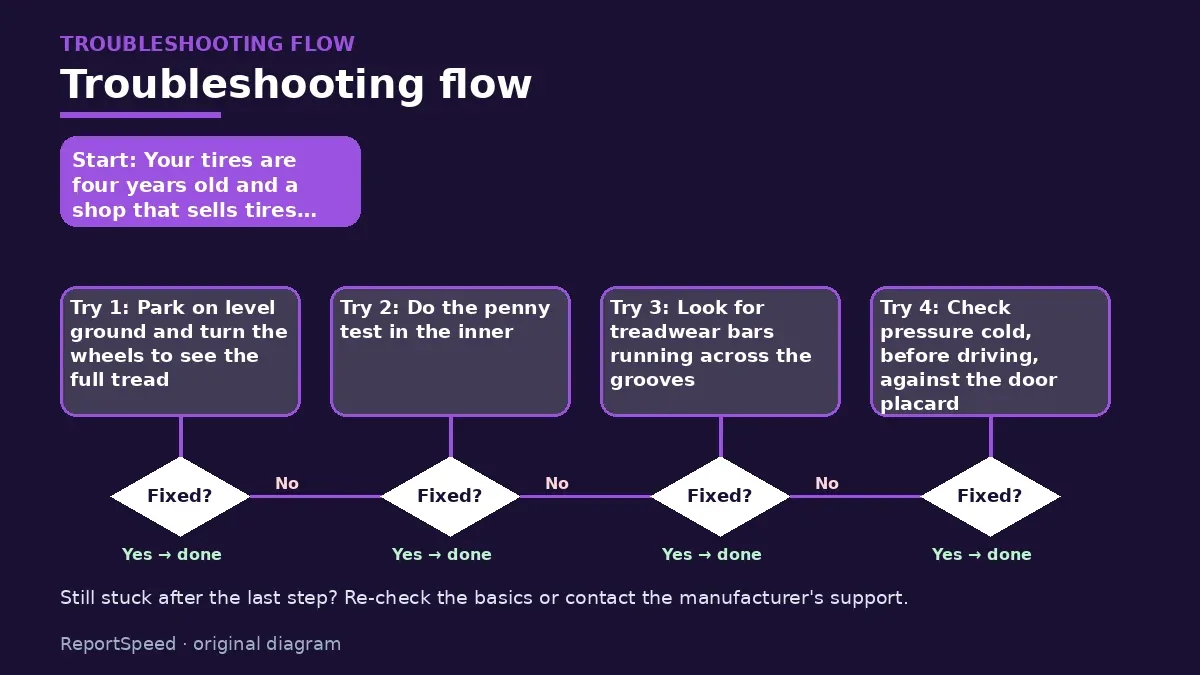
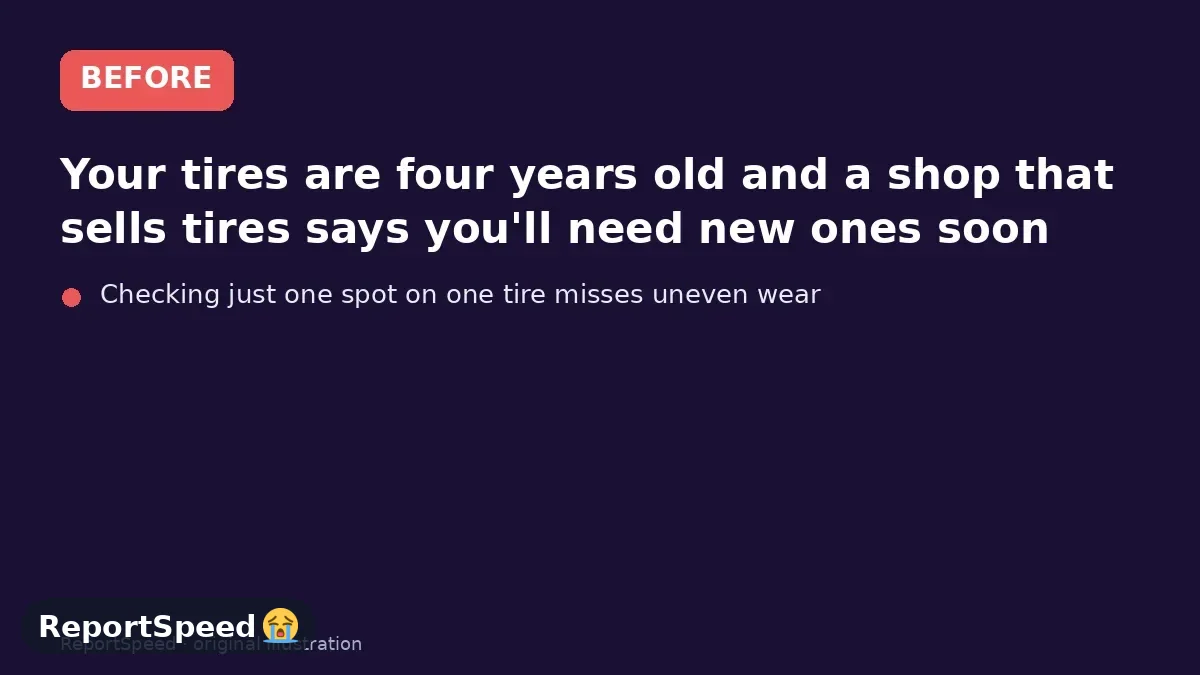
Your tires are four years old and a shop that sells tires says you'll need new ones soon.
| Task | Tool |
|---|---|
| Tread depth | Penny |
| Wear bars | Your eyes |
| Pressure | Gauge, tires cold |
| Target pressure | Door placard |
| Sidewalls | Look for bulges and cracks |
| Recalls | NHTSA lookup |

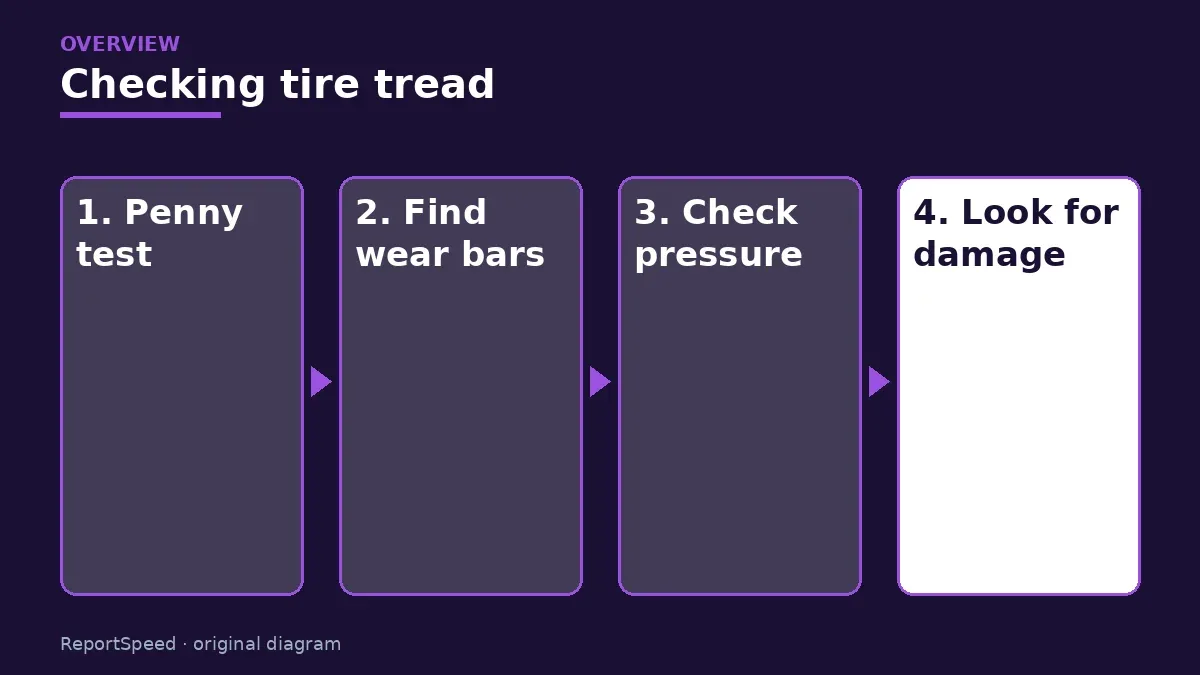
Causes & evidence
NHTSA's tire guidance says tires should be replaced when the tread wears down to 2/32 of an inch. Tires have built-in treadwear indicator bars molded into the grooves; when the tread is even with those bars, it's time to replace the tire. A quick penny test also works: put a penny upside down in a tread groove, and if you can see all of Lincoln's head, your tread is at or below 2/32 inch. NHTSA also recommends checking tires monthly for proper pressure, using the pressure on the placard inside the driver's door rather than the number on the tire sidewall, and looking for uneven wear, cracks, cuts, bulges or objects stuck in the tire. Uneven wear often points to alignment or pressure problems that will wear new tires too.
Edge cases: tires can need replacement because of age, damage or uneven wear even with tread left. Some states and drivers in snowy areas may want more tread than 2/32 inch for winter traction. Check your tire maker's age guidance too.
Checking just one spot on one tire misses uneven wear, which is often worst on the inside edge where you can't easily see it.
What to do
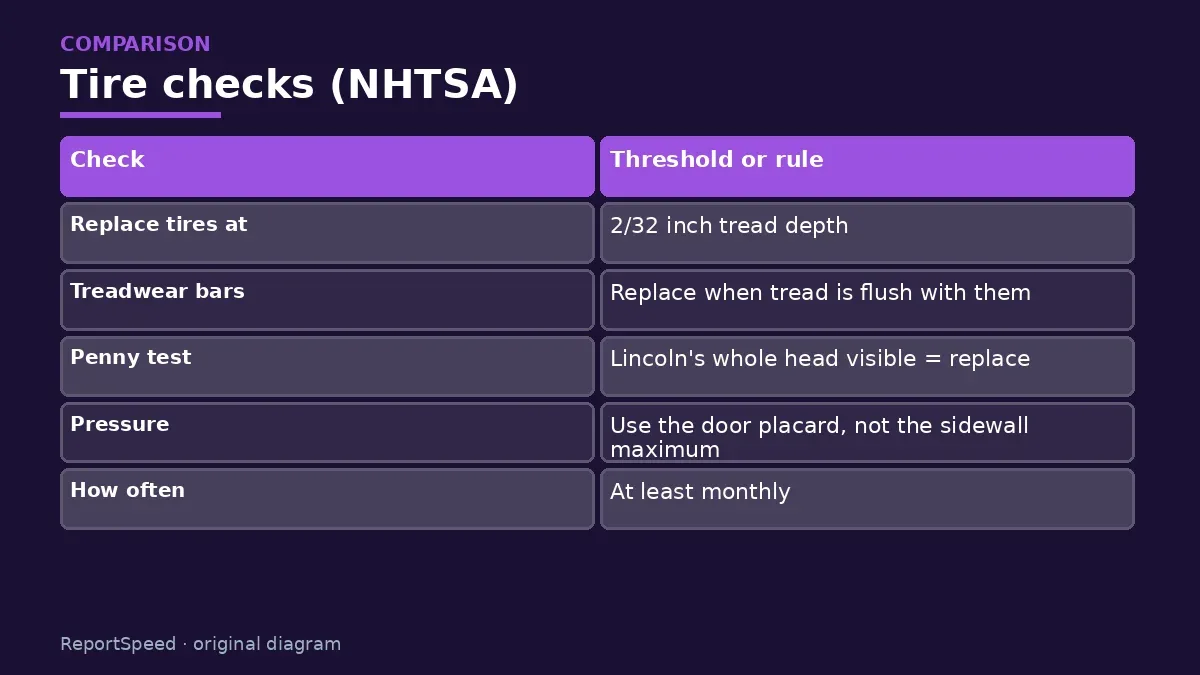
| Check | Threshold or rule |
|---|---|
| Replace tires at | 2/32 inch tread depth |
| Treadwear bars | Replace when tread is flush with them |
| Penny test | Lincoln's whole head visible = replace |
| Pressure | Use the door placard, not the sidewall maximum |
| How often | At least monthly |
| Damage | Cracks, cuts, bulges, uneven wear |
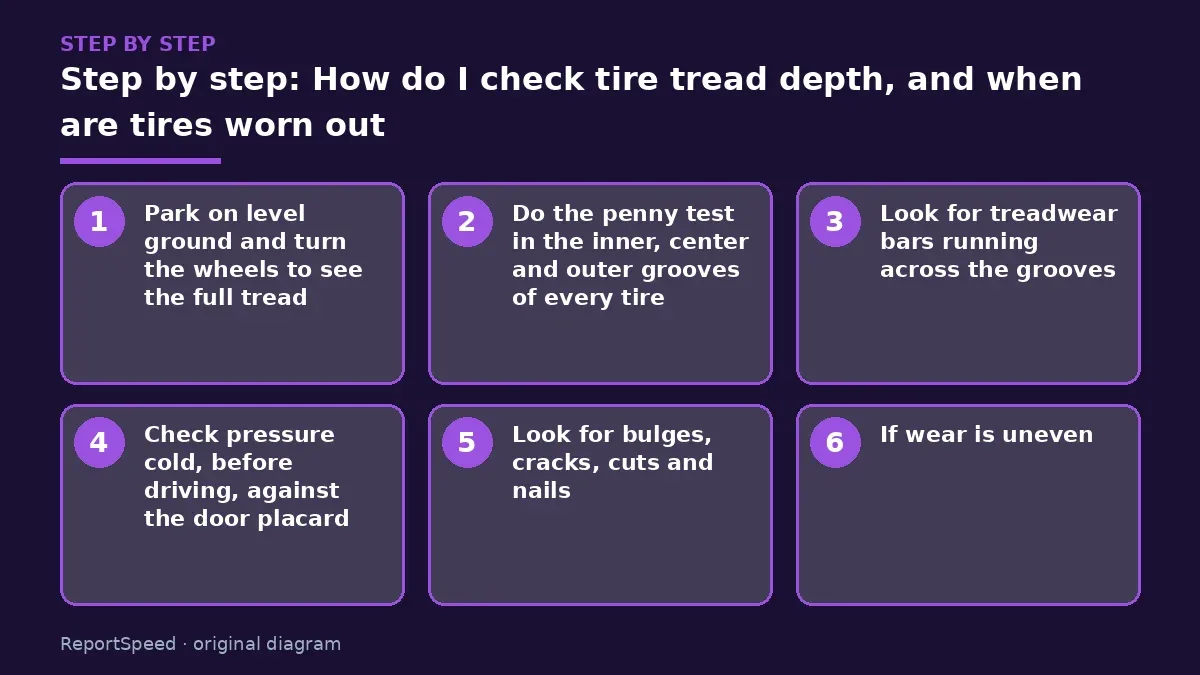
- Park on level ground and turn the wheels to see the full tread.
- Do the penny test in the inner, center and outer grooves of every tire.
- Look for treadwear bars running across the grooves.
- Check pressure cold, before driving, against the door placard.
- Look for bulges, cracks, cuts and nails.
- If wear is uneven, ask for an alignment and pressure check before buying new tires.
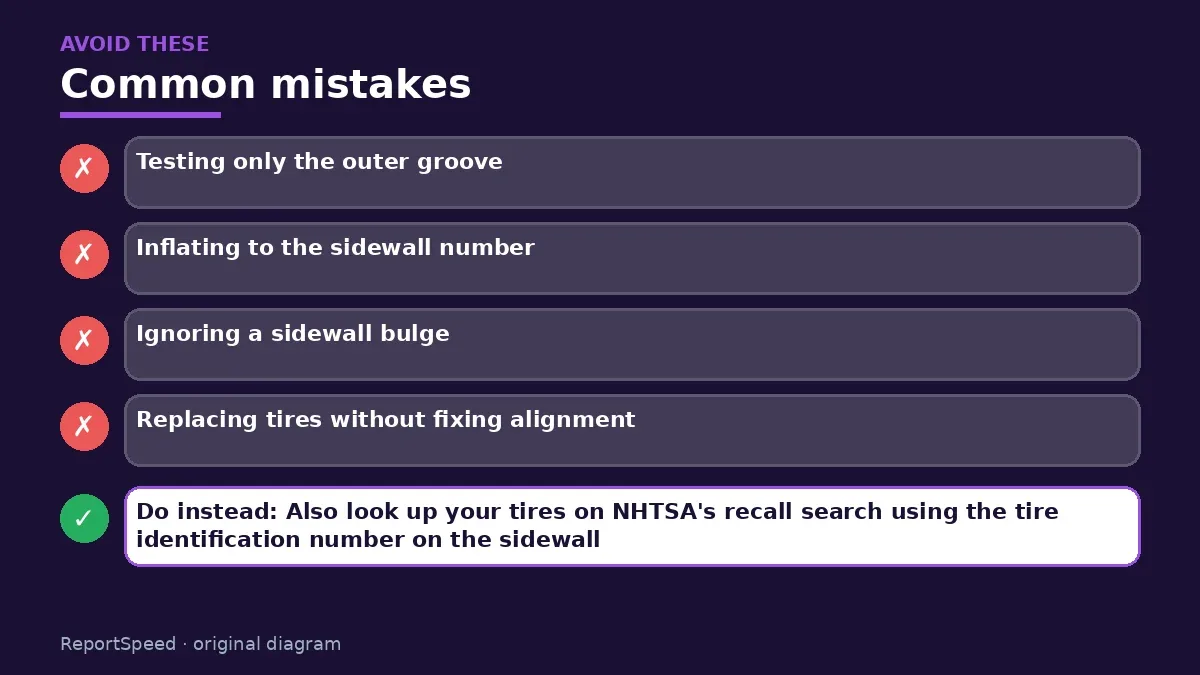
Common mistakes:
- Testing only the outer groove
- Inflating to the sidewall number
- Ignoring a sidewall bulge
- Replacing tires without fixing alignment
ReportSpeedMan tip: Also look up your tires on NHTSA's recall search using the tire identification number on the sidewall. Tire recalls are easy to miss.
What I would actually do
I'd penny-test every groove, check pressure cold, and buy tires when tread nears 2/32 inch or the wear bars, along with an alignment if wear is uneven.
The trade-off people miss: running tires to the legal limit saves money, but wet-road grip drops as tread wears, so I'd replace a bit early if I drive a lot in rain.
How to know it worked
Every groove passes the penny test and pressure matches the placard.
Quick FAQ
Is 2/32 inch the limit?
It's NHTSA's replacement point.
Can I just rotate them?
Rotation evens wear but doesn't add tread.
Where's the right pressure?
On the door placard.
Wrap-up: Replace at 2/32 inch, when tread meets the wear bars or Lincoln's head shows. Check every groove, pressure from the door placard, and look for damage.
Wiki: Vehicle Recalls and Fuel Economy Basics.
How do I check tire tread depth, and when are tires worn out: read the originals
Step-by-step photos
1. Before The problem 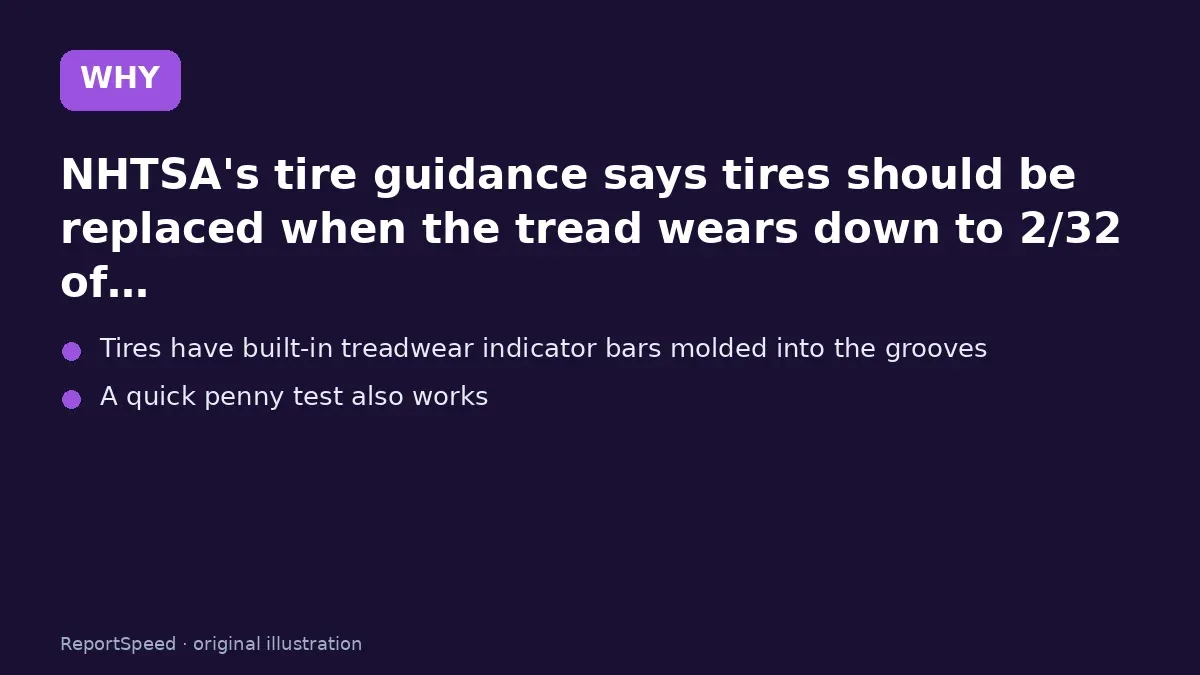
2. Why it happens The cause 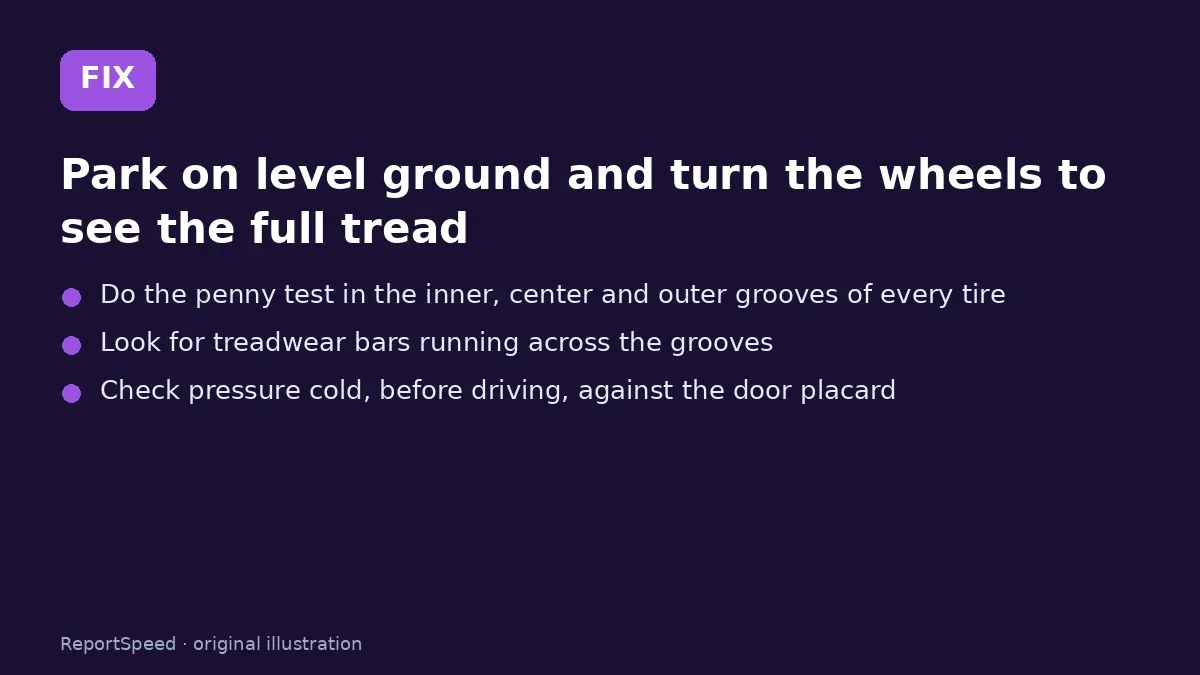
3. The fix The fix 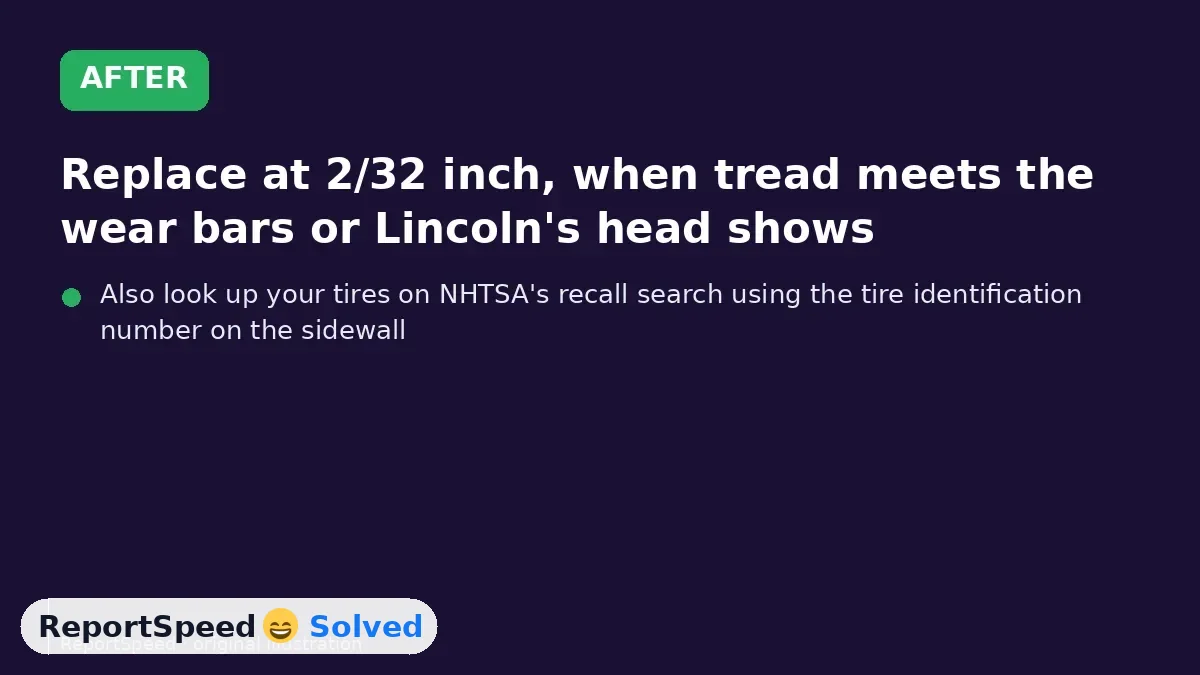
4. After The result
⚡ Speed Summary
- Replace at 2/32 inch, when tread meets the wear bars or Lincoln's head shows.
- Also look up your tires on NHTSA's recall search using the tire identification number on the sidewall. Tire recalls are easy to miss.
- Checking just one spot on one tire misses uneven wear, which is often worst on the inside edge where you can't easily see it.

Was this answer helpful?
Tap a star to rate this answer.
Related questions

How far should I sit from the steering wheel airbag?
Keep 10 inches from the air bag cover, tilt the wheel toward your chest, and keep kids 12 and under in the back.
Rate itSolved
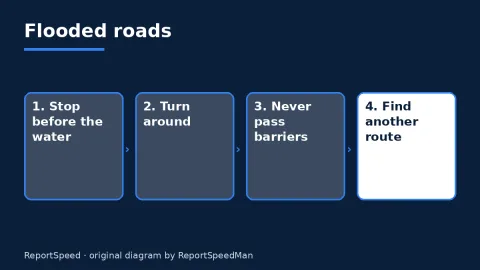
Is it safe to drive through a flooded road? How much water can float a car
Never drive into flood water; a foot of rushing water can carry most cars.
Rate itSolved
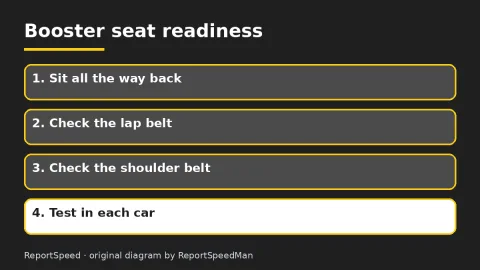
When can my child stop using a booster seat?
Keep the booster until the seat belt fits across the thighs and chest, and keep kids 12 and under in the back.
Rate itSolved

Does driving faster really waste gas? Speed and fuel economy
Above 50 mph mileage drops quickly, roughly like $0.30 more per gallon for each extra 5 mph.
Rate itSolved
Real experiences
No experiences yet. Be the first to share.