


I'm shopping for a car and the dealer keeps showing me a low monthly payment on a 72-month loan. The 48-month payment is much higher but people say long loans are a trap. I need a car for work and my budget is tight. How long should a car loan be, and what am I missing when I focus on the monthly payment?
How long should my car loan be? 48 vs 60 vs 72 months
Concerns & risks
You need a car, the monthly payment on a long loan looks manageable and the shorter loan feels out of reach, so you're tempted to just stretch it out.
| Check | Why |
|---|---|
| Preapproval in hand | Gives you a rate to beat |
| Total cost on paper | Shows what a long term really costs |
| Add-ons listed separately | Prevents hidden extras |
| Term length | Shorter usually means less interest |
Causes & evidence
A longer term spreads the same amount over more months, which lowers the payment but usually increases the total interest you pay, and longer loans often come with higher rates too. The CFPB advises shoppers to look at the total cost of the loan, not just the monthly payment, and to get preapproved before visiting a dealer so they can compare the dealer's offer. Because cars lose value quickly, a long loan also raises the chance of being upside down, owing more than the car is worth, which hurts if the car is totalled or you need to sell.
Cars typically lose value fastest in the first years, while a long loan pays down principal slowly at first. That combination is why long terms raise the chance of negative equity.
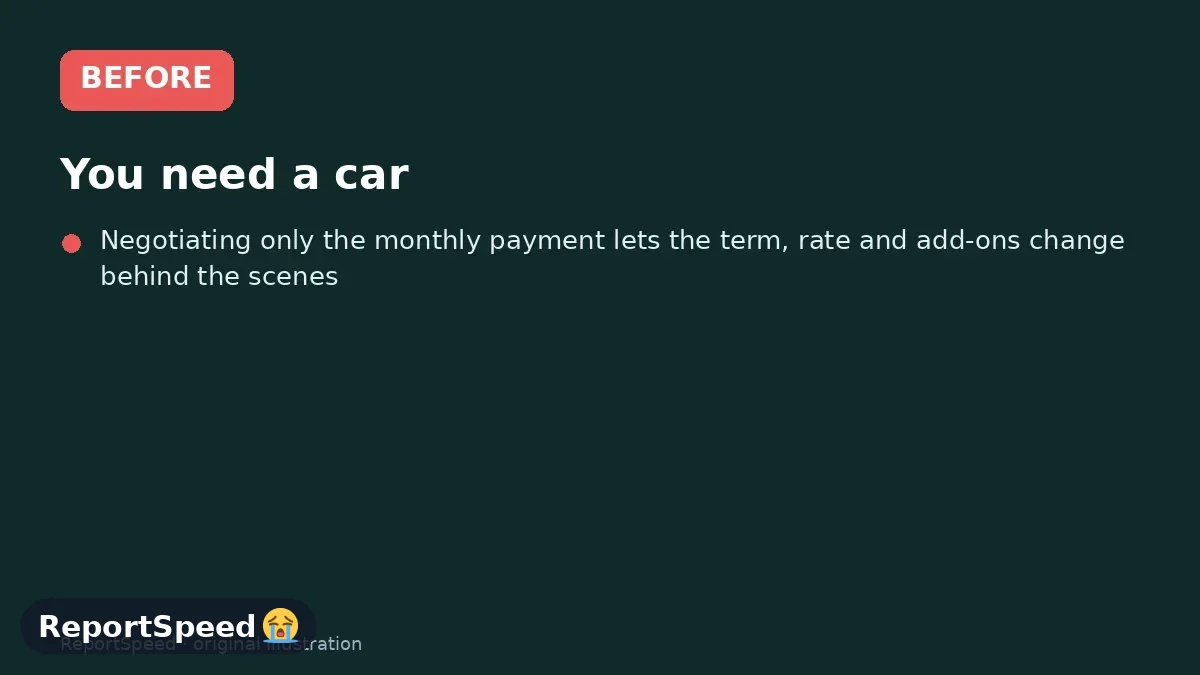
Negotiating only the monthly payment lets the term, rate and add-ons change behind the scenes.
What to do

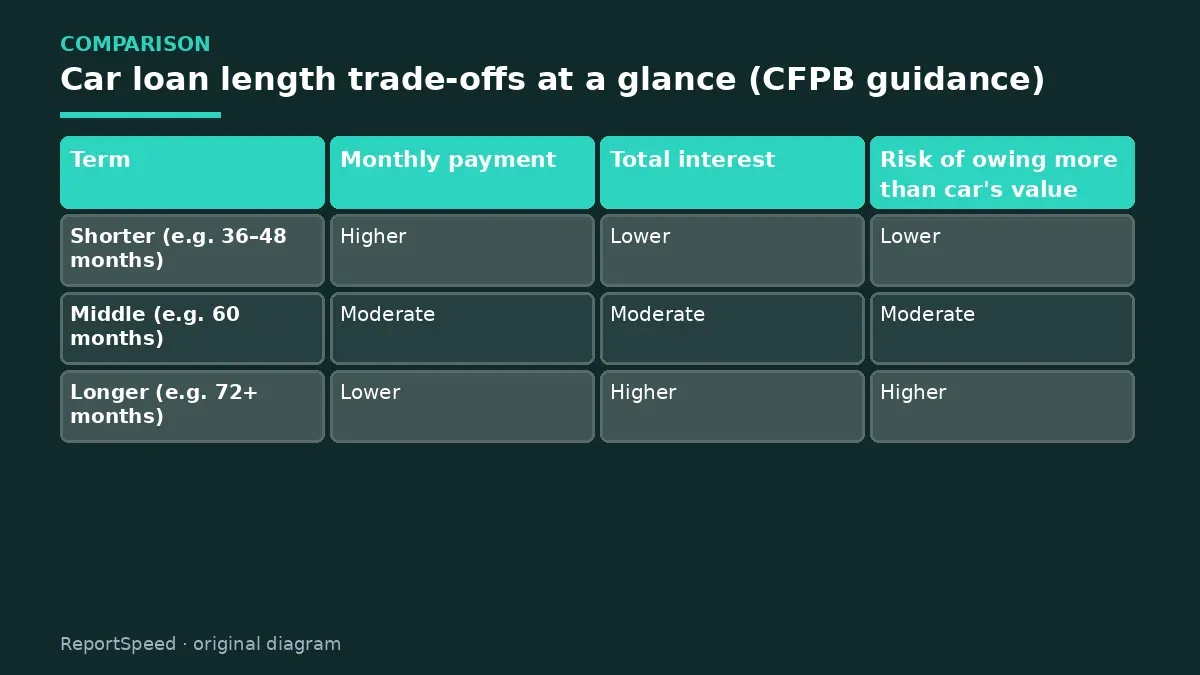
| Term | Monthly payment | Total interest | Risk of owing more than car's value |
|---|---|---|---|
| Shorter (e.g. 36–48 months) | Higher | Lower | Lower |
| Middle (e.g. 60 months) | Moderate | Moderate | Moderate |
| Longer (e.g. 72+ months) | Lower | Higher | Higher |
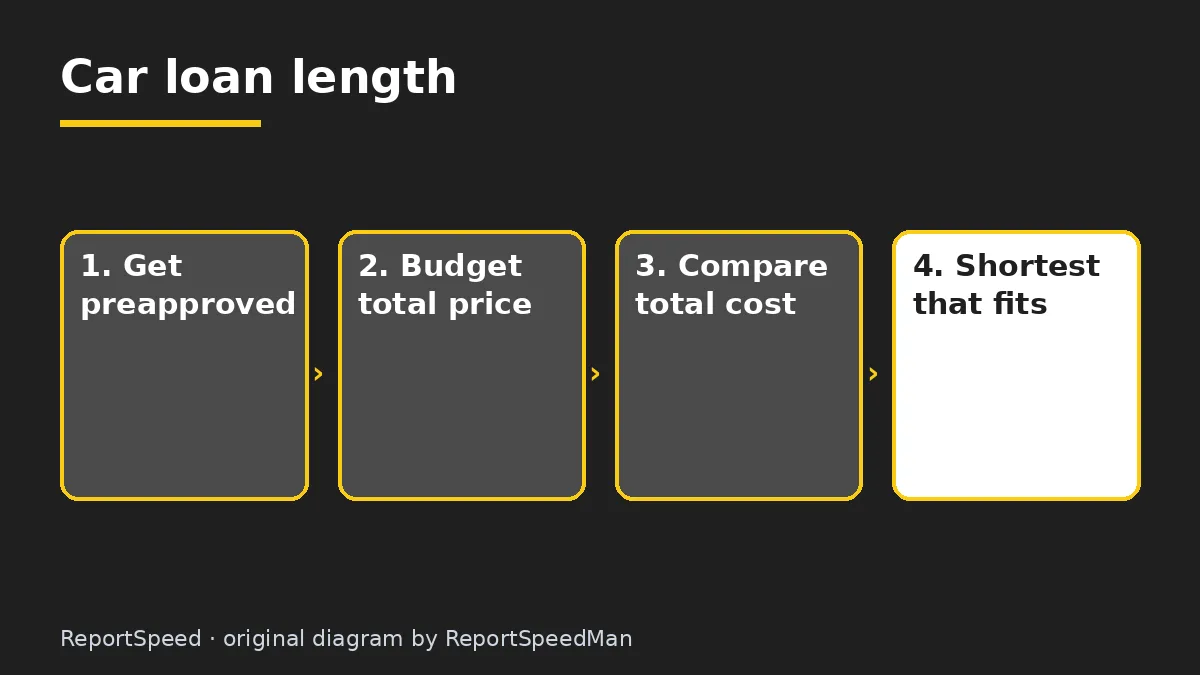
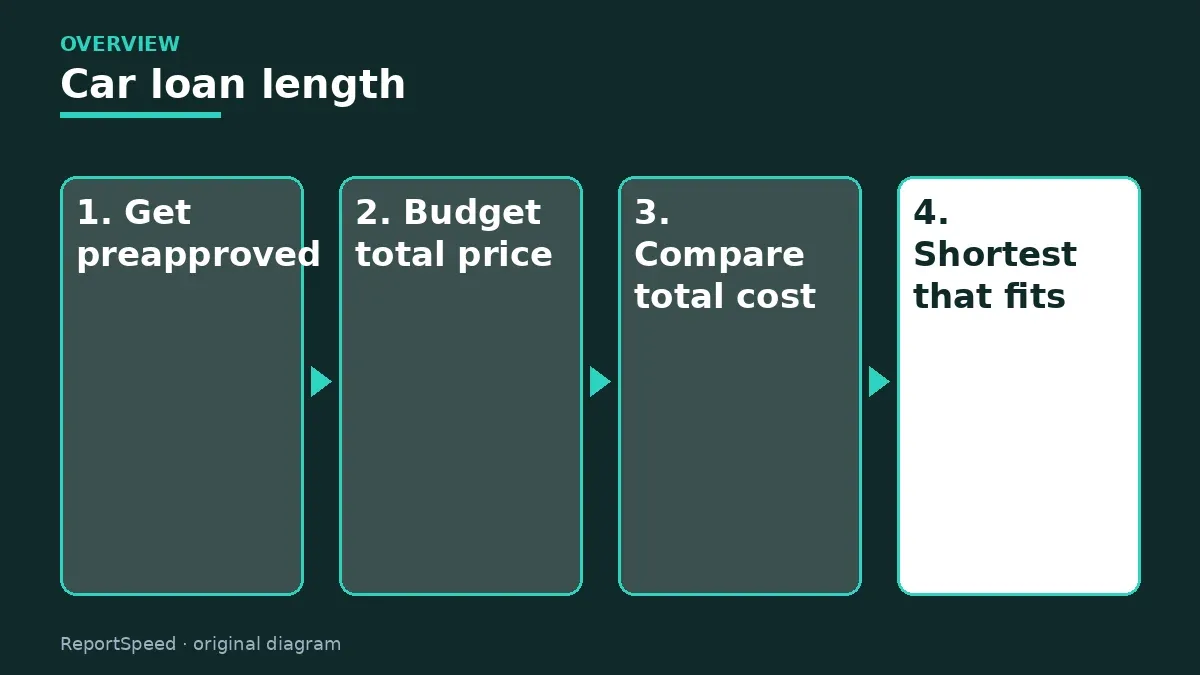
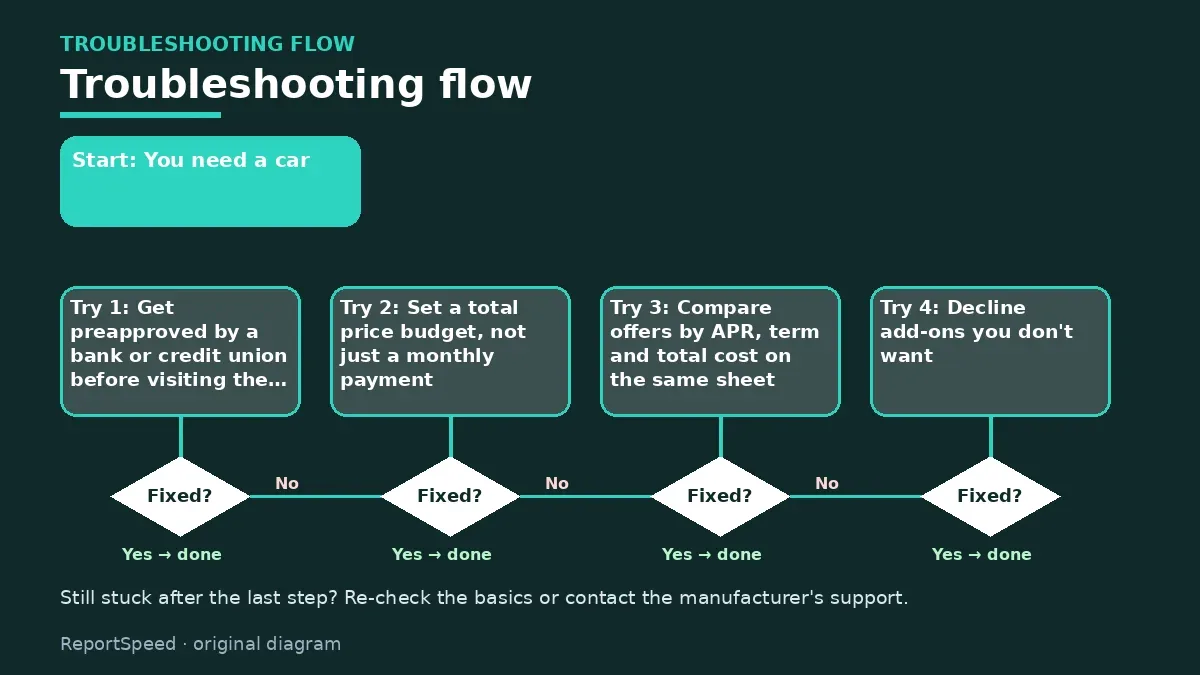
- Get preapproved by a bank or credit union before visiting the dealer.
- Set a total price budget, not just a monthly payment.
- Compare offers by APR, term and total cost on the same sheet.
- Decline add-ons you don't want, or price them separately before agreeing.
- Choose the shortest term whose payment still fits your budget comfortably.

Common mistakes:
- Negotiating only the monthly payment
- Skipping preapproval
- Rolling negative equity from an old car into a new loan
ReportSpeedMan tip: If the shorter loan's payment doesn't fit, that's often a sign to look at a less expensive car rather than a longer loan.
What I would actually do

walk in with a credit union preapproval, negotiate the car price first, and take the shortest term whose payment leaves breathing room in my budget.
The trade-off people miss: a lower payment over 72 months can feel safer monthly but leaves you owing more than the car is worth for longer.
Proof that it worked
You signed a loan with a payment that fits, a known total cost and nothing you didn't agree to.
Quick FAQ
Is 0% financing worth it?
It can be, but compare with cash rebates offered instead.
Should I put money down?
A down payment reduces the loan and negative equity risk.
Can I pay early?
Often yes; check for prepayment penalties.
Wrap-up: Choose the shortest loan you can comfortably afford, compare by total cost and walk in preapproved. Your future self will thank you.
Wiki: Credit Card Interest and APR and Credit Scores and Credit Reports.
How long should my car loan be: where the facts come from
Step-by-step photos
1. Before The problem 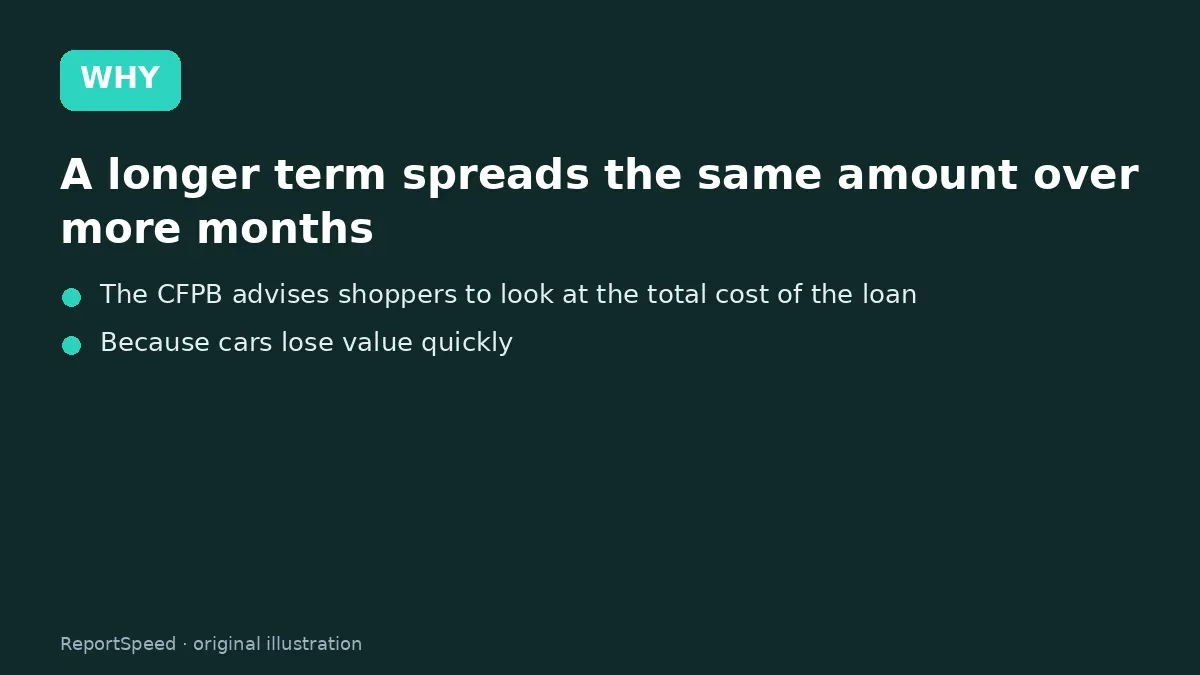
2. Why it happens The cause 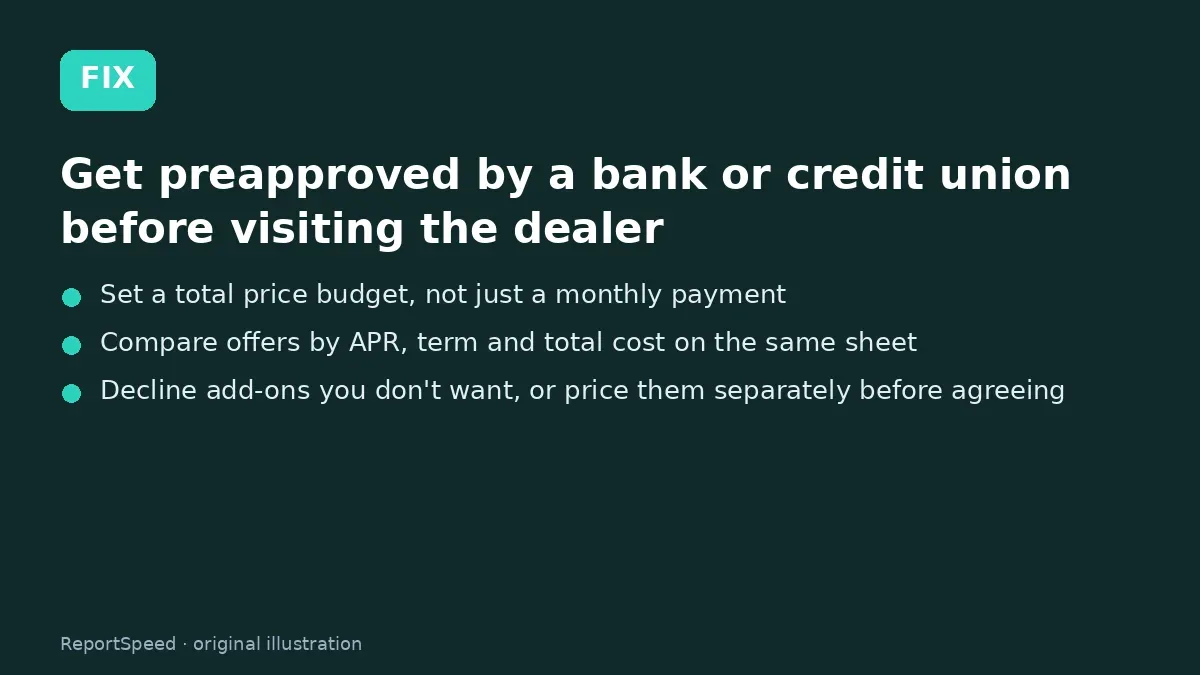
3. The fix The fix 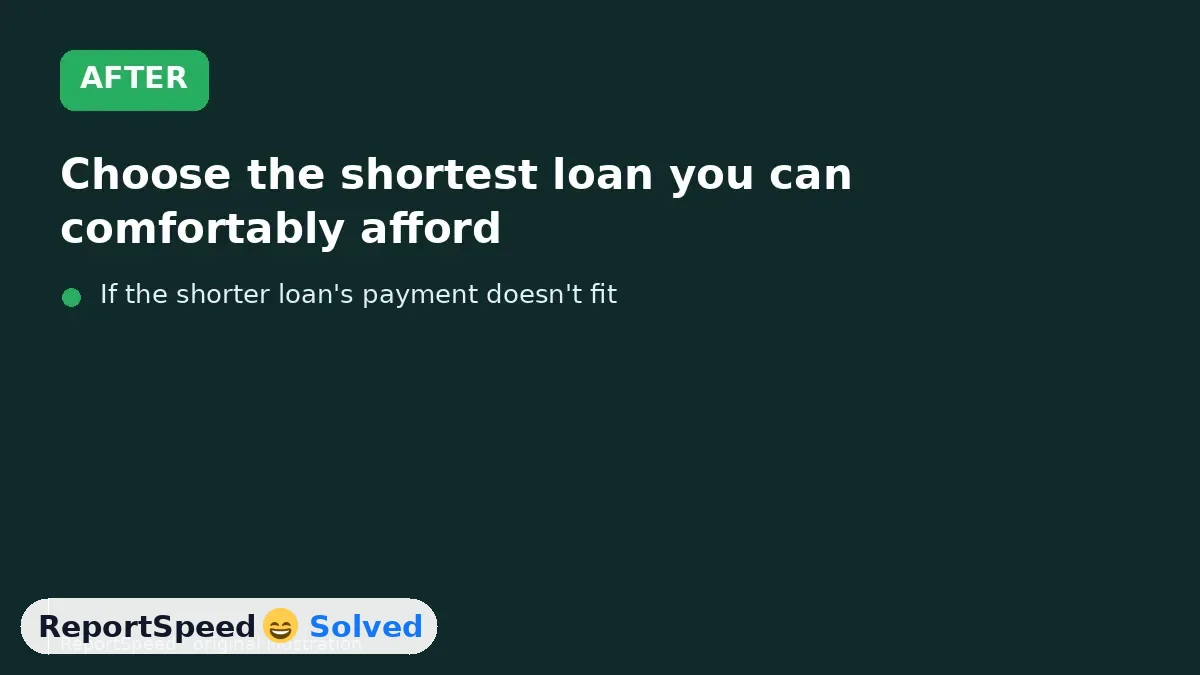
4. After The result
⚡ Speed Summary
- Choose the shortest loan you can comfortably afford, compare by total cost and walk in preapproved.
- If the shorter loan's payment doesn't fit, that's often a sign to look at a less expensive car rather than a longer loan.
- Negotiating only the monthly payment lets the term, rate and add-ons change behind the scenes.

Was this answer helpful?
Tap a star to rate this answer.
Related questions
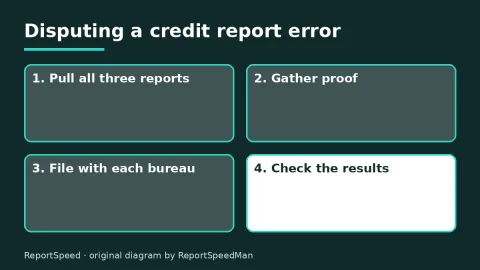
Found an error on my credit report? How to dispute it step by step
Dispute with each bureau and the furnisher, include proof, and expect results in about 30 days.
Rate itSolved
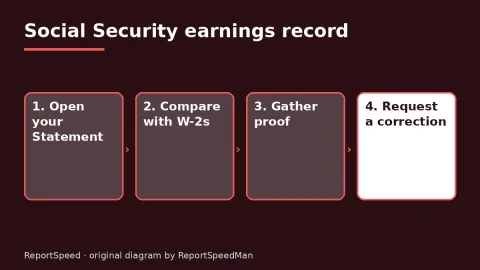
How do I check my Social Security earnings record and fix a mistake?
Check your Statement every year, match it to your W-2s, and correct gaps with proof before the usual window closes.
Rate itSolved
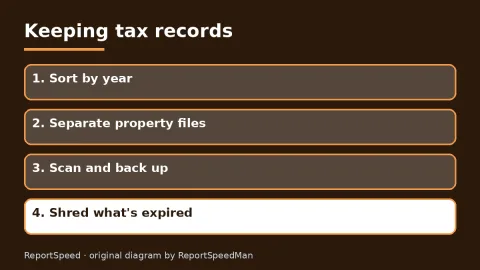
How long should I keep tax records? The IRS 3-, 6- and 7-year rules
Three years covers most returns; six, seven or forever apply in specific cases.
Rate itSolved
What happens if I only pay the minimum on my credit card?
Minimum payments keep you current but stretch the debt for years.
Rate itSolved
Real experiences
No experiences yet. Be the first to share.