


Open enrollment just started and my employer offers both an HSA (with a high-deductible plan) and an FSA. The names are almost the same and I don't understand which is better or whether I can have both. I'm healthy, single and mostly pay for checkups and occasional prescriptions. How do I choose?
HSA vs FSA: which health account should I use?
Concerns & risks
It's open enrollment, both accounts are on the menu, and you need to pick before the deadline without fully understanding the difference.
| Your situation | Often fits |
|---|---|
| Healthy, want long-term savings | HSA with HDHP |
| Predictable yearly costs | FSA |
| Family with frequent care | Compare plans carefully |
| Have an HSA, need dental/vision | Ask about limited-purpose FSA |


Causes & evidence
A health savings account requires you to be enrolled in a qualifying high-deductible health plan. The IRS sets the 2026 HSA contribution limit at $4,400 for self-only coverage and $8,750 for family coverage, plus a $1,000 catch-up at 55 or older, and for 2026 a qualifying plan's deductible must be at least $1,700 self-only or $3,400 family. HSA money rolls over every year, belongs to you if you leave your job, and can be invested. A health FSA is set up by your employer, has a 2026 limit of $3,400 and is generally use-or-lose, although plans may allow a carryover of up to $680 or a short grace period instead.
Both accounts can pay for qualified medical expenses such as copays, prescriptions and many over-the-counter items. Contribution limits are set yearly by the IRS, so check the current figures each open enrollment.
Putting a large amount in an FSA without a plan to spend it can mean forfeiting money at the end of the year.
What to do
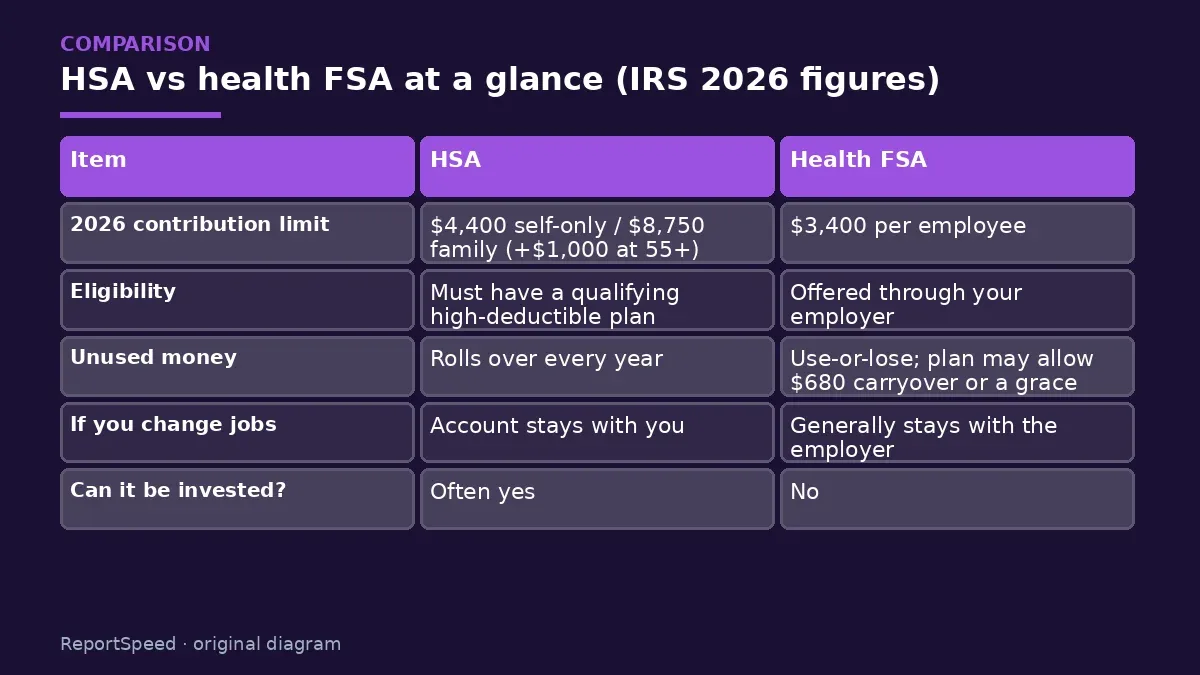
| Item | HSA | Health FSA |
|---|---|---|
| 2026 contribution limit | $4,400 self-only / $8,750 family (+$1,000 at 55+) | $3,400 per employee |
| Eligibility | Must have a qualifying high-deductible plan | Offered through your employer |
| Unused money | Rolls over every year | Use-or-lose; plan may allow $680 carryover or a grace period |
| If you change jobs | Account stays with you | Generally stays with the employer |
| Can it be invested? | Often yes | No |
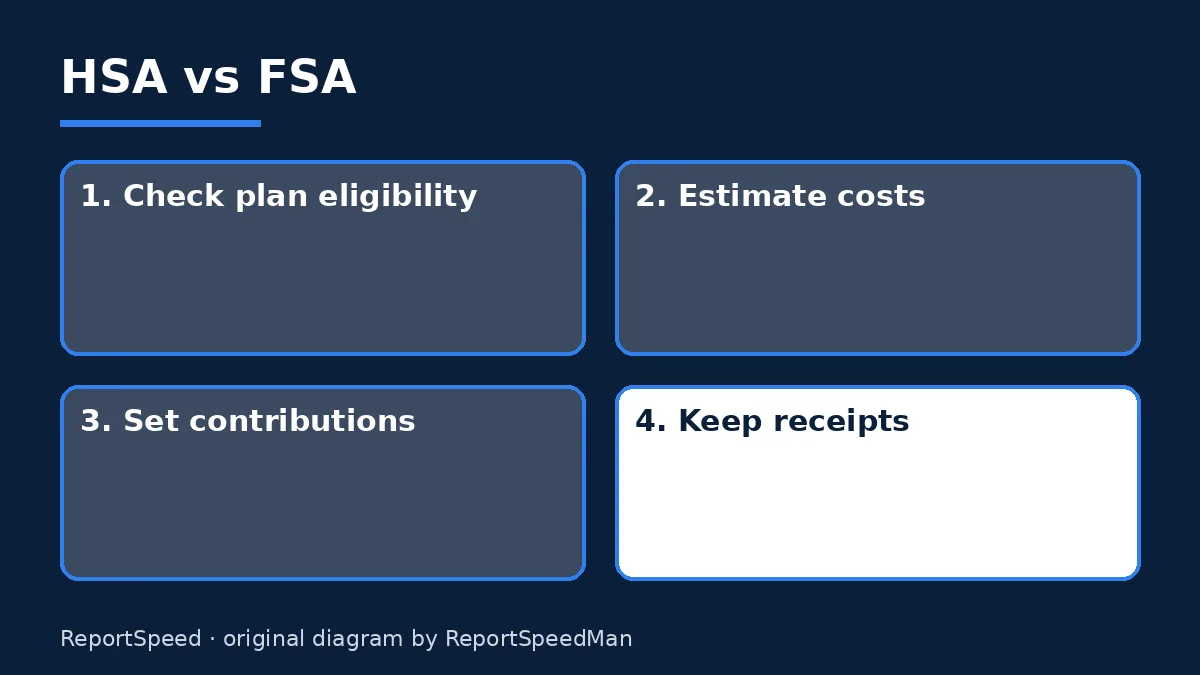
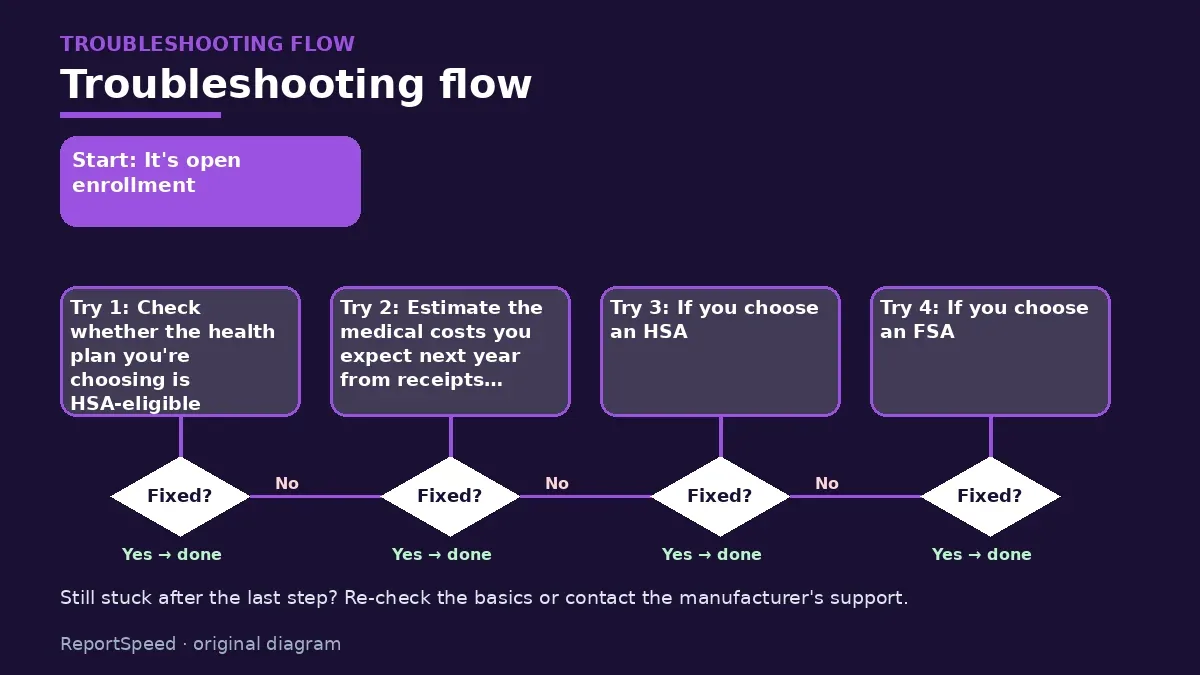
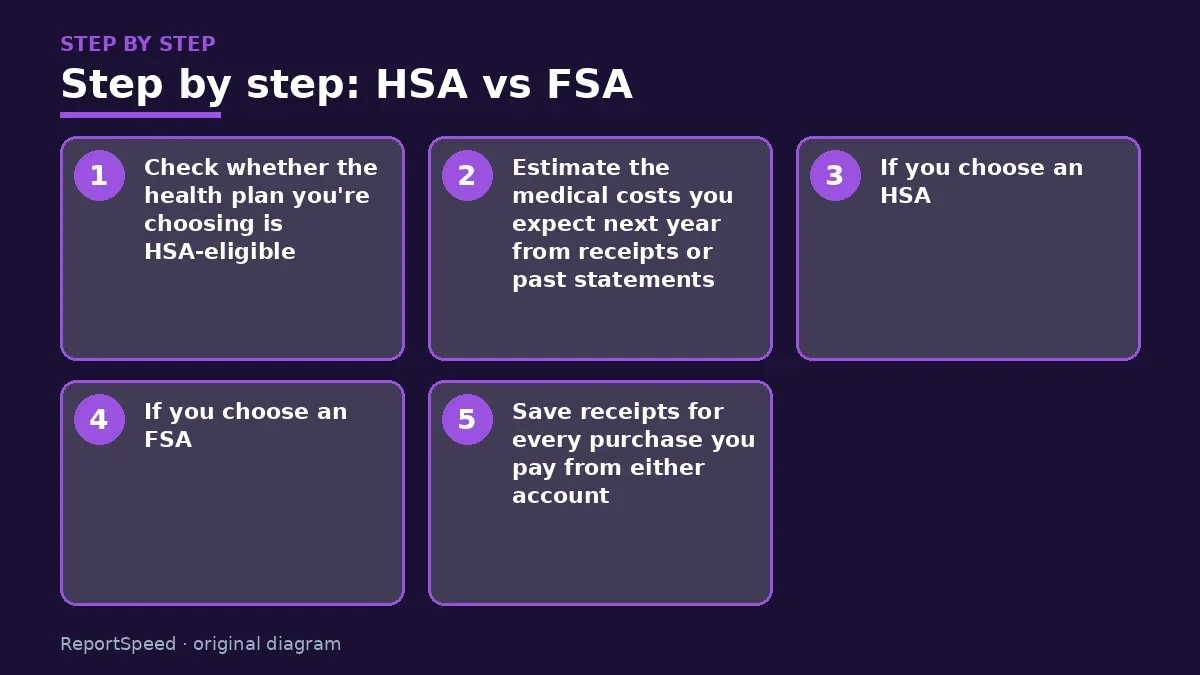
- Check whether the health plan you're choosing is HSA-eligible.
- Estimate the medical costs you expect next year from receipts or past statements.
- If you choose an HSA, set a payroll contribution and find out whether your employer adds money.
- If you choose an FSA, elect only what you're confident you'll spend, and note your plan's carryover or grace period.
- Save receipts for every purchase you pay from either account.
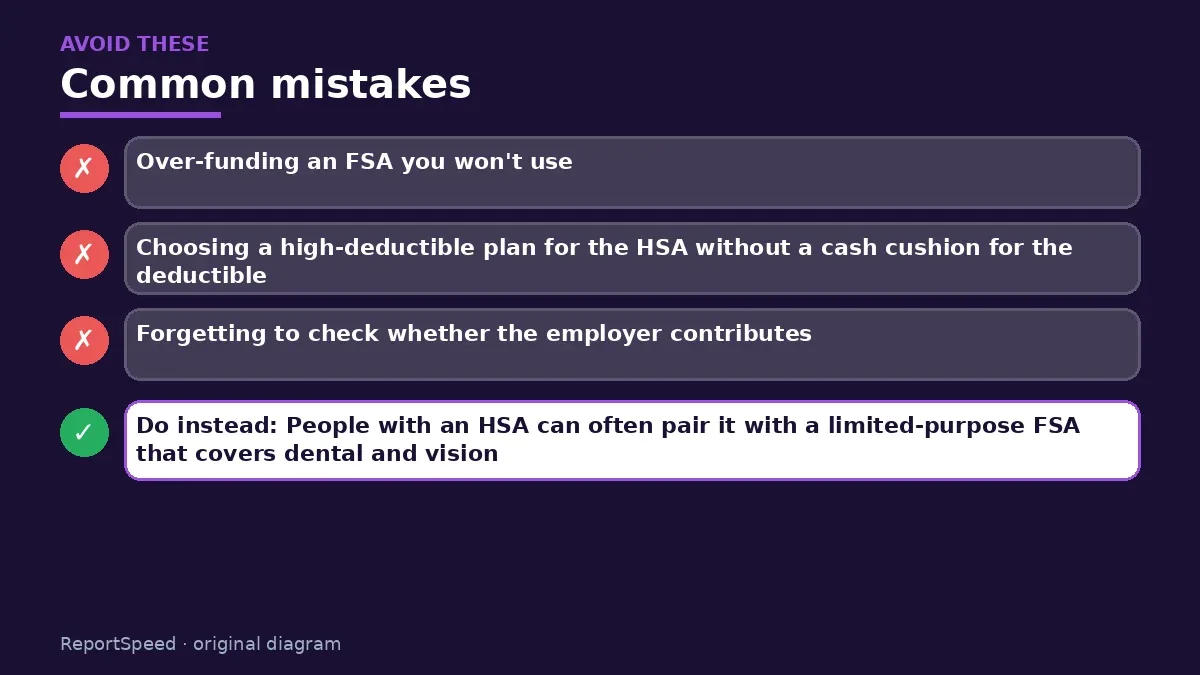
Common mistakes:
- Over-funding an FSA you won't use
- Choosing a high-deductible plan for the HSA without a cash cushion for the deductible
- Forgetting to check whether the employer contributes
ReportSpeedMan tip: People with an HSA can often pair it with a limited-purpose FSA that covers dental and vision. Ask your benefits team whether that option exists.
What I would actually do
if I were healthy and had cash to cover the deductible, I'd pick the HSA, contribute steadily and pay small bills out of pocket so the account can grow.
The trade-off people miss: a high-deductible plan means paying more up front when something unexpected happens. The HSA only works if you can absorb that deductible without debt.
How to know it worked
Your account matches your expected costs and you never forfeit money at year end.
Quick FAQ
Can I have both?
Generally only an HSA plus a limited-purpose FSA.
What if I leave my job?
HSA money stays yours; FSA rules depend on the plan.
Can I change my FSA amount mid-year?
Usually only with a qualifying life event.
Wrap-up: An HSA suits people comfortable with a high deductible who want long-term flexibility; an FSA suits predictable yearly costs. Match the account to how you actually use care.
Wiki: Emergency Fund and Compound Interest.
HSA vs FSA: official pages behind this answer
Step-by-step photos

1. Before The problem 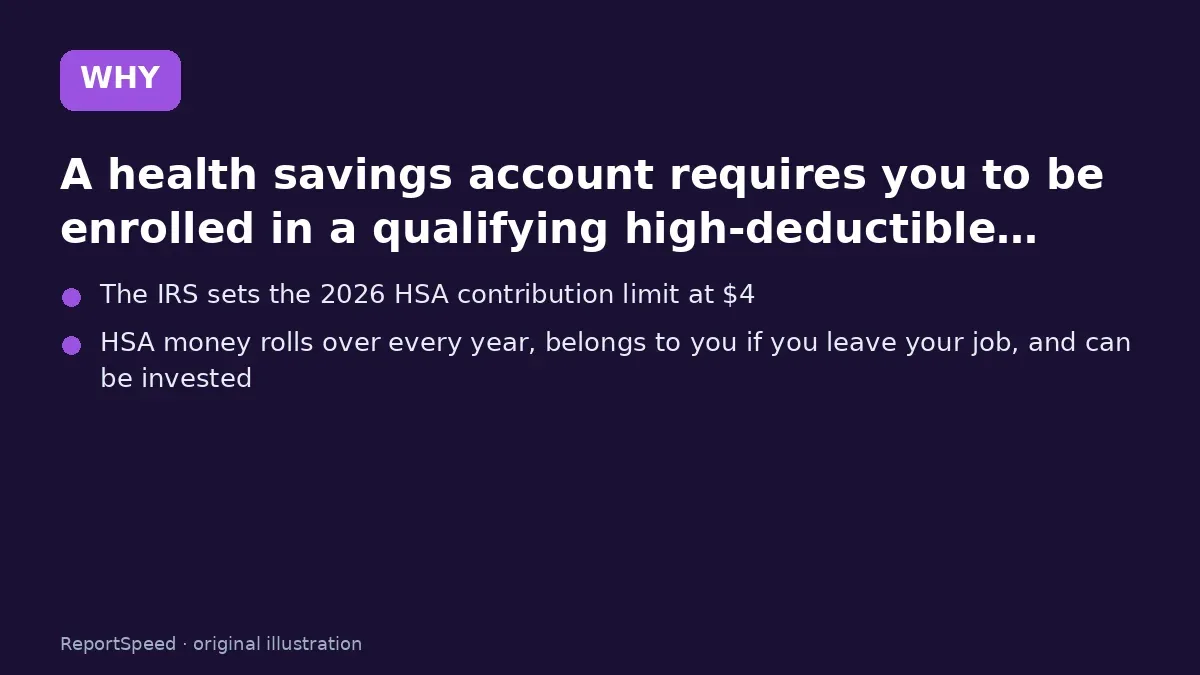
2. Why it happens The cause 
3. The fix The fix 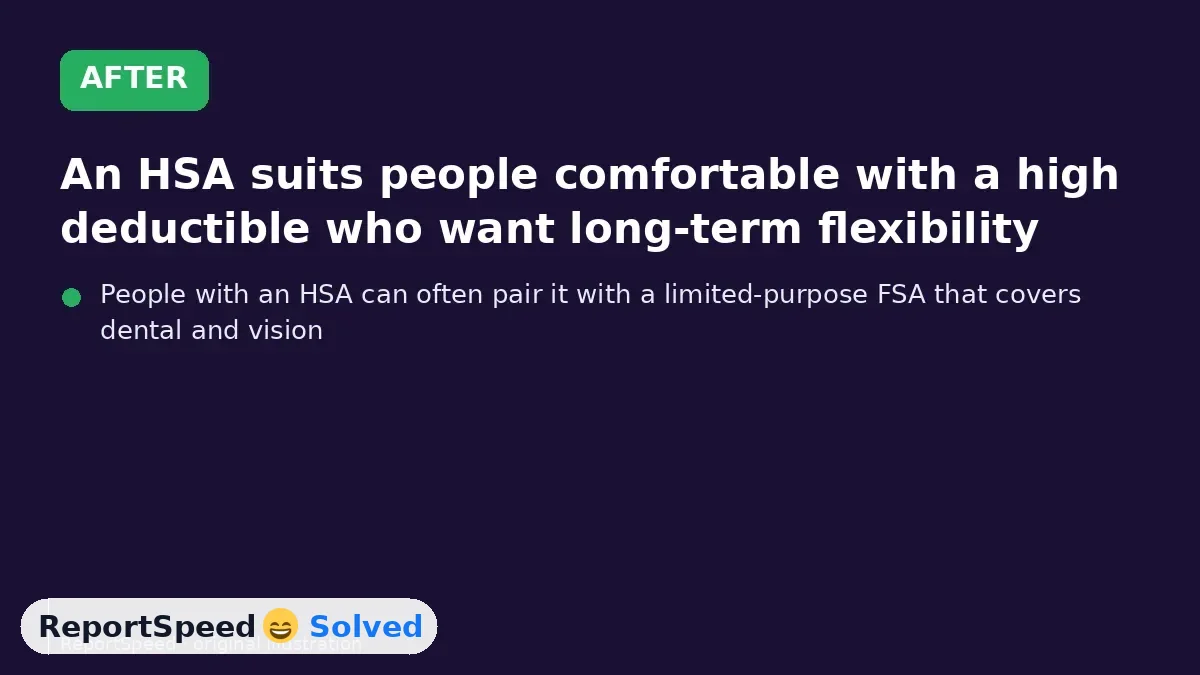
4. After The result
⚡ Speed Summary
- An HSA suits people comfortable with a high deductible who want long-term flexibility; an FSA suits predictable yearly costs.
- People with an HSA can often pair it with a limited-purpose FSA that covers dental and vision. Ask your benefits team whether that option exists.
- Putting a large amount in an FSA without a plan to spend it can mean forfeiting money at the end of the year.

Was this answer helpful?
Tap a star to rate this answer.
Related questions
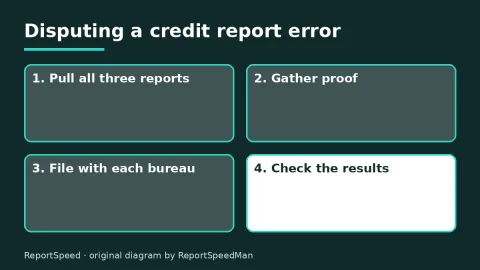
Found an error on my credit report? How to dispute it step by step
Dispute with each bureau and the furnisher, include proof, and expect results in about 30 days.
Rate itSolved
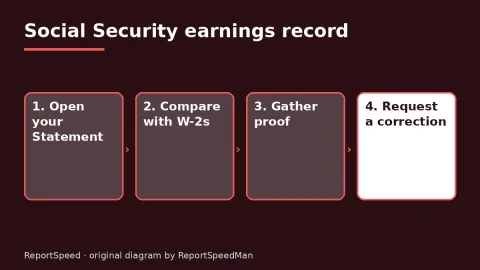
How do I check my Social Security earnings record and fix a mistake?
Check your Statement every year, match it to your W-2s, and correct gaps with proof before the usual window closes.
Rate itSolved
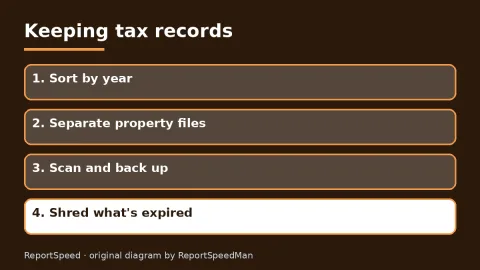
How long should I keep tax records? The IRS 3-, 6- and 7-year rules
Three years covers most returns; six, seven or forever apply in specific cases.
Rate itSolved
What happens if I only pay the minimum on my credit card?
Minimum payments keep you current but stretch the debt for years.
Rate itSolved
Real experiences
No experiences yet. Be the first to share.