


I'm picking up my first electric car next month. It comes with a cord that plugs into a regular outlet, but the dealer says I should pay to install a Level 2 charger in my garage. I drive about 35 miles a day. Level 1 vs Level 2 EV charging: which do I need at home?
Level 1 vs Level 2 EV charging at home: which do I need?
Concerns & risks
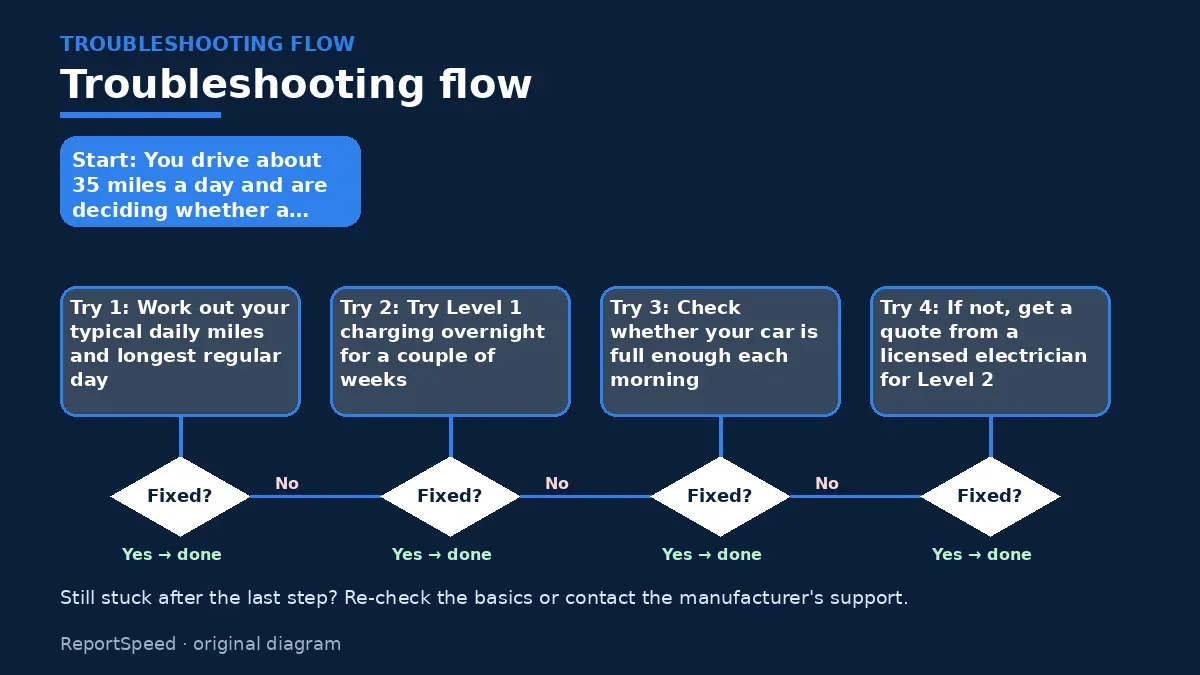
You drive about 35 miles a day and are deciding whether a Level 2 home charger is worth installing.
| Charging | Time to add ~35 miles |
|---|---|
| Level 1 at 2–5 mph | About 7 to 18 hours |
| Level 2 at 10–30 mph | About 1 to 4 hours |
| DC fast | Minutes, but not for daily home use |
| Overnight window | Often 10+ hours at home |
| Key factor | Your car's onboard charger |
Causes & evidence
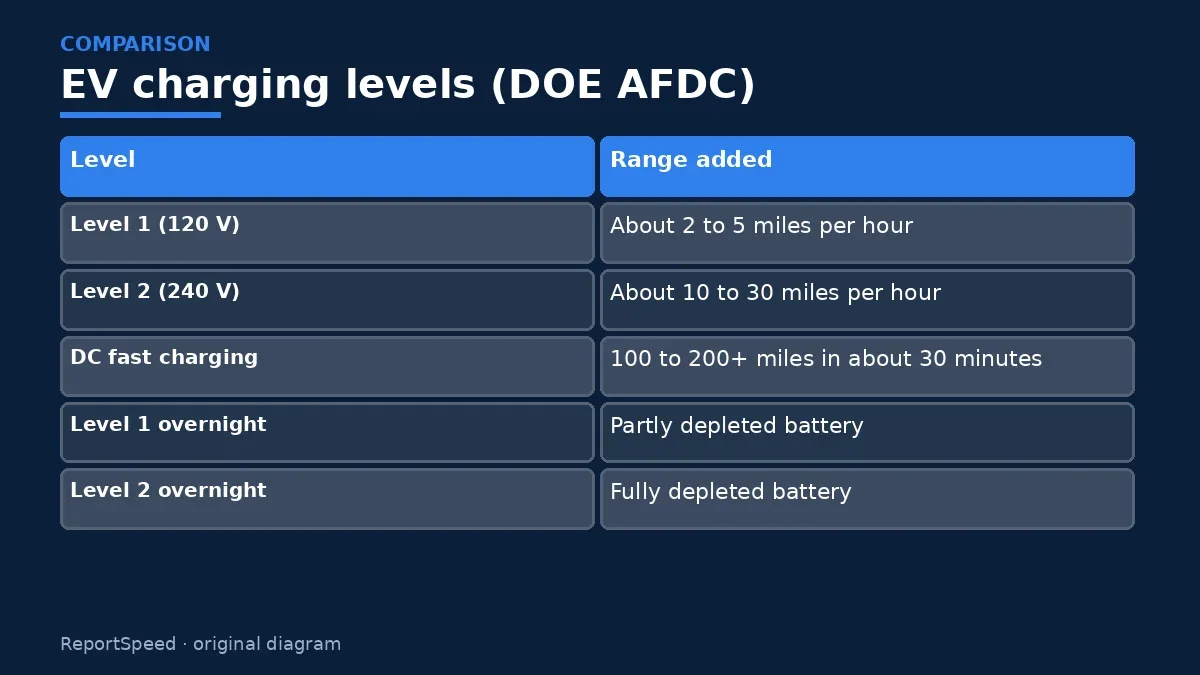
The Department of Energy's Alternative Fuels Data Center explains that Level 1 charging uses a standard 120-volt household outlet and the portable cord that comes with most EVs, adding roughly 2 to 5 miles of range per hour. Level 2 uses 240-volt service, like an electric dryer, and adds about 10 to 30 miles of range per hour depending on the equipment and the vehicle. DC fast charging, mostly found along highways, can add 100 to 200 or more miles in about 30 minutes. AFDC notes that Level 1 can recharge a partly depleted battery overnight, while Level 2 can generally recharge a fully depleted battery overnight. For a 35-mile daily commute, overnight Level 1 charging may be enough if you plug in every night for 10 hours or more, but Level 2 gives you more flexibility. Installing Level 2 usually needs a dedicated circuit and a licensed electrician.
Edge cases: renters and condo owners may need landlord or association approval for a Level 2 charger. Older homes may lack panel capacity, which can mean an electrical upgrade. In cold weather, charging can be slower and range shorter, so a margin above your daily miles helps. Plug-in hybrids have small batteries, and Level 1 is often enough for them.
Paying for a Level 2 install before checking whether overnight Level 1 covers your daily miles can mean spending money you didn't need to.
What to do
| Level | Range added |
|---|---|
| Level 1 (120 V) | About 2 to 5 miles per hour |
| Level 2 (240 V) | About 10 to 30 miles per hour |
| DC fast charging | 100 to 200+ miles in about 30 minutes |
| Level 1 overnight | Partly depleted battery |
| Level 2 overnight | Fully depleted battery |
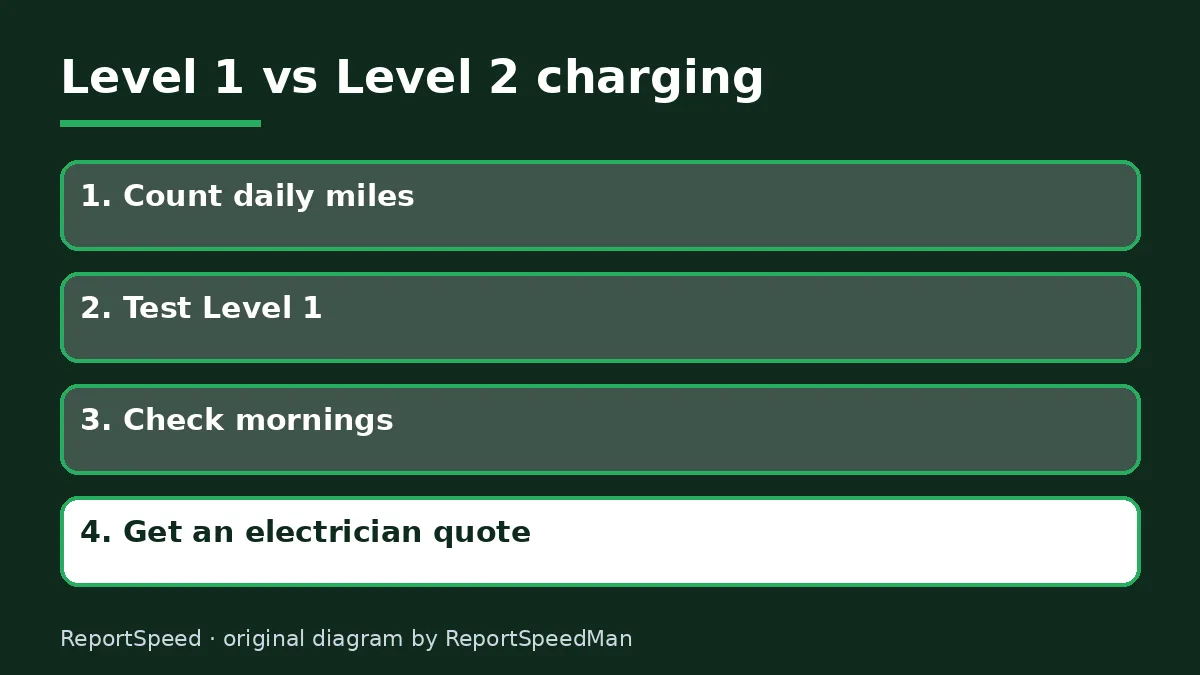
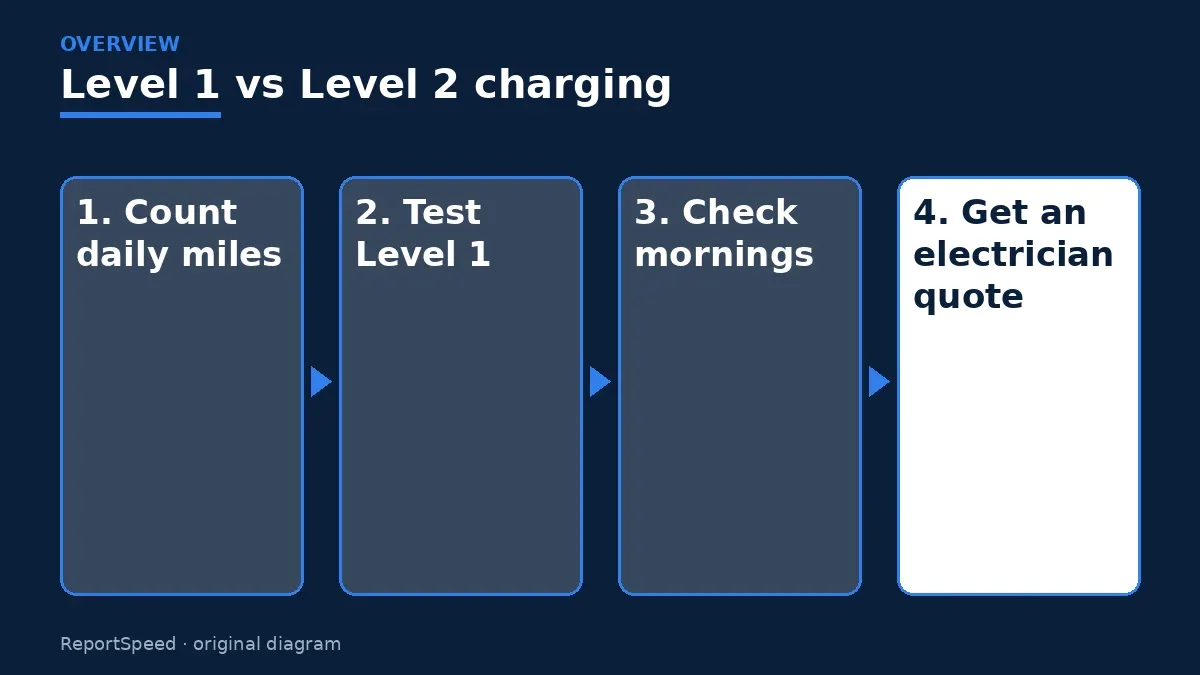
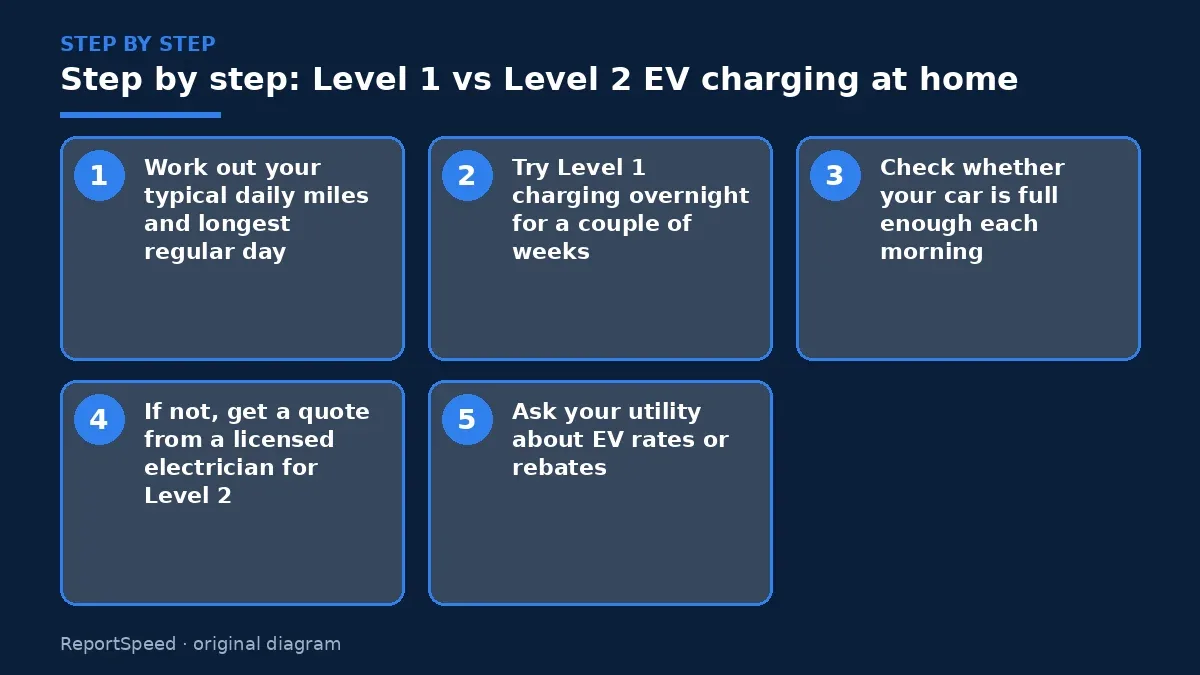
- Work out your typical daily miles and longest regular day.
- Try Level 1 charging overnight for a couple of weeks.
- Check whether your car is full enough each morning.
- If not, get a quote from a licensed electrician for Level 2.
- Ask your utility about EV rates or rebates.
Common mistakes:
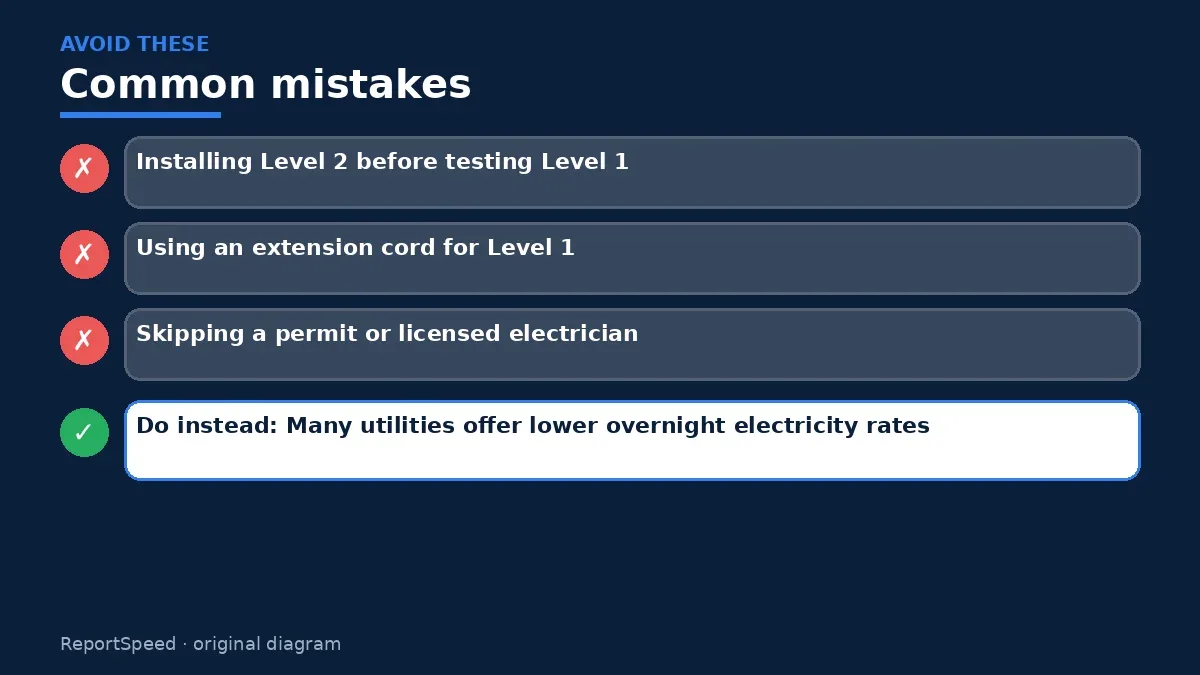
- Installing Level 2 before testing Level 1
- Using an extension cord for Level 1
- Skipping a permit or licensed electrician
ReportSpeedMan tip: Many utilities offer lower overnight electricity rates. Scheduling charging in the car's app can cut your costs.
What I would actually do
I'd charge on Level 1 for a few weeks before spending on installation. If the battery wasn't topped up most mornings, I'd then get an electrician's quote for Level 2.
The trade-off people miss: the charger is only part of the cost. Panel capacity, wiring distance and permits can make a Level 2 installation much more expensive than the unit itself, so get an on-site quote.
Signs it worked
Your car has enough charge every morning.
Quick FAQ
Can I use an extension cord?
Avoid it; use a properly rated outlet on a dedicated circuit.
Is outdoor charging safe?
Yes, with outdoor-rated equipment.
Are there rebates?
Check your utility and state for incentives.
Wrap-up: Level 1 adds about 2 to 5 miles an hour and Level 2 about 10 to 30. Test overnight Level 1 against your daily miles before paying for a Level 2 install.
Wiki: Fuel Economy Basics and Compound Interest.
Level 1 vs Level 2 EV charging at home: where the facts come from
Step-by-step photos
1. Before The problem 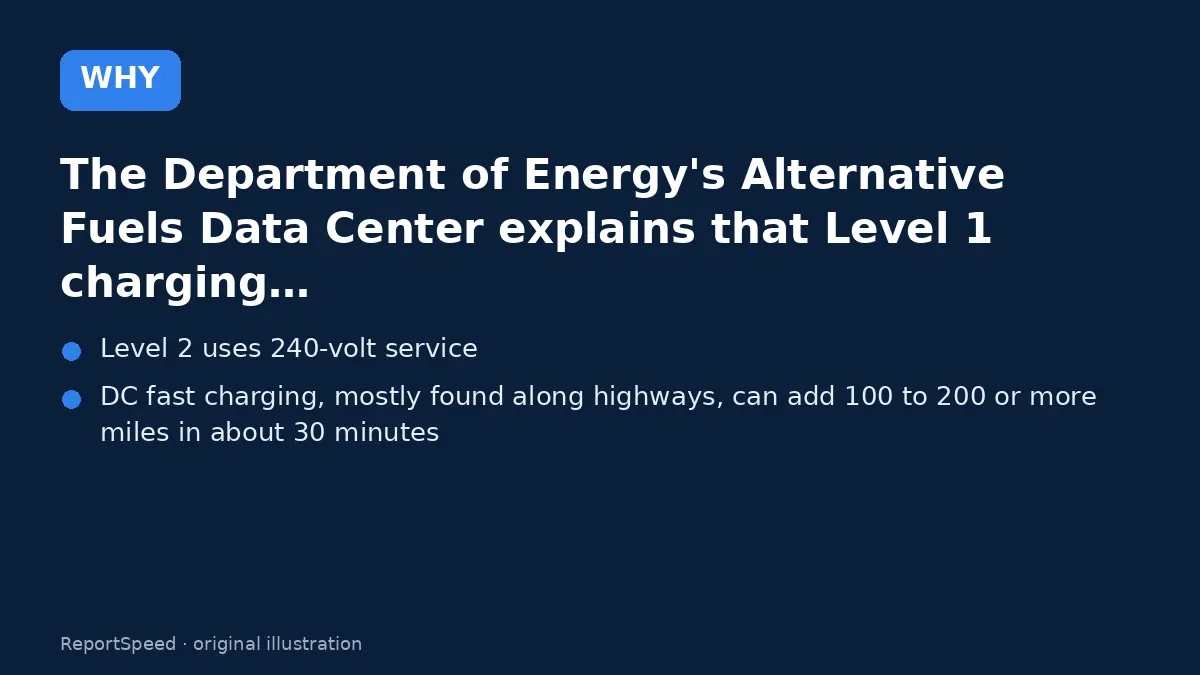
2. Why it happens The cause 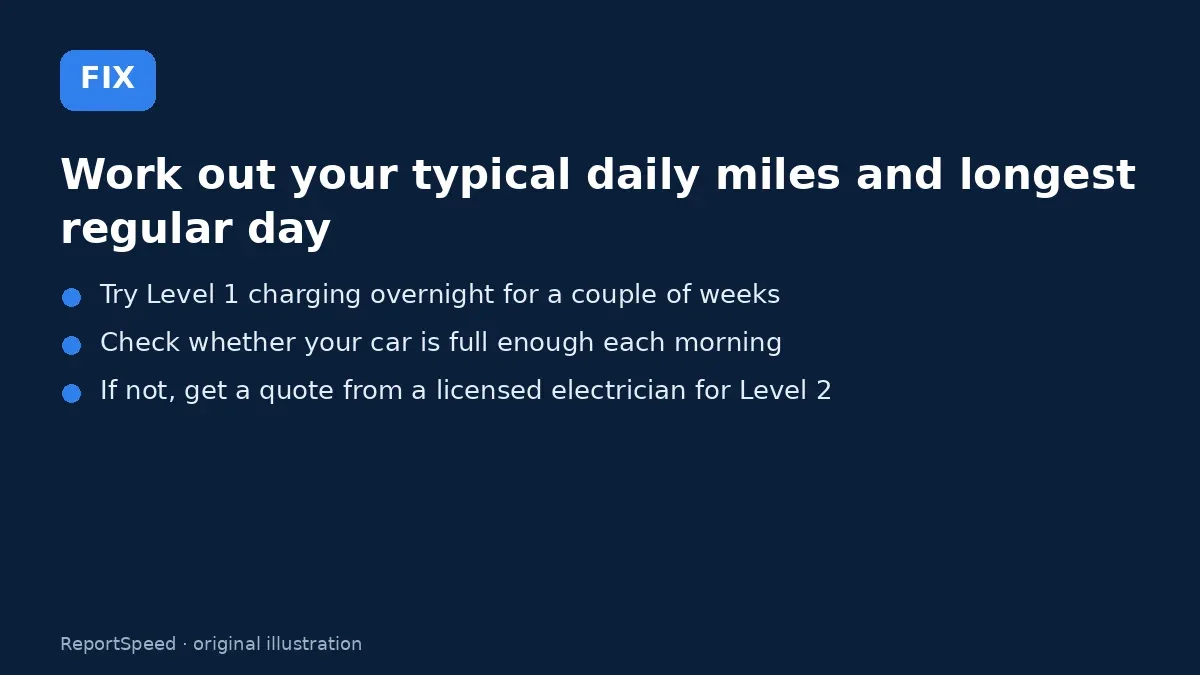
3. The fix The fix 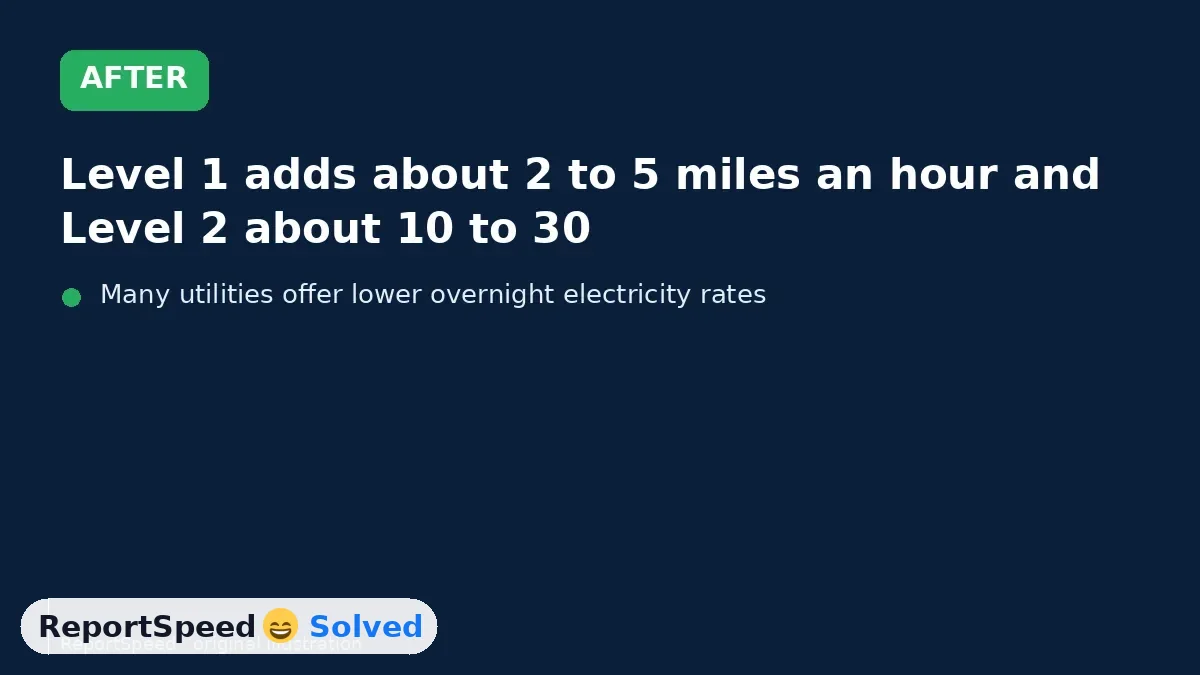
4. After The result
⚡ Speed Summary
- Level 1 adds about 2 to 5 miles an hour and Level 2 about 10 to 30.
- Many utilities offer lower overnight electricity rates. Scheduling charging in the car's app can cut your costs.
- Paying for a Level 2 install before checking whether overnight Level 1 covers your daily miles can mean spending money you didn't need to.

Was this answer helpful?
Tap a star to rate this answer.
Related questions

How far should I sit from the steering wheel airbag?
Keep 10 inches from the air bag cover, tilt the wheel toward your chest, and keep kids 12 and under in the back.
Rate itSolved
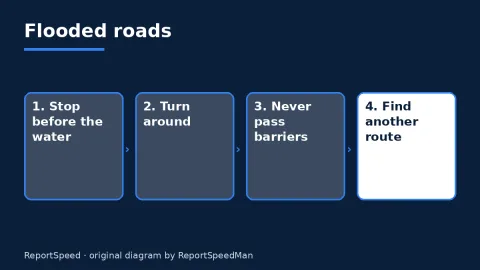
Is it safe to drive through a flooded road? How much water can float a car
Never drive into flood water; a foot of rushing water can carry most cars.
Rate itSolved
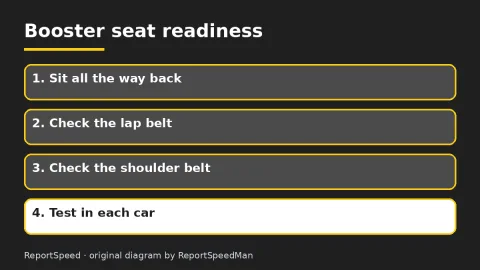
When can my child stop using a booster seat?
Keep the booster until the seat belt fits across the thighs and chest, and keep kids 12 and under in the back.
Rate itSolved
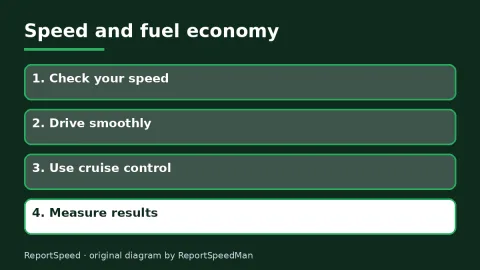
Does driving faster really waste gas? Speed and fuel economy
Above 50 mph mileage drops quickly, roughly like $0.30 more per gallon for each extra 5 mph.
Rate itSolved
Real experiences
No experiences yet. Be the first to share.