


I'm comparing two SUVs. One brags about a 5-star overall rating, the other about being a Top Safety Pick+. I assumed they meant the same thing, but apparently they come from different organisations. What does each rating actually test, and which one should I trust more?
NHTSA 5-star rating vs IIHS Top Safety Pick: what's the difference?
Concerns & risks
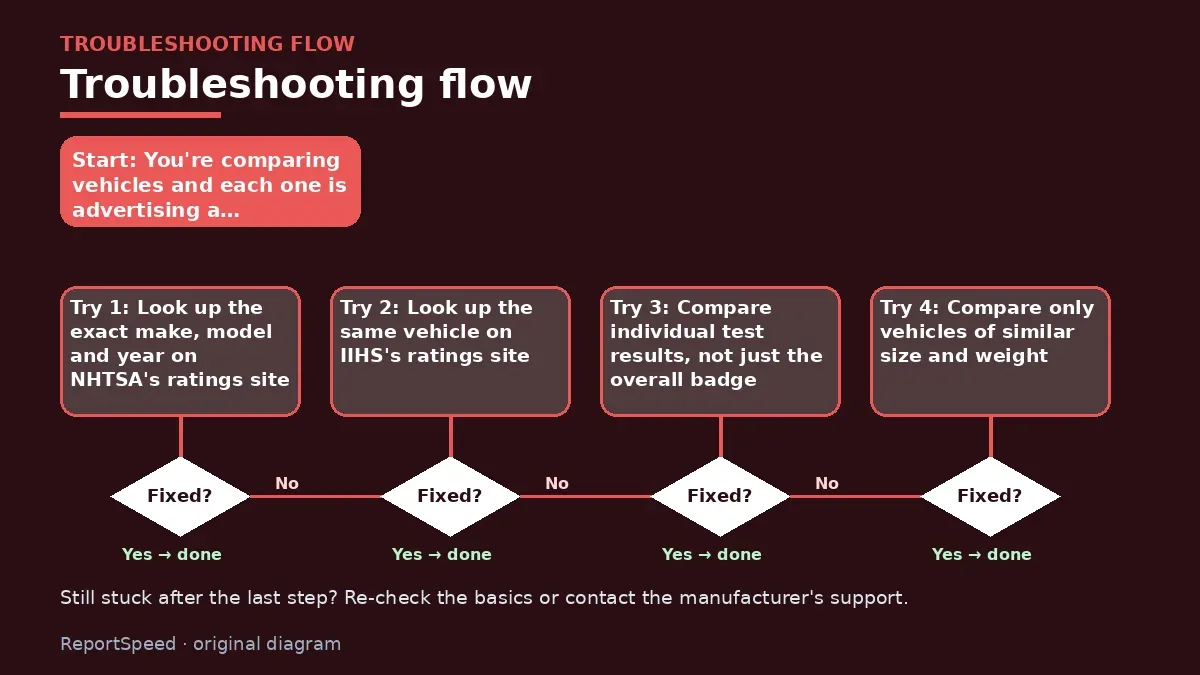
You're comparing vehicles and each one is advertising a different safety rating, so they're hard to compare.
| Situation | How to read it |
|---|---|
| Strong in both | Good sign |
| Strong in one, untested in other | Check individual tests |
| Different sizes | Don't compare directly |
| Older award year | Criteria may be weaker |
Causes & evidence
NHTSA, the federal agency, runs the New Car Assessment Program, giving one to five stars for frontal crash, side crash and rollover resistance, plus an overall score. The Insurance Institute for Highway Safety, funded by insurers, runs its own tests and rates results as Good, Acceptable, Marginal or Poor. IIHS gives Top Safety Pick and Top Safety Pick+ awards to vehicles that meet its criteria, which tend to get tougher each year, so an award from one year isn't directly comparable to another. Both organisations note crash results are most meaningful when comparing vehicles of similar size and weight.
Both organisations update their test programs over time, which is why the model year matters. Recall status is separate from ratings.
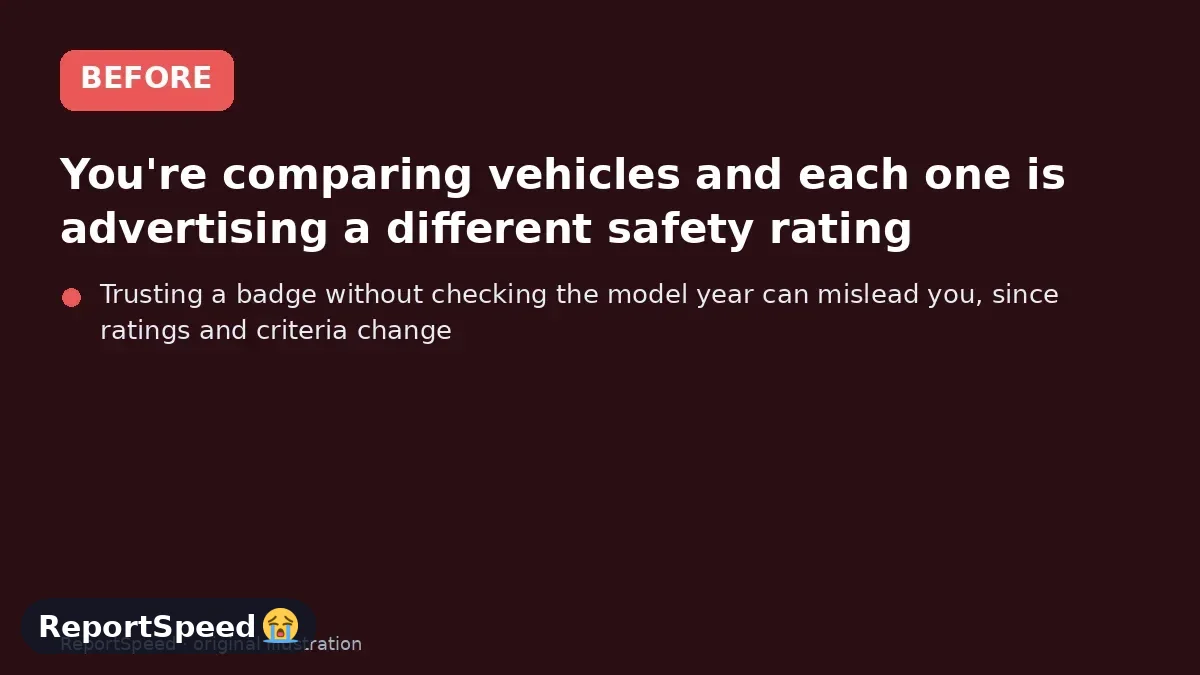
Trusting a badge without checking the model year can mislead you, since ratings and criteria change.
What to do

| Item | NHTSA (5-Star) | IIHS (TSP / TSP+) |
|---|---|---|
| Who runs it | Federal government | Insurance-funded research group |
| Scale | 1 to 5 stars | Good / Acceptable / Marginal / Poor |
| Main tests | Frontal, side, rollover | Several crash tests plus headlights and other criteria |
| Award | Overall star rating | Top Safety Pick and Top Safety Pick+ |
| Changes over time | Program updates periodically | Award criteria tend to tighten yearly |
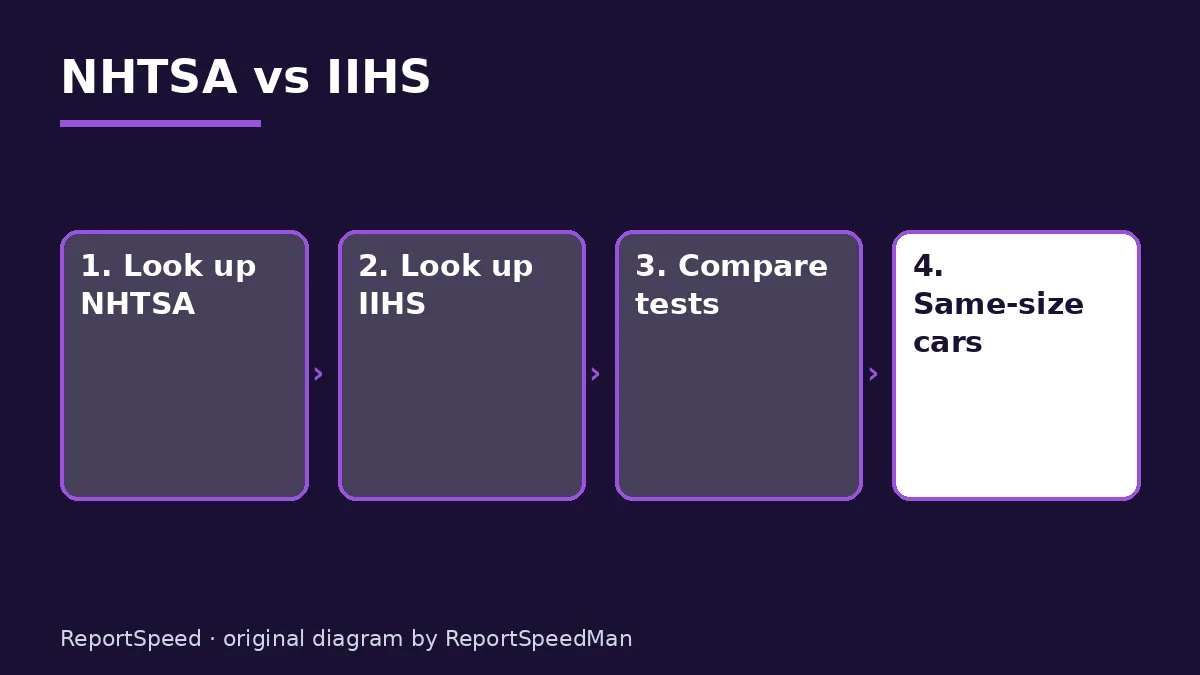
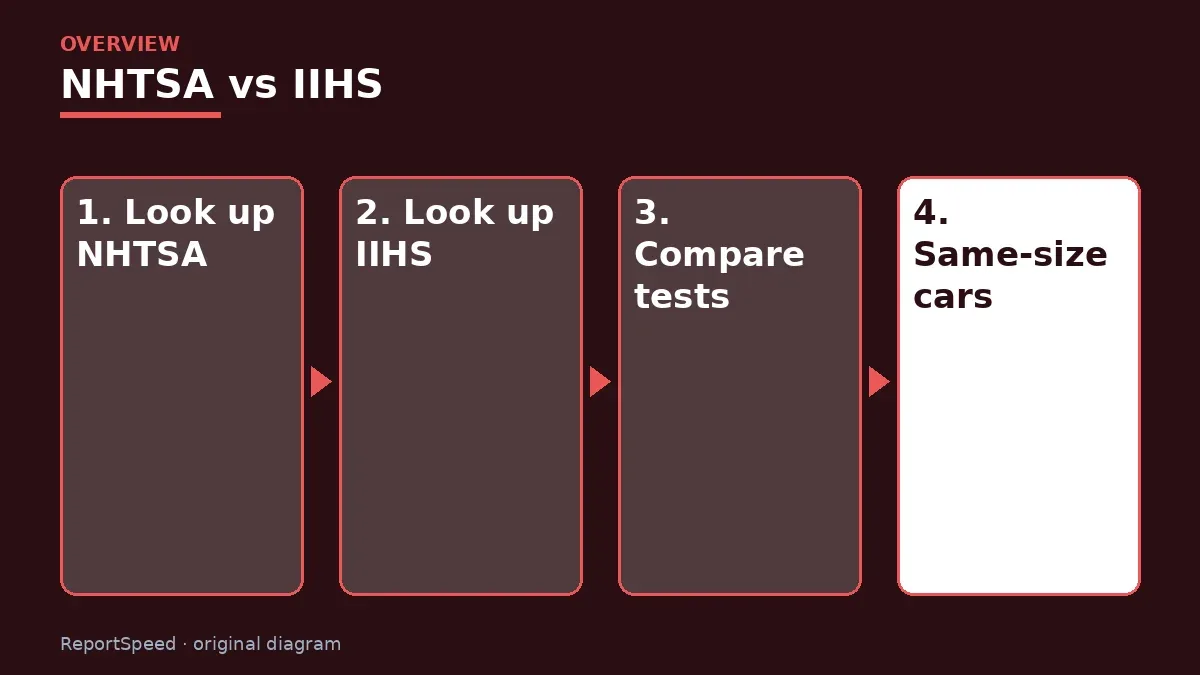
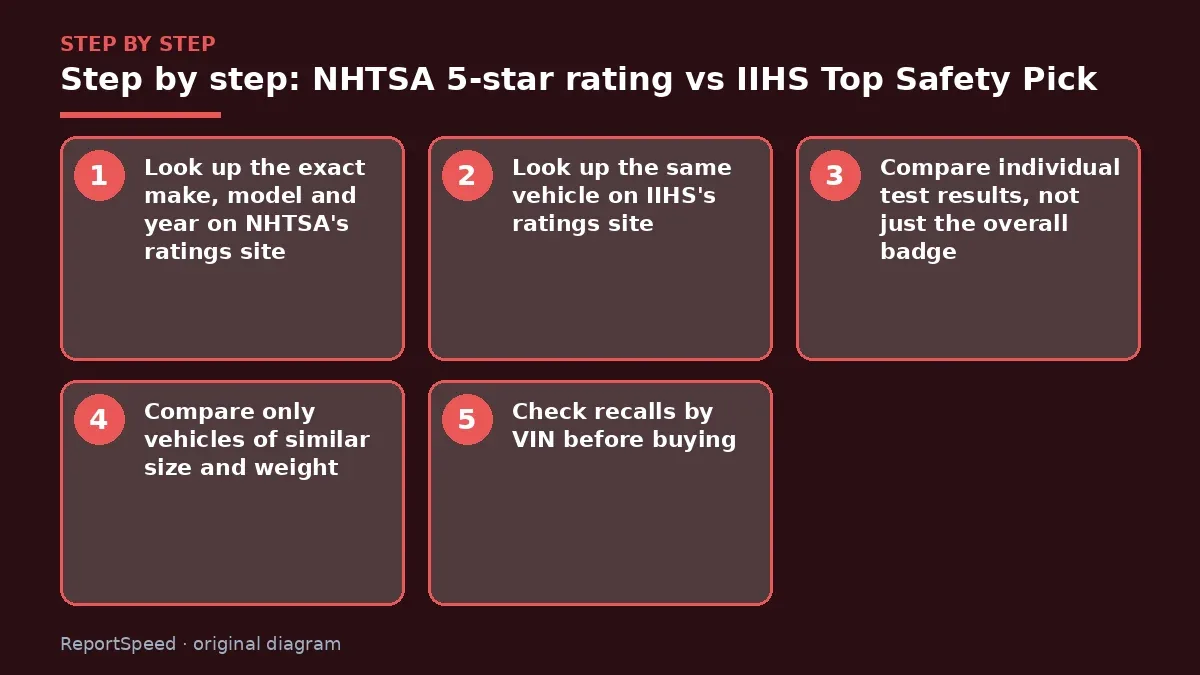
- Look up the exact make, model and year on NHTSA's ratings site.
- Look up the same vehicle on IIHS's ratings site.
- Compare individual test results, not just the overall badge.
- Compare only vehicles of similar size and weight.
- Check recalls by VIN before buying.
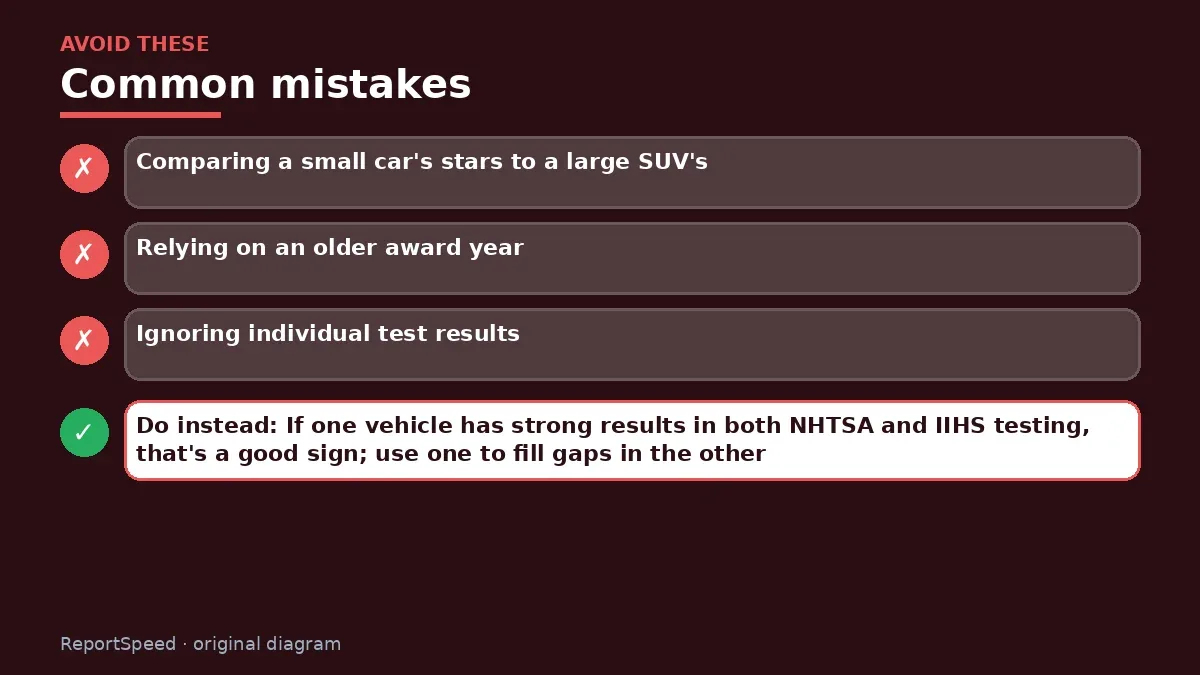
Common mistakes:
- Comparing a small car's stars to a large SUV's
- Relying on an older award year
- Ignoring individual test results
ReportSpeedMan tip: If one vehicle has strong results in both NHTSA and IIHS testing, that's a good sign; use one to fill gaps in the other.
What I would actually do
I'd check both sites for the exact model year, compare similar-size vehicles and pay attention to individual test results where one car is weaker.
The trade-off people miss: a larger vehicle may protect its occupants well but use more fuel and cost more. Safety isn't the only factor in the total price.
How to tell it worked
You've compared both ratings for similar-size vehicles of the same model year.
Quick FAQ
Which rating is better?
Use both; they test different things.
Do ratings include headlights?
IIHS evaluates headlights.
What about used cars?
Look up the original model year.
Wrap-up: Read both ratings for the exact model year and compare similar-sized vehicles. Together they give a fuller picture than either badge alone.
Wiki: Vehicle Recalls and Fuel Economy Basics.
NHTSA 5-star rating vs IIHS Top Safety Pick: where the facts come from
Step-by-step photos
1. Before The problem 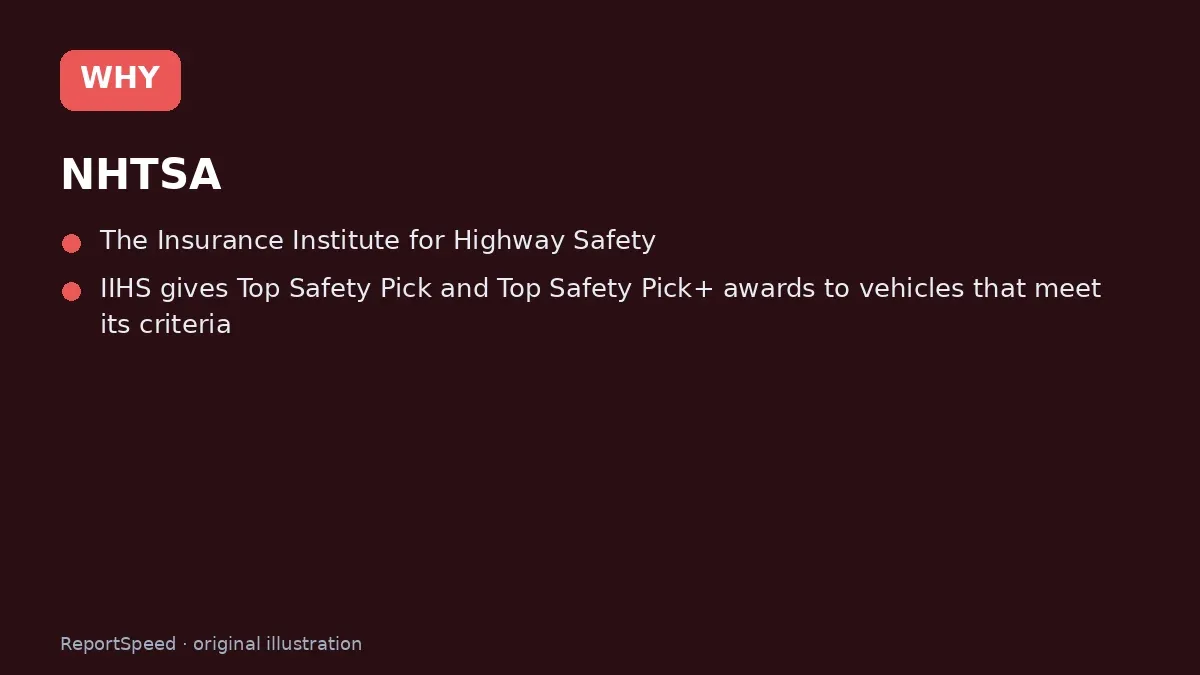
2. Why it happens The cause 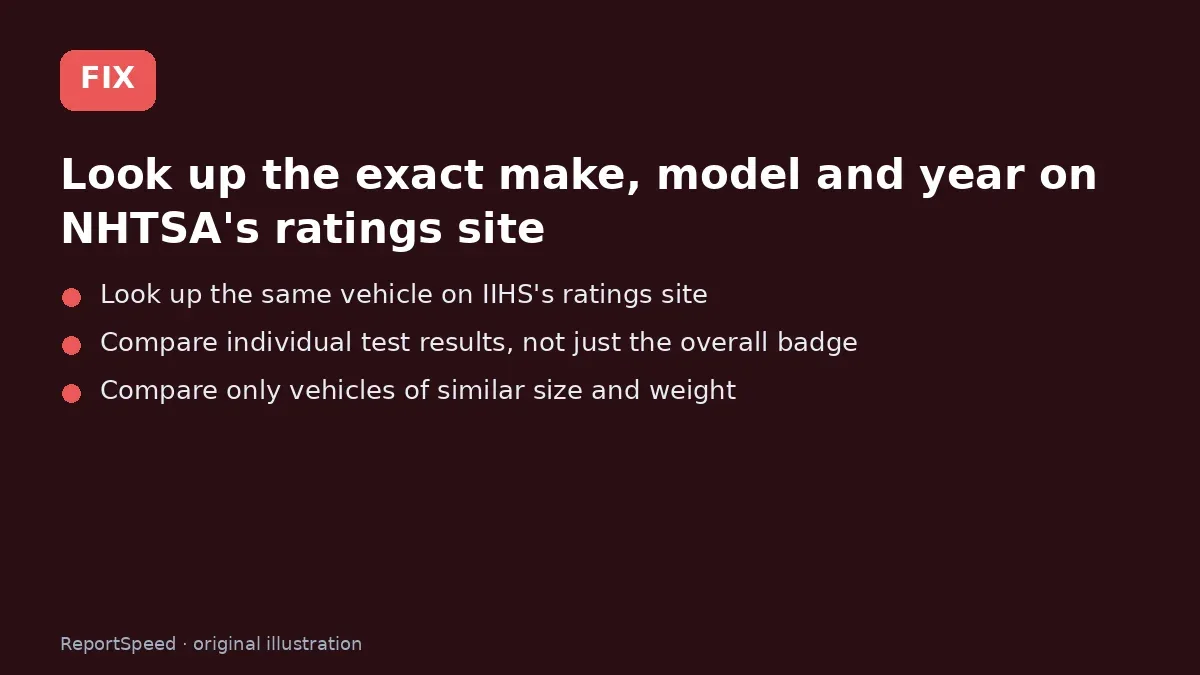
3. The fix The fix 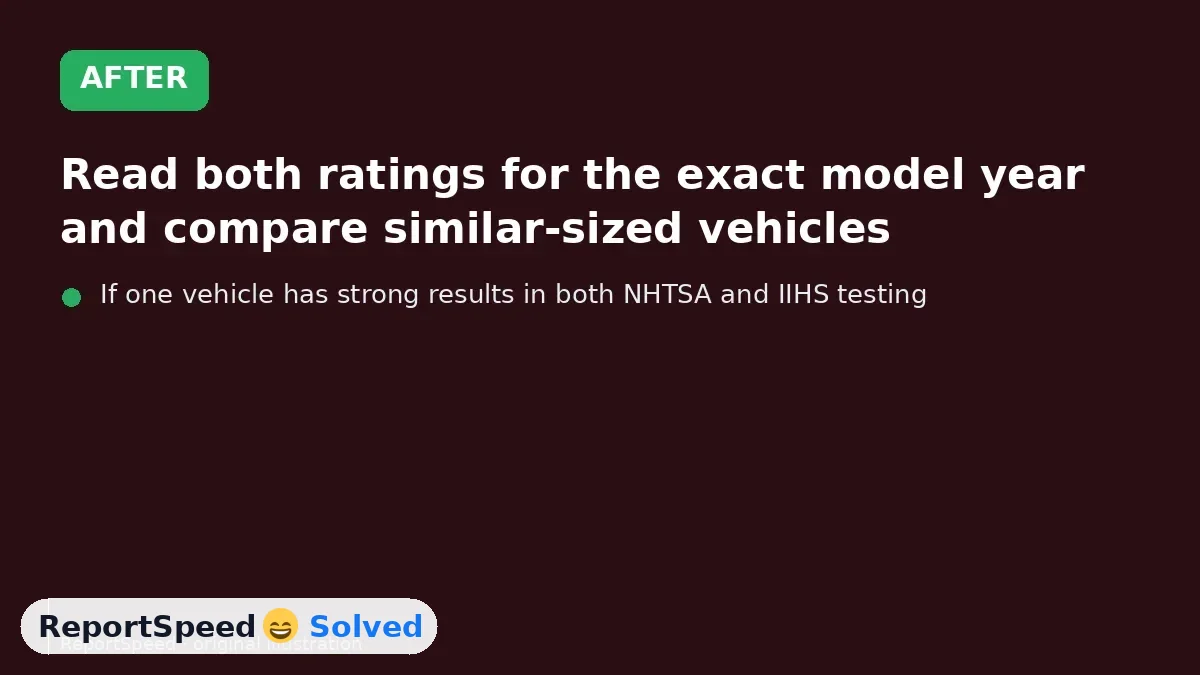
4. After The result
⚡ Speed Summary
- Read both ratings for the exact model year and compare similar-sized vehicles.
- If one vehicle has strong results in both NHTSA and IIHS testing, that's a good sign; use one to fill gaps in the other.
- Trusting a badge without checking the model year can mislead you, since ratings and criteria change.

Was this answer helpful?
Tap a star to rate this answer.
Related questions

How far should I sit from the steering wheel airbag?
Keep 10 inches from the air bag cover, tilt the wheel toward your chest, and keep kids 12 and under in the back.
Rate itSolved
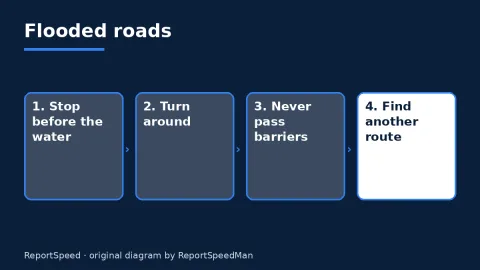
Is it safe to drive through a flooded road? How much water can float a car
Never drive into flood water; a foot of rushing water can carry most cars.
Rate itSolved
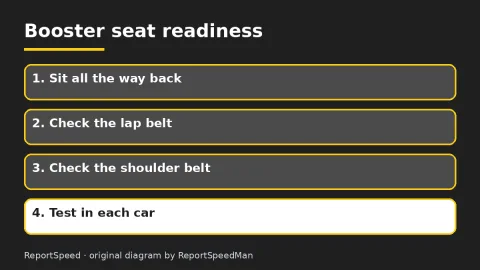
When can my child stop using a booster seat?
Keep the booster until the seat belt fits across the thighs and chest, and keep kids 12 and under in the back.
Rate itSolved
Does driving faster really waste gas? Speed and fuel economy
Above 50 mph mileage drops quickly, roughly like $0.30 more per gallon for each extra 5 mph.
Rate itSolved
Real experiences
No experiences yet. Be the first to share.