


My dad turns 73 this year and has a traditional IRA plus an old 401(k) from his last employer. He's still not sure when he has to start taking money out or how much. Someone told him the penalty for missing a required minimum distribution is huge. When do RMDs start, how is the amount figured, and what happens if he misses one?
Required minimum distributions: when do RMDs start and what if I miss one?
Concerns & risks
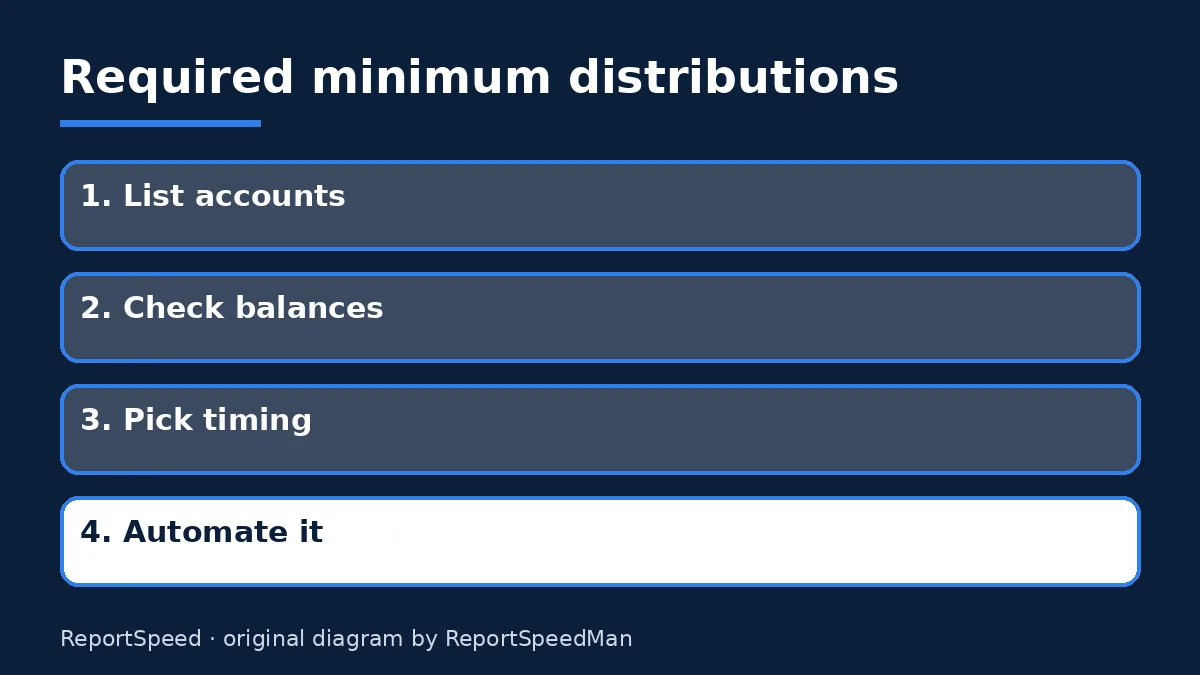
Your dad reaches 73 this year with a traditional IRA and a former employer's 401(k), and he's worried about getting the timing or amount wrong.
| Event | Deadline |
|---|---|
| Turn 73 in year 1 | First RMD for year 1 |
| Take first RMD in year 1 | By December 31, year 1 |
| Or delay first RMD | By April 1, year 2 |
| Second RMD | By December 31, year 2 |
| Delaying means | Two RMDs taxed in year 2 |
| Missed RMD form | Form 5329 |

Causes & evidence
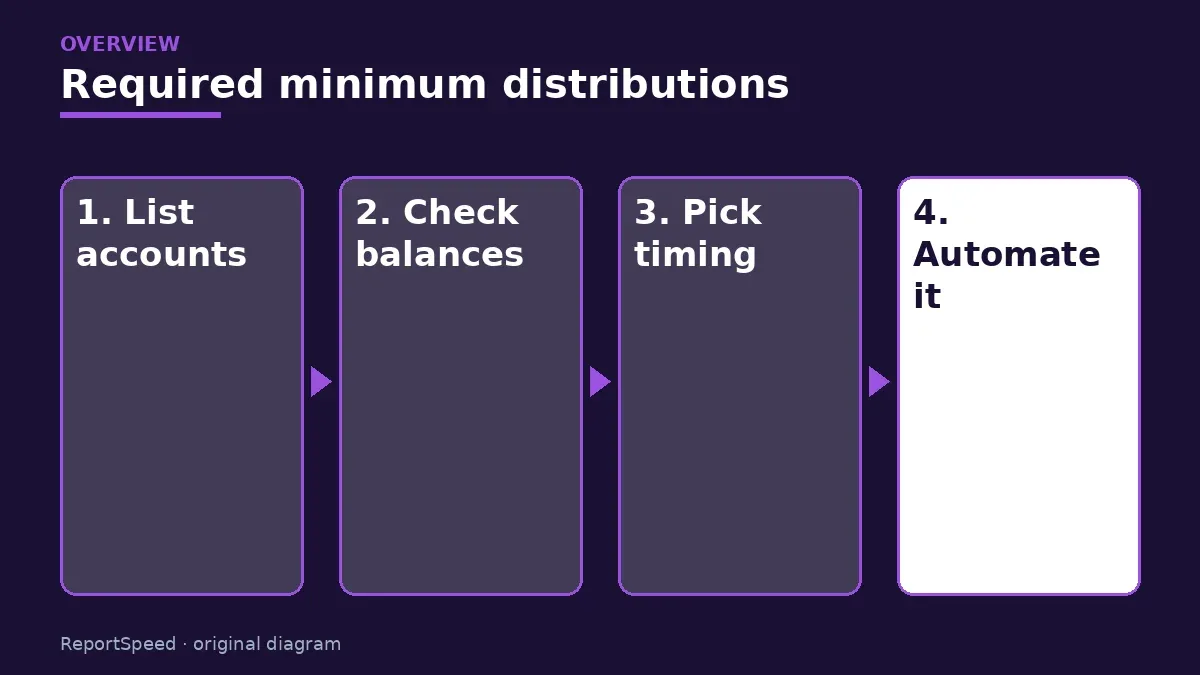
The IRS says you generally must start taking withdrawals from traditional IRAs, SEP IRAs, SIMPLE IRAs and retirement plan accounts when you reach age 73. Your first RMD can be delayed until April 1 of the year after you turn 73, but your second RMD is still due by December 31 of that same year, so delaying the first one means two taxable withdrawals in one year. The amount is figured from the account balance on December 31 of the prior year divided by a life expectancy factor from IRS tables. Roth IRAs don't require withdrawals while the owner is alive. If you don't take the full RMD, the IRS excise tax is 25% of the amount not withdrawn, reduced to 10% if the shortfall is corrected within the IRS correction window. Some workplace plans let people who are still working there delay RMDs from that plan until retirement, but that doesn't apply to IRAs.
Edge cases: RMD rules differ for inherited accounts, and many beneficiaries must empty the account within 10 years. Someone still working for the plan sponsor may delay RMDs from that plan unless they own more than 5% of the business. A qualified charitable distribution from an IRA can satisfy an RMD for people 70½ or older.
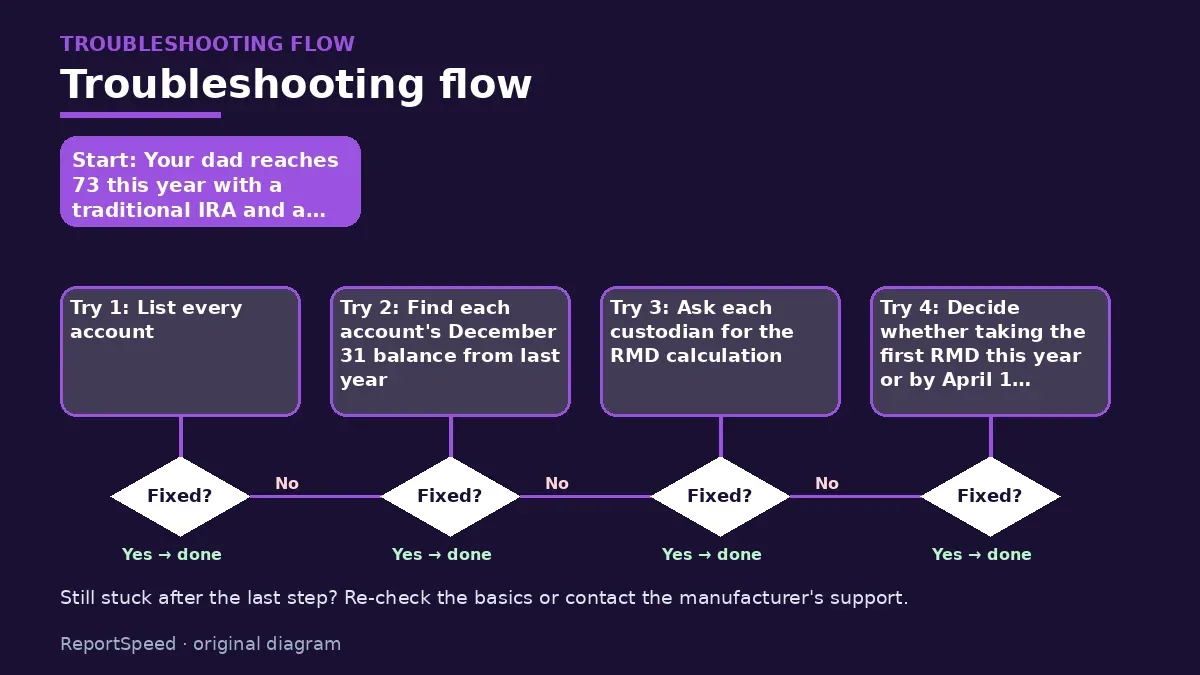
Delaying the first RMD to April 1 without realizing the second one is due that December is the classic surprise that pushes two withdrawals into one tax year.
What to do

| Rule | Detail |
|---|---|
| Starting age | 73 for most traditional accounts |
| First RMD deadline | April 1 of the year after turning 73 |
| Later RMDs | By December 31 each year |
| Balance used | December 31 of the prior year |
| Roth IRA owner | No RMDs while alive |
| Missed RMD excise tax | 25%, reduced to 10% if corrected in time |
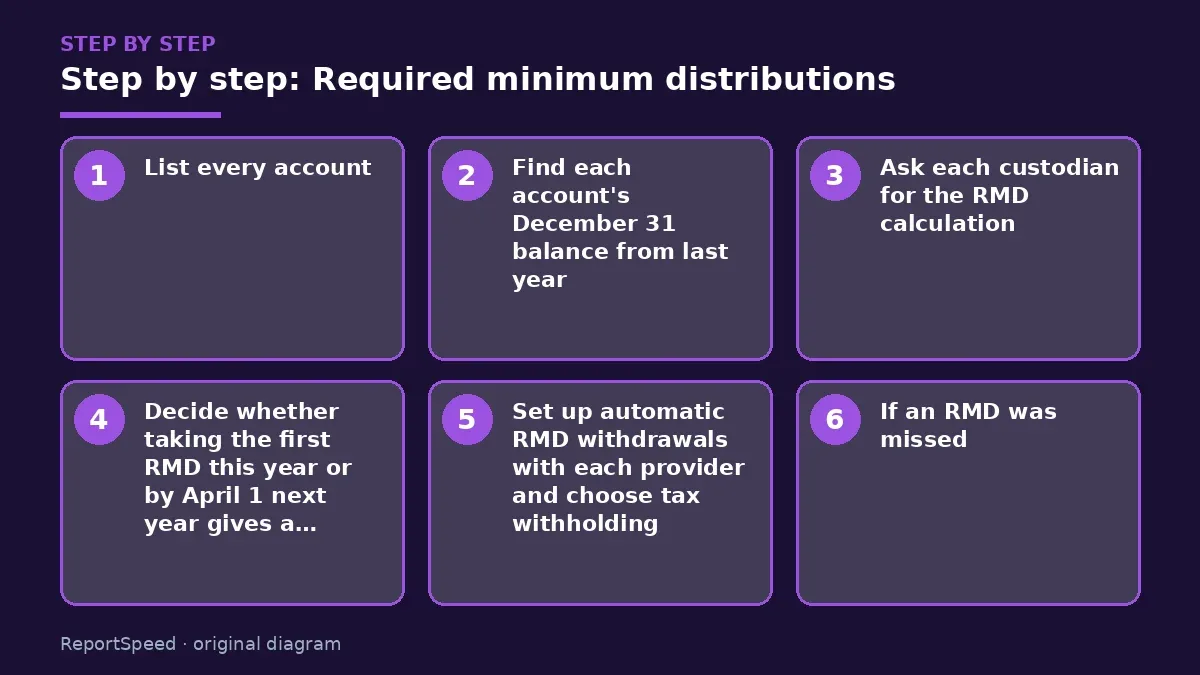
- List every account: traditional IRA, SEP or SIMPLE IRA, and each old workplace plan.
- Find each account's December 31 balance from last year.
- Ask each custodian for the RMD calculation, or use the IRS Uniform Lifetime Table.
- Decide whether taking the first RMD this year or by April 1 next year gives a better tax result.
- Set up automatic RMD withdrawals with each provider and choose tax withholding.
- If an RMD was missed, take it as soon as possible and file Form 5329 to report it and request relief if eligible.
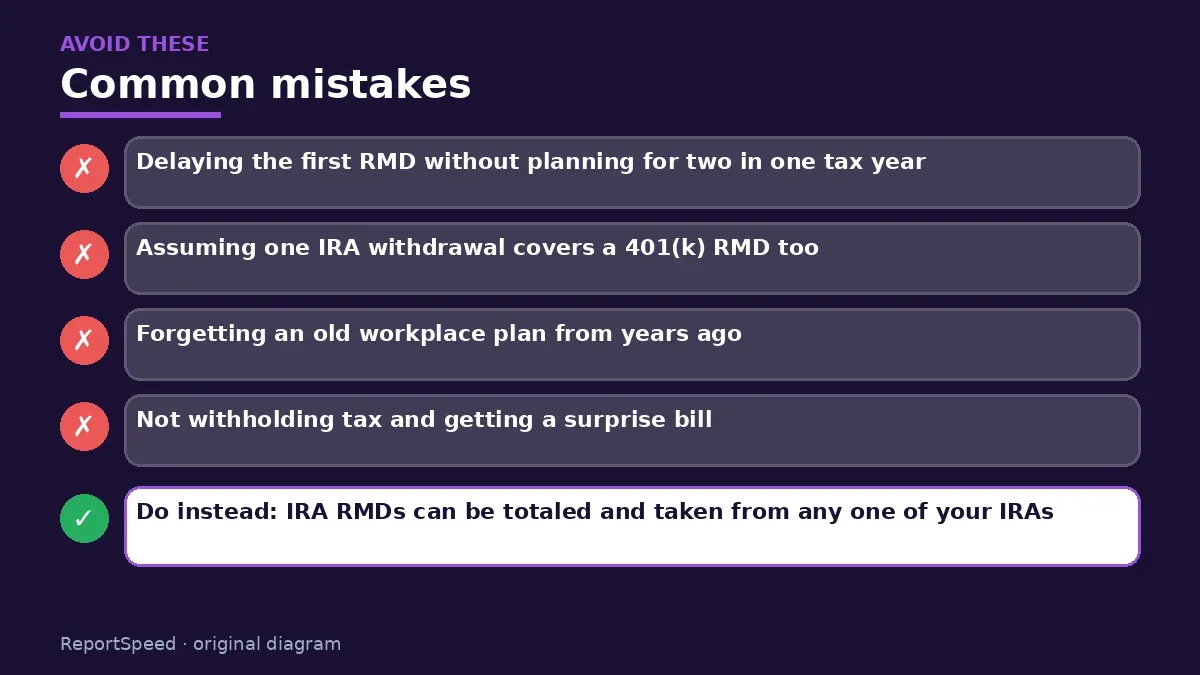
Common mistakes:
- Delaying the first RMD without planning for two in one tax year
- Assuming one IRA withdrawal covers a 401(k) RMD too
- Forgetting an old workplace plan from years ago
- Not withholding tax and getting a surprise bill
ReportSpeedMan tip: IRA RMDs can be totaled and taken from any one of your IRAs, but 401(k) RMDs generally must come from each plan separately. Put that on a sticky note for your dad.
What I would actually do
I'd take the first RMD in the year my dad turns 73 rather than waiting to April, set up automatic December withdrawals with withholding, and consolidate old 401(k)s into an IRA if it simplifies things.
The trade-off people miss: delaying the first RMD feels like a win, but stacking two withdrawals into one year can push income into a higher bracket and may affect Medicare premiums later.
How to know it worked
Each account has an RMD schedule and the first withdrawal is on the calendar.
Quick FAQ
Do Roth IRAs need RMDs?
Not while the owner is alive.
Can I take more than the RMD?
Yes; it's a minimum.
Can I combine IRA RMDs?
Yes, from any of your IRAs; 401(k) RMDs are separate.
Wrap-up: RMDs start at 73, the first can wait until April 1 of the next year, and a missed RMD costs 25% or 10% if fixed quickly. Map every account and automate the withdrawals.
Wiki: Compound Interest and Tax Withholding and Form W-4.
Required minimum distributions: primary sources
Step-by-step photos
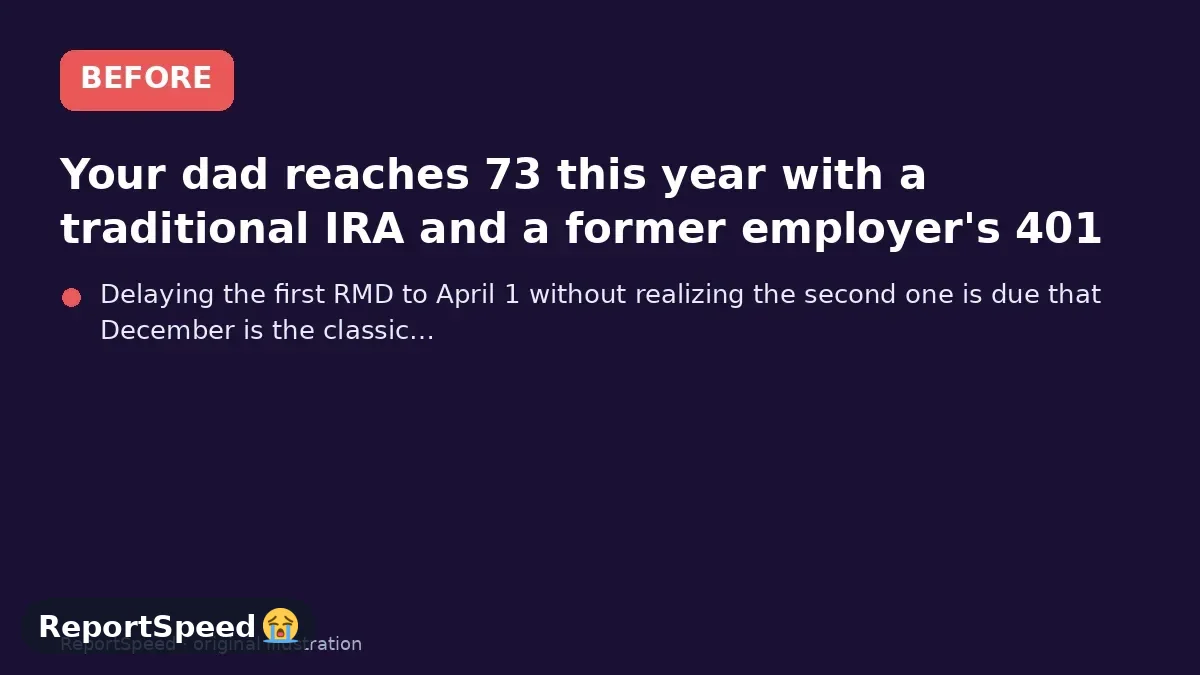
1. Before The problem 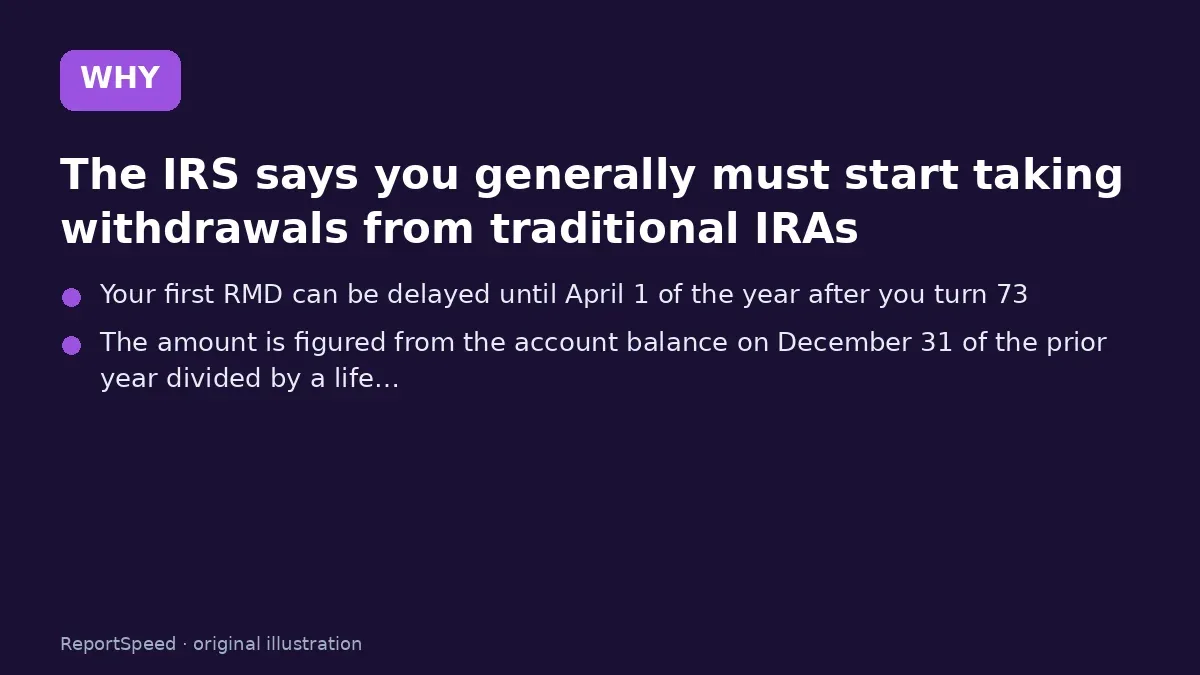
2. Why it happens The cause 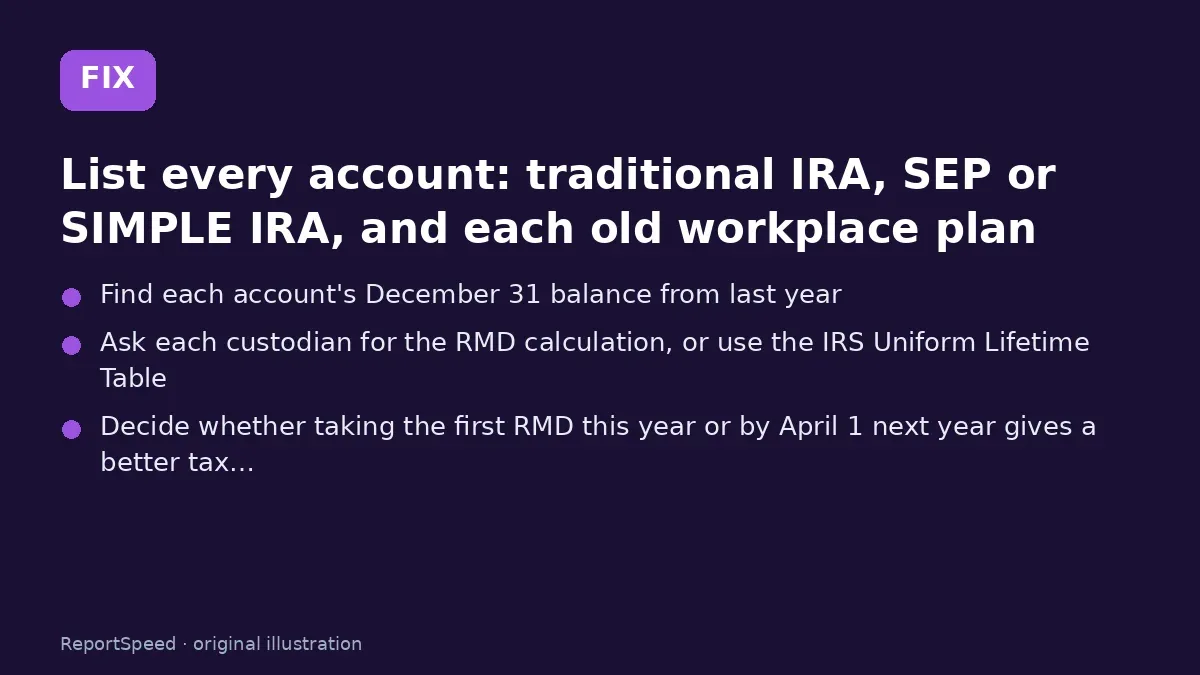
3. The fix The fix 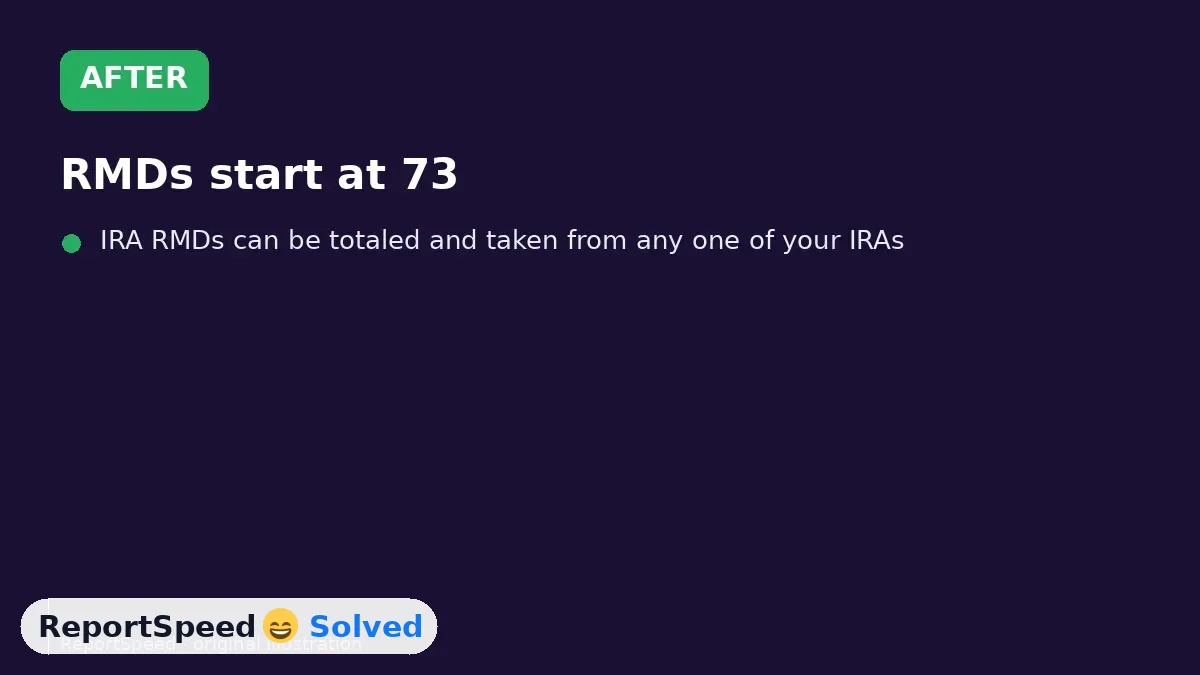
4. After The result
⚡ Speed Summary
- RMDs start at 73, the first can wait until April 1 of the next year, and a missed RMD costs 25% or 10% if fixed quickly.
- IRA RMDs can be totaled and taken from any one of your IRAs, but 401(k) RMDs generally must come from each plan separately. Put that on a sticky note for your dad.
- Delaying the first RMD to April 1 without realizing the second one is due that December is the classic surprise that pushes two withdrawals into one tax year.

Was this answer helpful?
Tap a star to rate this answer.
Related questions
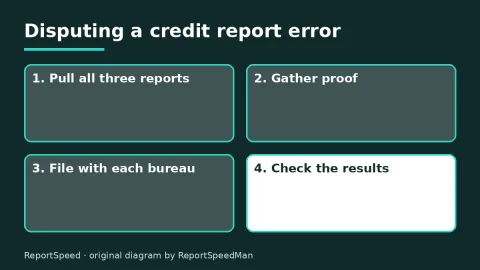
Found an error on my credit report? How to dispute it step by step
Dispute with each bureau and the furnisher, include proof, and expect results in about 30 days.
Rate itSolved
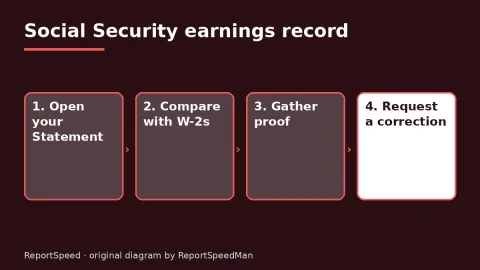
How do I check my Social Security earnings record and fix a mistake?
Check your Statement every year, match it to your W-2s, and correct gaps with proof before the usual window closes.
Rate itSolved
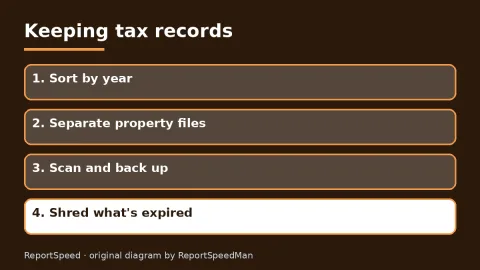
How long should I keep tax records? The IRS 3-, 6- and 7-year rules
Three years covers most returns; six, seven or forever apply in specific cases.
Rate itSolved
What happens if I only pay the minimum on my credit card?
Minimum payments keep you current but stretch the debt for years.
Rate itSolved
Real experiences
No experiences yet. Be the first to share.