


I started delivering food and selling crafts online on weekends. I made a few thousand dollars this year, and one app says it won't send me a tax form because I didn't earn enough. Do I still have to report this income, and do I owe extra tax because I'm self-employed?
Side hustle taxes: do I owe tax on gig income?
Concerns & risks
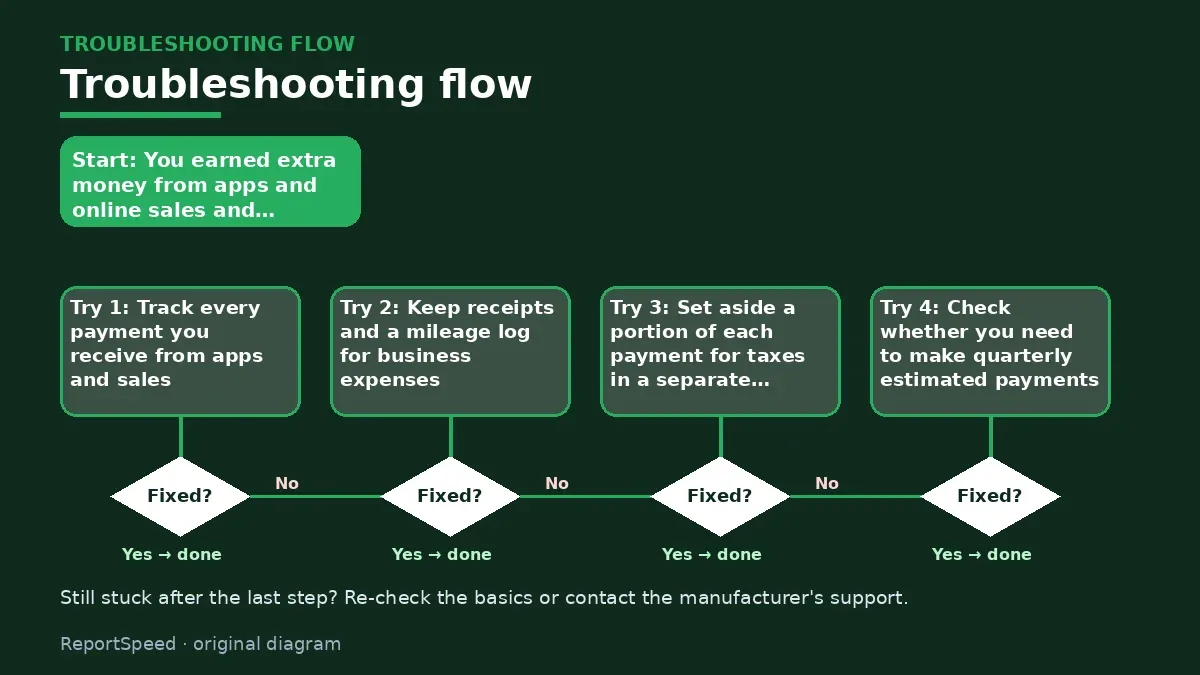
You earned extra money from apps and online sales and aren't sure what to report or whether you'll owe more.
| Habit | Why |
|---|---|
| Separate tax account | Money is there when due |
| Mileage log | Supports deductions |
| Receipts folder | Proof for expenses |
| Calendar for quarterly dates | Avoid penalties |

Causes & evidence
The IRS says income from the gig economy is generally taxable and must be reported, even if you don't receive a Form 1099 or other information return. If you work as an independent contractor rather than an employee, you generally owe self-employment tax, which covers Social Security and Medicare, when your net earnings from self-employment are $400 or more. The self-employment tax rate is 15.3%, made up of 12.4% for Social Security and 2.9% for Medicare, applied to net earnings. You can deduct ordinary and necessary business expenses, and because no tax is withheld, you may need to make quarterly estimated tax payments.
If you're unsure whether you're an employee or contractor, the IRS has guidance on worker classification. Keep records for at least as long as the IRS can audit the return.
Assuming no form means no tax can lead to a bill with penalties later.
What to do
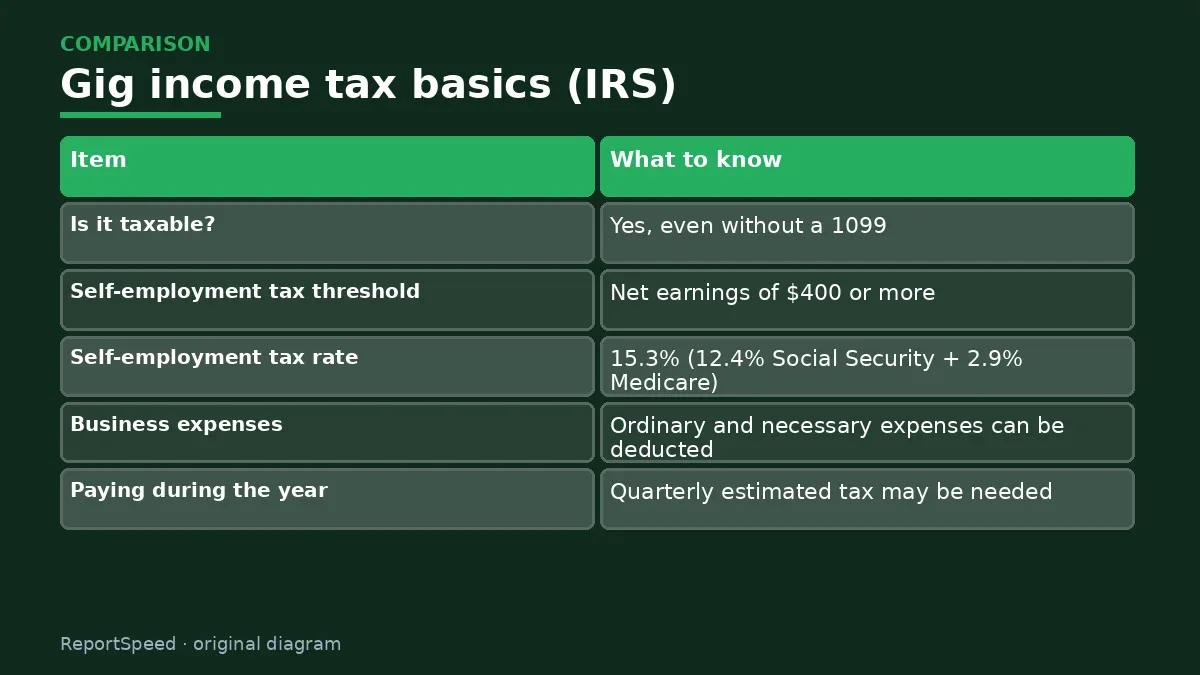
| Item | What to know |
|---|---|
| Is it taxable? | Yes, even without a 1099 |
| Self-employment tax threshold | Net earnings of $400 or more |
| Self-employment tax rate | 15.3% (12.4% Social Security + 2.9% Medicare) |
| Business expenses | Ordinary and necessary expenses can be deducted |
| Paying during the year | Quarterly estimated tax may be needed |
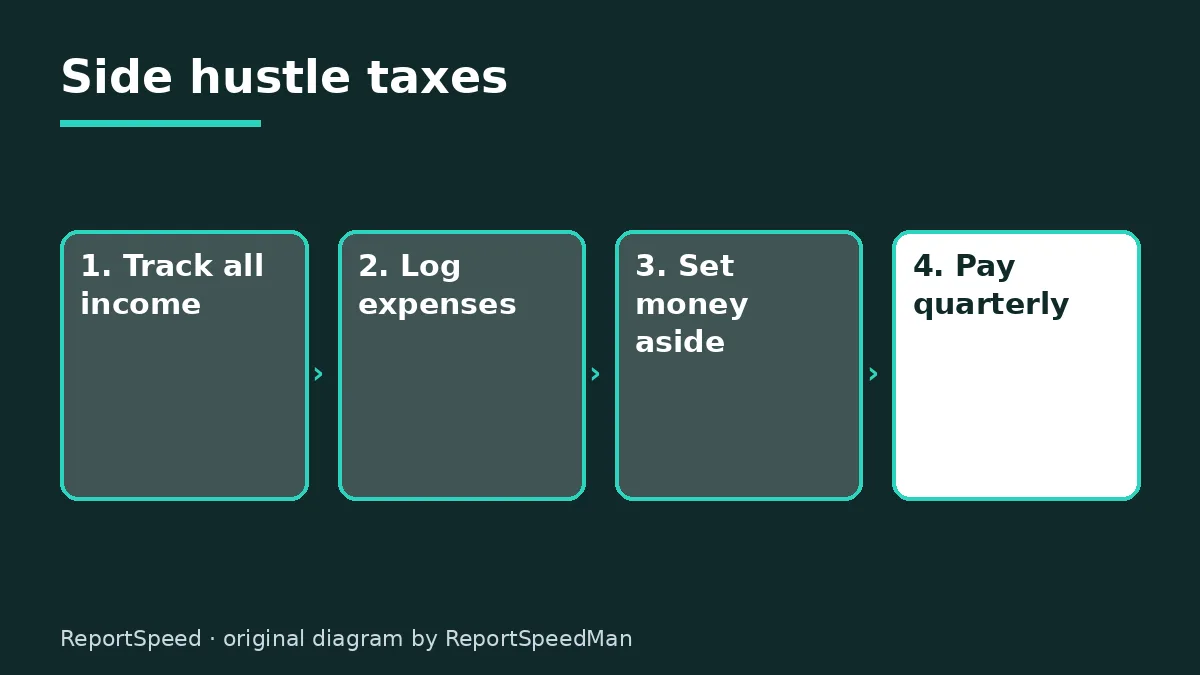
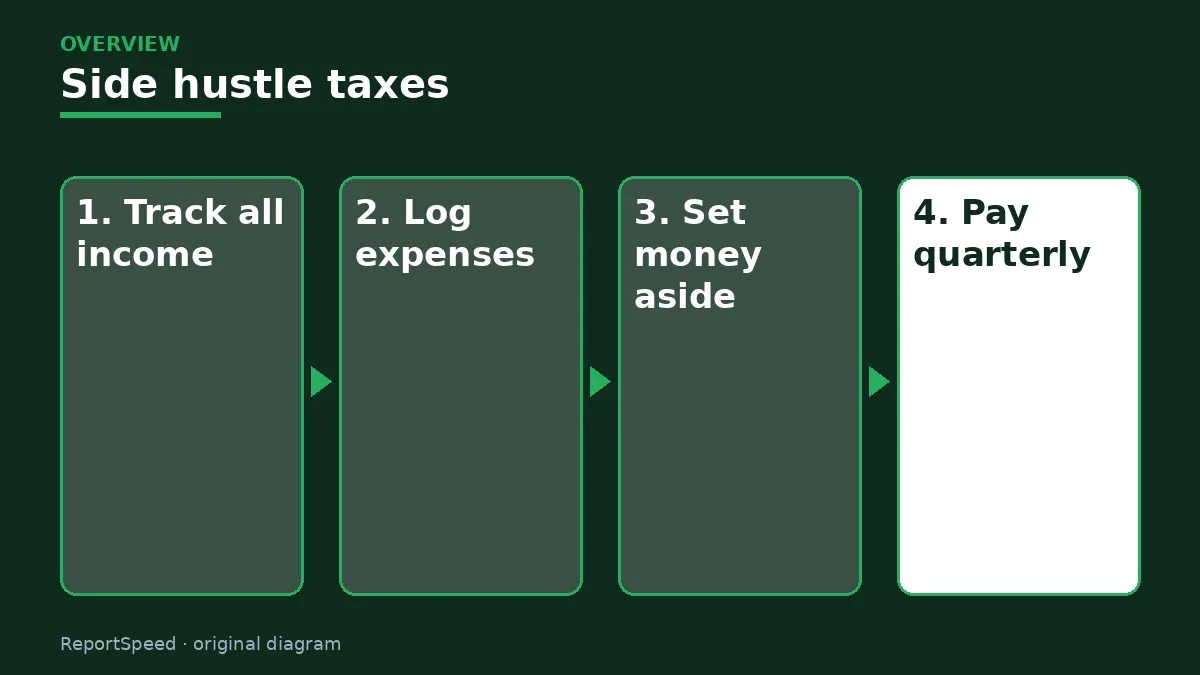
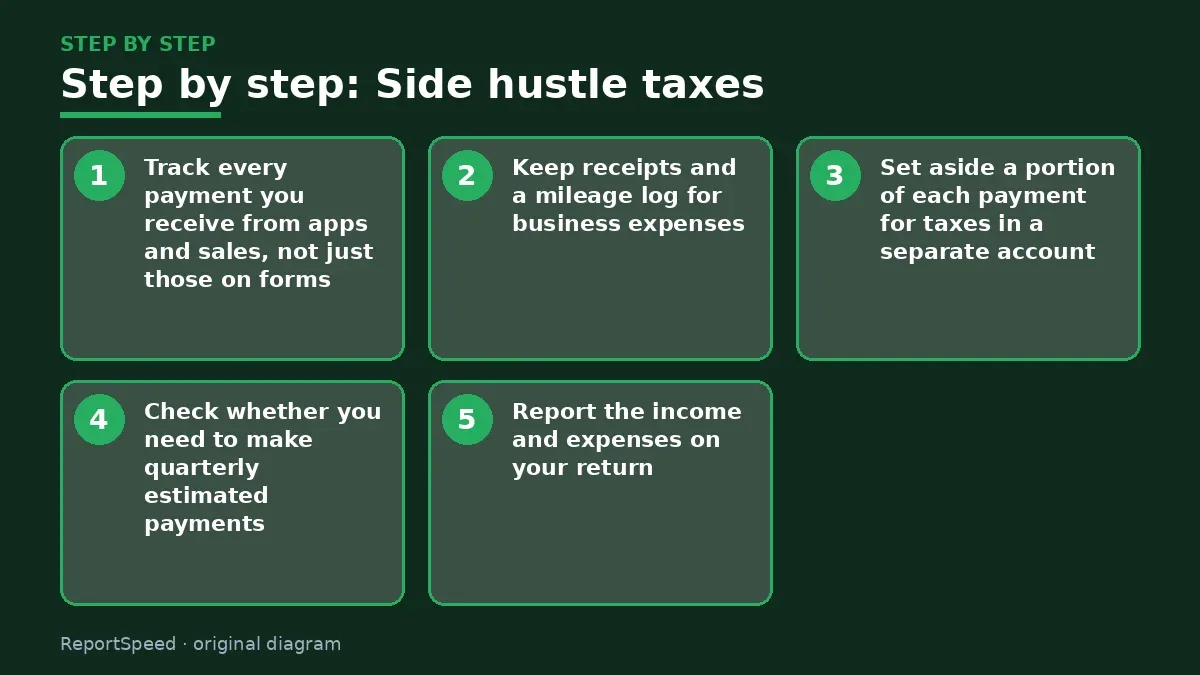
- Track every payment you receive from apps and sales, not just those on forms.
- Keep receipts and a mileage log for business expenses.
- Set aside a portion of each payment for taxes in a separate account.
- Check whether you need to make quarterly estimated payments.
- Report the income and expenses on your return, using the IRS Gig Economy Tax Center for guidance.
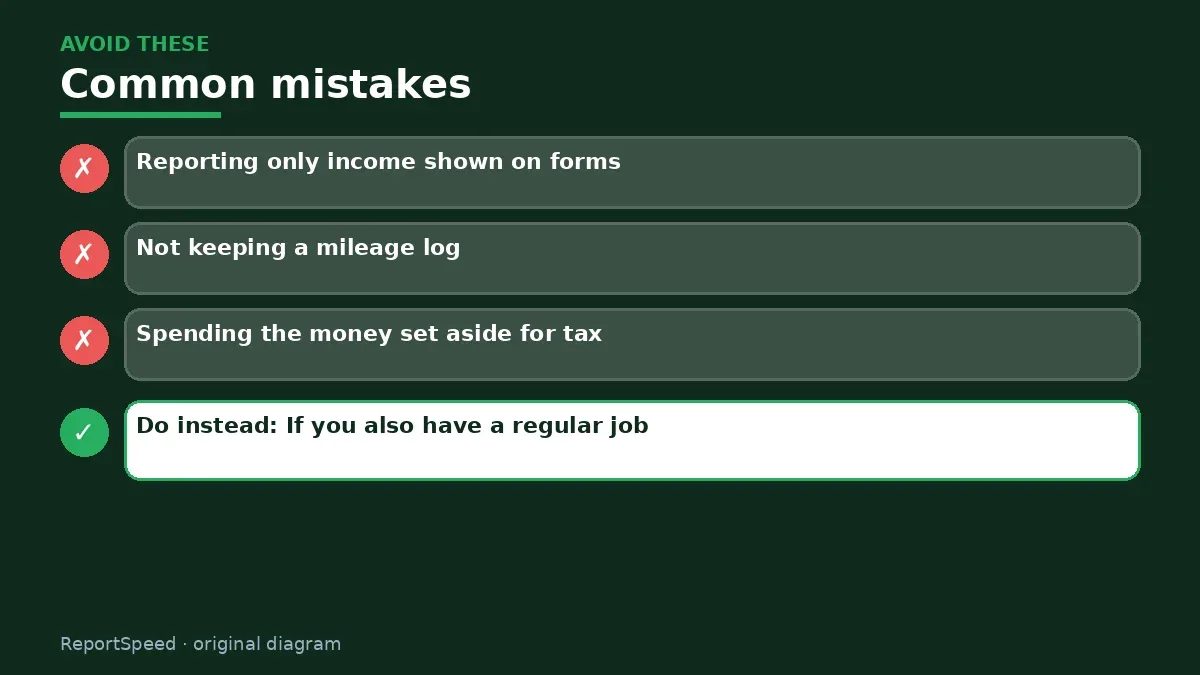
Common mistakes:
- Reporting only income shown on forms
- Not keeping a mileage log
- Spending the money set aside for tax
ReportSpeedMan tip: If you also have a regular job, raising your W-4 withholding there can cover the tax on side income instead of making separate quarterly payments.
What I would actually do
I'd open a separate savings account and move a fixed share of every payout into it the same day, then use it for quarterly payments.
The trade-off people miss: the 15.3% self-employment tax is on top of regular income tax, so a 'small' side income can produce a bigger bill than people expect, even though half of SE tax is deductible.
How you can tell it worked
Your tax money is set aside and your return matches your income and expense records.
Quick FAQ
I earned under $400. Do I report it?
Income is generally still reportable; SE tax applies at $400+ net.
Can I deduct my phone?
The business-use share may be deductible.
When are quarterly payments due?
Check the IRS estimated tax schedule.
Wrap-up: Report all gig income, track expenses and set money aside. A simple system during the year avoids a painful bill at tax time.
Wiki: Tax Withholding and Form W-4 and Emergency Fund.
Side hustle taxes: read the originals
Step-by-step photos
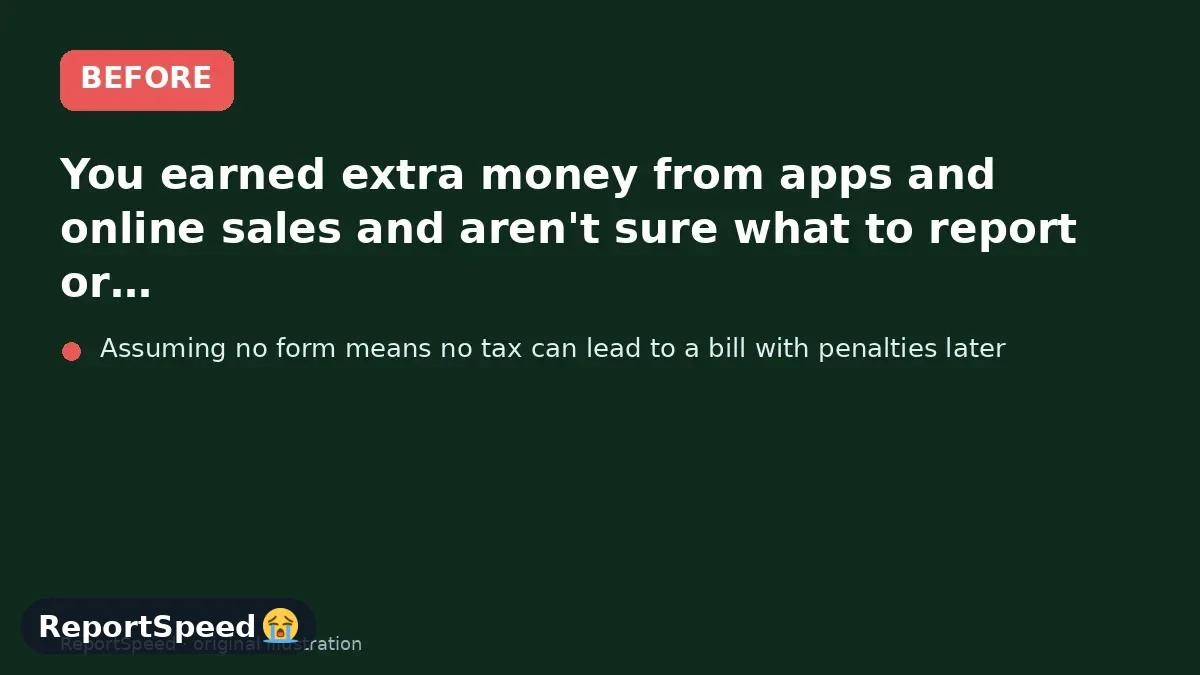
1. Before The problem 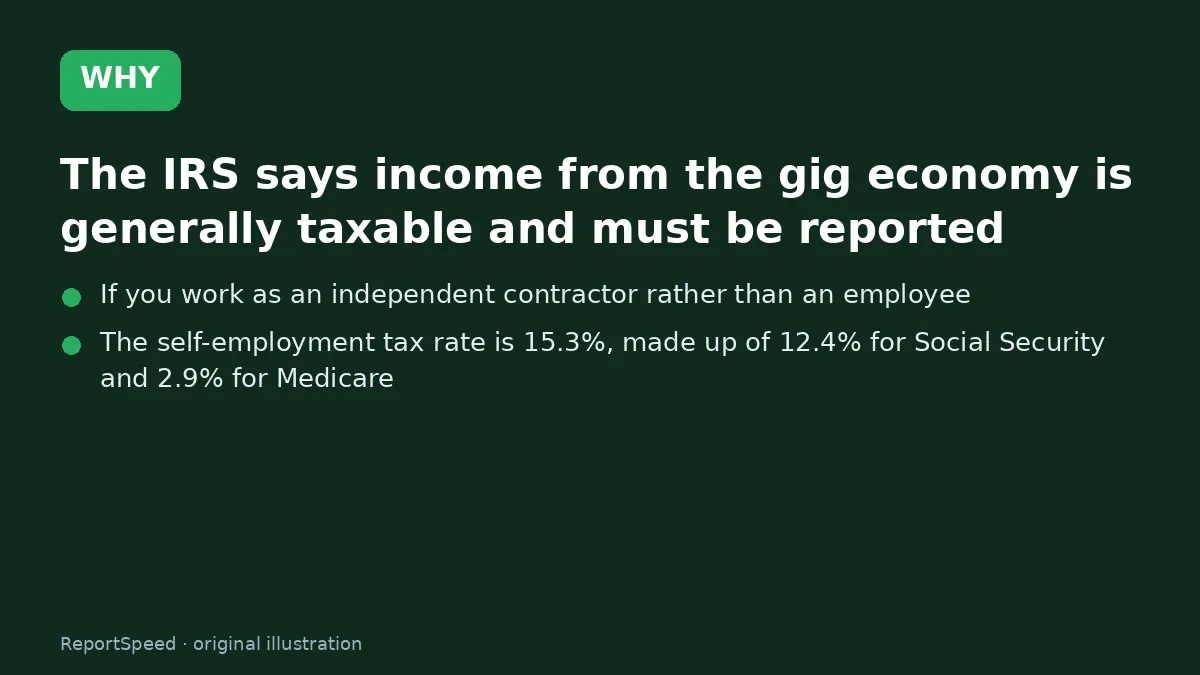
2. Why it happens The cause 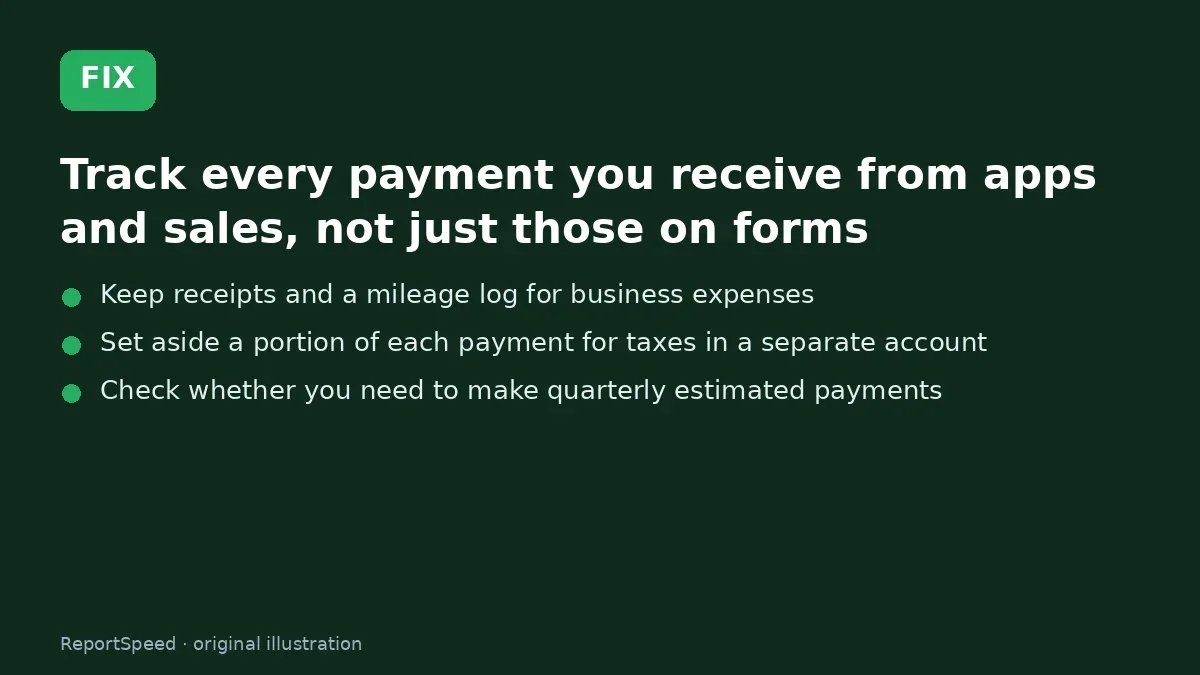
3. The fix The fix 
4. After The result
⚡ Speed Summary
- Report all gig income, track expenses and set money aside.
- If you also have a regular job, raising your W-4 withholding there can cover the tax on side income instead of making separate quarterly payments.
- Assuming no form means no tax can lead to a bill with penalties later.

Was this answer helpful?
Tap a star to rate this answer.
Related questions
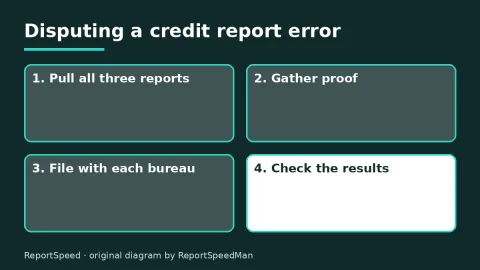
Found an error on my credit report? How to dispute it step by step
Dispute with each bureau and the furnisher, include proof, and expect results in about 30 days.
Rate itSolved
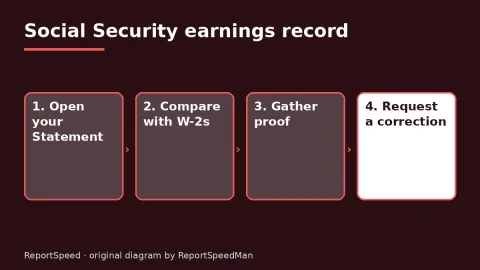
How do I check my Social Security earnings record and fix a mistake?
Check your Statement every year, match it to your W-2s, and correct gaps with proof before the usual window closes.
Rate itSolved
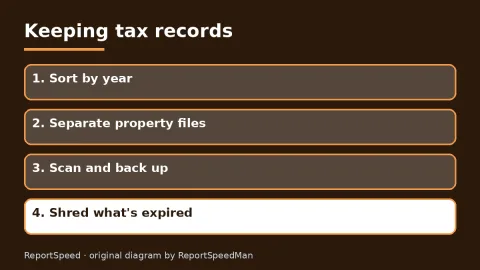
How long should I keep tax records? The IRS 3-, 6- and 7-year rules
Three years covers most returns; six, seven or forever apply in specific cases.
Rate itSolved
What happens if I only pay the minimum on my credit card?
Minimum payments keep you current but stretch the debt for years.
Rate itSolved
Real experiences
No experiences yet. Be the first to share.