


My daughter just turned one and relatives keep asking if we've 'opened a 529 yet.' I know it's for college, but I don't really understand how it works, what happens if she doesn't go to college, or whether it's better than just saving in a regular account. Should I open one?
What is a 529 plan, and should I open one for my child?
Concerns & risks
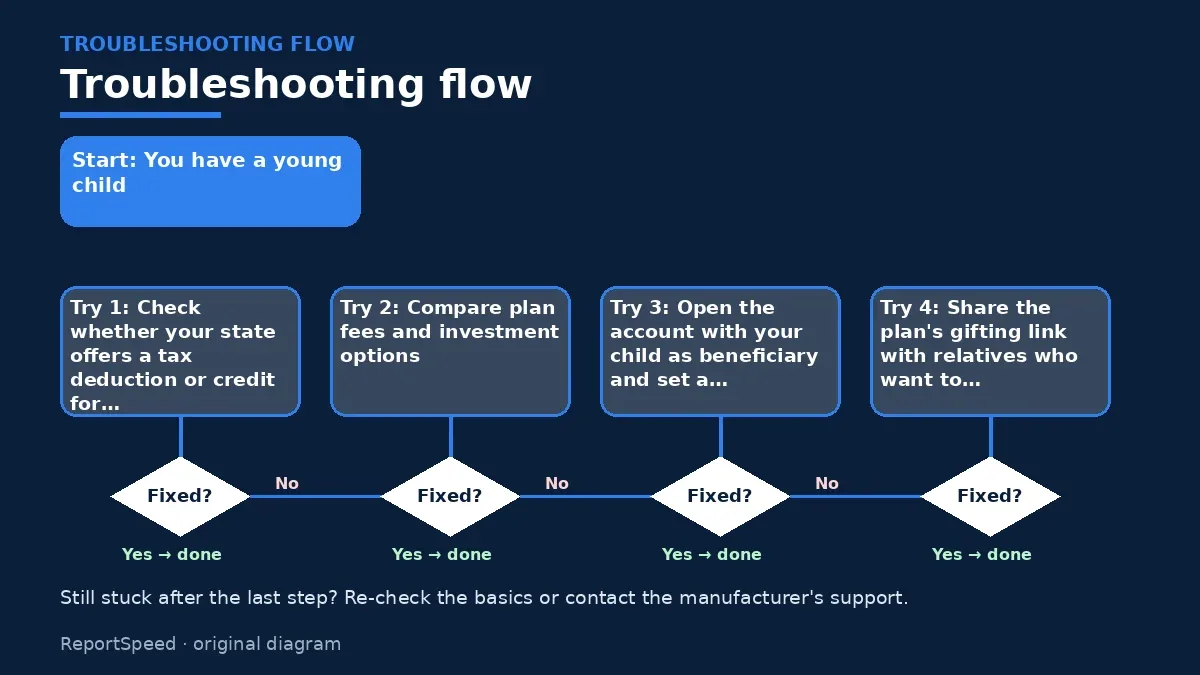
You have a young child, family members are asking about a 529, and you want to know if it's the right place for education savings.
| Step | Tip |
|---|---|
| Pick a plan | Start with your state's plan |
| Choose investments | Age-based options are simple |
| Contribute | Automate a small monthly amount |
| Invite family | Use the plan's gifting link |

Causes & evidence
A 529 plan is a tax-advantaged savings plan sponsored by a state. According to the IRS, earnings grow tax-deferred and withdrawals are tax-free when used for qualified education expenses, such as college tuition, fees, books and certain room and board. The rules also allow some K-12 tuition, registered apprenticeship costs and a limited amount of student loan repayment. If money is withdrawn for non-qualified purposes, the earnings portion is taxed and usually faces an additional 10% tax. You can generally change the beneficiary to another family member, and many states offer a state tax deduction for contributing to their own plan.
Each state sponsors at least one 529 plan, and you can usually enrol in any state's plan. Contributions are made with after-tax money at the federal level.
Choosing a plan only because a relative uses it can mean missing your own state's tax deduction.
What to do
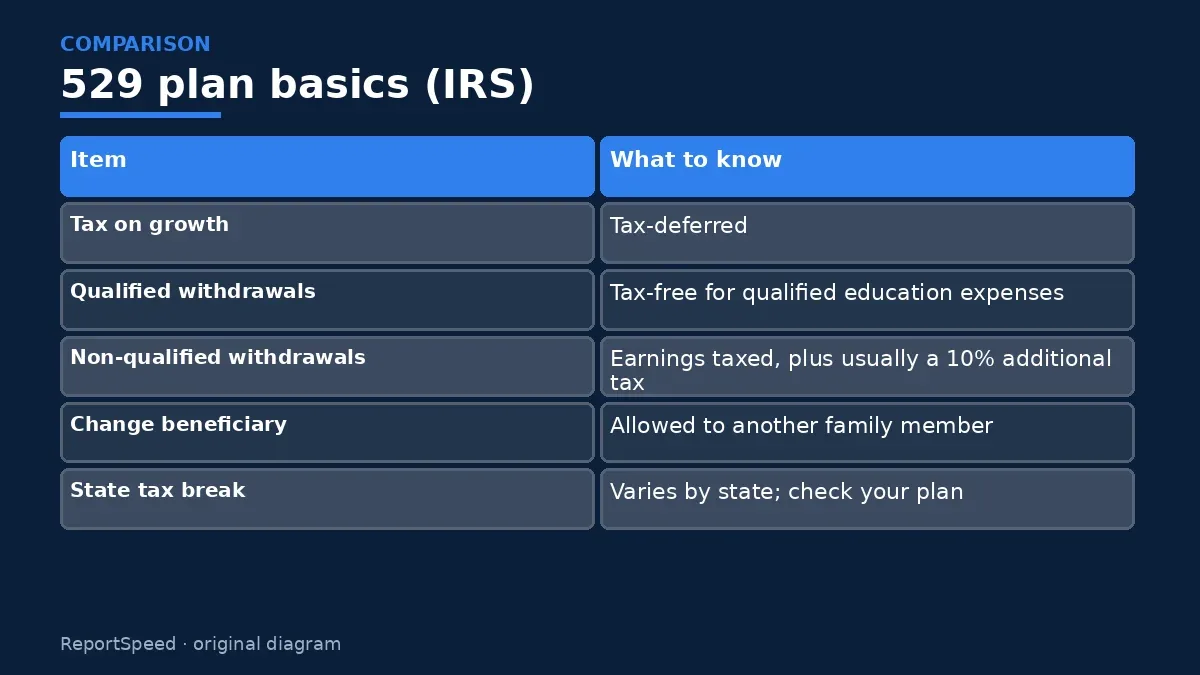
| Item | What to know |
|---|---|
| Tax on growth | Tax-deferred |
| Qualified withdrawals | Tax-free for qualified education expenses |
| Non-qualified withdrawals | Earnings taxed, plus usually a 10% additional tax |
| Change beneficiary | Allowed to another family member |
| State tax break | Varies by state; check your plan |
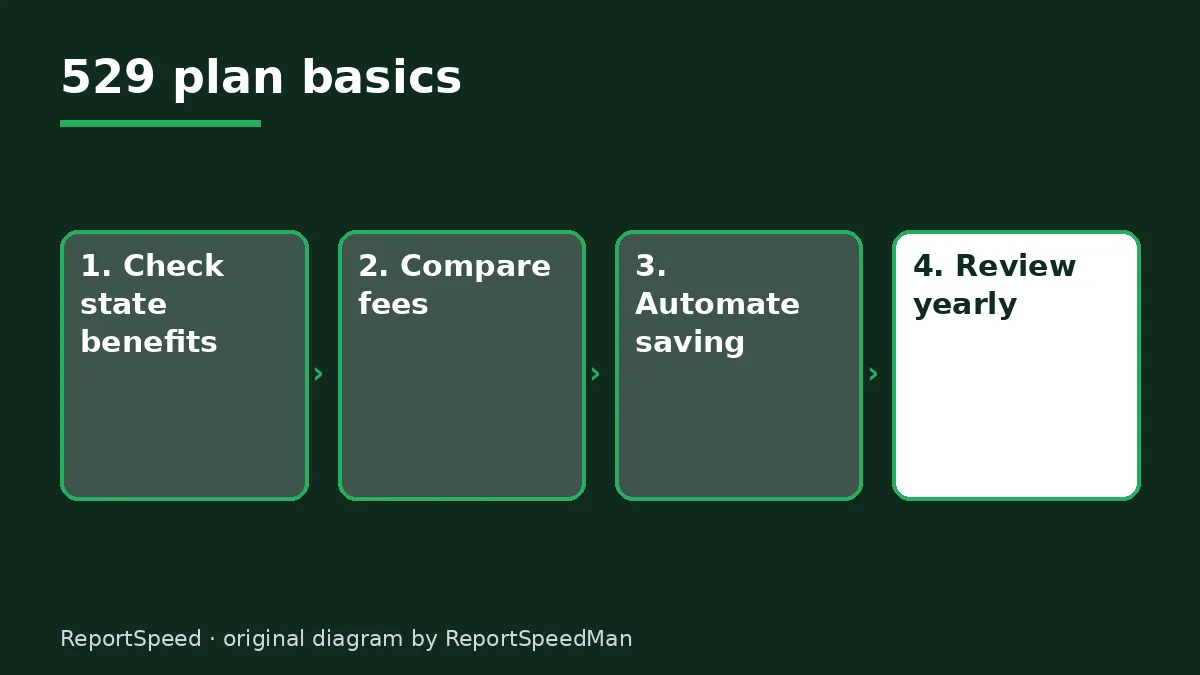
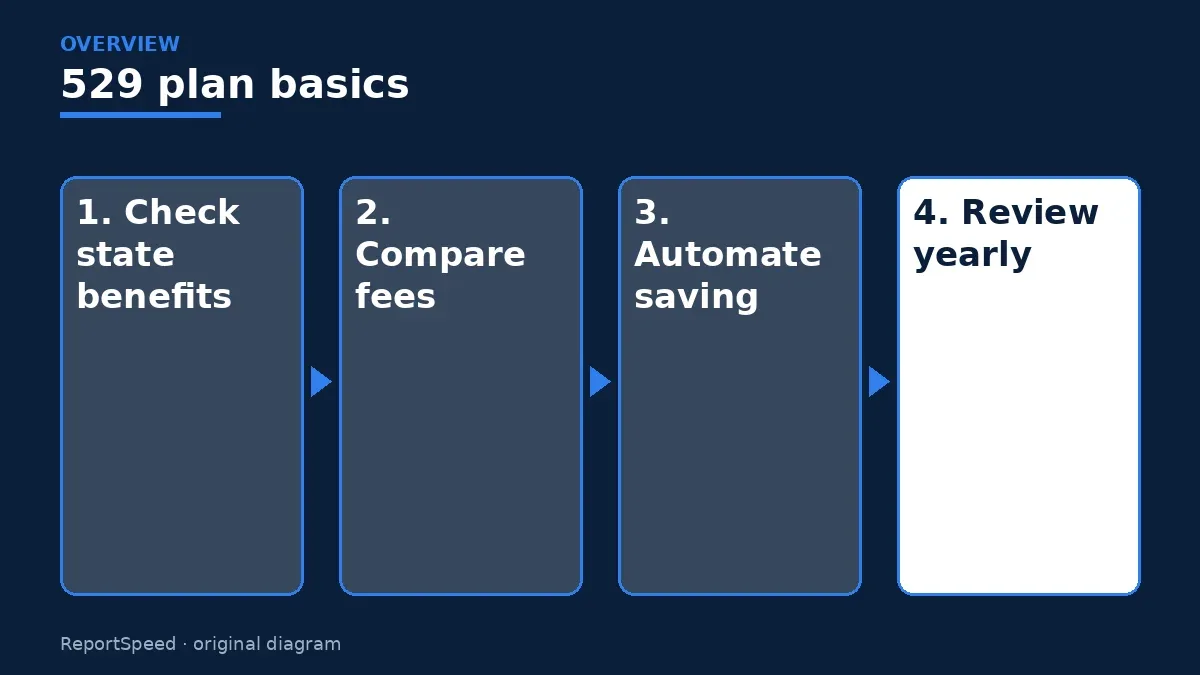
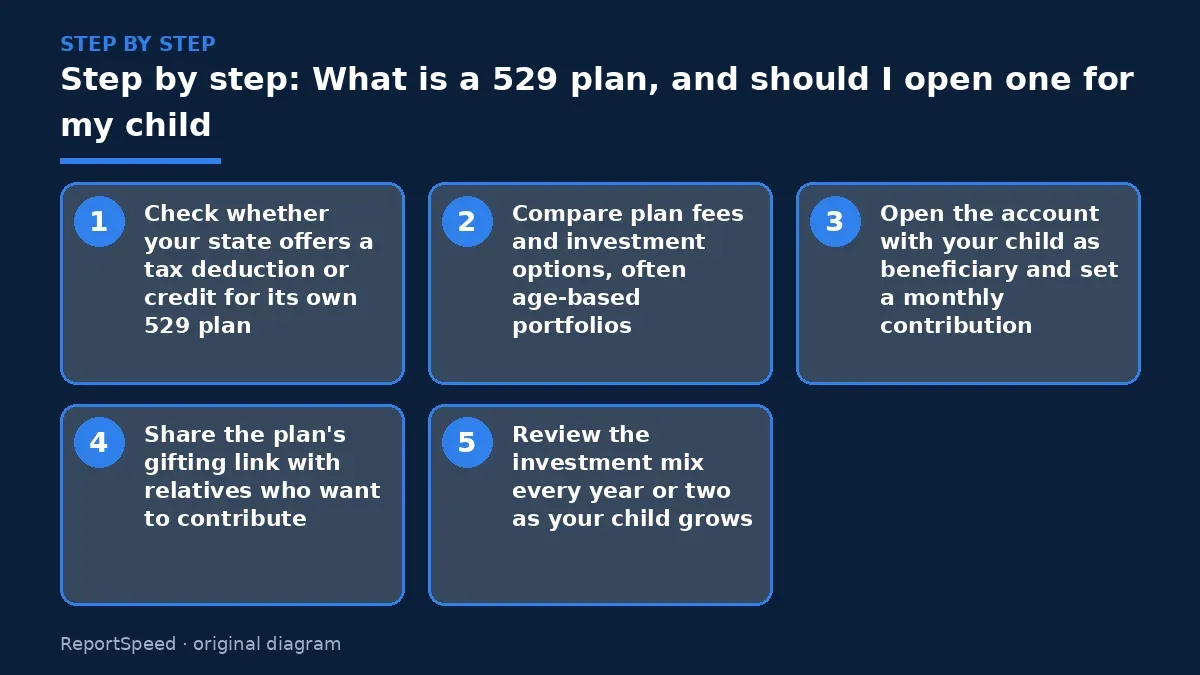
- Check whether your state offers a tax deduction or credit for its own 529 plan.
- Compare plan fees and investment options, often age-based portfolios.
- Open the account with your child as beneficiary and set a monthly contribution.
- Share the plan's gifting link with relatives who want to contribute.
- Review the investment mix every year or two as your child grows.
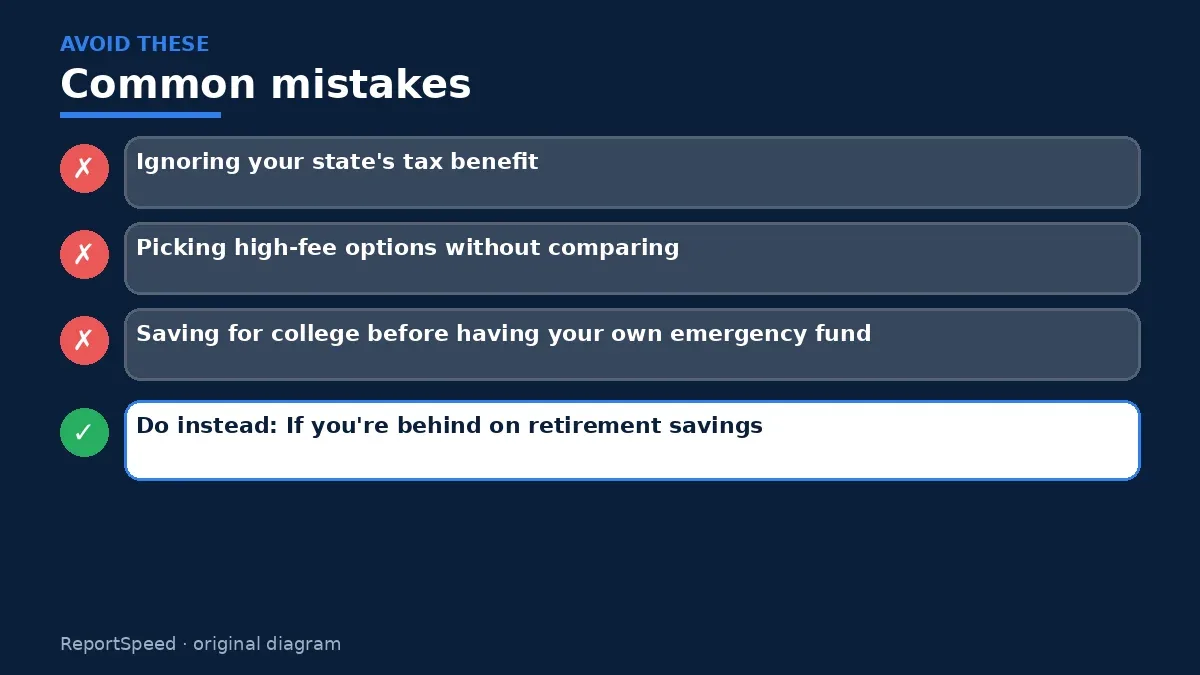
Common mistakes:
- Ignoring your state's tax benefit
- Picking high-fee options without comparing
- Saving for college before having your own emergency fund
ReportSpeedMan tip: If you're behind on retirement savings, many planners suggest prioritising that first, because there are loans for college but not for retirement.
What I would actually do
I'd open my own state's plan if it gives a tax deduction, choose an age-based fund and automate a small amount, then ask relatives to contribute instead of buying more toys.
The trade-off people miss: money in a 529 is best for education. If your child gets a scholarship or chooses a different path, you have options, but they're narrower than a regular account.
Signs it worked
The account is open, contributions run automatically and family members know how to give.
Quick FAQ
Does it affect financial aid?
A parent-owned 529 is usually counted as a parental asset.
Can grandparents open one?
Yes.
What if my child doesn't go to college?
Change the beneficiary or use other qualified options.
Wrap-up: A 529 is a strong option for education savings, especially started early. Check your state's benefits, keep fees low and automate small contributions.
Wiki: Compound Interest and Emergency Fund.
What is a 529 plan, and should I open one for my child: official sources I checked
Step-by-step photos
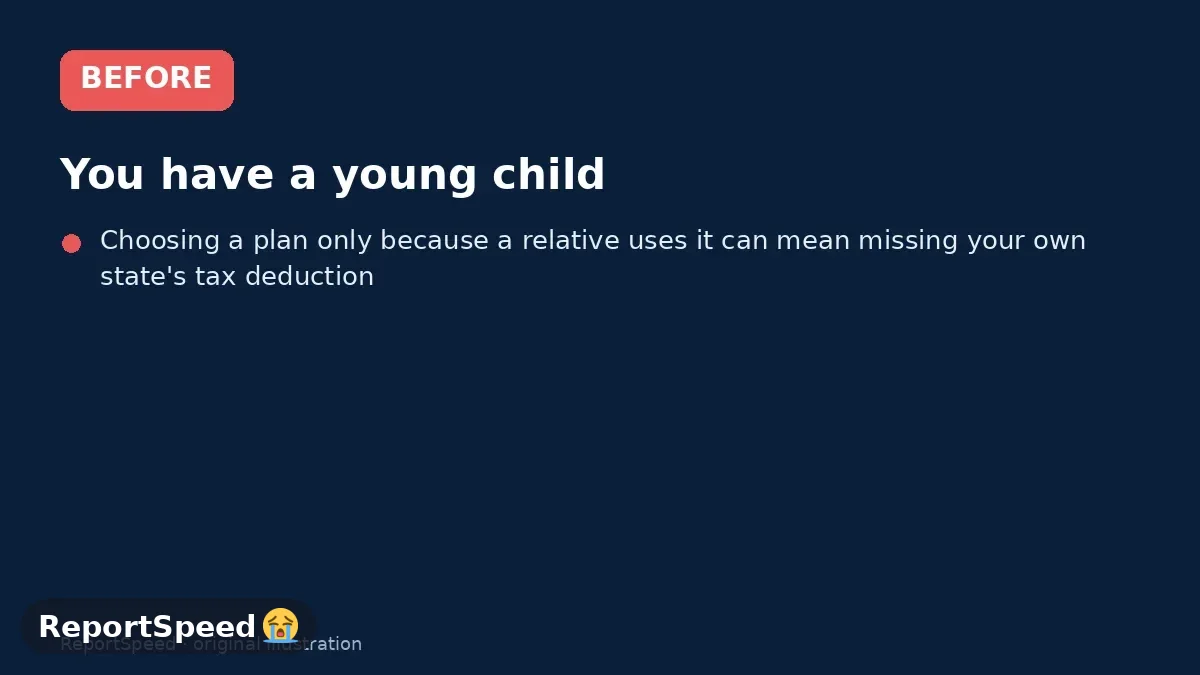
1. Before The problem 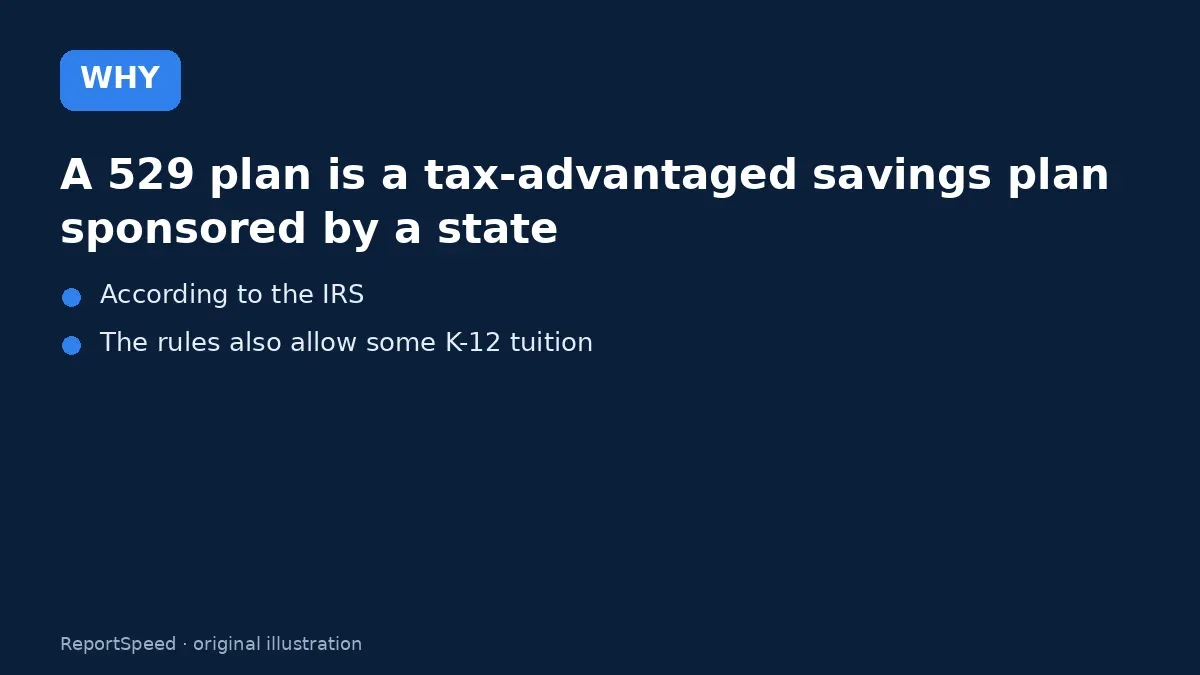
2. Why it happens The cause 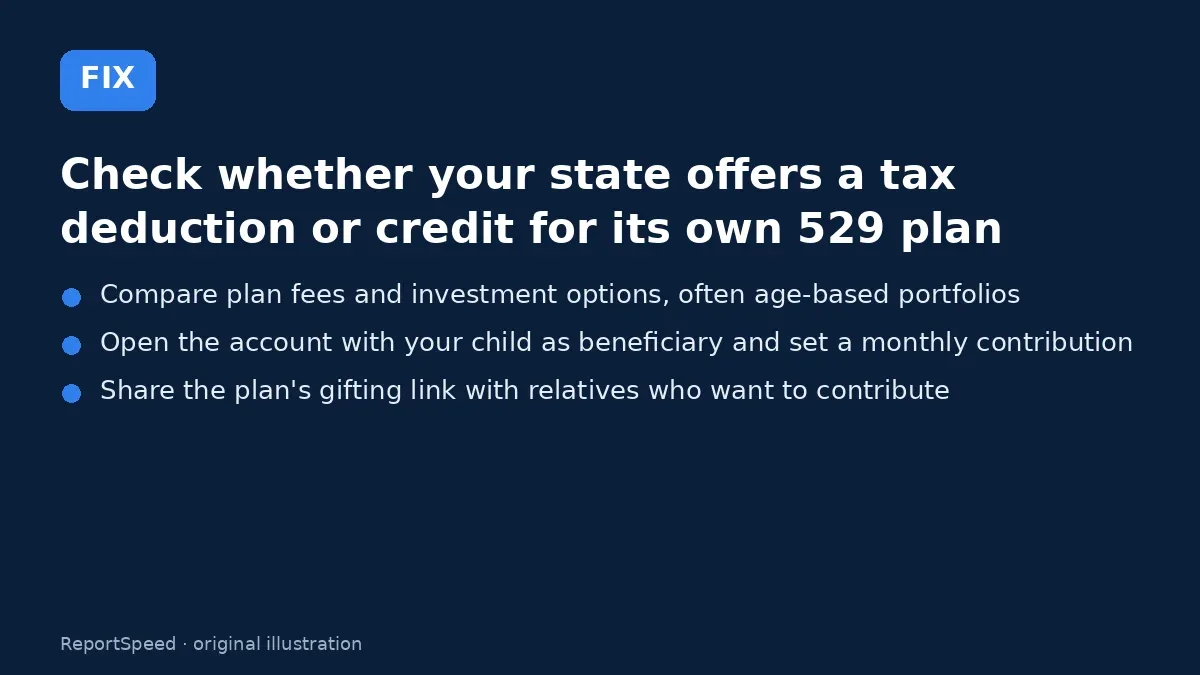
3. The fix The fix 
4. After The result
⚡ Speed Summary
- A 529 is a strong option for education savings, especially started early.
- If you're behind on retirement savings, many planners suggest prioritising that first, because there are loans for college but not for retirement.
- Choosing a plan only because a relative uses it can mean missing your own state's tax deduction.

Was this answer helpful?
Tap a star to rate this answer.
Related questions
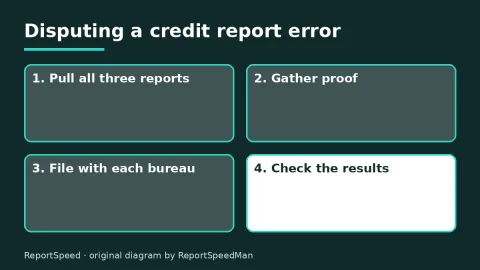
Found an error on my credit report? How to dispute it step by step
Dispute with each bureau and the furnisher, include proof, and expect results in about 30 days.
Rate itSolved
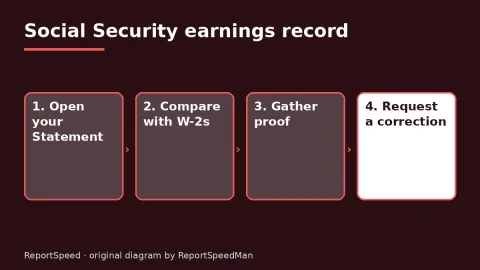
How do I check my Social Security earnings record and fix a mistake?
Check your Statement every year, match it to your W-2s, and correct gaps with proof before the usual window closes.
Rate itSolved
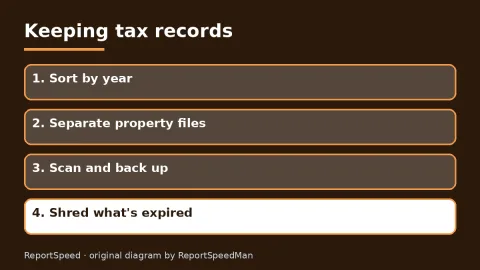
How long should I keep tax records? The IRS 3-, 6- and 7-year rules
Three years covers most returns; six, seven or forever apply in specific cases.
Rate itSolved
What happens if I only pay the minimum on my credit card?
Minimum payments keep you current but stretch the debt for years.
Rate itSolved
Real experiences
No experiences yet. Be the first to share.