


I e-filed my tax return two weeks ago and still have no refund. My friend got hers in a week. I'm starting to worry something is wrong. How do I check where my refund is, how long it normally takes, and when should I actually contact the IRS?
Where's my tax refund? How to track it and when to worry
Concerns & risks
You filed, the money hasn't arrived, and you're not sure whether to wait, check online or call.
| Stage | Meaning |
|---|---|
| Return received | IRS has your return |
| Refund approved | Amount confirmed |
| Refund sent | Money is on its way to your bank |
| Message shown | Follow its instructions |
Causes & evidence
The IRS says most refunds for electronically filed returns with direct deposit are issued in less than 21 days. Its Where's My Refund tool shows three stages: return received, refund approved and refund sent. Status is generally available about 24 hours after e-filing the current year's return, or about four weeks after mailing a paper return, and the tool updates once a day, usually overnight. Some refunds take longer by law: if you claim the Earned Income Tax Credit or the Additional Child Tax Credit, the IRS can't issue the refund before mid-February. Errors, identity checks and paper returns also add time.
The IRS2Go app shows the same information as the website. Amended returns have a separate tool and take much longer to process.
Calling the IRS before 21 days have passed usually gets the same answer the online tool gives.
What to do
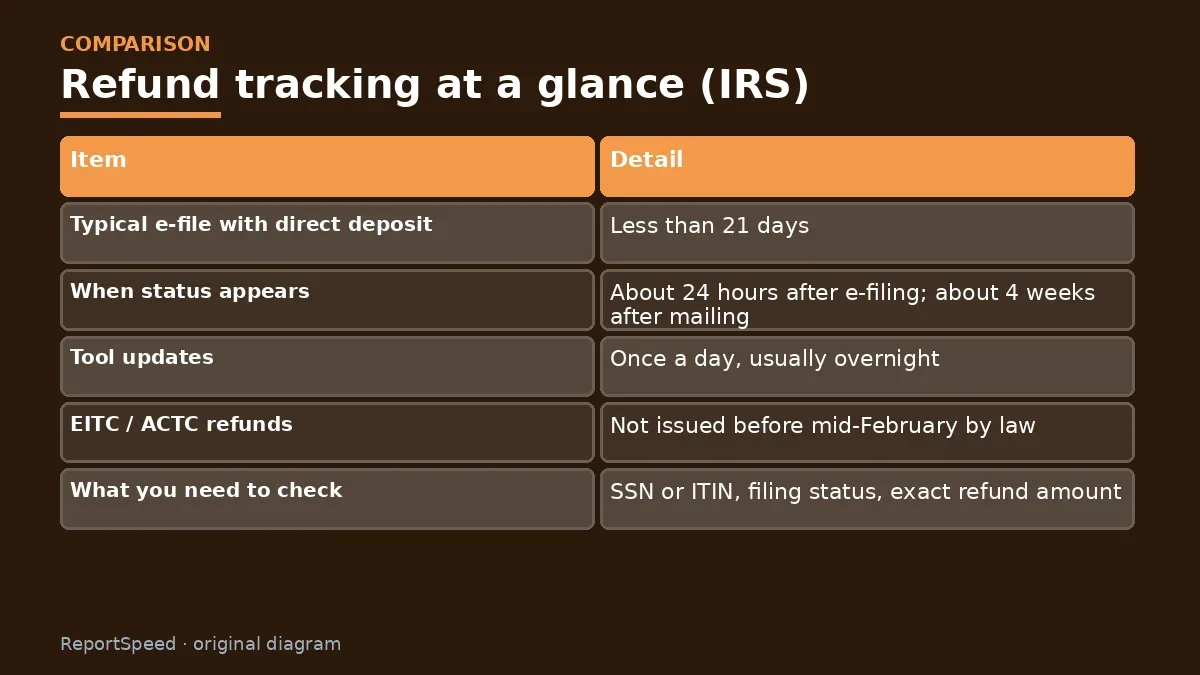
| Item | Detail |
|---|---|
| Typical e-file with direct deposit | Less than 21 days |
| When status appears | About 24 hours after e-filing; about 4 weeks after mailing |
| Tool updates | Once a day, usually overnight |
| EITC / ACTC refunds | Not issued before mid-February by law |
| What you need to check | SSN or ITIN, filing status, exact refund amount |
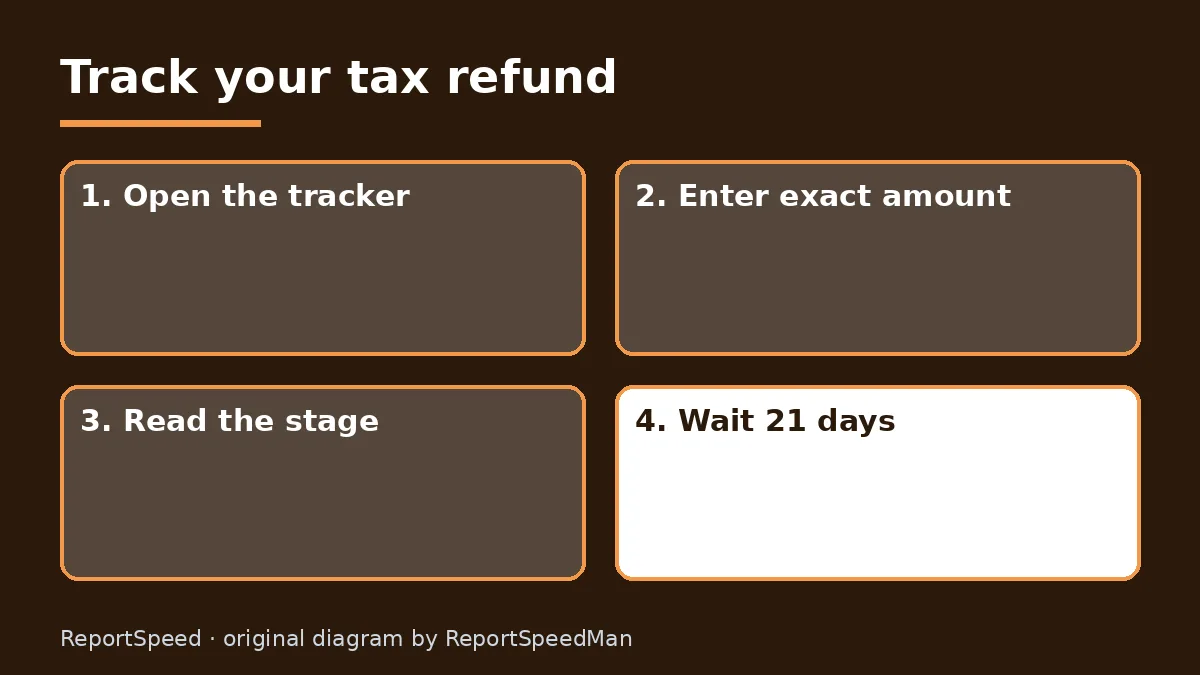
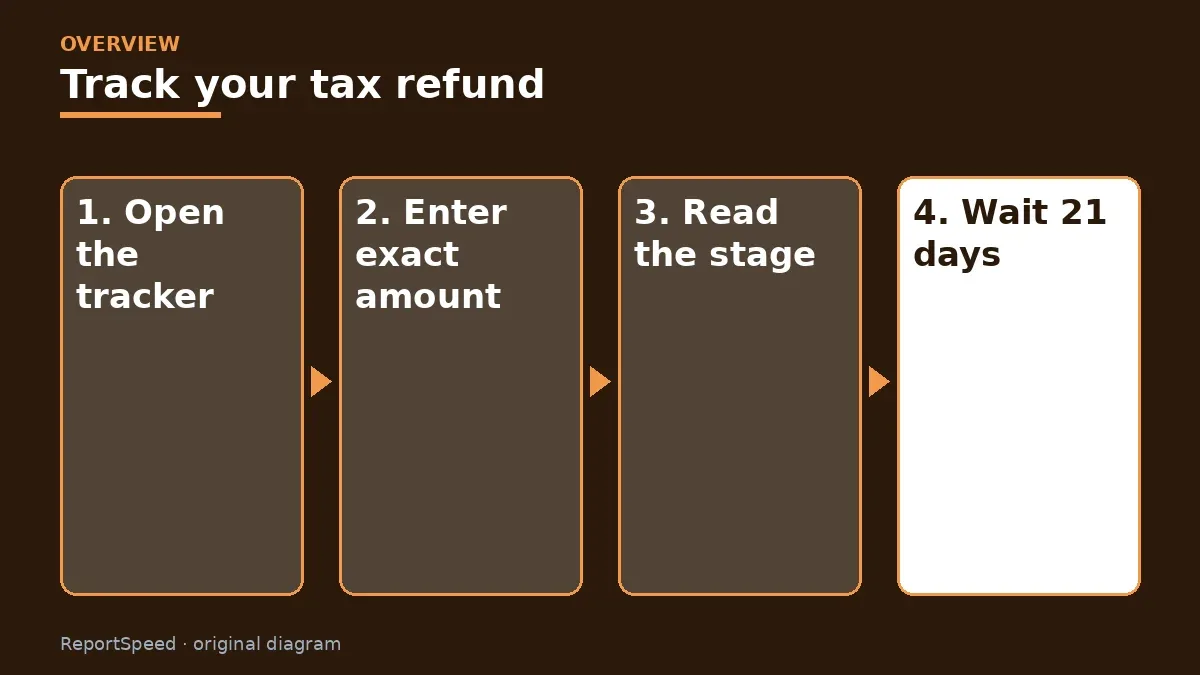
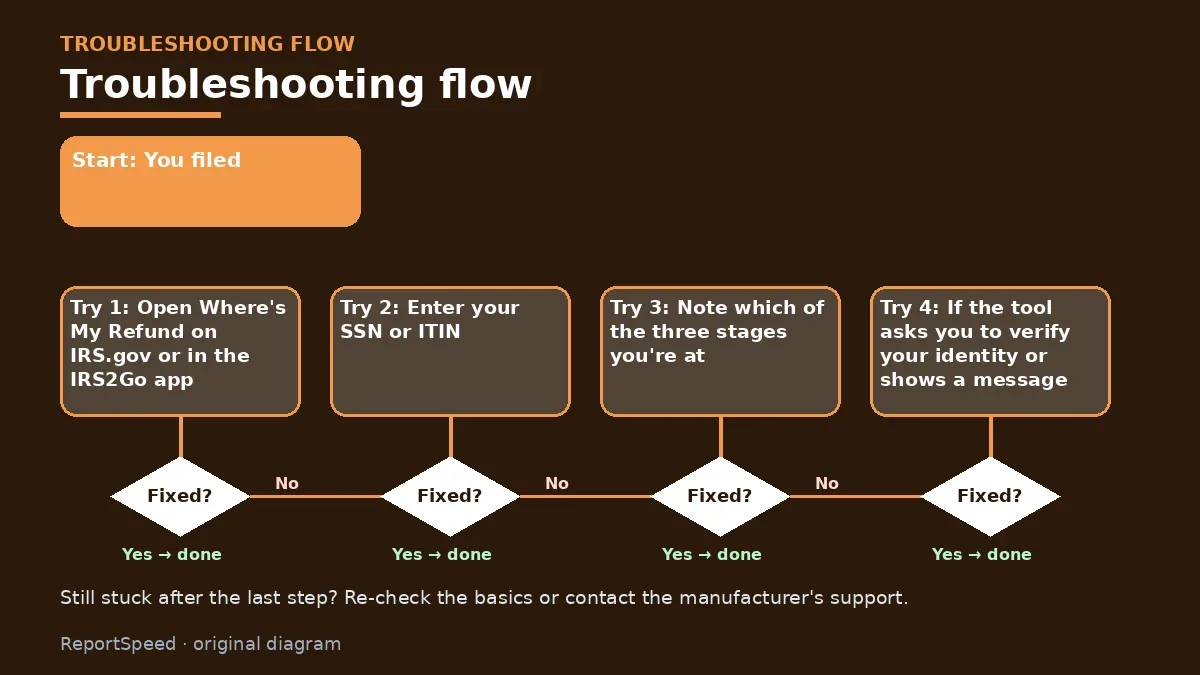
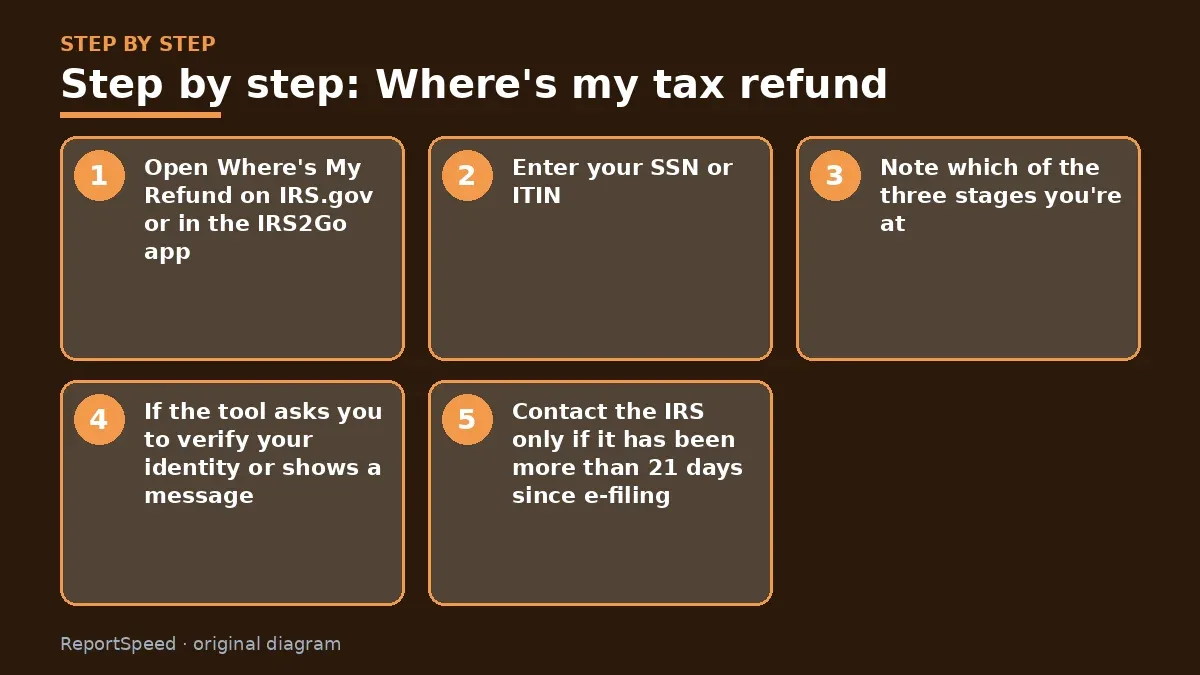
- Open Where's My Refund on IRS.gov or in the IRS2Go app.
- Enter your SSN or ITIN, filing status and the exact refund amount from your return.
- Note which of the three stages you're at.
- If the tool asks you to verify your identity or shows a message, follow its instructions.
- Contact the IRS only if it has been more than 21 days since e-filing, or the tool tells you to.

Common mistakes:
- Entering a rounded refund amount
- Filing a second return because the first seems slow
- Calling before the normal timeframe has passed
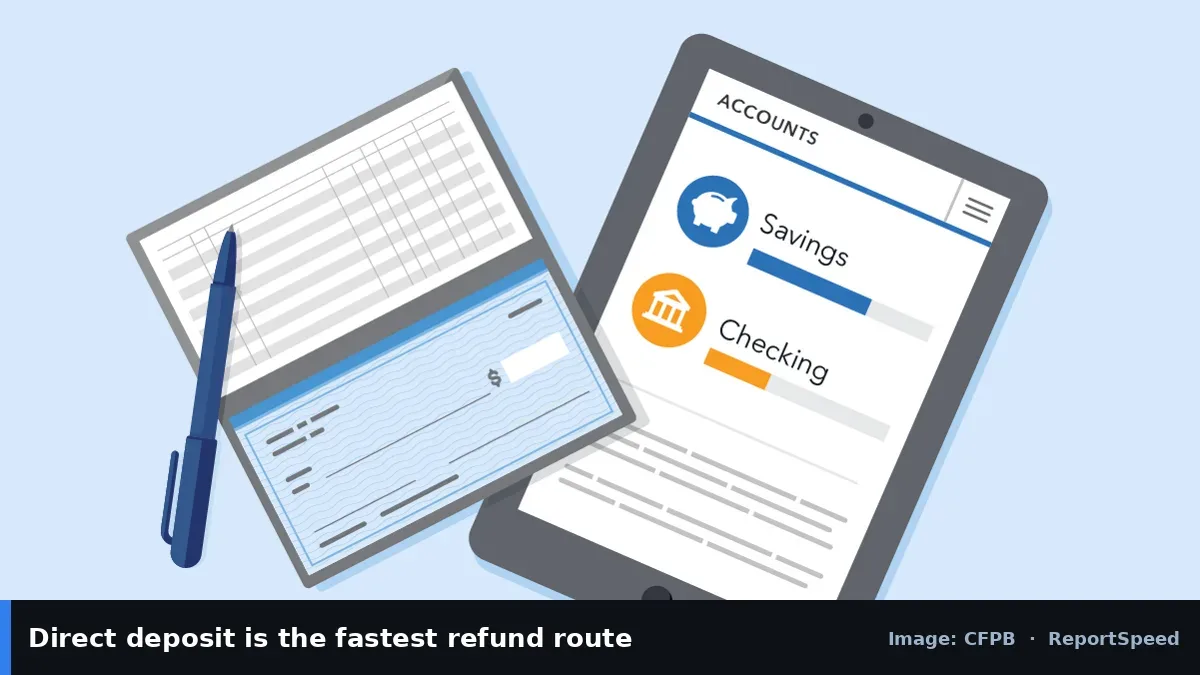
ReportSpeedMan tip: Direct deposit is the fastest way to get a refund, and the IRS has been phasing out paper refund checks, so make sure your bank details on the return are correct.
What I would actually do
I'd check Where's My Refund once a day at most, since it only updates overnight, and wait the full 21 days before calling.
The trade-off people miss: a big refund means you lent the government money interest-free all year. Adjusting your W-4 gives you that money in each paycheck instead.
Did it work? How to check
Where's My Refund shows 'Refund sent' and the money reaches your bank.
Quick FAQ
Why does my amount differ?
The IRS may have adjusted it and will send a notice.
Can I change my bank account?
Generally not after filing.
Will calling speed it up?
Usually not within the normal timeframe.
Wrap-up: Use the IRS tracker, give it the normal 21 days and act only on what the tool tells you. Most refunds arrive without any extra steps.
Wiki: Tax Withholding and Form W-4 and Emergency Fund.
Where's my tax refund: where the facts come from
Step-by-step photos
1. Before The problem 
2. Why it happens The cause 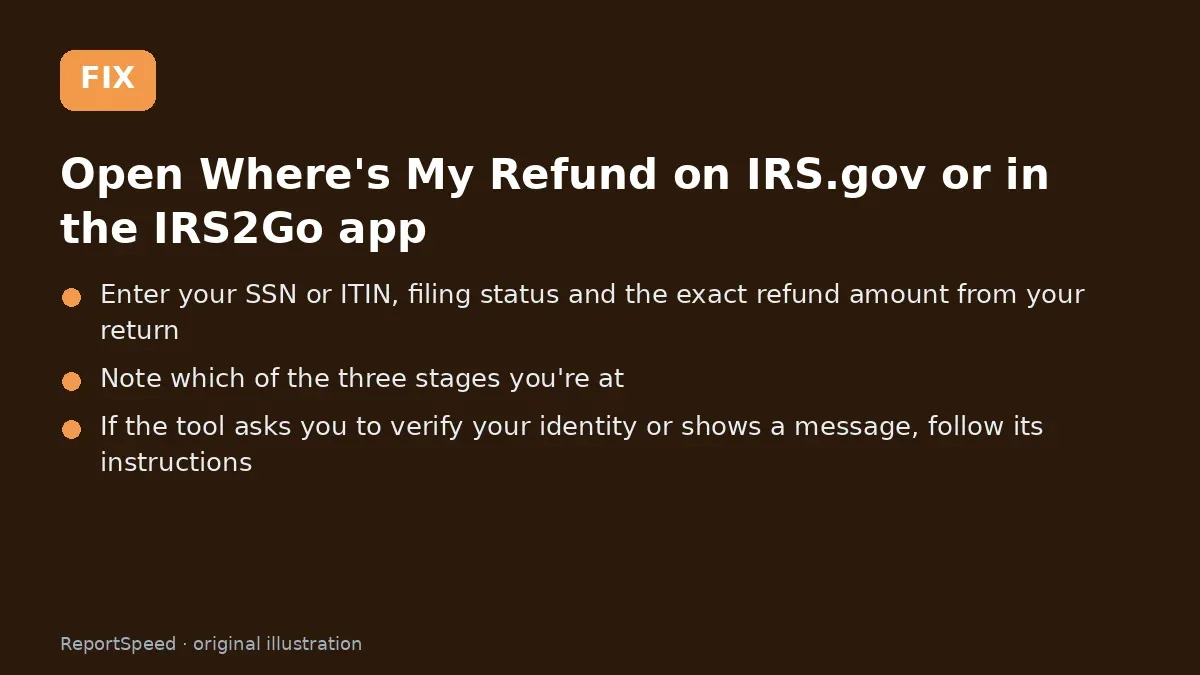
3. The fix The fix 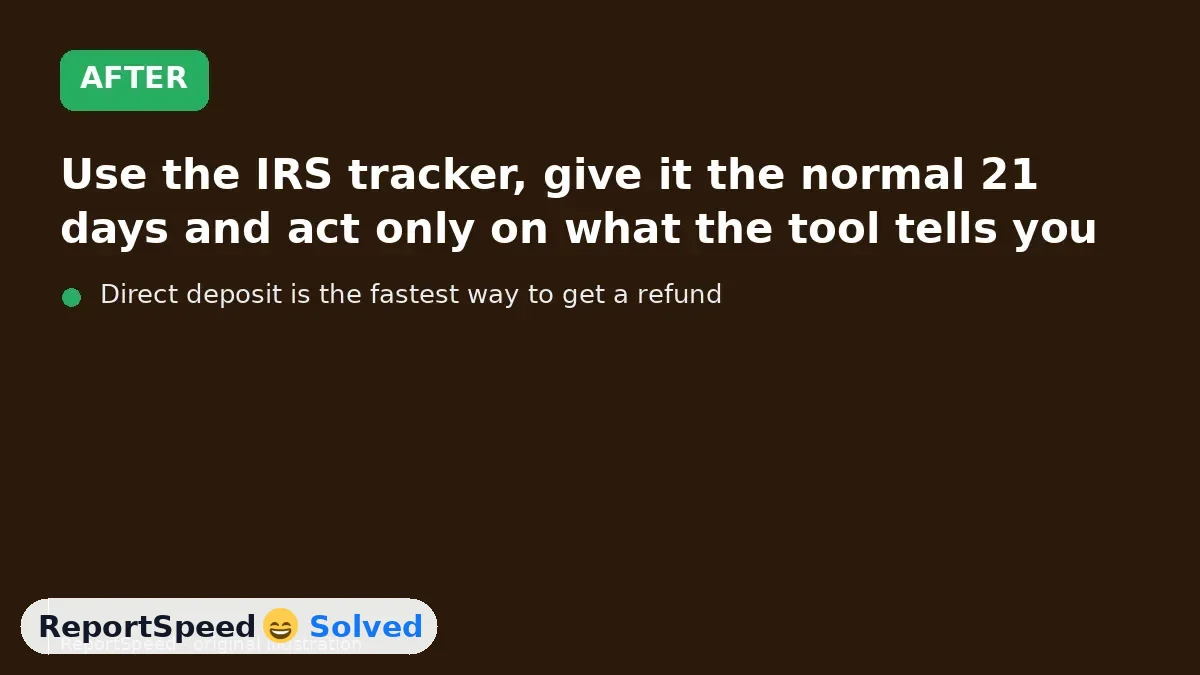
4. After The result
⚡ Speed Summary
- Use the IRS tracker, give it the normal 21 days and act only on what the tool tells you.
- Direct deposit is the fastest way to get a refund, and the IRS has been phasing out paper refund checks, so make sure your bank details on the return are correct.
- Calling the IRS before 21 days have passed usually gets the same answer the online tool gives.

Was this answer helpful?
Tap a star to rate this answer.
Related questions
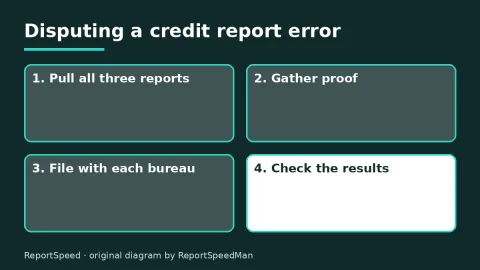
Found an error on my credit report? How to dispute it step by step
Dispute with each bureau and the furnisher, include proof, and expect results in about 30 days.
Rate itSolved
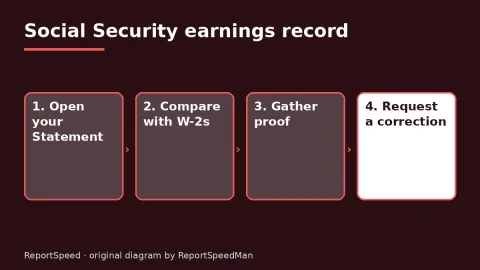
How do I check my Social Security earnings record and fix a mistake?
Check your Statement every year, match it to your W-2s, and correct gaps with proof before the usual window closes.
Rate itSolved
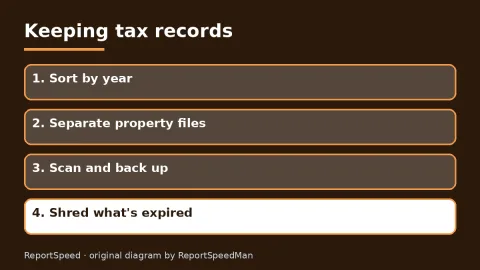
How long should I keep tax records? The IRS 3-, 6- and 7-year rules
Three years covers most returns; six, seven or forever apply in specific cases.
Rate itSolved
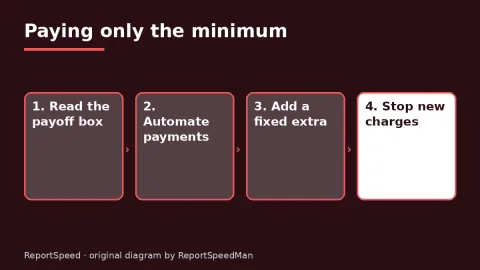
What happens if I only pay the minimum on my credit card?
Minimum payments keep you current but stretch the debt for years.
Rate itSolved
Real experiences
No experiences yet. Be the first to share.