


The TPMS light came on this morning and my tires look normal. Do I really need to check them?
Why is my tire pressure light on but my tires look fine?
Concerns & risks
You were trying to get to work on time, but the moment you started the car a little orange horseshoe with an exclamation point lit up on the dash. You walked around the car, kicked a tire, and everything looked normal.
Driving on a low tire hurts handling, braking and tire life.
Causes & evidence
Underinflated tires are hard to spot by sight, and the light only comes on when a tire is significantly low. Cold mornings can trigger it too. See tire pressure and tread.
What to do
- Check all four tires (and the spare) with a gauge.
- Fill to the pressure on the driver's door jamb label, not the tire sidewall.
- Recheck after a few days; a tire that keeps dropping may have a leak.
Common mistakes: Common mistakes: judging pressure by looking. A tire can be well under the recommended pressure and still look fine, especially radials. Another mistake is checking right after driving, when warm tires read higher; check cold, before you drive or after the car has sat a few hours. Gas station gauges can be worn, so your own gauge is more reliable. If the light comes on and the car pulls, vibrates or a tire looks obviously low, slow down and pull over somewhere safe. Some cars need a TPMS reset after filling; your owner's manual explains how. If the light flashes and then stays on, the sensor system itself may need service.
Speed Man tip: Keep a cheap pressure gauge in the glovebox.
Wrap-up: Low tires are hard to see. Use the door-jamb number. Repeated drops mean a leak.
⚡ Speed Summary
- Low tires are hard to see.
- Use the door-jamb number.
- Repeated drops mean a leak.

Was this answer helpful?
Tap a star to rate this answer.
Related questions

How far should I sit from the steering wheel airbag?
Keep 10 inches from the air bag cover, tilt the wheel toward your chest, and keep kids 12 and under in the back.
Rate itSolved
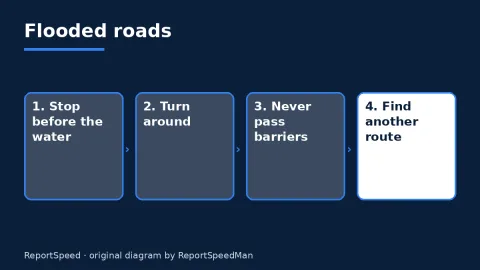
Is it safe to drive through a flooded road? How much water can float a car
Never drive into flood water; a foot of rushing water can carry most cars.
Rate itSolved
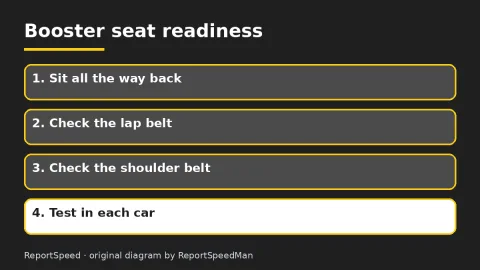
When can my child stop using a booster seat?
Keep the booster until the seat belt fits across the thighs and chest, and keep kids 12 and under in the back.
Rate itSolved
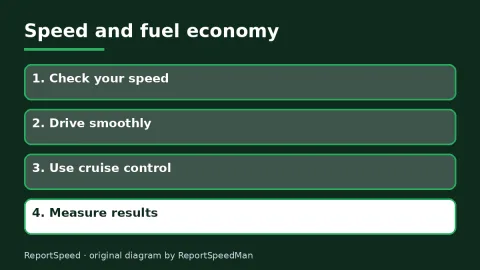
Does driving faster really waste gas? Speed and fuel economy
Above 50 mph mileage drops quickly, roughly like $0.30 more per gallon for each extra 5 mph.
Rate itSolved
Real experiences
No experiences yet. Be the first to share.