


A company I have never heard of keeps calling about an old credit card debt. Sometimes they call twice a day, once before 8 in the morning. I'm not even sure the debt is mine or the amount is right. What are my rights with a debt collector, and what should I actually say or do?
A debt collector keeps calling me: what are my rights?
Concerns & risks
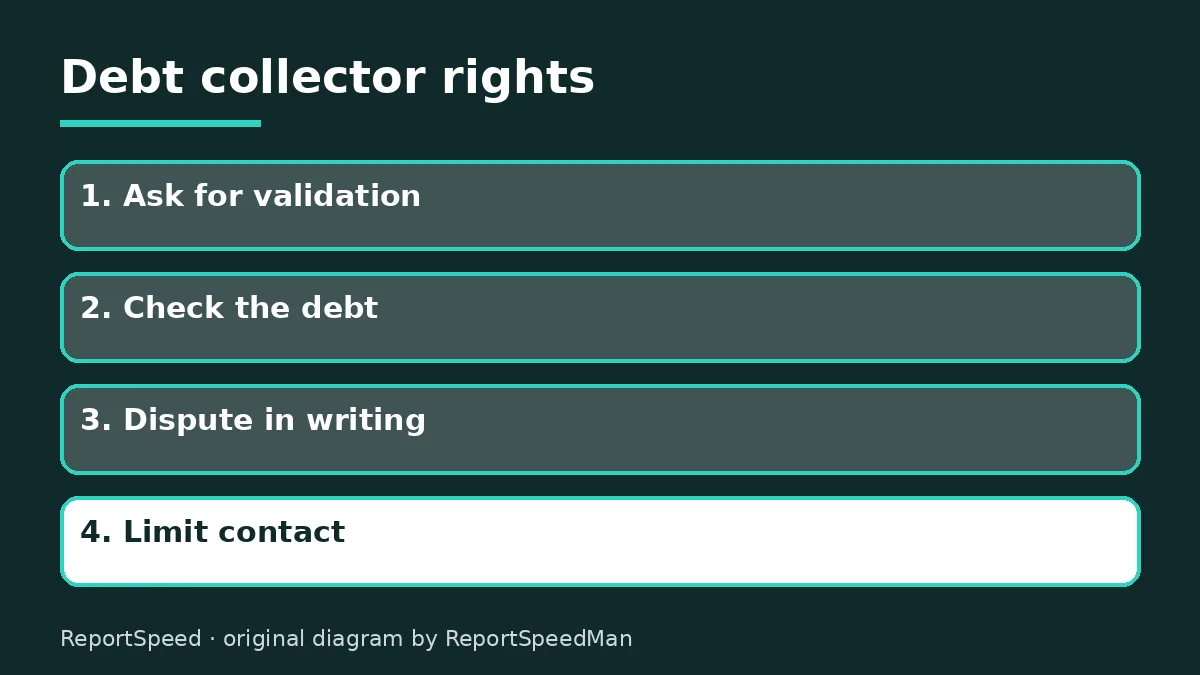
A collector is calling often, possibly at bad hours, and you can't tell whether the debt or the amount is legitimate.
| Moment | Your move |
|---|---|
| First call | Ask for name, address and validation info |
| Debt looks wrong | Dispute in writing within the validation period |
| Calls too often | Tell them in writing how and when to contact you |
| Want no contact | Send a written stop-contact request |
| Rules broken | Complain to the CFPB and state attorney general |

Causes & evidence
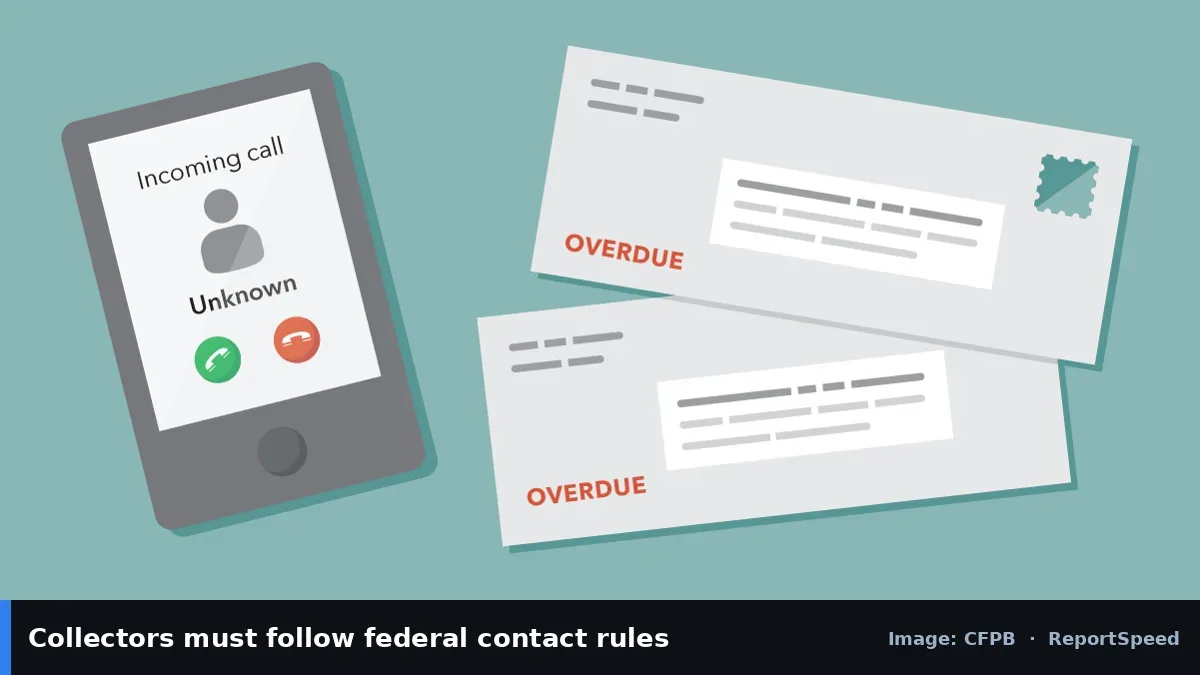
The Fair Debt Collection Practices Act and the CFPB's Regulation F set the rules for third-party collectors. Collectors generally can't contact you before 8 a.m. or after 9 p.m. your local time unless you agree, can't threaten arrest or use abusive language, and are presumed to be harassing you if they call more than seven times in seven days about one debt. Early on they must give you validation information: who the creditor is, how much is owed and how to dispute it. If you dispute in writing within the validation period, they must pause collection until they verify the debt. You can also tell them in writing to stop contacting you.
Debt collection rules apply to third-party collectors and debt buyers; original creditors collecting their own debts are covered mostly by other laws. Very old debts may be past your state's statute of limitations, which affects whether you can be sued.

Paying something on the first call 'to make it stop' before checking the debt can be a costly mistake, and in some states a payment can affect the time limit for being sued.
What to do
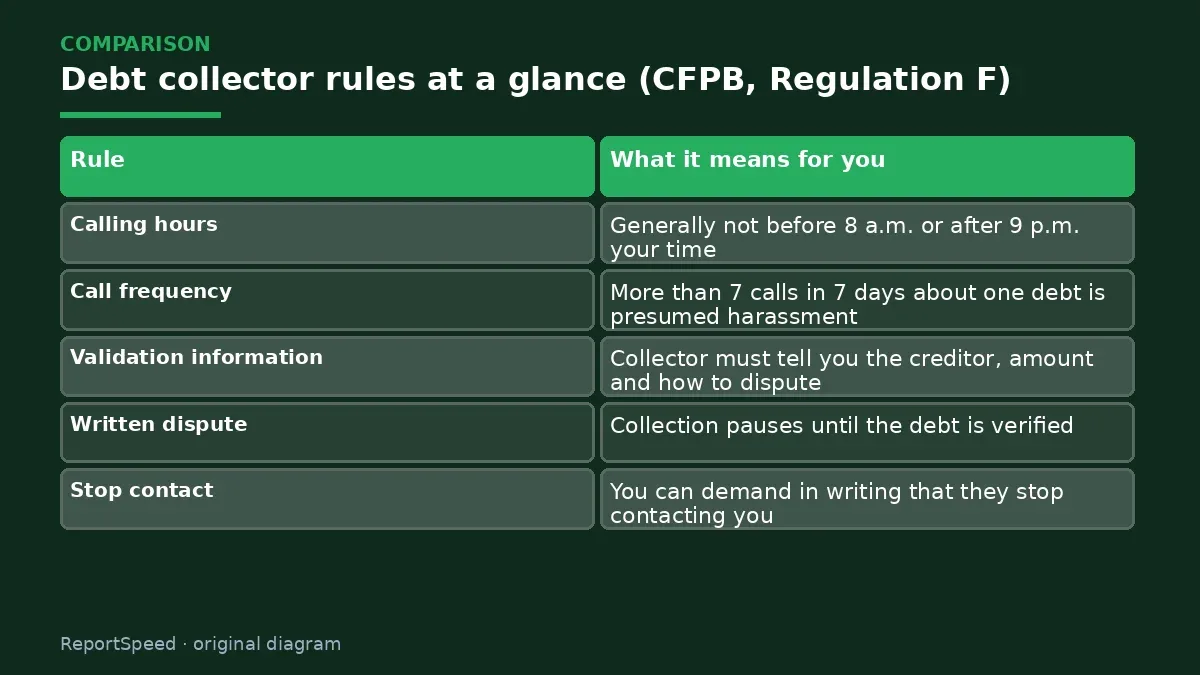
| Rule | What it means for you |
|---|---|
| Calling hours | Generally not before 8 a.m. or after 9 p.m. your time |
| Call frequency | More than 7 calls in 7 days about one debt is presumed harassment |
| Validation information | Collector must tell you the creditor, amount and how to dispute |
| Written dispute | Collection pauses until the debt is verified |
| Stop contact | You can demand in writing that they stop contacting you |
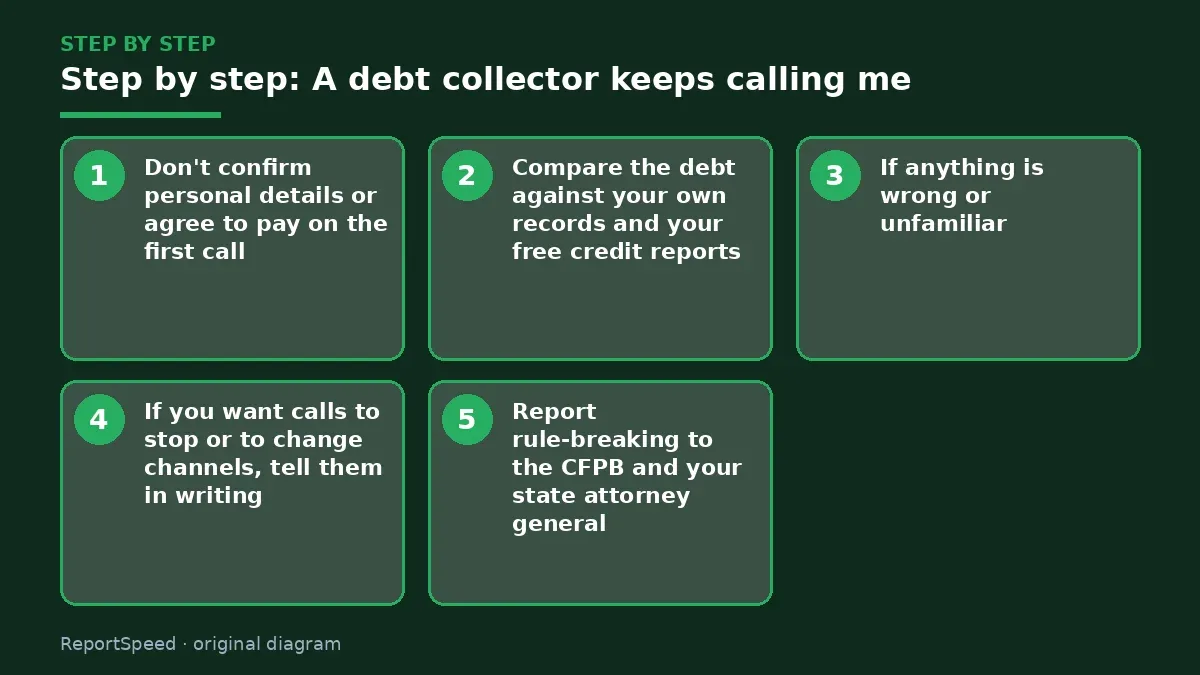
- Don't confirm personal details or agree to pay on the first call; ask for the collector's name, address and the validation information.
- Compare the debt against your own records and your free credit reports.
- If anything is wrong or unfamiliar, send a written dispute within the validation period and keep a copy.
- If you want calls to stop or to change channels, tell them in writing.
- Report rule-breaking to the CFPB and your state attorney general.
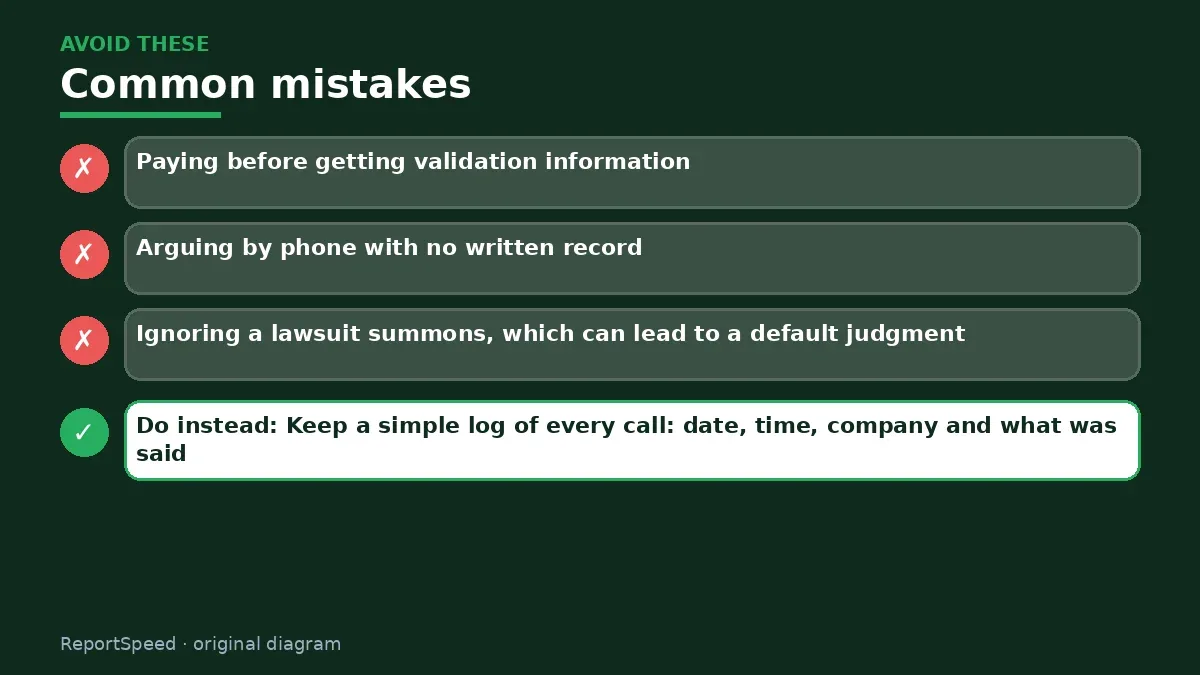
Common mistakes:
- Paying before getting validation information
- Arguing by phone with no written record
- Ignoring a lawsuit summons, which can lead to a default judgment
ReportSpeedMan tip: Keep a simple log of every call: date, time, company and what was said. If the calls break the rules, that log is the evidence regulators need.
What I would actually do
I'd say almost nothing on the first call except 'please send me the validation information in writing,' then compare it with my credit reports before deciding anything.
The trade-off people miss: a stop-contact letter ends the calls, but it doesn't erase the debt, and the collector can still sue. If the debt is real, a written payment plan may serve you better.
How you can tell it worked
You have validation information in writing, any disputes are documented and calls follow the limits you set.
Quick FAQ
Can they contact me at work?
Not if they know your employer prohibits it, or after you tell them.
Can they text or email?
Yes, but they must offer a simple way to opt out.
Should I pay a debt I don't recognise?
Not until it's verified.
Wrap-up: Ask for validation, dispute anything that looks wrong in writing and use your right to limit contact. You stay in control of the conversation.
Wiki: Credit Scores and Credit Reports and Identity Theft Recovery Steps.
A debt collector keeps calling me: where the facts come from
Step-by-step photos
1. Before The problem 
2. Why it happens The cause 
3. The fix The fix 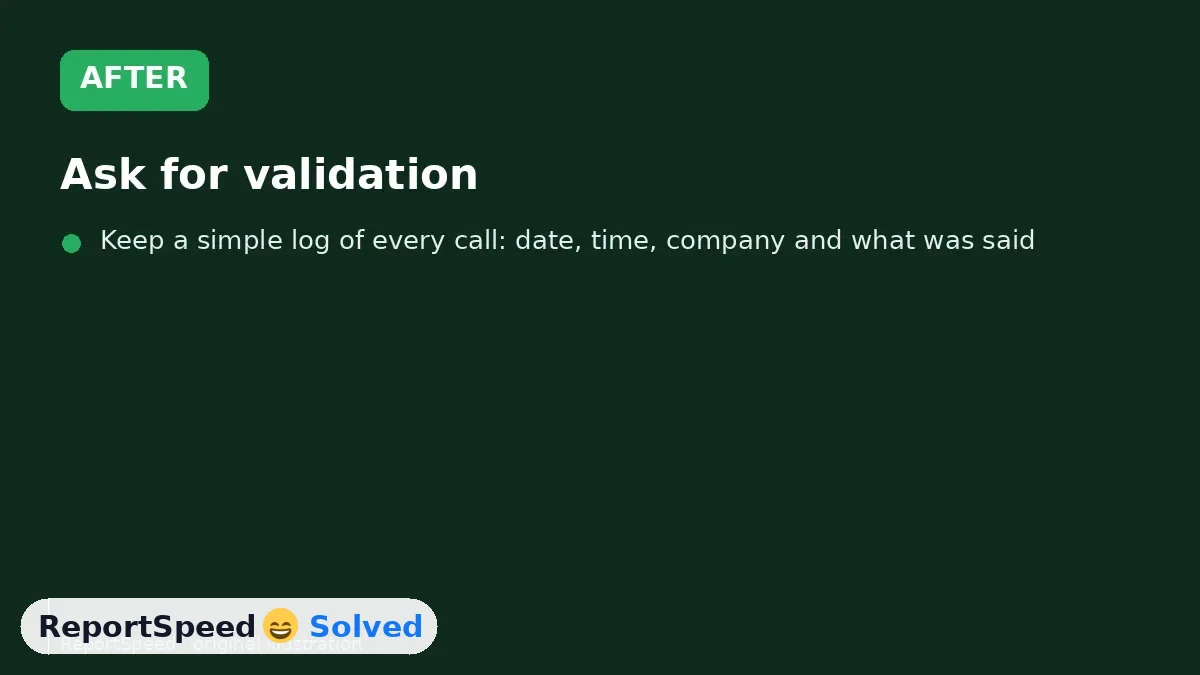
4. After The result
⚡ Speed Summary
- Ask for validation, dispute anything that looks wrong in writing and use your right to limit contact.
- Keep a simple log of every call: date, time, company and what was said. If the calls break the rules, that log is the evidence regulators need.
- Paying something on the first call 'to make it stop' before checking the debt can be a costly mistake, and in some states a payment can affect the time limit for being sued.

Was this answer helpful?
Tap a star to rate this answer.
Related questions
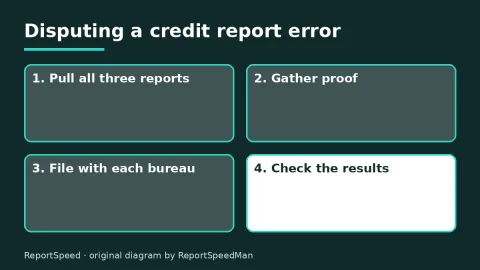
Found an error on my credit report? How to dispute it step by step
Dispute with each bureau and the furnisher, include proof, and expect results in about 30 days.
Rate itSolved
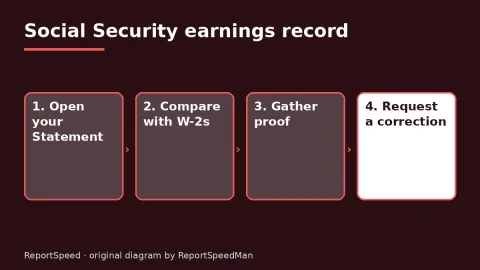
How do I check my Social Security earnings record and fix a mistake?
Check your Statement every year, match it to your W-2s, and correct gaps with proof before the usual window closes.
Rate itSolved
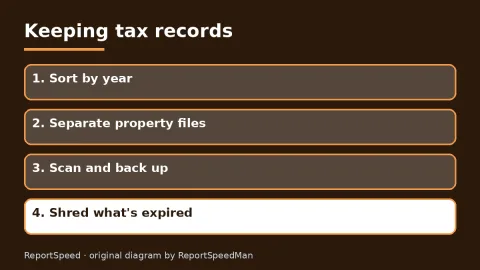
How long should I keep tax records? The IRS 3-, 6- and 7-year rules
Three years covers most returns; six, seven or forever apply in specific cases.
Rate itSolved
What happens if I only pay the minimum on my credit card?
Minimum payments keep you current but stretch the debt for years.
Rate itSolved
Real experiences
No experiences yet. Be the first to share.