


I drive home at 1 a.m. after closing shifts at a restaurant, about 40 minutes on a quiet highway. A few times I've realized I don't remember the last few exits, and once I hit the rumble strip. Coffee and the radio don't seem to help much. What are the real drowsy driving warning signs, and what actually works?
Drowsy driving: warning signs and when to pull over
Concerns & risks
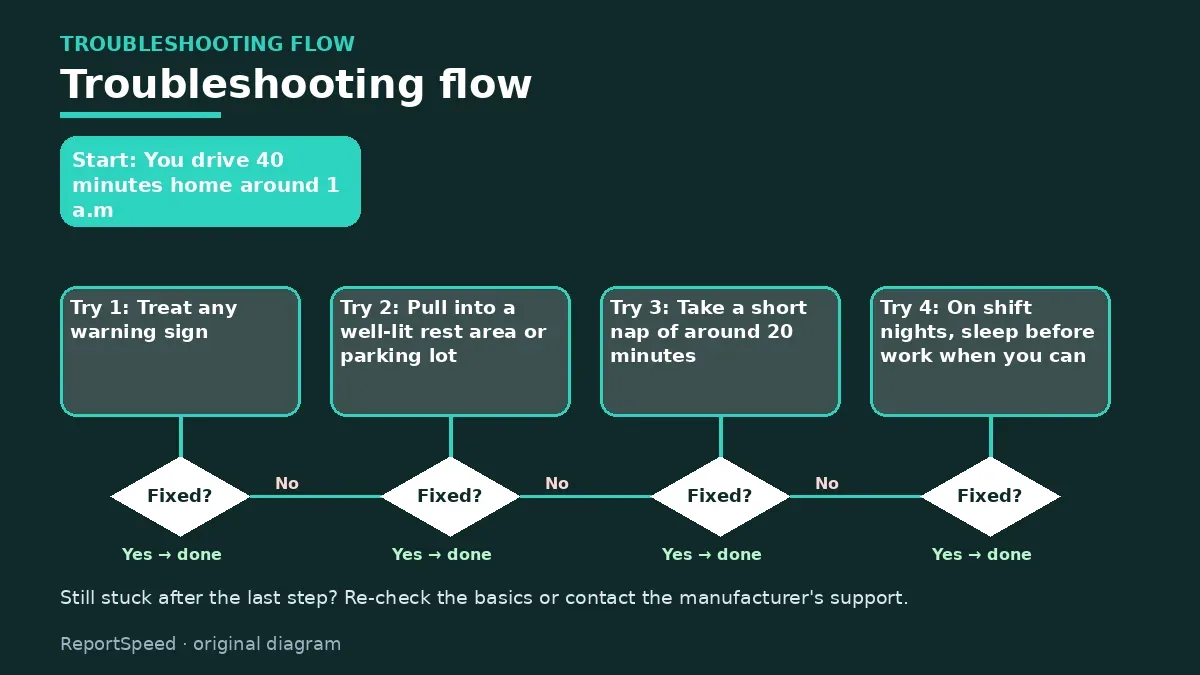
You drive 40 minutes home around 1 a.m. and have already missed exits and hit a rumble strip.
| Plan | Example |
|---|---|
| Sleep before shift | Nap in the afternoon |
| Rest stop | Halfway gas station |
| Caffeine timing | Before a short nap |
| Backup ride | Coworker or rideshare |
| Medicine check | Ask a pharmacist |
| Hard stop sign | Any missed exit |

Causes & evidence
NHTSA estimates that in 2017, 91,000 police-reported crashes involved drowsy drivers, leading to about 50,000 injuries and nearly 800 deaths, and it notes these numbers are likely underestimates. Drowsy driving crashes most often happen between midnight and 6 a.m. or in the late afternoon, frequently involve a single driver running off the road at high speed with no sign of braking, and are common on rural roads and highways. Warning signs include frequent yawning or blinking, trouble remembering the past few miles, missing your exit, drifting from your lane and hitting a rumble strip. NHTSA advises getting enough sleep before driving, avoiding alcohol and sedating medicines, and pulling over to a safe place if you get drowsy. Caffeine and a short nap can help briefly, but they don't replace sleep.
Who this applies to: night-shift workers, commercial drivers, people with untreated sleep disorders and teens are at higher risk. People who snore loudly or feel sleepy during the day may want to talk to a clinician about sleep apnea.
Opening the window and turning up the radio feels like a fix, but it doesn't reverse sleepiness and gives false confidence.
What to do
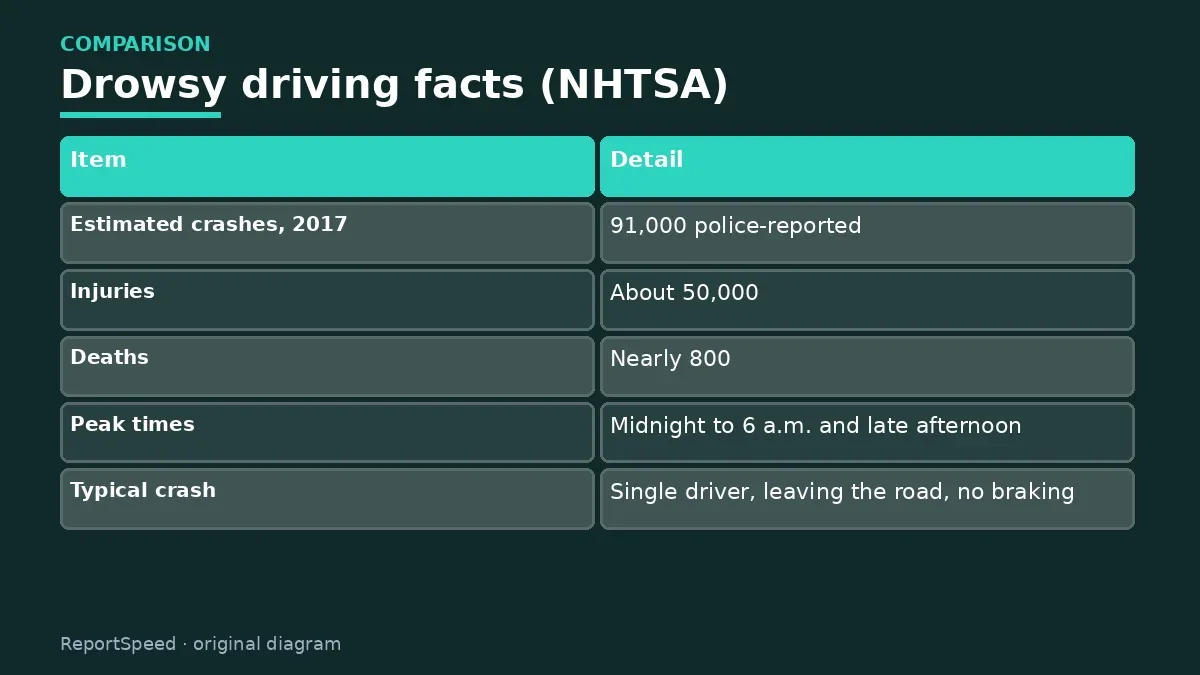
| Item | Detail |
|---|---|
| Estimated crashes, 2017 | 91,000 police-reported |
| Injuries | About 50,000 |
| Deaths | Nearly 800 |
| Peak times | Midnight to 6 a.m. and late afternoon |
| Typical crash | Single driver, leaving the road, no braking |
| Warning signs | Yawning, lost miles, missed exits, drifting, rumble strips |
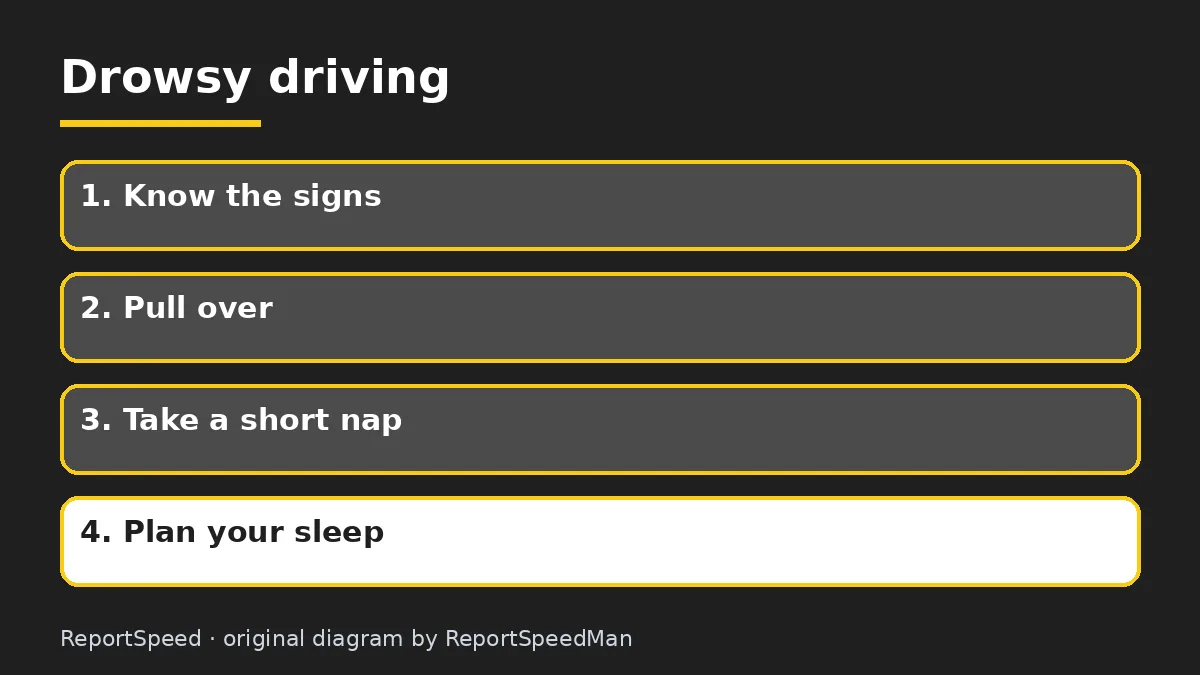
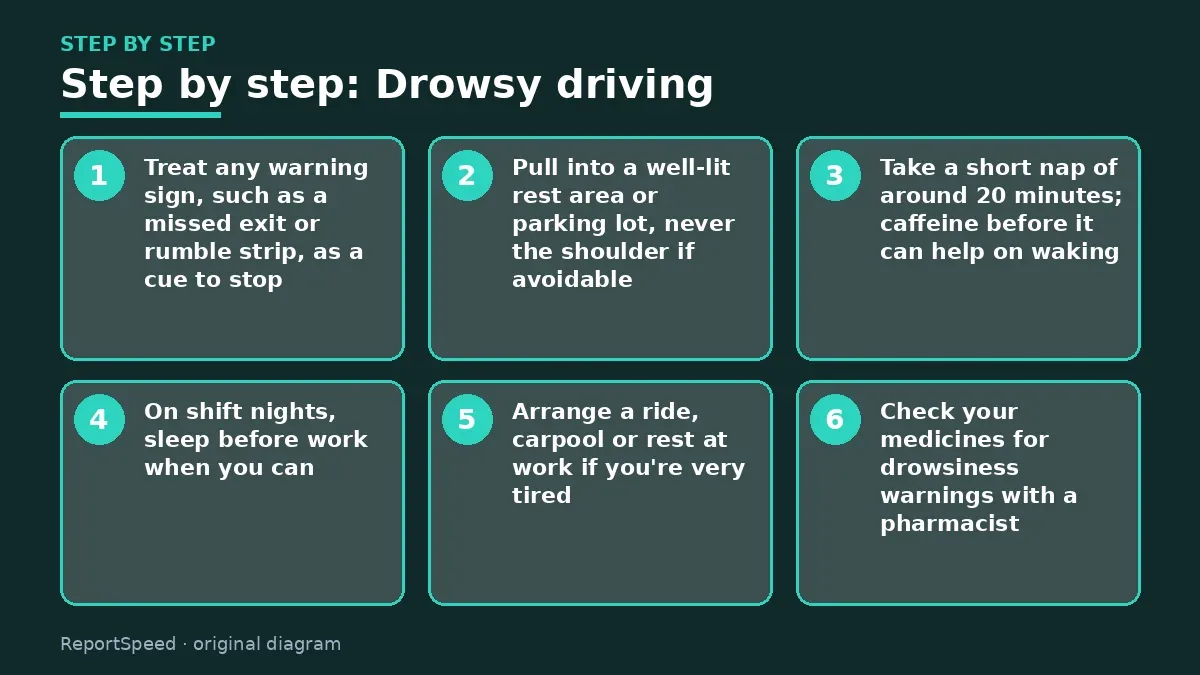
- Treat any warning sign, such as a missed exit or rumble strip, as a cue to stop.
- Pull into a well-lit rest area or parking lot, never the shoulder if avoidable.
- Take a short nap of around 20 minutes; caffeine before it can help on waking.
- On shift nights, sleep before work when you can.
- Arrange a ride, carpool or rest at work if you're very tired.
- Check your medicines for drowsiness warnings with a pharmacist.
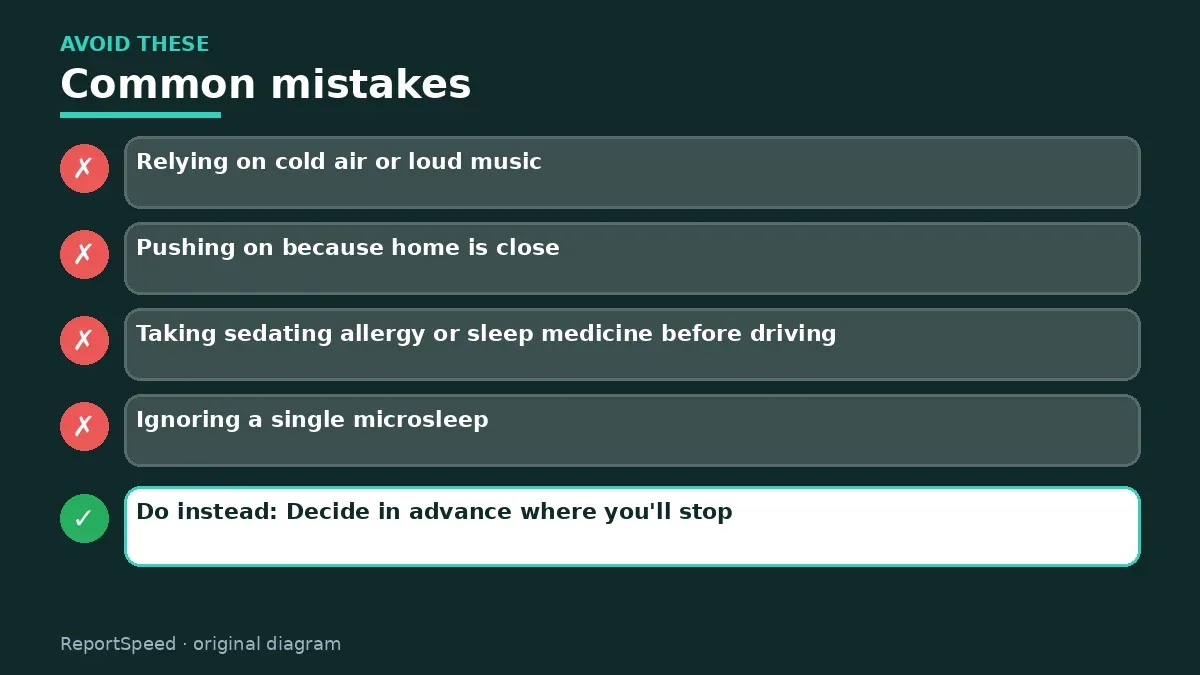
Common mistakes:
- Relying on cold air or loud music
- Pushing on because home is close
- Taking sedating allergy or sleep medicine before driving
- Ignoring a single microsleep
ReportSpeedMan tip: Decide in advance where you'll stop: a 24-hour gas station halfway home makes pulling over a plan, not a debate with yourself at 1 a.m.
What I would actually do
I'd treat any missed exit as a hard stop, plan a 20-minute nap spot halfway home, and ask for an earlier closing shift when possible.
The trade-off people miss: stopping adds 20 minutes, but pushing on drowsy trades that time for crash risk on the exact roads and hours where drowsy crashes cluster.
Proof that it worked
You stop at the first warning sign instead of pushing on.
Quick FAQ
Does coffee work?
Briefly, but it doesn't replace sleep.
Is a nap enough?
A short nap helps for a while.
Do rumble strips mean stop?
Yes, treat it as a warning.
Wrap-up: Missed exits, drifting and rumble strips mean stop now. Nap briefly, plan sleep before late shifts and don't rely on radio or cold air.
Wiki: Sleep Basics and Insomnia and Vehicle Recalls.
Drowsy driving: official pages behind this answer
Step-by-step photos
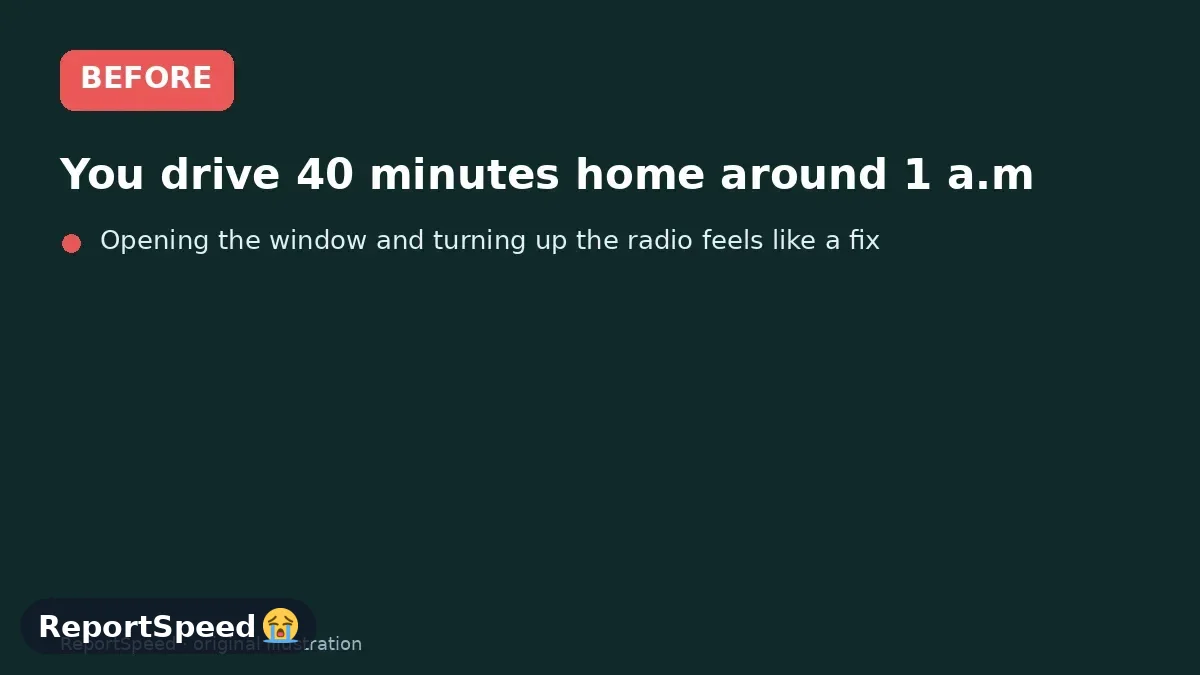
1. Before The problem 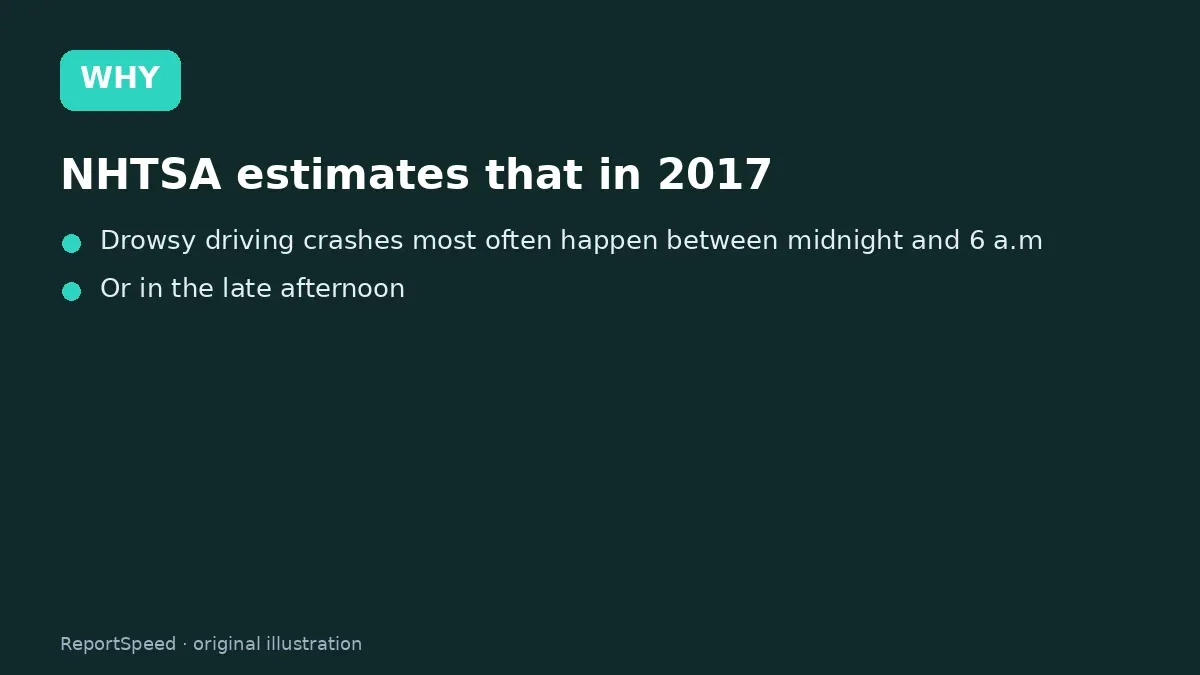
2. Why it happens The cause 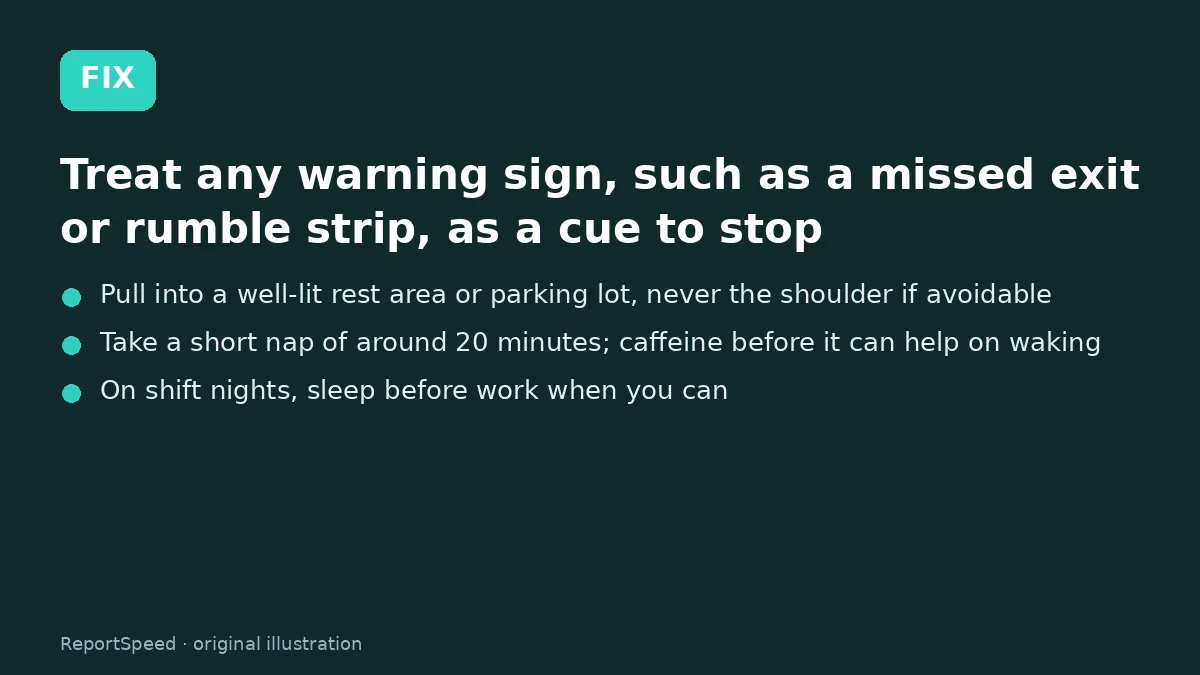
3. The fix The fix 
4. After The result
⚡ Speed Summary
- Missed exits, drifting and rumble strips mean stop now.
- Decide in advance where you'll stop: a 24-hour gas station halfway home makes pulling over a plan, not a debate with yourself at 1 a.m.
- Opening the window and turning up the radio feels like a fix, but it doesn't reverse sleepiness and gives false confidence.

Was this answer helpful?
Tap a star to rate this answer.
Related questions

How far should I sit from the steering wheel airbag?
Keep 10 inches from the air bag cover, tilt the wheel toward your chest, and keep kids 12 and under in the back.
Rate itSolved
Is it safe to drive through a flooded road? How much water can float a car
Never drive into flood water; a foot of rushing water can carry most cars.
Rate itSolved
When can my child stop using a booster seat?
Keep the booster until the seat belt fits across the thighs and chest, and keep kids 12 and under in the back.
Rate itSolved
Does driving faster really waste gas? Speed and fuel economy
Above 50 mph mileage drops quickly, roughly like $0.30 more per gallon for each extra 5 mph.
Rate itSolved
Real experiences
No experiences yet. Be the first to share.