


We had a backyard party, and the potato salad and chicken were out on the table for about three hours. It wasn't super hot, maybe 85 degrees. My partner wants to put the leftovers in the fridge. How long can food sit out before it's unsafe, and should we toss it?
How long can food sit out? The 2-hour rule explained
Concerns & risks
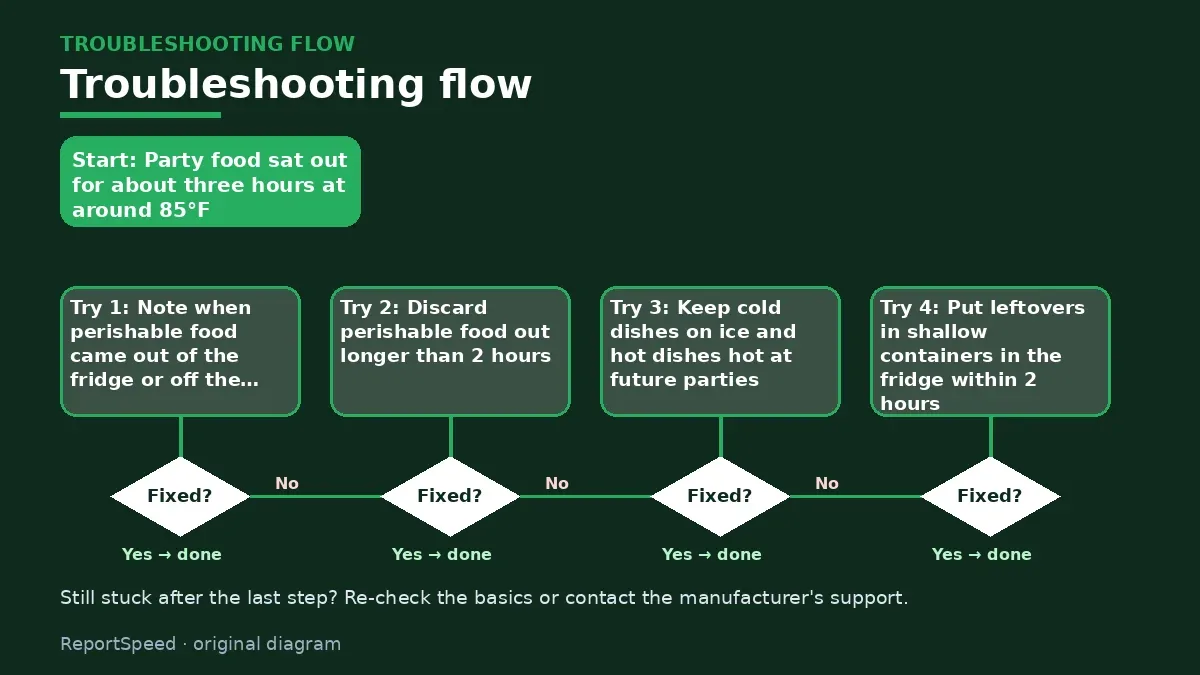
Party food sat out for about three hours at around 85°F, and you're deciding whether to keep the leftovers.
| Food | Keep it safe |
|---|---|
| Salads and dips | Set in a bowl of ice |
| Grilled meat | Serve off the grill, refill small portions |
| Hot dishes | Warmer or slow cooker at 140°F+ |
| Leftovers | Shallow containers, fridge within 2 hours |
| Above 90°F | 1-hour limit |
Causes & evidence
The USDA's Food Safety and Inspection Service says bacteria grow most rapidly between 40°F and 140°F, a range it calls the danger zone, where they can double in as little as 20 minutes. Its rule is to never leave perishable food out of the refrigerator for more than 2 hours, or more than 1 hour if the temperature is above 90°F. After that, the USDA advises discarding it. Keeping hot food at 140°F or above and cold food at 40°F or below keeps it out of the danger zone. Your refrigerator should be at 40°F or below and your freezer at 0°F. Reheating doesn't make food that sat out too long safe, because some bacteria produce toxins heat won't destroy. Leftovers should go in the fridge within 2 hours in shallow containers so they cool quickly.
Edge cases: the 2-hour clock covers total time out of the fridge, including shopping, transport and serving. Hard cheeses, whole fruits and bread are not perishable in the same way, but cut fruit and cooked rice are. During a power outage, a closed fridge keeps food cold for about 4 hours, according to the USDA.
Smelling food to decide whether it's safe doesn't work, because the bacteria that cause food poisoning usually don't change how food looks or smells.
What to do
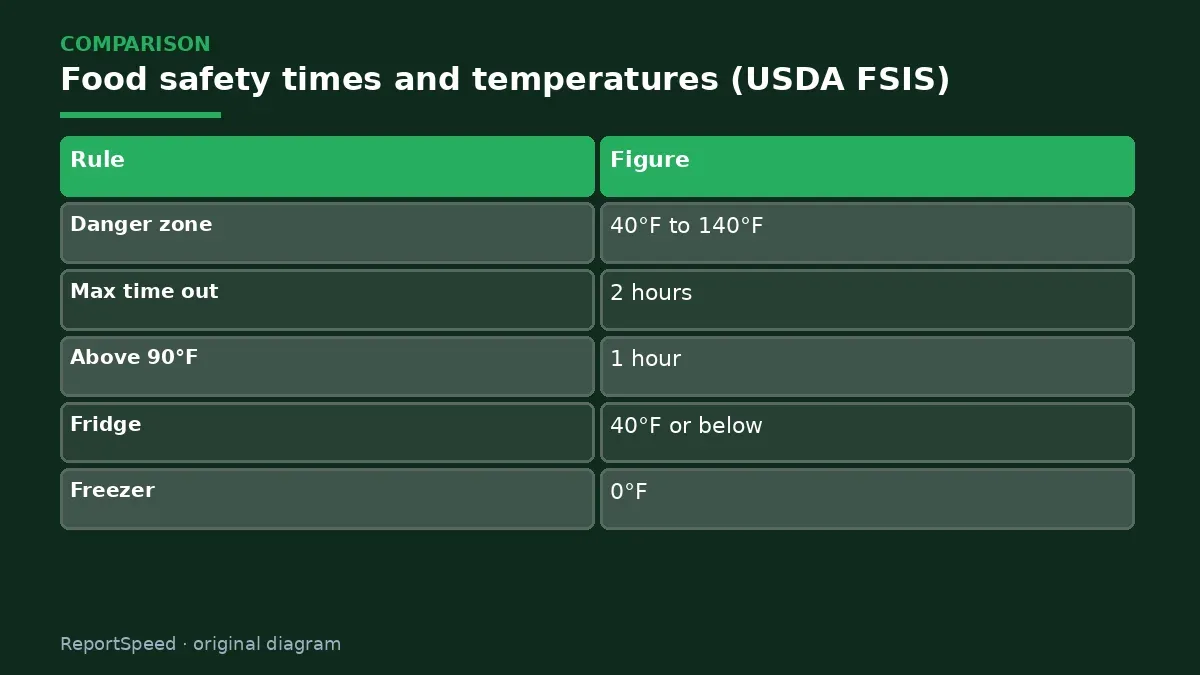
| Rule | Figure |
|---|---|
| Danger zone | 40°F to 140°F |
| Max time out | 2 hours |
| Above 90°F | 1 hour |
| Fridge | 40°F or below |
| Freezer | 0°F |
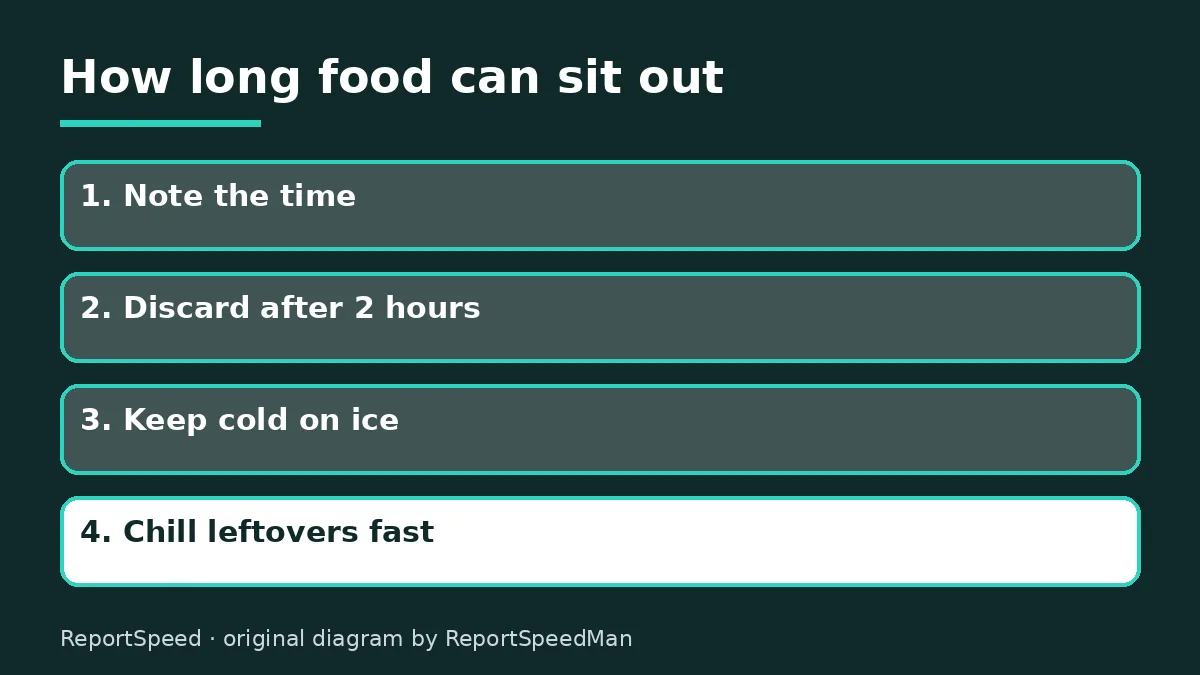
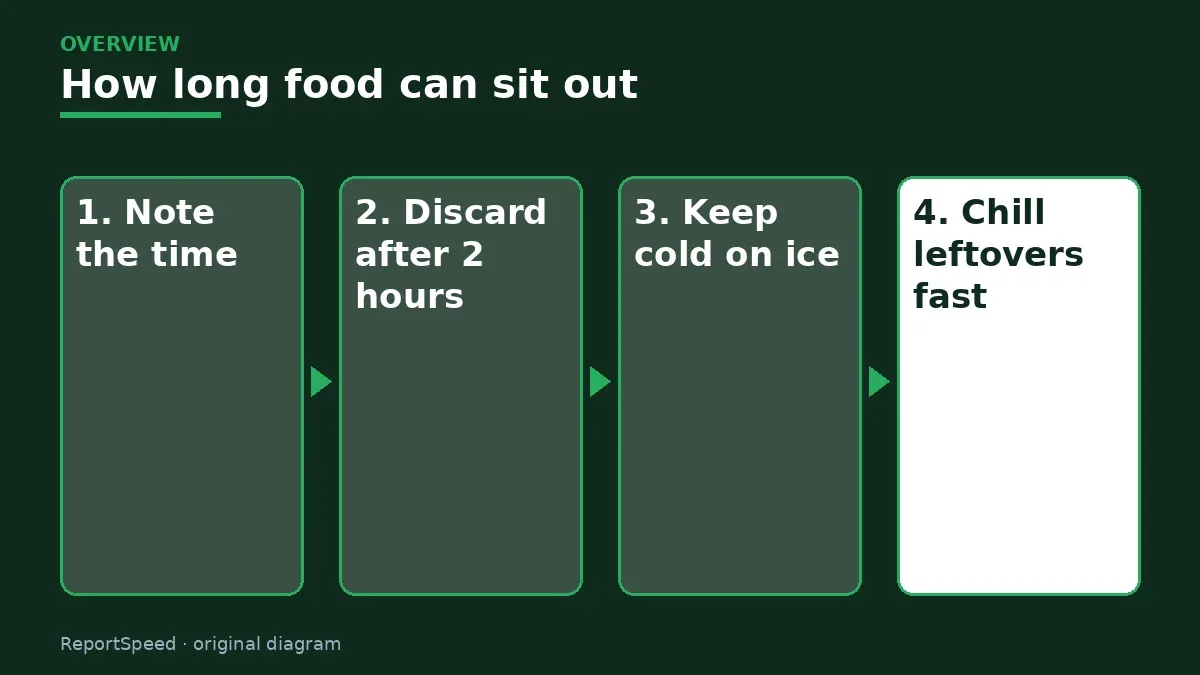
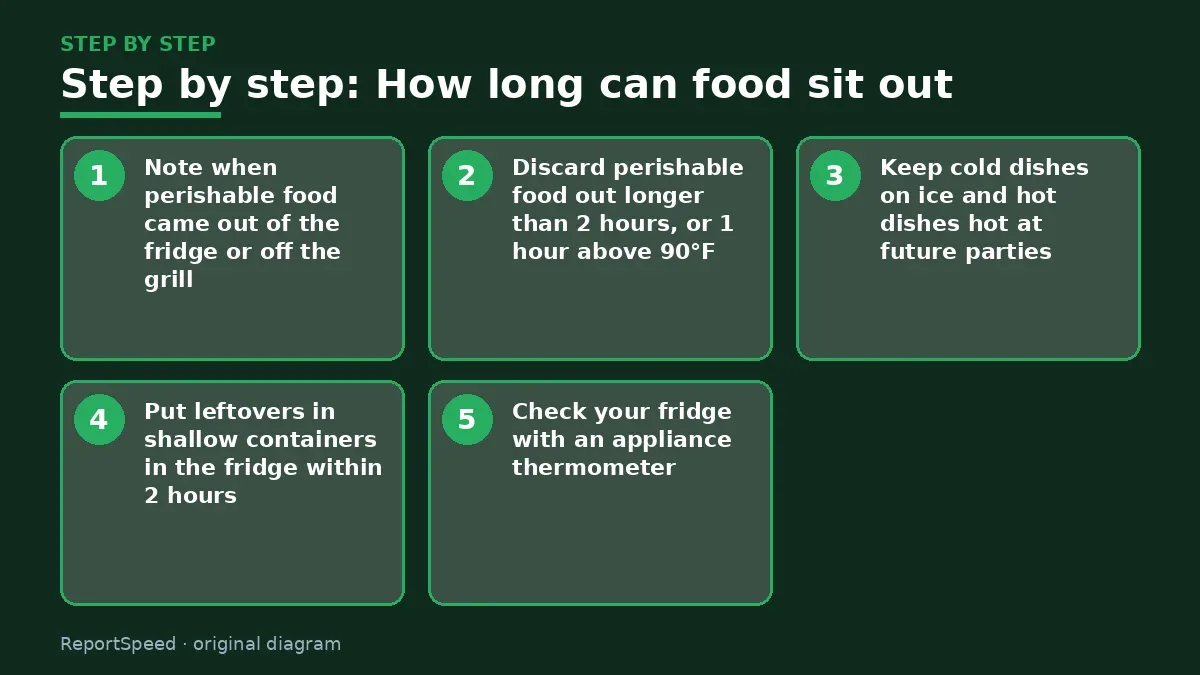
- Note when perishable food came out of the fridge or off the grill.
- Discard perishable food out longer than 2 hours, or 1 hour above 90°F.
- Keep cold dishes on ice and hot dishes hot at future parties.
- Put leftovers in shallow containers in the fridge within 2 hours.
- Check your fridge with an appliance thermometer.
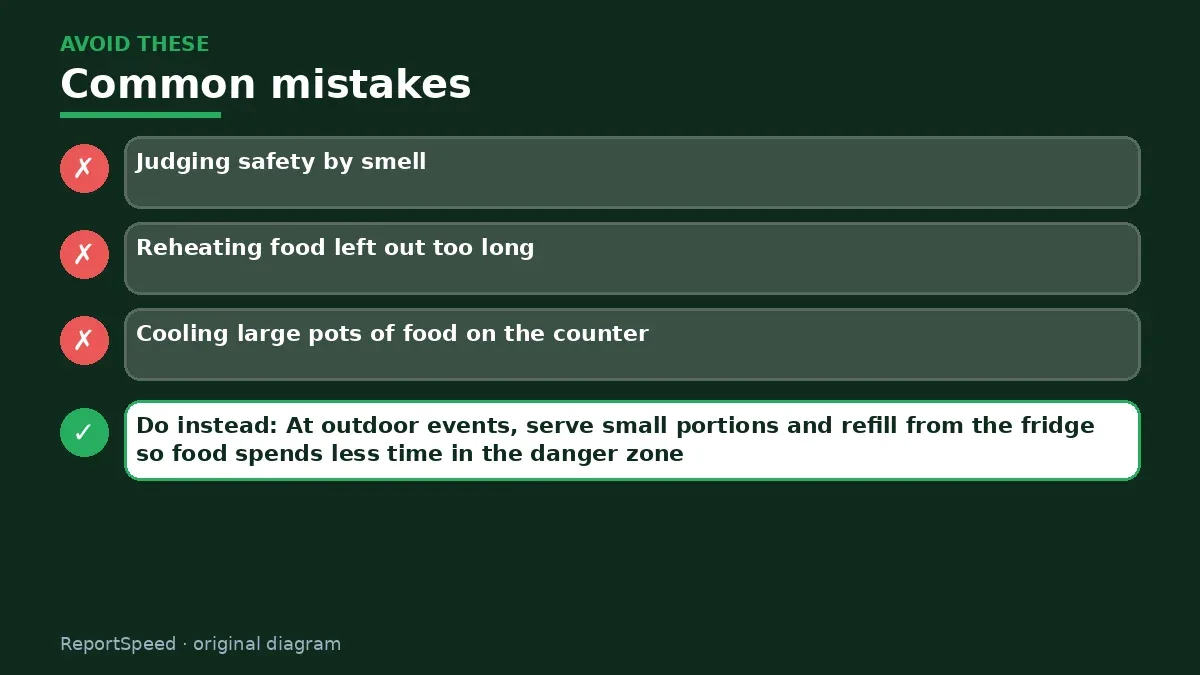
Common mistakes:
- Judging safety by smell
- Reheating food left out too long
- Cooling large pots of food on the counter
ReportSpeedMan tip: At outdoor events, serve small portions and refill from the fridge so food spends less time in the danger zone.
What I would actually do
I'd throw out the three-hour potato salad and chicken, and at the next party keep cold dishes on ice and serve small batches straight from the fridge.
The trade-off people miss: throwing food away feels wasteful, but food poisoning can cost days of illness. Planning smaller portions is the real way to cut waste.
How you can tell it worked
Leftovers go in the fridge within 2 hours.
Quick FAQ
Can I reheat food that sat out?
No. Some bacterial toxins survive heating.
Does the 1-hour rule apply indoors?
It applies whenever the air is above 90°F.
How long do leftovers last in the fridge?
Generally 3 to 4 days.
Wrap-up: Perishable food shouldn't sit out more than 2 hours, or 1 hour above 90°F. After three hours, the safe choice is to throw it out.
Wiki: Common Cold vs. Flu and Sleep Basics and Insomnia.
How long can food sit out: read the originals
Step-by-step photos
1. Before The problem 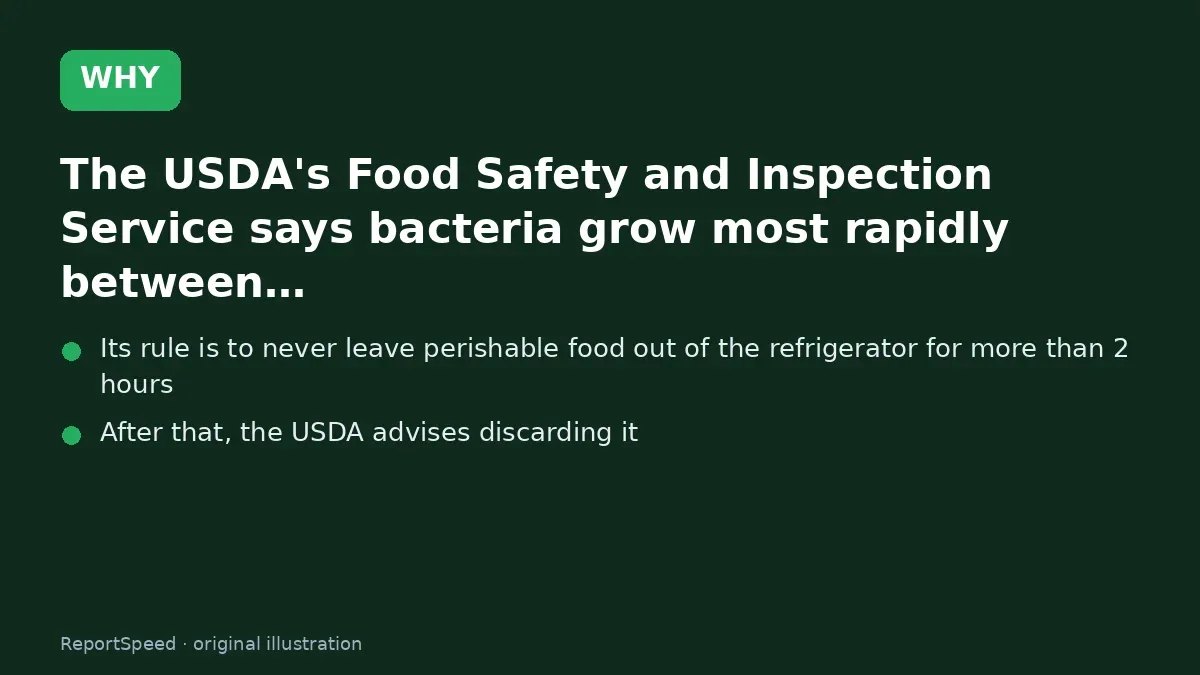
2. Why it happens The cause 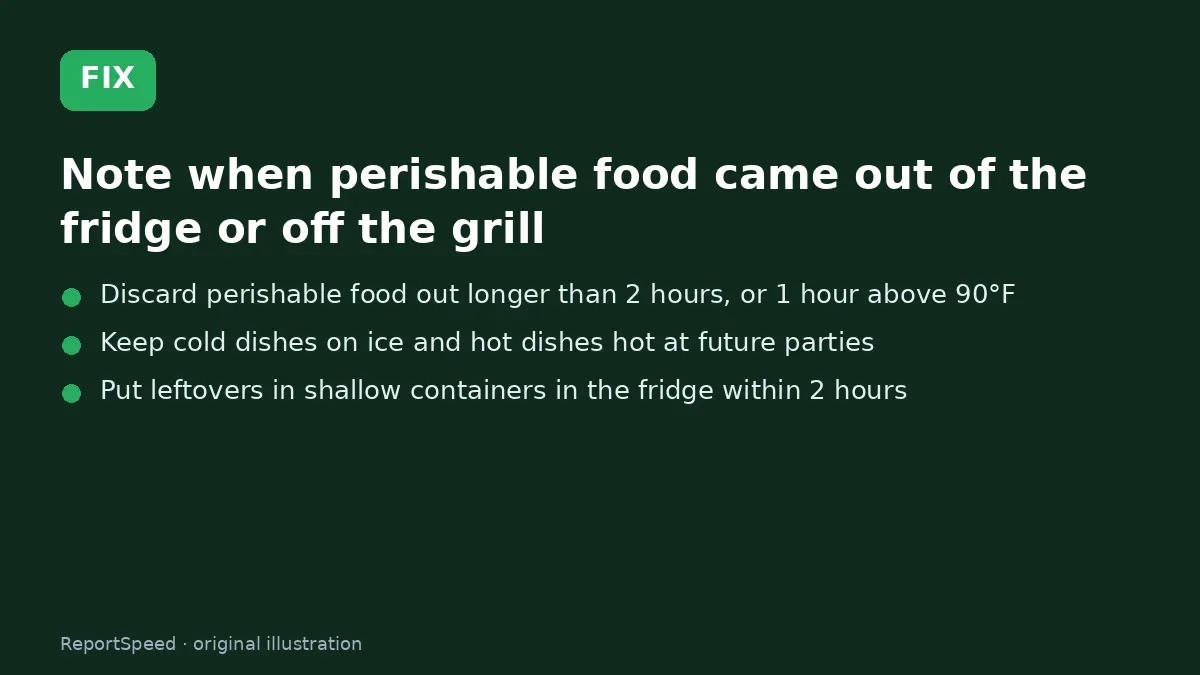
3. The fix The fix 
4. After The result
⚡ Speed Summary
- Perishable food shouldn't sit out more than 2 hours, or 1 hour above 90°F.
- At outdoor events, serve small portions and refill from the fridge so food spends less time in the danger zone.
- Smelling food to decide whether it's safe doesn't work, because the bacteria that cause food poisoning usually don't change how food looks or smells.

Was this answer helpful?
Tap a star to rate this answer.
Related questions
Is there lead in my tap water? How to check and lower your risk
Lead comes from plumbing, can't be seen, and isn't removed by boiling.
Rate itSolved
When do I need a tetanus shot? Booster timing and wounds
Boosters are every 10 years, or 5 years for dirty or puncture wounds.
Rate itSolved
How to help someone who is choking: back blows and abdominal thrusts
Let a strong cough work.
Rate itSolved
Fever: when to call the doctor for a child or adult
At 8 months, 102.2°F is the call-now line; your baby's 101.5°F means watch closely and call if it rises or warning signs appear.
Rate itSolved
Real experiences
No experiences yet. Be the first to share.