


I drink a big coffee in the morning, an energy drink after lunch and sometimes tea at night. I've started having trouble sleeping and feel jittery. How much caffeine is considered safe in a day, and how do I know how much I'm actually getting?
How much caffeine a day is too much?
Concerns & risks
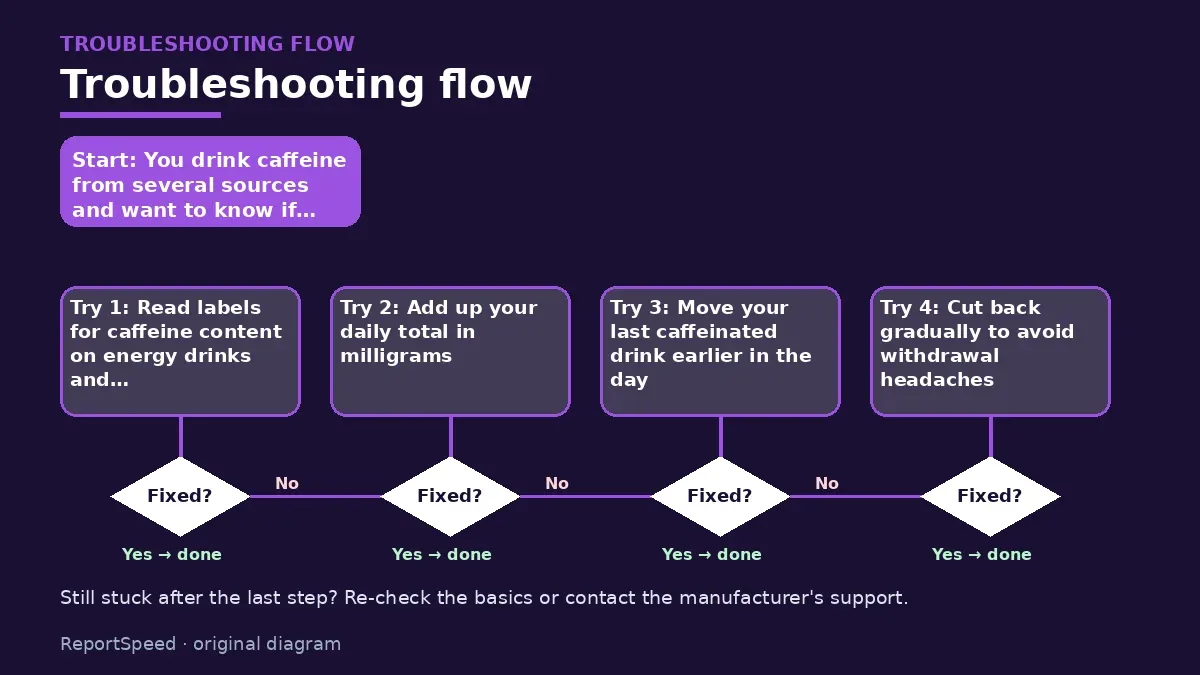
You drink caffeine from several sources and want to know if you're overdoing it.
| Source | Check |
|---|---|
| Coffee | Size and strength vary |
| Energy drinks | Read the label |
| Tea and soda | Smaller amounts add up |
| Supplements | Pre-workouts can be high |

Causes & evidence
The FDA says that for healthy adults, 400 milligrams of caffeine a day, roughly four or five cups of coffee, is an amount not generally associated with dangerous, negative effects. People differ in how sensitive they are to caffeine and how quickly they break it down. The FDA notes that consuming too much can cause insomnia, jitters, anxiety, a fast heart rate, upset stomach, nausea, headache and a feeling of unhappiness. Caffeine content varies widely between drinks, and energy drinks and some supplements can contain a lot. Pregnant people, those who are breastfeeding, people with certain conditions and those on some medications should ask a health care provider about limits.
Caffeine affects people differently, and some medications interact with it. Powdered and highly concentrated caffeine products can be dangerous because small measuring errors can give large doses.
Counting 'cups' instead of milligrams hides how much an energy drink or large coffee adds.
What to do
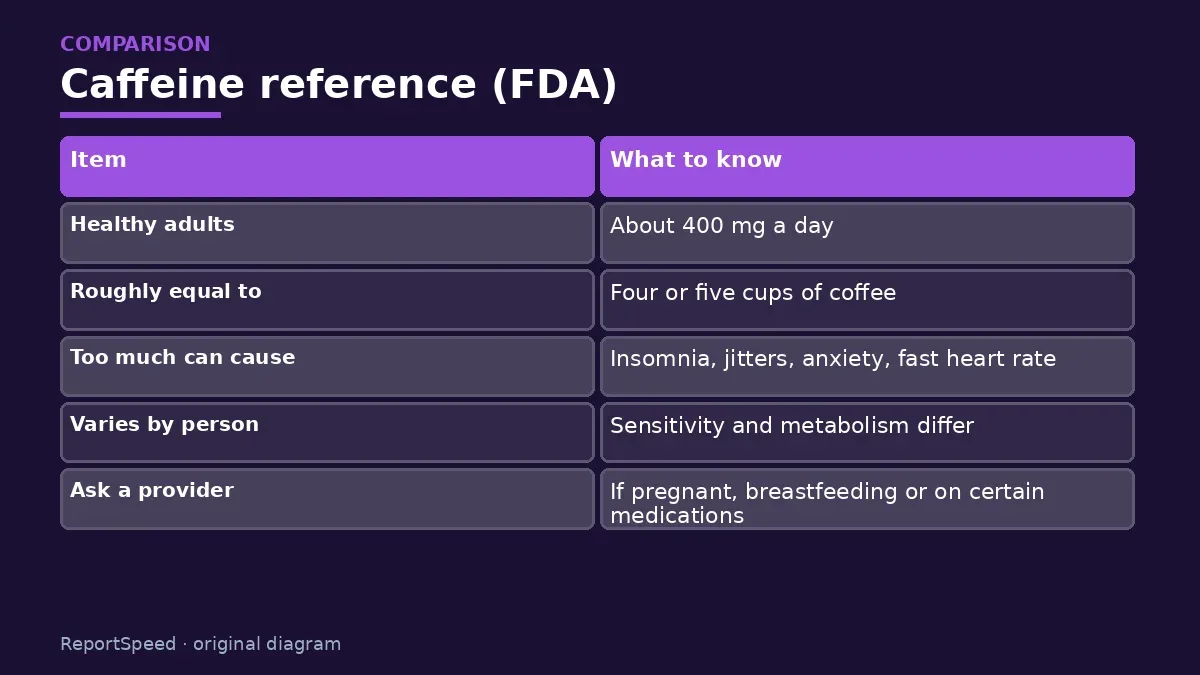
| Item | What to know |
|---|---|
| Healthy adults | About 400 mg a day |
| Roughly equal to | Four or five cups of coffee |
| Too much can cause | Insomnia, jitters, anxiety, fast heart rate |
| Varies by person | Sensitivity and metabolism differ |
| Ask a provider | If pregnant, breastfeeding or on certain medications |
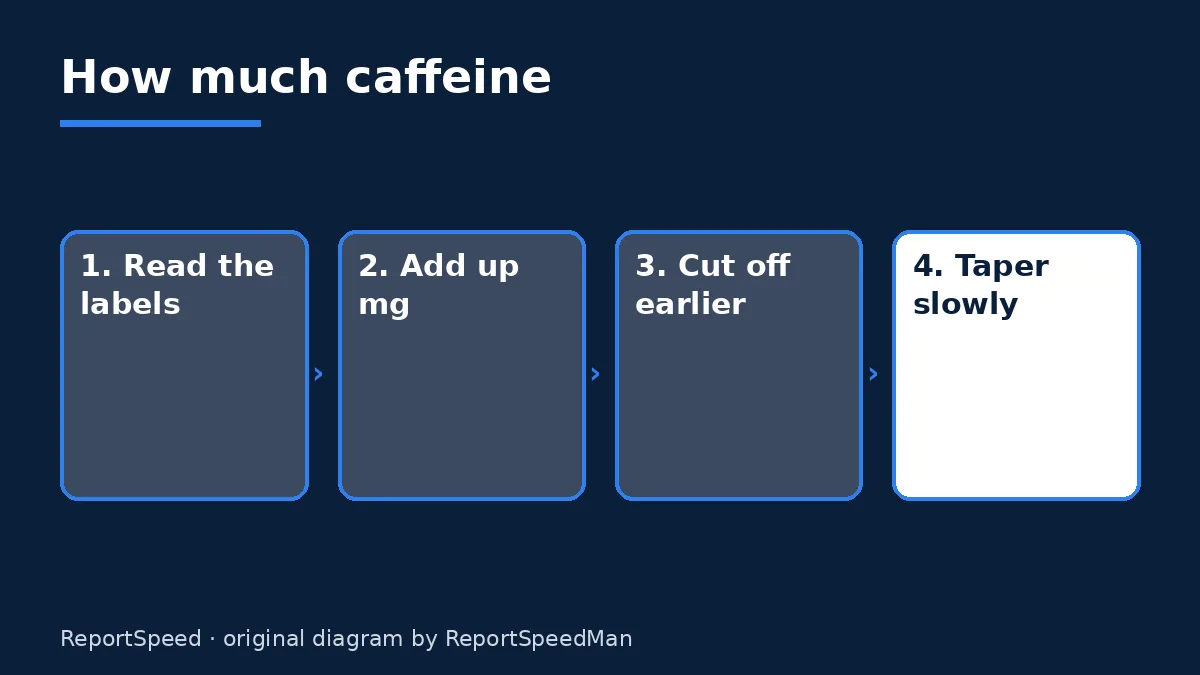
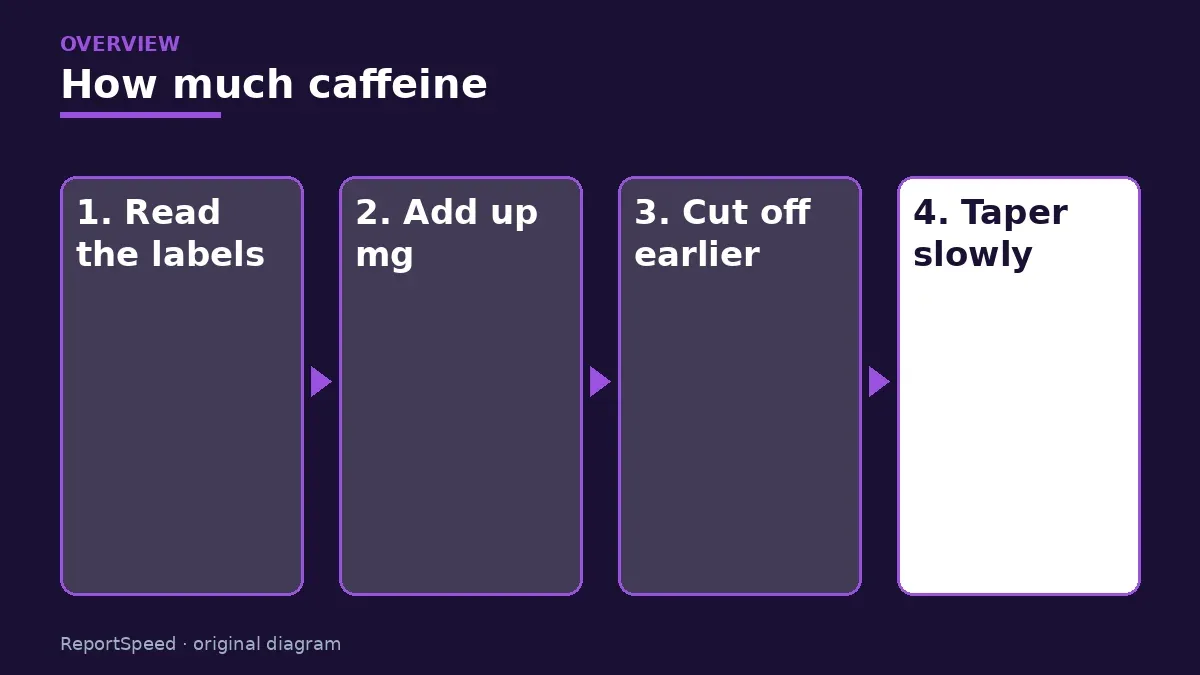
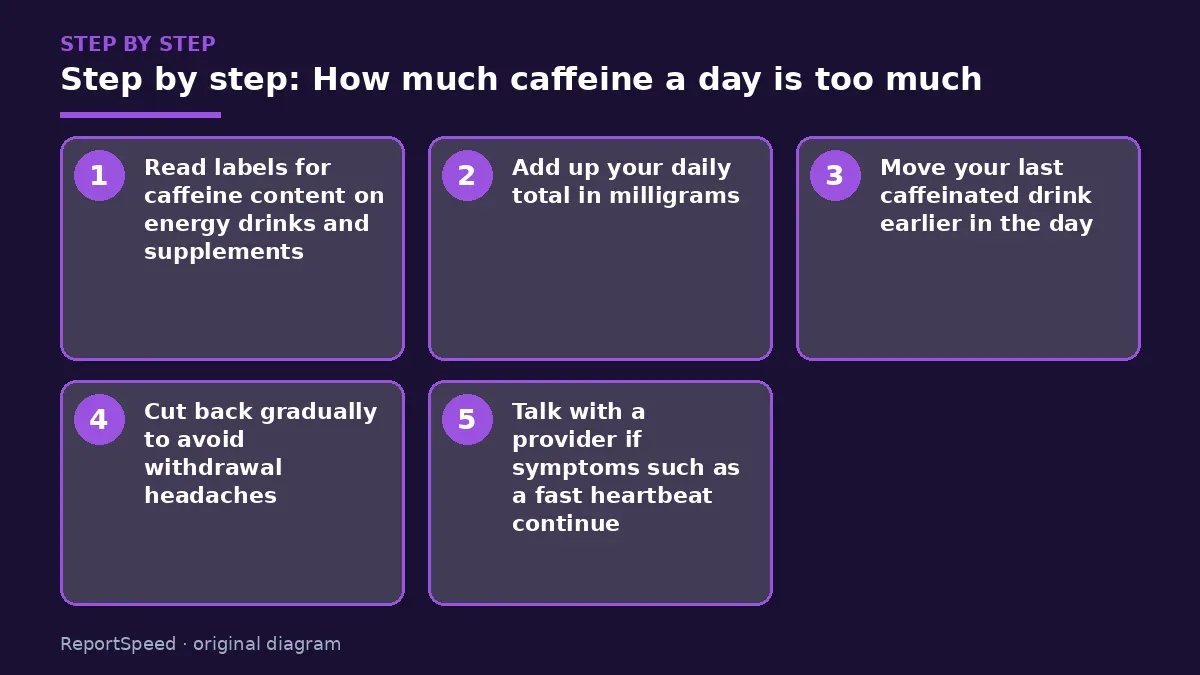
- Read labels for caffeine content on energy drinks and supplements.
- Add up your daily total in milligrams.
- Move your last caffeinated drink earlier in the day.
- Cut back gradually to avoid withdrawal headaches.
- Talk with a provider if symptoms such as a fast heartbeat continue.
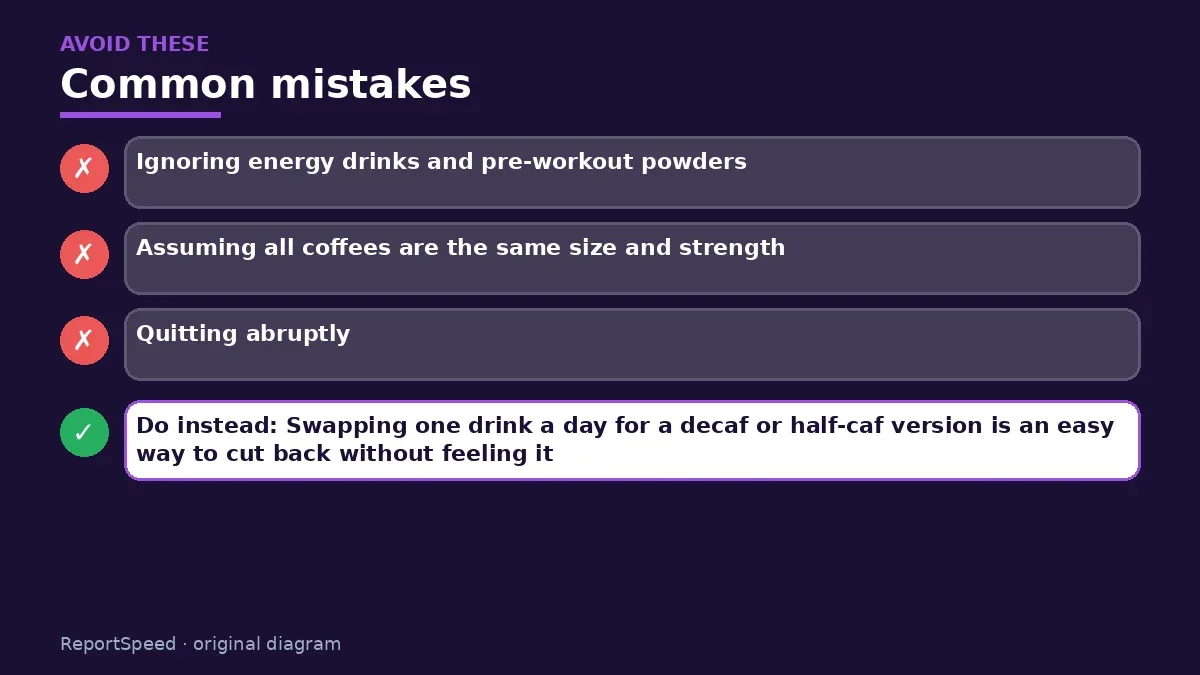
Common mistakes:
- Ignoring energy drinks and pre-workout powders
- Assuming all coffees are the same size and strength
- Quitting abruptly
ReportSpeedMan tip: Swapping one drink a day for a decaf or half-caf version is an easy way to cut back without feeling it.
What I would actually do

I'd tally a typical day in milligrams, then move my last caffeine to early afternoon before cutting the amount.
The trade-off people miss: 400 mg is a general reference for healthy adults, not a target. If your sleep suffers at much less, your personal limit is lower.
How to know it worked
Your daily total is under your limit and you sleep better.
Quick FAQ
Is decaf caffeine-free?
It has a small amount.
Does caffeine dehydrate me?
Moderate amounts from drinks still count toward fluids.
How long does caffeine last?
Effects can last several hours.
Wrap-up: Use 400 mg as the reference, count all your sources and adjust if sleep or jitters tell you it's too much.
Wiki: Sleep Basics and Insomnia and Common Cold vs. Flu.
How much caffeine a day is too much: official pages behind this answer
Step-by-step photos
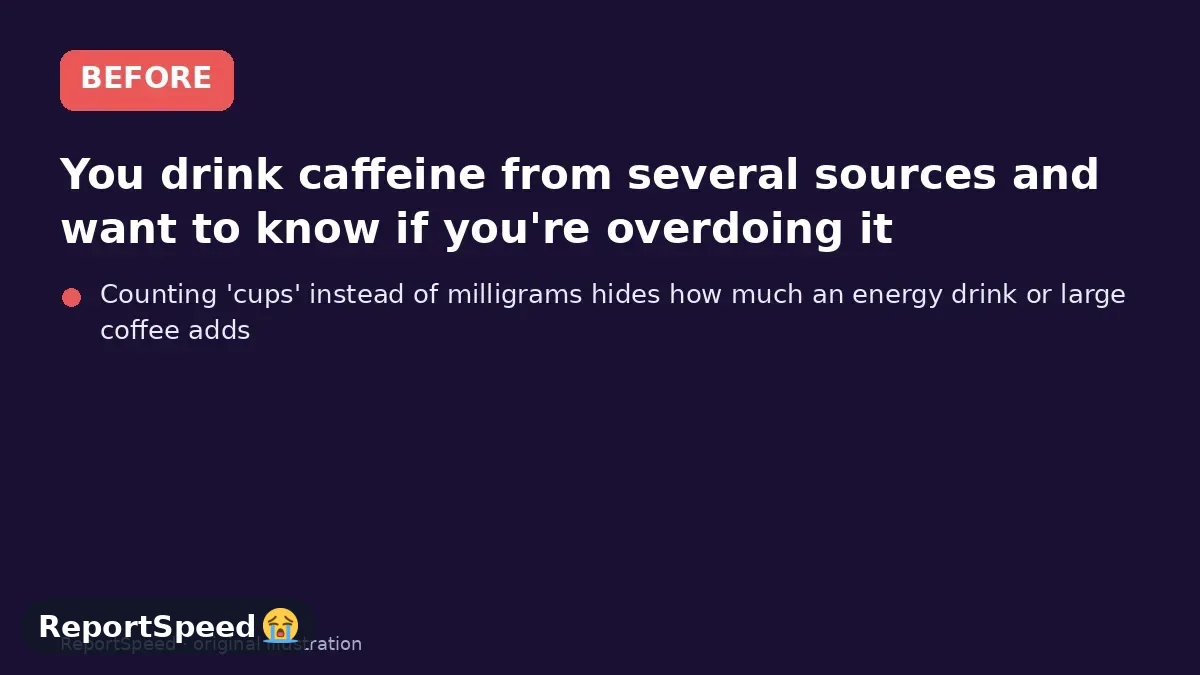
1. Before The problem 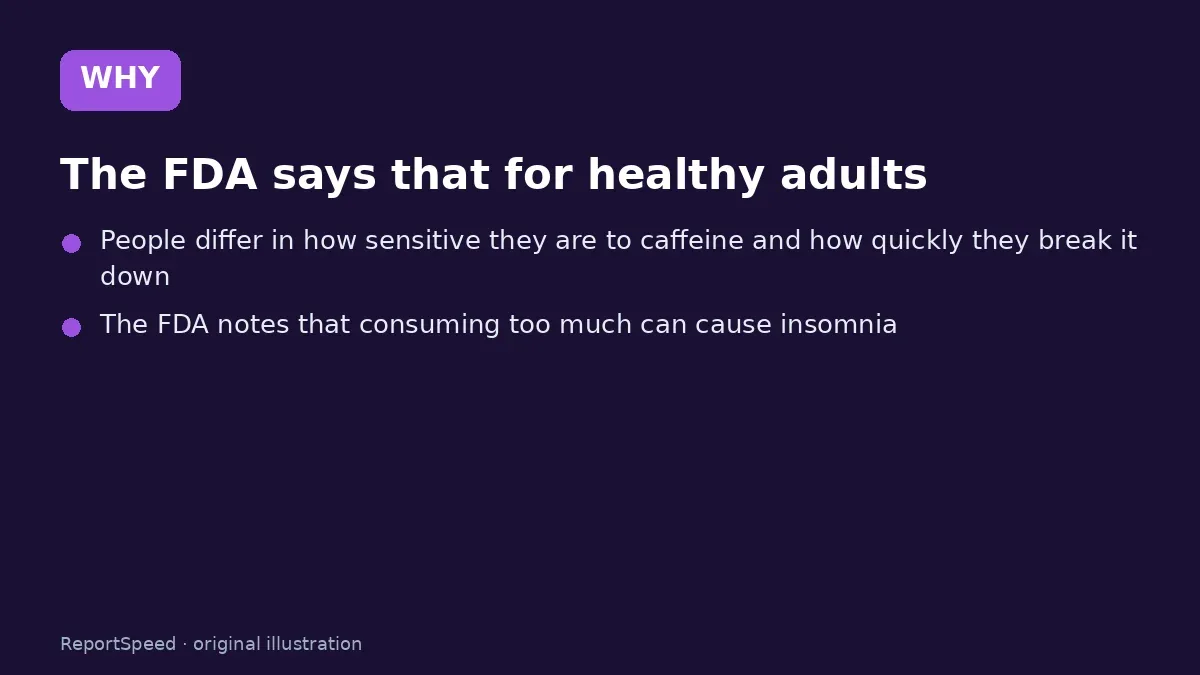
2. Why it happens The cause 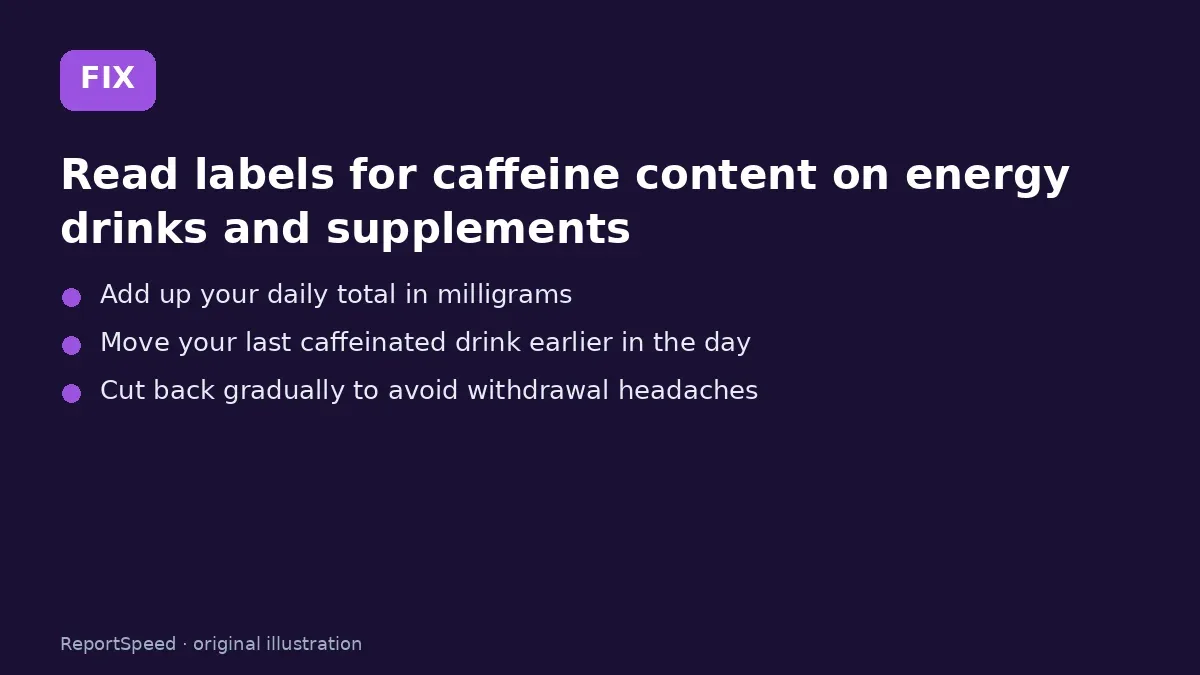
3. The fix The fix 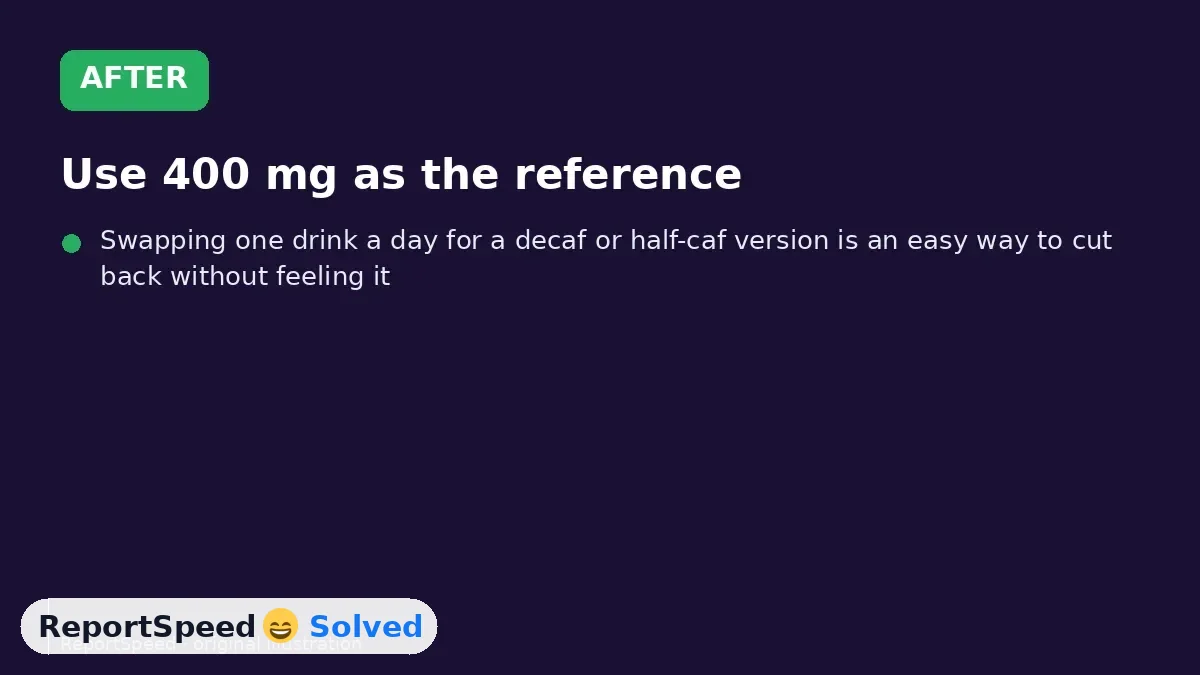
4. After The result
⚡ Speed Summary
- Use 400 mg as the reference, count all your sources and adjust if sleep or jitters tell you it's too much.
- Swapping one drink a day for a decaf or half-caf version is an easy way to cut back without feeling it.
- Counting 'cups' instead of milligrams hides how much an energy drink or large coffee adds.

Was this answer helpful?
Tap a star to rate this answer.
Related questions

Is there lead in my tap water? How to check and lower your risk
Lead comes from plumbing, can't be seen, and isn't removed by boiling.
Rate itSolved

When do I need a tetanus shot? Booster timing and wounds
Boosters are every 10 years, or 5 years for dirty or puncture wounds.
Rate itSolved
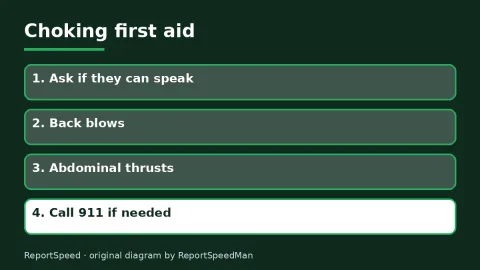
How to help someone who is choking: back blows and abdominal thrusts
Let a strong cough work.
Rate itSolved
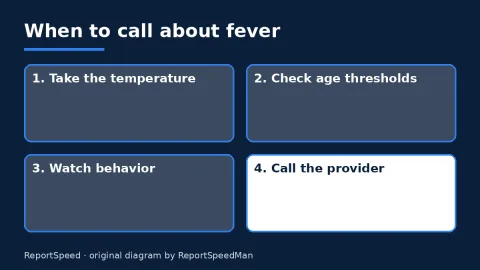
Fever: when to call the doctor for a child or adult
At 8 months, 102.2°F is the call-now line; your baby's 101.5°F means watch closely and call if it rises or warning signs appear.
Rate itSolved
Real experiences
No experiences yet. Be the first to share.