


My dad always changed his oil every 3,000 miles, and the quick-lube place puts a sticker on my windshield saying the same. But my car's dashboard says I still have 40% oil life left at 5,000 miles. How often should I change my oil, and who should I believe?
How often should I change my oil? Manual vs the 3,000-mile rule
Concerns & risks
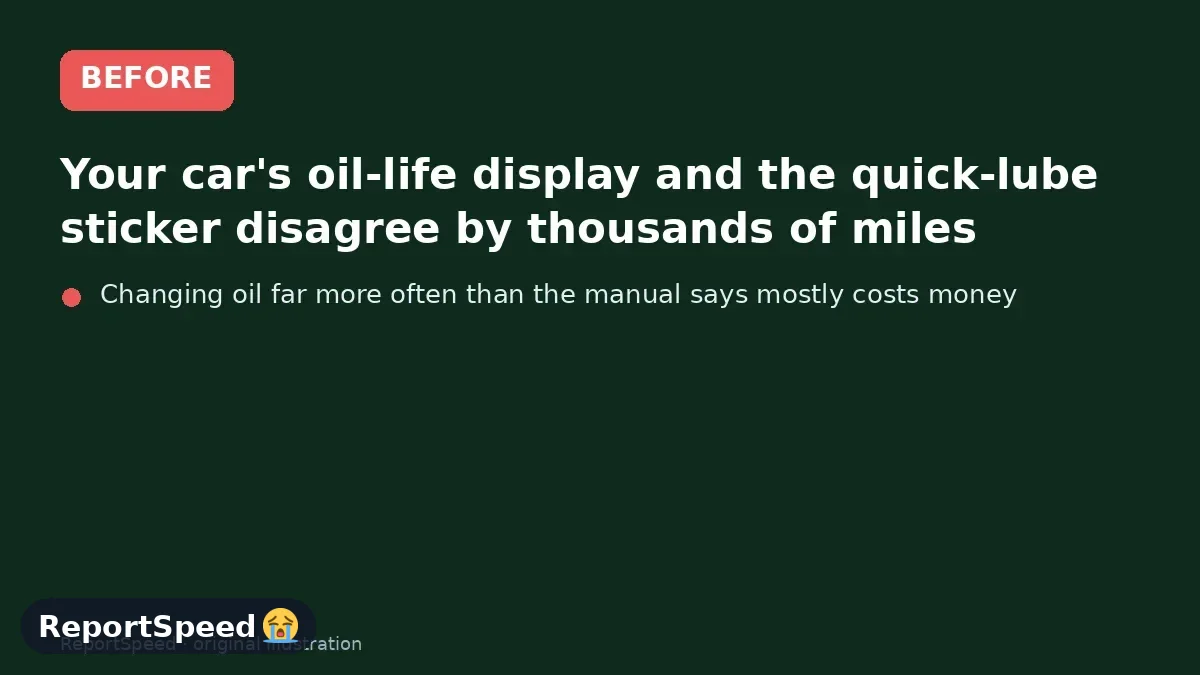
Your car's oil-life display and the quick-lube sticker disagree by thousands of miles.
| Driving pattern | Schedule to check |
|---|---|
| Mostly short trips under a few miles | Often severe |
| Towing or heavy loads | Severe |
| Dusty or unpaved roads | Severe |
| Very hot or very cold climate | Often severe |
| Steady highway commuting | Usually normal |
Causes & evidence
The Department of Energy's fueleconomy.gov advises following the maintenance schedule in your owner's manual and using the grade of motor oil the manufacturer recommends, noting that using the recommended grade can improve fuel economy by 1% to 2%. The old 3,000-mile habit comes from older engines and oils; many modern cars specify much longer intervals and use an oil-life monitor that estimates when a change is due based on how you drive. Most manuals also list a 'severe' schedule for conditions such as frequent short trips, towing, dusty roads or extreme temperatures, which shortens the interval. There is usually a time limit too, so a car that's driven little still needs oil changed periodically. Skipping changes can void warranty coverage, so keep records with dates and mileage.
Who this applies to: intervals vary widely between engines, and hybrids, turbocharged engines and older cars can each have different needs. If your car is under warranty, follow the manual exactly and keep records, since the manufacturer may ask for proof of maintenance. Check the oil level between changes too: the manual explains how, and low oil can damage an engine regardless of when it was last changed.

Changing oil far more often than the manual says mostly costs money, while stretching past it to save money can risk engine wear and warranty claims.
What to do
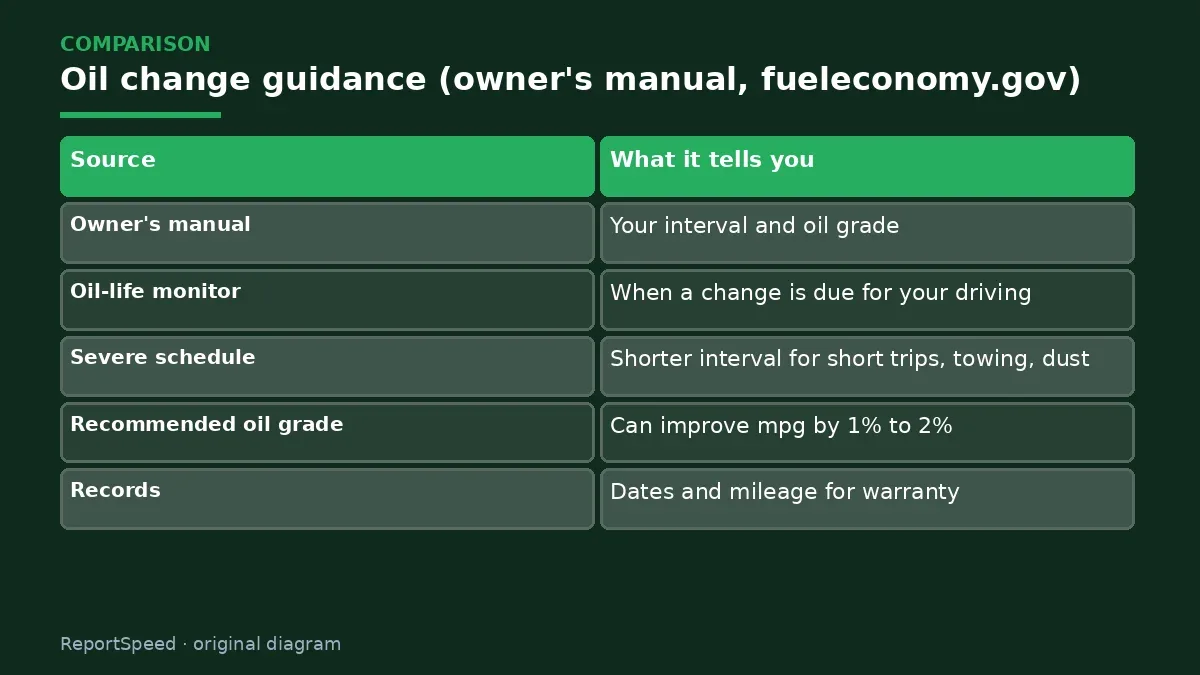
| Source | What it tells you |
|---|---|
| Owner's manual | Your interval and oil grade |
| Oil-life monitor | When a change is due for your driving |
| Severe schedule | Shorter interval for short trips, towing, dust |
| Recommended oil grade | Can improve mpg by 1% to 2% |
| Records | Dates and mileage for warranty |
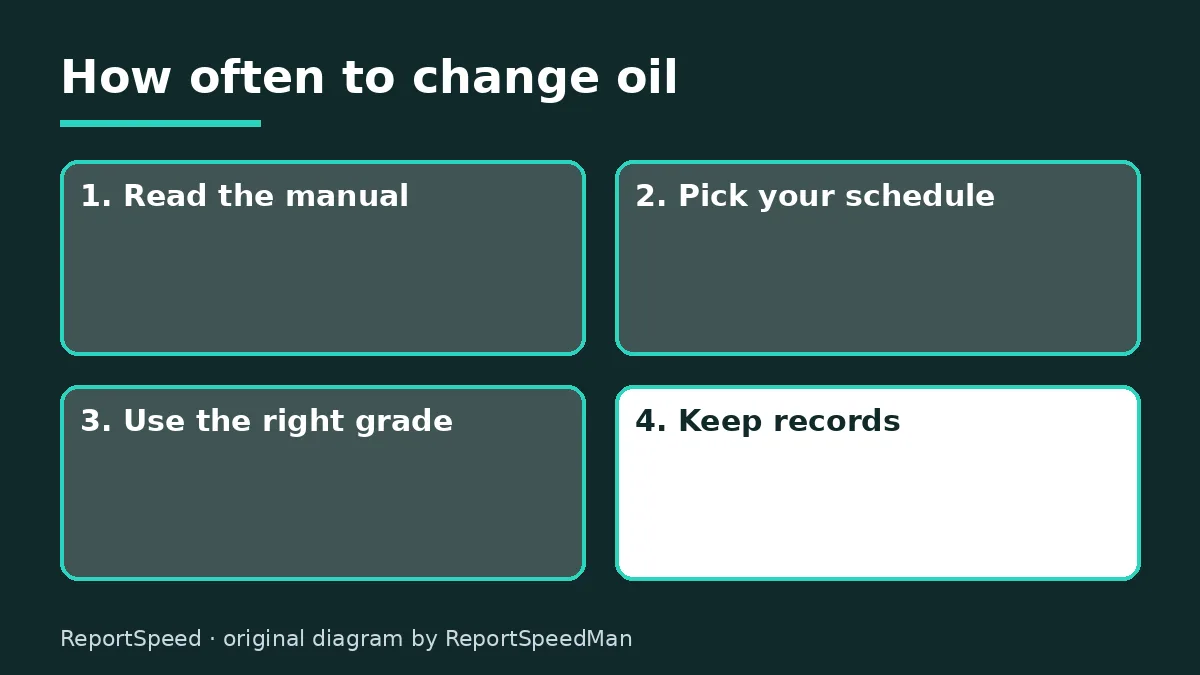
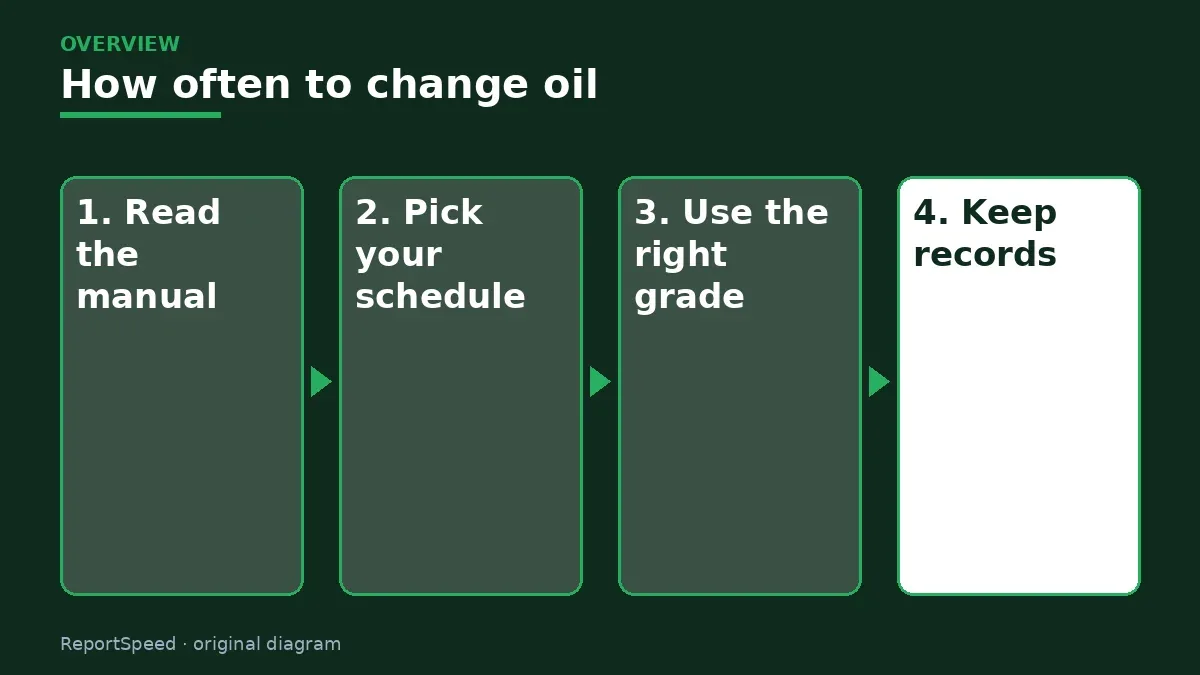
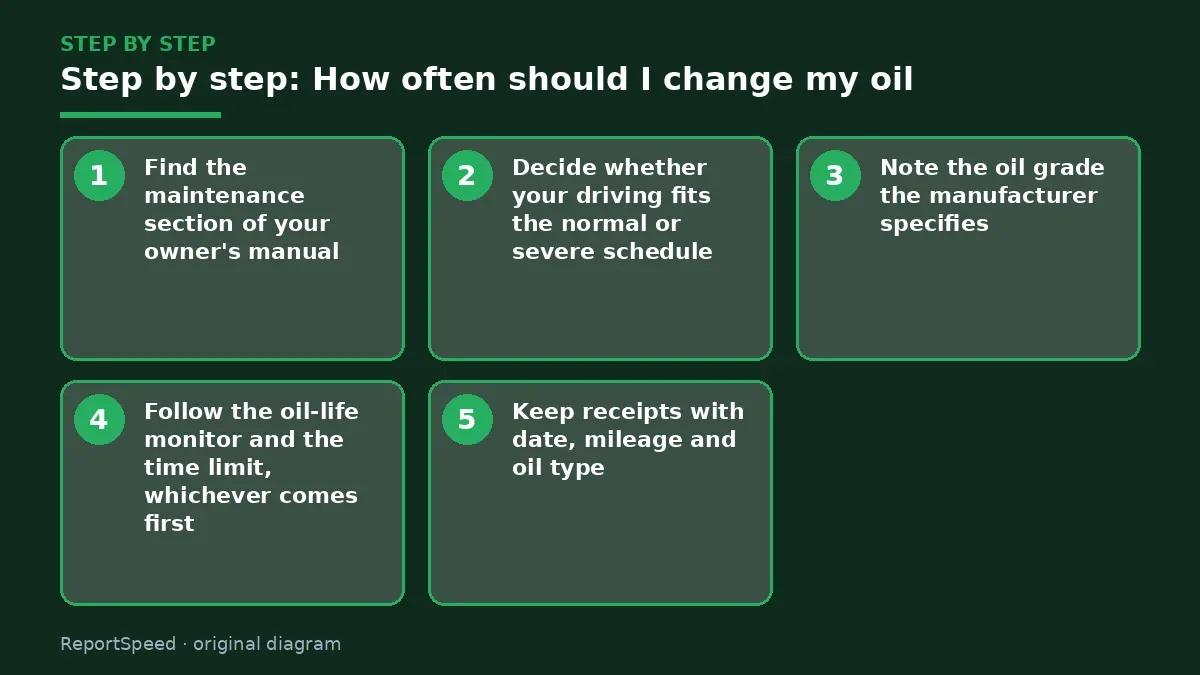
- Find the maintenance section of your owner's manual.
- Decide whether your driving fits the normal or severe schedule.
- Note the oil grade the manufacturer specifies.
- Follow the oil-life monitor and the time limit, whichever comes first.
- Keep receipts with date, mileage and oil type.
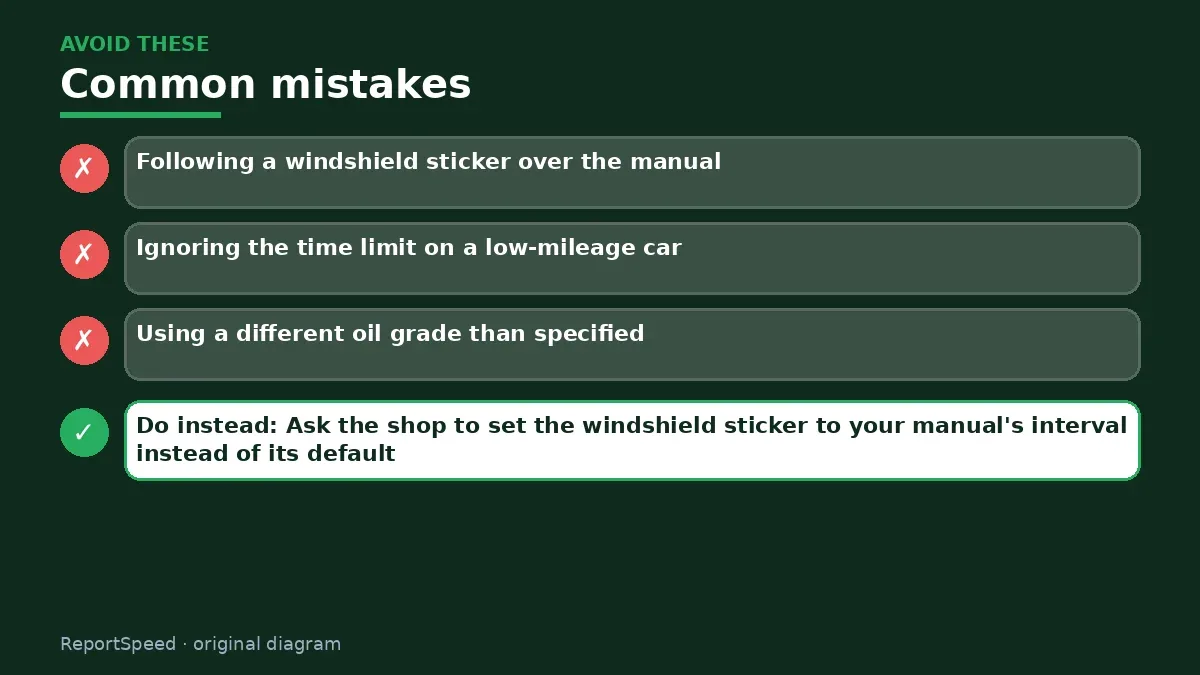
Common mistakes:
- Following a windshield sticker over the manual
- Ignoring the time limit on a low-mileage car
- Using a different oil grade than specified
ReportSpeedMan tip: Ask the shop to set the windshield sticker to your manual's interval instead of its default.
What I would actually do
I'd follow the oil-life monitor and the manual's time limit, use the exact grade printed in the manual, and ask the shop to write my real interval on the sticker.
The trade-off people miss: many people actually drive under 'severe' conditions without realizing it, such as lots of short trips in cold weather, so a longer interval only applies if your driving really is normal.
How you can tell it worked
Your oil changes match the manual and your records are up to date.
Quick FAQ
Is synthetic oil required?
Only if your manual specifies it.
Does a quick-lube void my warranty?
Not by itself; keep records showing the correct oil and interval.
What's the time limit?
It's in your manual, often stated in months.
Wrap-up: Change your oil when the owner's manual or oil-life monitor says to, use the recommended grade and keep records. The 3,000-mile rule doesn't fit most modern cars.
Wiki: Fuel Economy Basics and Vehicle Recalls.
How often should I change my oil: primary sources
Step-by-step photos
1. Before The problem 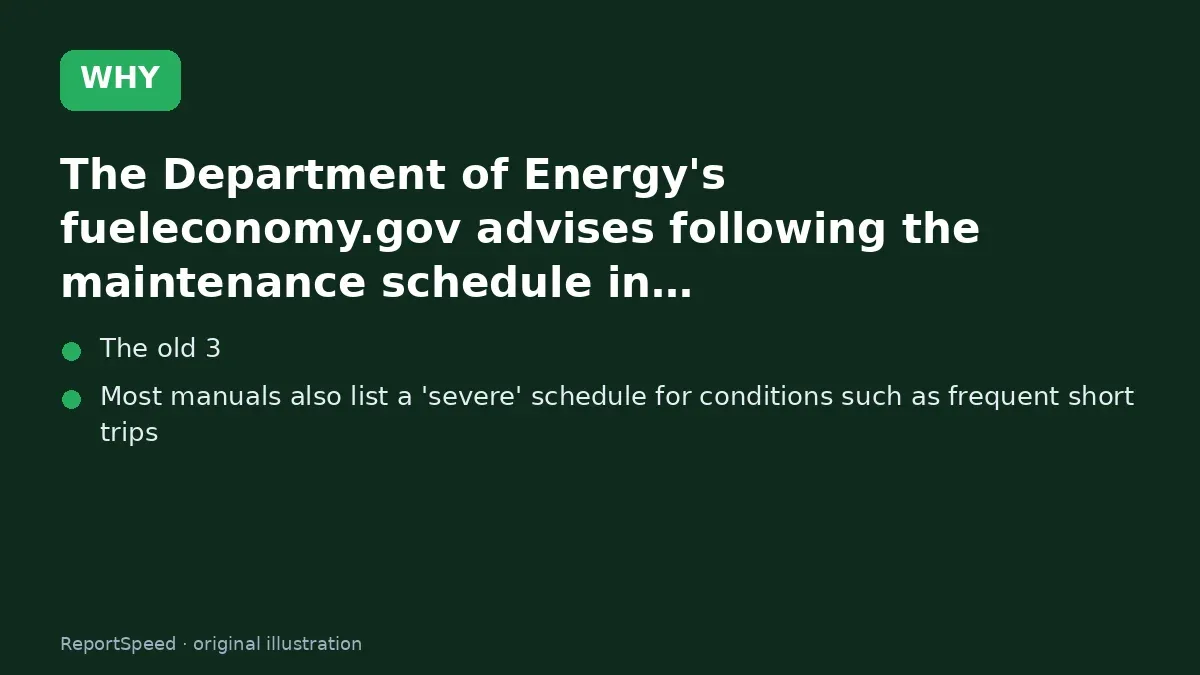
2. Why it happens The cause 
3. The fix The fix 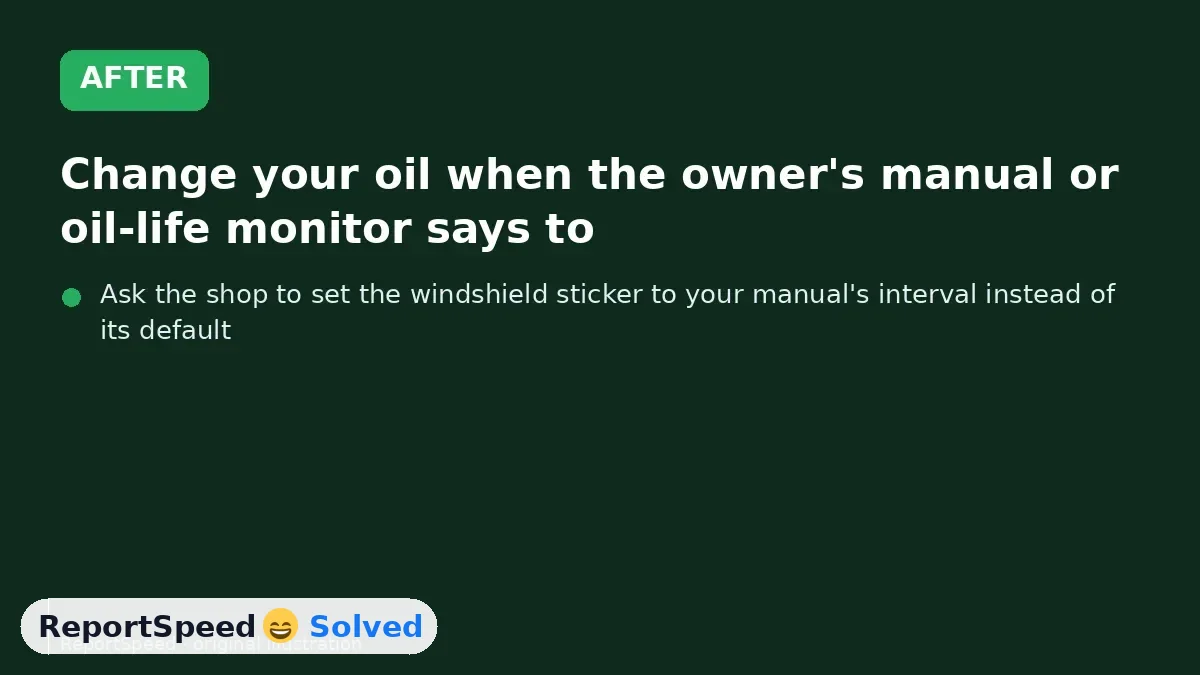
4. After The result
⚡ Speed Summary
- Change your oil when the owner's manual or oil-life monitor says to, use the recommended grade and keep records.
- Ask the shop to set the windshield sticker to your manual's interval instead of its default.
- Changing oil far more often than the manual says mostly costs money, while stretching past it to save money can risk engine wear and warranty claims.

Was this answer helpful?
Tap a star to rate this answer.
Related questions

How far should I sit from the steering wheel airbag?
Keep 10 inches from the air bag cover, tilt the wheel toward your chest, and keep kids 12 and under in the back.
Rate itSolved

Is it safe to drive through a flooded road? How much water can float a car
Never drive into flood water; a foot of rushing water can carry most cars.
Rate itSolved
When can my child stop using a booster seat?
Keep the booster until the seat belt fits across the thighs and chest, and keep kids 12 and under in the back.
Rate itSolved

Does driving faster really waste gas? Speed and fuel economy
Above 50 mph mileage drops quickly, roughly like $0.30 more per gallon for each extra 5 mph.
Rate itSolved
Real experiences
No experiences yet. Be the first to share.