


I'm 38, feel healthy and exercise a few times a week. I honestly can't remember the last time I had my cholesterol tested. My father had a heart attack at 58. How often should I get my cholesterol checked, and what should I ask for?
How often should I get my cholesterol checked?
Concerns & risks
You're 38, active and unsure when you last had a cholesterol test, and your father had early heart disease.
| Measure | What it is |
|---|---|
| Total cholesterol | Overall cholesterol in blood |
| LDL | 'Bad' cholesterol that can build up in arteries |
| HDL | 'Good' cholesterol that helps remove LDL |
| Triglycerides | A type of fat in blood |
| Fasting | Ask whether you need it |

Causes & evidence
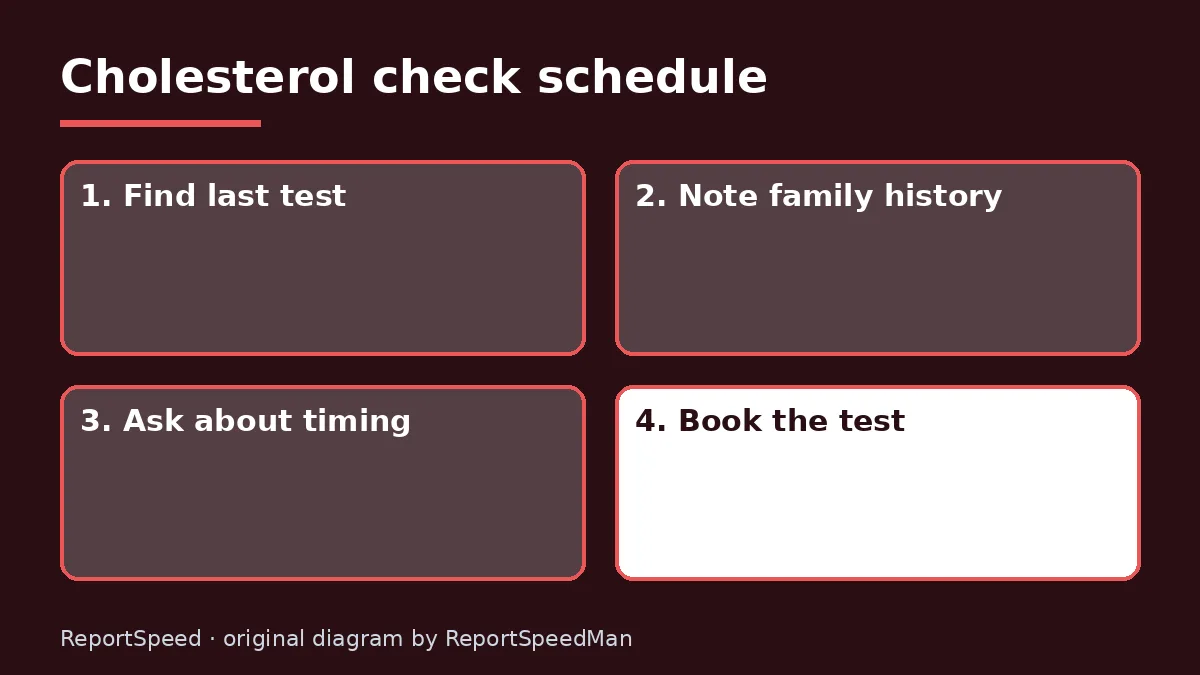
The CDC says most healthy adults should have their cholesterol checked every four to six years. People with heart disease, diabetes or a family history of high cholesterol may need it checked more often, and children should be checked at least once between ages 9 and 11 and again between 17 and 21. High cholesterol usually has no symptoms, so a blood test is the only way to know your levels. A standard lipid panel measures total cholesterol, LDL ('bad') cholesterol, HDL ('good') cholesterol and triglycerides. Your clinician looks at these results together with other risk factors, such as blood pressure, smoking, diabetes and family history, to decide on next steps. A father's heart attack before 55, or a mother's before 65, is generally considered early heart disease, so mention your family history.
Edge cases: people with diabetes, high blood pressure, obesity or kidney disease may need more frequent testing. Some genetic conditions, such as familial hypercholesterolemia, cause very high LDL from childhood, which is one reason family history matters. Children's screening schedules are set by their pediatrician.

Skipping a test because you feel fine misses the point: high cholesterol usually causes no symptoms at all.
What to do
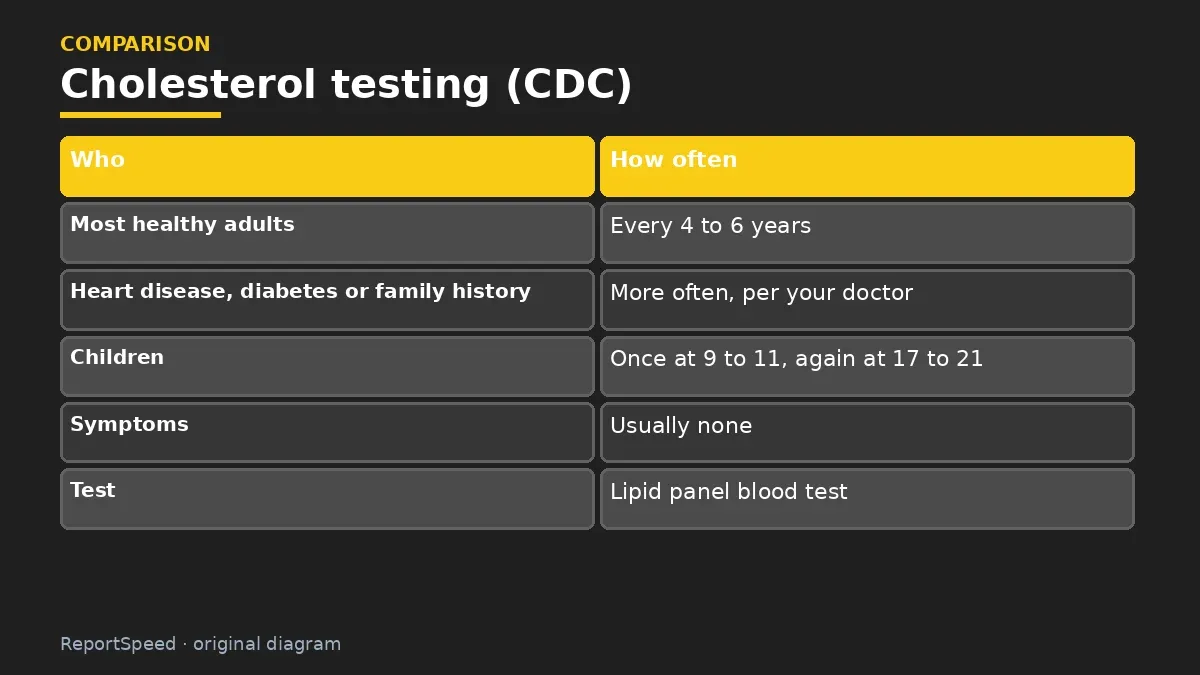
| Who | How often |
|---|---|
| Most healthy adults | Every 4 to 6 years |
| Heart disease, diabetes or family history | More often, per your doctor |
| Children | Once at 9 to 11, again at 17 to 21 |
| Symptoms | Usually none |
| Test | Lipid panel blood test |
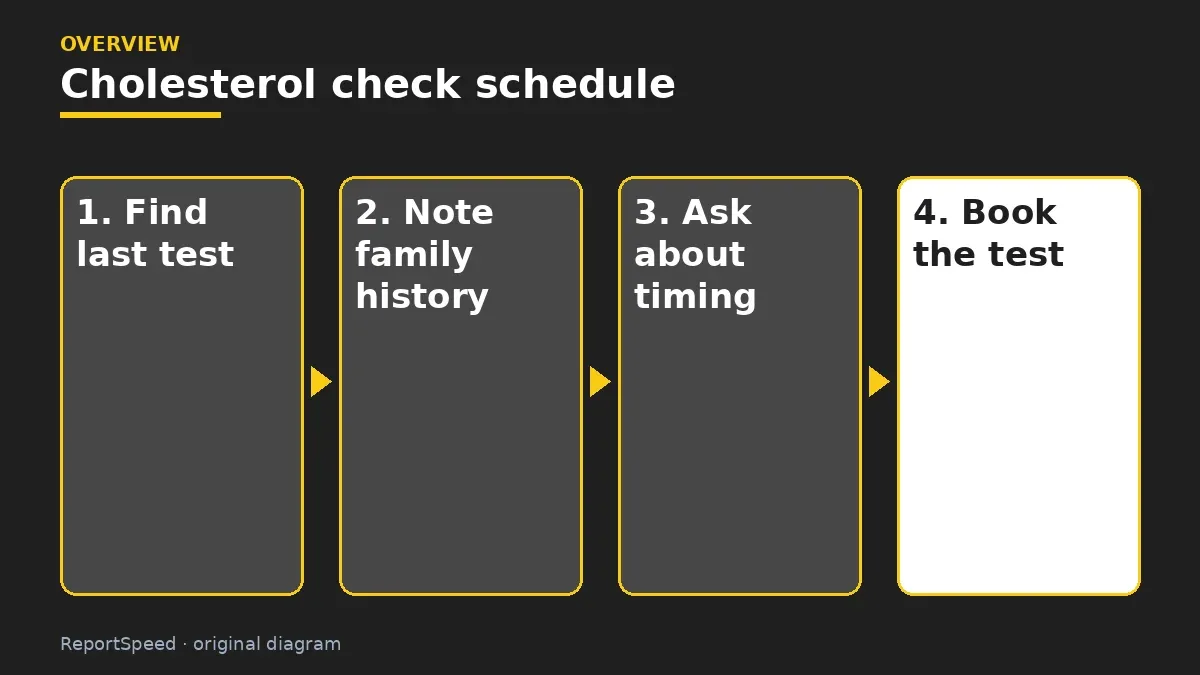
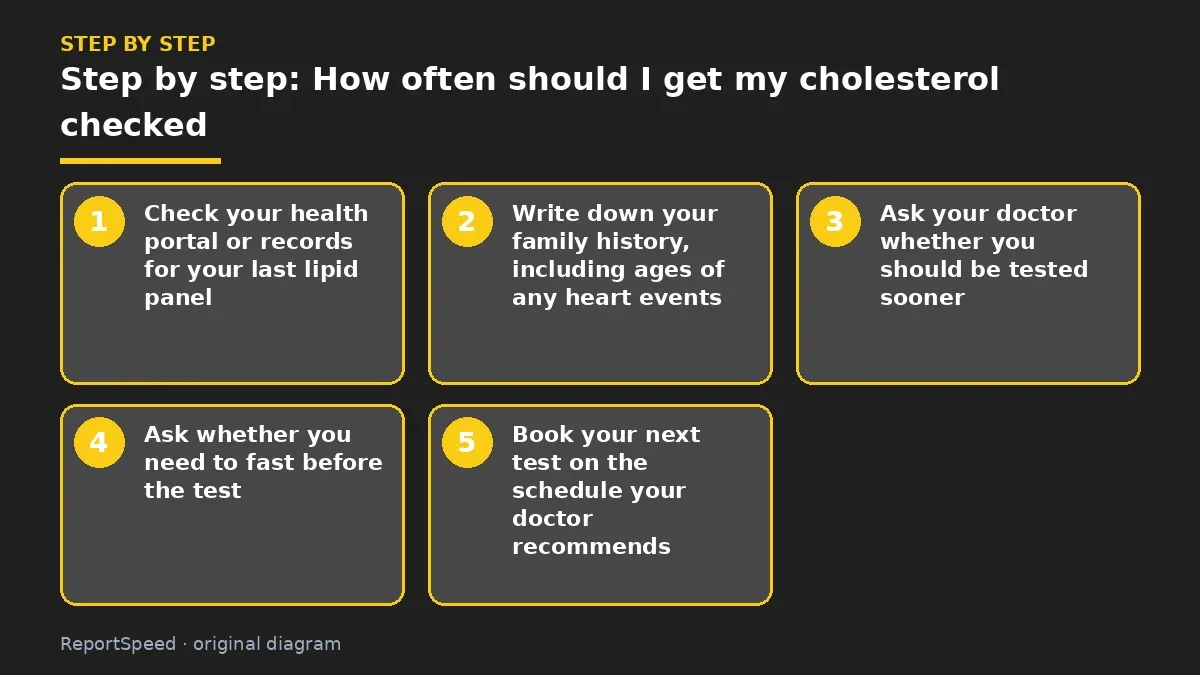
- Check your health portal or records for your last lipid panel.
- Write down your family history, including ages of any heart events.
- Ask your doctor whether you should be tested sooner.
- Ask whether you need to fast before the test.
- Book your next test on the schedule your doctor recommends.
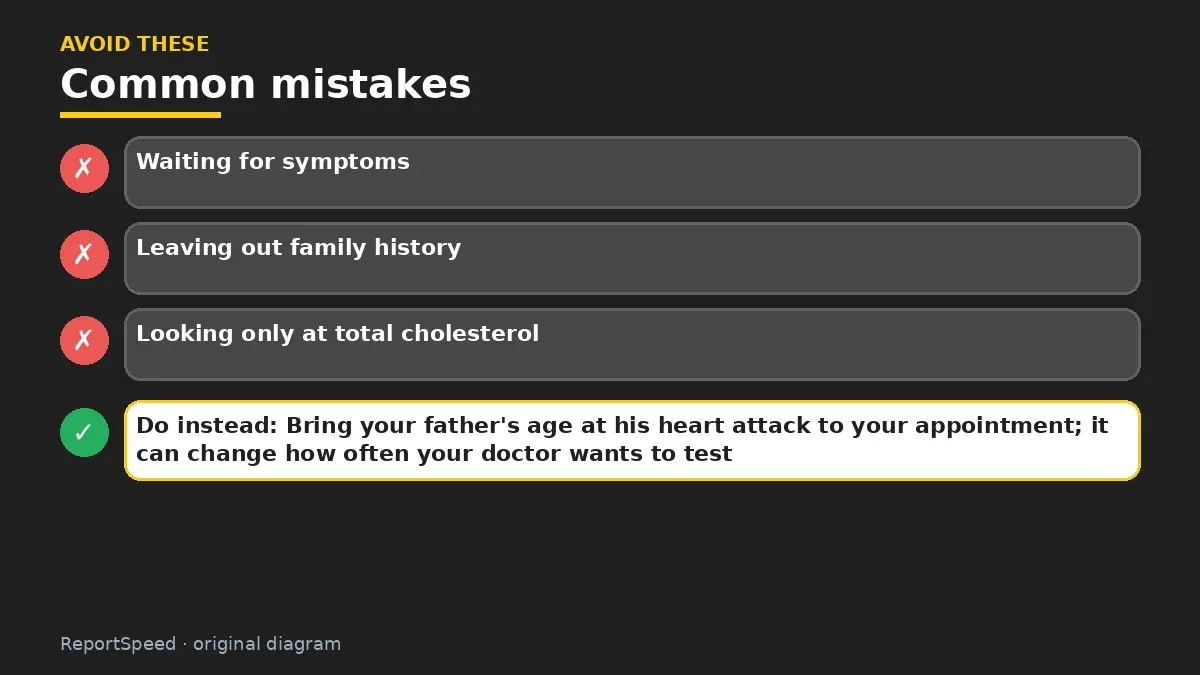
Common mistakes:
- Waiting for symptoms
- Leaving out family history
- Looking only at total cholesterol
ReportSpeedMan tip: Bring your father's age at his heart attack to your appointment; it can change how often your doctor wants to test.
What I would actually do
I'd book a lipid panel at my next checkup and tell my doctor my father's age at his heart attack, so the testing schedule fits my real risk.
The trade-off people miss: a single normal result doesn't mean you can forget about it for a decade. Weight, diet, menopause, new medicines and family history can all change your numbers between tests.
Checking that it worked
You have a recent lipid panel and a retest date.
Quick FAQ
Do I need to fast?
Ask your clinician; some lipid panels don't require it.
Can I have high cholesterol at a healthy weight?
Yes. Genetics play a big role.
Are home tests reliable?
They can screen, but a lab test is standard.
Wrap-up: Healthy adults generally need a cholesterol check every four to six years, but family history can mean more often. Book a lipid panel and share your history.
Wiki: Sleep Basics and Insomnia and Emergency Fund.
How often should I get my cholesterol checked: official pages behind this answer
Step-by-step photos
1. Before The problem 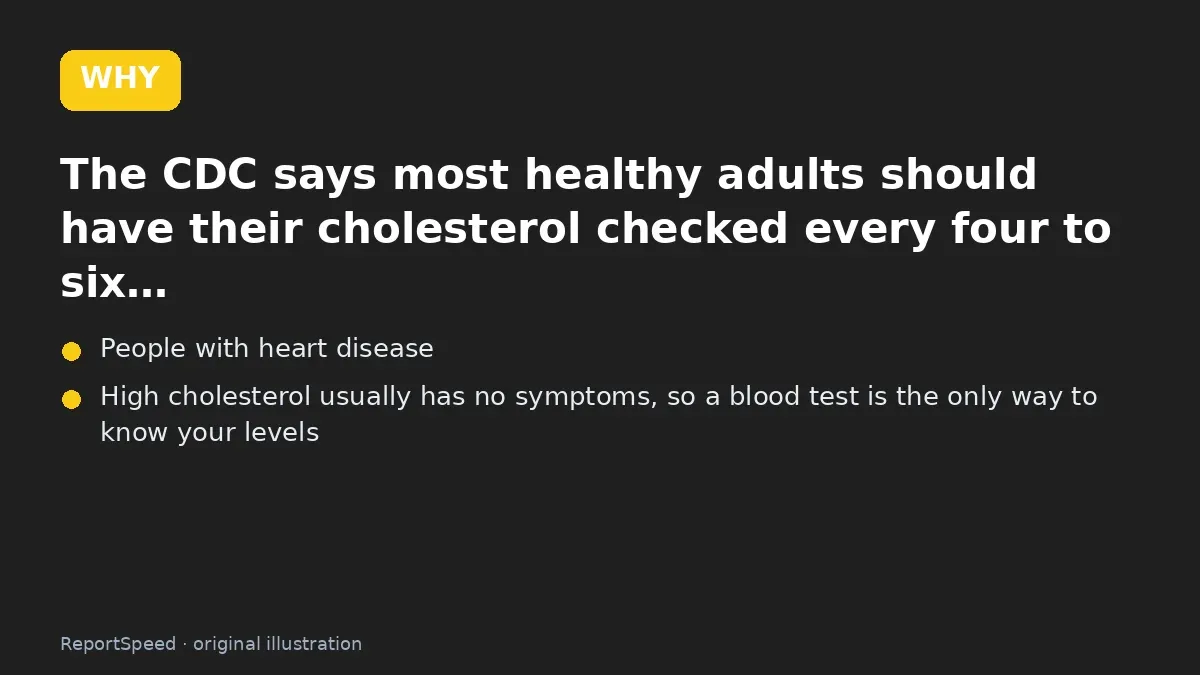
2. Why it happens The cause 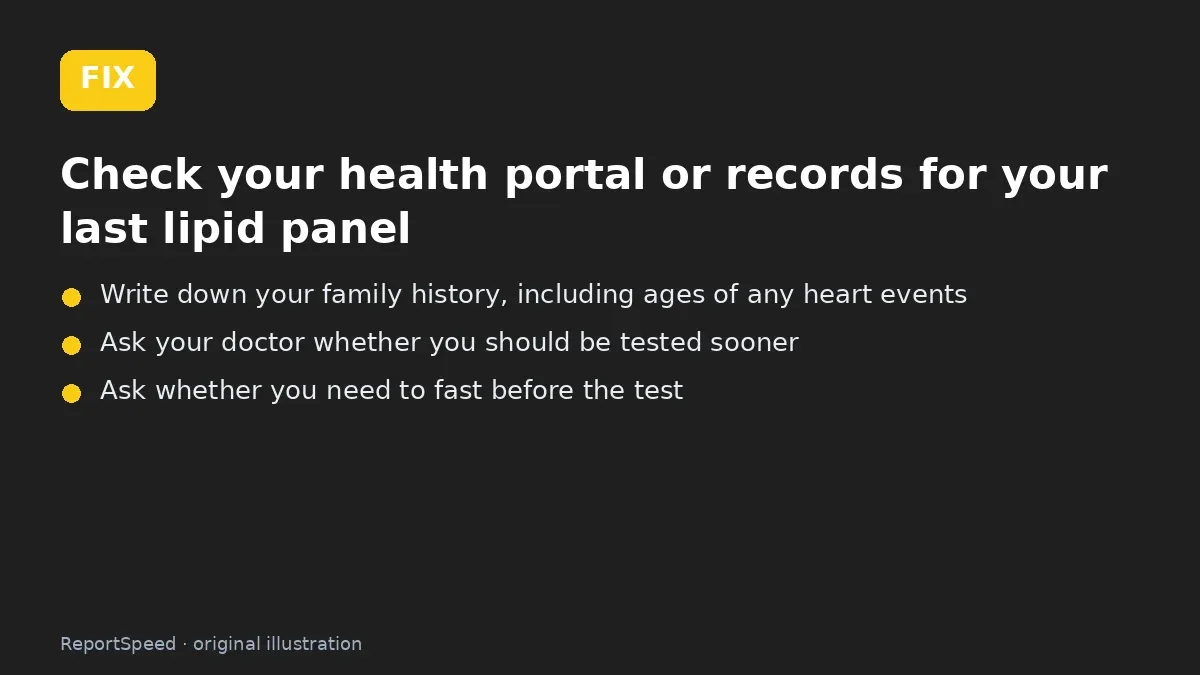
3. The fix The fix 
4. After The result
⚡ Speed Summary
- Healthy adults generally need a cholesterol check every four to six years, but family history can mean more often.
- Bring your father's age at his heart attack to your appointment; it can change how often your doctor wants to test.
- Skipping a test because you feel fine misses the point: high cholesterol usually causes no symptoms at all.

Was this answer helpful?
Tap a star to rate this answer.
Related questions
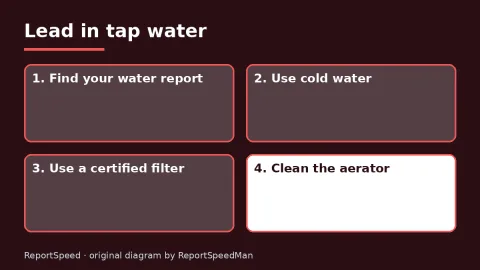
Is there lead in my tap water? How to check and lower your risk
Lead comes from plumbing, can't be seen, and isn't removed by boiling.
Rate itSolved
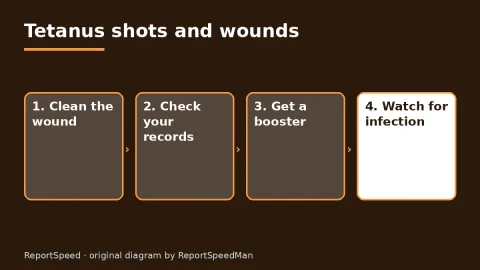
When do I need a tetanus shot? Booster timing and wounds
Boosters are every 10 years, or 5 years for dirty or puncture wounds.
Rate itSolved
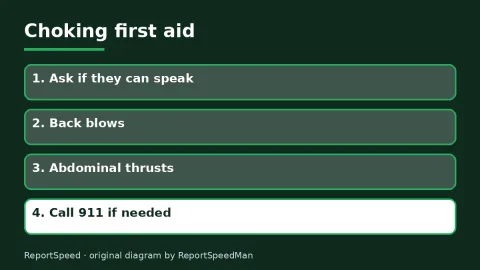
How to help someone who is choking: back blows and abdominal thrusts
Let a strong cough work.
Rate itSolved
Fever: when to call the doctor for a child or adult
At 8 months, 102.2°F is the call-now line; your baby's 101.5°F means watch closely and call if it rises or warning signs appear.
Rate itSolved
Real experiences
No experiences yet. Be the first to share.