


I've been taking a melatonin gummy most nights for about six months because it helps me fall asleep. Now I'm wondering if that's a bad habit. Is it safe to take melatonin long term, how much is too much, and should I be doing something different for my sleep?
Is it safe to take melatonin every night?
Concerns & risks
You've been taking melatonin regularly, it seems to help, and you're unsure whether long-term nightly use is fine or something to rethink.
| Question | Why ask |
|---|---|
| Is nightly use fine for me? | Long-term safety is not well studied |
| Does it interact with my medicines? | Interactions are possible |
| Could something else cause my insomnia? | Many causes are treatable |
| What timing makes sense? | Timing affects how it works |
Causes & evidence
Melatonin is a hormone your body makes in response to darkness, and supplements mimic that signal. The NIH's National Center for Complementary and Integrative Health (NCCIH) says short-term use appears to be safe for most people, but information on long-term safety is limited. In the U.S., melatonin is sold as a dietary supplement, which the FDA regulates differently from medicines, and NCCIH notes that products have been found to contain amounts different from their labels. Possible side effects include headache, dizziness, nausea and next-day sleepiness, and melatonin can interact with some medications.
Melatonin's effects depend on timing as well as dose. Your body's own melatonin rises in the evening as light fades, which is why light exposure matters for sleep.
Increasing the dose when it stops working, instead of looking at sleep habits, is a common trap.
What to do
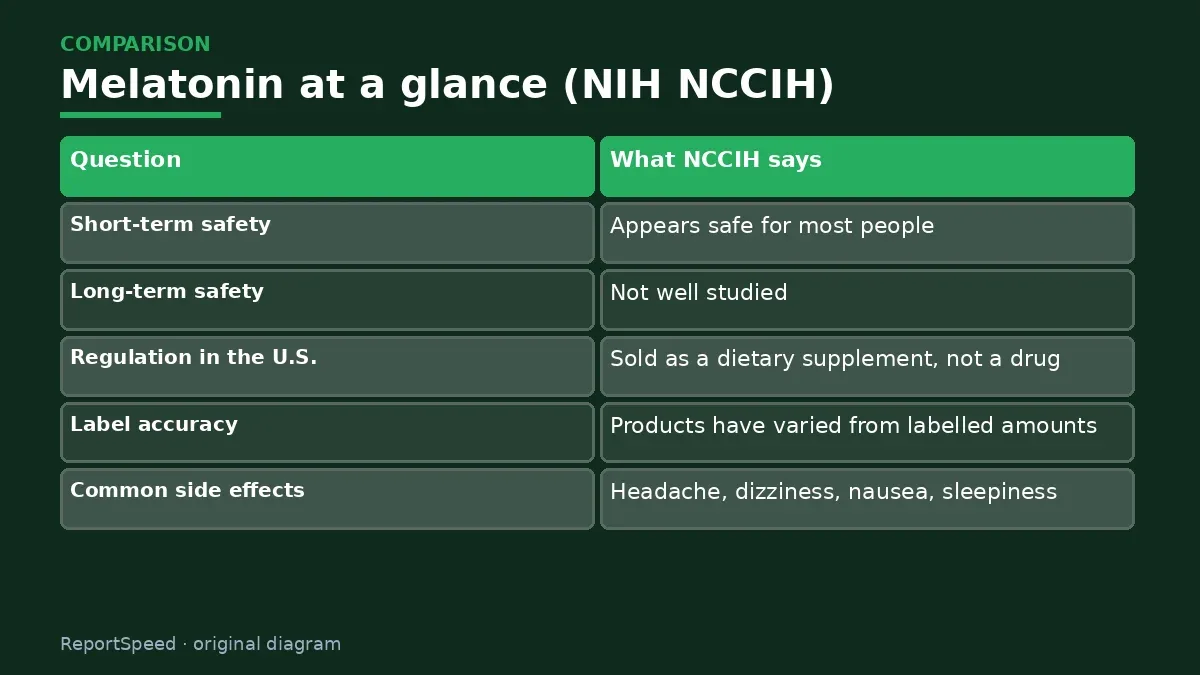
| Question | What NCCIH says |
|---|---|
| Short-term safety | Appears safe for most people |
| Long-term safety | Not well studied |
| Regulation in the U.S. | Sold as a dietary supplement, not a drug |
| Label accuracy | Products have varied from labelled amounts |
| Common side effects | Headache, dizziness, nausea, sleepiness |
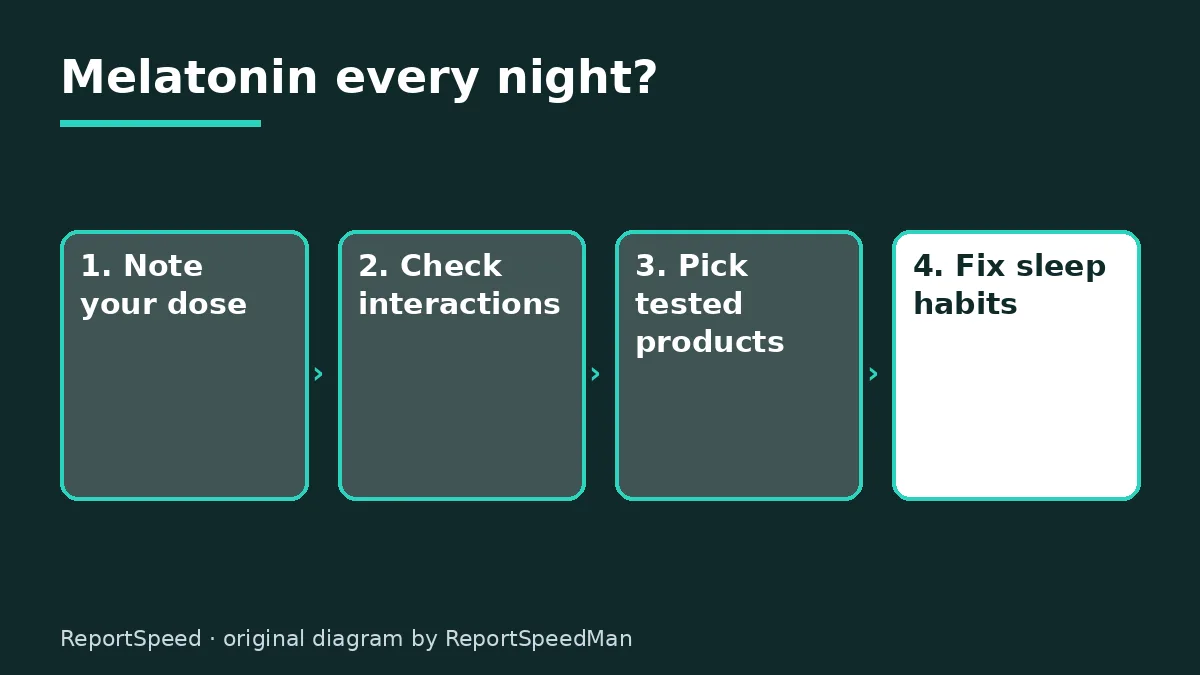
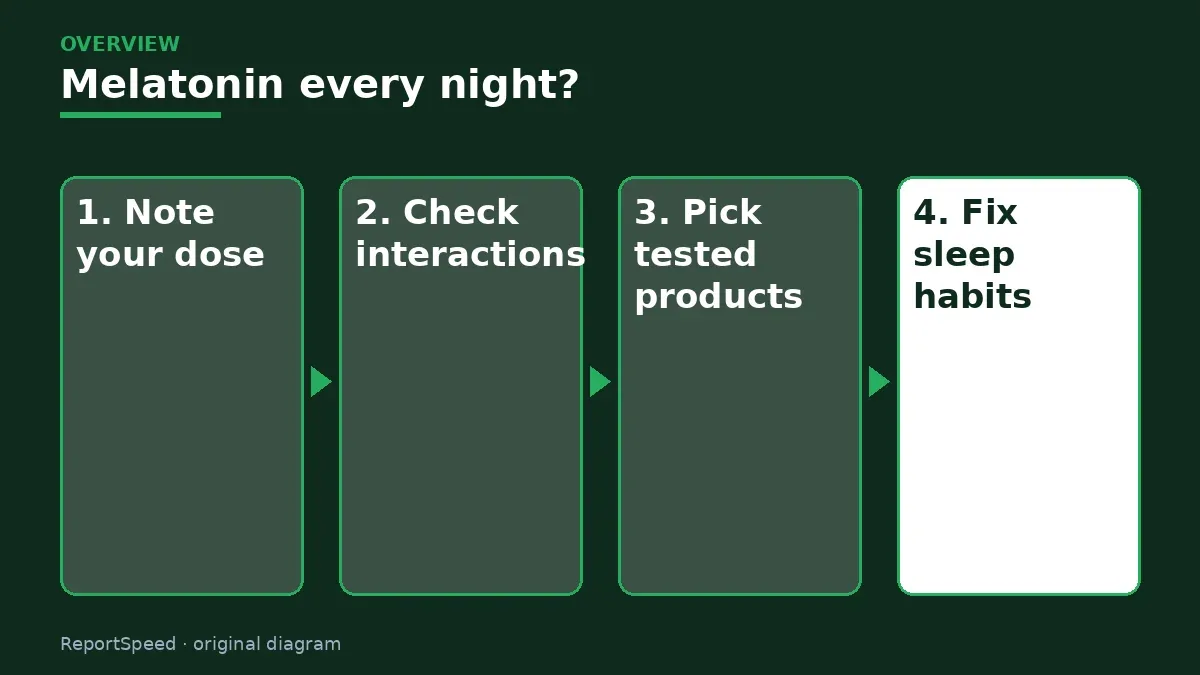
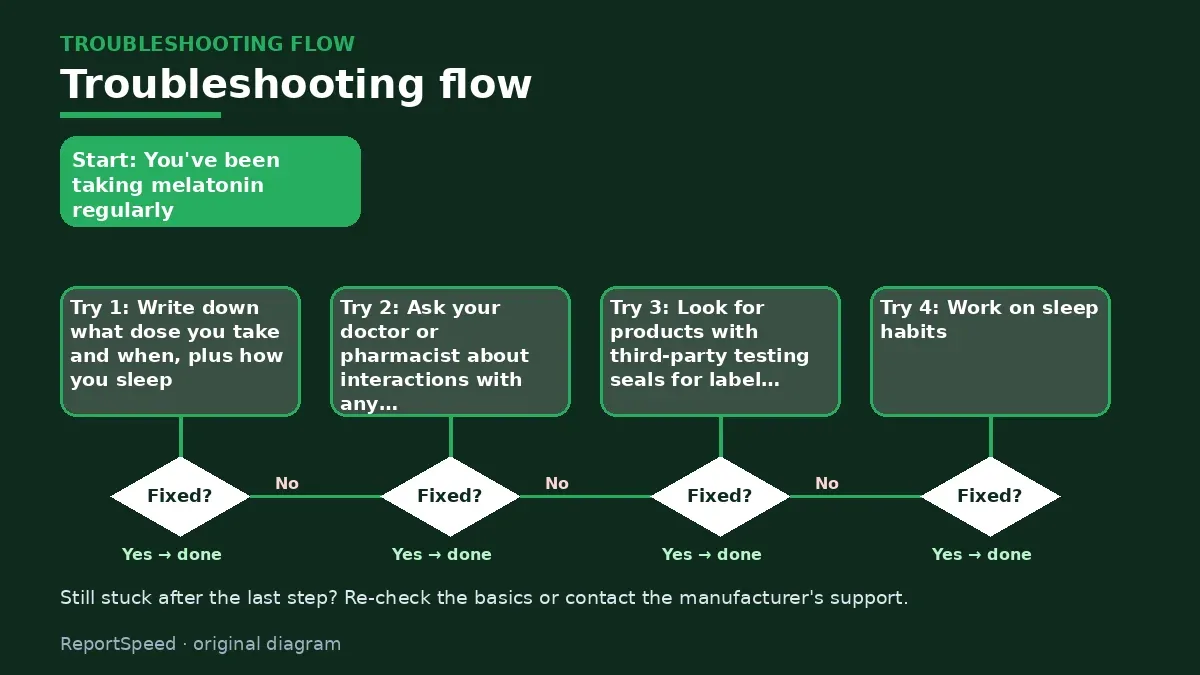
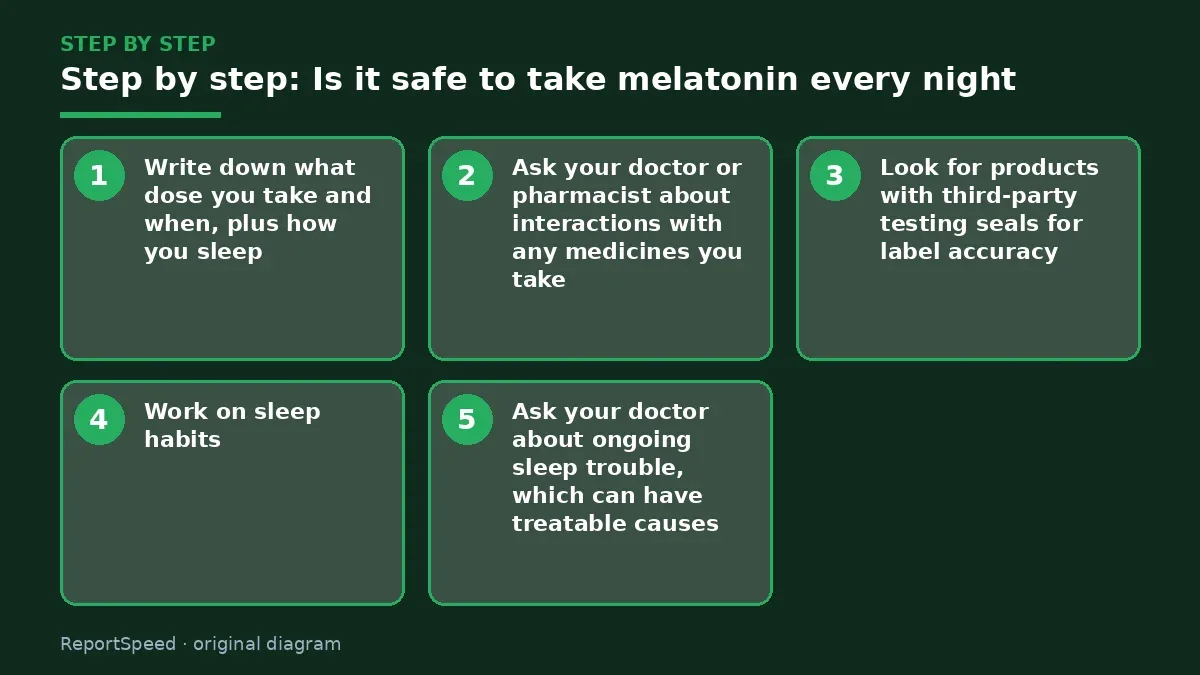
- Write down what dose you take and when, plus how you sleep.
- Ask your doctor or pharmacist about interactions with any medicines you take.
- Look for products with third-party testing seals for label accuracy.
- Work on sleep habits: consistent wake time, less late-evening screen light, a cool dark room.
- Ask your doctor about ongoing sleep trouble, which can have treatable causes.
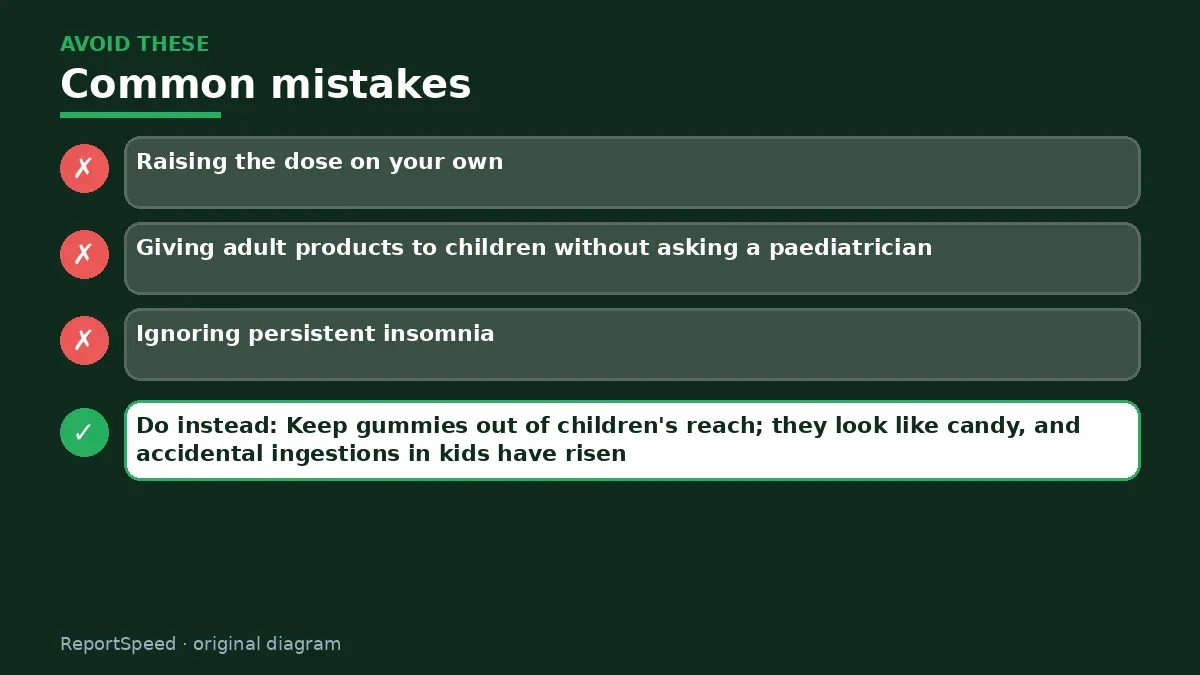
Common mistakes:
- Raising the dose on your own
- Giving adult products to children without asking a paediatrician
- Ignoring persistent insomnia
ReportSpeedMan tip: Keep gummies out of children's reach; they look like candy, and accidental ingestions in kids have risen.
What I would actually do
keep a two-week sleep diary, bring it and the melatonin bottle to my doctor, and work on a consistent wake time and dimmer evenings in the meantime.
The trade-off people miss: a supplement that helps you fall asleep can hide an underlying sleep problem that would respond better to other treatment.
How you can tell it worked
You've discussed melatonin with your doctor and your sleep habits support good nights.
Quick FAQ
Can kids take it?
Ask a paediatrician first.
Is it habit-forming?
It isn't considered addictive, but long-term safety is less studied.
Does it interact with medicines?
It can; ask a pharmacist.
Wrap-up: Melatonin can be a short-term helper, but long-term nightly use is worth a conversation with your doctor and a look at your sleep habits.
Wiki: Sleep Basics and Insomnia.
Is it safe to take melatonin every night: primary sources
Step-by-step photos
1. Before The problem 
2. Why it happens The cause 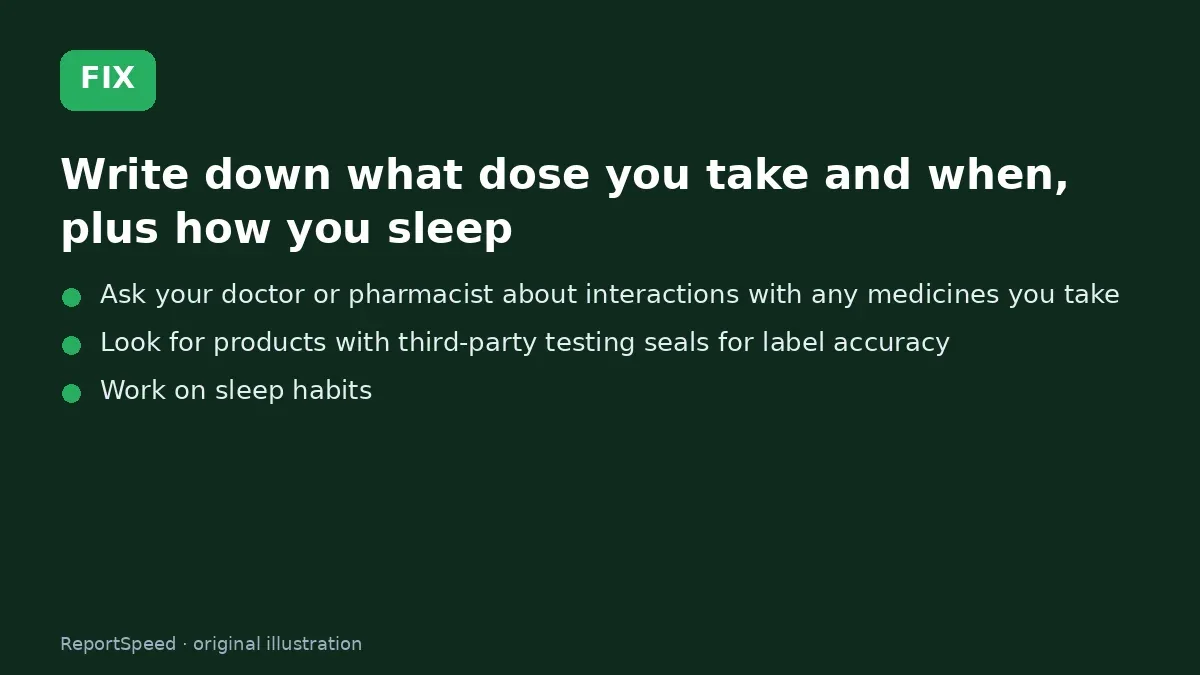
3. The fix The fix 
4. After The result
⚡ Speed Summary
- Melatonin can be a short-term helper, but long-term nightly use is worth a conversation with your doctor and a look at your sleep habits.
- Keep gummies out of children's reach; they look like candy, and accidental ingestions in kids have risen.
- Increasing the dose when it stops working, instead of looking at sleep habits, is a common trap.

Was this answer helpful?
Tap a star to rate this answer.
Related questions

Is there lead in my tap water? How to check and lower your risk
Lead comes from plumbing, can't be seen, and isn't removed by boiling.
Rate itSolved

When do I need a tetanus shot? Booster timing and wounds
Boosters are every 10 years, or 5 years for dirty or puncture wounds.
Rate itSolved

How to help someone who is choking: back blows and abdominal thrusts
Let a strong cough work.
Rate itSolved
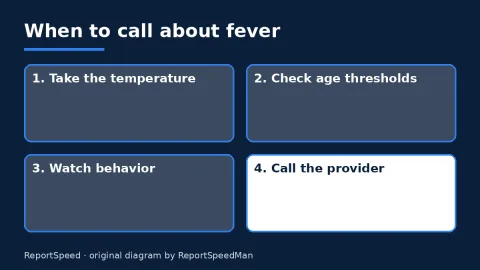
Fever: when to call the doctor for a child or adult
At 8 months, 102.2°F is the call-now line; your baby's 101.5°F means watch closely and call if it rises or warning signs appear.
Rate itSolved
Real experiences
No experiences yet. Be the first to share.